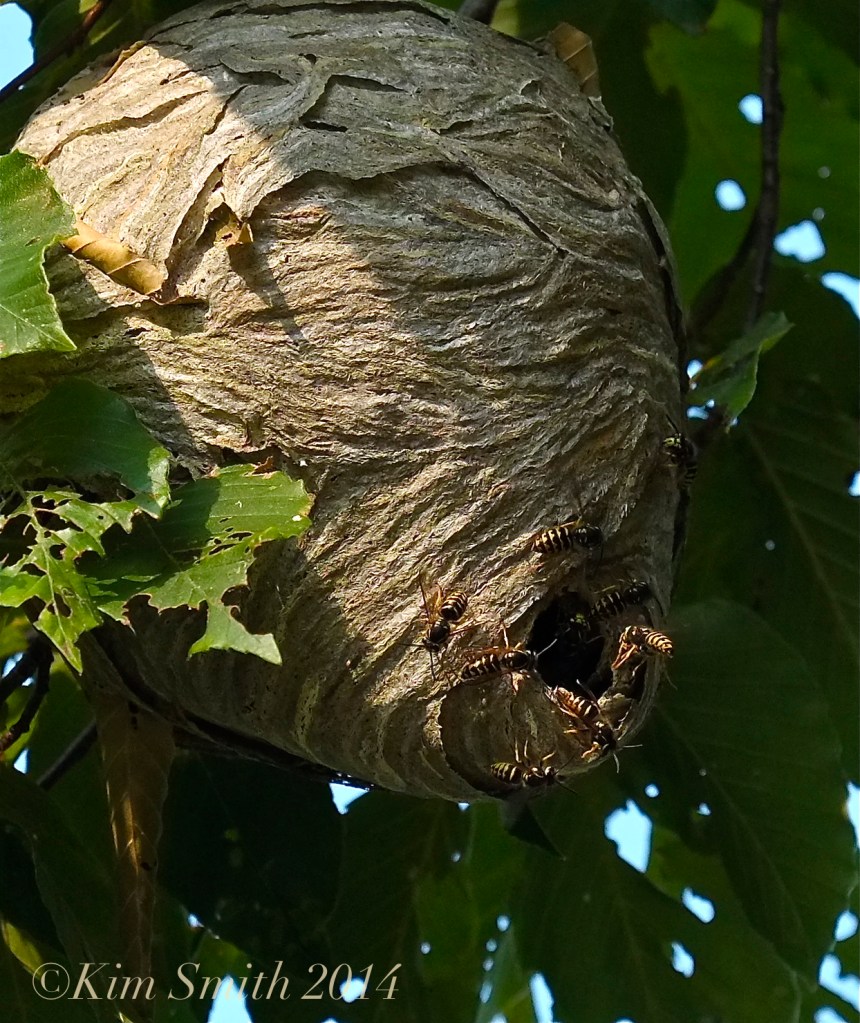
 Aerial Yellow Jacket Nest
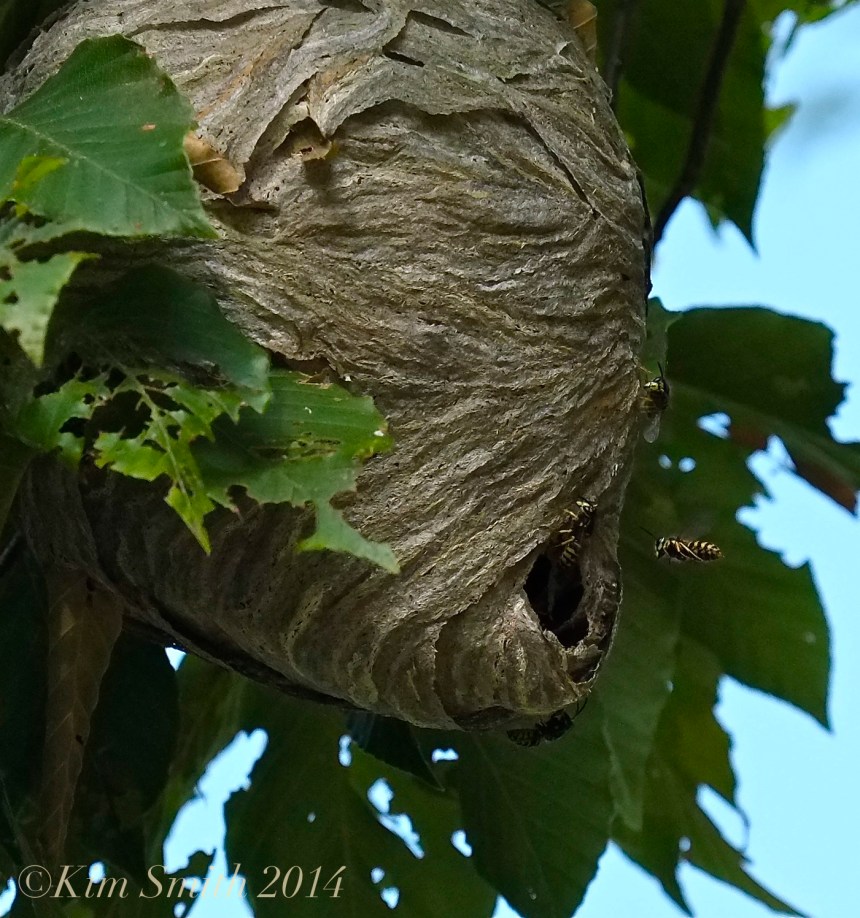
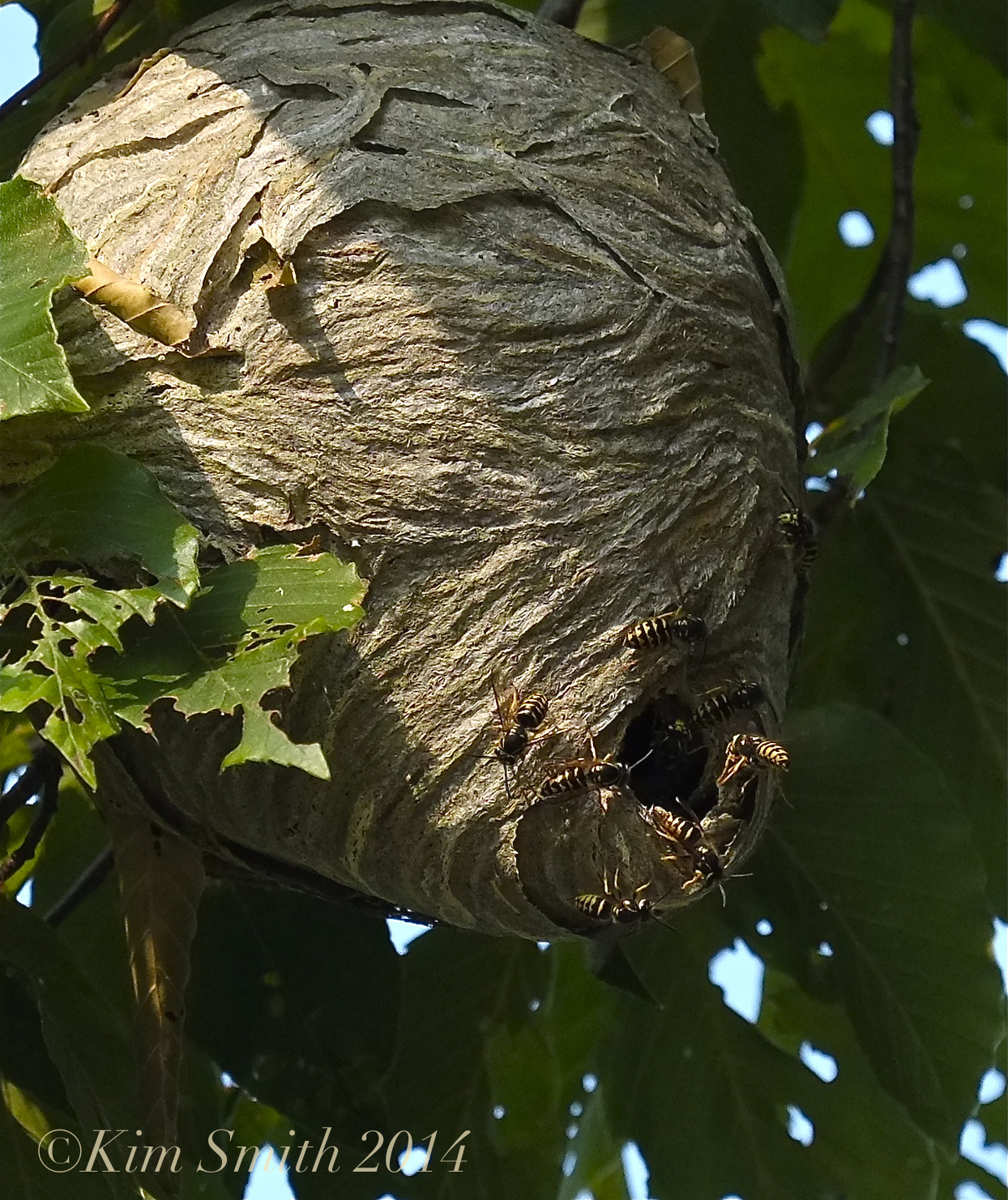
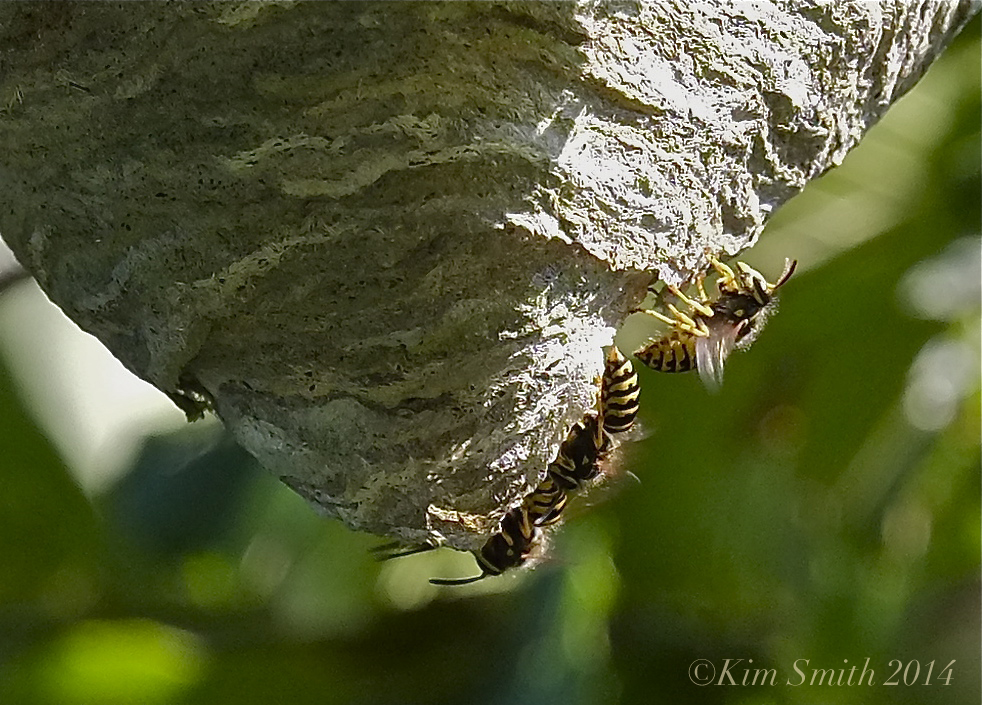
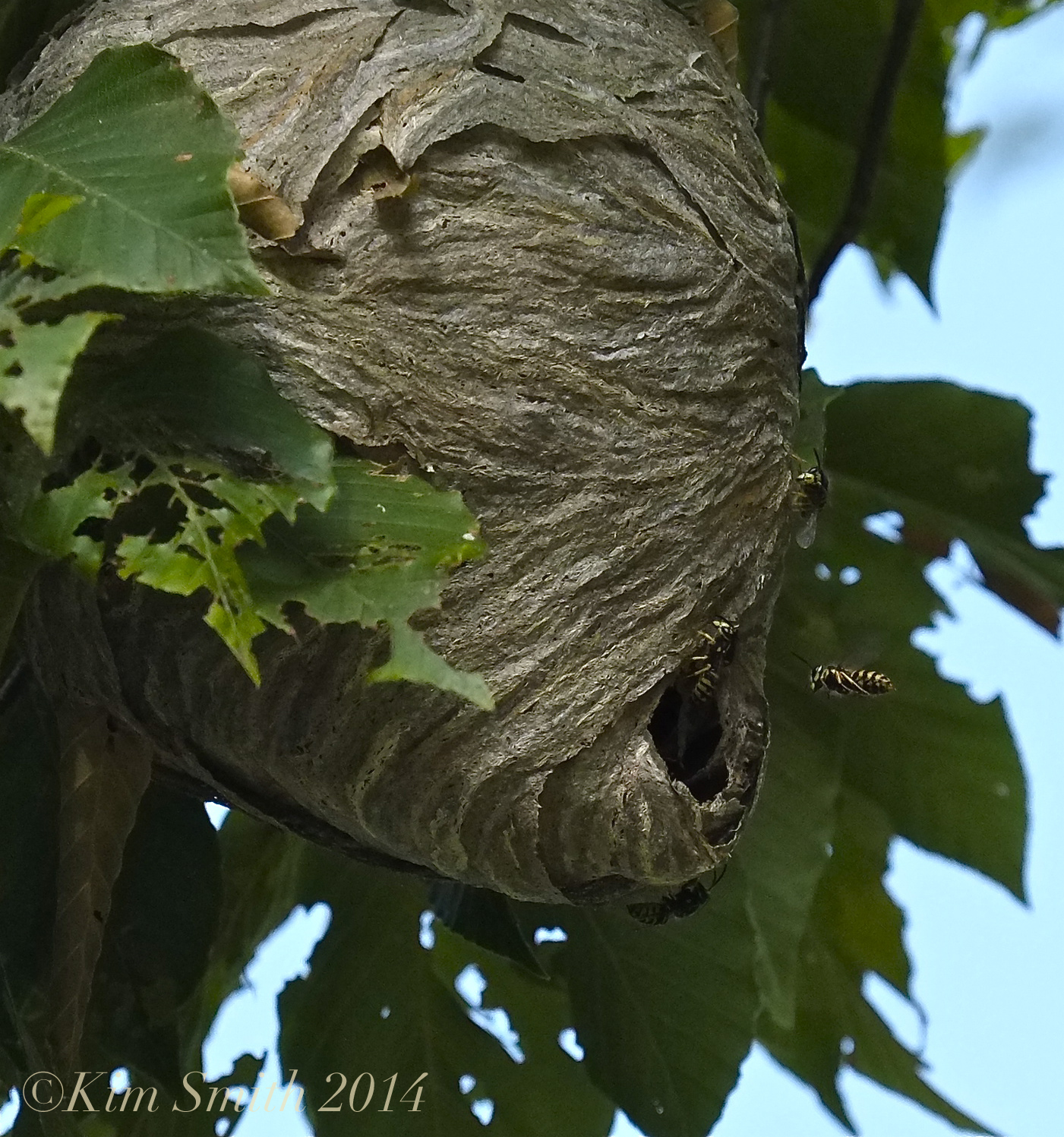
Recently at one of my landscape design project sites, which is located within a public space, a very distraught woman approached exclaiming that there was a wasp nest in a tree down the road aways. She was sure it needed to be destroyed, despite that it was at least 30 feet high up in the tree and not any where near where guests might wander. I calmly explained to her that the tree was not in my jurisdiction and even if it was, my first impulse would not be to destroy the nest. I thought it best to learn more about wasps in case there were more calls for its annihilation and after she left, I photographed the nest. I was glad she had pointed it out because it was so interesting to observe the rhythms of the comings and goings of the wasps, which after looking at the images through my camera’s lens, determined that it was the nest of the Aerial Yellowjacket (Dolichovespula arenaria).
Aerial Yellowjackets are often confused with honey bees (Apis mellifera) becasue of their similar color. In contrast, the body of the yellow and black striped wasp is less hairy and thinner than that of a honey bee’s, and yellowjackets do not transport pollen.
Side-by-side comparison of an Aerial Yellowjacket and honeybee:

Aerial Jellowjacket
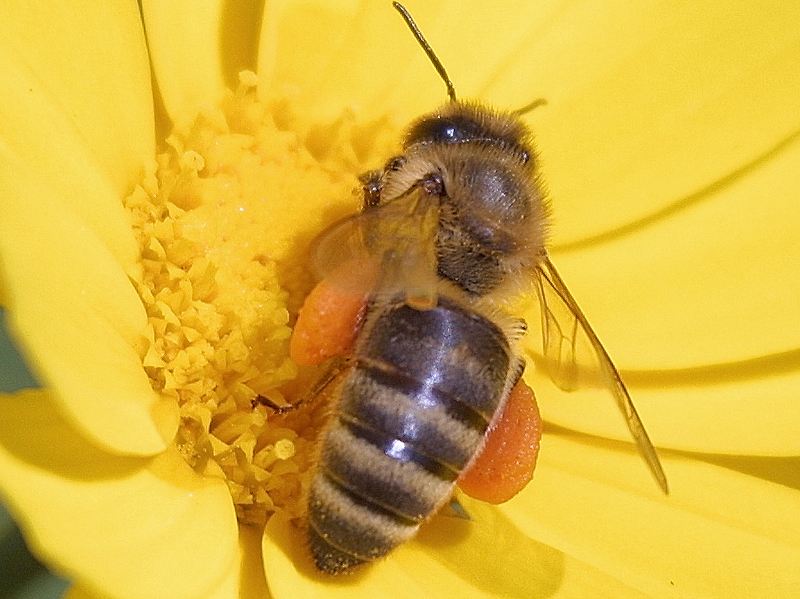 Honeybee with Pollen Sacs on Hind Legs
The native Aerial Yellowjacket is considered beneficial because it preys on many insect crop pests. It is also serves as food for a variety of animals including frogs, skunks, birds, and other insects (I can’t imagine eating a wasp!). Yellowjackets typically sting in defense of their colony and can also be a pest at picnics, especially in late summer and fall when they switch their diet from that of a protein-based diet rich of the meat of chewed up caterpillars and insects, to a sugar-based diet.
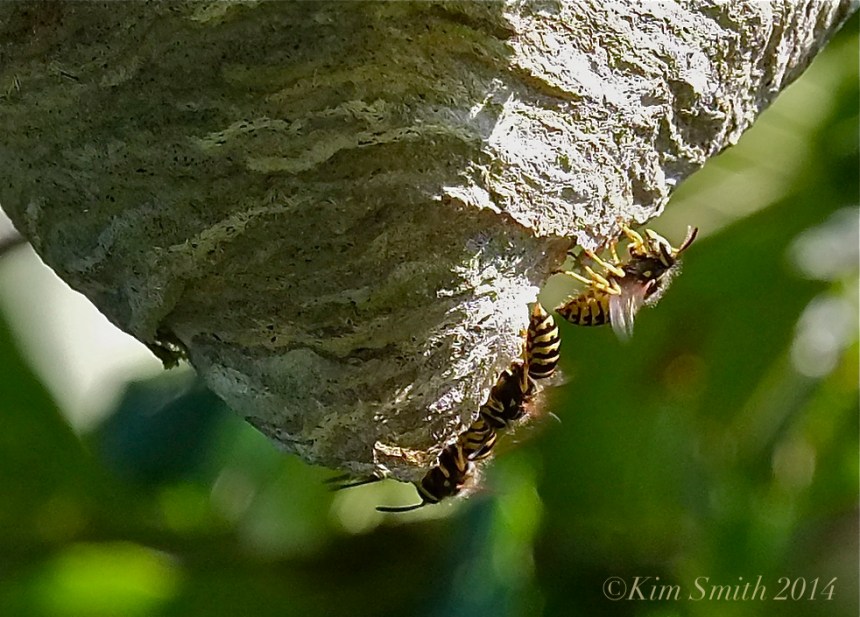
The nest is is a papery-like material constructed from the worker yellowjacket’s chewed wood and saliva pulp and is typically only used for one year in our region. The Aerial Yellowjacket is so named because it builds its nest high up, as opposed to underground.
We left the nest alone, and so far, no more calls have gone out for its destruction.
 Honeybee and Aerial Yellowjacket photos courtesy wiki commons media.
Spread The GMG Love By Sharing With These Buttons:



 Good Morning Gloucester