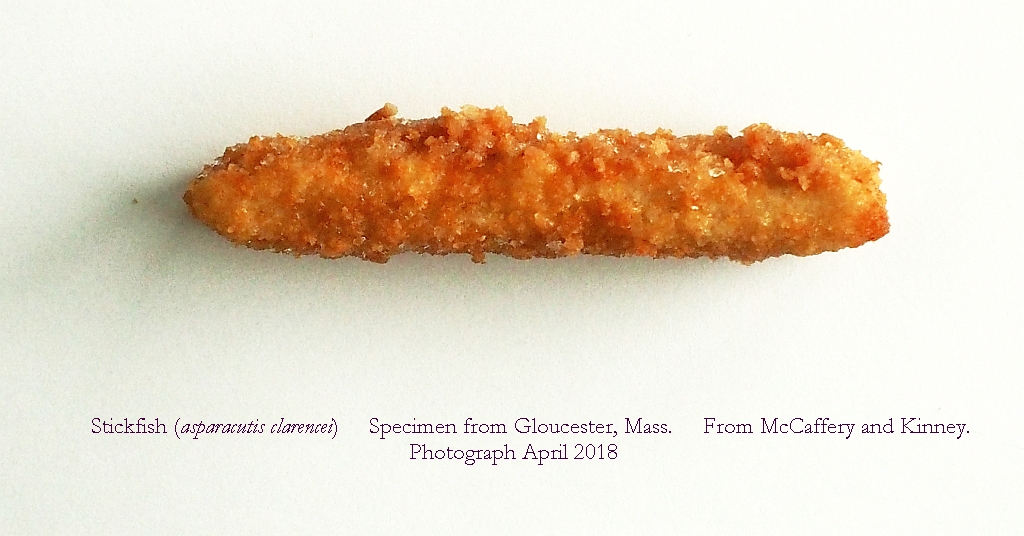
Stickfish; fish stick, fish finger
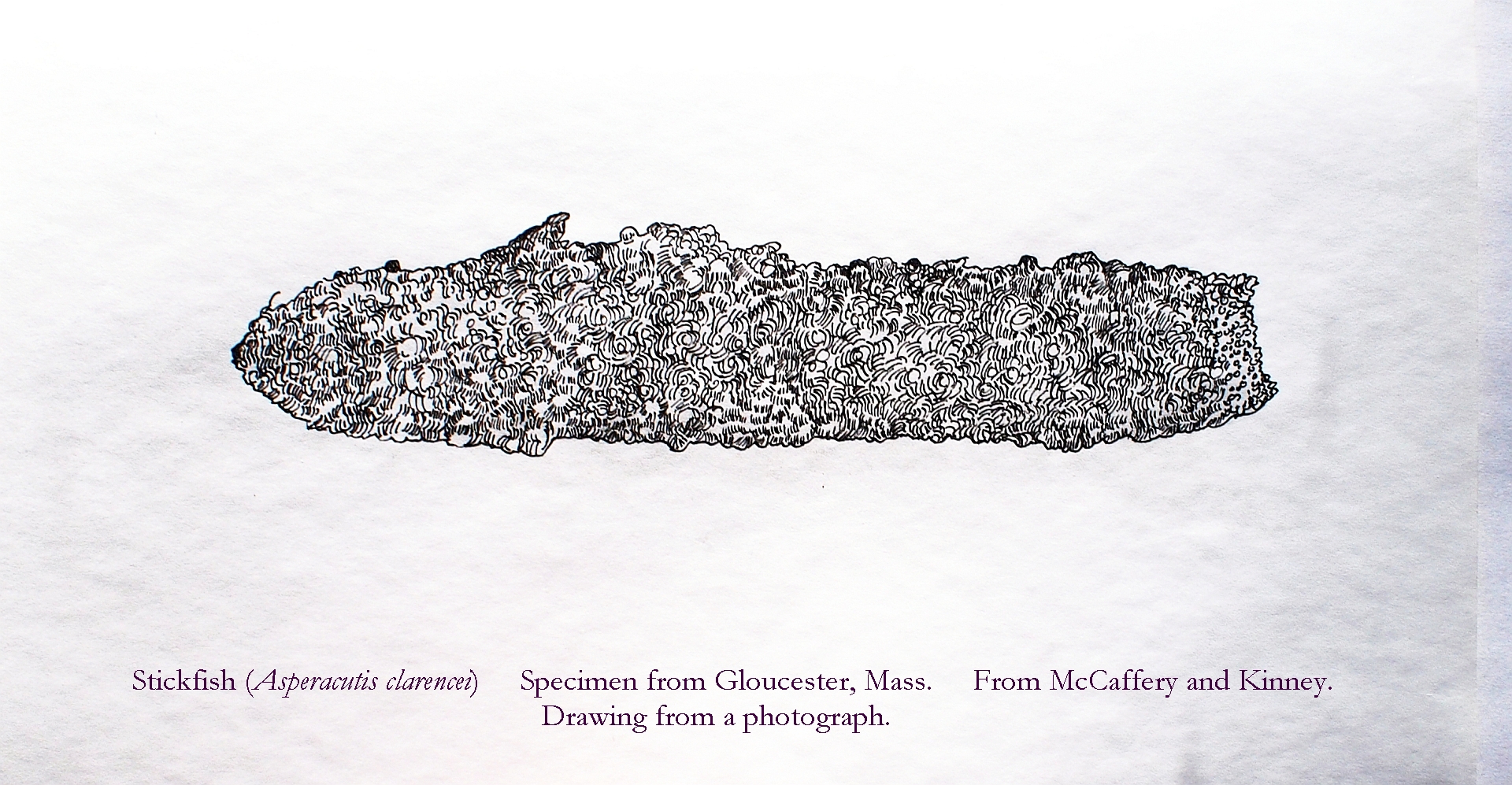
About the April 2nd post on Stickfish … It was intended to appear online April 1st, so with the delay, you might call it a red herring. The fish stick in the photograph here was drawn for the previous post by P K Bezanson.
Embedded clues in the previous post:
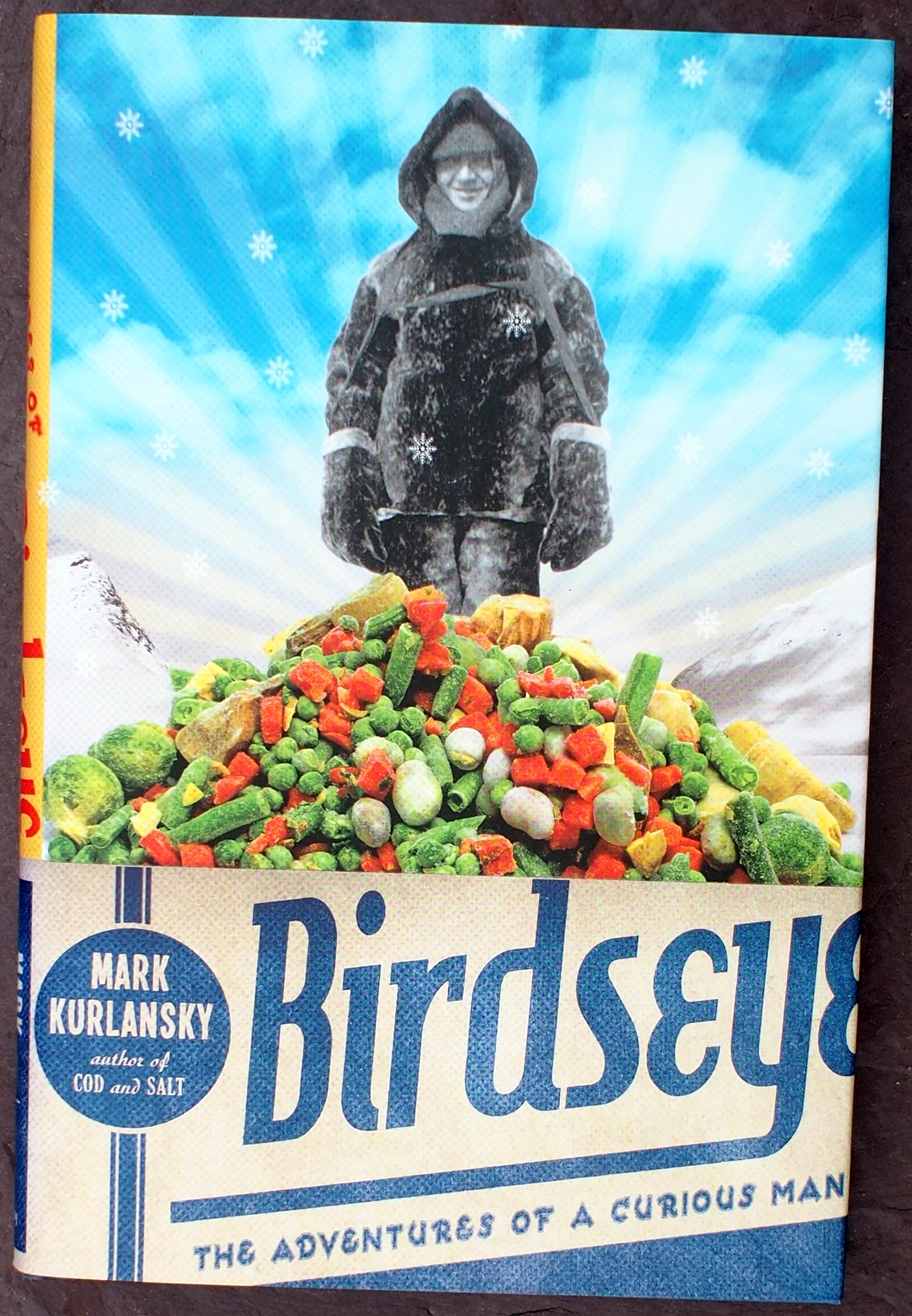
(Asperacutis clarencei) For Clarence Birdseye (1886-1956), who, right here in Gloucester, developed the process for manufacturing frozen fish blocks. Most fish sticks are cut from blocks. Mark Kurlansky’s 2012 biography of this remarkable man is highly recommended.
Francis McCaffery (1921-2010) Mechanical Engineering graduate of Columbia College, 1943. Went immediately to work on the Manhattan Project, then after the war, to the Birdseye Division of General Foods. In 1954 McCaffery cofounded Commodore Foods with plants in Lowell and Westford where he developed the machinery to manufacture fish sticks.
- Robert Kinney (1917-2013) Joined Gorton’s in the early 1950’s, becoming president in 1958. Guided Gorton’s to lead in the production and marketing of fish sticks. In 1968 General Mills acquired Gorton’s and Kinney moved to Minneapolis where he soon became CEO of General Mills. From there he further strengthened Gorton’s earnings by deploying the considerable resources of General Mills Engineering Departments on the fish stick manufacturing practice.
[M.A.T.W] Guy whose picture is on the yellow bag. The fish stick in the photo is from this bag.
mean length 3.5 to 4 inches. Largest specimen 6.4 inches. Fish blocks are 19X10X2½ inches and there are only so many ways you can slice a block into sticks. It takes some doing to cut the 19 into thirds and get it through the process intact.
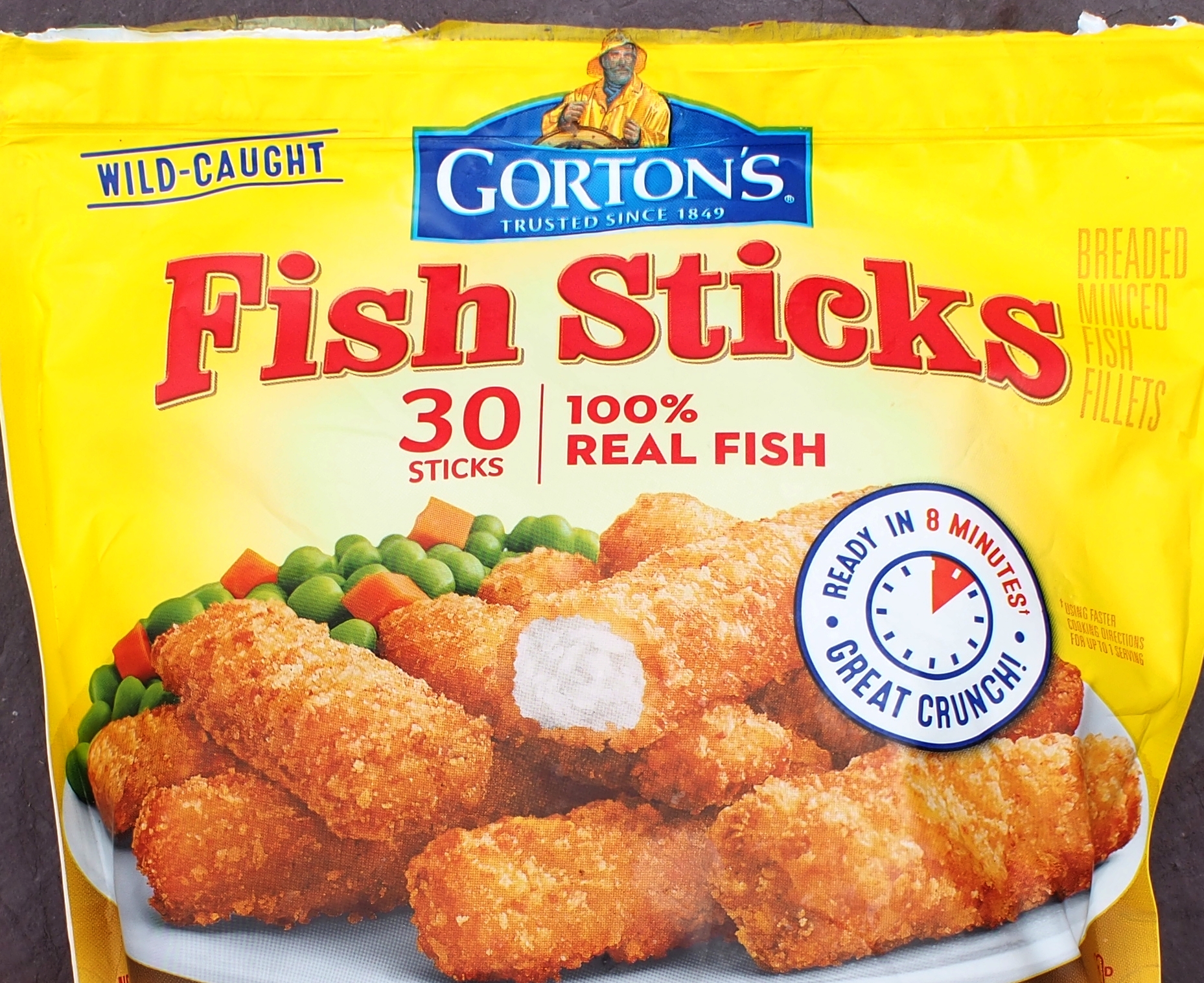
I landed in the fish stick business in 1964 with Gorton’s engineering. Fish sticks had only been around for about ten years at that time and I knew of three companies who each claimed to be first to market fish sticks. After moving elsewhere, continued work on the manufacturing process back at Gorton’s and with other producers for a span of fifty years. Trivia point … a modern fish stick processing line produces in under twenty years enough sticks, if they are place end to end, to reach the moon. This on a single shift basis with average down time.


 Good Morning Gloucester