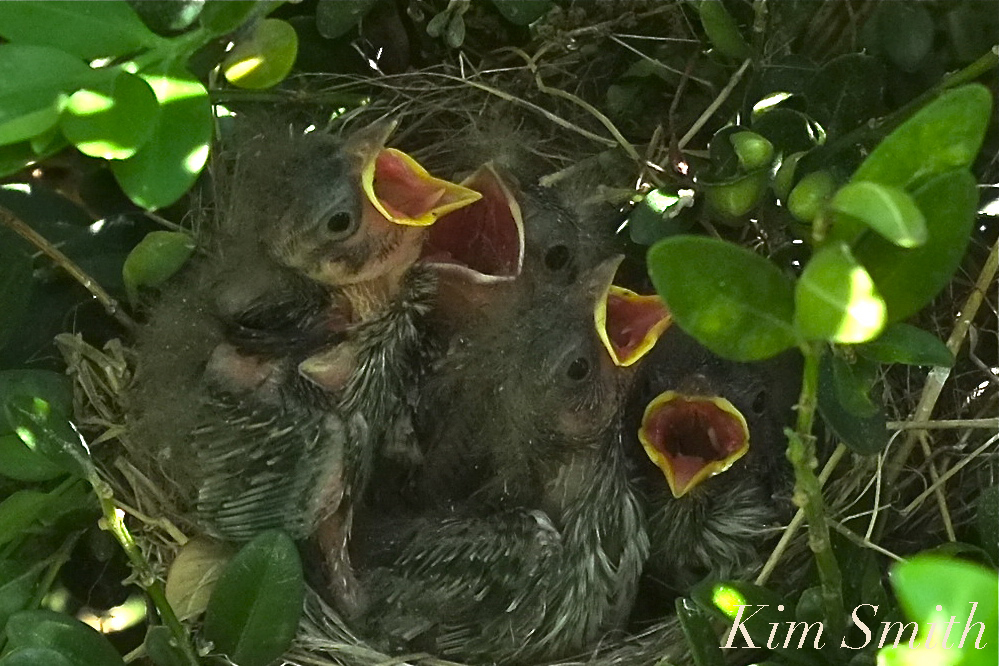
 To and fro, to and fro, flying from the branches of the majestic old oak tree to the garden beds, and then into the thickest part of the small shrub at the edge of the vegetable garden, then back to the sheltering oak above, a pair of Chipping Sparrow parents tirelessly fed their hungry brood of tiny hatchlings. Chipping cheeraree cheeraroo all the while, despite beaks overflowing with worms, and every kind of larvae you can imagine.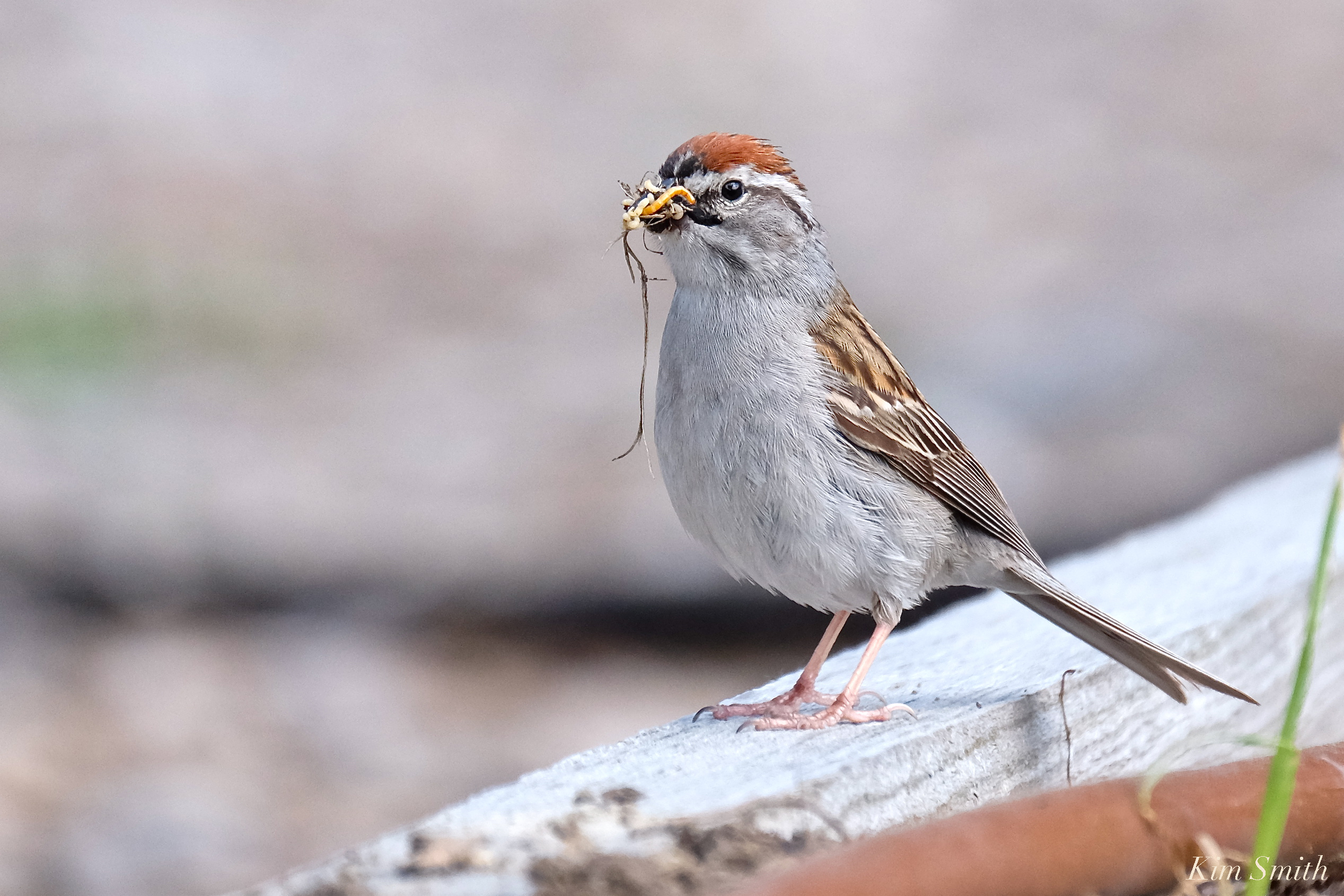
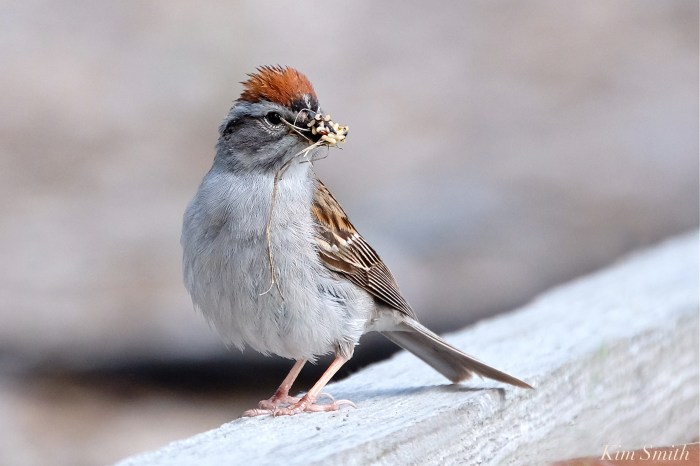
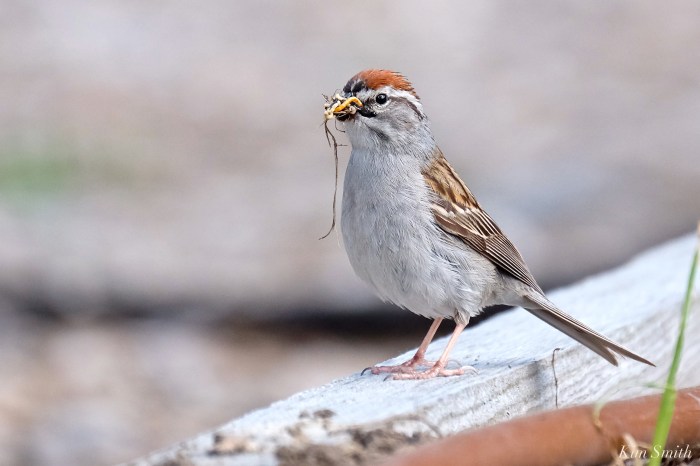
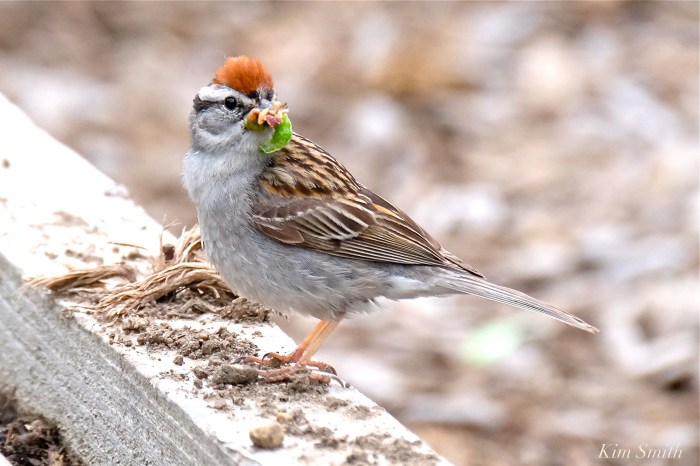
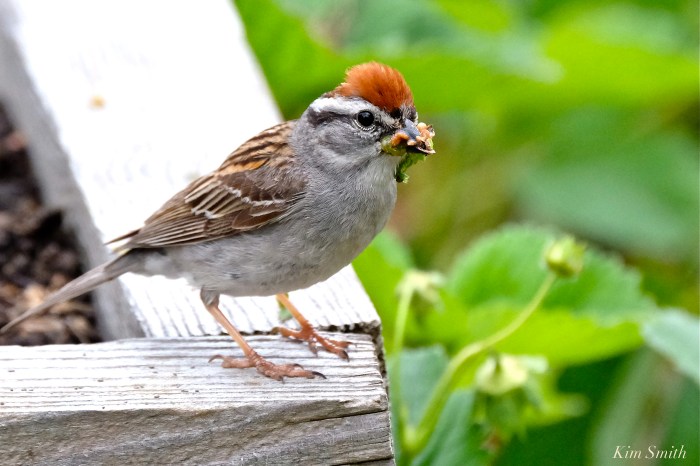
Chipping Sparrows are easily identified with their rufous red beret-like cap and cheery chipping. Massachusetts is part of their northern breeding range. Come fall they will begin to flock together and migrate to the southern US and Mexico. Chipping Sparrows were once more of a woodland species but today, they have become well-adapted to human habitats and nest in gardens, parks, and farmlands.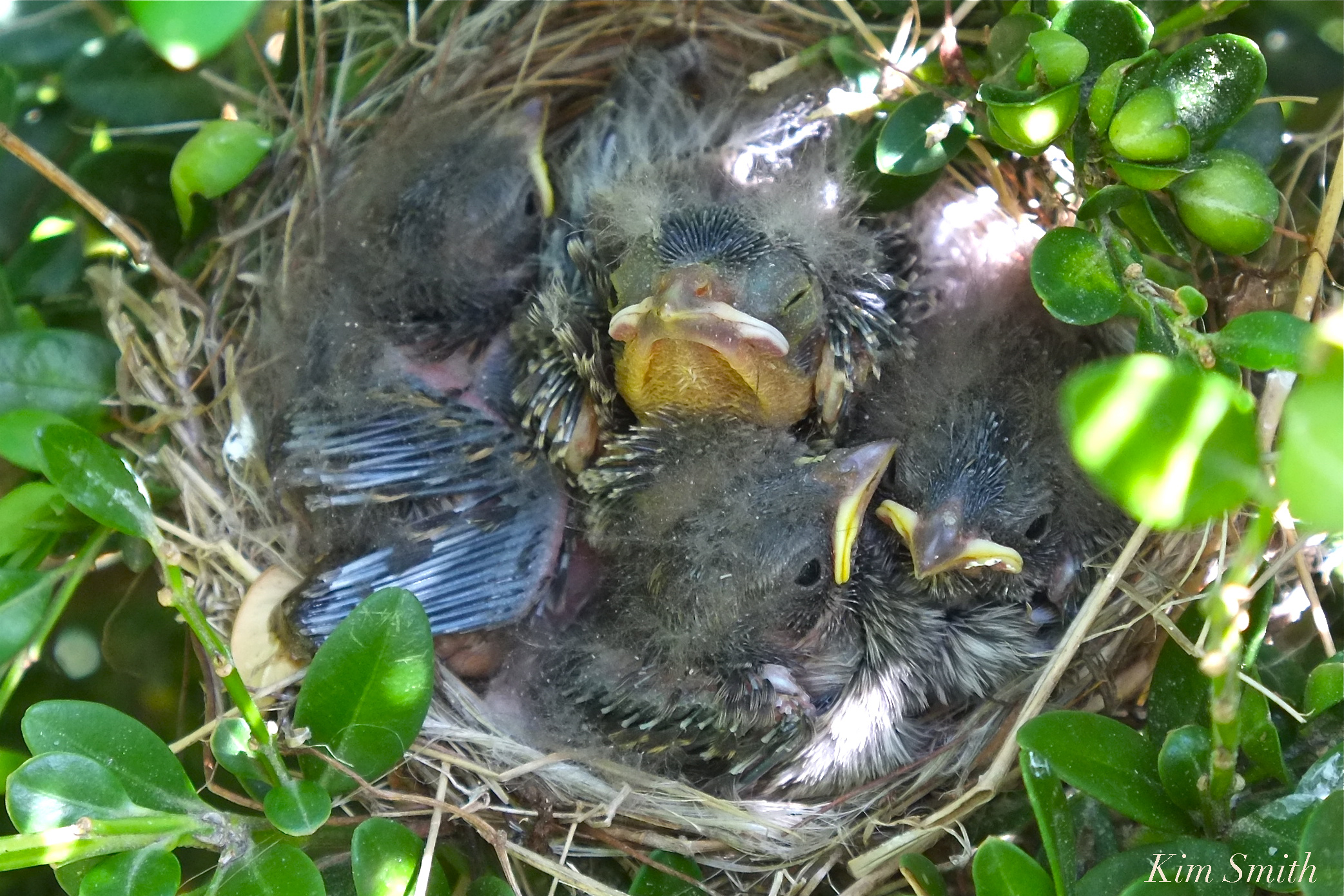
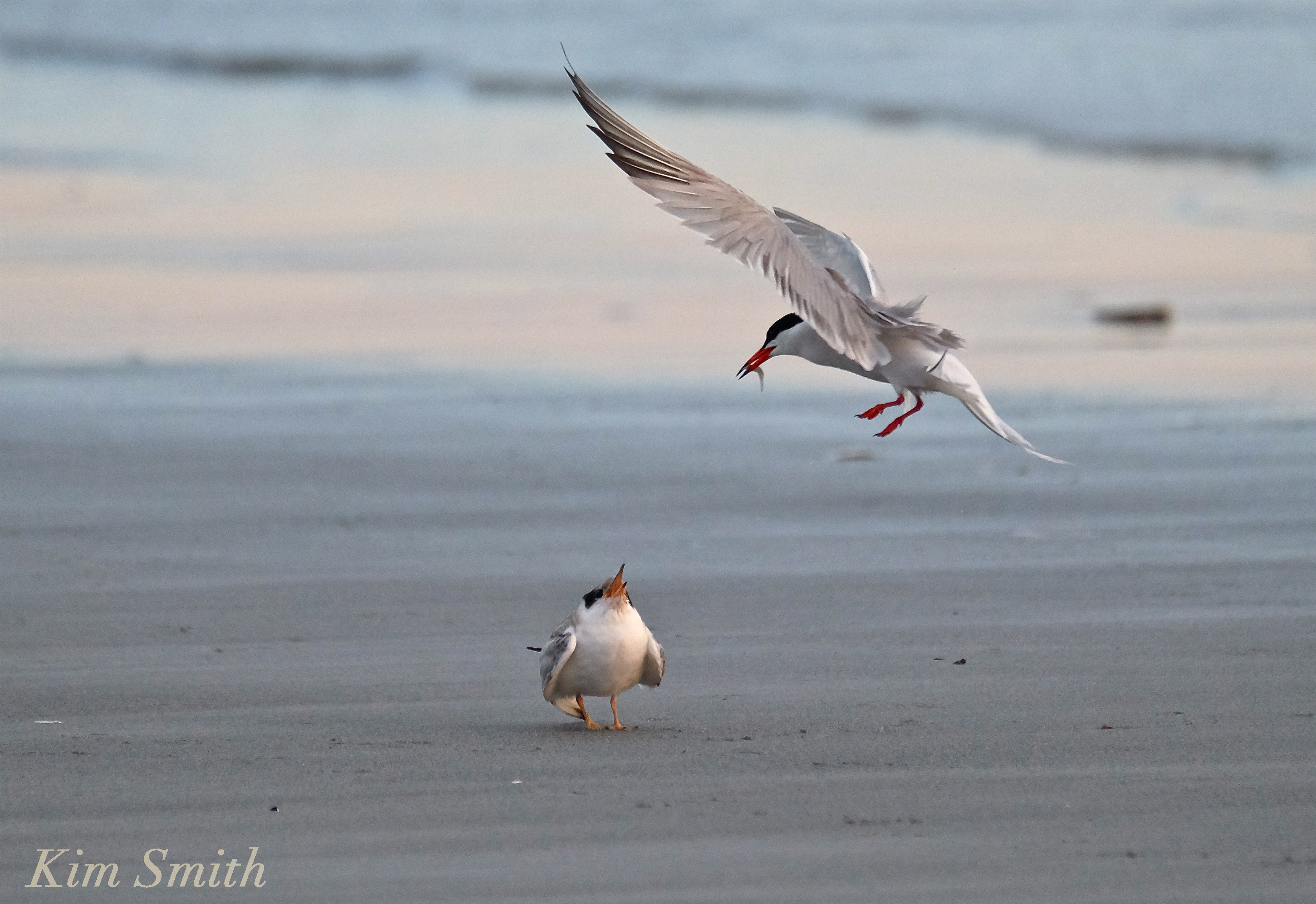
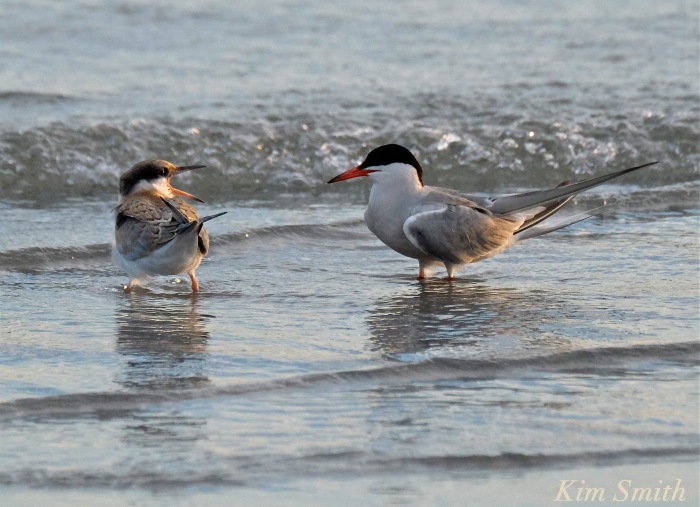
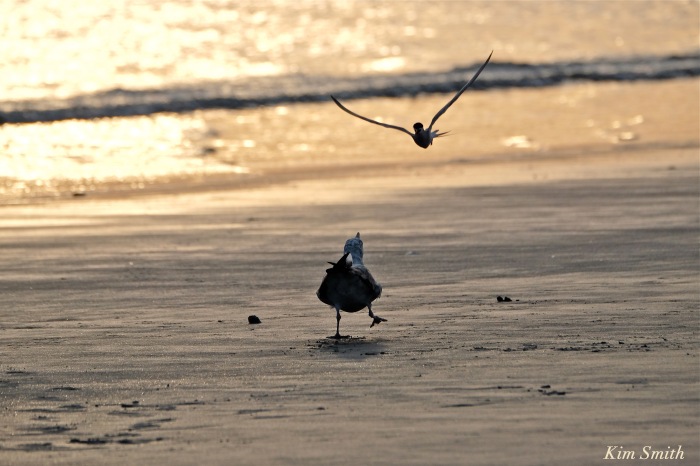
Like all song birds, Chipping Sparrow young are altricial, which means they hatch semi-undeveloped and are blind, naked, and helpless, needing constant care and feeding by the parents. Species of Plovers, such as Piping Plovers and Killdeers are precocial. They are fully mobile and can feed themselves within hours after hatching. The adults are needed to keep them warm and to protect the chicks from predators. Birds in the tern and gull family, such as Least Terns, are semi-precocial. They hatch with their eyes open, are covered with downy fluff, can walk (and in some cases swim) but must be fed by the parents.
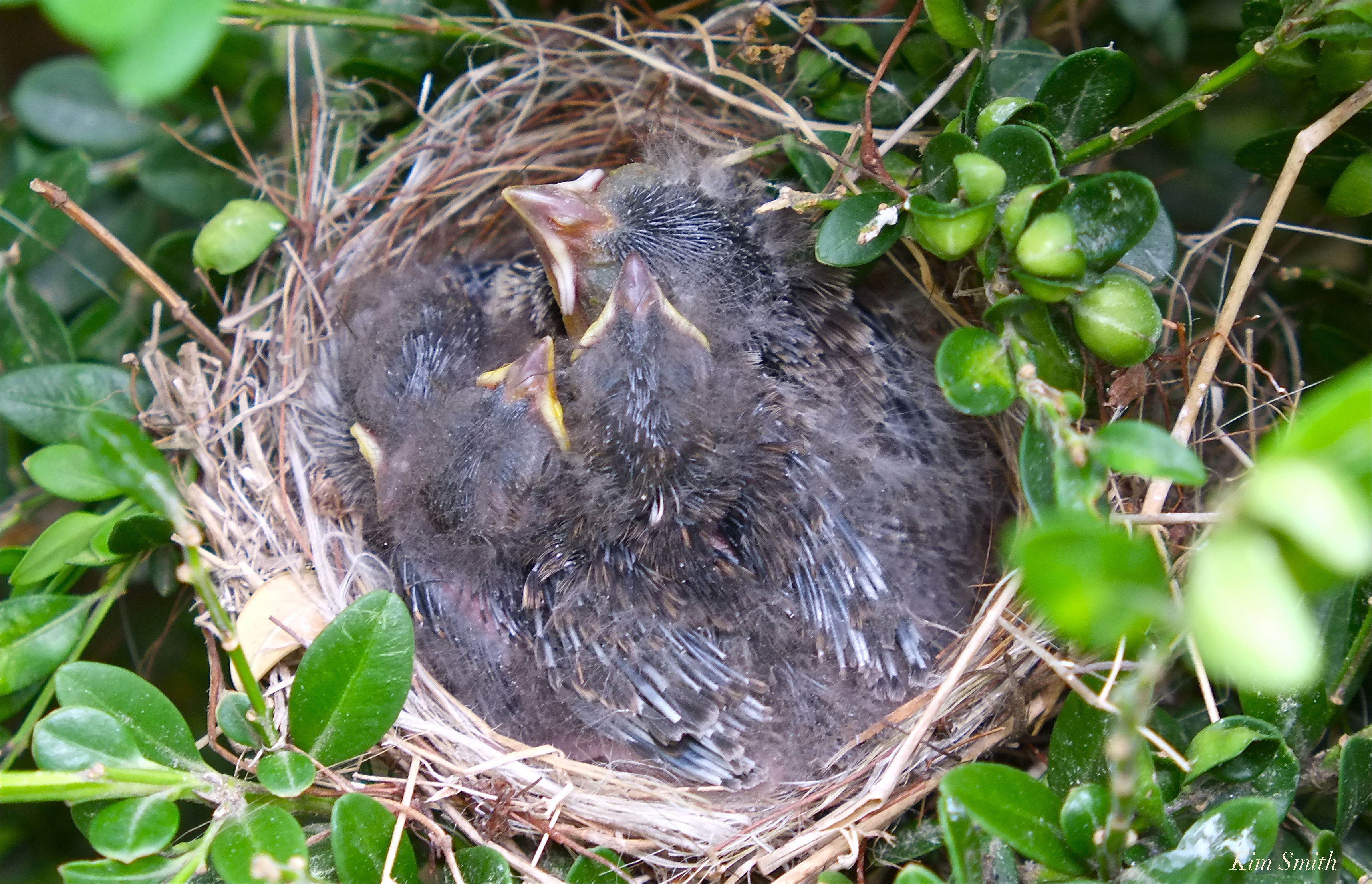 Chipping Sparrow Nestlings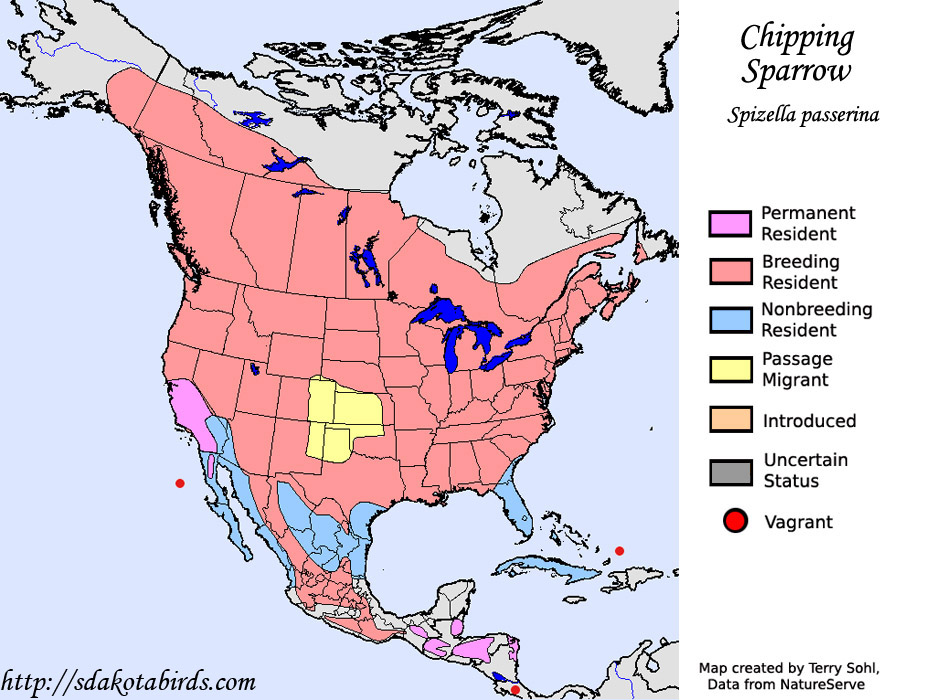






 Good Morning Gloucester