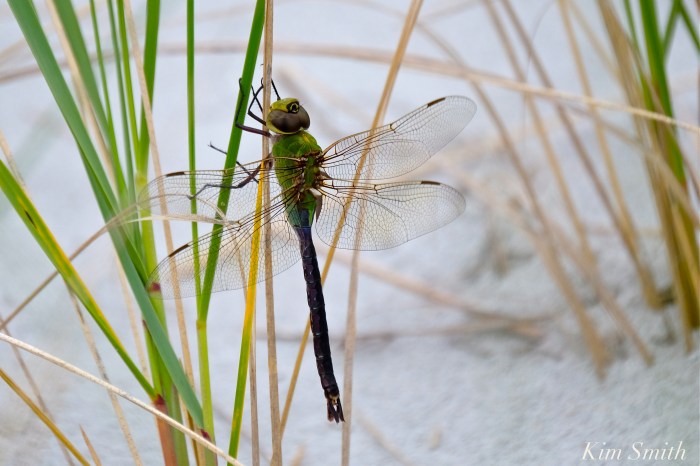
Green Darners are on the move!
A recent study described in Biology Letters has revealed the story of the migration of the Common Green Darner (Anax janius). Watching Green Darners along the shores of Cape Ann today I was reminded of the following article published this winter in Science News, written by Susan Milius.
Green darner dragonflies migrate a bit like monarch butterflies
Each annual migratory loop takes multiple generations
By Susan Milius
The monarch butterfly isn’t the only insect flying up and down North America in a mind-boggling annual migration. Tests show a big, shimmering dragonfly takes at least three generations to make one year’s migratory loop.
Ecologist Michael Hallworth and his colleagues pieced together the migration of the common green darner, described December 19 in Biology Letters, using data on forms of hydrogen in the insects’ wings, plus records of first arrivals spotted by citizen scientists.
The study reveals that a first generation of insects emerges in the southern United States, Mexico and the Caribbean from about February to May and migrates north. Some of those Anax junius reach New England and the upper Midwest as early as March, says Hallworth, of the Smithsonian Migratory Bird Center headquartered in Washington, D.C.
Those spring migrant darners lay eggs in ponds and other quiet waters in the north and eventually die in the region. This new generation migrates south from about July until late October, though they have never seen where they’re heading. Some of these darners fly south in the same year their parents arrived and some the next year, after overwintering as nymphs.
A third generation emerges around November and lives entirely in the south during winter. It’s their offspring that start the cycle again by swarming northward as temperatures warm in the spring. With a wingspan as wide as a hand, they devote their whole lives to flying hundreds of kilometers to repeat a journey their great-grandparents made.
READ THE COMPLETE ARTICLE HERE
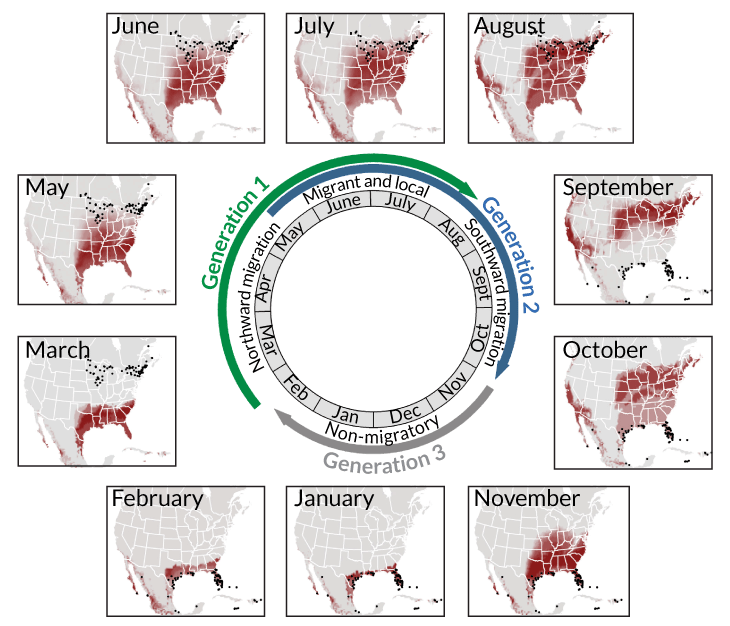
Mass migration
At least three generations make up the annual migration of common green darner dragonflies. The first generation emerges in the southern United States, Mexico and the Caribbean starting around February and flies north. There, those insects lay eggs and die, giving rise to second generation that migrates south until late October. (Some in that second generation don’t fly south until the next year, after overwintering as nymphs.) A third generation, hatched in the south, overwinters there before laying eggs that will start the entire process over again. These maps show the emergence origins of adult insects (gray is zero; red is many) captured at sampling locations (black dots).



 Good Morning Gloucester