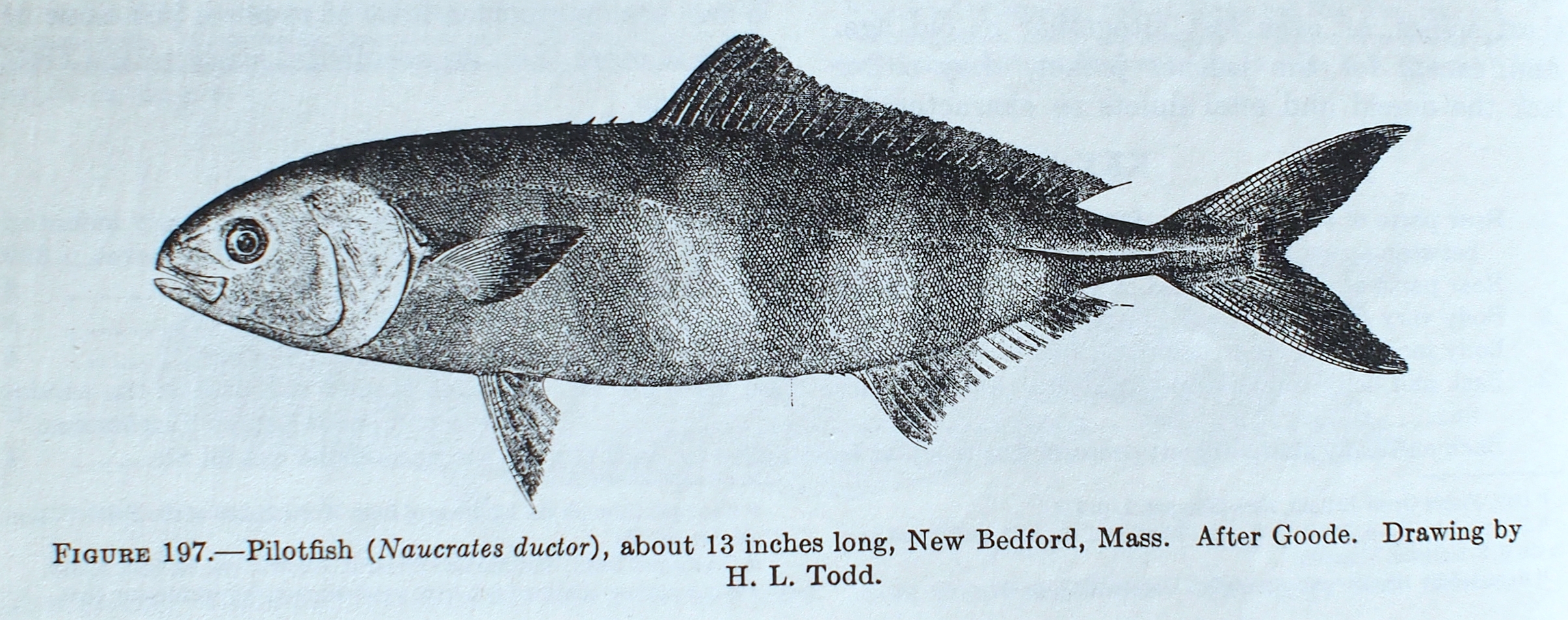
This is the fish that so commonly attends sharks in tropic seas, either picking up a living from the scraps left by the latter, or feeding on the parasites with which their protectors are infested. They often follow sailing vessels, also. The only records of this species from within the Gulf include one taken in a mackerel net in Provincetown Harbor in October 1858, the fish probably having followed a whale ship that arrived a few days previous. From Fishes of the Gulf of Maine by Bigelow and Schroeder (1953) online courtesy of MBL/WHOI http://www.gma.org/fogm/Naucrates_ductor.htm 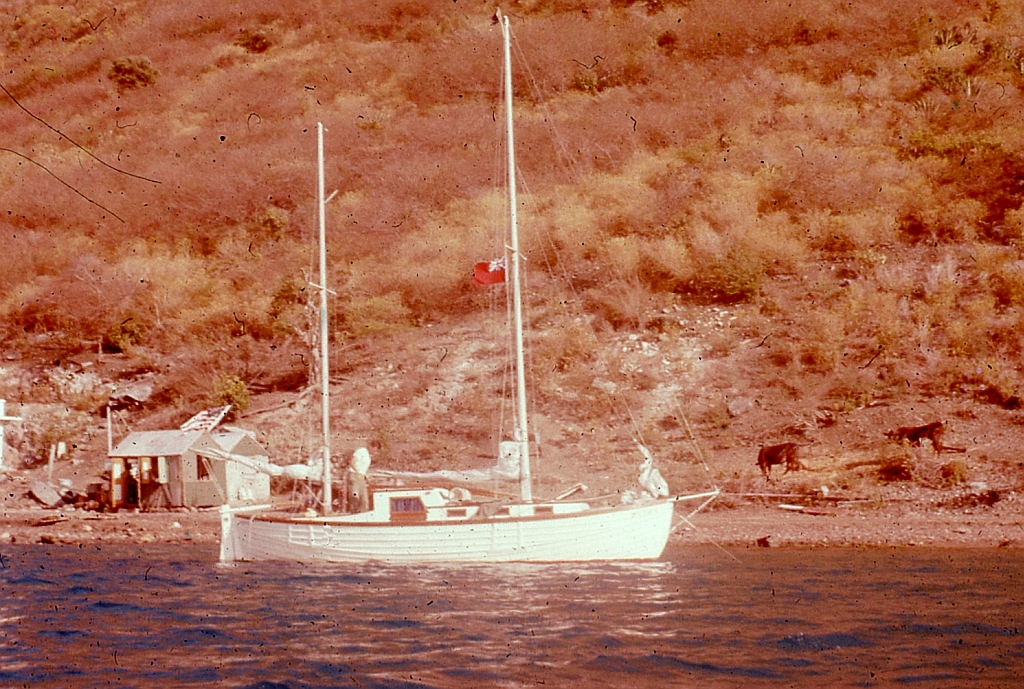 SERENDIPITY, SOPERS HOLE, TORTOLA, 5/8/1961
I sailed in this 26 foot converted USCG Monomoy Surf Boat for more than 700 miles with three pilotfish. A double-ender with a tiller and very little freeboard, so we had a clear view of the rudder where our companions kept pace. On a 13½ day passage from Nassau to San Juan we were joined early on by thirteen pilotfish, but within a day ten were lost in an attack by dolphins. The three survivors stayed with us for twelve days until we lost sight of them in the murky water of San Juan as we sailed in by El Morro.
It was 1961, we had no engine, and for a couple days of light wind the Antilles Current carried us backwards. We named the fish after comic strip heroes like Smilin’ Jack and at times shooed away tropic birds as they hovered eyeing our fish. Much of the passage was in the Sargasso Sea and the fish would leave us at times to graze in patches of Sargasso weed, causing us great worry for their safety. We were prepared to turn back if they did not rejoin us.
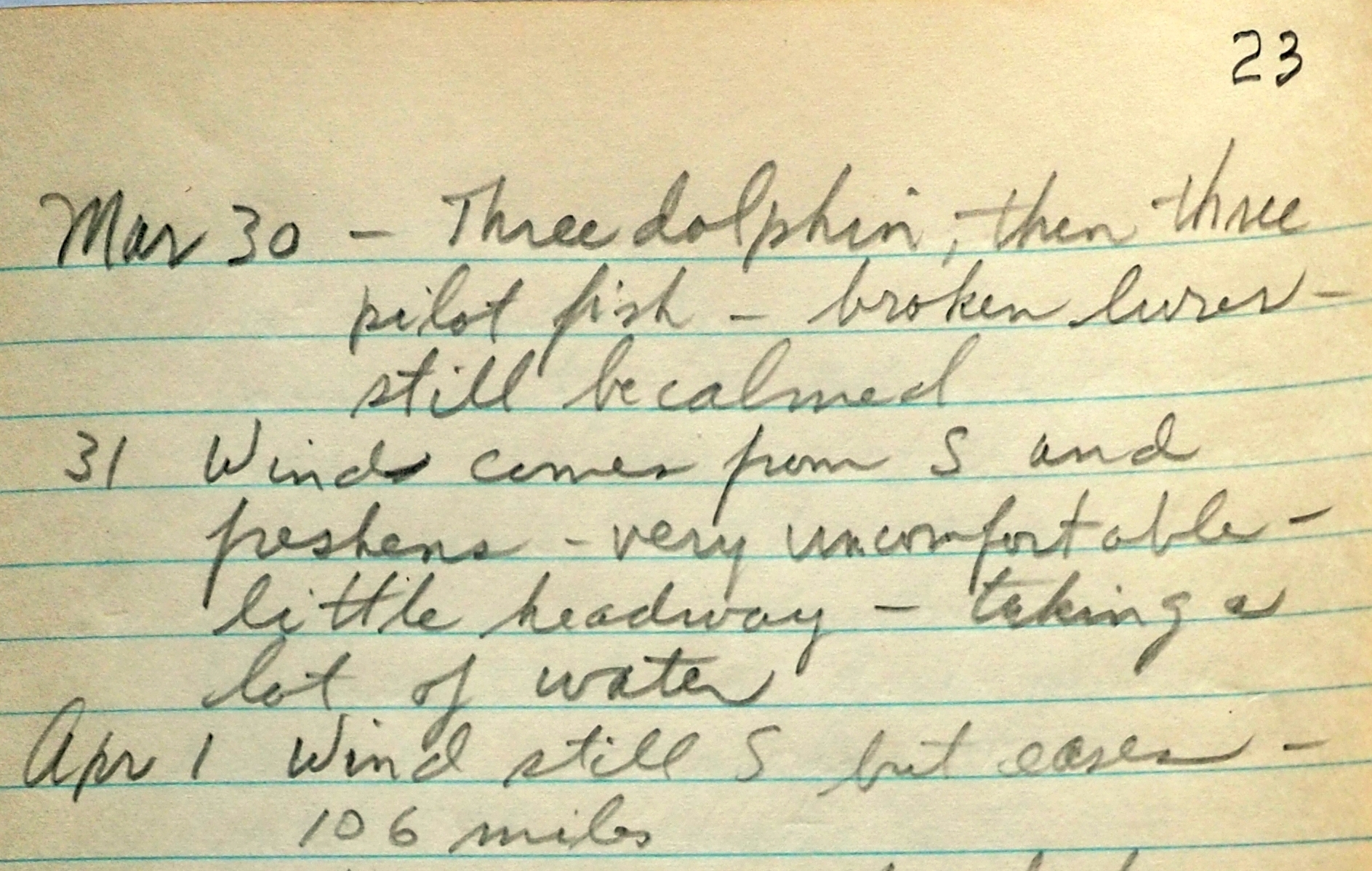
FROM THE LOG OF SERENDIPITY MARCH 1961
Al Bezanson

 Good Morning Gloucester