GROW NATIVE!

I love this handy chart that features a number of common butterflies we see in New England, and thought you would, too.

Nectar plants are wonderful to attract butterflies to your garden, but if you want butterflies to colonize your garden, you need to plant their caterpillar host (food) plants. We all know Common Milkweed and Marsh Milkweed are the best host plants for Monarchs, and here are a few more suggestions. When you plant, they will come! And you will have the wonderful added benefit of watching their life cycle unfold.


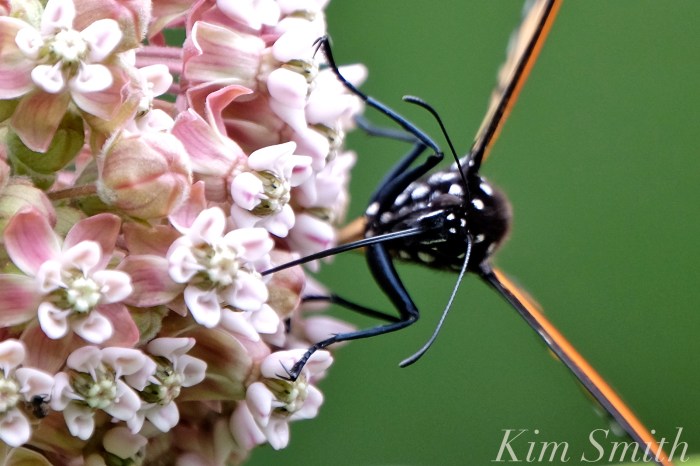
Monarchs are dependent upon milkweeds during every stage of their life cycle. Milkweeds are not only their caterpillar food, it provides nectar to myriad species of pollinators.

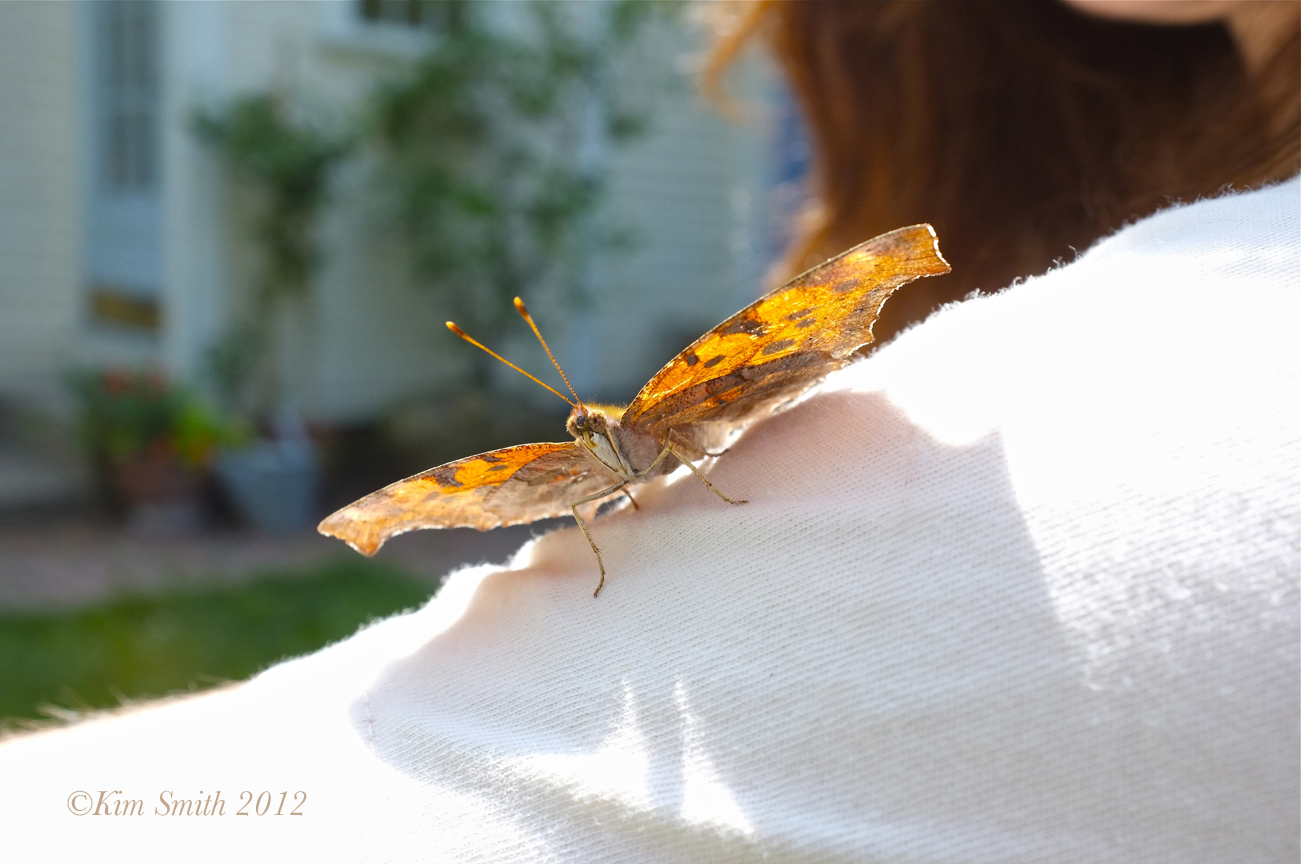
The Question Mark

Janet writes to GMG the following, “Can anyone identify this moth/butterfy that was hanging in East Gloucester today?”

Question Mark Butterfly Photo from Janet Rice

The Question Mark Butterfly (Polygonia interrogationis), so named because when the wings are folded, you can see a little raised backward question mark pattern, in white, on the underside of the hindwing. They feed on floral nectar, but are often seen on trees because they also feed on sap. And they alight on people too, because they are attracted to the salts and minerals in human perspiration. Both last year and this year we have had a tremendous influx of Question Mark Butterflies.
I can’t at the moment locate a clear photo of the underside, but know I have video footage (somewhere) that shows the question mark pattern and will try to find this weekend.
Question Mark Butterfly (Polygonia interrogationis)