Pollinator Gardening Tip: Deadheading

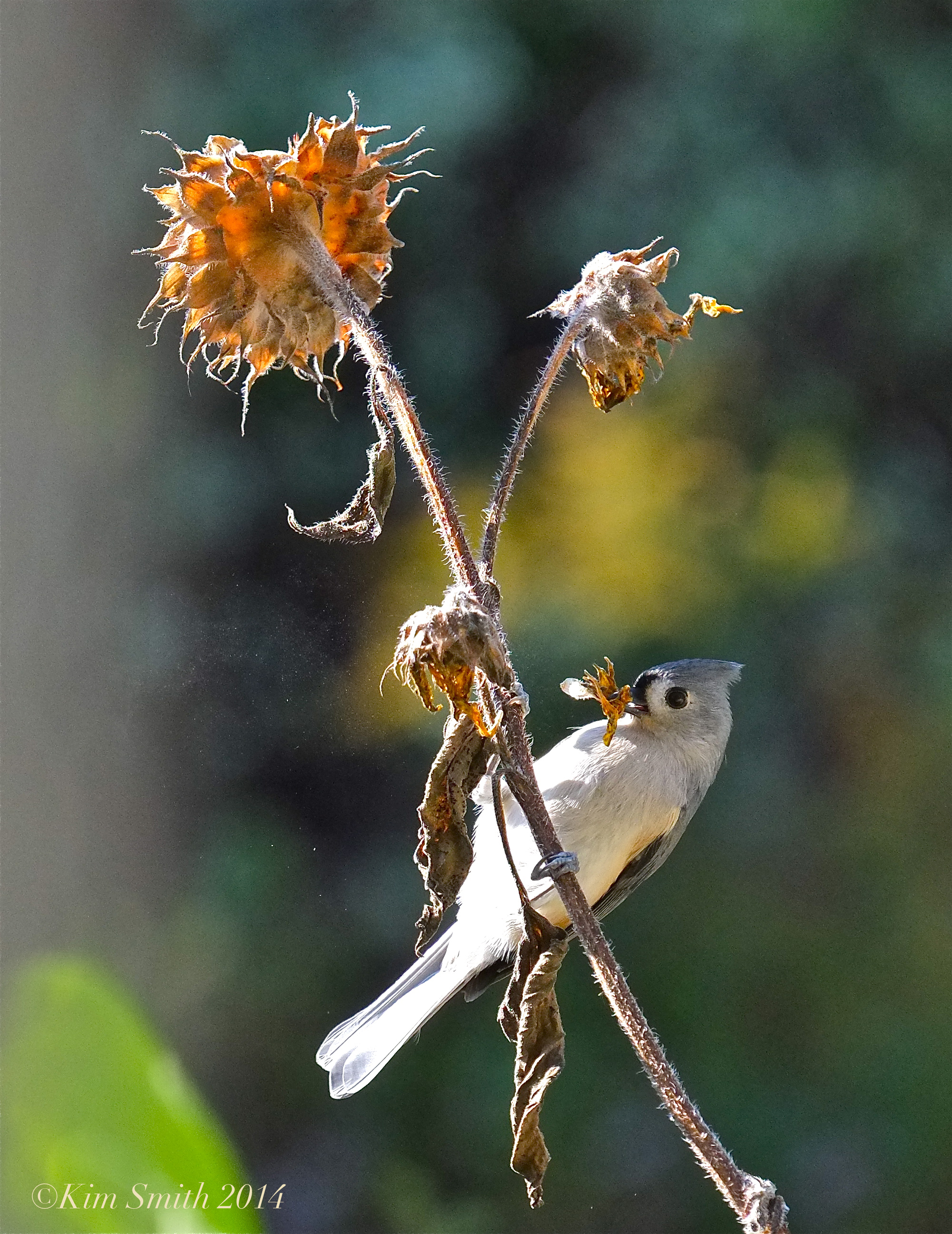
Tufted titmouse Baeolophus bicolor ©Kim Smith 2014Tufted titmouse ~ Baeolophus bicolor

In my garden design practice, the topic of deadheading flowers comes up often, especially at this time of year. The habitat garden is designed for people and for pollinators and the objective is to find a balance between the two. Esthetically speaking, to some, a garden only looks its best when every plant is tidily trimmed and every spent flower blossom removed. But to a hungry bird on the wing, an expiring sunflower or cosmos is bird food. Some plants should be deadheaded and pruned however, the next time you get a jones to neaten a plant, take a moment to look at it from the perspective of a songbird.
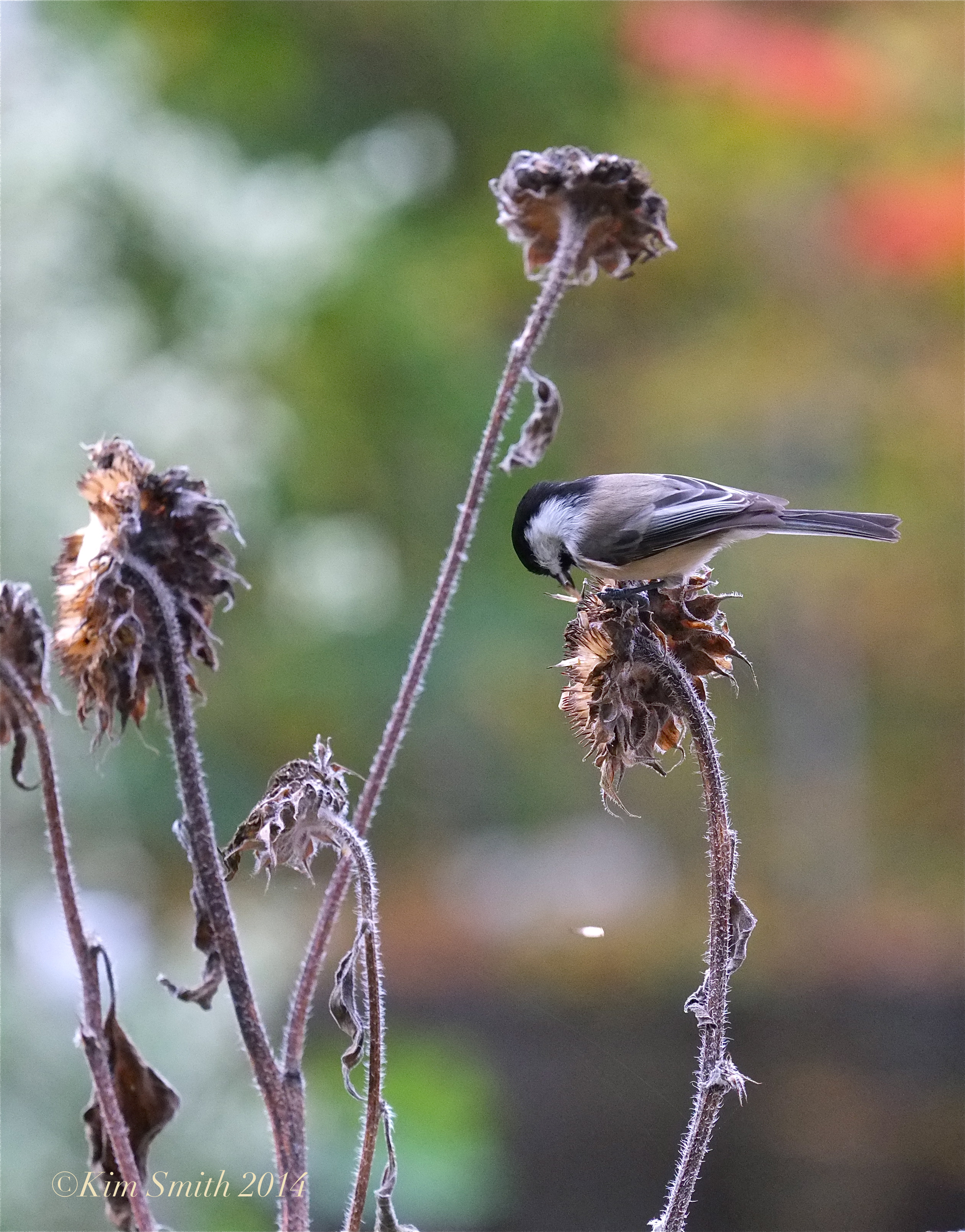
Black-capped Chicakdee Poecile articapillus ©Kim Smith 2014

Black-capped Chicakdee ~  Poecile articapillus

I like a bit of unruliness in the garden and don’t even deadhead cosmos any longer. They will continue to flower whether deadheaded or not. A few weeks ago while working with several of our wonderful HarborWalk volunteers, I was explaining what plants to deadhead and what plants not to deadhead, and why, when at the very moment that I was speaking those very words, three brilliant cadmium yellow goldfinches flew on the scene and began devouring the seed heads of a nearby coneflower!
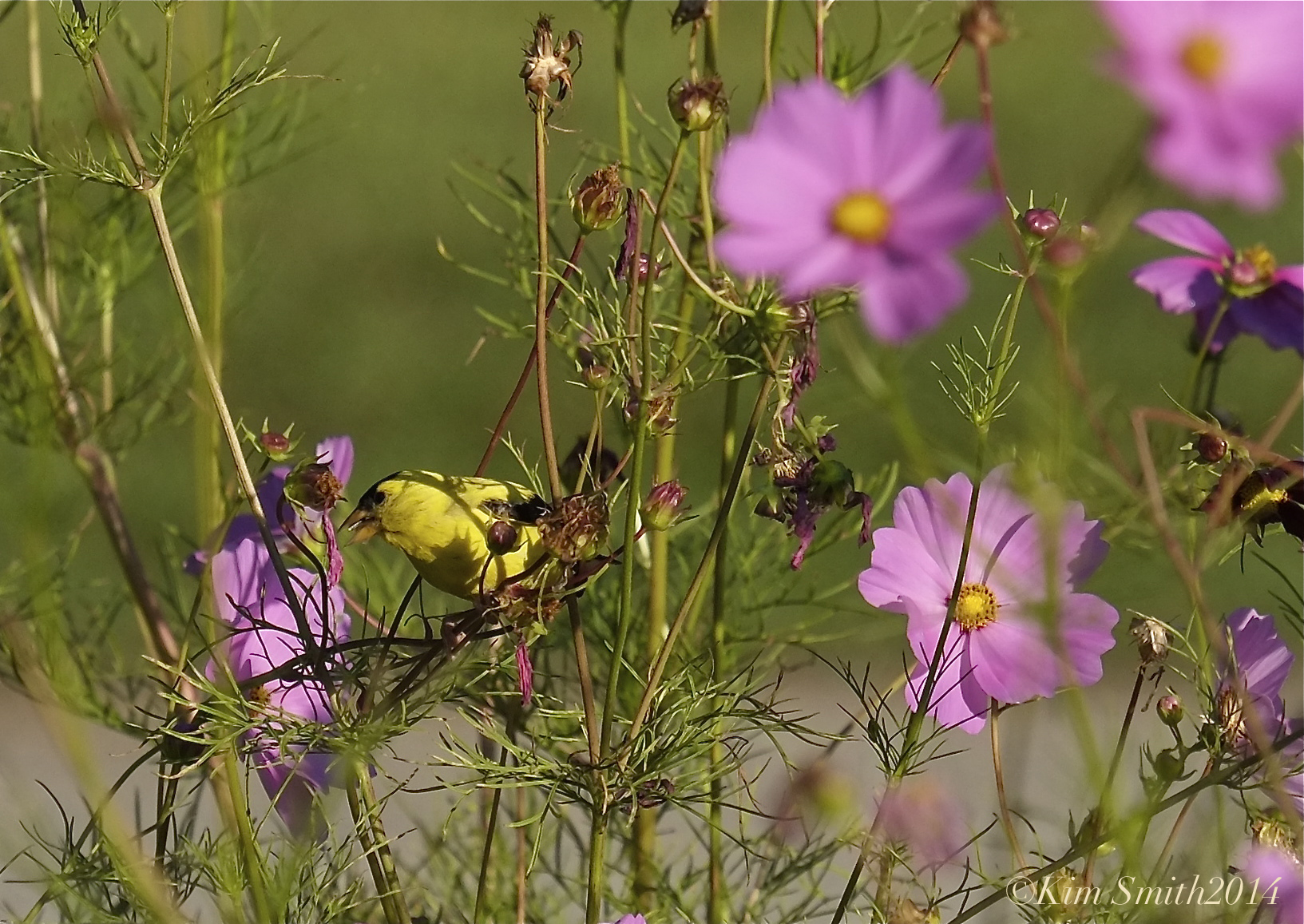
American Goldfinch male Cosmos bipinatus ©Kim Smith 2014

American Goldfinch Eating Cosmos Seeds

And too, a batch of Echinacea not only provides mid-winter sustenance to hungry birds, the seed heads sure look pretty silhouetted by new fallen snow.
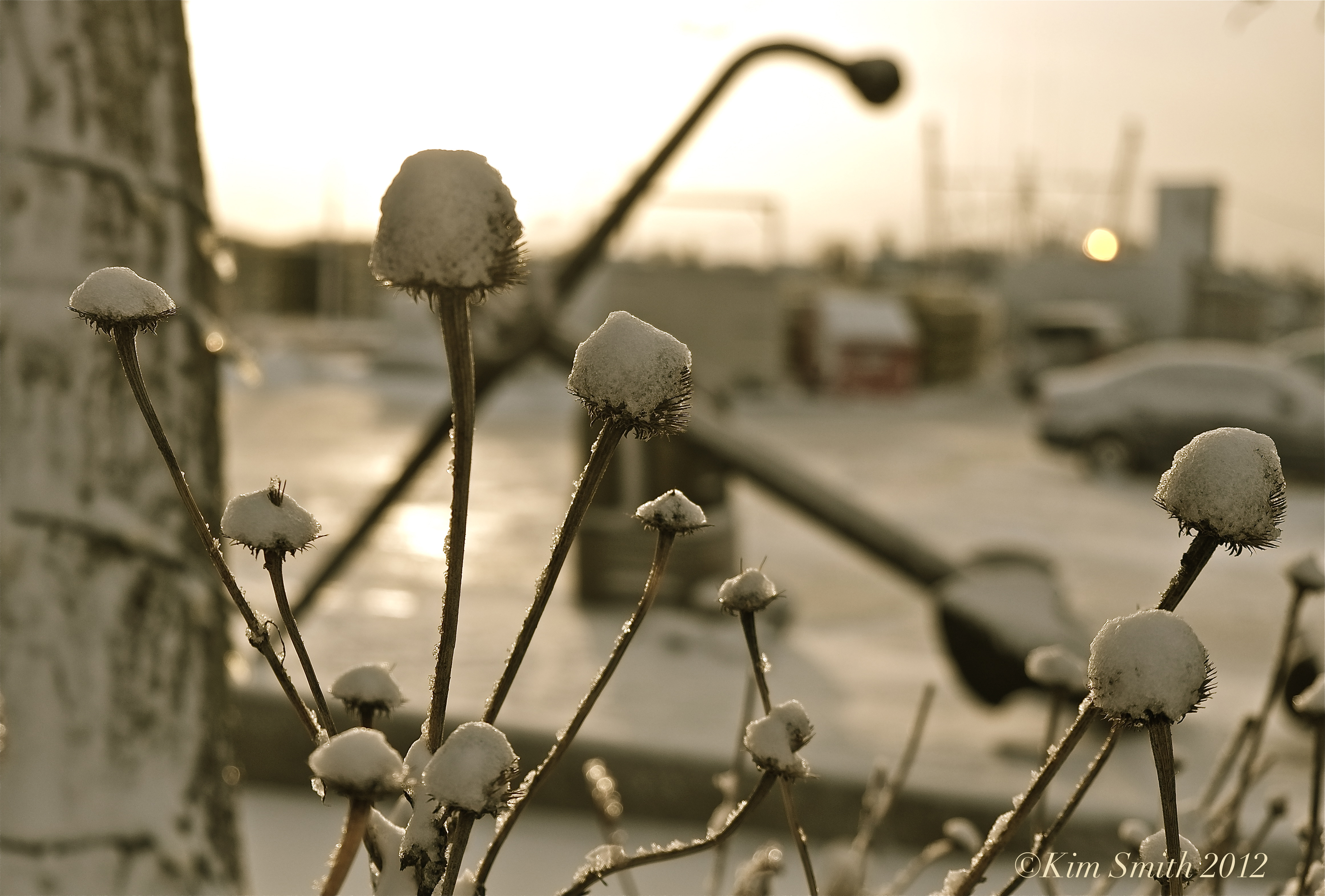
Coneflowers in the snow ©Kim Smith 2012Gloucester HarborWalk

Kim Smith Guest Speaker at the Rockport Garden Club Monday, October 6th

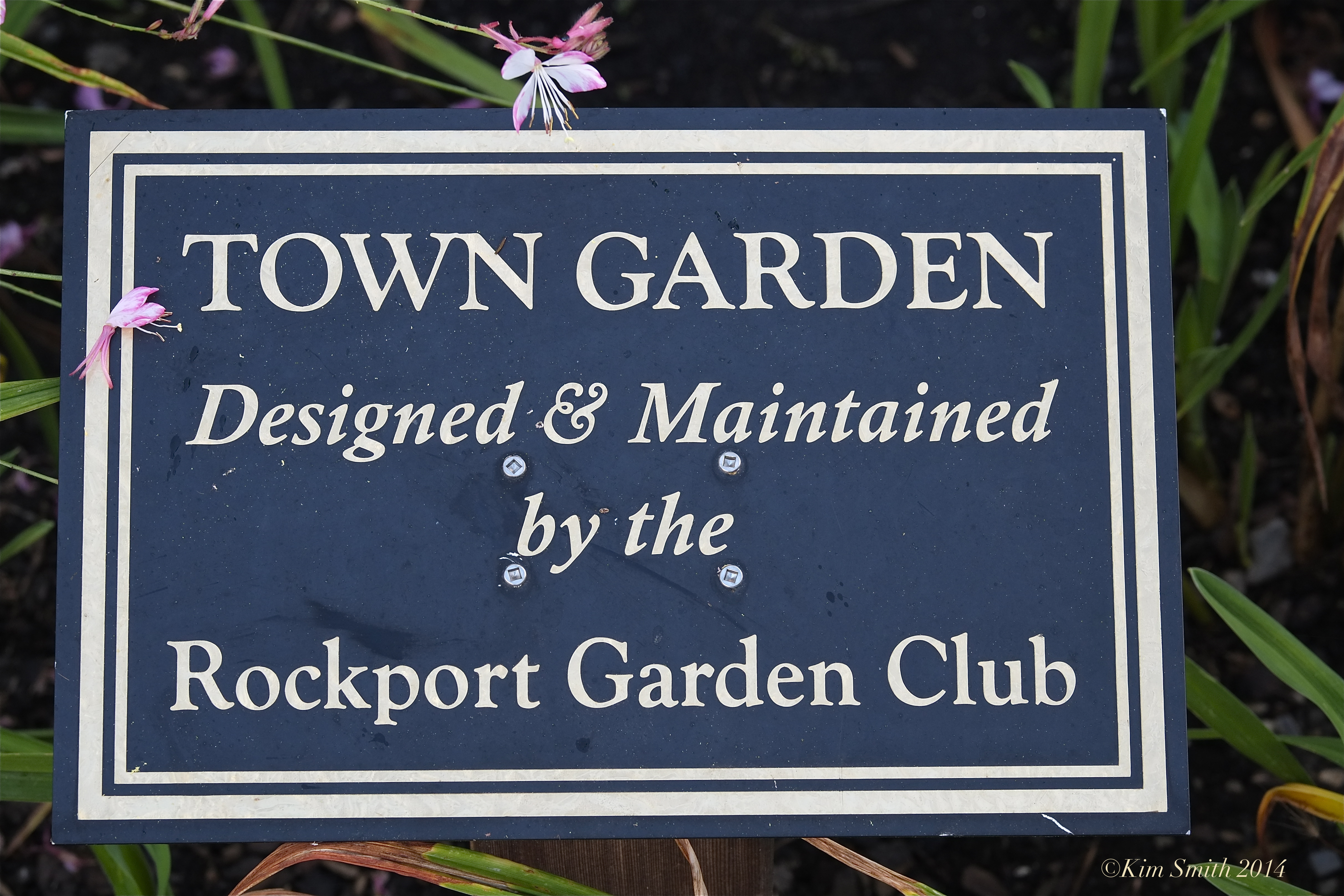
Rockport Garden Club ©Kim Smith 2014Sign Posted at the Rockport Community Center Garden

Next Monday afternoon at the Community House I will be presenting my “Pollinator Garden” program to the Rockport Garden Club. I am looking forward to meeting with this great group of civic-minded gardeners.  I see their signs all around town at the various gardens they maintain and they do a simply outstanding job! The program begins at 1:15 and the doors open to the public at 1:00.

The Pollinator Garden

Following the rhythm of the seasons, celebrated landscape designer Kim Smith presents a stunning slide show and lecture demonstrating how to create a welcoming haven for bees, birds, butterflies, and other wildlife. Native plants and examples of organic and architectural features will be discussed based on their value to particular vertebrates and invertebrates.

Please visit the Programs Page of visit my website for a complete list of program offerings.

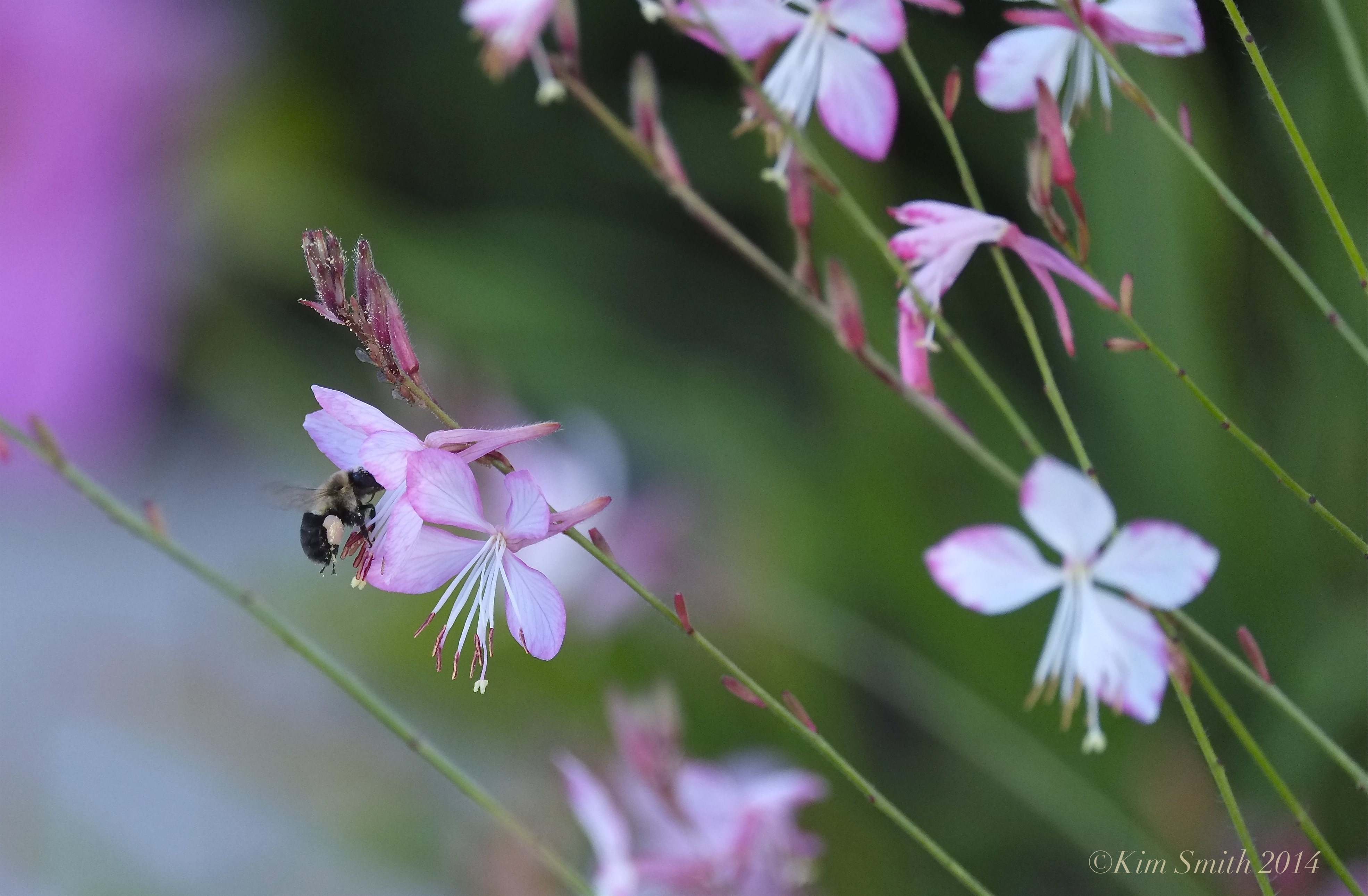
Whirling Butterflies (Gaura lindheimeri) ©Kim Smith 2014Whirling Butterflies (Gaura lindheimeri) at the Rockport Community House and Senior Center

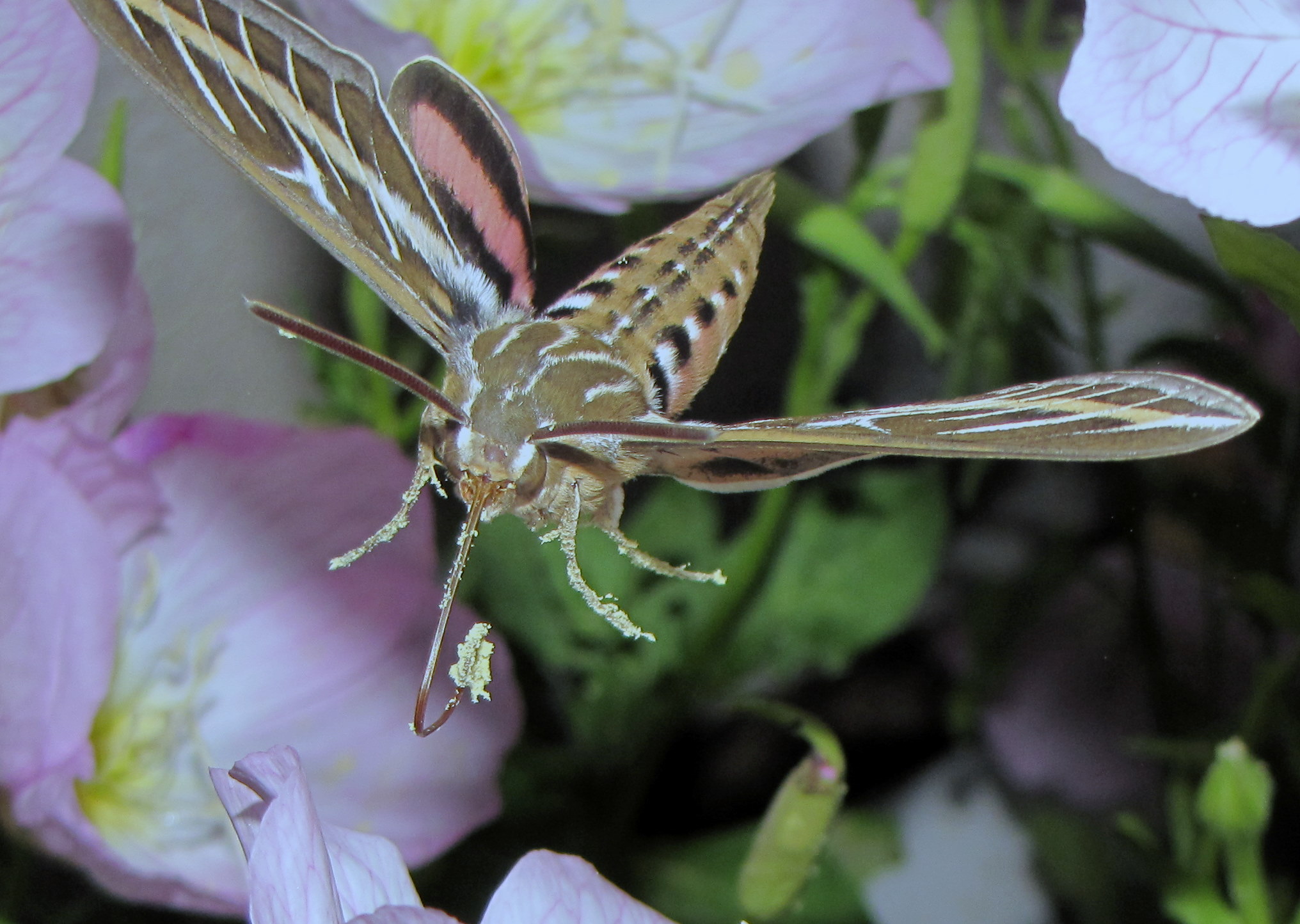
Gaura is not a only a fabulous drought tolerant plant for the water-wise garden, it is also a caterpillar food plant for the beautiful day-flying White-lined Sphinx Moth.

Hummingbird-Hawk-Moth-Life-CycleGraphic Source: Animalbook.org

White-lined_sphinxAbove White-lined Sphinx Moth image courtesy wiki commons media.

The Rockport Community House is located at 58 Broadway, Rockport.

Reminder: “The Pollinator Garden” at the Beverly Public Library

On Tuesday evening, October 15th, at 7 pm, I will be giving my program, “The Pollinator Garden,” at the Beverly Public Library. Following the rhythm of the seasons, I present a slide show (with over 100 photos!) and lecture demonstrating how to create a welcoming haven for bees, birds, butterflies, and other wildlife. Native plants and examples of organic and architectural features will be discussed based on their value to particular vertebrates and invertebrates. I hope you’ll come join me!

Sunflower Helianthus annuus ©Kim Smith 2013Helianthus annuus

“The Pollinator Garden” at the Beverly Public Library

On Tuesday evening, October 15th, at 7 pm, I will be giving my program, “The Pollinator Garden,” at the Beverly Public Library. Following the rhythm of the seasons, I present a slide show (with over 100 photos!) and lecture demonstrating how to create a welcoming haven for bees, birds, butterflies, and other wildlife. Native plants and examples of organic and architectural features will be discussed based on their value to particular vertebrates and invertebrates. I hope you’ll come join me!

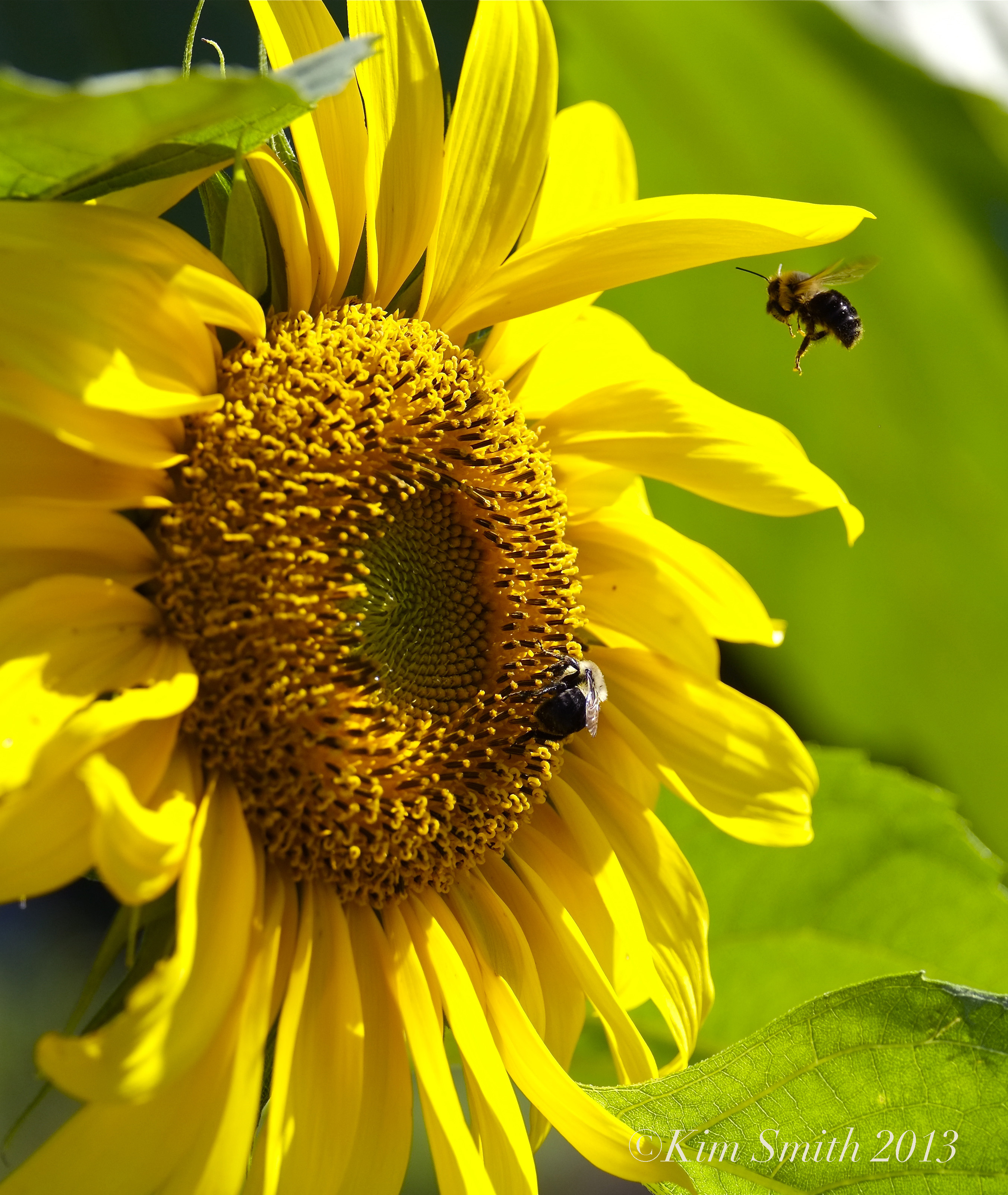
Sunflower and bee ©Kim Smith 2013Helianthus annuus

Kim Smith To Talk About Creating The Pollinator Garden for the Garden Club Federation of Massachusetts Monday February 28th

The Pollinator Garden and Redpolls Return!

Kim Smith Writes-

The redpolls return, with friends in tow! Two weeks ago we were visited by a half dozen or so Common Redpolls; yesterday and today we have a troupe of thirty. Goldfinch-sized, with crisp white and brown patterned tail feathers and velvety crimson caps, they have the winsome habit of cocking their heads and looking straight at you, as if to say (in the most conversational manner), “I am very photogenic; won’t you concur?”

Come join me Monday morning, February 28th, from 10:00 to 12:00 at the Espousal Center in Waltham,where I will be giving a talk and photo presentation about creating The Pollinator Garden for the Garden Club Federation of Massachusetts. Although this is a state Garden Club Federation event, everyone is welcome. Cost is free for members and $5. for non-members. My extensive pollinator planting list is provided with lecture.

image

Check Out Kim’s Blog Here for more of her fantastic photos and birds and butterfly stuff