RARELY SEEN WHITE PELICAN IN MASSACHUSETTS, IN GLOUCESTER, ON NILES POND!

Imagine the excitement when after filming Mr. Swan this morning, I spotted across the pond a very swan-like large white bird. The first thought that came to mind was a new Mrs. Swan had magically appeared on the scene. But no–not as wonderful–but equally as exciting, with its large orange pouched bill, the bird was unmistakably a pelican!

It was swimming toward the berm so I raced back to the other side of the pond and was able to get somewhat nearer, close enough so that the footage is passable. Without warning, the pelican suddenly took to the air with elegant, graceful wingbeats and I was lucky to have movie camera in hand. The light was murky this morning and all would have been more beautiful if the sun were out a bit more. Nonetheless, it’s great to have a record of this very unusual occurrence.

The American White Pelican is a rare sight in Massachusetts and I wonder if any of our readers have ever seen one on our shores. Please write if you have. 

With wings spanning nine feet, the American White Pelican is one of our largest native birds, only the Trumpeter Swan and California Condor are larger, reportedly having up to ten-foot wingspans. Comparatively, the wings of a Mute Swan span approximately seven to eight feet. Please note that Mr. Swan is a Mute Swan, not a Trumpeter Swan, and is not indigenous.

The Niles Pond pelican was far off course. Pelicans east of the Rocky Mountains typically migrate through the Mississippi Valley, from breeding grounds in northernmost North America to the Gulf of Mexico Texas and Florida coasts. Unlike Brown Pelicans, which dive and plunge for food, white pelicans catch prey while swimming.

As with the Brown Pelican, during the mid-twentieth century, the American White Pelican was severely adversely affected by spraying DDT in fields and wetlands. Habitat destruction, shoreline erosion, and mass poisonings when pesticides are used near breeding grounds continue to threaten the American White Pelican.
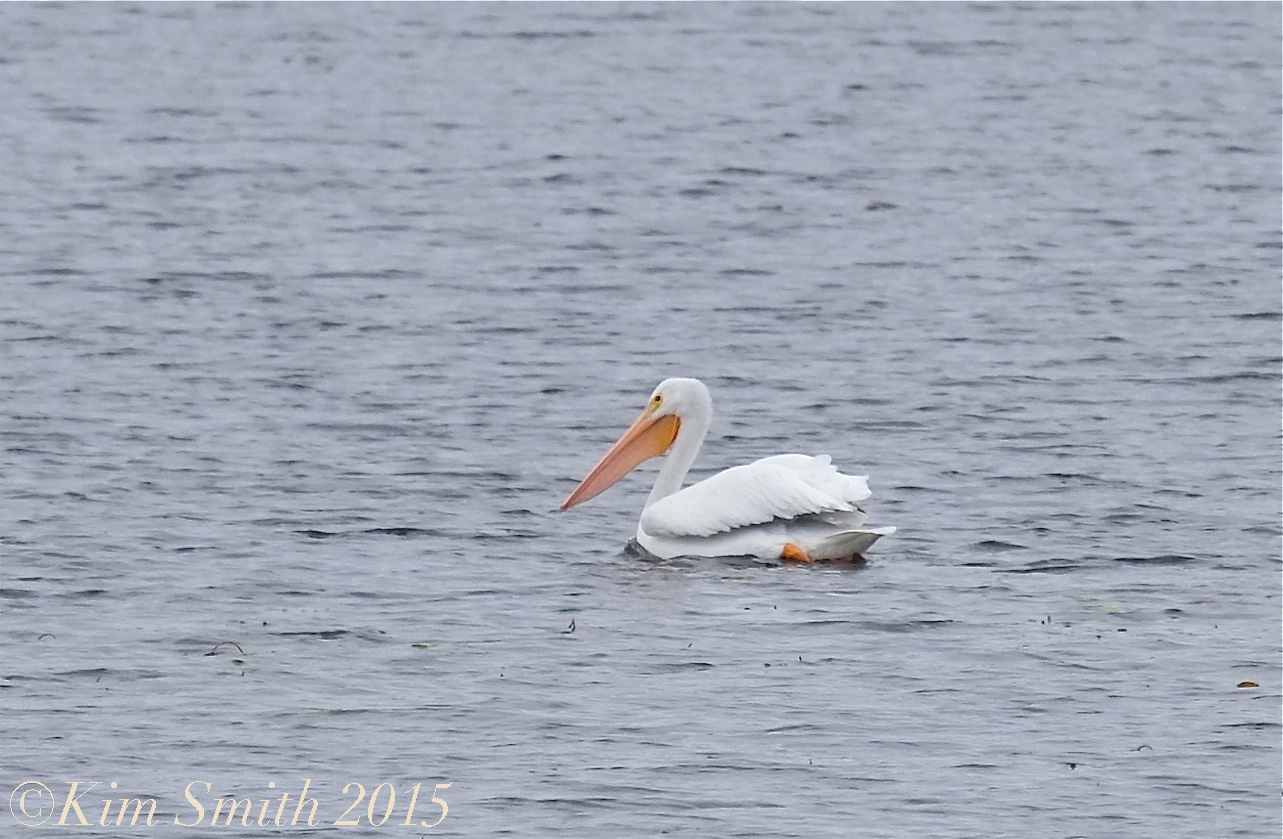
White pelican Massachusetts gloucester ©Kim Smith 11-16-15Far off course, a white pelican migrates through Gloucester
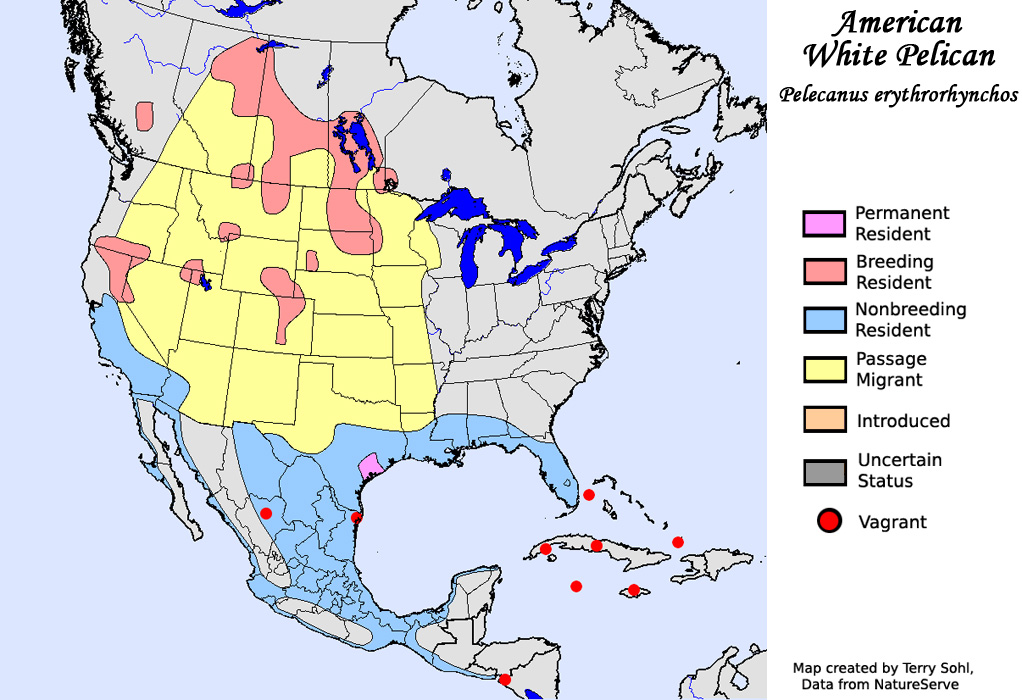
american_white_pelican_map_bigMap provided by South Dakota Birds, via Peter Houlihan, who is Anna from Cape Ann Giclee’s brother. Peter teaches biology at UMass Amherst, has a PhD in biology/animal behavior, and is an ornithologist. Thank you Peter!

Brown Pelican Pesticide Ban Success Story and Why This is Relevant to Gloucester Lobstermen and Our Community

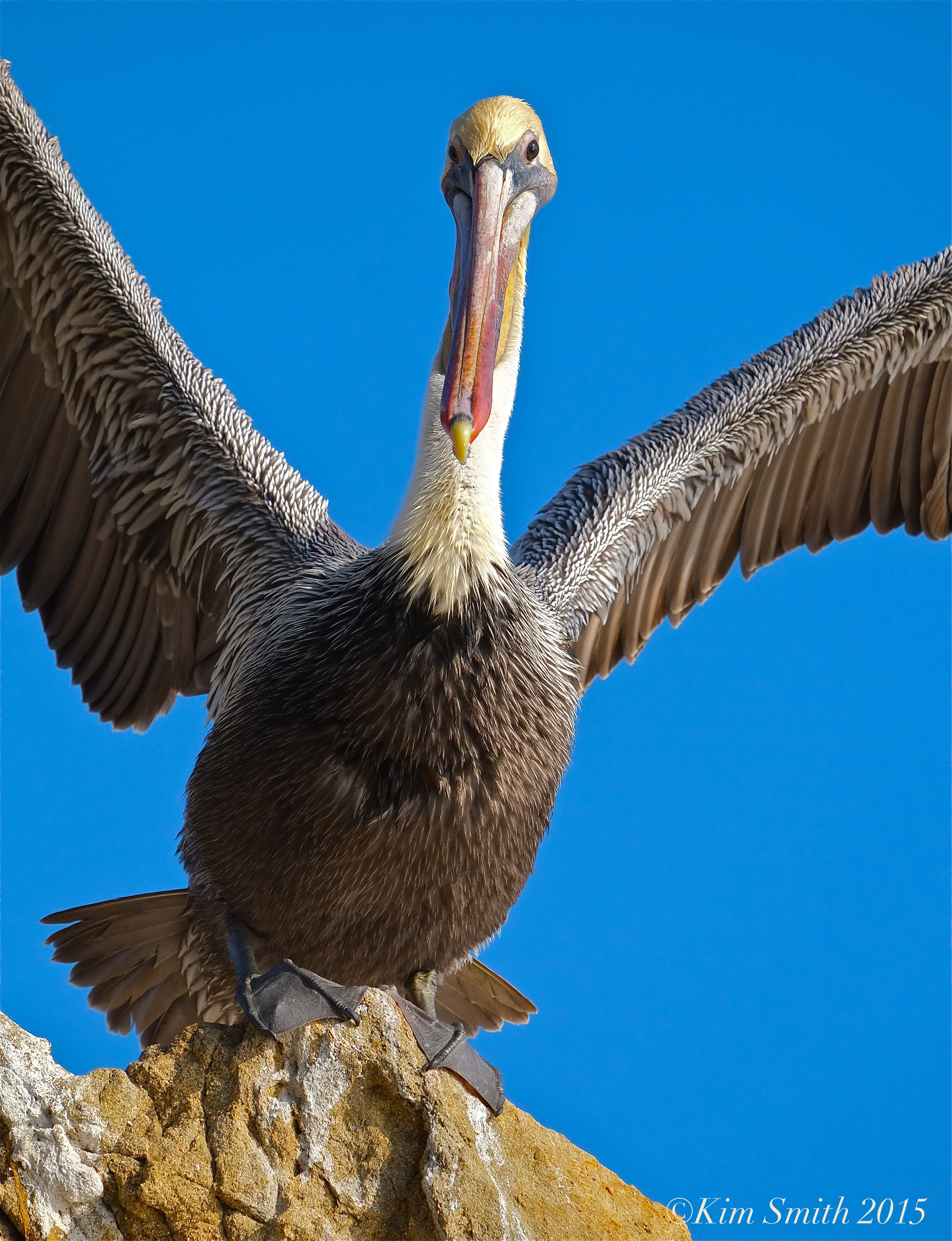
California Brown Pelican taking flight El Matador Beach ©Kim Smith 2015 copyBrown Pelican Taking Flight

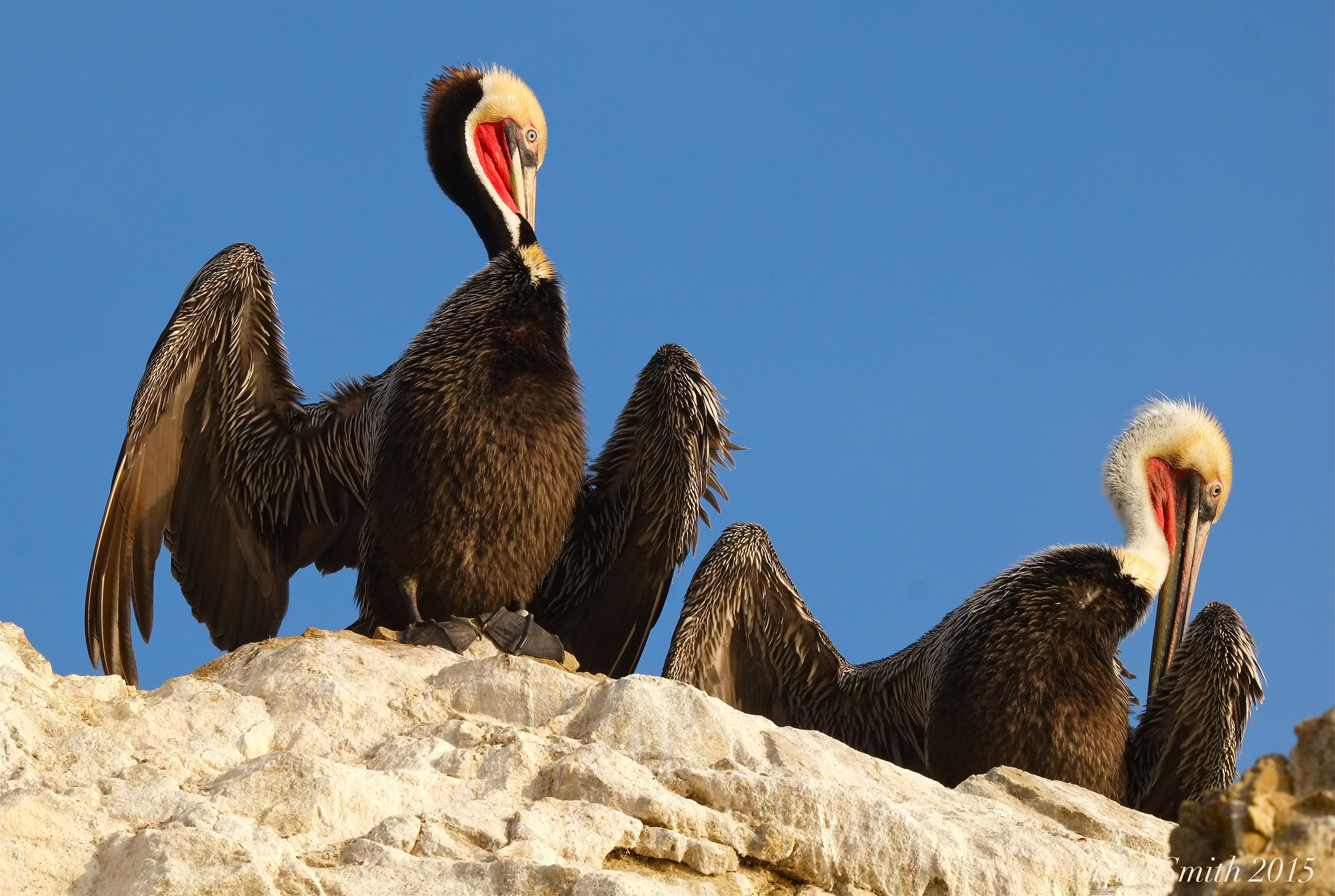
When I was a young girl my family lived in Southern California for several years. I recall seeing few, if any, brown pelicans at our local beaches. Due to the widespread use of DDT in agriculture, brown pelicans on both the east and west coasts, along with other species of birds, were made nearly extinct. Pelicans incubate their eggs with the skin of their feet, essentially standing on the eggs to keep them warm. DDT caused thinning of the eggshells and when the pelican parents stood on the eggshells, the shells fractured and broke.California Brown Pelican preening ©Kim Smith 2015

Preening Pelicans ~ You can tell that these two are young pelicans because their eyes, usually brown, turn blue during courtship.

During the 1960s brown pelican colonies along the Southern California coast had shrunk by more than 90 percent. For decades, a chemical plant had been discharging thousands of pounds of DDT into Los Angeles sewers. The toxic chemical was ingested by anchovies and other fish consumed by pelicans. The chemical altered the pelican’s calcium metabolism, which caused them to lay eggs with thinner shells. DDT-caused shell thinning also exterminated peregrine falcons in the east, and took a terrible toll on bald eagles and ospreys.

El Matador Beach Brown Pelican habitat ©Kim Smith 2015. JPG

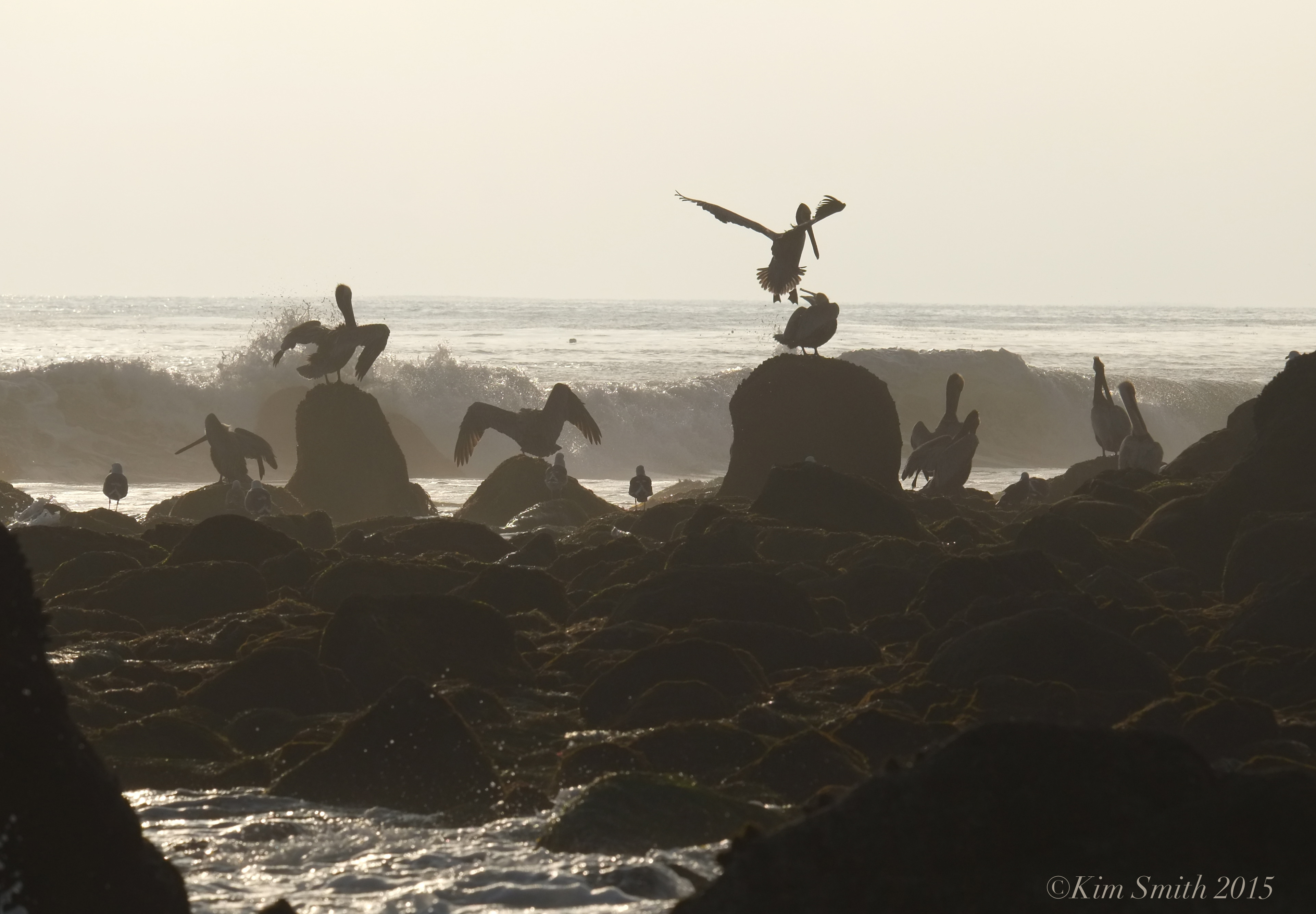
Insulation: After deep diving for fish, pelicans perch on rocks and preen. Pelicans feather’s keep them warm and dry; they do not actually get wet thanks to the oil in their preening gland. The glands secrete oily waxes and fats that they work into their feathers making them wind- and weatherproof, as well as providing insulation from the cold.

As a direct result of Rachel Carson’s seminal book Silent Spring, in 1972 DDT was banned nationwide. The brown pelican has recovered ground and was delisted from the federally endangered species in 2009. Unfortunately, after DDT was banned, two years later Monsanto brought to market their glyphosate herbicide Round Up.

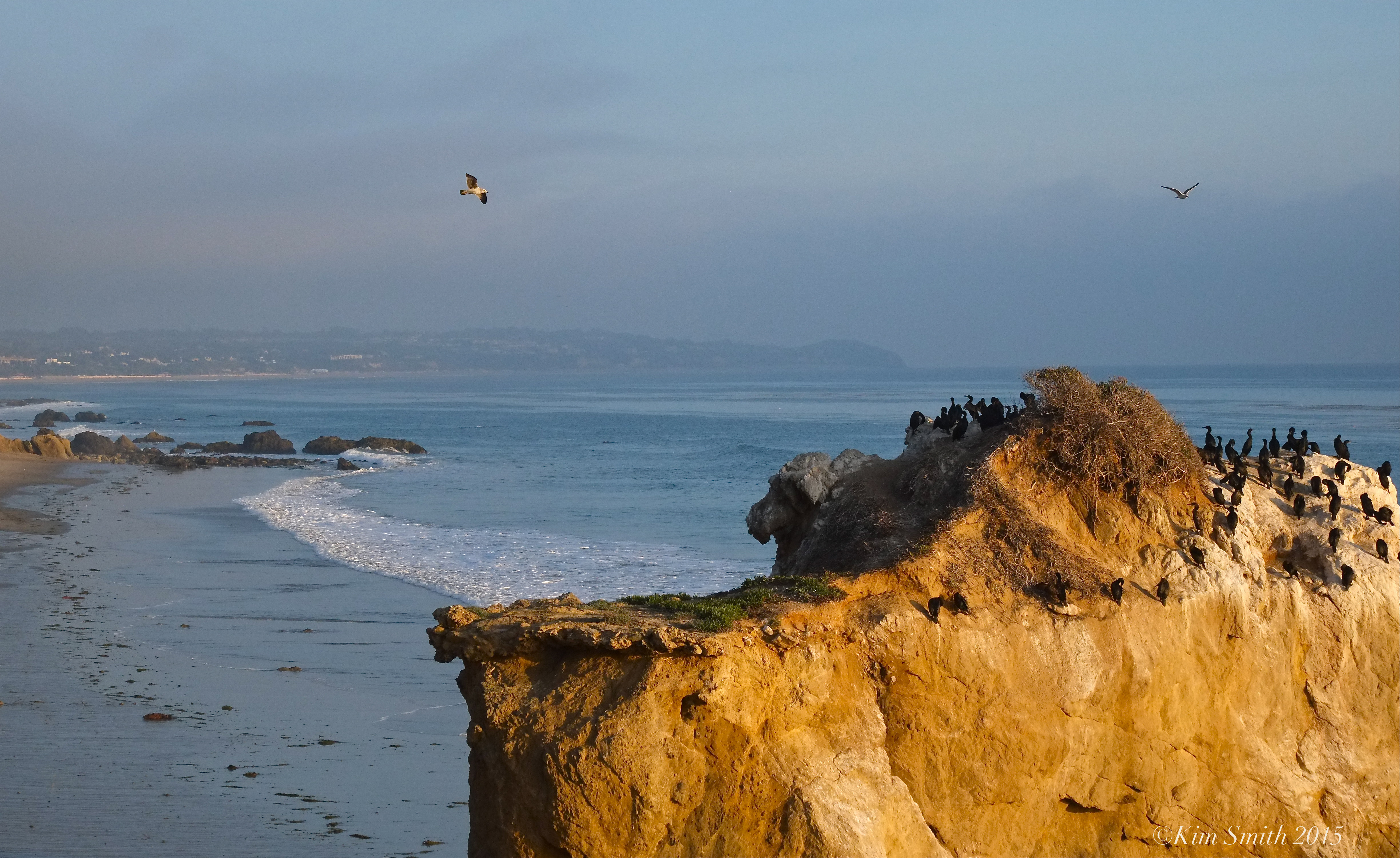
El Matador Beach commorants ©kim Smith 2015

 Brown Pelican Habitat ~ El Matador State Beach

While visiting Liv and Matt, we spotted pelicans everywhere and it was absolutely wonderful to see. They are magnificent birds with an extraordinary life story. Here are several links to learn more about the California brown pelican:

About Pelicans, California Brown Pelicans

El Matador  Beach Pelican ©Kim Smith 2015

Today the lobster industry faces several major threats. Not only are the lobsters stressed from warming ocean waters and a protozoan parasite, but several pesticides used in massive mosquito spraying, including methoprene, malathion, and remethrin are linked to contributing to the collapse of the lobster fishery in the waters off Connecticut and New York. Lobsters are arthropods, which places them in the same phylum classification as mosquitoes and may help explain why they are affected. Lobster landings on Long Island Sound are of particular concern as they have declined from 3.7 million pounds in 1999 to 142,000 pounds in 2011.

Bearing in mind that worse chemicals are often used after specific chemicals are banned, the Maine Lobsterman’s Association is somewhat reluctant at this point to endorse banning specific pesticides until more comprehensive testing is done.

Gloucester lobsterman follow strict conservation guidelines. It would be very interesting to learn what they consider are the reason(s) for the declining population of lobsters in fisheries further south.

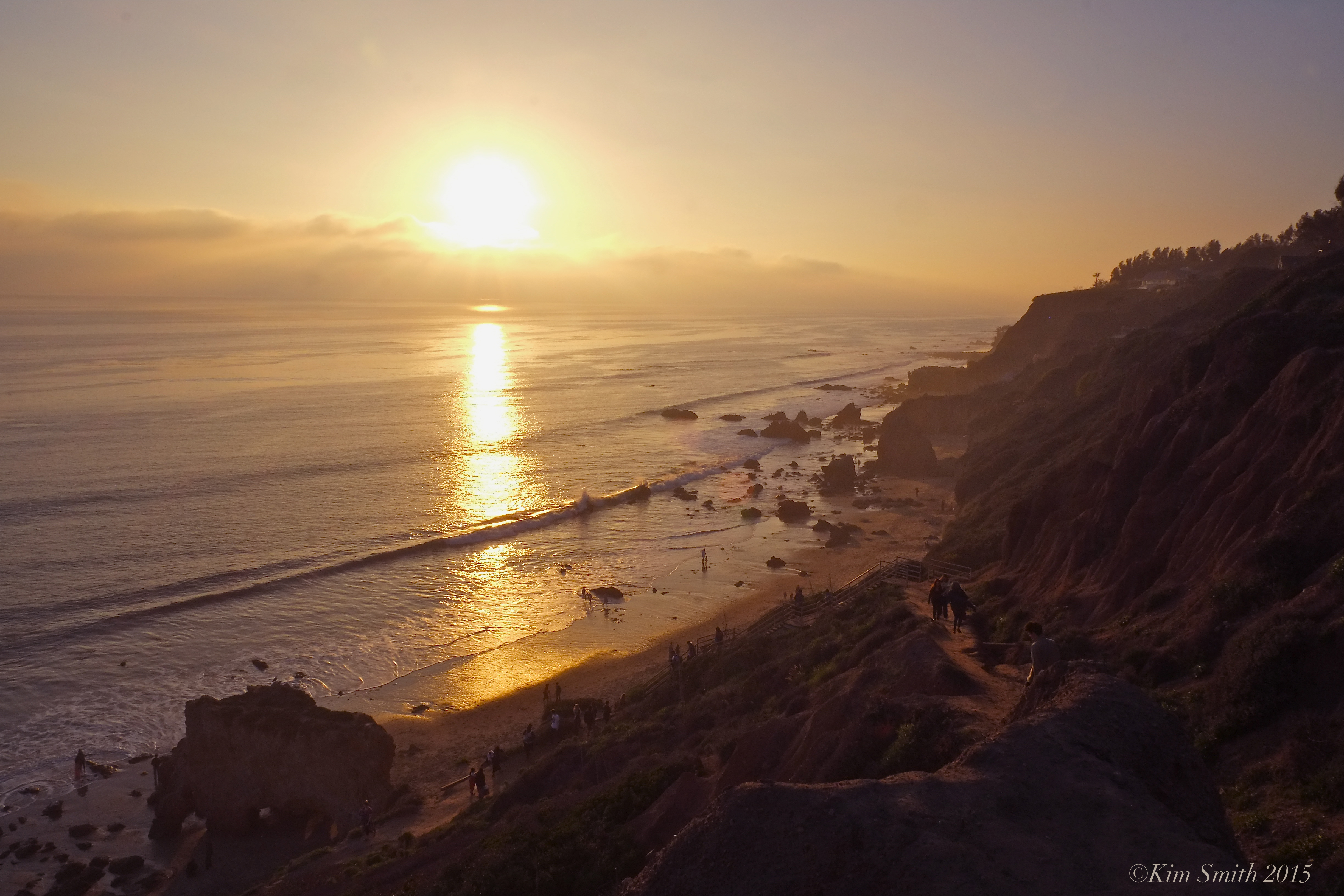
El Matador Beach ©Kim Smith 2015El Matador Beach

Overkill: Why Pesticide Spraying for West Nile Virus May Cause More Harm Than Good

Silent Spring