Last summer the Ciaramitaro girls stopped by our garden to see a newly emerged Monarch butterfly. Â After releasing the butterfly, Eloise wanted to learn more about the Monarchs, and butterflies in general. This year she remembered from their visit the previous year that the Monarch caterpillar food plant is milkweed. Eloise, who I am convinced is a budding naturalist and artist, is an avid gardener (just ask her about her vegetable patch!), so I promised her milkweed plants. We scouted out a sunny a corner of the family’s yard and, after mom Jill helped dig up the sod, we planted a petite butterfly garden, with Common Milkweed for the Monarchs, parsley and fennel for the Black Swallowtails, and marigolds to attract the nectaring insects. We’re looking forward to their first butterfly sightings!
Tag: Monarch Butterfly
Chickity Check It!- Kim Smith Monarch Butterfly Migration Late Summer 2010
Monarch Butterfly Migration Late Summer 2010
Magical Seaside Goldenrod
Dear Gardening Friends,
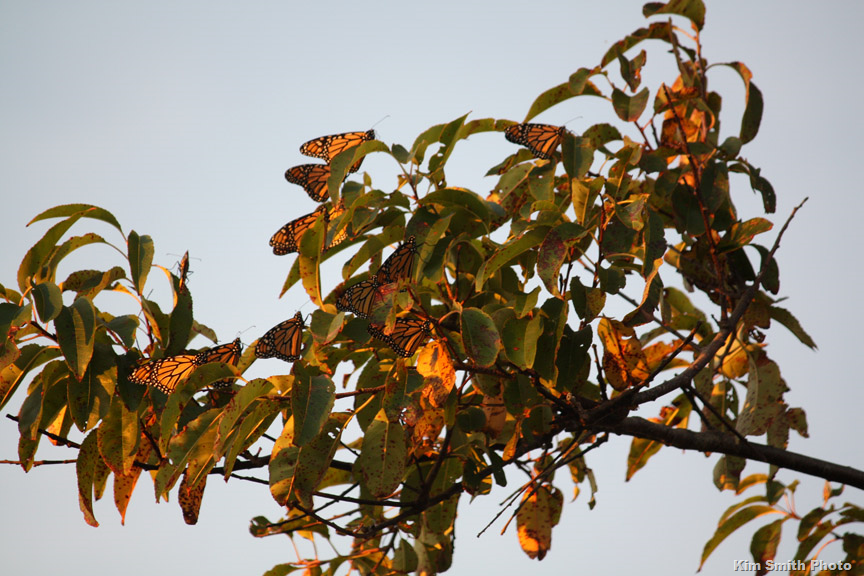
So many have telephoned or emailed inquiring about the status of the annual Monarch butterfly migration through our region. This past summer I have observed umpteen Monarch butterflies and caterpillars in cultivated gardens, wildflower meadows, and along the shoreline; however, I did not see the great numbers in great heaps roosting in any one particular place that I have observed in some years past. Rather I would find a small passel here and a small passel there—perhaps several dozen at a time—roosting in the wild black cherry trees (Prunus serotina) at Eastern Point, awakening in the early morning and nectaring at the Seaside Goldenrod in the meadow below.
Monarchs Mimic Withering foliage of Black Cherry Tree
Although the Monarchs are guided genetically, using their internal sun-compass navigation and circadian clock, each year the annual southward migration takes a different form that depends on many other variables, primarily the weather conditions in their overwintering site in Michoacán, Mexico as well as weather patterns in their US and Canadian breeding grounds. Because Cape Ann is located at approximately 43 degrees latitude north, our peak migration pattern is estimated at around September 11, but I modify this pattern because of the strong winds and storms we often experience in the late summer living along the coastline.
Check Out Kim Smith’s Website for The Rest Of Her Post Here
For All You Butterfly Freaks-

GMG fan and respected butterfly author Kim Smith will be giving a lecture about the monarch butterfly and hold an exhibit at SFL
read more-
Dear Gardening Friends,