Where Are All the Monarchs?

Monarchs usually arrive in our region by the first week in July and go through several brood cycles. This year, barely any arrived. The Monarch’s sensitivity to temperature and dependence on milkweed make it vulnerable to environmental changes. Since 1994, U.S. and Mexican researchers have recorded a steady decline in the Monarch population in their overwintering grounds, with 2012-2013 being the lowest recorded to date.
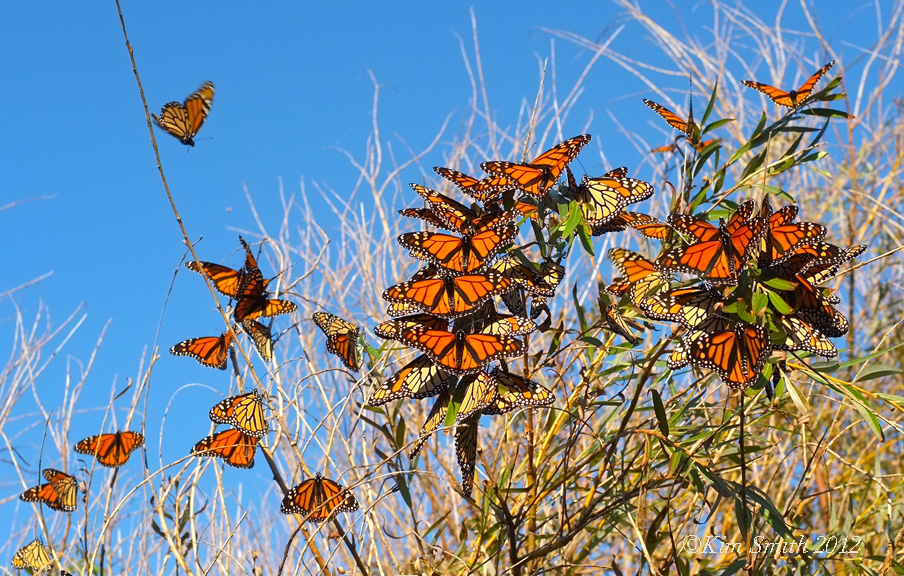
Monarch butterflies daybreak willow tree ©Kim Smith 2012

Temperature change and habitat loss affect breeding success and longevity. Dr. Chip Taylor, a leading Monarch researcher at the University of Kansas reports that the widespread adoption of GMO corn and soybean crops resistant to herbicides, along with with intensive herbicide use, coupled with the federal government’s incentivized expansion of corn and soy acreage for the production of biofuels have caused a significant drop in milkweed throughout the heart of the Monarch’s range. Lack of milkweed equals no Monarchs. “Monarch/milkweed habitat has declined significantly in parallel with the rapid adoption of glyphosate-tolerant corn and soybeans and, since 2006, the rapid expansion of corn and soy acreage to accommodate the production of biofuels,” Taylor wrote on May 29.
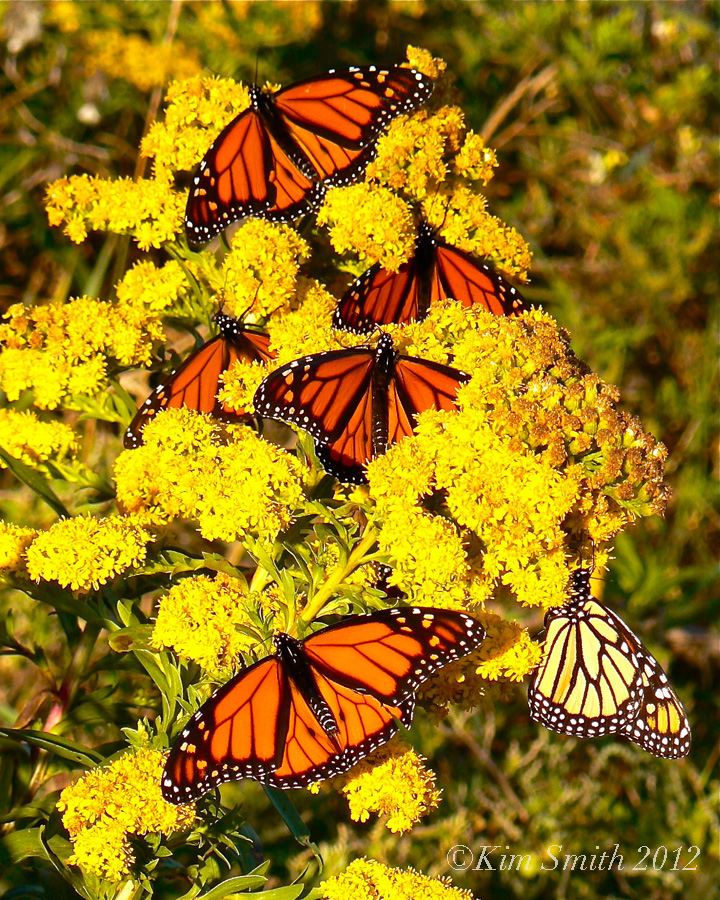
Monarch Butterfly Nectaring at Seaside Goldenrod ©Kim Smith 2011

Monarchs Nectaring at Seaside Goldenrod

What can we do? Encourage conservation organizations that conserve Monarch habitat, plant milkweed, plant nectar plants, and raise caterpillars. Hopefully the weather next spring and early summer will be more conducive to the Monarch’s northward migration and breeding success, and if and when the Monarchs arrive, they will find our milkweed plants.

Monarch Butterflies New england Aster ©Kim Smith 2012

Monarch Butterflies Nectaring at New England Asters

If anyone sees a Monarch, please email me at kimsmithdesigns@hotmail.com or leave a comment in the comment section.

Update #2: Reader Jude Writes the following ~

Hi Kim,

I have maybe 30milkweed plants in the front yard. I would be happy to harvest the seeds, are there places you know of that would be willing or have a large enough property to seed them? Can you harvest them as soon as the pods pop? I remember as a kid finding the most beautiful cocoon I have ever seen. I haven’t seen many butterflies at all and of the ones I have seen are not Monarchs.

My reponse:

Hi Jude, I am putting it out there in GMG Land that if anyone would like your milkweed seed pods to please contact me.

Yes, you can harvest immediately after the pods pop, as a matter of fact, I recommend doing just that and sowing your seeds in the fall. The easiest method is to lightly scratch the surface of the soil where you wish the milkweed to grow. Scatter the seeds and water. That’s it.

Thank you so much for writing. Hopefully, we’ll find a home for your milkweed seeds.

Update: For more information, see previous GMG posts on Monarchs and Milkweed:

How Exactly is Monsanto’s Roundup Ravaging the Monarch Butterfly Population?

News Release: MONARCH WATCH ANNOUNCES ‘BRING BACK THE MONARCHS’ CAMPAIGN

Cape Ann Milkweed Project

GloucesterCast Podcast 4/25/13 With Guest Kim Smith

From Germany to Logan to Gloucester, for Butterflies!

I sent the following to the Boss this morning: Thought you would like to know–Last night at sunset I was filming B roll at the EP Lighthouse. A German couple was there, with binoculars, and they had just arrived from Germany. I asked what they were looking for and they said, “Monarchs,” because they had seen all the butterfly postings on GMG, not only mine, Donna’s, too, and all the comments. Sometimes I think I am posting TMI about butterflies, but I thought you would think this pretty funny, and amazing; straight away from Germany to Logan to Gloucester, for butterflies!

To the lovely couple from Germany that was at the Lighthouse yesterday: Come on down to the dock to get your GMG sticker and meet Joey C, the creator of Good Morning Gloucester. He’d love to meet you!  Captain Joe and Sons is located at 95 East Main Street.

Dogbar Breakwater Eastern Point, Gloucester

Monarch Flakes

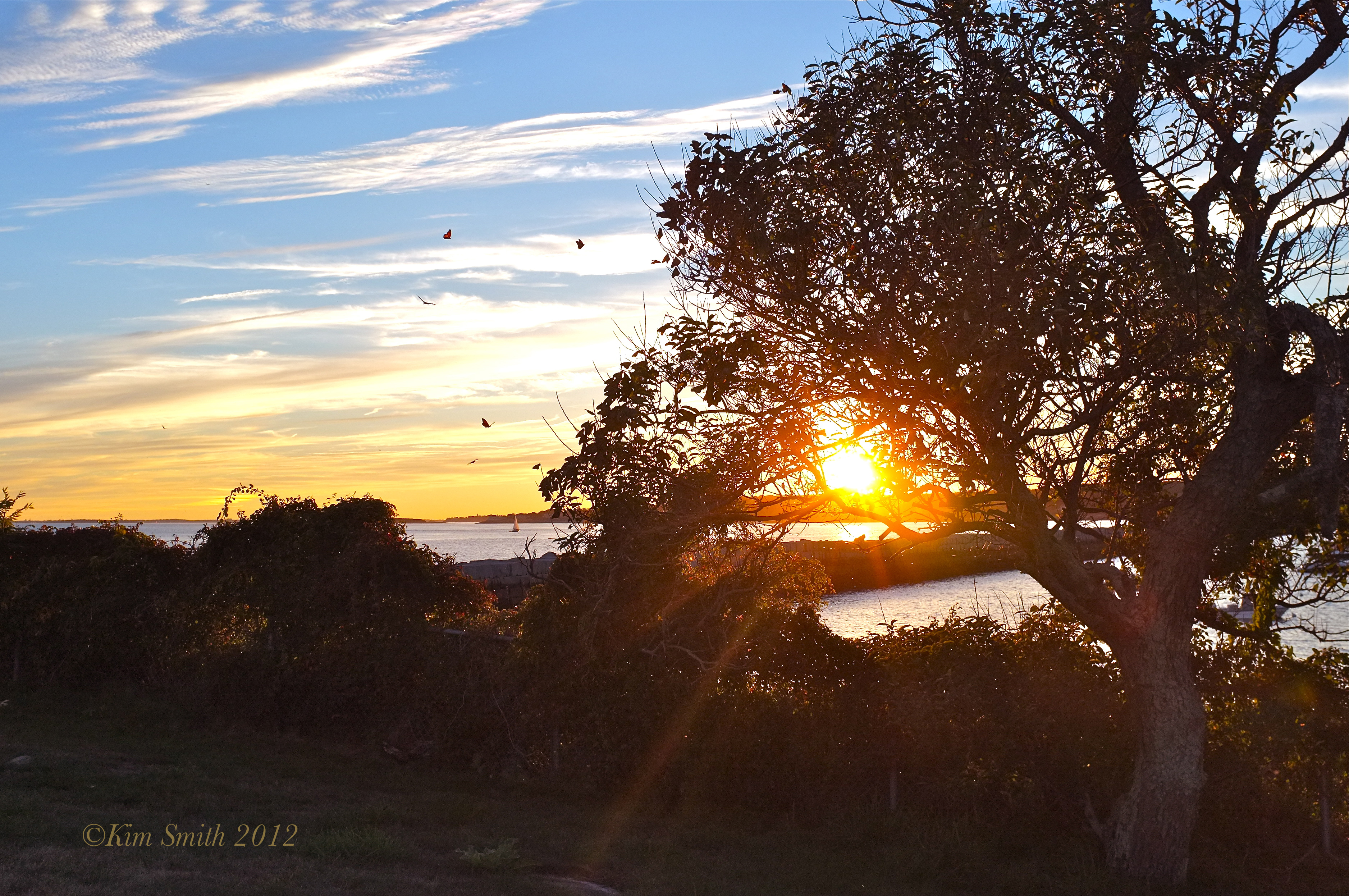
Click the photo to view larger and you will see the little Monarch flakes heading into the cherry tree. The clustering Monarchs were well-camoflouged by the autumn foliage nonetheless, their silhouettes are clearly visible in the setting sun.

Another passel of Monarchs poured onto the Point last Thursday at dusk, carried in by the warm southerly breeze. Overnight the wind shifted, coming in from the northeast, and by day break Friday morning, the Monarchs had flown from the trees, carried to shores further south by the blustery tailwind.

Giving Credit Where Credit is Due

Dear Friends,

Recently I attended a lecture given by an expert in a field to which I am passionately involved. I was really looking forward to this lecture and I have on many occasions actively promoted this lecturer. To get to the point, I was stunned to recognize that the third photo into the slideshow was one of my own photos, and it was presented without acknowledgement. I sat stupefied listening to the rest of the lecture. I hoped that no other photos of mine were part of the presentation. Unfortunately that was not the case. One of the last photos presented was one of my best selling photographs and the audience was audibly moved by the photo. It would have been so simple at that point to say something like, “Thanks to Kim Smith, the photographer, who is here with us this evening.”

The following morning I wrote the lecturer a very polite email stating that I don’t mind sharing my work. I simply requested that he use any one of several photos that I attached for him, with my name discreetly added in the lower right corner. In reply I received a curt and condescending note from the lecturer stating he would delete my photos from his presentation and from his files.

I spent three freezing hours before a long workday in a windy wet field hoping to get that shot that the lecturer was using as part of his presentation. Taking credit, either by claiming it as your own, or by lack of acknowledgement is unethical, at the very least. I really empathize with people who experience more extreme cases of appropriation. Some may find this case to be relatively minor; I found it totally unnerving.

I love to share information and photos about wildflowers and butterflies—as my new friend Hannah says, “You are working for the butterflies.” I blame myself for not watermarking the photos, although I believe very sincerely that most people are honest, have integrity, and give credit when credit is due. For example, when Maggie Harper, the producer from the television show Chronicle, borrowed my Greasy Pole footage, they not only ran my name across the top of the footage, they also provided a link to my blog on the Chronicle website. Maggie had seen the footage on Good Morning Gloucester and contacted Joey, who graciously provided her with my contact information. From the Chronicle link, I received many thousands of hits on my own blog. As another example, when a non-profit national wildflower organization wanted to use several photos for their publication, I gladly said yes, and only requested that I receive a photo credit, which they did provide. I am honored and touched beyond measure that people enjoy my photos and films. My policy is the same as many artists in that I request that if someone wishes to use my work for presentation, that they would please let me know, prior to use.

Enough with all that. Many have written requesting information about this year’s Monarch Butterfly migration. I have been shooting daily hours and hours of video and still photos and will be sharing all. I have figured out how to add a watermark in photo shop, but am hoping to find a more efficient and faster method of adding a signature.

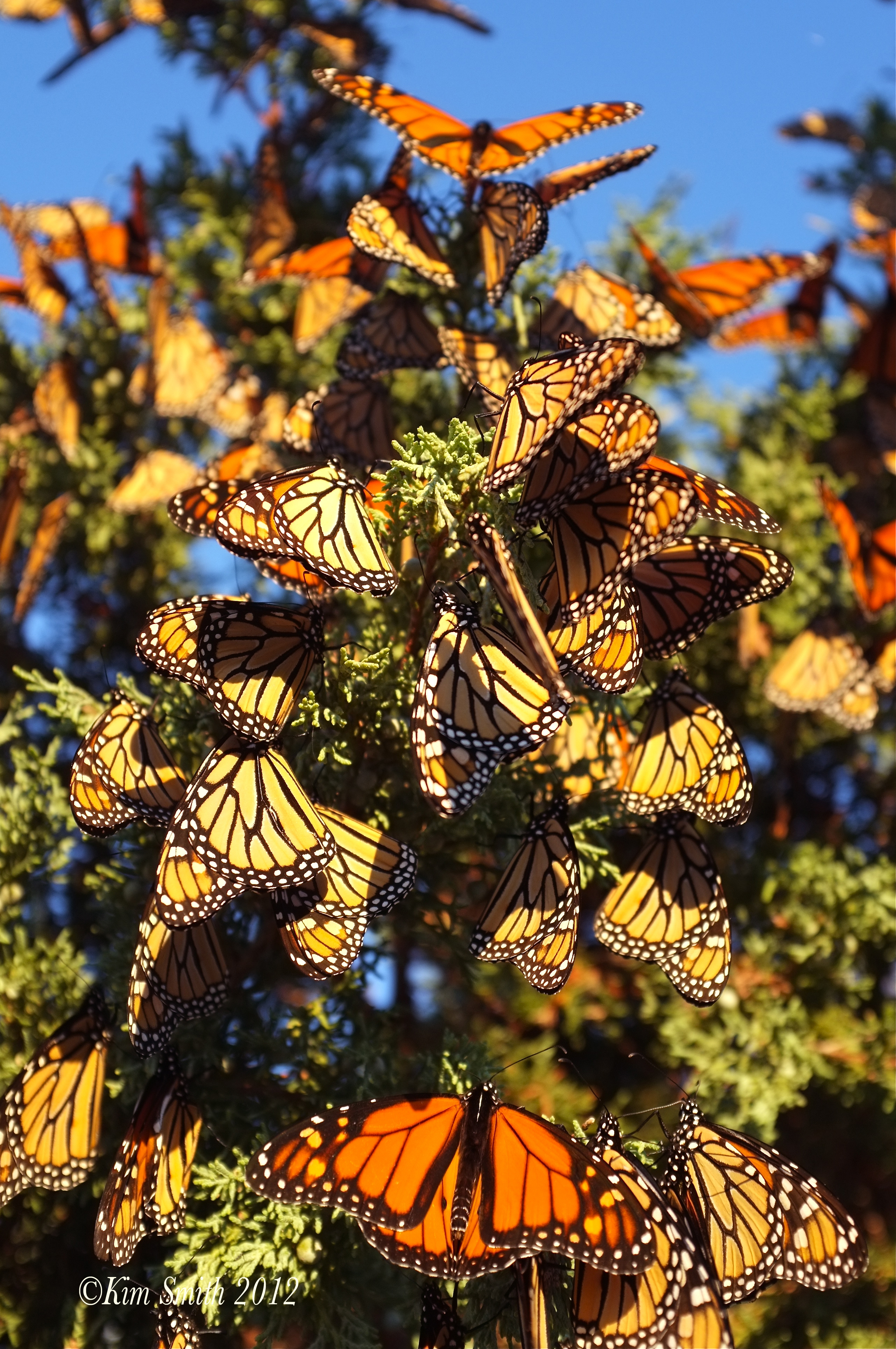
Monarch Butterfly Migration Gloucester Massachusetts 2012

Happy Last Days of Summer!

Many more photos from this year’s migration to come.