Cape Ann Milkweed Project ~ Last day to order plants

Monarch Butterfly Marsh Milkweed ©Kim Smith 2011

Monarch Butterfly on Marsh Milkweed

Order Your Milkweed Plants Today!

In case you missed the details see Sunday’s Post: Cape Ann Milkweed Project

Tonight I am placing the order for the milkweed plants. Please get your orders in.

Thank you to Everyone participating in the Cape Ann Milkweed Project!!!

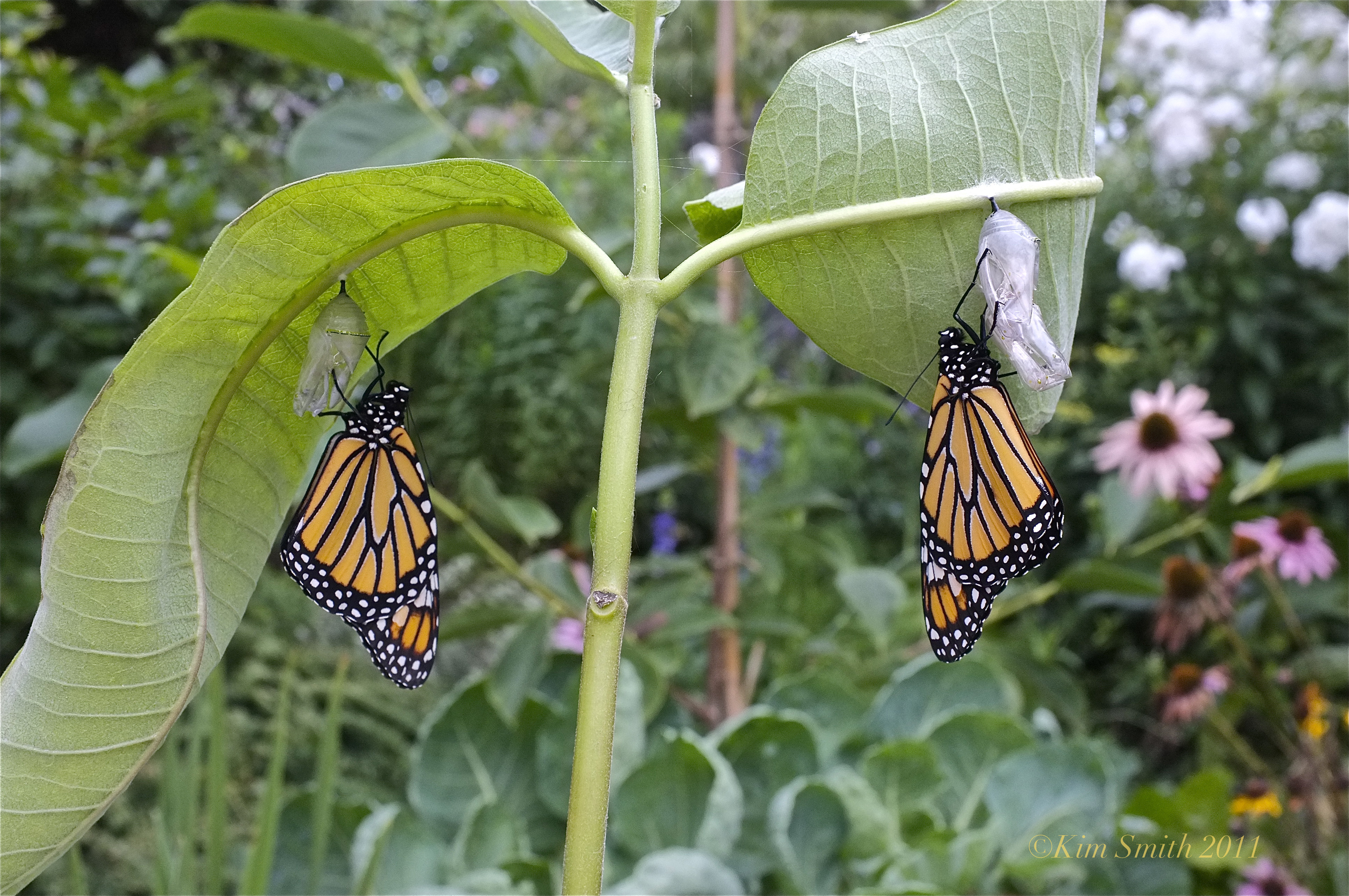
Monarch Butterfly Twins ©Kim smith 2011

Newly Emerged Monarch Butterflies.  I called these two butterflies the” Twins,”  because they completed every stage of their life cycle within moments of each other, including pupating and emerging from their chrysalides.

Cape Ann Milkweed Project ~ Place your orders today

Order Your Milkweed Plants Today!

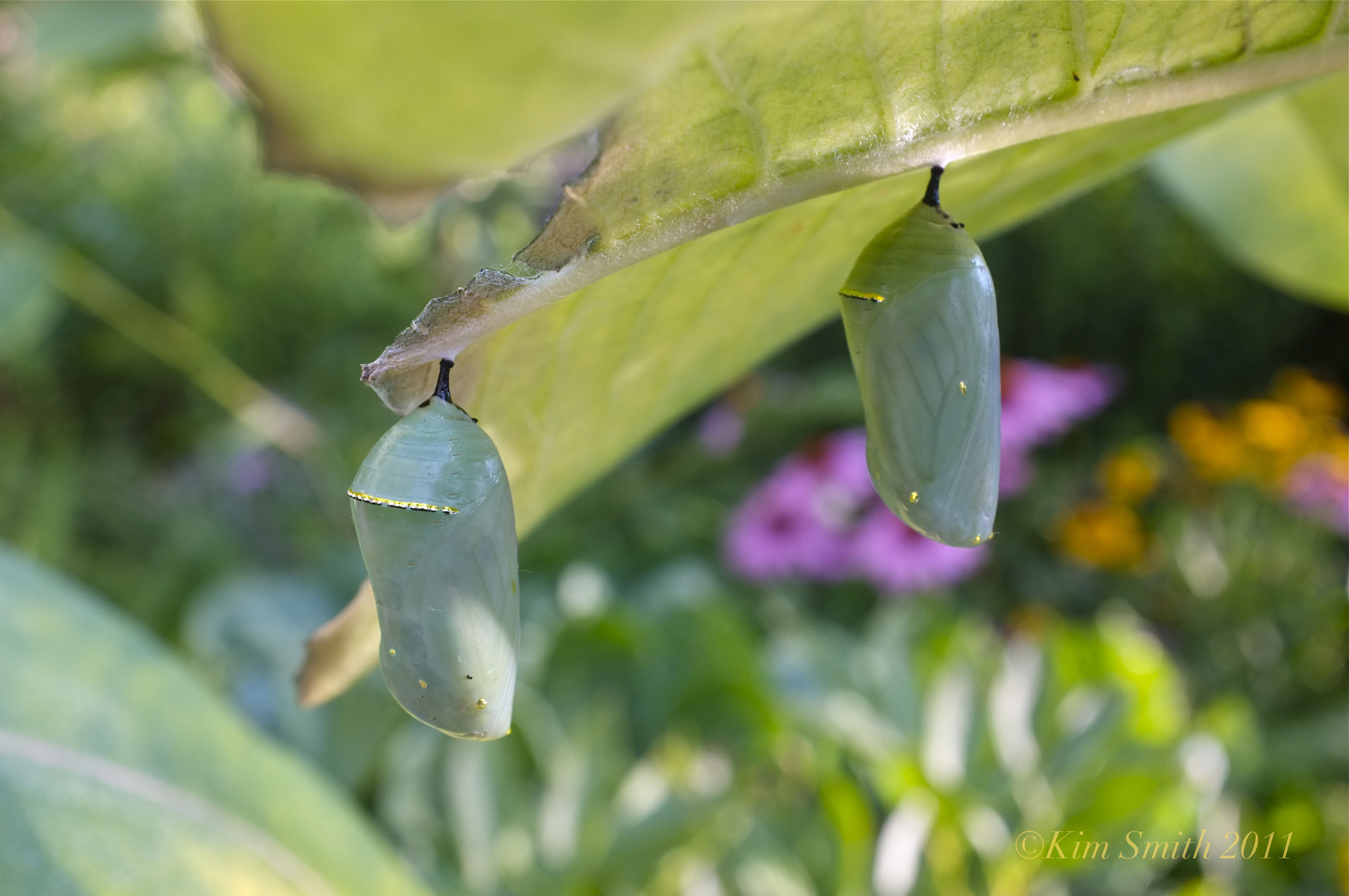
Monarch Chrysalis on milkweed rib ©Kim Smith 2011Monarch Chrysalis on Rib of Common Milkweed Leaf

Everyone who wrote in yesterday and placed an order has been recorded. Anyone interested in ordering either Common or Marsh Milkweed today, please place your order in the comment section of this post or yesterday’s post, which explains the project, and includes all details. Don’t forget to specify whether you are interested in Common or Marsh Milkweed and how many plants you would like.

Thank  you so much to everyone who is participating. Keep the orders coming!

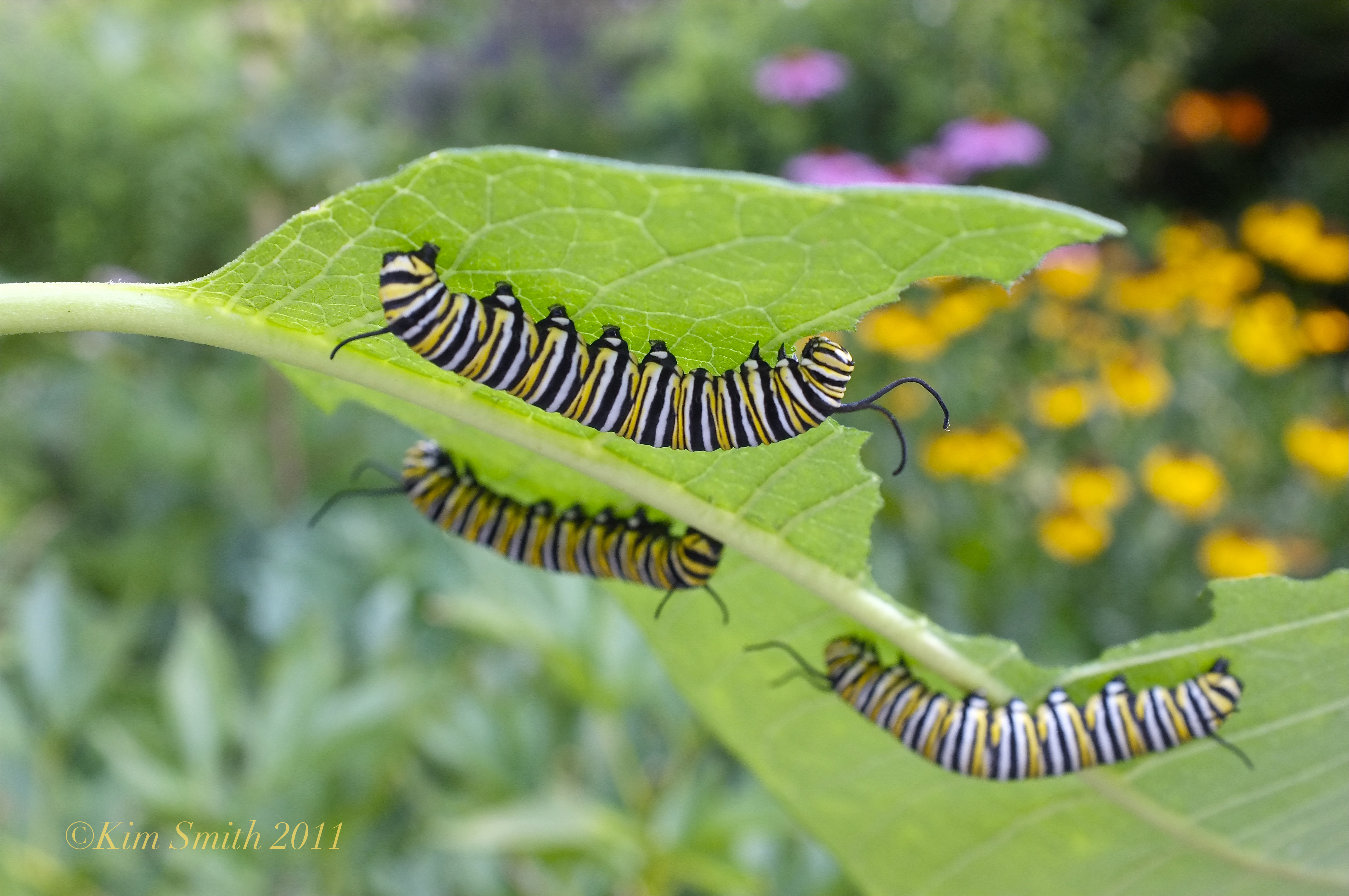
Monarch Caaterpillars Feeding on Common Milkweed ©Kim Smith 2011

Monarch Caterpillars Feeding on Milkweed in the Summer…

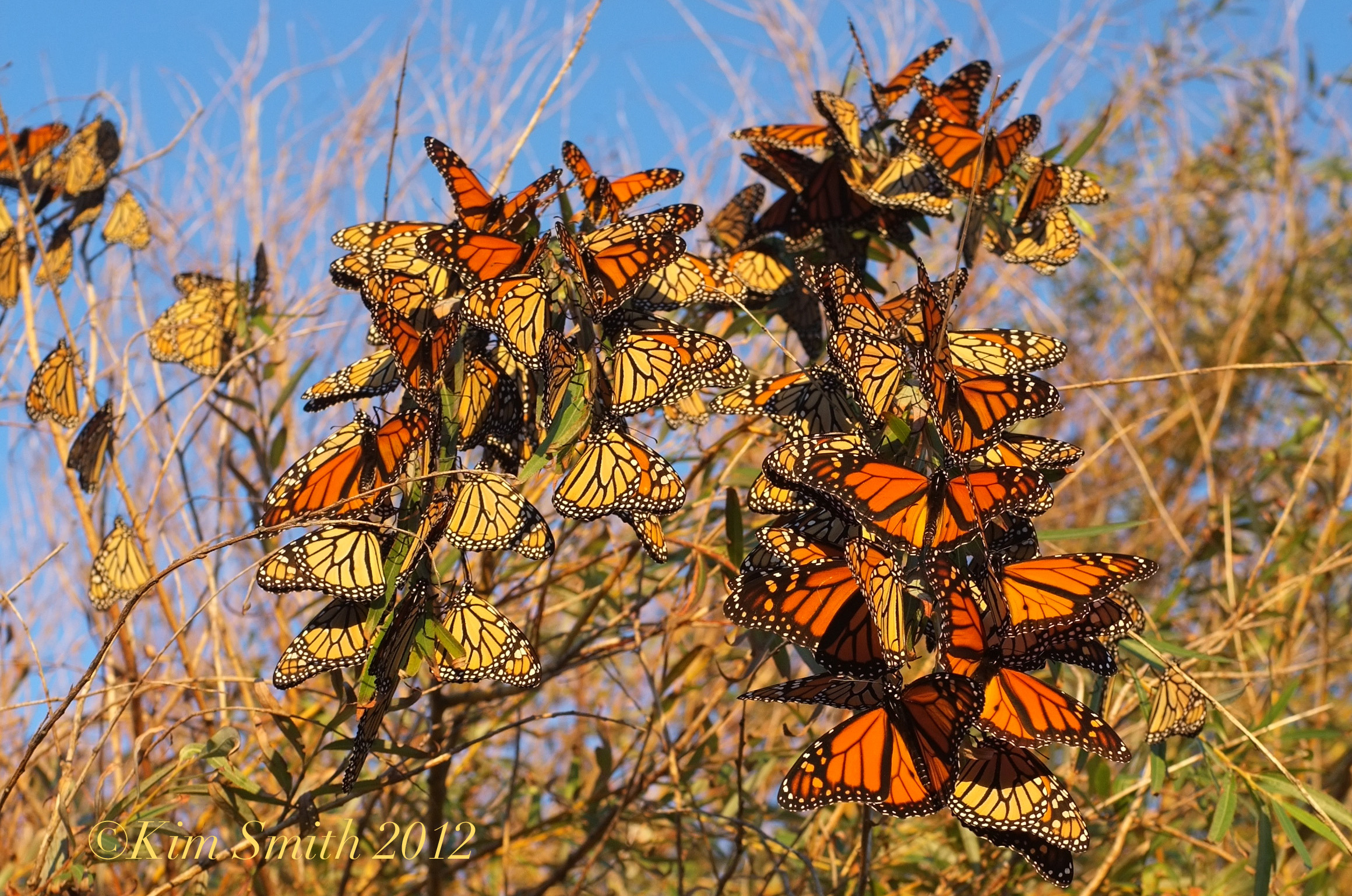
Monarch Willow tree ©Kim Smith 2012 copy

Equals Millions of Monarchs in the Fall!!!

Cape Ann Milkweed Project

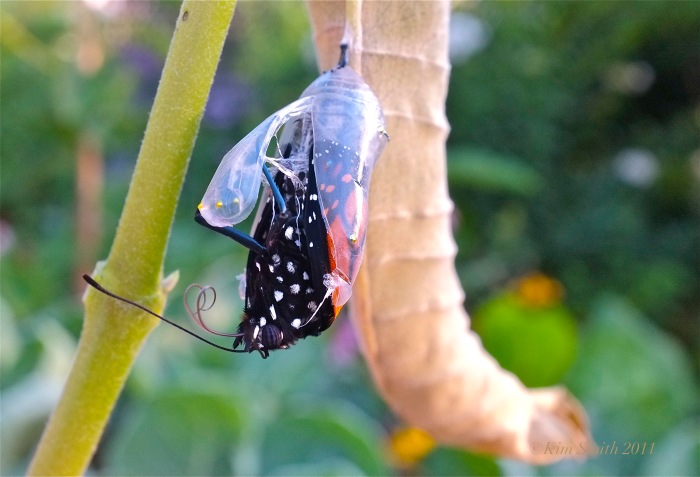
Monarch Butterfly Monarch Butterfly Emerging from Chryslais ©Kim Smith 2011

Monarch Butterfly Emerging from Chrysalis

Order Your Milkweed Plants Today!

In March I shared an article about bringing back the Monarch Butterflies. Great interest in planting milkweed was expressed by many. The way to bring as many Monarchs as possible to our region is to help recreate the butterfly’s habitat in our own gardens. The number one way to do this is by planting native wildflowers, milkweed for the summer caterpillars, and asters and goldenrod for the fall migrants. Number two is to make a commitment not to use pesticides, which will indiscriminately kill all the creatures that your milkweed plants invite to your garden.

Monarch Butterfly Eggs Common Milkweed ©Kim Smith

Monarch Eggs on Common Milkweed ~ see the tiny yellow pinhead-sized dots on the top of the upper leaves of the milkweed plants (click to view larger)

Milkweed is the only food plant of the Monarch caterpillar and the flower is a fantastic source of nectar for myriad species of bees and butterflies.

So many GMG readers wrote in requesting milkweed plants that Joey has very generously offered his place of business—Captain Joe and Sons—as our go-to-place for picking up plants!! It’s going to be a super fun morning–stop by with your coffee, visit, learn about milkweed and Monarchs, and pick up your order.

Please place your order today or tomorrow. I am not pre-collecting the money and am fronting the funds to purchase plants. I don’t want to have dozens of homeless plants, so I am asking everyone to please be on the honor system.

We are ordering two types of milkweed. The cost is 7.00 per plant, which will come in a 3.5 inch square pot. The plants are on the smallish side however, that is the ideal size for shipping and transplanting milkweed. I am writing instructions for planting and they will be provided at the time of purchase.

Monarch Caterpillars Common Milkweed ©Kim Smith 2011

Monarch Caterpillars J-Shape on Common Milkweed Getting Ready to Turn into a Chrysalis

Common Milkweed (Asclepias syriaca) is the milkweed we see most typically growing in our dunes, meadows, roadsides, and fields. It grows quickly and spreads vigorously by underground runners. This is a great plant if you have an area of your garden that you want to devote entirely to milkweed. It prefers full sun, will tolerate some shade, and will grow in nearly any type of soil. The flowers are dusty mauve pink and have a wonderful honey-hay sweet scent.

Marsh Milkweed (Aclepias incarnata) is more commonly found in marshy areas, but it grows beautifully in gardens. It does not care for dry conditions. These plants are very well-behaved and are more clump forming, rather than spreading by underground roots. The flowers are typically a brighter pink than Common Milkweed.

Monarch Butterfly Emerging from Chryslais ©Kim Smith 2011.JPG

Monarchs deposit their eggs readily on both types of milkweed and in my garden I grow Common Milweed and Marsh Milkweed side-by-side.

The cost of the plants includes shipping from Missouri. Hopefully everyone will be good and if they place an order, will honor their commitment. If there is any money beyond what was spent on plants and shipping we will donate it to the ongoing fundraising drive for the Rocky Neck Cultural Center purchase of the beautiful center on Wonson Street.

Plant pick-up is at Captain Joe and Sons, 95 East Main Street, Gloucester, on Saturday, May 18th from 9:00am to 12noon. If you cannot pick up your plants at that time, please ask a friend.

My order to the nursery is being placed on Tuesday night, so please get your orders in asap. Place Your Milkweed Order in the comment section of this post. Be sure to indicate which type of milkweed, Common or Marsh, and number of plants.

Our deepest thanks to everyone who is participating. 

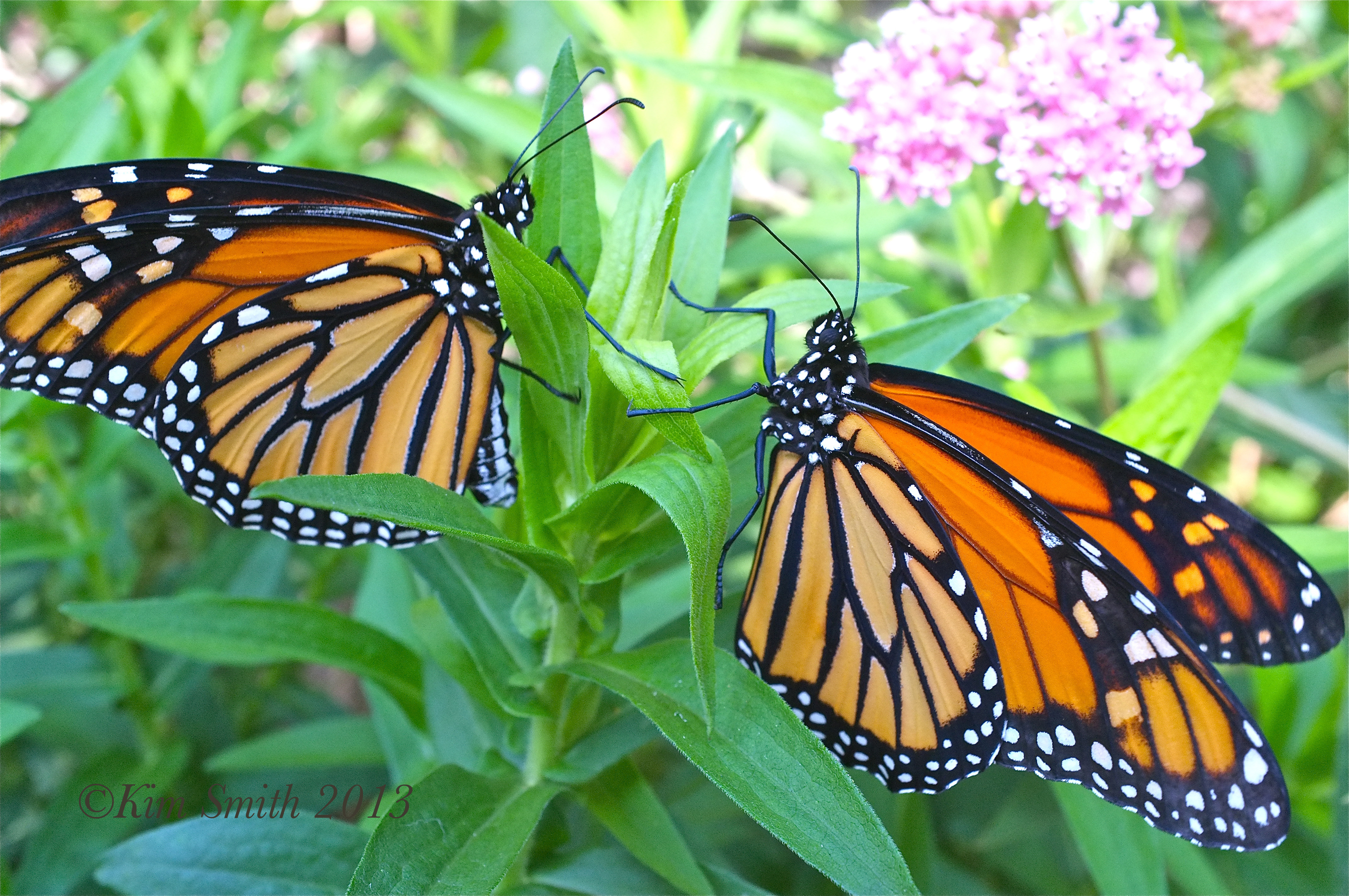
Monarch Butterfiles Female left Male right Milkweed ©Kim Smith 2012

Female and Male Monarch Butterfly on Marsh Milkweed (Asclepias incarnata)

Rain date pick up: Sunday, May 19th from 9am to 12noon.

How Exactly is Monsanto’s Roundup Ravaging the Monarch Butterfly Population?

Monarch Butterfiles Female left Male right Milkweed ©Kim Smith 2012The above photo of a male (right) and female (left) Monarch Butterflies on Marsh Milkweed is part of the GMG/Cape Ann Giclee show opening tonight.

I am often asked the following question at my butterfly and pollinator garden design lectures. How exactly are Monsanto’s products ravaging the Monarch Butterfly population?

First, it is important to understand that all butterfly caterpillars rely on plant foods specific to each species of butterfly. For example, Monarch caterpillars only eat members of the milkweed family, Black Swallowtail caterpillars eat plants in the carrot family, and Heliconian butterflies eat plants in the passionflower family. Some caterpillars, like the larvae of the Eastern Tiger Swallowtail eat plants from a wide range of plant families. That being said, it is worth repeating that Monarch caterpillars only survive on members of the milkweed family.

Imagine a farm with row upon row of corn. Growing amongst and around the edges of the cornfields are wildflowers of all sorts, including milkweed. The wildflowers draw to the fields myriad pollinators such as bees, butterflies, and birds.

Monsanto has genetically modified the seed of corn and soybeans so that it will withstand extremely heavy doses of its herbicide, called Roundup. Monsanto’s corn and soybean seed is actually called Roundup Ready. Roundup Ready plants can withstand massive doses of the herbicide Roundup, but the milkweed and other wildflowers growing in the corn and soybean fields cannot.

Each year massive amounts of Roundup are sprayed on the corn and soybean fields, killing everything in sight, except the Roundup Ready corn and soybean. Additionally, Monsanto’s Roundup contains the active ingredient glyphosate, which has been tied to more health and environmental problems than you can possibly imagine.

Now imagine you are a Monarch Butterfly, having flown hundreds of miles northward towards breeding grounds of milkweed. But there is no milkweed to deposit your eggs. The circle in the chain of life is broken.

Since the use of genetically modified Roundup Ready began, milkweed has disappeared from over 100 million acres of row crops, or a roughly 58 percent decrease. Milkweed is not only the Monarch caterpillar host (or food) plant, the nectar-rich florets provide nourishment for hundreds of species of bees and other Lepidoptera.

The Monarch Butterfly migration is one of the great migrations of the world. Climate change and the loss of habitat are also factors in the decrease of butterflies. The Mexican government and the people of Mexico have enacted policies to help protect from logging the remaining oyamel fur trees in the Monarchs winter habitat.

There are several steps that we in the United States can undertake. 1) Avoid as much as possible genetically modified food, especially corn and soybean products. 2) If you own shares of Monsanto stock, get rid of it (Monsanto also developed Agent Orange). Thirdly, we need to start a national movement to cultivate milkweed and to create awareness about the important role wildflowers play in our ecosystem.

Calling Everyone: Plant Milkweed! No matter how small or large your garden, give a spot over to milkweed and watch your garden come to life!

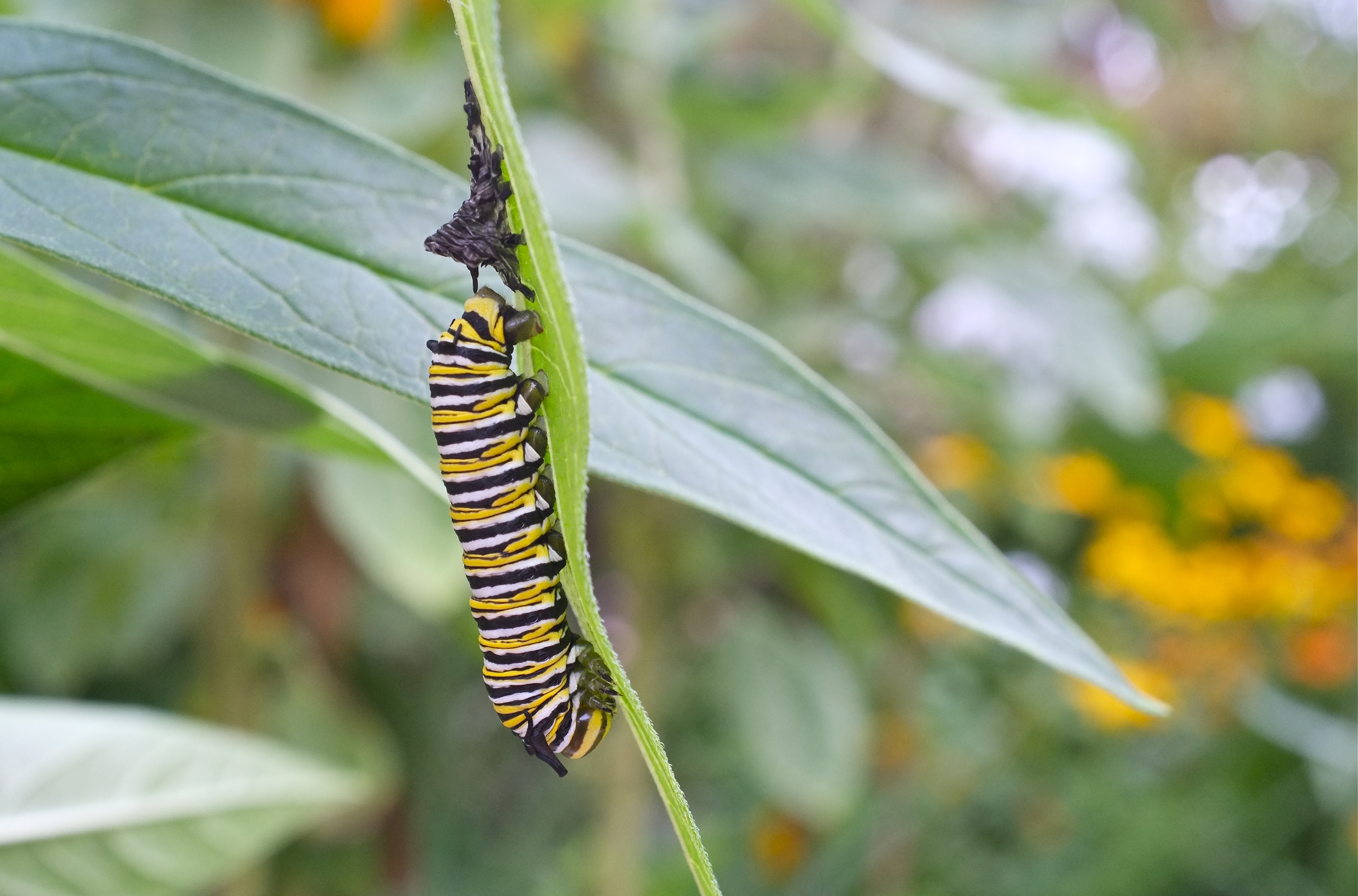
Newly Molted Caterpillar

Butterfly caterpillars molt four or five times as they grow. Each different caterpillar stage is called an instar.

In the photo below you can see the caterpillar’s crumpled discarded exoskeleton.

Molting Monarch Caterpillar

The caterpillar first grows a new skin under its old skin. Then the caterpillar draws its head out of its head capsule. Occasionally it will need to use its front legs to help remove the head capsule. Next the caterpillar crawls out of its old skin. This is called molting. After the molt and while the new skin is soft and pliable the caterpillar swallows a lot of air, which expands the body. As the new exoskeleton hardens it lets out the air to allow room to grow.

Molting takes a great deal of energy and after each molt, the caterpillar rests quietly for a brief period before then eating its discarded exoskeleton.