
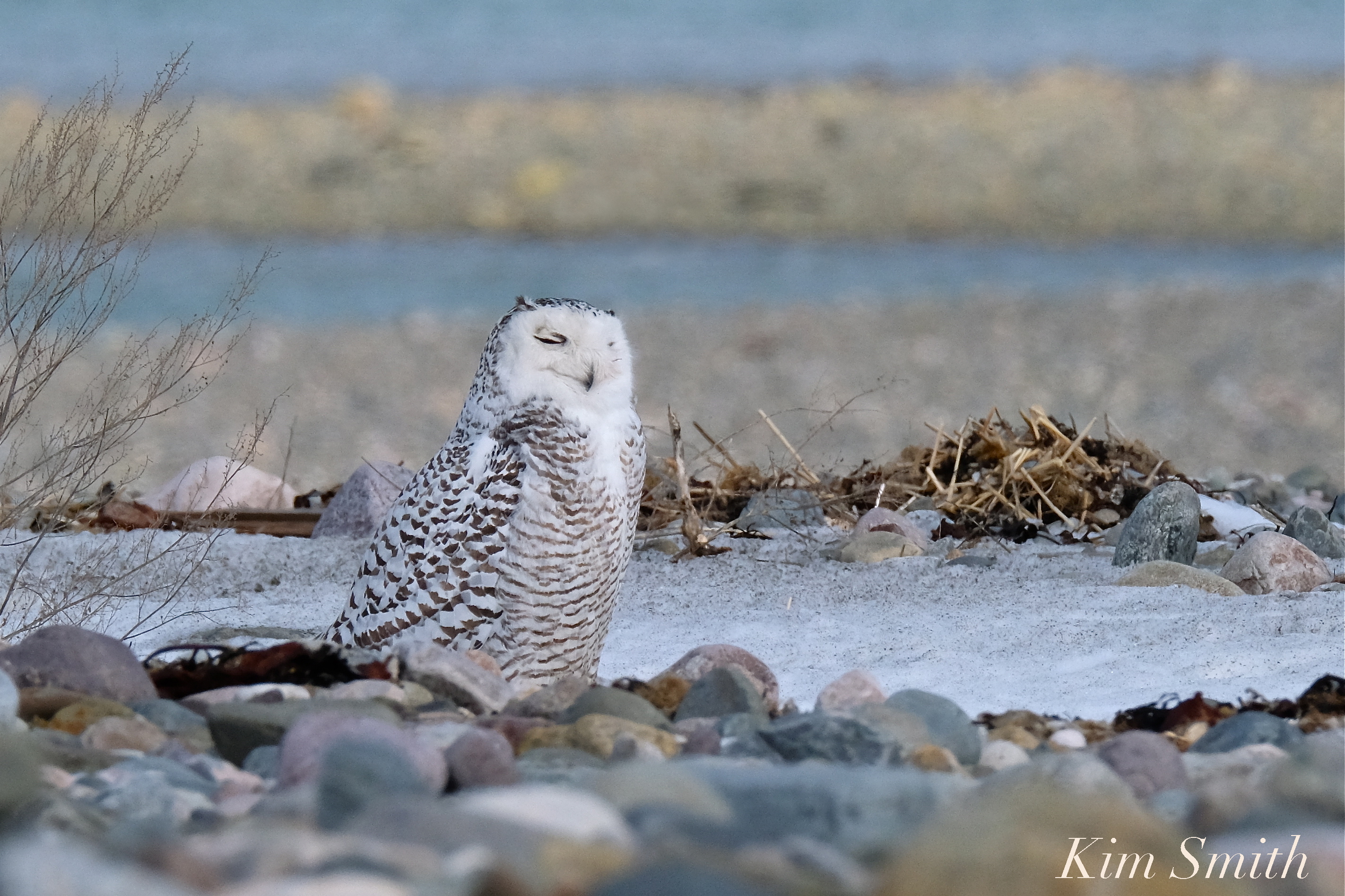
This beautiful Snowy Owl female was left alone for the better part of a frigid and blustery morning. Although Snowies are covered in feathers from head to toe, during very cold weather they try to find perches low to the ground and blocked from the wind.
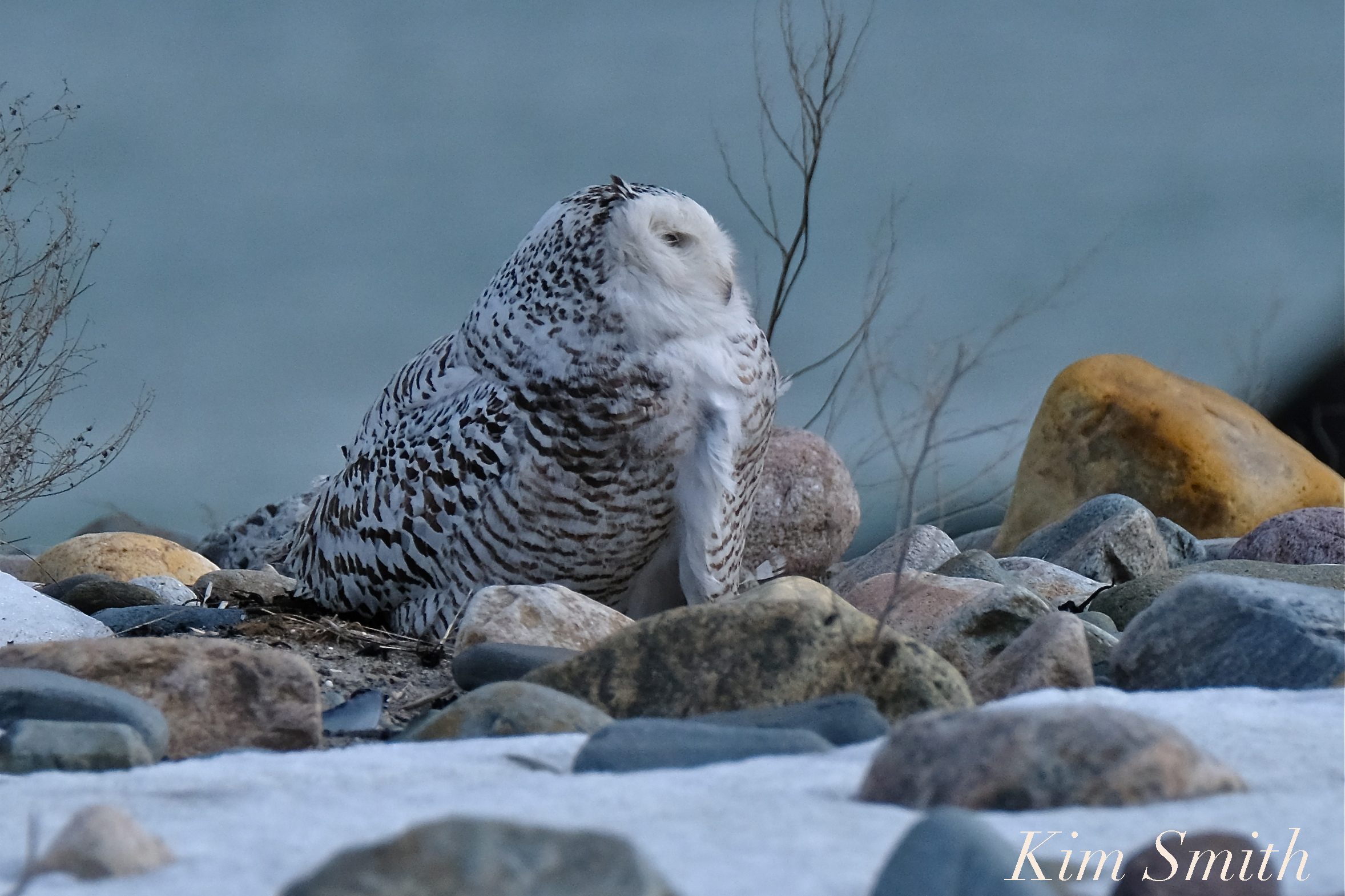
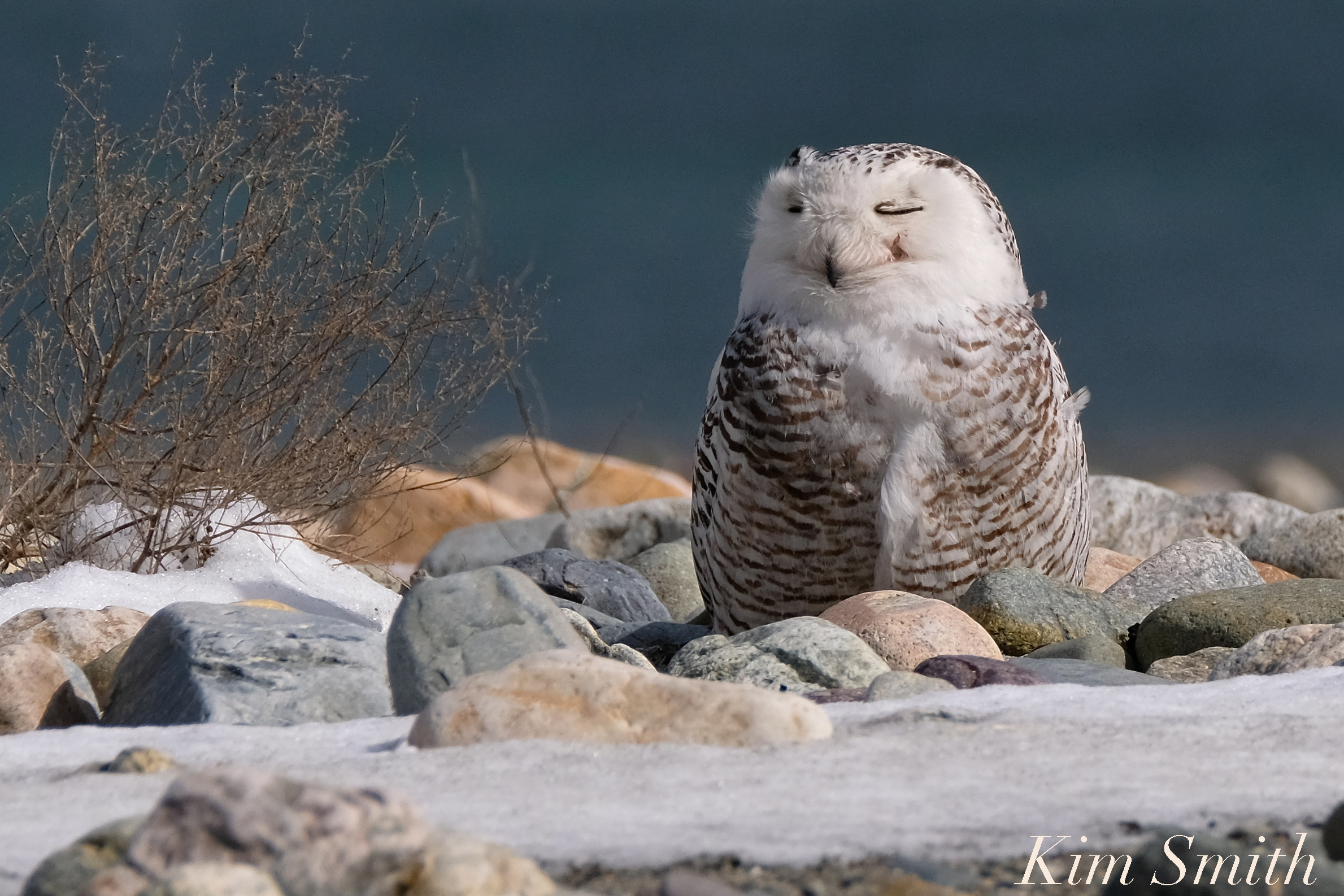
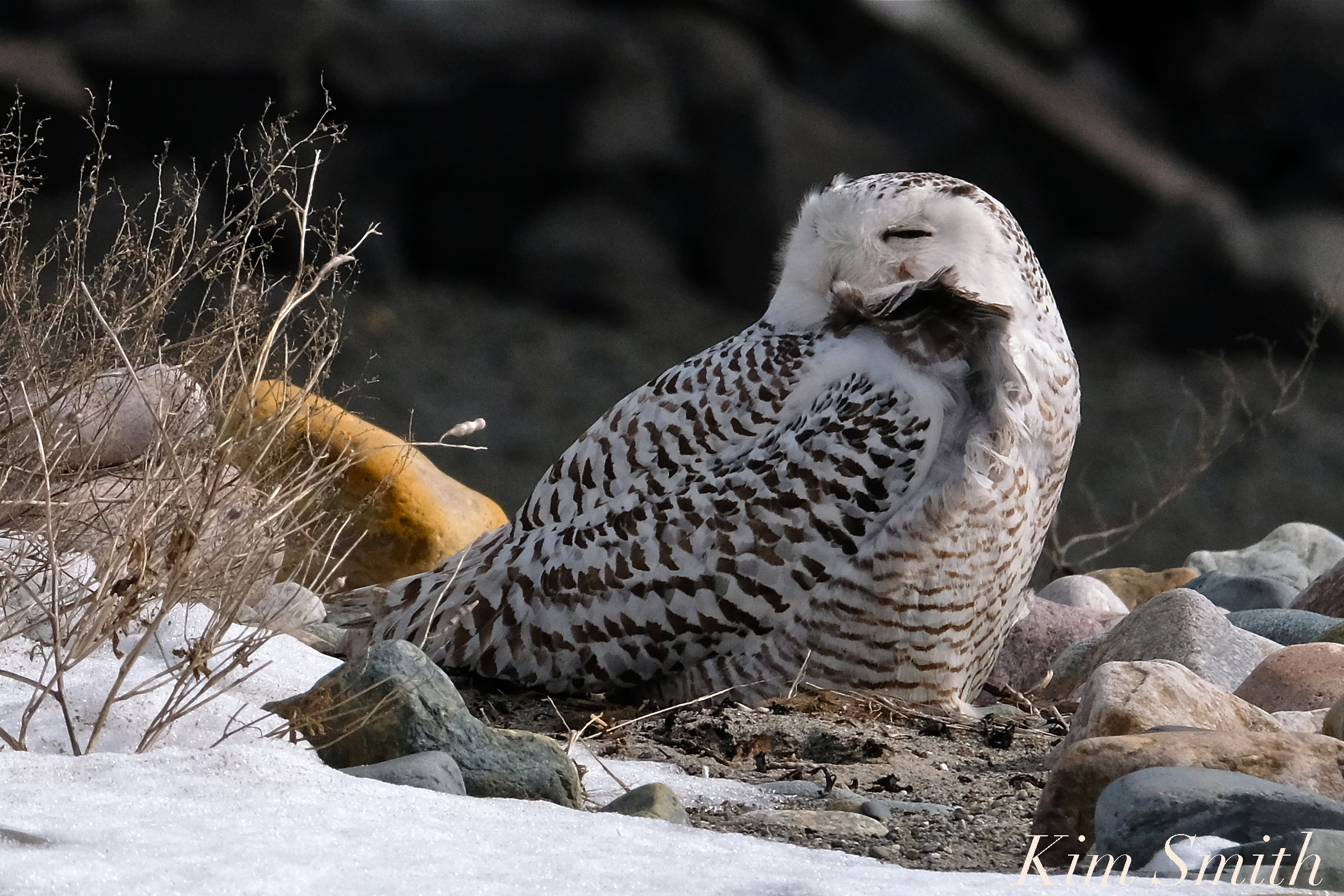
Snowy with her feathers fluffed for warmth


Morning foot bath
A cell phone photographer made her flush three times over a ten minute period before she gave up and left the beach.
Snowies don’t want to be disturbed and fly when they are resting on the beach. Flying makes them use up precious energy. It’s not just cell phone photographers that are harming the Snowies. Recently I watched from an adjacent road as a group of photographers with telephoto lenses chased a Snow Owl up and down a beach. The Snowy flew away and departed the area.
Snowy Owls that are visiting our shores are, for the most part, young and relatively new at hunting, are in unfamiliar territory, and basically just need to rest and conserve energy when they are not hunting.
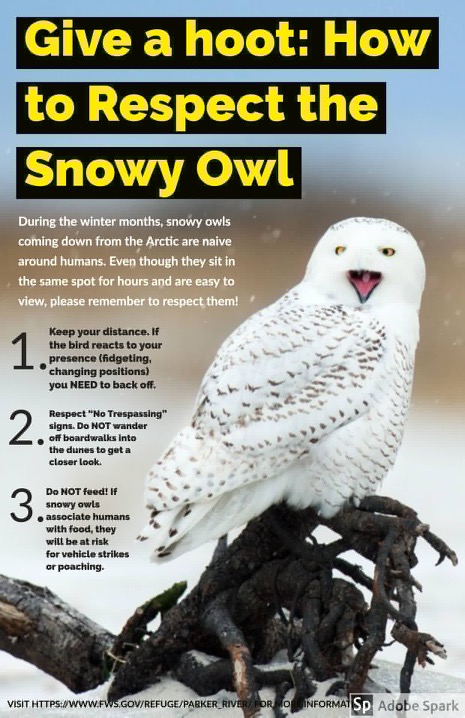 Please respect our Snowies ❤
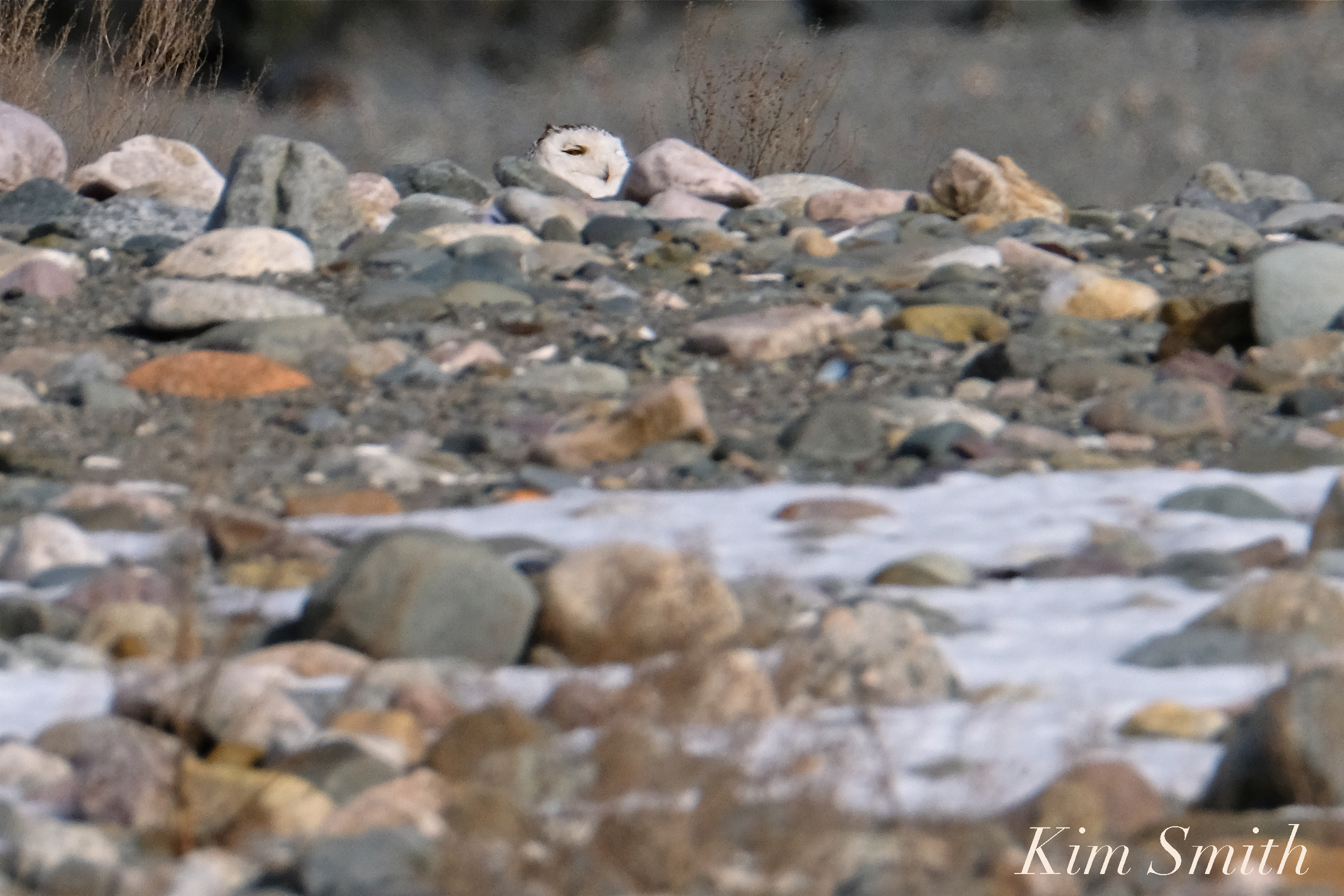
Snowy Owls love both rocky beaches and the tundra-like terrain of sandy beaches, because both are similar habitats found in their Arctic breeding and hunting grounds. And, too, look how well disguised is the Snowy in the photo above.


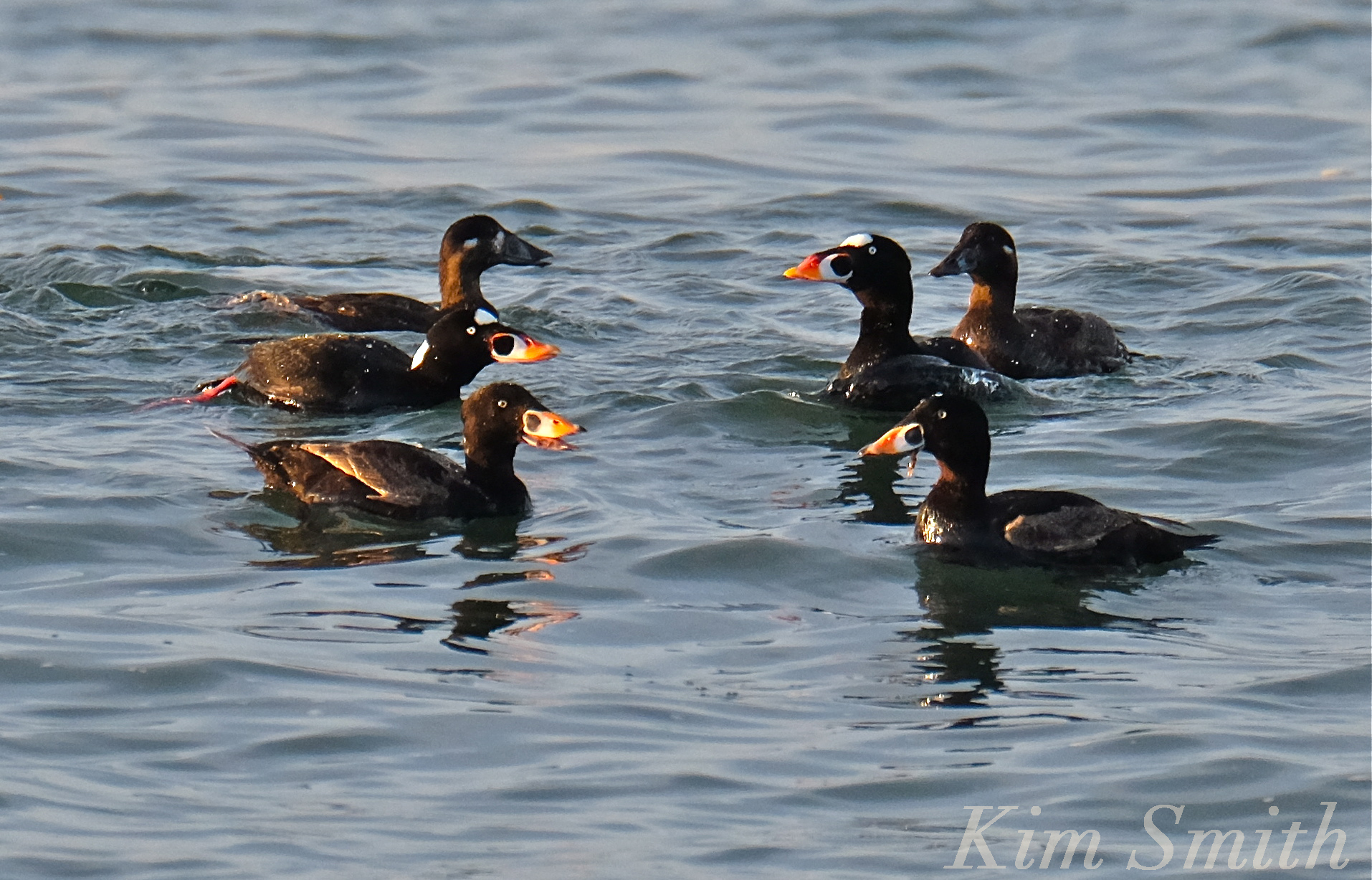
A few more creatures found on the beach that morning, including Surf Scoters, and a Snow Bunting flying very near to the Snowy.




 Good Morning Gloucester