Cheap Photographers Only Kill Themselves, Not The Industry.
Sat , October 2nd, 2010
Posted by zack
under Just Stuff,Philosophy,Photo Resources

First, thanks for all of your input on the first blog post of this series. As usual, your comments are far more interesting, entertaining, and thought provoking than anything I write here. If you haven’t read through those yet, you should. What’s interesting to note in the comments there is how the tone of comments changes through the 100+ of them. They start off friendly enough and then somewhere in the middle a few feathers begin to get ruffled. That’s fine. That’s welcomed. It’s a very interesting time in our industry right now and it’s good to have passionate discussion about it. The smart photographers will sit with open minds and get a bit introspective and take a look at their own business practices. The stupid photographers will sit from on high and just point fingers OR sit at the bottom and think, “I’m banking an extra $1,000 a month that I don’t claim with my $800 camera!”
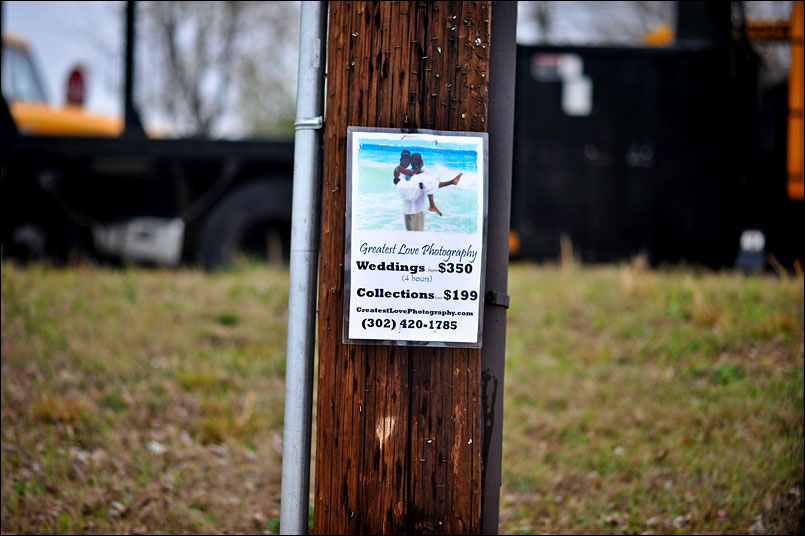
Anyway. Check out that photo above. It’s some stop light advertising for a wedding photographer advertising weddings starting at $350. Man… that’s cheap. Is this person part of the problem in our industry? Absolutely not. I admire the hustle. I admire the fact that they are trying. Now – if you are the type of pro photographer that looks at that and says, “This is everything that is wrong with this damn industry! You can’t be a pro charging $350 for a wedding! What an A-hole!” Yeah, if you’re that photographer let me challenge you.
Think of the brides out there who don’t have a budget but want some photos of their weddings. Maybe there are young couples getting married who don’t have the parents to pay for a big event or they don’t want to start their young family in debt but they would like someone to come take some pictures. Are you saying that if they can’t afford a $3,000+ photographer then they don’t deserve photos? Are you saying that if they can’t afford a Mercedes then they shouldn’t be allowed to drive? Shame on you. Not everyone can afford pro level prices. That doesn’t mean they can’t have some level of photographic services available to them.
Let me tell you a little something about my journey being the cheap photographer after the jump…
click here for the rest of his post
He raises some serious questions and discussions and my guess is that where people will come down on the issue is going to correlate to exactly where people are on the photography business chain. The photographer that charges $10,000 to shoot and edit a wedding will call all those non-pros charging little money for their work assholes and the non-professional photographer with the $800 camera that charges little money to shoot an event will shrug his or her shoulders and continue to try to improve and make a name for themselves until either they can make more money or tire of shooting things unless they are of interest to them.
With technology becoming less complicated and decent equipment becoming cheaper and cheaper and means of distribution as inexpensive as “free” the lines of communication are becoming more blurred between the professional and the amateur. Constraints on old world media like newspapers, publishing, photography, network television trying to work within the old model has got to be extremely frustrating for a newspaper editor, local access cable director or book publisher. When you have blogs reporting things within seconds of them happening, you have people putting things on YouTube that are uploaded and archived for free, you have authors deciding to self-publish to Amazon or the Apple book store for reading on their Kindle or iPad they just have to be feeling the squeeze.
What’s scary is that there is a real need for newspapers and professional journalists. They don’t just report on the fluff but they are the ones who go out and report without a bias left or right and keep politicians honest with reporting of decisions that are made that the average blogger would never bother with. A blogger writes exactly about what is of interest to them and obviously whatever they write is biased to their line of thinking. A blogger doesn’t have to be fair or balanced at all when they tell a story but a newspaper reporter’s whole job is to report the facts and present them to the public so they can make informed decisions based on those facts. The question is how do newspapers continue to generate enough revenue to pay the reporter or photographer when there is so much content coming from the internet for free? Are consumers of newspapers willing to pay and are business advertising dollars going to support old school newspapers?
There are a couple things that local newspapers have that they really need to take advantage of- A) they started out with basically the entire market so they have a huge base of people that are familiar with their brand and may go to their site or buy their paper and B) they are local and have the connections to report things that no other sources are going to report. Some people buy the paper for no other reason than the obituaries, local sports scores,local election results, local zoning issues and the police notes. Although it could be done, it is highly unlikely that a blogger is going to start doing comprehensive obituary pages or police notes. HyperLocal- people are looking to local newspapers for stories from their community. People aren’t going to their local newspaper for news out of Washington. Just like the locavore movement in the food chain, local newspapers need to be the best source of timely information that is highly concentrated right in it’s own backyard.
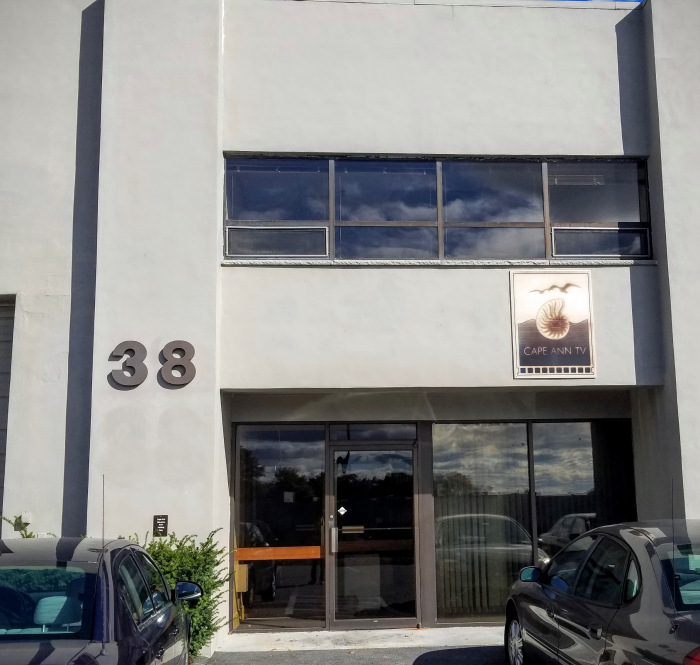
Then there is local cable channels. You have people with studios and equipment costing in the hundreds of thousands of dollars with trained video editors and people that have earned communications degrees creating nice local stories but no matter how fantastic the program they put together, they still haven’t come to the realization that they only run these pieces once or twice at set times of the week and then the content gets shelved for eternity. Any blogger with an iPhone 4 can cover the same events edit the video with a $4.95 iMovie video editing app and upload it from the event itself to YouTube where it is archived in High definition with searchable tags for eternity. If a consumer wants to watch a 2008 Saturday Greasy Pole winning walk all they have to do is to fire up their computer or smartphone, go to YouTube and type in a search for “2008 Greasy Pole” and without even doing the search I can virtually guarantee you there will be some content there. To be producing these shows at a local access channel studio and to not archive them in a searchable database online is unfuckingbelievable (yes, one word) to me. Why would anyone go through the trouble to set up the $10,000 camera, go back to the studio, spend hours editing the program and then it only be shown a couple of random times throughout the week when 99.9% of your potential audience isn’t watching when you could upload it to YouTube and it could be viewed at anyone’s leisure and archived for viewing today, tomorrow, at 2AM, at 3PM, from now to eternity? Are these media people that really care about getting their stuff shown to the widest possible audience or are these people stuck in an old media rut of ways of doing things and can’t see that things have evolved. In the meantime the people with the HD smartphone cameras and $200 video cameras are eating their lunch.
The Gloucester Daily Times has taken some steps toward integrating new media into their program but so much more could be done. The Local Cable Access channel IMO could be sooooo much more than it is. I have no idea what it is that holds these old media companies back from maximizing the use of cheap new technology but it is crystal clear to me that there is a disconnect somewhere. I know without a shadow of doubt that I could help with the things I’ve learned creating and distributing Good Morning Gloucester to 12-20,000 daily views in less than three short years.
Spread The GMG Love By Sharing With These Buttons:


 Good Morning Gloucester