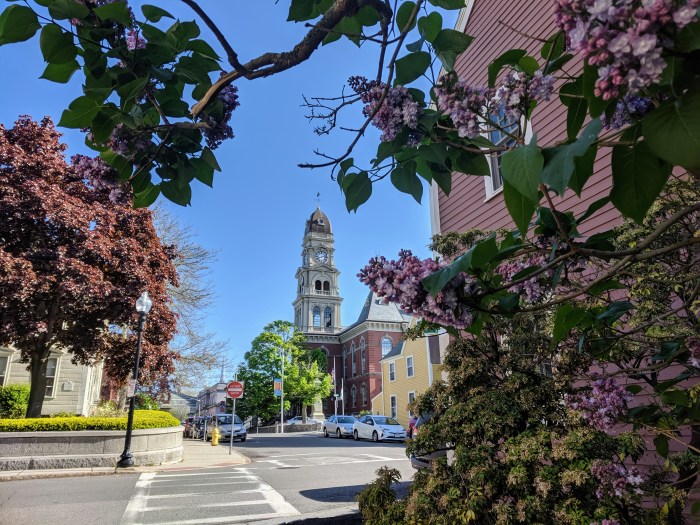
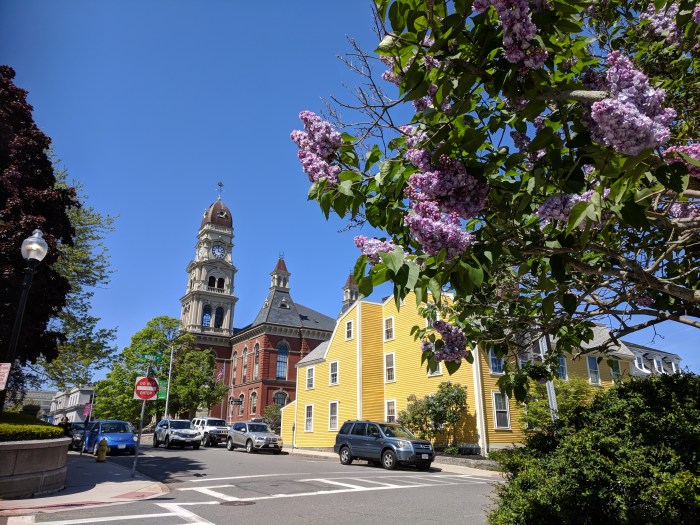
Super easy citizen science! Try adding in here: Track a Lilac: https://trackalilac.usanpn.org/
My View of Life on the Dock
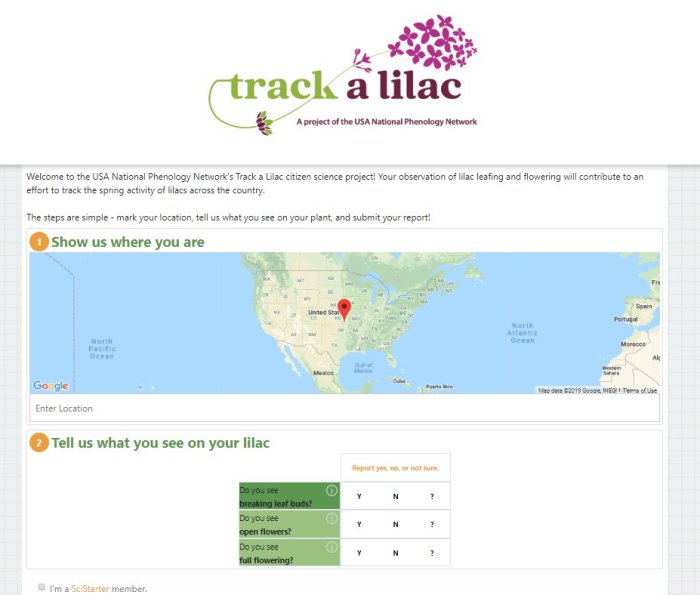
Super easy citizen science! Try adding in here: Track a Lilac: https://trackalilac.usanpn.org/

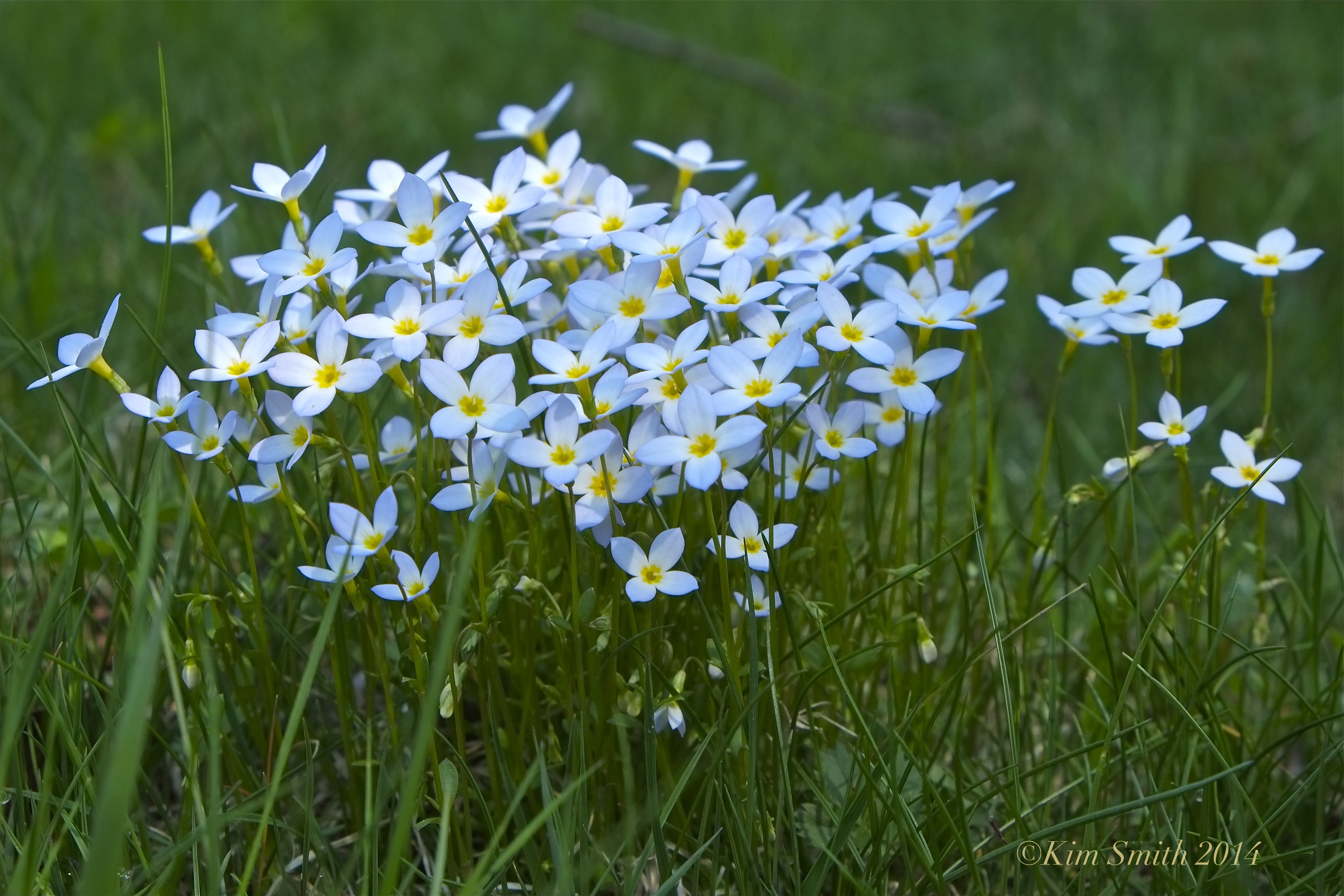 Bluets, also known by the charming name Quaker Ladies
The first day of spring! It’s official although, with temperatures hovering in the twenties, its hard to believe. Close your eyes and imagine along with me pink and orange tulips, spring dresses, (stick with me here–just don’t look out your window at the still high drifts of snow) fields of bluets, sailboats in the harbor, windows open, the music of buzzing bees, shoots of new green grass, blue skies, robin bird songs, the smell of freshly tilled earth, fog horns in the distance, baby birds, misty warm April showers, the sweet scent of jonquils, bird’s nests along the meadow’s edge, the song of the Baltimore orioles returning, walking along the beach (without bundling up), friendly Red Admiral butterflies, lilacs, plum blossoms, magnolias in bloom, dogwoods in bloom, orange poppies, sweet pea tendrils, and sweet alyssum (see there, its not that hard).
Hurry Up Spring!

Tulips at The Mary Prentiss Inn
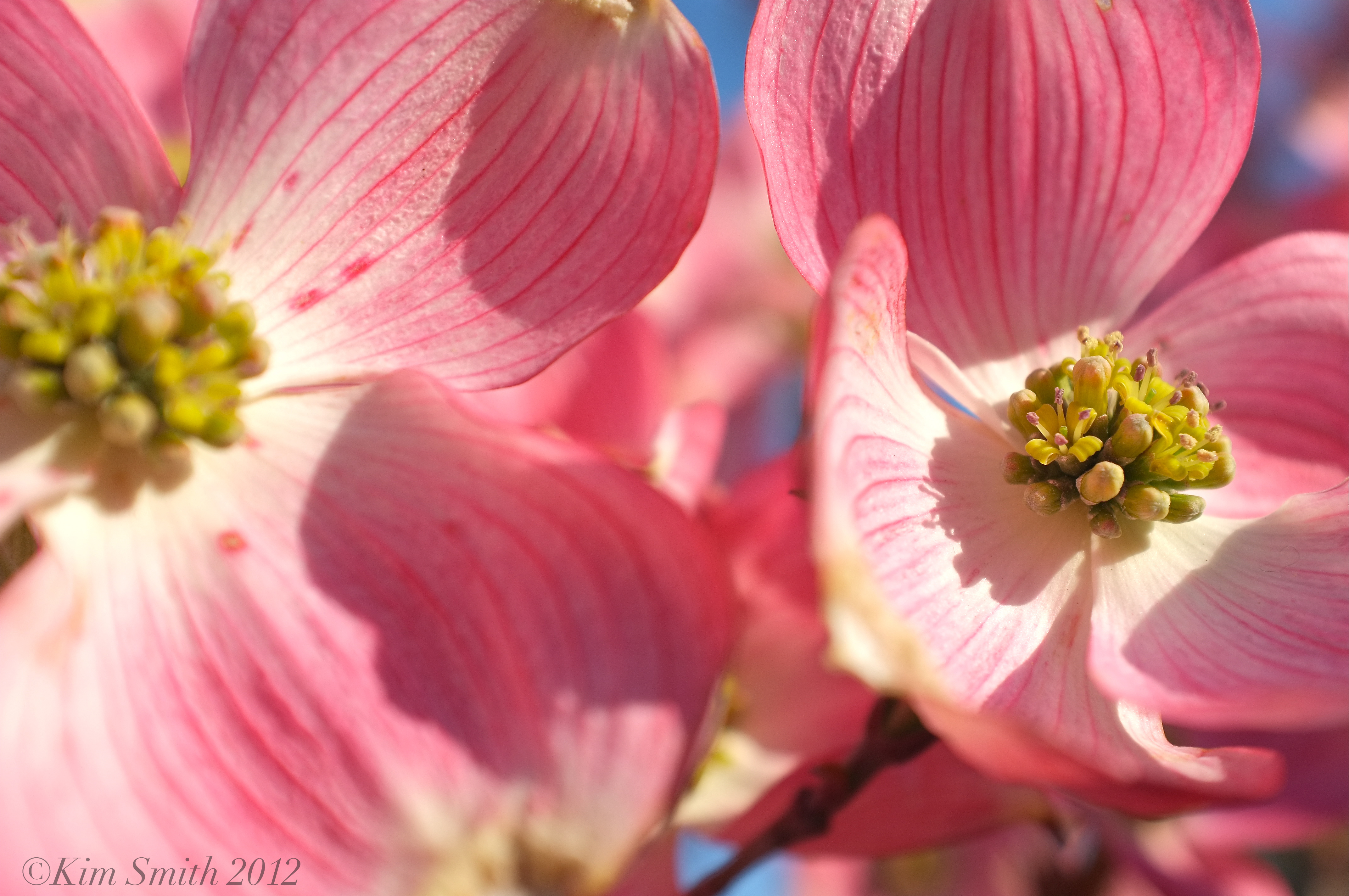
Cornus florida rubra
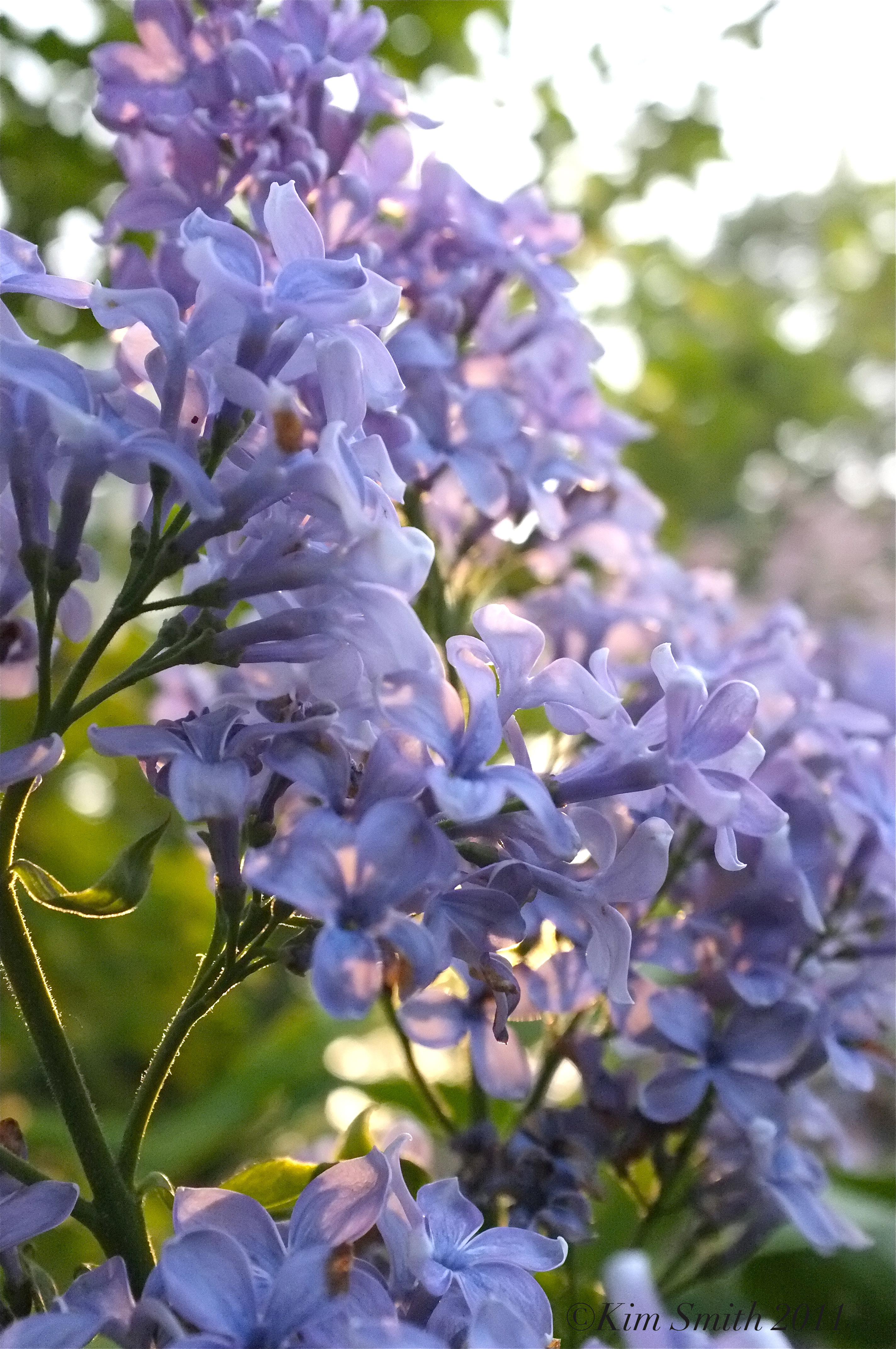 Blue Lilac ‘President Grevy’
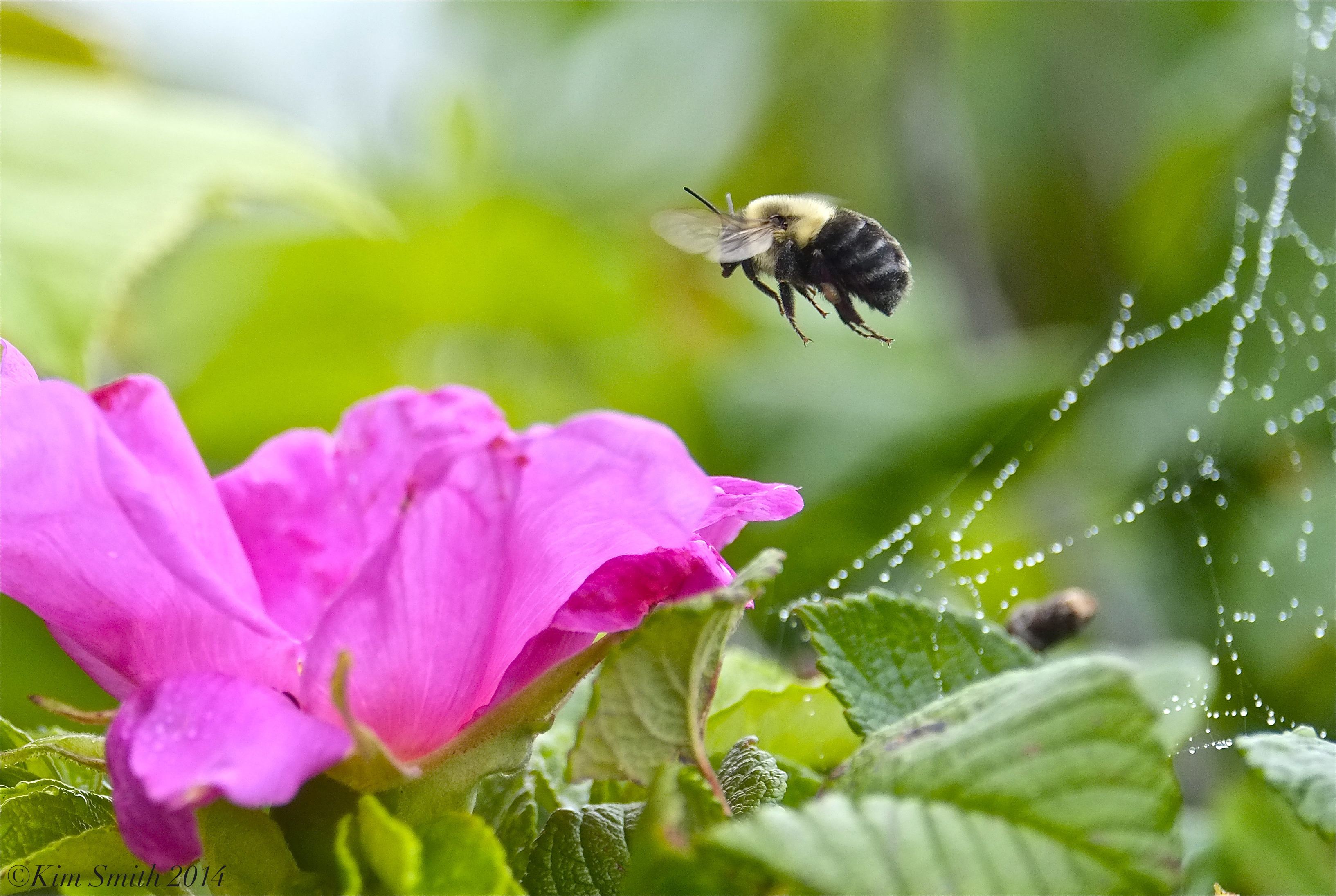 Rosa rugosa and Bee
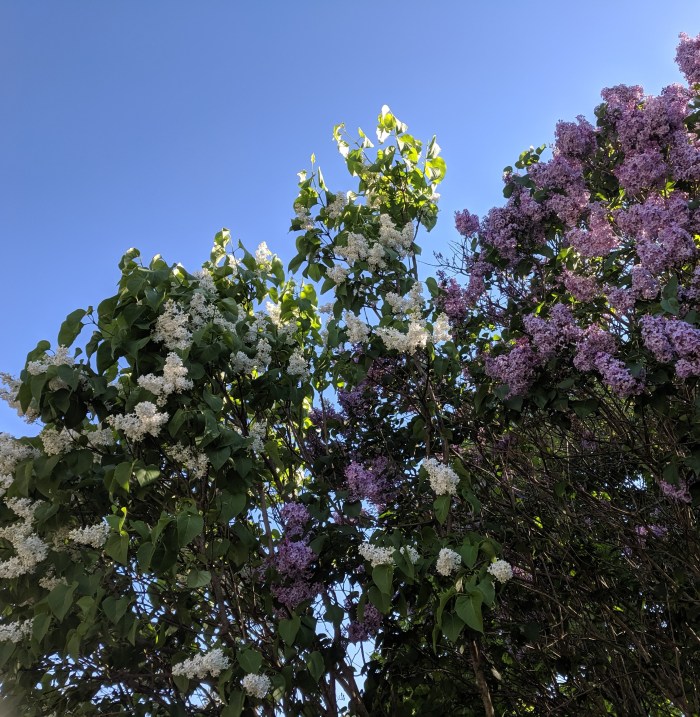
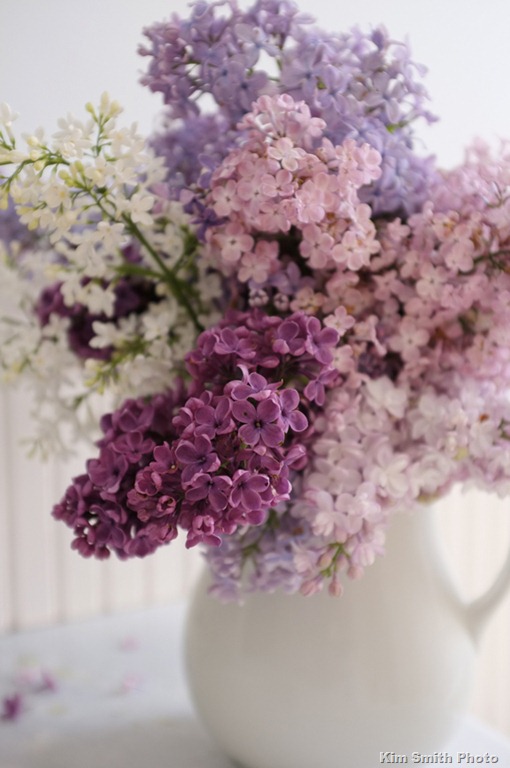
 Lilacs flower in an array of beautiful hues

Lilacs,
False blue
White
Purple
Colour of lilac
Heart-leaves of lilac all over
New England,
Roots of lilac under all the soil
of New England,
Lilacs in me because I am
New England,
because my roots are in it,
Because my leaves are in it,
Because my flowers are for it,
Because it is my country
And I speak to it of itself
And sing of it with my own voice
Since certainly it is mine.
—from Lilacs by Amy Lowell (1874–1925)
Surely at the top of the list of shrubs to grow for creating the framework of an intimate garden or garden room are lilacs, in particular Syringa vulgaris and their French hybrids. Syringa vulgaris are grown for their exquisite beauty in both form and color of blossoms, although it is their fragrance flung far and throughout gardens and neighborhoods that make them so unforgettable.
Not all species of Syringa and cultivars of Syringa vulgaris are scented. The early French hybrids and hybrids of Leonid Kolesnikov have retained their fragrance.Syringa oblata has a similar fragrance, though is not nearly as potent. Several of the Chinese species have a spicy cinnamon scent, while many of the Asian species and their hybrids have very little, if any, fragrance. To find your personal preference, I suggest a visit to a local arboretum, or take your nose to the nursery during the extended period of time (six to eight weeks, or so) in which the different cultivars of S. vulgaris are in bloom.
For the rest of Kim’s Post check out and subscribe to her blog- Kim Smith Designs

 Good Morning Gloucester