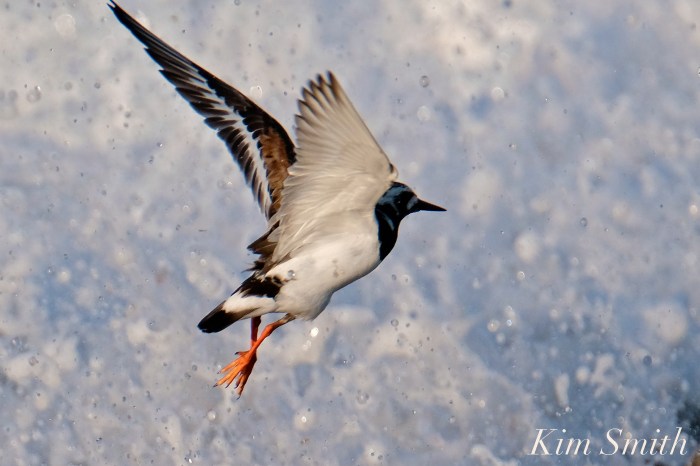
THAT CALICO CAT BIRD -RUDDY TURNSTONES MIGRATING THROUGH CAPE ANN!

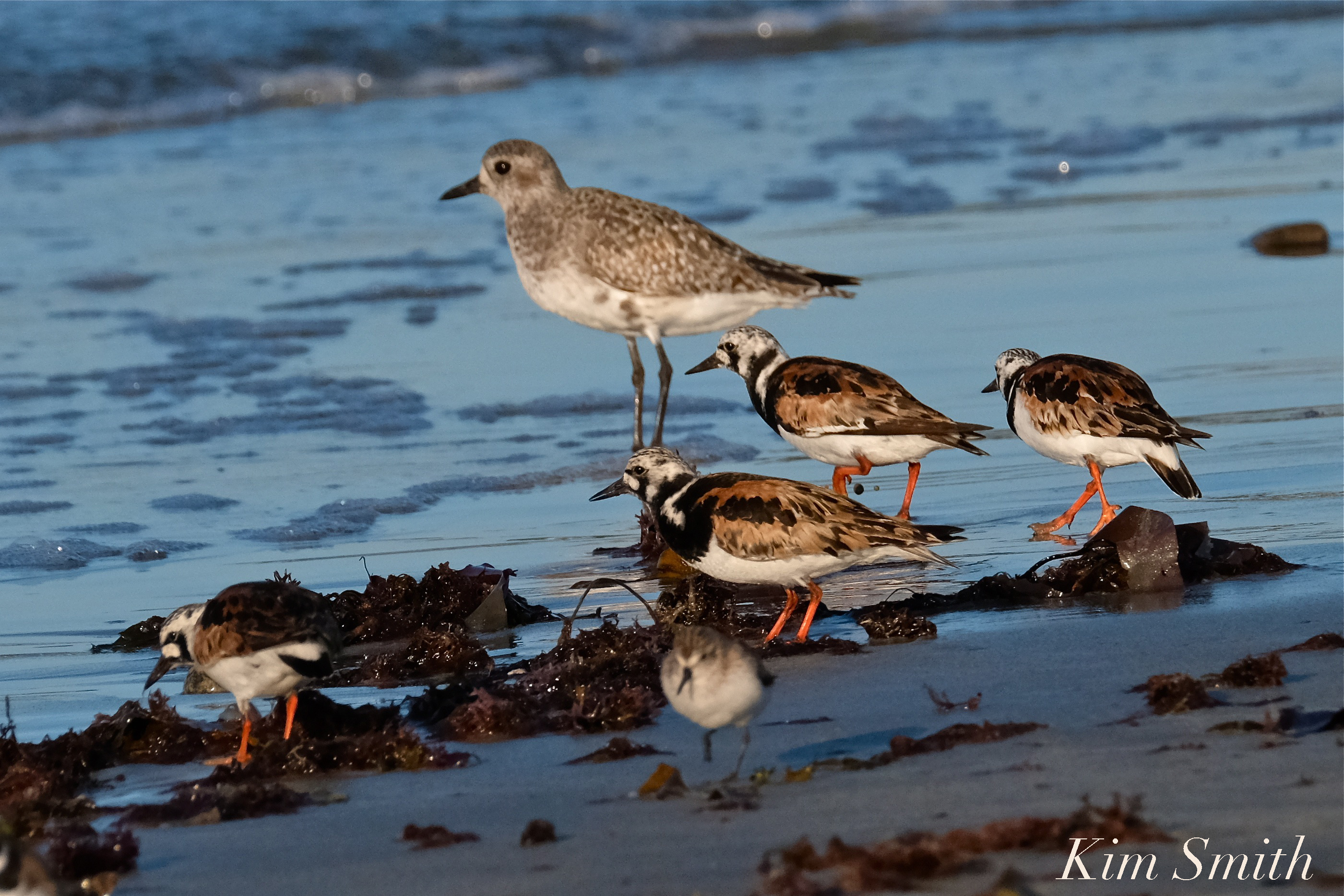
For the past several weeks a beautiful mixed flock of shorebirds has been stationed along our shores, foraging and fattening up for the next leg of their journey. The flock includes one gorgeous long-legged Willet, two teetering Spotted Sandpipers, half a dozen chunky Ruddy Turnstones, a dozen or so skittish Black-bellied Plovers, and dozens and dozens of sociable Semi-palmated Plovers, Semi-palmated Sandpipers, and Sanderlings.
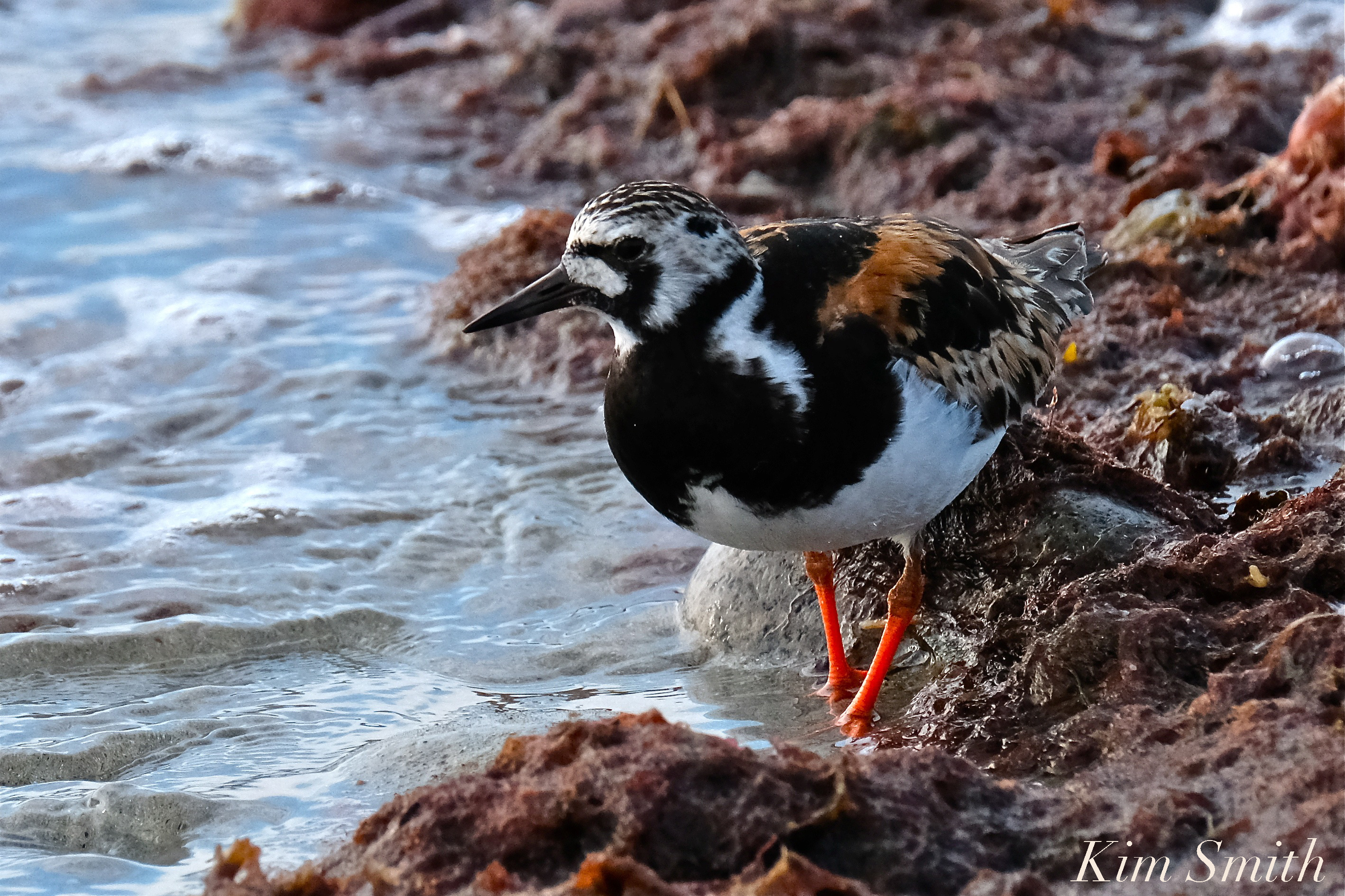
Today’s feature is the Ruddy Turnstone, which I wrote a bit about here: RUDDY TURNSTONE.

It was later in the season when the photo in that post was shared and that bird had lost much of its breeding plumage.
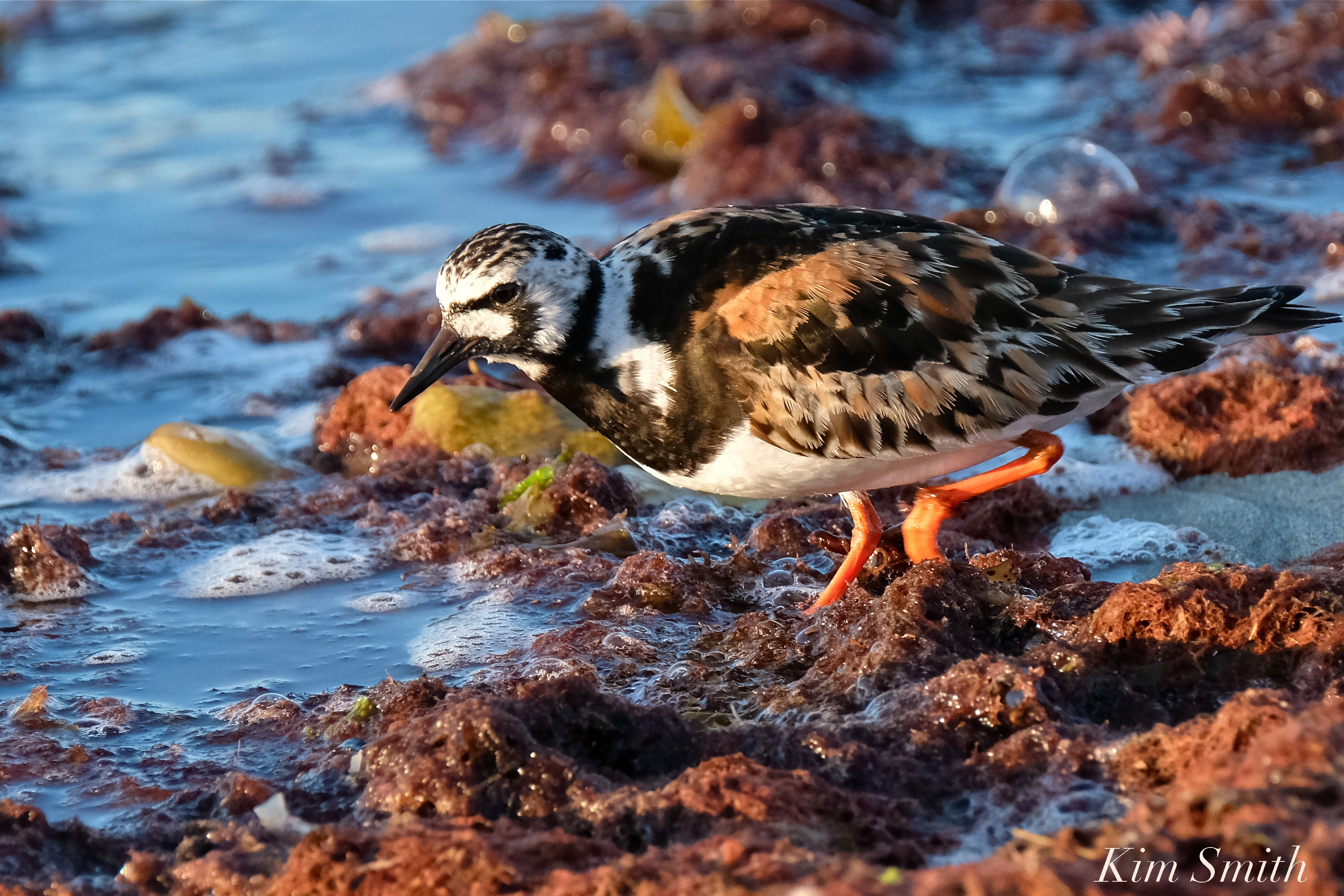
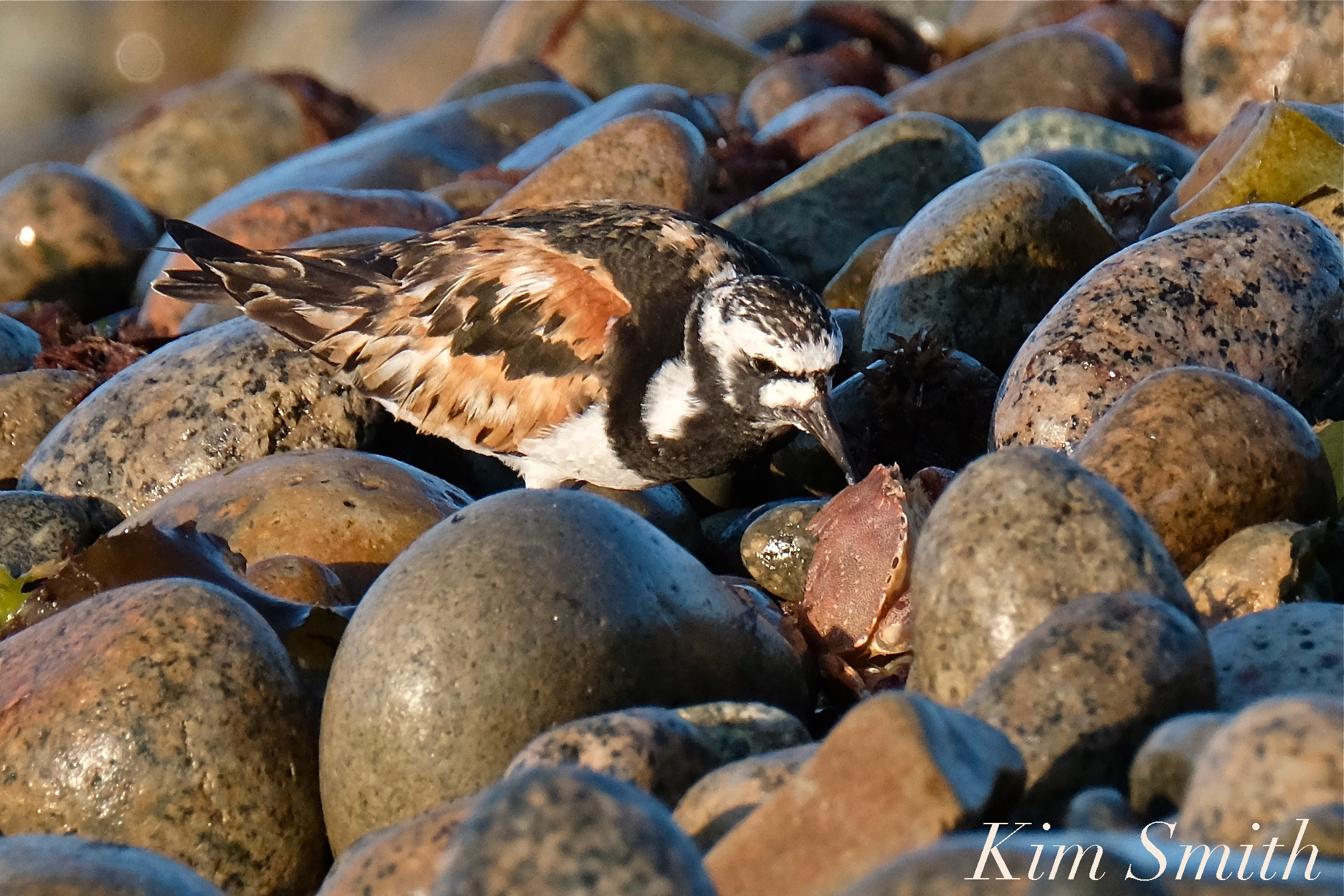
The flock that is here now is still vibrantly colored in its feathered pattern of rust, white, and black–just like a calico cat. Notice its bright orange legs and chunky little shape. They run in and out of the surf vigorously pulling at seaweed mostly looking for tiny invertebrates.
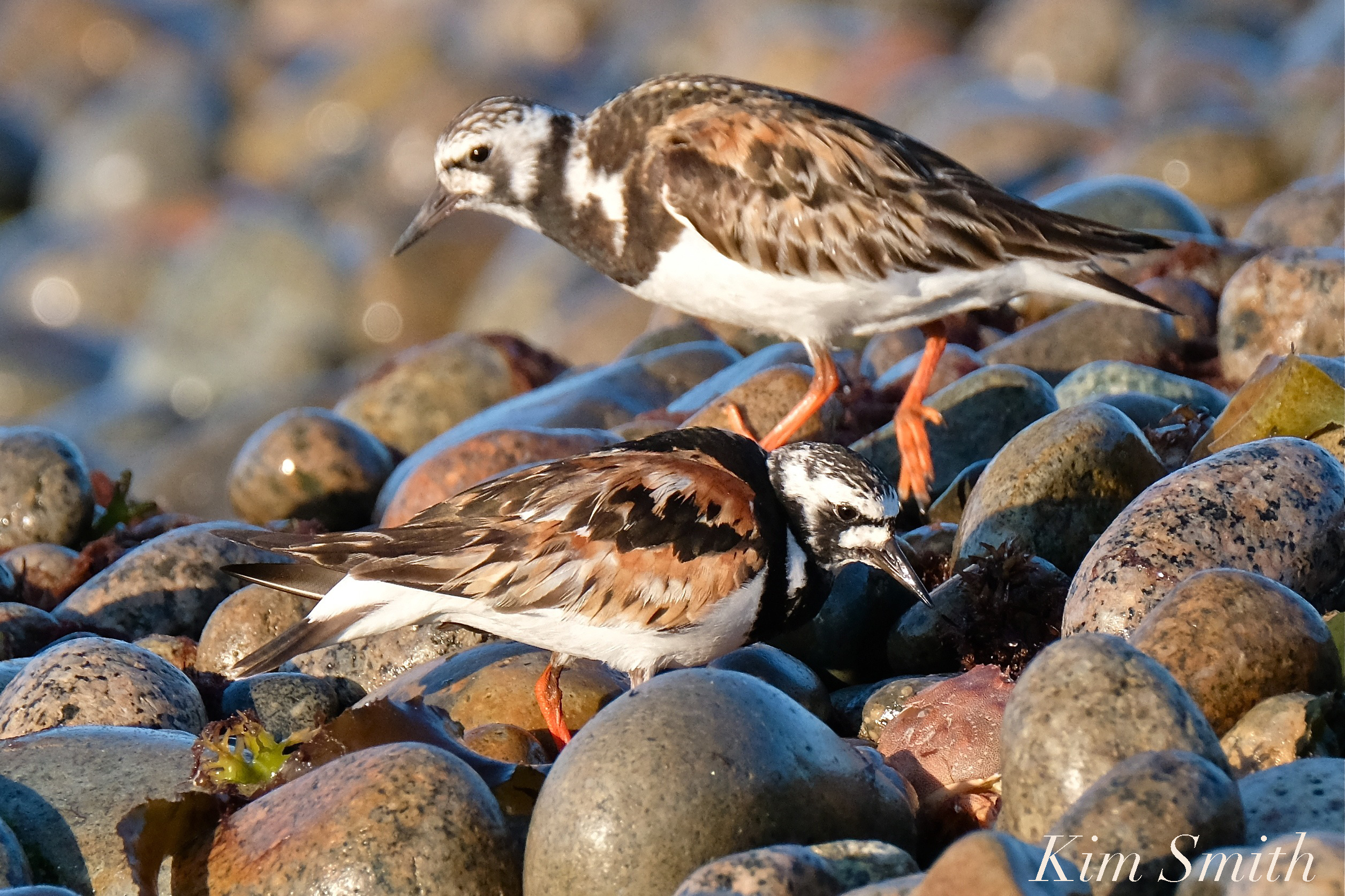
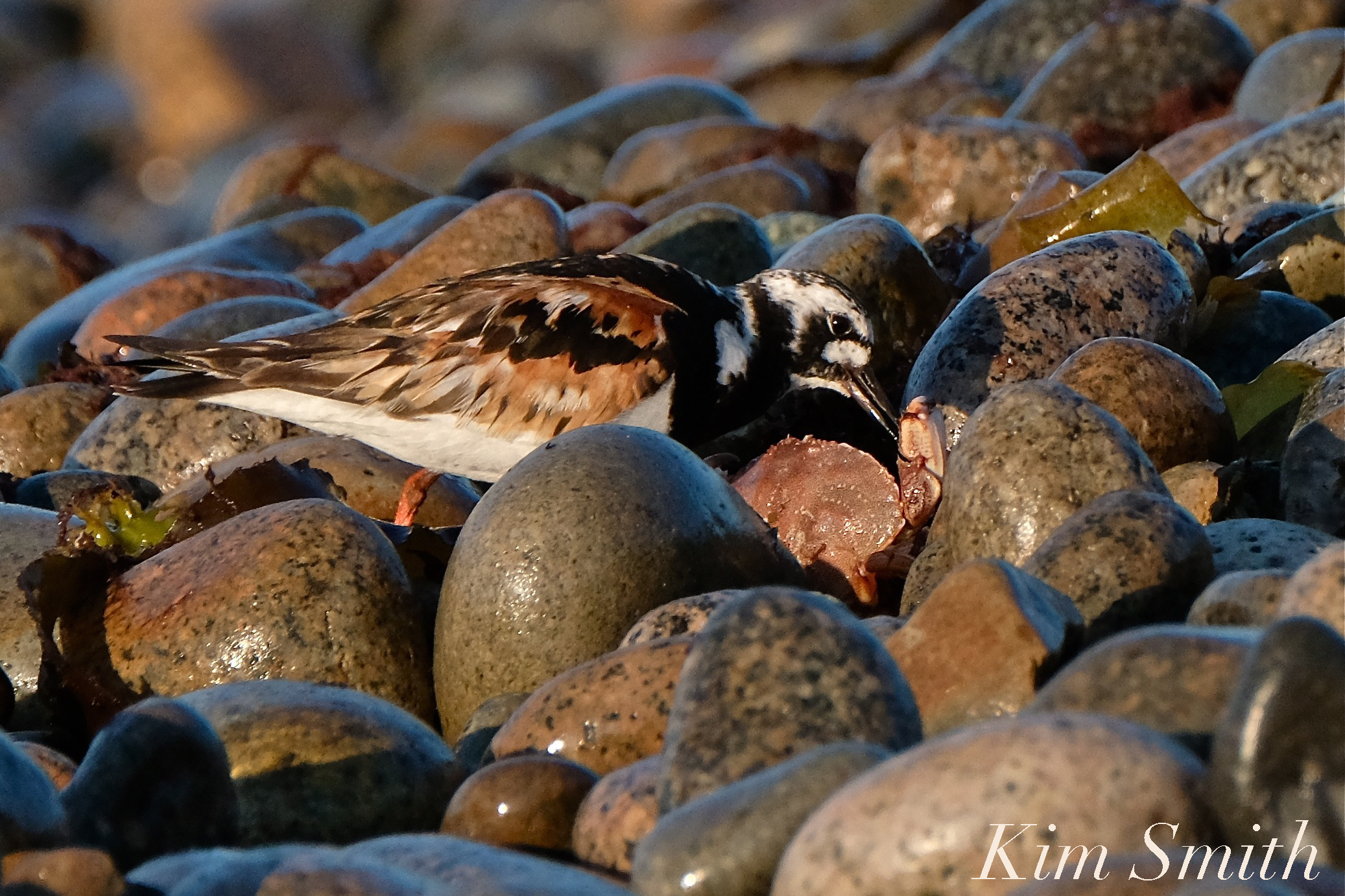
A pair shared a crabmeat breakfast, scavenged from between the rocks.

If you are seeing Ruddy Turnstones, please write and let me know. Thank you!

RUDDY TURNSTONE ON CAPE ANN

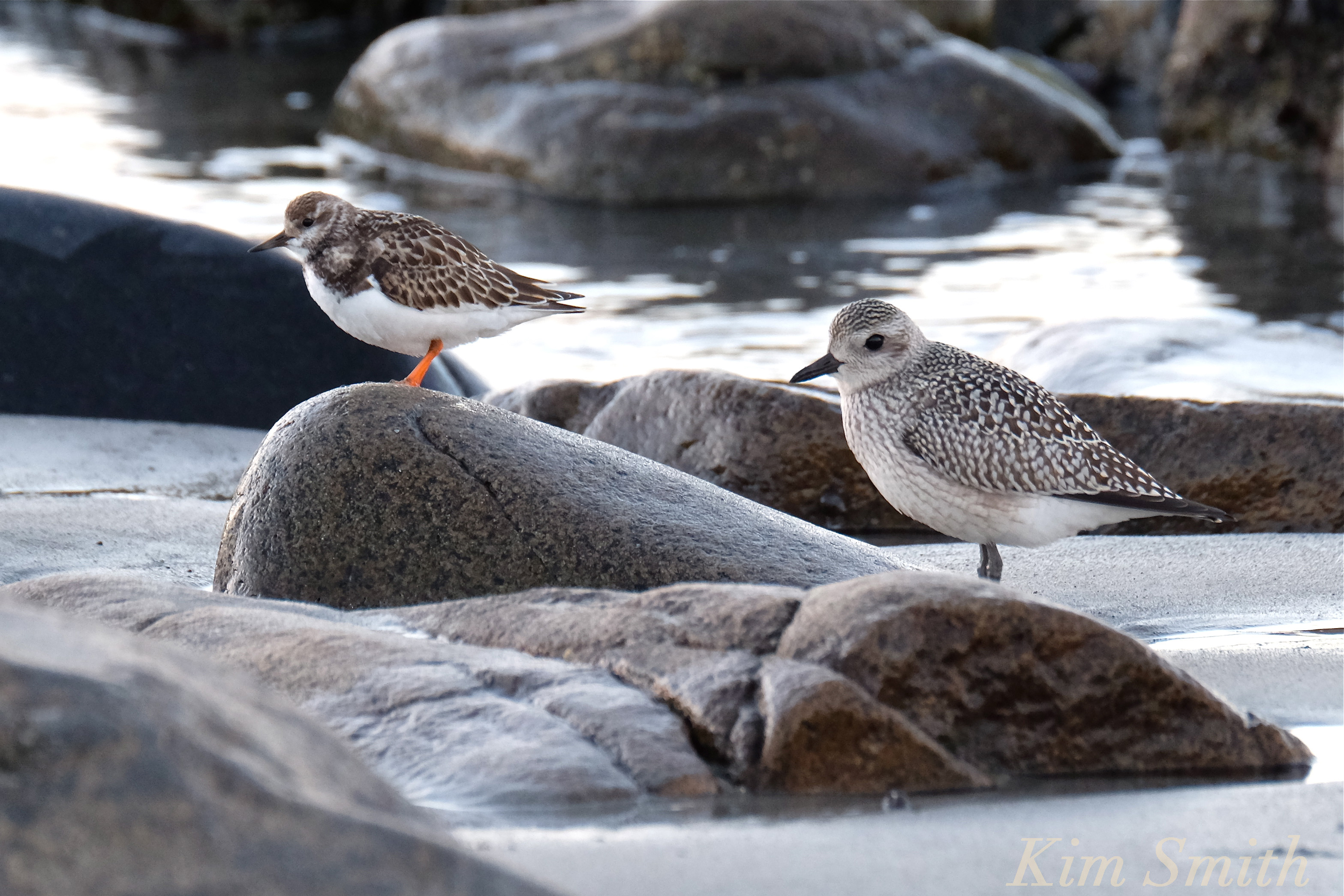
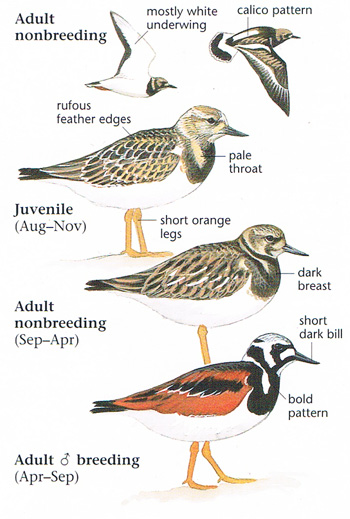
ruddy-turnstone-rockport-massachusetts-copyright-kim-smithHere’s another sweet little migrating feathered friend observed recently on our shores. A bit bigger than the Sanderlings, and not quite as large as the Black-bellied Plovers with which it was feeding, the solitary Ruddy Turnstone’s bright orange short, stocky legs and big feet are what caught my attention. Although its behavior is anything but, the Ruddy Turnstone is anther one of the birds whose plumage appears almost boring compared to its beautiful harlequin patterned summer coat.

ruddy-turnstone-black-bellied-plover-massachusetts-copyright-kim-smith

Ruddy Turnstone, left, Black-bellied Plover, right

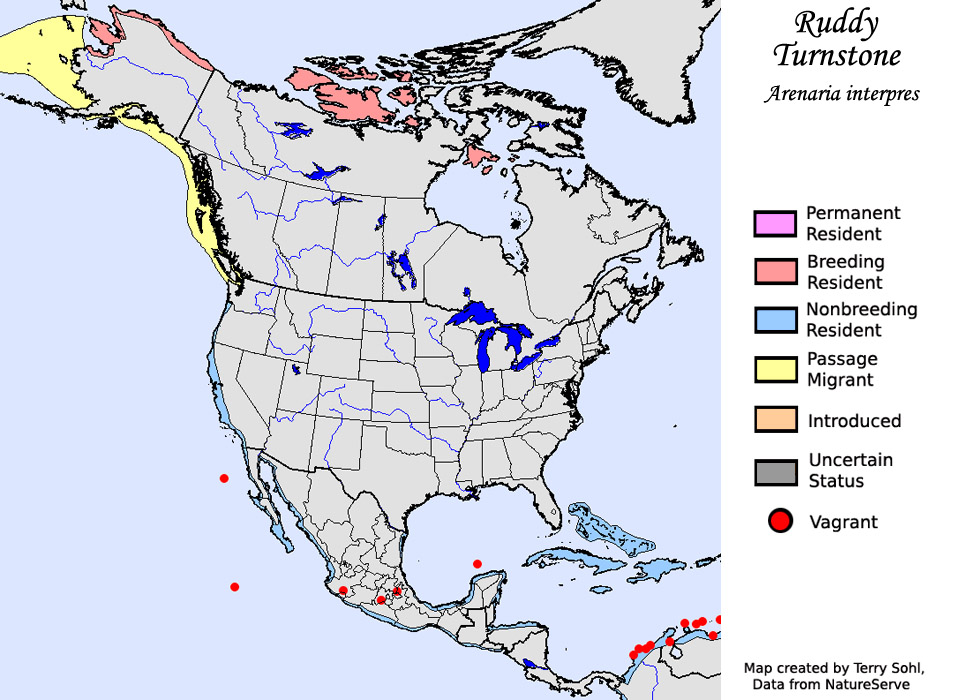
As are Black-bellied Plovers and Red Knots, the Ruddy Turnstone is highly migratory, breeding on the rocky coasts and tundra of the Arctic and spending winters in coastal areas throughout the world. And like members of the plover family, the male’s nest-like scrapes are part of the courtship ritual. I was excited to learn Ruddy Turnstones’s are a member of the plover family (Charadriidae) and thought it would be a great addition to our Piping Plover documentary however, as scientists are want to do, they have reclassified the RT and it is now considered a member of the sandpiper family (Scolopacidae). Oh well.ruddyturnstone

During the non-breeding season, look for the Ruddy Turnstone on rocky shorelines where it energetically feeds by probing and pecking, seeking aquatic invertebrates and insects at the surface of rocks. I believe Ruddy Turnstones are seen with regularity on the “other” Cape. I wonder how many of our readers see Ruddy Turnstones on Cape Ann, and if so so where, and what time of year? Please share, if you do, the information is wonderfully helpful. Thank you!ruddy_turnstone_map_big