“How much is known about the Gulf of Maine?”
“Practically nothing.”
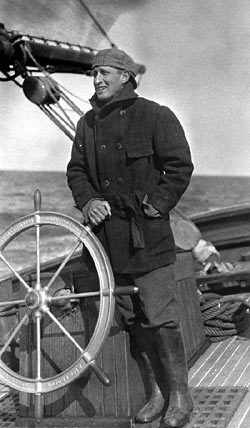
So, according to his memoirs, went the conversation that kicked Henry Bryant Bigelow (Harvard) ’01, Ph.D. ’06, S.D. ’46, out of a rut and onto the Gulf of Maine, which he would transform from a scientific unknown to one of the most thoroughly studied large bodies of water in the world–and in doing so, set modern oceanography on an “interdisciplinary,” “ecosystemic” course before either term existed. Bigelow developed a rigorous, integrative approach to oceanography that he eloquently propagated for decades. Along the way, he served what he reckoned to be the longest tenure in Harvard’s history, working as a researcher, instructor, and professor of zoology from 1906 to 1962–for which he solicited and received, he recalled with typical humor in the memoirs, the only bottle of whiskey ever presented to anyone by the President and Fellows of Harvard College. (By David Dobbs, for Harvard Magazine) https://harvardmagazine.com/1999/01/vita.html
Fishes of the Gulf of Maine by Bigelow and Schroeder has long been known simply as Bigelow and Schroeder. Dr. Henry Bryant Bigelow (1879-1967) was founding director of Woods Hole Oceanographic Institution. https://www.whoi.edu/main/profile/henry-bryant-bigelow
Photograph courtesy of WHOI archives: Dr. Henry Bryant Bigelow at the helm of Grampus in the Gulf of Maine, 1912

 Good Morning Gloucester