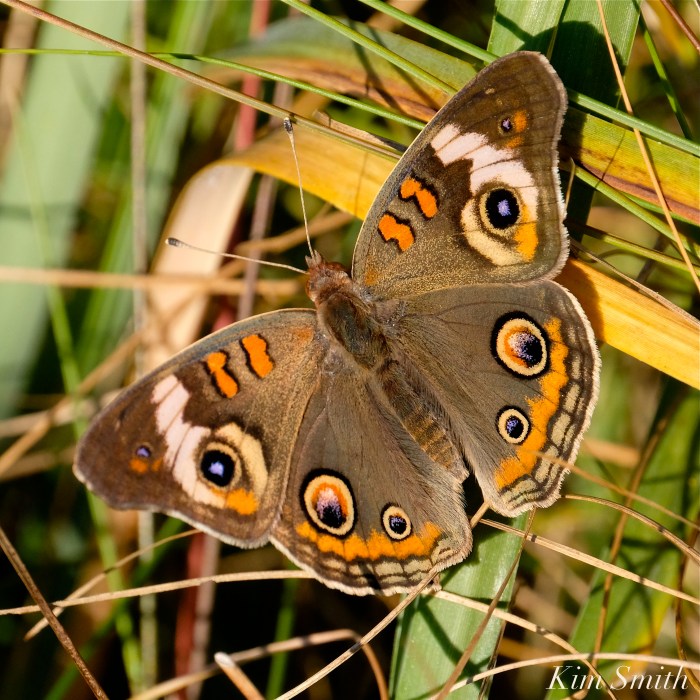
The colorful concentric and contrasting circles, or eyespots, that we see on butterfly and moth wings function in two ways as defense against predators.
The first theory is that the false eyes evolved as a way to intimidate a predator by mimicking the eyes of a snake or mammal. The attacker thinks they are facing a large dangerous animal. The wings that have the most glistening eyespot centers are found to be the most effective in deterring predators.
A second use for the eyespots may be to draw attention away from the main body parts, the head, thorax, and abdomen. If the predator takes a snip out of the butterfly’s colorful wing, the butterfly is more likely to survive than if its head is attacked.
Eyespots don’t just appear on butterflies–fish, reptiles, birds, and many other species of insects have developed false eyes.
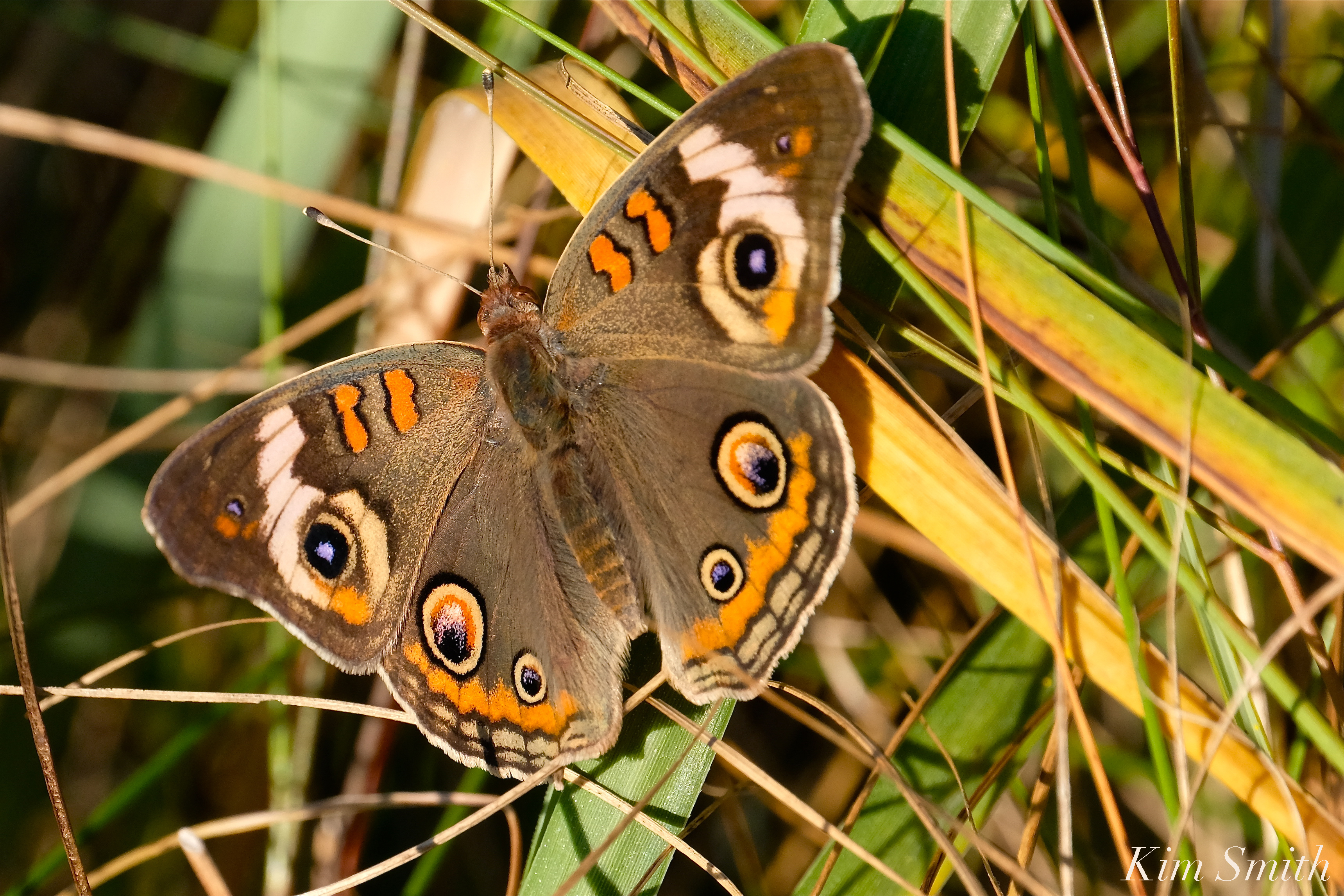 The beautiful eyespots of the Common Buckeye Butterfly

 Good Morning Gloucester