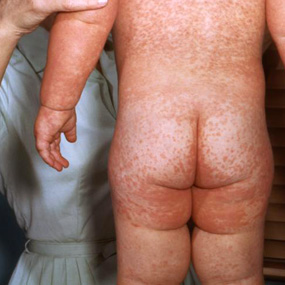
Who would purposefully subject their child to this?
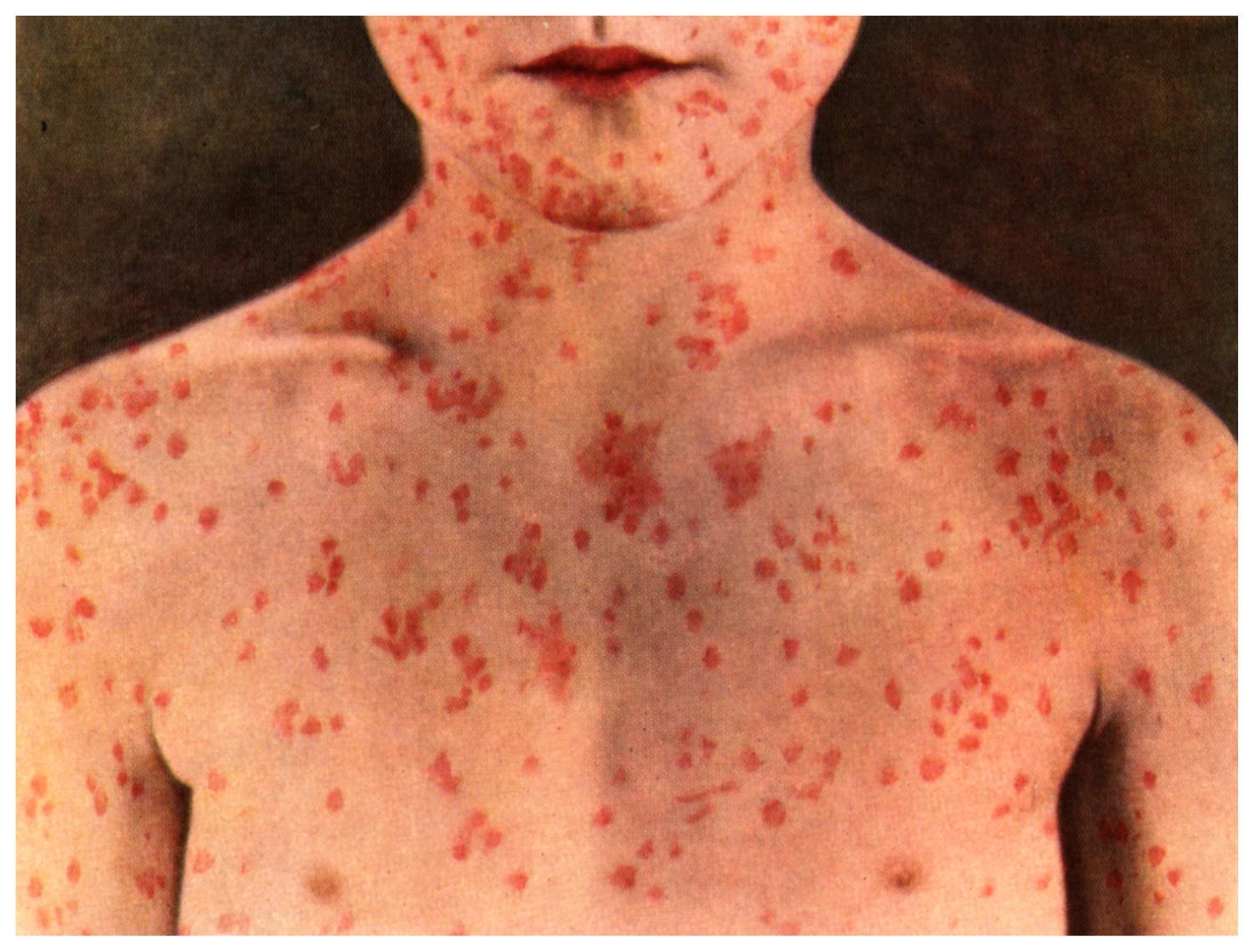
Measles is a highly contagious respiratory virus spread through coughing and sneezing. A parent’s choice not to vaccinate is understandable if for a medical reason, such as their child has leukemia and its immune system is so horribly weakened he or she cannot tolerate the vaccine. Frankly, though all other reasons, religious or political, seem utterly ridiculous.
Did you know that Russia, China, Libya, Iran, and Zimbabwe have a higher measles immunization coverage for one year olds than does the United States?
Children younger than one year old cannot be vaccinated against the measles. They benefit from the herd immunity theory, which is the idea that if all other age groups have received the vaccine, the very youngest will not come in contact with the disease.
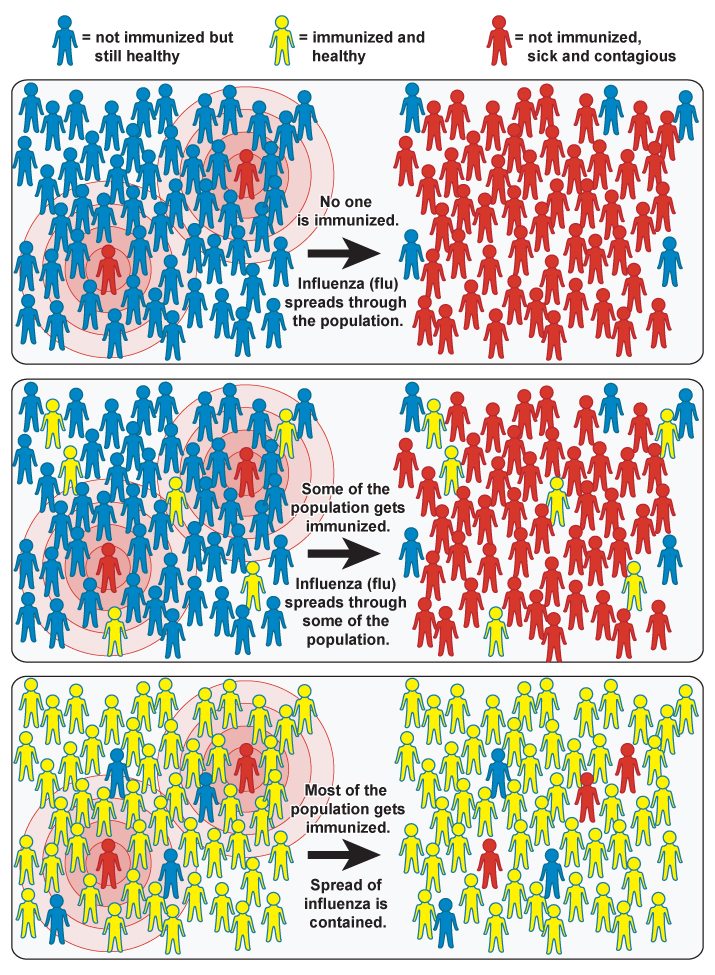
The terrific graphic shown below (wiki) illustrates the herd immunity theory, also called community immunity.
From wiki:
Herd immunity or herd effect, also called community immunity, describes a form of immunity that occurs when the vaccination of a significant portion of a population provides a measure of protection for individuals who have not developed immunity. Herd immunity theory proposes that, in contagious diseases that are transmitted from individual to individual, chains of infection are likely to be disrupted when large numbers of a population are immune or less susceptible to the disease. The greater the proportion of individuals who are resistant, the smaller the probability that a susceptible individual will come into contact with an infectious individual.
Vaccination acts as a sort of firebreak or firewall in the spread of the disease, slowing or preventing further transmission of the disease to others. Unvaccinated individuals are indirectly protected by vaccinated individuals, as the latter are less likely to contract and transmit the disease between infected and susceptible individuals. Hence, a public health policy of herd immunity may be used to reduce spread of an illness and provide a level of protection to a vulnerable, unvaccinated subgroup. Since only a small fraction of the population (or herd) can be left unvaccinated for this method to be effective, it is considered best left for those who cannot safely receive vaccines because of a medical condition such as an immune disorder, organ transplant recipients, or people with egg allergies.

 Good Morning Gloucester