 Male Common Eider (center) with Male Buffleheads
Last week a reader wrote asking how to tell the difference between Buffleheads and Common Eiders. Both males of the species are black and white and both frequent our shores during the winter months. The easiest difference is that the Eiders are much larger, about 25 to 27 inches, while Buffleheads are about half the size of an Eider, only measuring 11-15 inches in length. Common Eiders are the largest diving duck in North America; the Bufflehead the smallest diving duck.
 Eiders have a long sloping bill and move rather slowly.

Male and Female (right) Buffleheads
Buffleheads are sprightly and butterball shaped. From a distance the male Bufflehead looks striking, appearing black and white. Up close, the head feathers are a stunning iridescent purple and green. Both Eiders and Buffleheads can be seen feeding all along the Massachusetts coastline during the winter months. Buffleheads inhabit fresh water ponds and salt water whereas Common Eiders are sea ducks. During the summer breeding season, Common Eiders are found across Alaska and Canada all the way south to our region, whereas Buffleheads breed in the boreal forests and aspen parklands of Canada and Alaska.
I am sure you’ve heard of eiderdown pillows and quilts. The eiderdown, plucked from the female’s breast to line the nest, can be collected sustainably and safely after the ducklings leave the nest. Eiderdown has been largely replaced by down from farm raised geese.
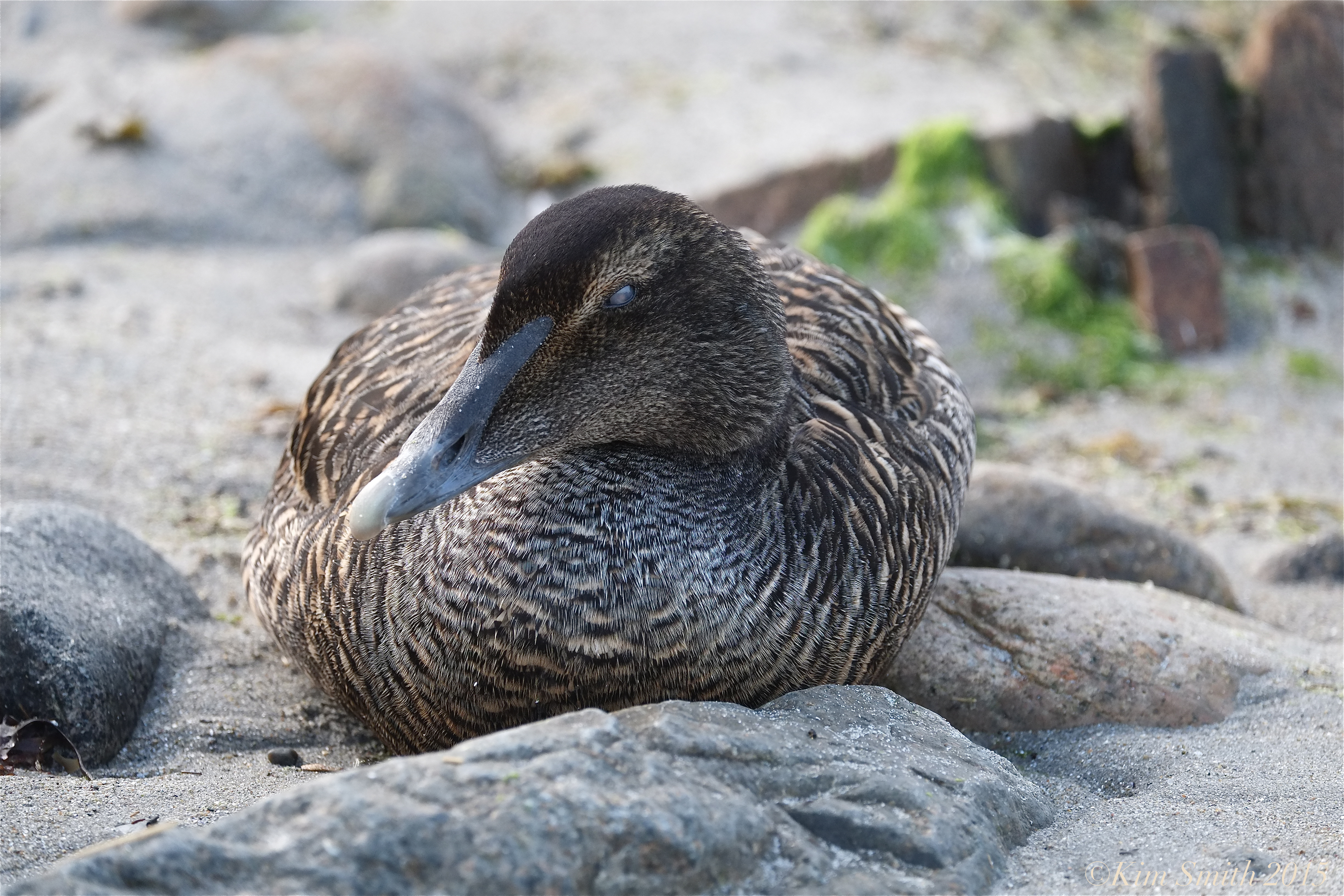 Female Common Eider

 Good Morning Gloucester