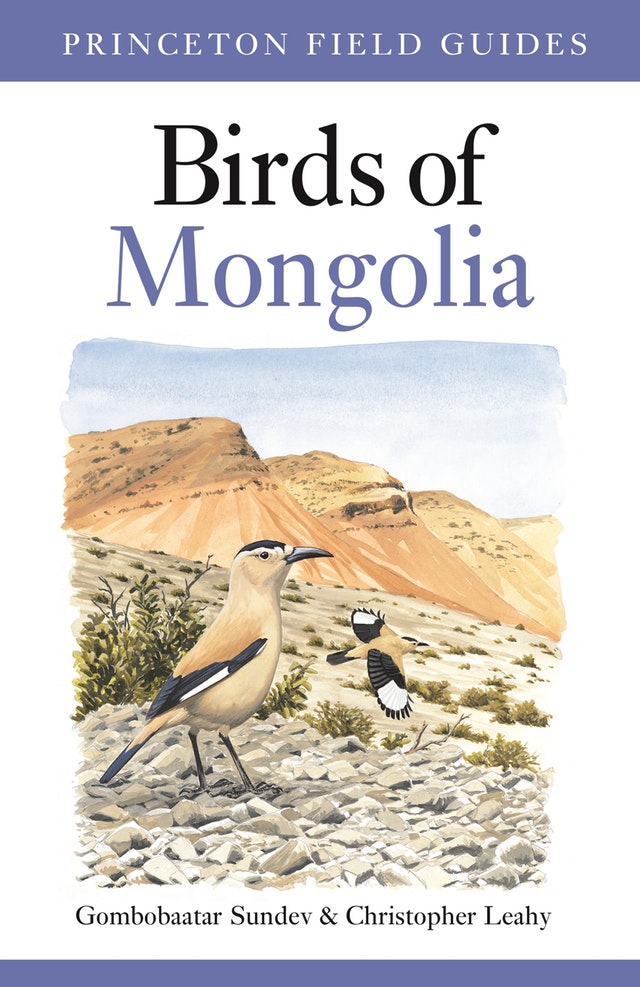
The fourth program of The Writer’s Block with John Ronan’s 30th anniversary features Chris Leahy on Birds of Mongolia, co-written with Gombobaatar Sundev.
“Mongolia is one the most unspoiled regions on earth, rich in spectacular landscapes, and home to abundant wildlife and some of the world’s rarest birds. Chris Leahy is an expert naturalist and birder and has been exploring Mongolia since 1982. Leahy served as Director of Mass Audubon’s Center for Biological Conservation and is the holder of the Bertrand Chair (emeritus). Gombobaatar Sundev is Mongolia’s most famous ornithologist.”
Spread The GMG Love By Sharing With These Buttons:
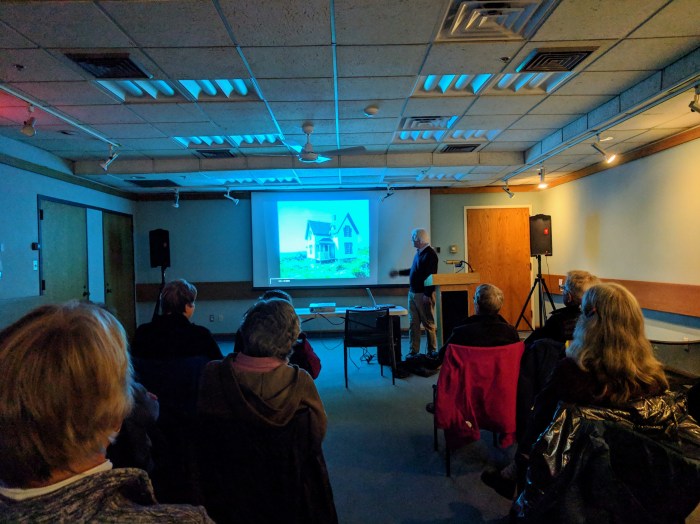
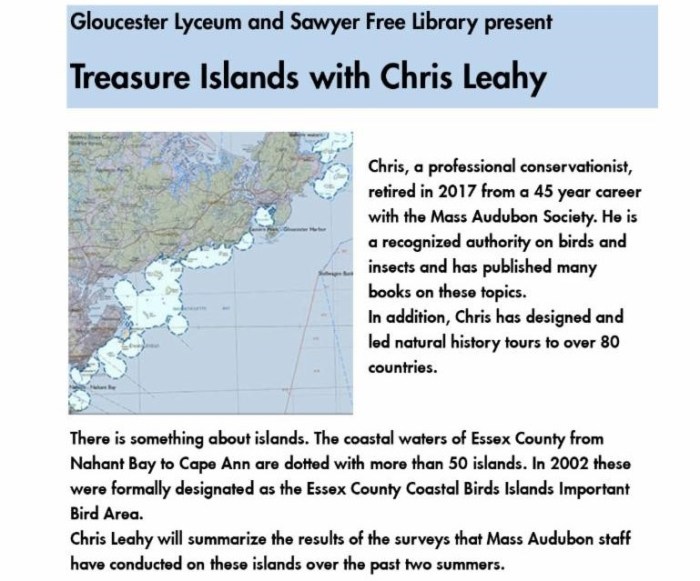
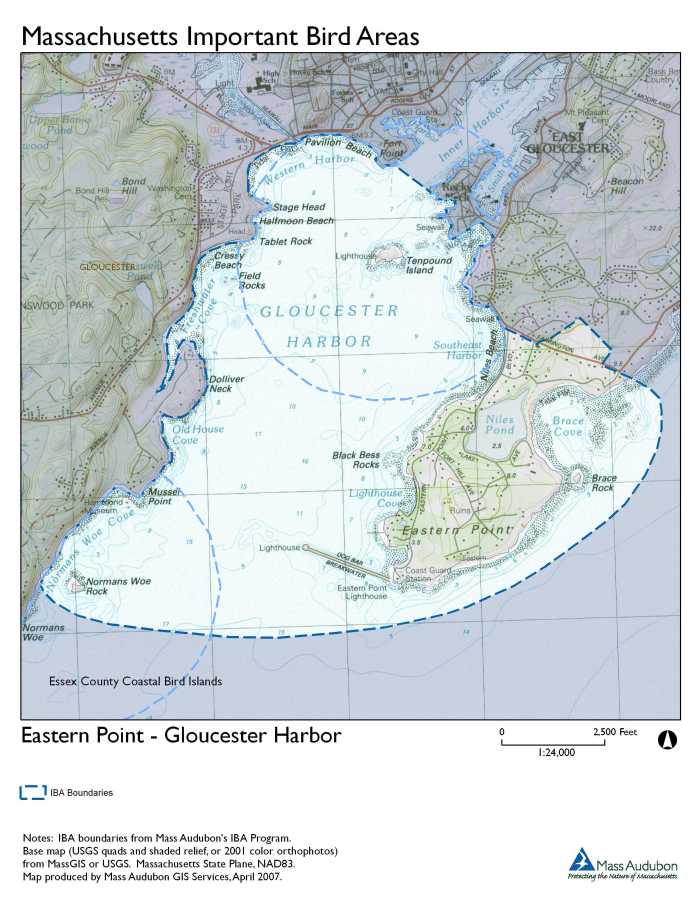
Esteemed conservationist and bird and insect authority, Chris Leahy discussed recent multi-year surveys of Essex County islands for Mass Audubon and Mass Fish & Wildlife with humor and depth as only he can having resided on the North Shore, in Gloucester, and championed this Important Bird Area for some 50 years.
The islands range in size and offer different kinds of nesting habitat. There are great shoals for fishing. Islands include familiar names like Tinkers, Straitsmouth, Thacher, Children’s, Kettle, House, Eagle, Ram, Cormorant and Ten Pound. Leahy recalled visiting some in the 1960s-70s for the first ever field counts with Dorothy “Dottie” Addams Brown, Sarah Fraser Robbins & others, and readily compares data then and now.
Some of the bird species making the count: gulls, egrets, herons, cormorants, harlequin duck, geese, loon, coots, purple arctic sandpiper, common eiders, and snowy owls. There are not a lot of songbirds due to restricted habitat although so many song sparrows he quips, “it almost feels like they’re going to attack.” Predators do and did. Gulls and rats stuck in my mind, and our ruinous plume hat trade. At that time “Snowy egrets– in FLA and elsewhere south– were slaughtered for plumage developed solely at breeding time, leaving any young to die and rot.”
Climate is partly a factor and population dispersement in the birds they find. Sometimes there are great “fallout” of migratories which are unpredicatable and awesome. Various species are easier to count especially those perched amid low tree shrubs. Guess which ones? Forgot the burrowers! Forecasts are exciting. He predicts we might see Manx shearwters maybe nesting here in the coming years.
Kindness of organizations and people with boats helps make this happen. And one steel hulled sailboat that makes access to these rocky isles a bit more possible.
Chris Leahy presented Treasure Islands for Gloucester Lyceum & Sawyer Free Public Library. Mary Weissblum has endeavored to host evenings for Leahy’s numerous publications and projects, so many that she’s lost count. “Always a treat to be educated and charmed by his incredible store of knowledge,” she writes. Look for Chris Leahy’s next talk.
Learn more about Thacher Island Association (Paul St Germain) here
Two+ centuries of naturalists in Gloucester is quite a legacy. Here’s a partiallist from Robbins to Cramer and Smith to Smith–there have been notable champions most every decade.
Mason Walton (Hermit of Gloucester)
Alpheus Hyatt, principal founder of world famous Marine Biological Laboratory at Woods Hole– from 1880-1886 the school was on Goose Cove and later off Lobster Cove
BH VanVleck (wrote book with David Starr)- instructor at Annisquam seaside laboratory
Samuel Sawyer land conservation
Alfred G. Mayor (Hyatt’s son in law) marine zoologist- his studies on marine life led to 1905 book Sea Shore Life
Prince Mahidol of Thailand “Sanitary Survey of the City of Gloucester, Massachusetts 1921 by M. Songkla” in city archives- Includes brief history of Gloucester and description of public health activities
Roger Babson land conservation and watershed
Dr. Ralph Dexter, began his studies on marine life in 1933 (later Kent State) and chimney swifts
Ivy LeMon banded monarch butterflies to trace their migration wintering in Mexico
Sara Fraser Robbins curator of education ( the title of her classic book The Sea is All About Us was a nod to Gloucester summer resident TS Eliot’ Four Quartets)
Betty Smith
Dan Greenbaum
Sara Evans
Philip Weld, Jr
Jane Benotti
Deborah Cramer
Chris Leahy
Harriet Webster
Martin Ray
Kim Smith
Ian Kerr
organizations such as Gloucester Civic and Garden Club, Essex County Greenbelt, Mass Audubon, Ocean Alliance, Martime Gloucester, UMASS Marine Station…
Spread The GMG Love By Sharing With These Buttons:
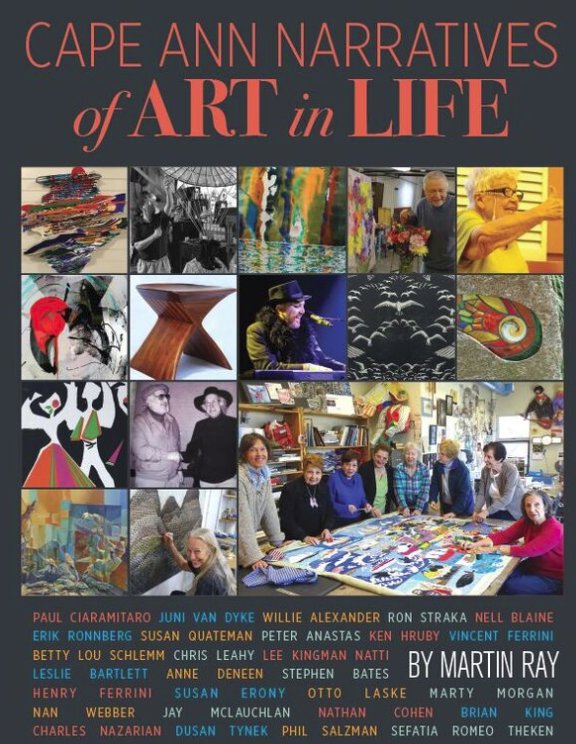
“The book will be offered for sale at $30.00 during a SIGNING PARTY at Trident Gallery, 189 Main Street, Gloucester, 3:00-5:00 Sunday afternoon December 10. At 4:00 I will give remarks of acknowledgement to the profilees and to the team which coalesced to grace the printed book with elegance. I hope to see you there.” – Martin Ray
January 13, 2018 Cape Ann Museum reception and panel
Spread The GMG Love By Sharing With These Buttons:
Reminder- Dogtown could be eligible for the National Register. A team of archaeologists began surveying and reviewing Dogtown the week of November 13. Come to a special public presentation TONIGHT – November 29th in Kyrouz Auditorium, Gloucester City Hall, 9 Dale Avenue, at 7pm.
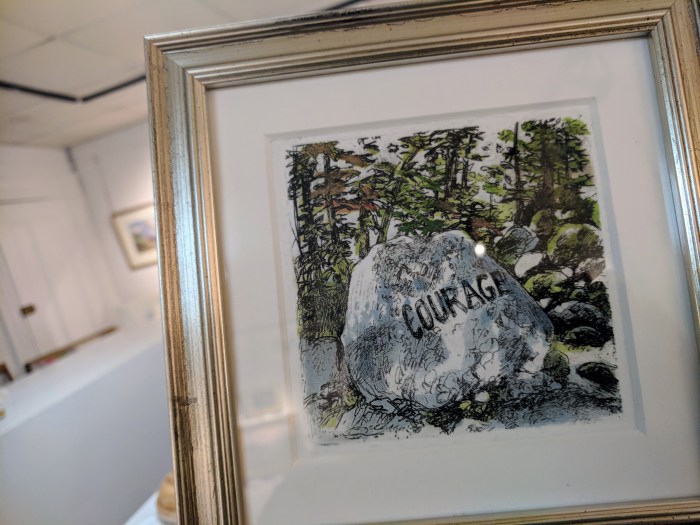
Artistic practice inspired by Dogtown takes on many forms across generations and centuries. I’ve shown examples of 20th century artists and writers connected to Dogtown. Here’s a 21st century one to note: Deborah Guertze, Babson Boulders # (Courage), original small and lovely hand colored etching, ed.50. This particular impression is currently for sale at Rockport Art Association.
“Presenters at City Hall on Nov 29th will include Betsy Friedberg from the Massachusetts Historical Commission, who will explain how the National Register program works and what it does and does not do, and Kristen Heitert from the PAL, who will present an initial plan for defining the boundaries of Dogtown as a National Register District. People attending the meeting will be asked to respond to that plan and to express their views about what makes Dogtown special. What should be the boundaries of the proposed National Register District, and what cultural features should be included in it? What would be the benefits of National Register status, and are there any drawbacks?”
Spread The GMG Love By Sharing With These Buttons:
Sharing press release from Mary Ellen Lepionka and Bill Remsen followed by a selection of visual arts, maps, and writing spotlighting Dogtown (1633-1961) by Catherine Ryan.
Nov 29th, 7PM, Public Meeting
Come to a special public presentation November 29th in Kyrouz Auditorium in Gloucester City Hall, 9 Dale Avenue, at 7pm.
Week of Nov 13
“During the week of November 13 a team of archaeologists from the Public Archaeology Laboratory (PAL) in Providence will be conducting fieldwork in Dogtown. They will begin mapping and describing an area to be nominated to the National Register of Historic Places, a National Park Service program to honor historically significant buildings and landscapes.
What do you think?
“Presenters at City Hall on Nov 29th will include Betsy Friedberg from the Massachusetts Historical Commission, who will explain how the National Register program works and what it does and does not do, and Kristen Heitert from the PAL, who will present an initial plan for defining the boundaries of Dogtown as a National Register District. People attending the meeting will be asked to respond to that plan and to express their views about what makes Dogtown special. What should be the boundaries of the proposed National Register District, and what cultural features should be included in it? What would be the benefits of National Register status, and are there any drawbacks?
Who all is involved?
“The Dogtown archaeological survey is funded through a matching grant from the Massachusetts Historical Commission and the Dusky Foundation and is financed by the City of Gloucester. The Gloucester Historical Commission applied for the grant and is coordinating the project in collaboration with the Rockport Historical Commission. The PAL team will also have the assistance of members of the Dogtown Advisory Committee, the Rockport Rights of Way Committee, the Cape Ann Trail Stewards, and the Friends of Dogtown.”
– Dogtown is eligible for the National Register. Will Gloucester earn another major district designation? Above excerpts from the press release for the Nov 29th event shared by Bill Remsen, local project coordinator, and Mary Ellen Lepionka, co-chair Gloucester Historical Commission, and some Dogtown maps and memorabilia 1633-1961
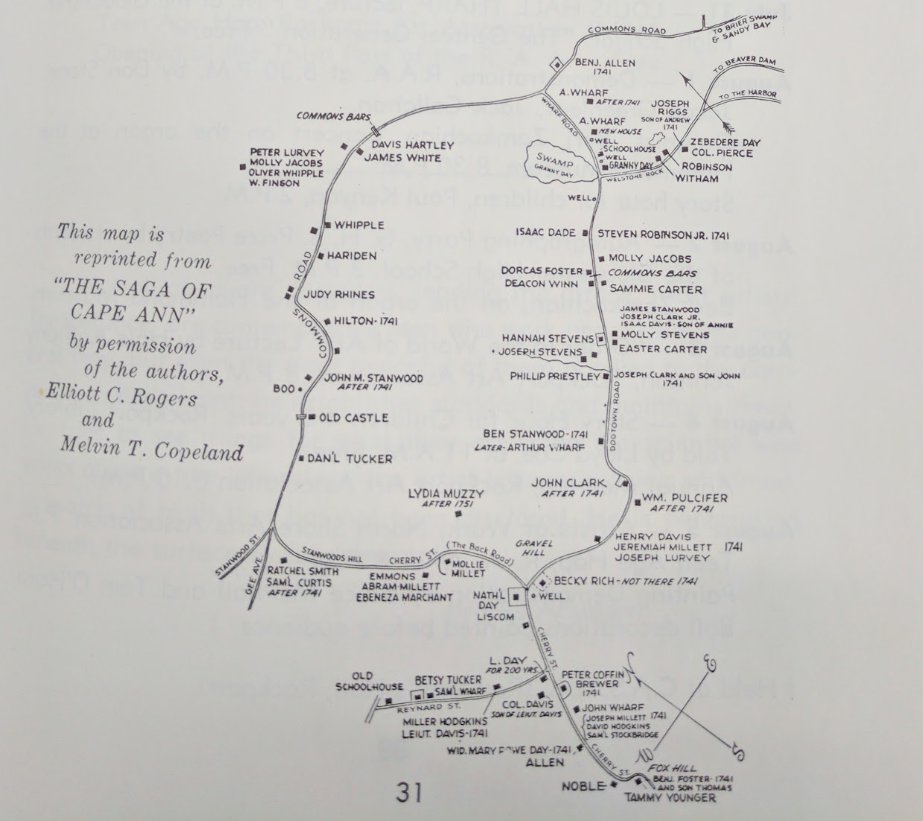
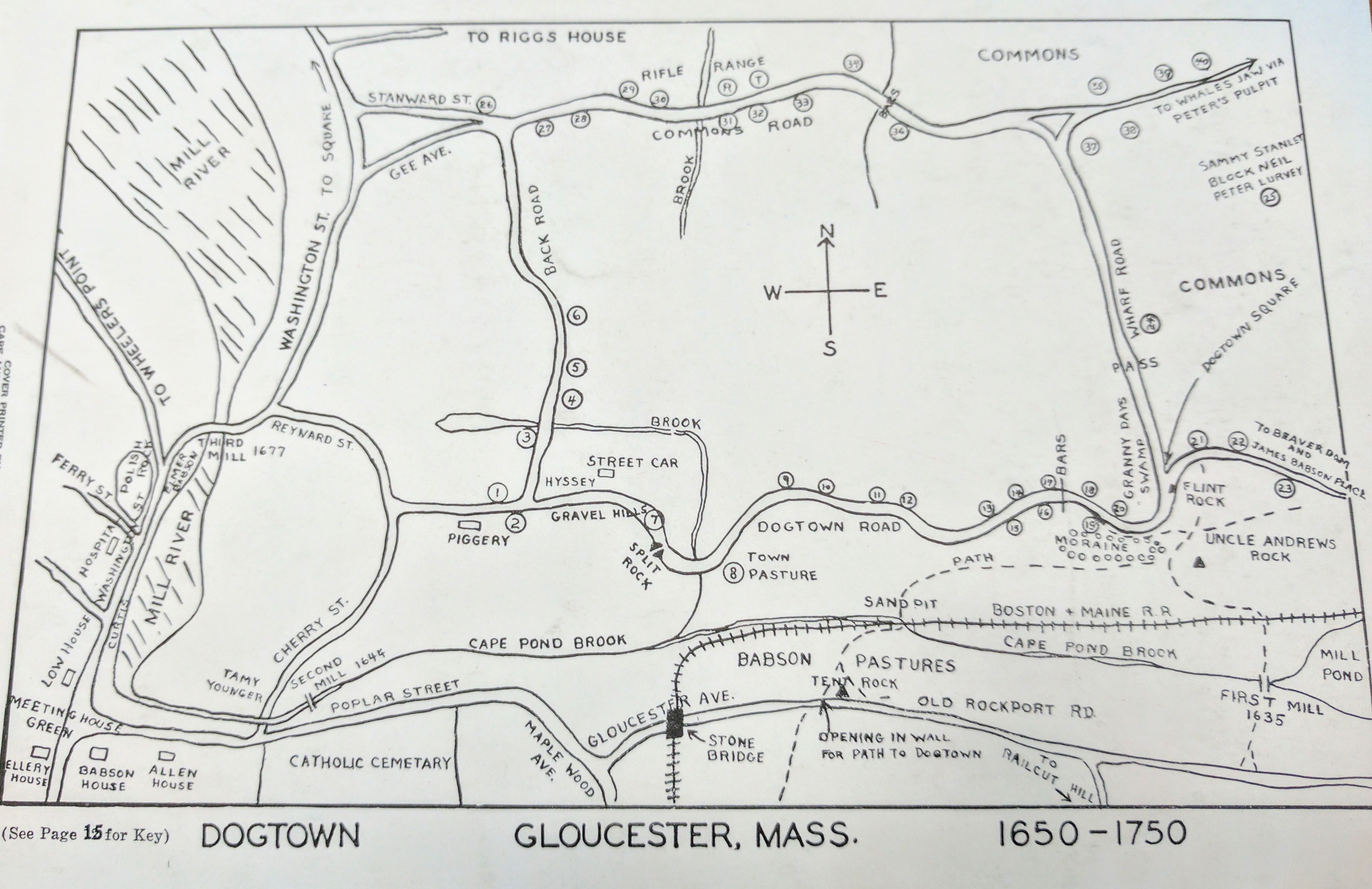
Dogtown Maps and memorabilia 1633-1961 selected by Catherine Ryan
Prior 2017 Dogtown public forums, lectures and meetings mentioned consideration of controlled burns to clear brush and return some land to a former moors state, with various potential benefits.
“Nature takes a lot of courses.” Chris Leahy said. He focused on Dogtown, “a very special place”, and possible merits of land stewardship geared at fostering greater biodiversity. Perhaps some of the core acres could be coaxed to grasslands as when parts of Gloucester were described as moors? Characteristic wildlife, butterflies, and birds no longer present may swing back.” March 4 2017 Dogtown Forum at Cape Ann Museumin collaboration with Essex County Greenbelt, Mass Audubon, and Friends of Dogtown group
February 23, 2017 Chris Leahy also gave a talk at Sawyer Free Library Dogtown- the Biography of a Landscape:750 Million Years Ago to the Present A photographic history through slides presented by the Gloucester Lyceum and the Friends of the Library
“Today the Hudson River Valley in upstate New York is gorgeous. The hills are covered with oak forests, and the valleys are patchworks of hayfields and farms. But Ostfeld says the area didn’t always look like this. When the Europeans came here hundreds of years ago, they clear-cut nearly all of the forests to plant crops and raise livestock. “They also cut down trees for commercial use,” Ostfeld says, “to make masts for ships, and for firewood.” Since then a lot of the forest has come back — but it’s not the same forest as before, he says. Today it’s all broken up into little pieces, with roads, farms and housing developments. For mice, this has been great news. “They tend to thrive in these degraded, fragmented landscapes,” Ostfeld says, because their predators need big forests to survive. Without as many foxes, hawks and owls to eat them, mice crank out babies. And we end up with forests packed with mice — mice that are chronically infected with Lyme and covered with ticks.”
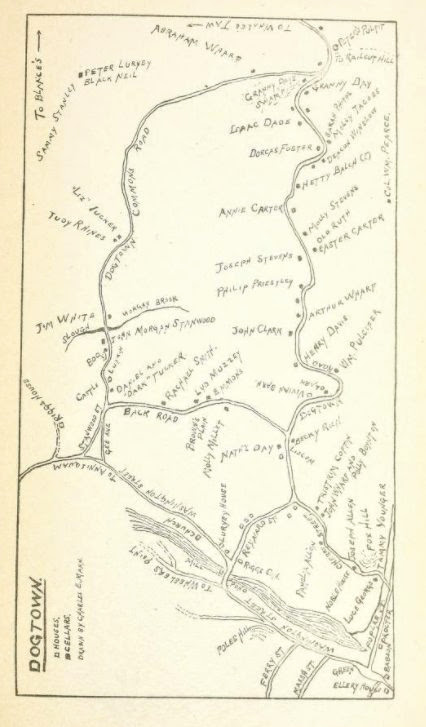
Selection of maps
from books, and memorabilia I’ve pulled on Dogtown (1634-1961):
1961
From Gloucester 1961 Cape Ann Festival of the Arts booklet
1954
From Gloucester 1954 Festival of the Arts booklet, prepared for the second of the Russel Crouse Prize Play, the Witch of Dogtown, by S. Foster Damon. “Each year it is hoped new plays dealing with the Gloucester or Cape Ann theme will be produced.”
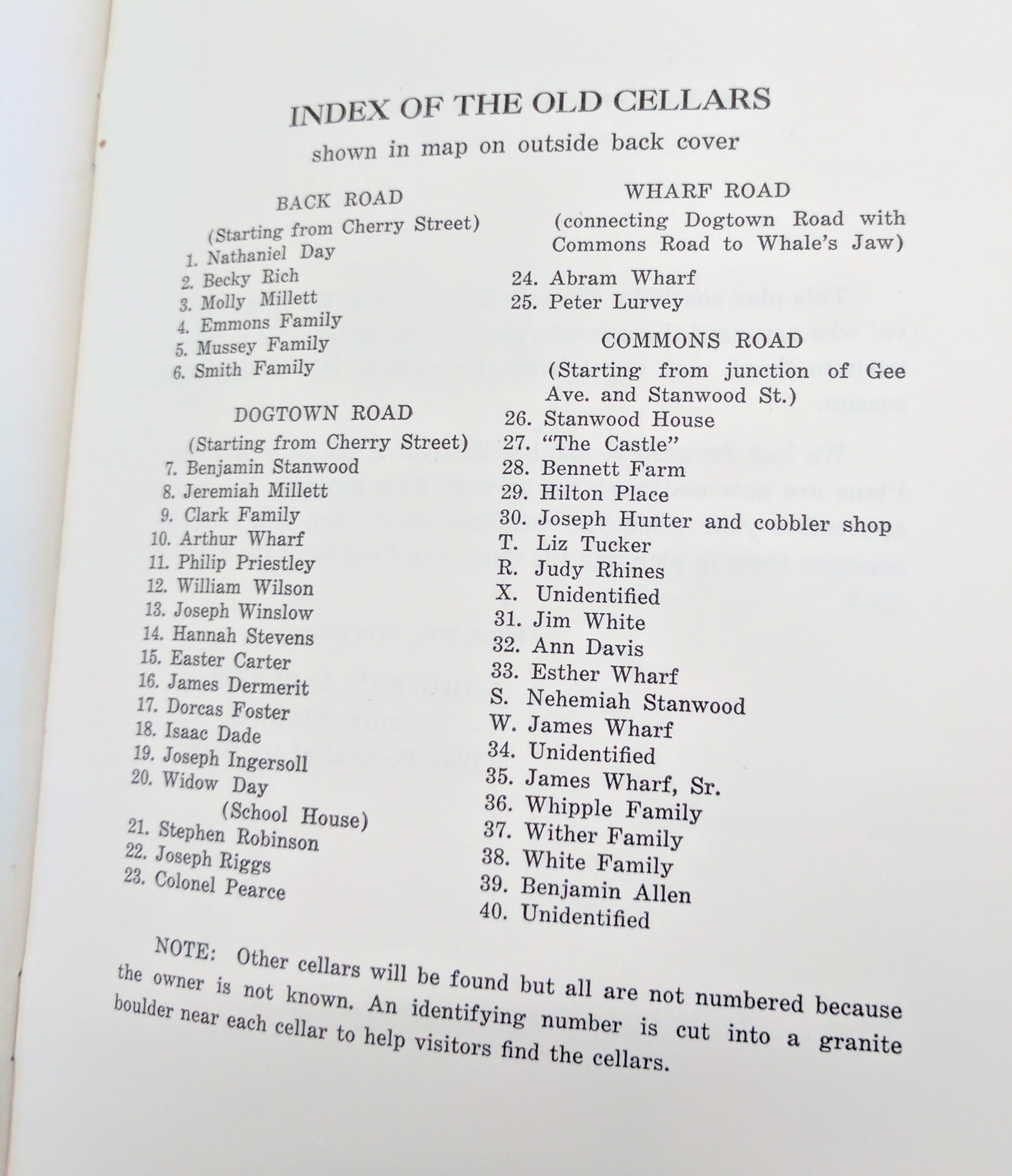
Joshua Batchelder 1741 survey map of “a good part of Dogtown common” printed and annotated for Gloucester’s 3rd Annual Cape Ann Festival of the Arts in 19541954 Index to annotated map
1923 Christian Science Monitor art review for Gloucester Society of Artists
“Dogtown Common, the now deserted hill home of the first settlers who 300 years ago braved the dangers of a hostile and Indian Annisquam, offers both romance and reality. It has remained for Louise Upton Brumback to interpret its clear contrasts, its far spaces, blue skies, white clouds and stiff green pointed cedars. Although the draftsmanship is crude in the extreme, the effect is rare and genuine. The old resident who passes through the gallery will shake his head dubiously at the false color creations of harbor and rock, but accepts this striking and bold visualization of Dogtown Common as the true spirit of Cape Ann…”
Inland among the lonely cedar dells Of Old Cape Ann, near Gloucester by the Sea, Still live the Dead–in homes that used to be. All day in dreamy spells They tattle low with sounds of tinkling cattle bells Or spirit tappings of some hollow tree And there, all night–out of the dark– They bark–and bark…
“Note: From a little volume, by Charles E. Mann, entitled “In the Heart of Cape Ann” Gloucester, Mass., The Proctor Bros. Co), the curious reader may learn more strange, half forgotten facts concerning the old Puritan life of that region. Among its singular New England characters, certain authentic and legendary figures have entered the theme of this poem. P.M-K. Miami University, Oxford, Ohio. March, 1921
Percy MacKaye (1875–1956) was an American dramatist and poet.
Harvard MacKaye papers: “History note: Percy Wallace MacKaye, author and dramatist, graduated from Harvard in 1897, wrote poetic dramas, operatic libretti, modern masques and spectacles, and was active in promoting community theatre. The collection includes his papers and those of his wife, Marion Homer Morse MacKaye, as well as material relating to the career of his father Steele MacKaye (1842-1894), an American theatrical designer, actor, dramatist, and inventor. The bulk of the collection consists of material pertaining to community drama; correspondence with literary and theatrical figures including Edgar Lee Masters, Edwin Arlington Robinson, George Pierce Baker, Theodore Dreiser, Amy Lowell, Upton Sinclair, Edward Gordon Craig, Louis Untermeyer and Thornton Wilder.”
Dartmouth: The MacKaye Family Papers “contain materials documenting the life and career of four generations of the family. They include a large amount of personal and professional correspondence as well as original manuscripts and typescripts of plays, prose, masques, pageants, poetry, essays and articles. Of note are manuscript materials for Benton MacKaye’s works on geotechnics entitled “Geotechnics of North America,” and “From Geography to Geotechnics,” as well as Percy MacKaye’s biography and works on his father Steele MacKaye and the MacKaye family, entitled respectively, “Epoch,” and “Annals of an Era.”
(Gloucester, Dogtown Common, is not on the MacKaye Wikipedia page)
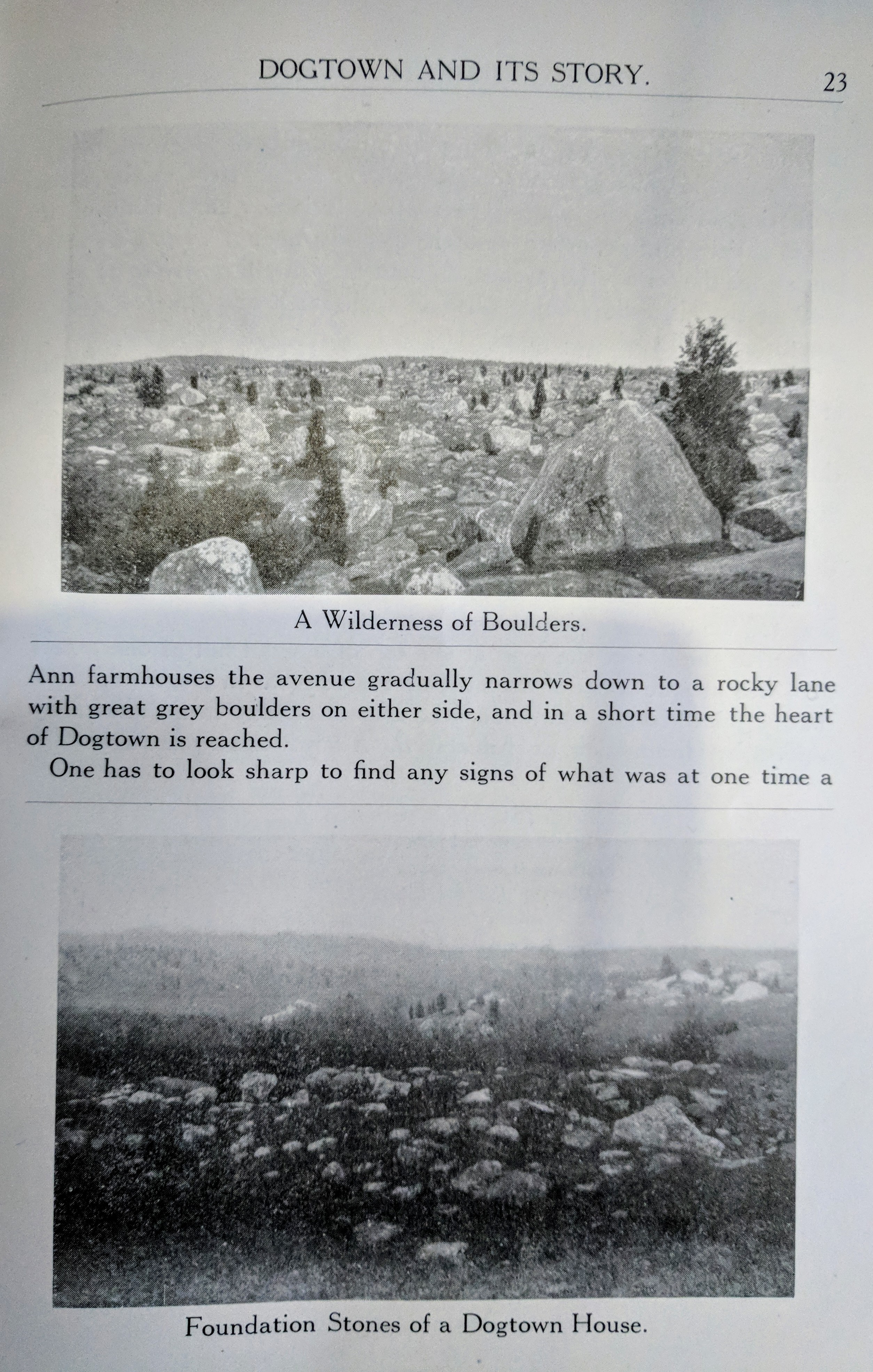
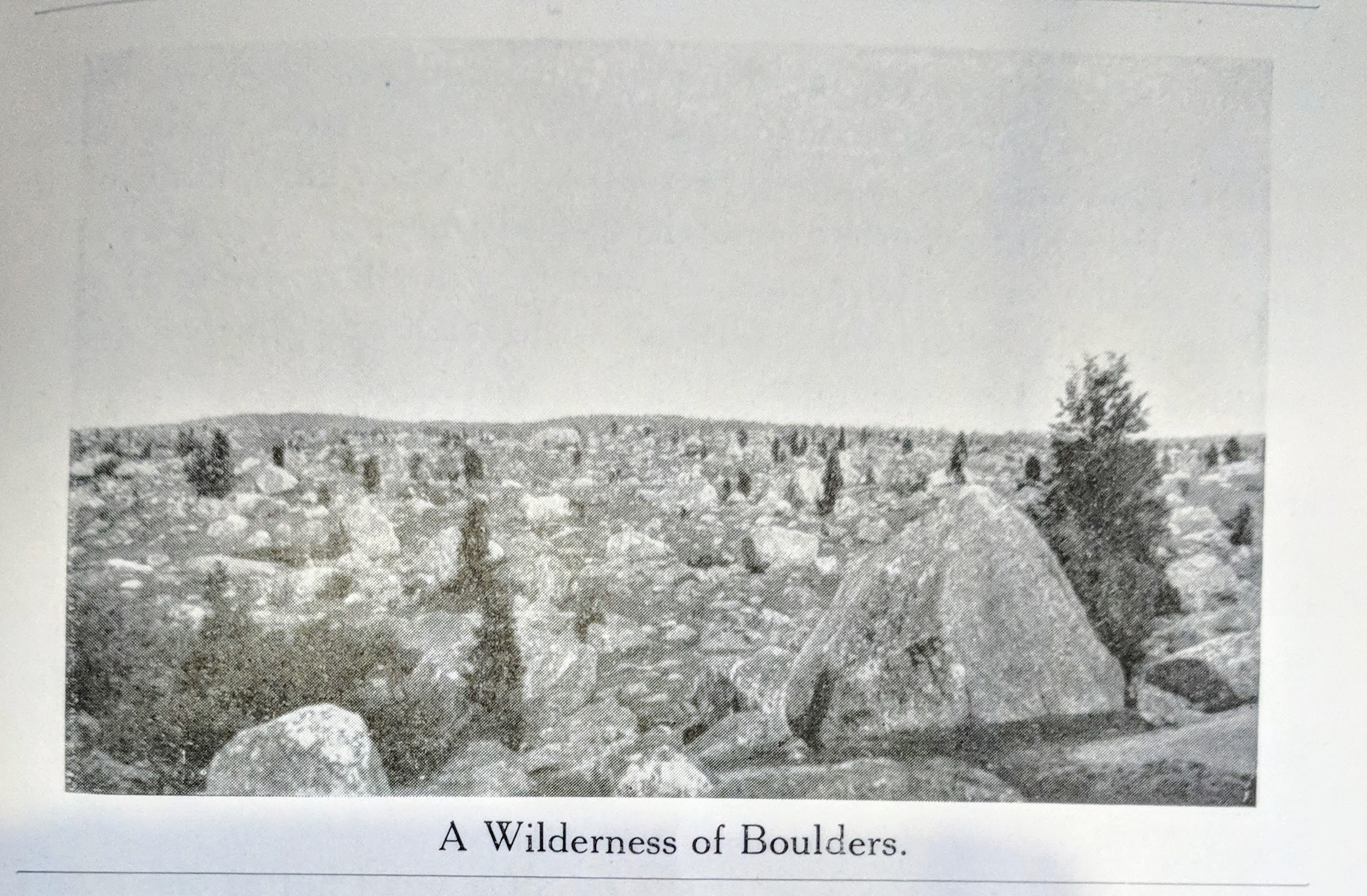
Great read p.22 from the Dogtown and Its Story chapter, in The Gloucester Book, by Frank L. Cox, 1921
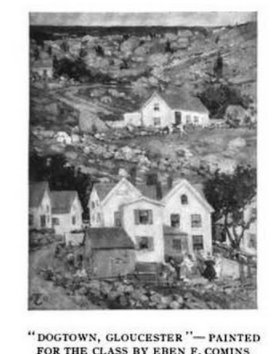
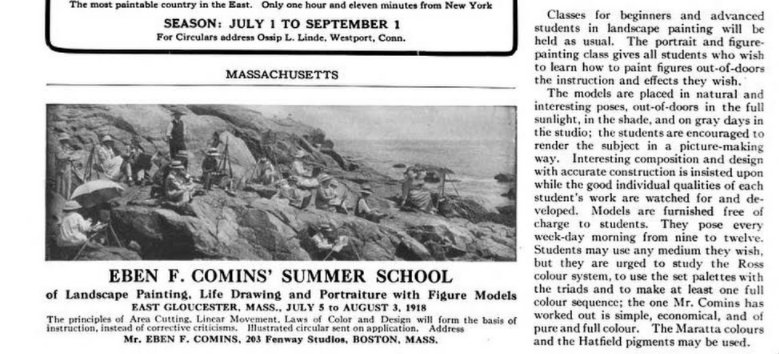
1918 Eben Comins painting
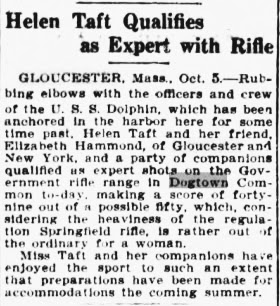
1912 government rifle range Dogtown
1904 (1742)
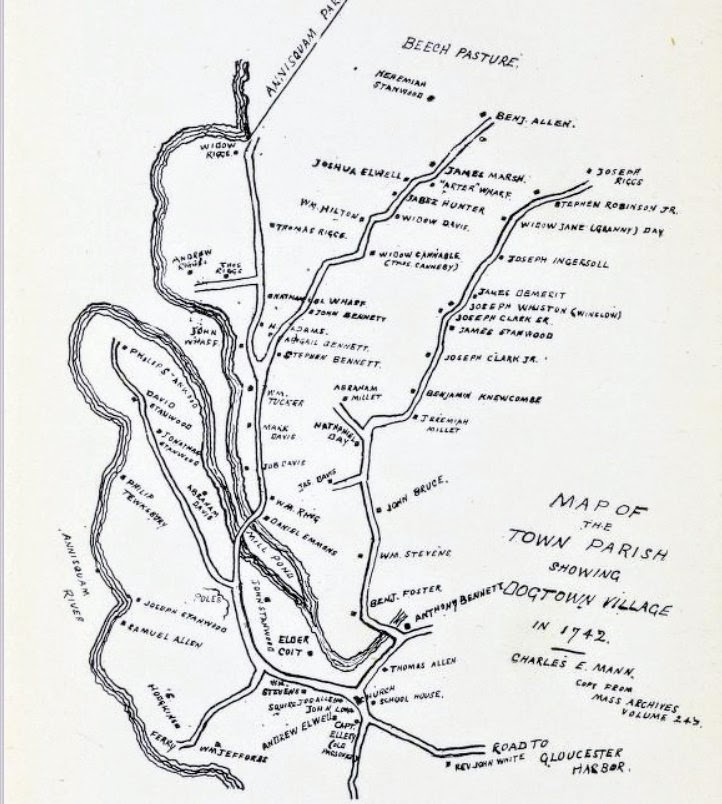
ca.1904 Charles E. Mann map copied from 1742 map in MA archives collectionMann
1877 Higginson
“Three miles inland, as I remember, we found the hearthstones of a vanished settlement; then we passed a swamp with cardinal flowers; then a cathedral of noble pines, topped with crow’s-nests. If we had not gone astray by this time, we presently emerged on Dogtown Common, an elevated table-land, over spread with great boulders as with houses, and encircled with a girdle of green woods and an outer girdle of blue sea. I know of nothing more wild than that gray waste of boulders..”
In 1855, Henry David Thoreau wrote in his journal: “I am [reading] William Wood’s “New England’s Prospect”… William Wood New Englands Prospect was originally published in 1634 in London. Here is a Wood excerpt concerning burning brush to clear land, a historical antecedent (and apt surname) to keep in mind when considering stewardship 2017 and beyond.
…The next commodity the land affords is good store of woods, and that not only such as may be needful for fuel but likewise for the building of ships and houses and mills and all manner of water-work about which wood is needful. The timber of the country grows straight and tall, some trees being twenty, some thirty foot high, before they spread forth their branches; generally the trees be not very thick, though there may be many that will serve for mill posts, some being three foot and a half over. And whereas it is generally conceived that the woods grow so thick that there is no more clear ground than is hewed out by labor of man, it is nothing so, in many places diverse acres being clear so that one may ride a hunting in most places of the land if he will venture himself for being lost. There is no underwood saving in swamps and low grounds that are wet, in which the English get Osiers and Hasles and such small wood as is for their use. Of these swamps, some be ten, some twenty, some thirty miles long, being preserved by the wetness of the soil wherein they grow; for it being the custom of the Indians to burn the wood in November when the grass is withered and leaves dried, it consumes all the underwood and rubbish which otherwise would overgrow the country, making it unpassable, and spoil their much affected hunting; so that by this means in those places where the Indians inhabit there is scarce a bush or bramble or any cumbersome underwood to be seen in the more champion ground. Small wood, growing in these places where the fire could not come, is preserved. In some places, where the Indians died of the plague some fourteen years ago, is much underwood, as in the midway betwixt Wessaguscus and Plimouth, because it hath not been burned. Certain rivers stopping the fire from coming to clear that place of the country hath made it unuseful and troublesome to travel thorow, in so much that it is called ragged plaine, because it teares and rents the cloathes of them that pass. Now because it may be necessary for mechanical Artificers to know what timber and wood of use is in the Country, I will recite the most useful as followeth*…” *see photos for Wood’s trees list
Thoreau was thinking along these lines, finding god in berries.
“From William Wood’s New England’s Prospect, printed about 1633, it would appear that strawberries were much more abundant and large here before they were impoverished or cornered up by cultivation. “Some,” as he says, “being two inches about, one may gather half a bushel in a forenoon.” They are the first blush of a country, its morning red, a sort of ambrosial food which grows only on Olympian soil.” -Thoreau’s Wild Fruit
“If you look closely you will find blueberry and huckleberry bushes under your feet, though they may be feeble and barren, throughout all our woods, the most persevering Native Americans, ready to shoot up into place and power at the next election among the plants, ready to reclothe the hills when man has laid them bare and feed all kinds of pensioners.”
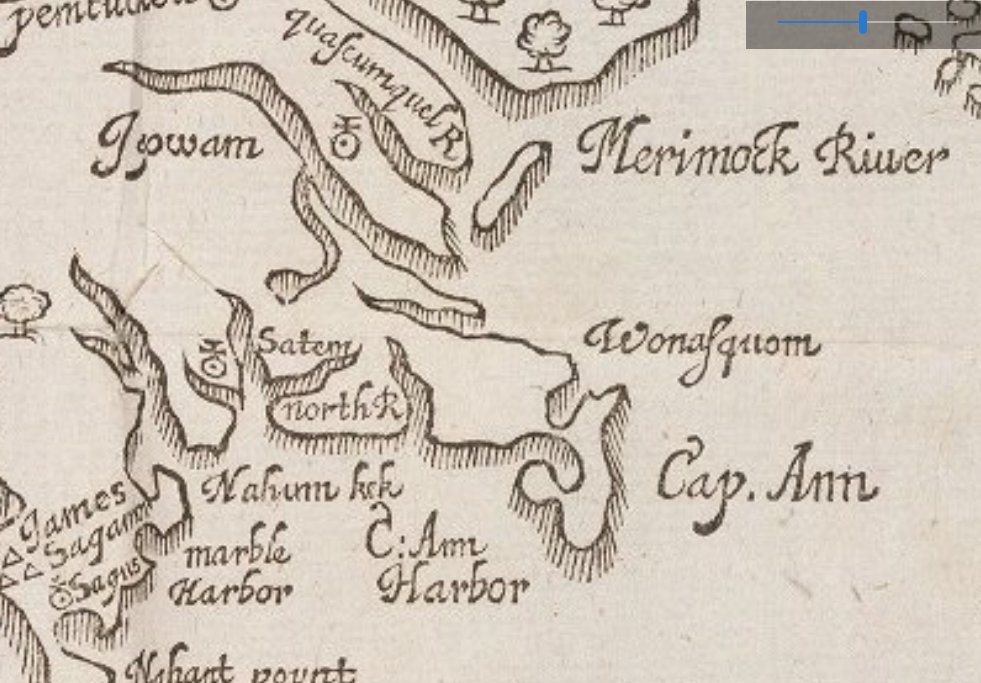
photos: William Wood’s New Englands Prospect scanned from book in the University of CA collection. “Wonasquam” on map at Cape Ann
“Of their Custom in burning the Country, and the reason thereof” The Salvages are accustomed to set fire of the Country in all places where they come, and to burne it twice a year: at the Spring, and the fall of the leaf. The reason that moves them to do so, is because it would other wise be so overgrown with underweeds that it would be all a coppice wood, and the people would not be able in any wise to pass through the Country out of a beaten path… And this custom of firing the Country is the meanes to make it passable; and by that meanes the trees growe here and there as in our parks: and makes the Country very beautiful and commodious.”
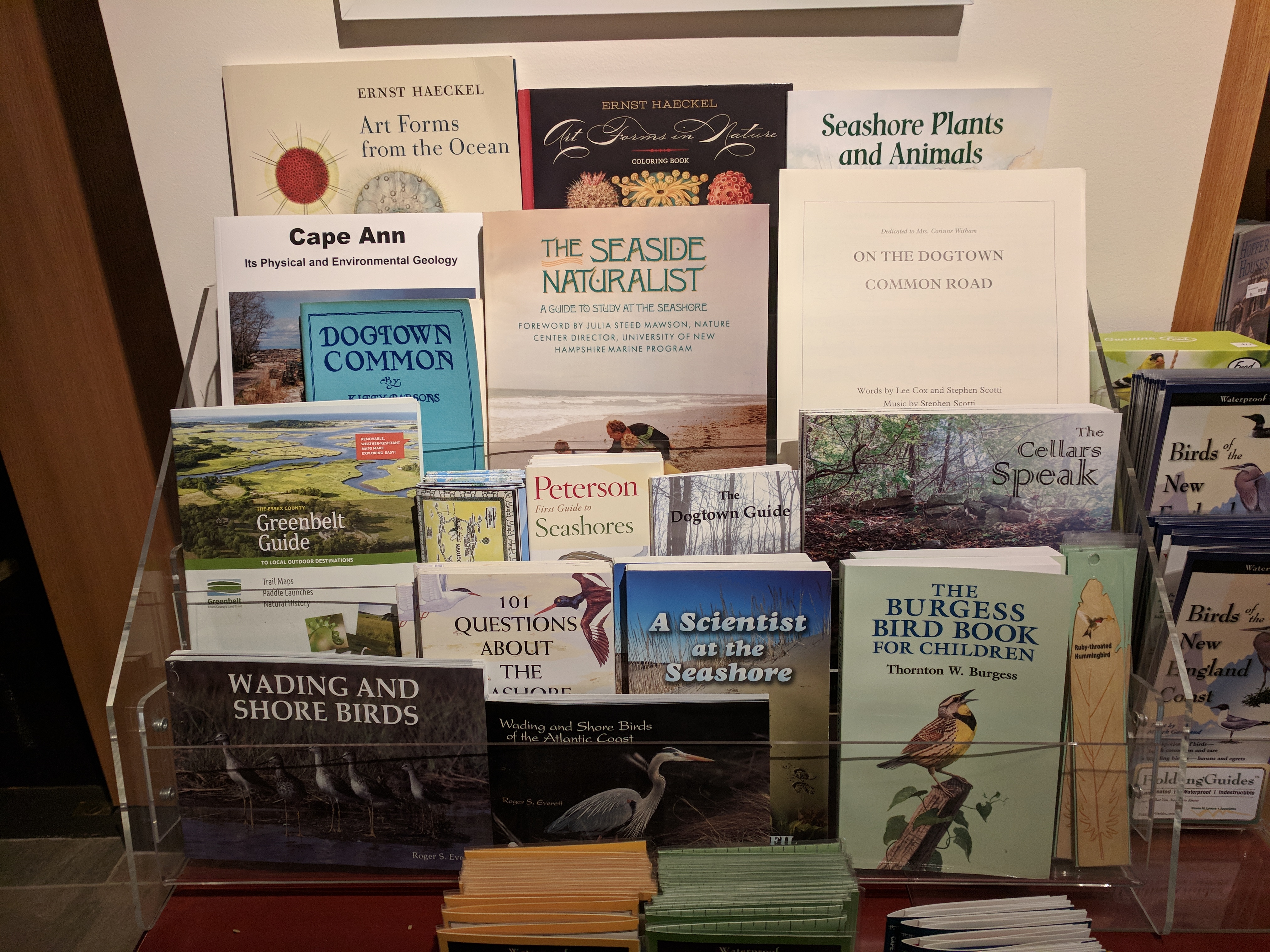
Cape Ann Museum book shop display October 2017
Spread The GMG Love By Sharing With These Buttons:
“This Saturday morning forum is offered in collaboration with Essex County Greenbelt, Friends of Dogtown, Lanesville Community Center and Mass Audubon and held at Cape Ann Museum. The forum will be moderated by Ed Becker, President of the Essex County Greenbelt Association.”
UPDATE: Cape Ann TV is scheduled to film the event!
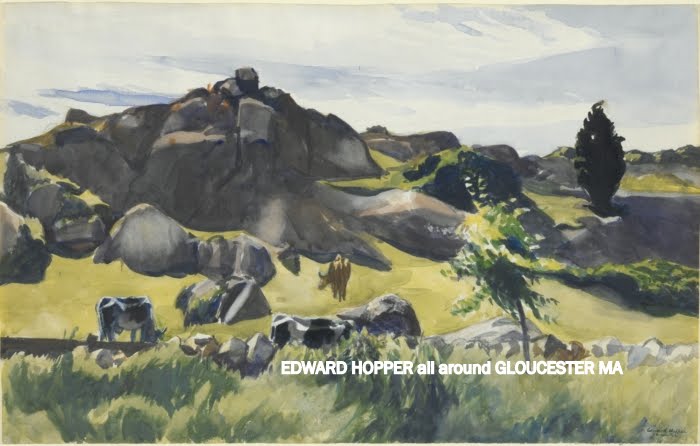
Edward Hopper Cape Ann Pasture watercolor drawing (ca.1928) was gifted to Yale University in 1930
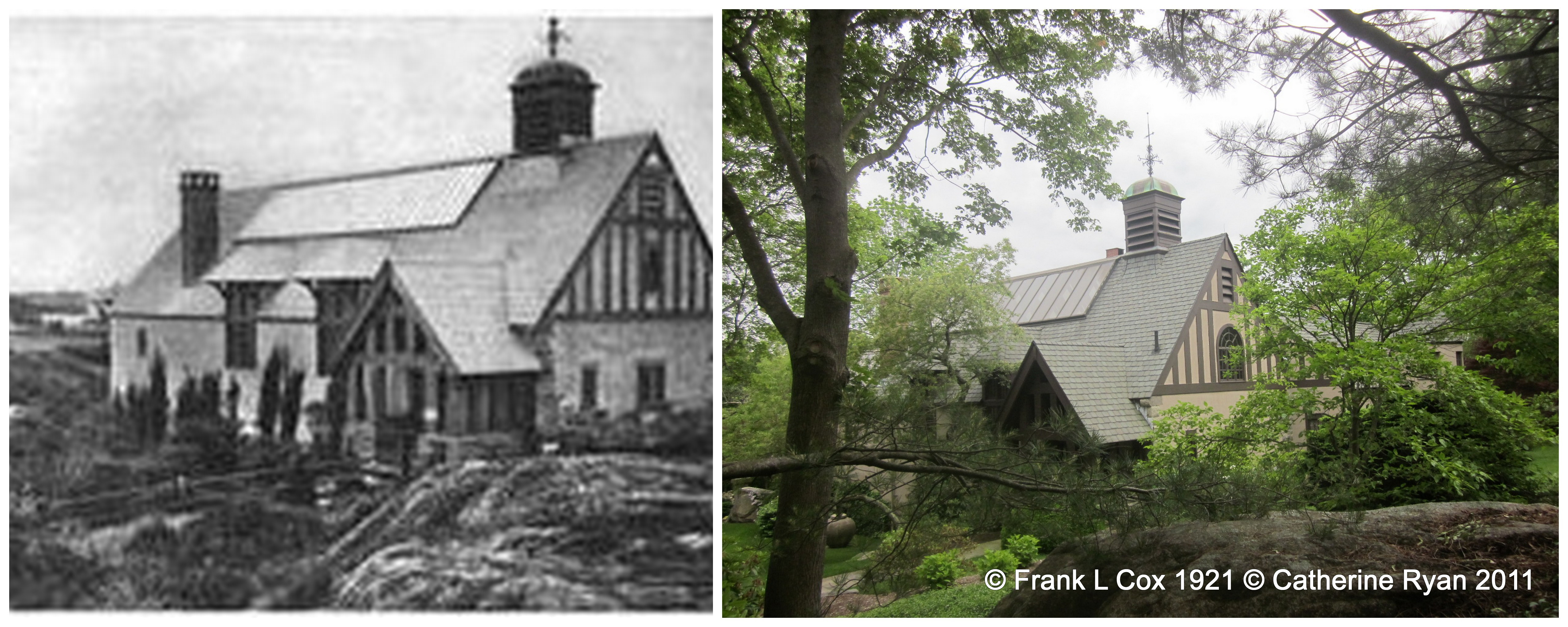
East Gloucester Atwood’s Gallery on the Moors as seen on the left in 1921–open vistas at that time
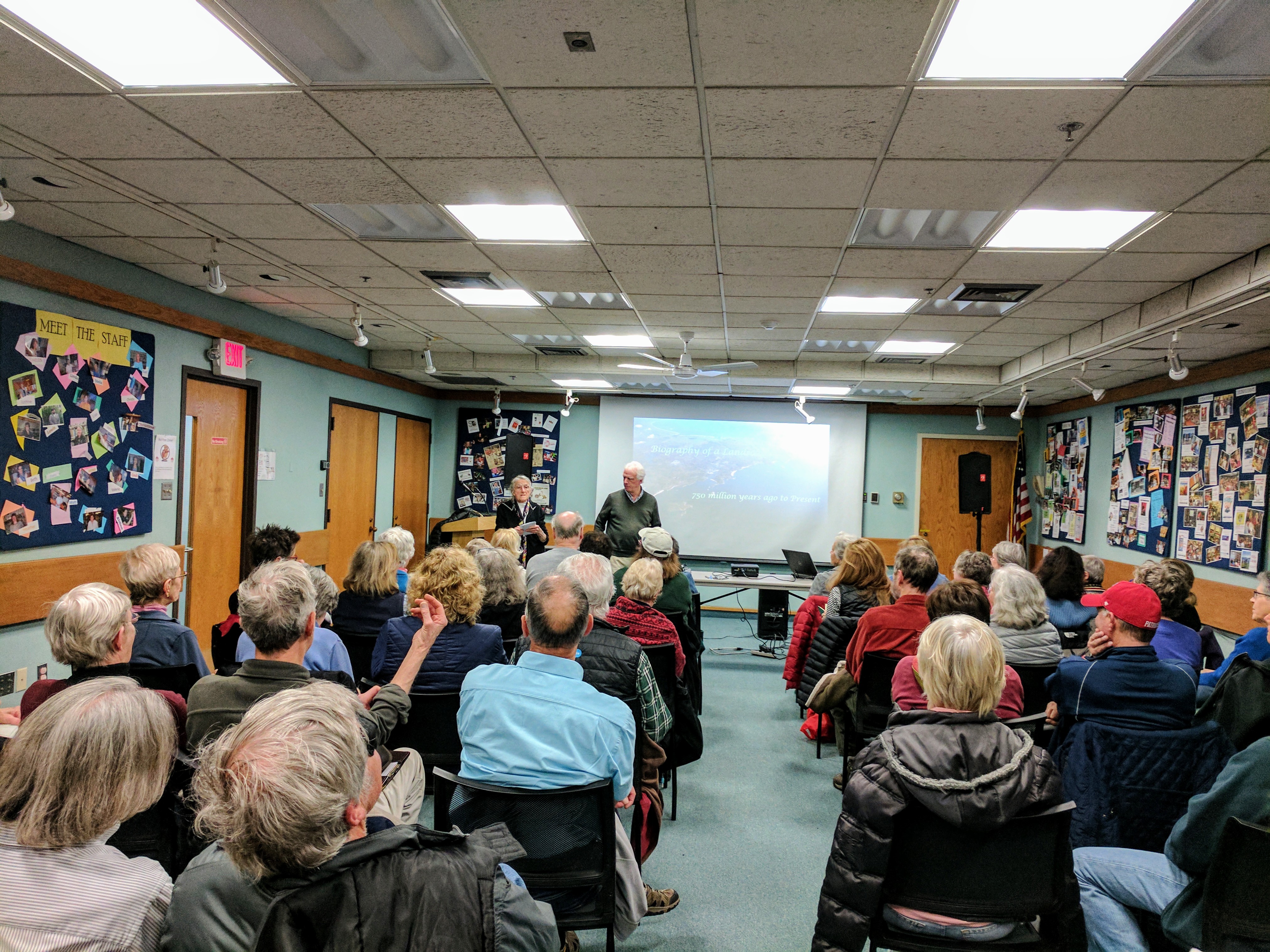
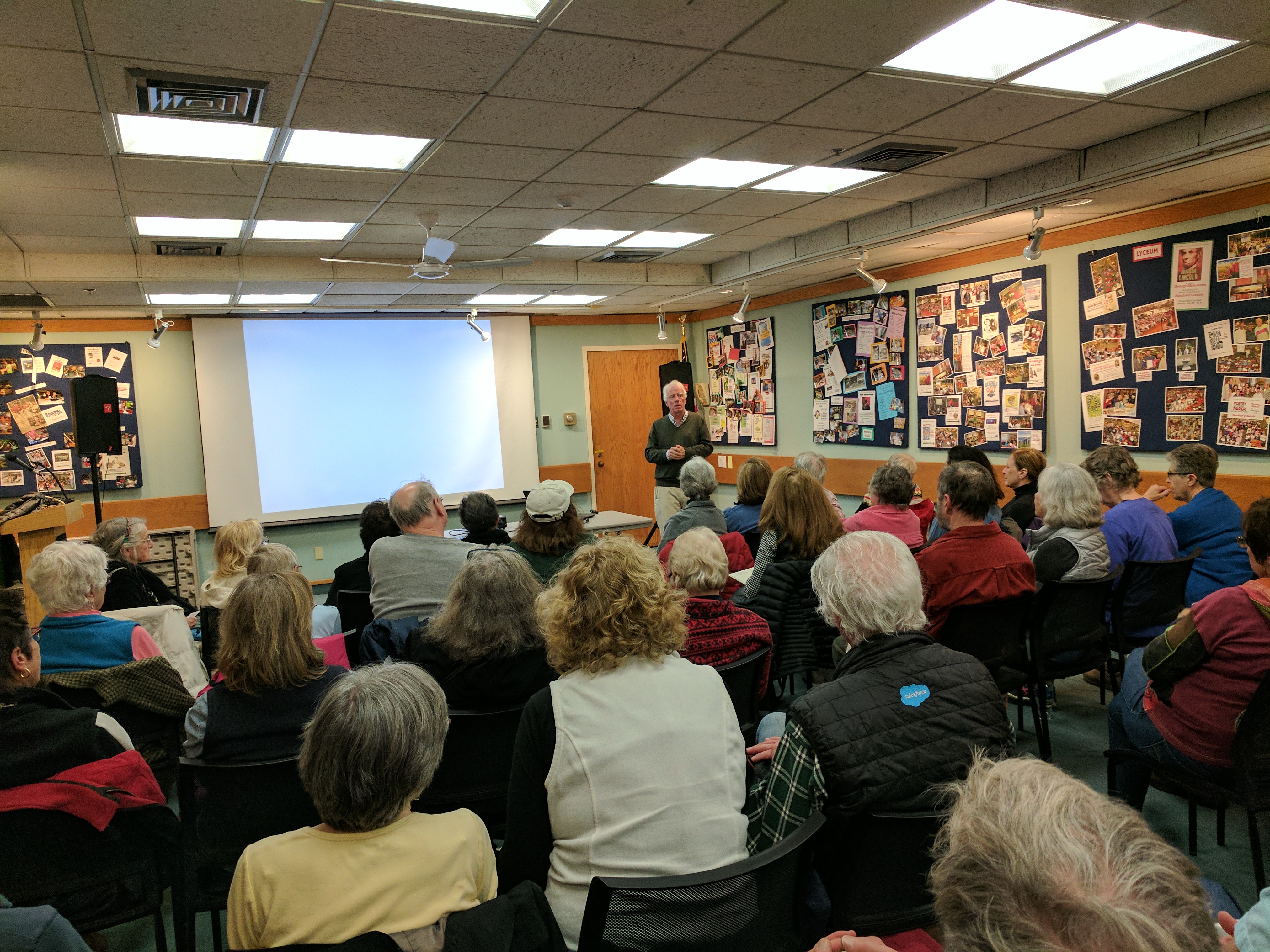
Chris Leahy gave a presentation at Gloucester Lyceum & Sawyer Free Library on February 23, 2017: Dogtown- the Biography of a Landscape: 750 Million Years Ago to the Present A photographic history through slides presented by the Gloucester Lyceum and the Friends of the Library. Mary Weissblum opened the program.
Chris broadly covered the history of the local landscape from an ecological bent with a bias to birds and blueberry picking, naturally. New England is a patchwork of forested landscapes. He stressed the evolution of bio diversity and succession phenomenon when the earth and climate change. “Nature takes a lot of courses.” He focused on Dogtown, “a very special place”, and possible merits of land stewardship geared at fostering greater biodiversity. Perhaps some of the core acres could be coaxed to grasslands as when parts of Gloucester were described as moors? Characteristic wildlife, butterflies, and birds no longer present may swing back. There were many philosophical takeaways and tips: he recommends visiting the dioramas “Changes in New England Landscape” display at Harvard Forest HQ in Petersham.
“Isolation of islands is a main driver of evolution”
“Broad Meadow Brook Wildlife Sanctuary in Worcester has the highest concentration* of native butterflies in all of Massachusetts because of secondary habitats.” *of Mass Audubon’s c.40,000 acres of wildlife sanctuaries statewide. “The fact that Brook Meadow Brook is in greater Worcester, rather than a forested wilderness, underscores the value of secondary habitats.”
“1830– roughly the time of Thoreau (1817-1862)– was the maximum period of clearing thus the heyday for grasslands…As farmsteads were abandoned, stages of forests return.”
Below are photos from February 23, 2017. I added some images of art inspired by Dogtown. I also pulled out a photograph by Frank L Cox, David Cox’s father, of Gallery on the Moors (then) compared with a photo of mine from 2011 to illustrate how the picturesque description wasn’t isolated to Dogtown.
Edward Hopper, Cape Ann Granite, 1928, oil on canvas can we get this painting into the Cape Ann Museum collection?
Louise Upton Brumback (1867-1929), Dogtown- Cape Ann, 1920 oil on canvas
Spread The GMG Love By Sharing With These Buttons:
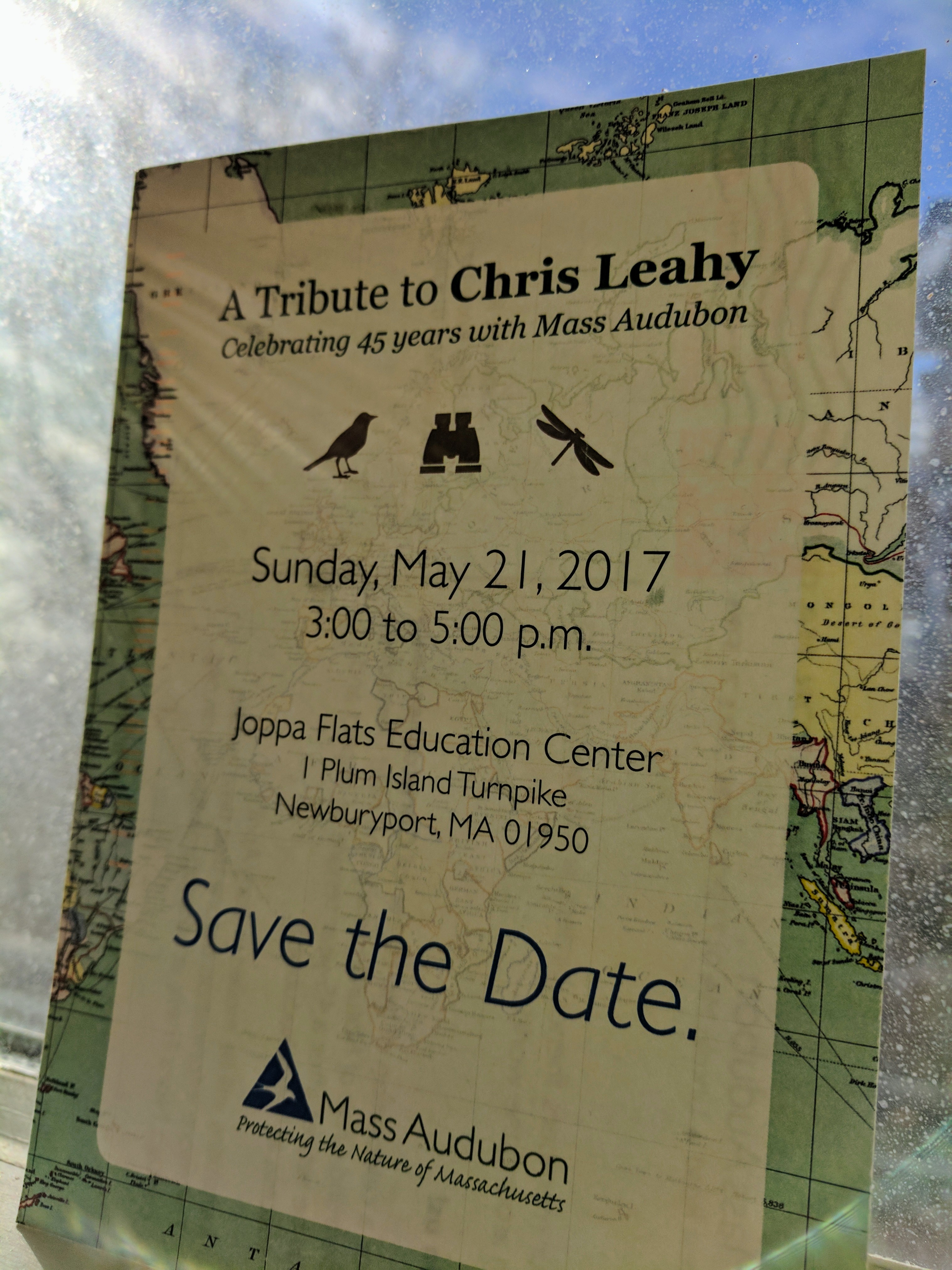
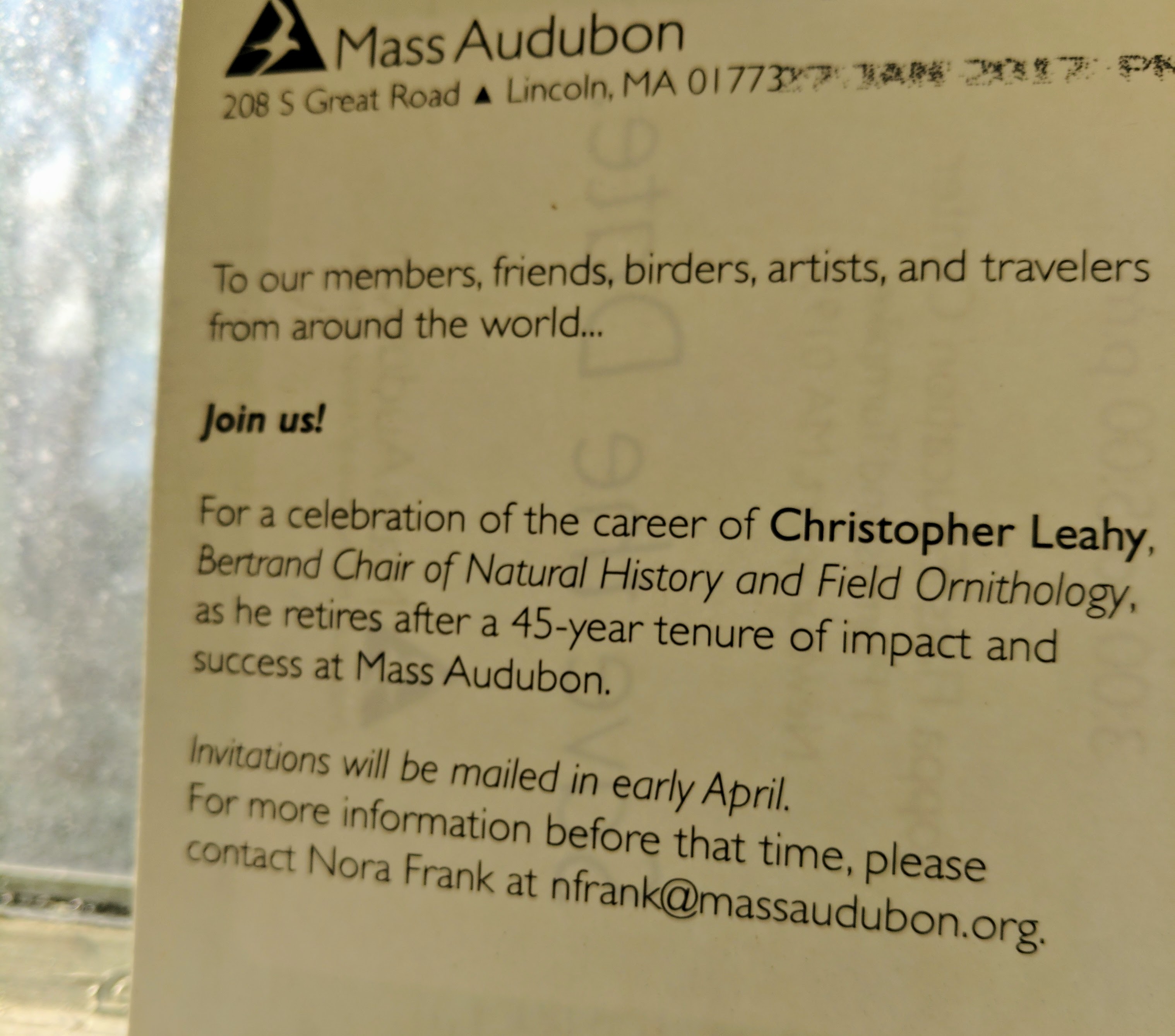
It’s not a surprise party, but it is limited in size. Invitations will go out in April. Mass Audubon is hosting a special retirement tribute for Chris Leahy in celebration of his remarkable career –45 years of “impact and success”. How nice to see a Gloucester naturalist treasure being recognized in the spring –(bird-a-thon season!)– at Joppa Flats Education Center, Parker River National Wildlife sanctuary. Folks and fans can also swarm cards and MA Audubon gifts as a great way to acknowledge this milestone. Chris’s astonishing powers of observation and communication skills can make anyone care about birds, nature, and place. Within a mere twenty seconds of conversation he can capture history and immediacy in such an affable and effortless manner. What an ambassador.
“If I said, ‘Are there more birds around in the summer or the winter?’ most people would say the summer, and that’s right. But not by much,” said tour leader Christopher Leahy of Gloucester, who holds the Gerard A. Bertrand chair of natural history and field ornithology at Mass Audubon. “Actually almost 50 percent of the 300 bird species that occur in Massachusetts occur here during the winter.”– Chris Leahy from Boston Globe article Thrills and Chills: Birders Brave the Cape Ann Cold and Find What They’re Looking For by Joel Brown, published February 5, 2009
Congratulations, Chris
Spread The GMG Love By Sharing With These Buttons:
Piping plovers have quite a story. In Massachusetts, the vast majority are south, Cape Cod and the islands. By the close of the 19th century, these birds were near extinction. They rebounded successfully by the 1950’s.
I spoke with Dave Rimmer of Essex County Greenbelt, Marion Larson with Ma Wildlife, Deborah Cramer and Chris Leahy. All of them have updates for GMG which I’ll add next. First,
Chris Leahy, MA Audubon, explained that a second age of precipitous piping plover decline occurred in the 1960s and 70s. What do you think it was?
Read on to find out.
Mass Audubon grabbed on and worked closely with many to solve the problem early. It turns out the population plummet correlated highly to a steep increase in vehicles driving on beaches. The baby fledglings could not climb out of wheel ruts and perished, or were squished by the next roaring set of wheels.
Not the only vehicles, but I do recall dune buggys everywhere,especially down the Cape. They were cool and celebrated in TV and film: Steve McQueen driving on Crane’s Beach (just past Coffins) in the Thomas Crown Affair, Elvis through waves, Adam 12, Monkees, Bionic Woman, Speed Buggy /Scooby Doo, the list goes on and on.
“That was big!” said Leahy. “Once that connection was figured out, the goal was how to restrict vehicles.” Massachusetts is far and away a leader in piping plover conservation and decades later a nesting pair on Good Harbor Beach is a major insight into just how well Massachusetts has done. Piping plovers have nested on Coffins Beach before; Good Harbor, Lynn and Revere are relatively new.
Photos Gloucester, Mass.:
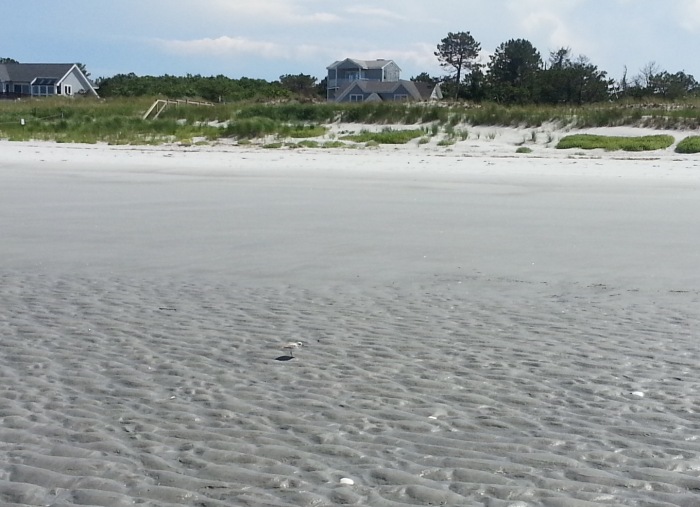
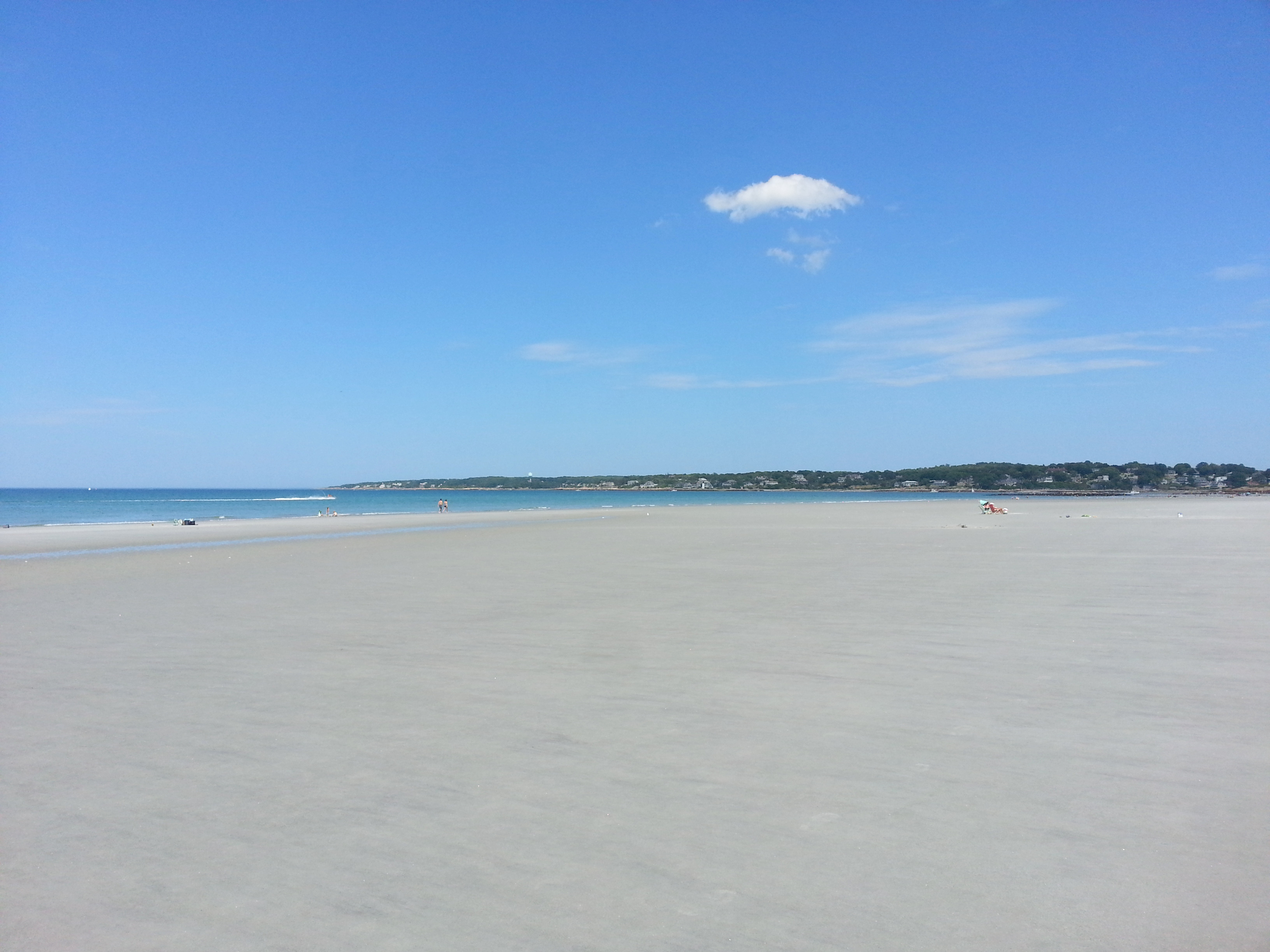
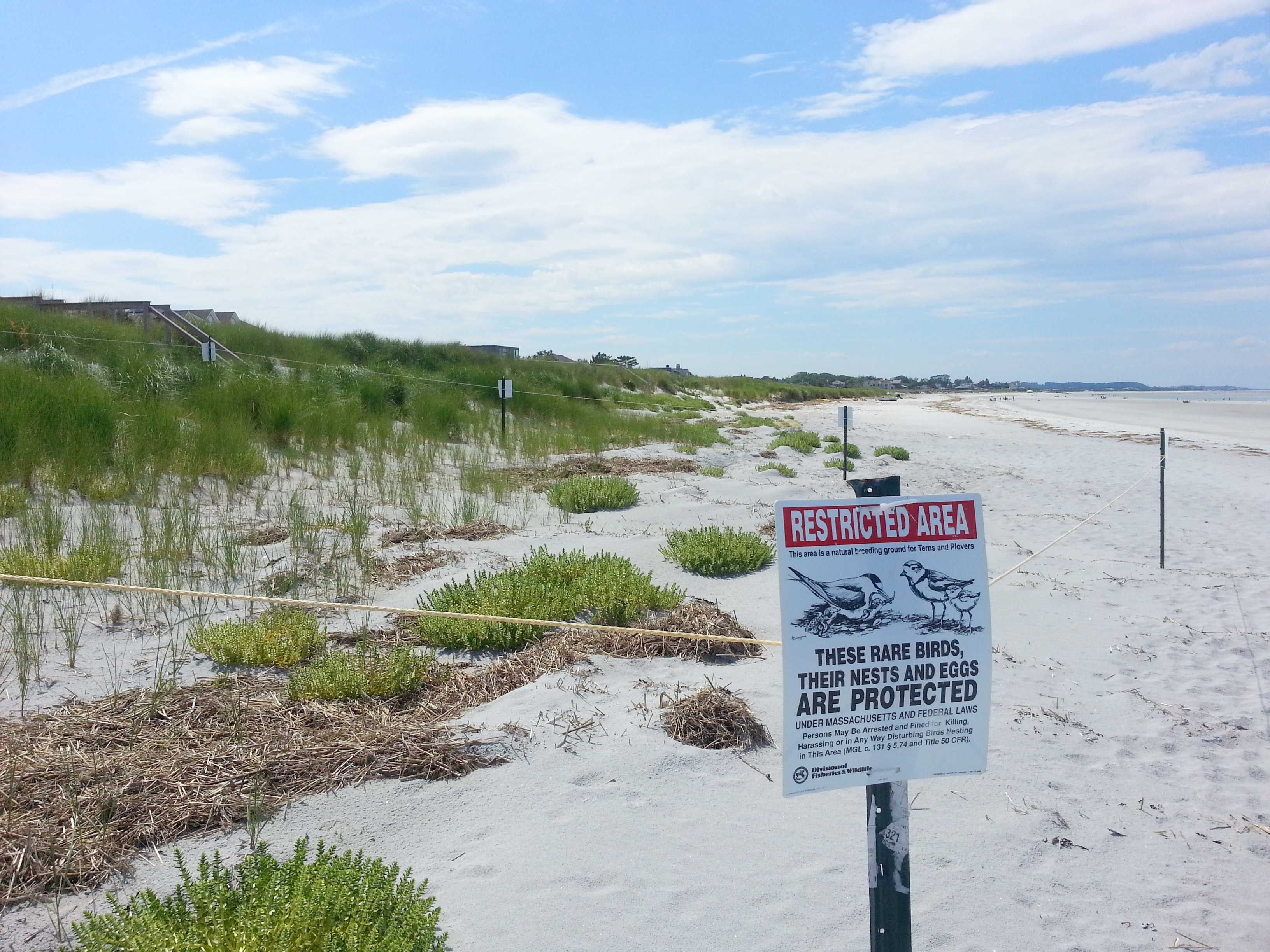
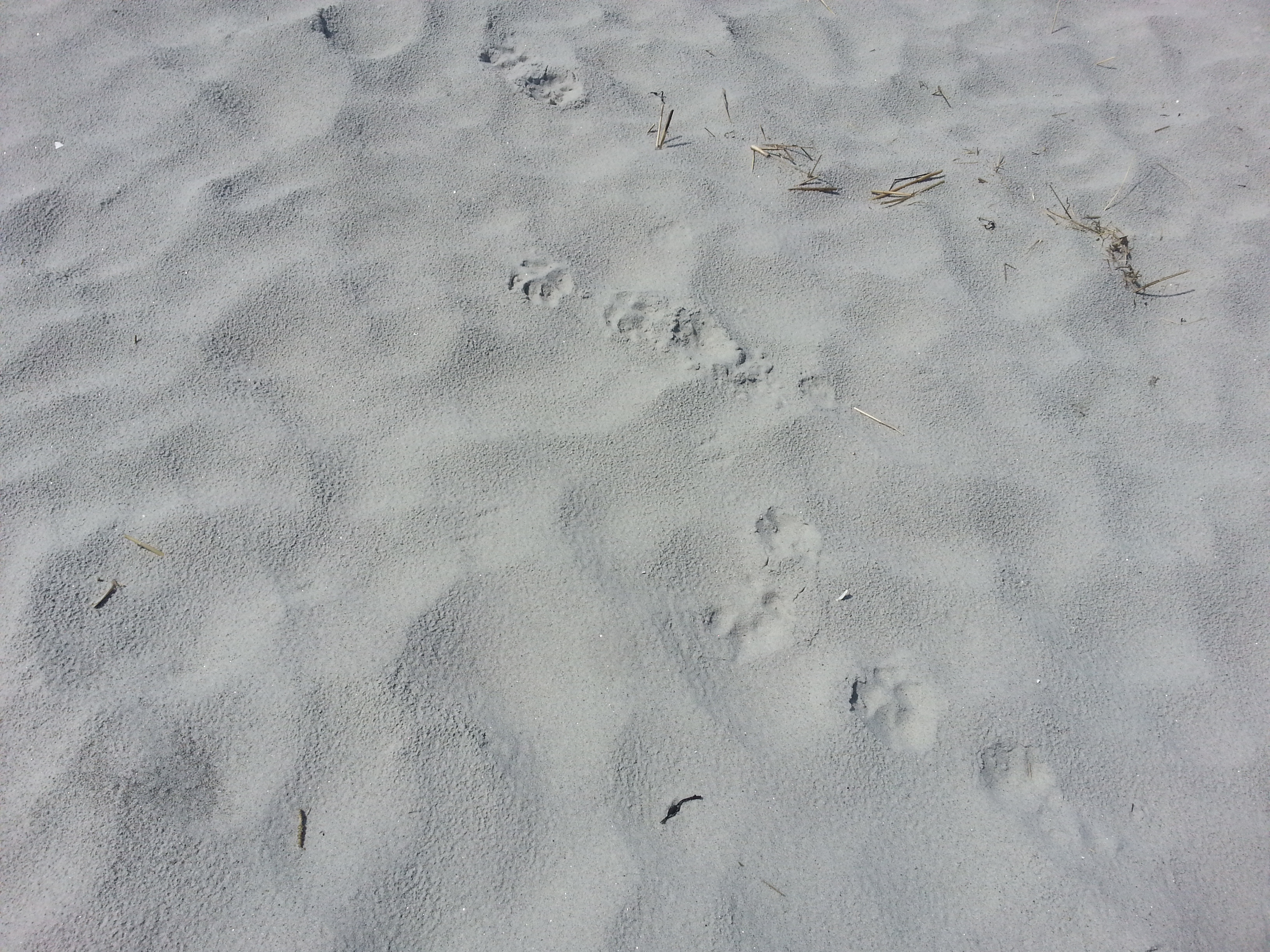
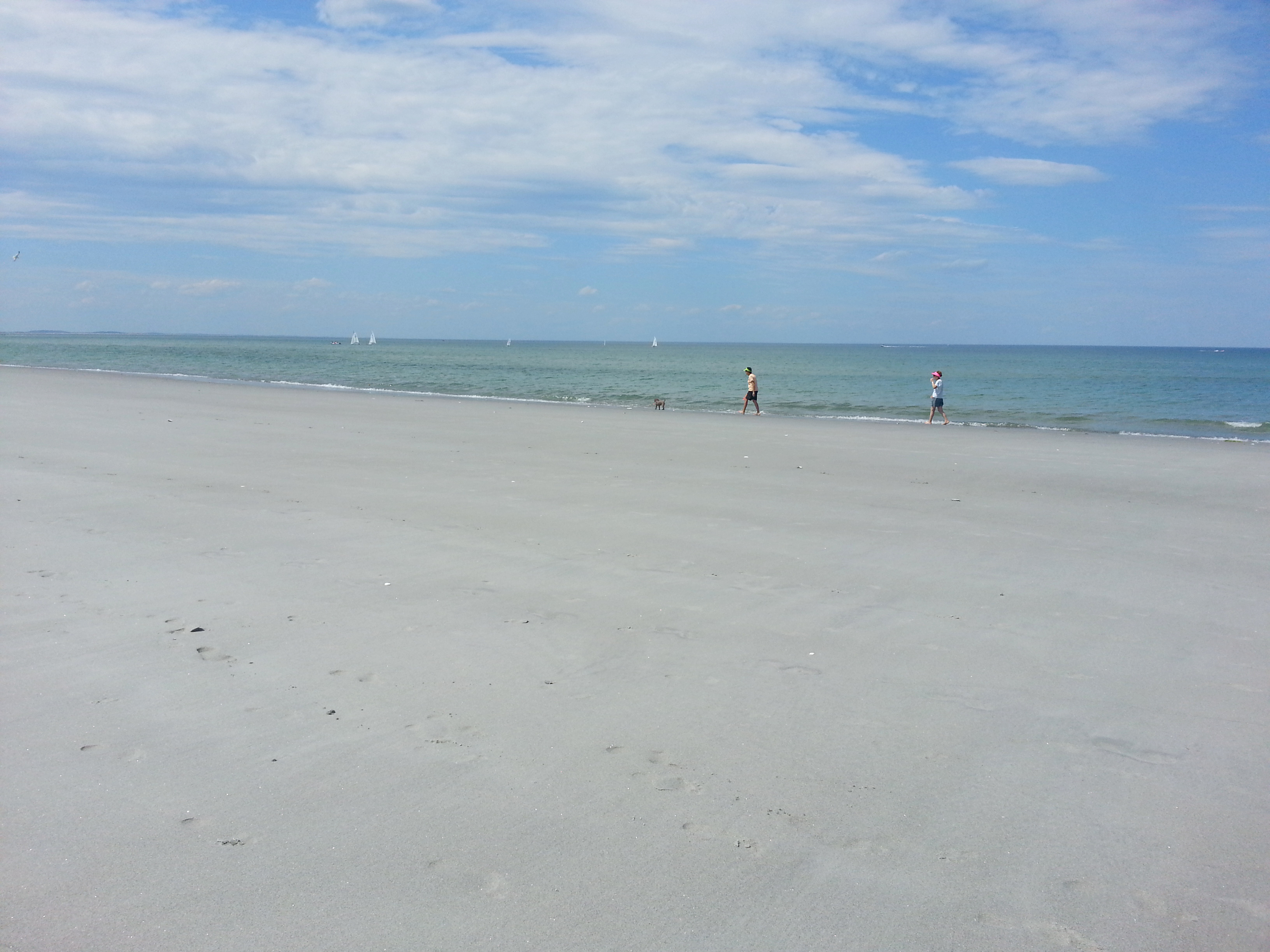
Coffins Beach is a long, long stretch of wide open sandy seashore framed by dunes, sea and sky. Growing up, we called it the private side of Wingaersheek. I could hear piping plovers and saw two ‘in the zone’– the intertidal bit that is still wet at low tide and well under water at high tide. I didn’t see birds in the safe retreats by the upper part of the beach, but heard the melodious chirps that inspired their nickname.
Listen to the piping plover
Essex County Greenbelt protective measures in concert with MA Wildlife
Deborah Cramer thanks Good Morning Gloucester for mentioning her book and asks for photographs and stories about horseshoe crabs, otherwise known as the nearly scene stealing co-stars from her inspiring book on red knots (sandpiper shorebirds), The Narrow Edge.
“I’m in the midst of a project right now trying to uncover the almost forgotten history of the whereabouts of horseshoe crabs in Gloucester. I’ve heard some fantastic stories, like one from a man who used to go down to Lobster Cove after school and find horseshoe crabs so plentiful he could fill a dory. Do you think there’s a value to putting up a few pictures on GMG and asking people to send in their recollections of beaches, coves where they used to see them in abundance?”
We do. Please send in photos or stories if you have them about horseshoe crabs in Gloucester or the North Shore for Deborah Cramer’s project. Write in comments below and/or email cryan225@gmail.com
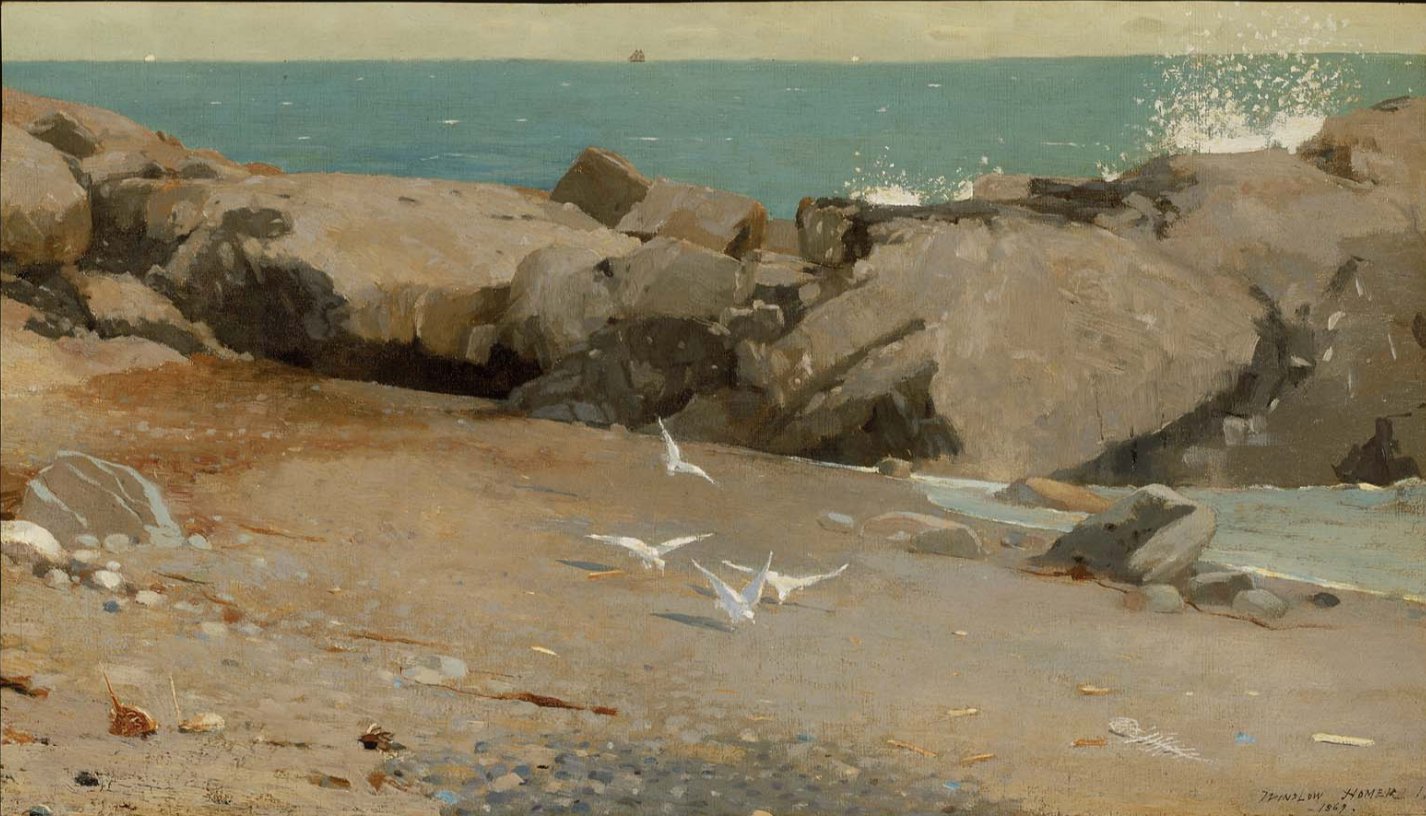
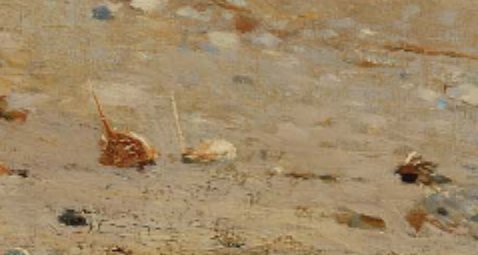
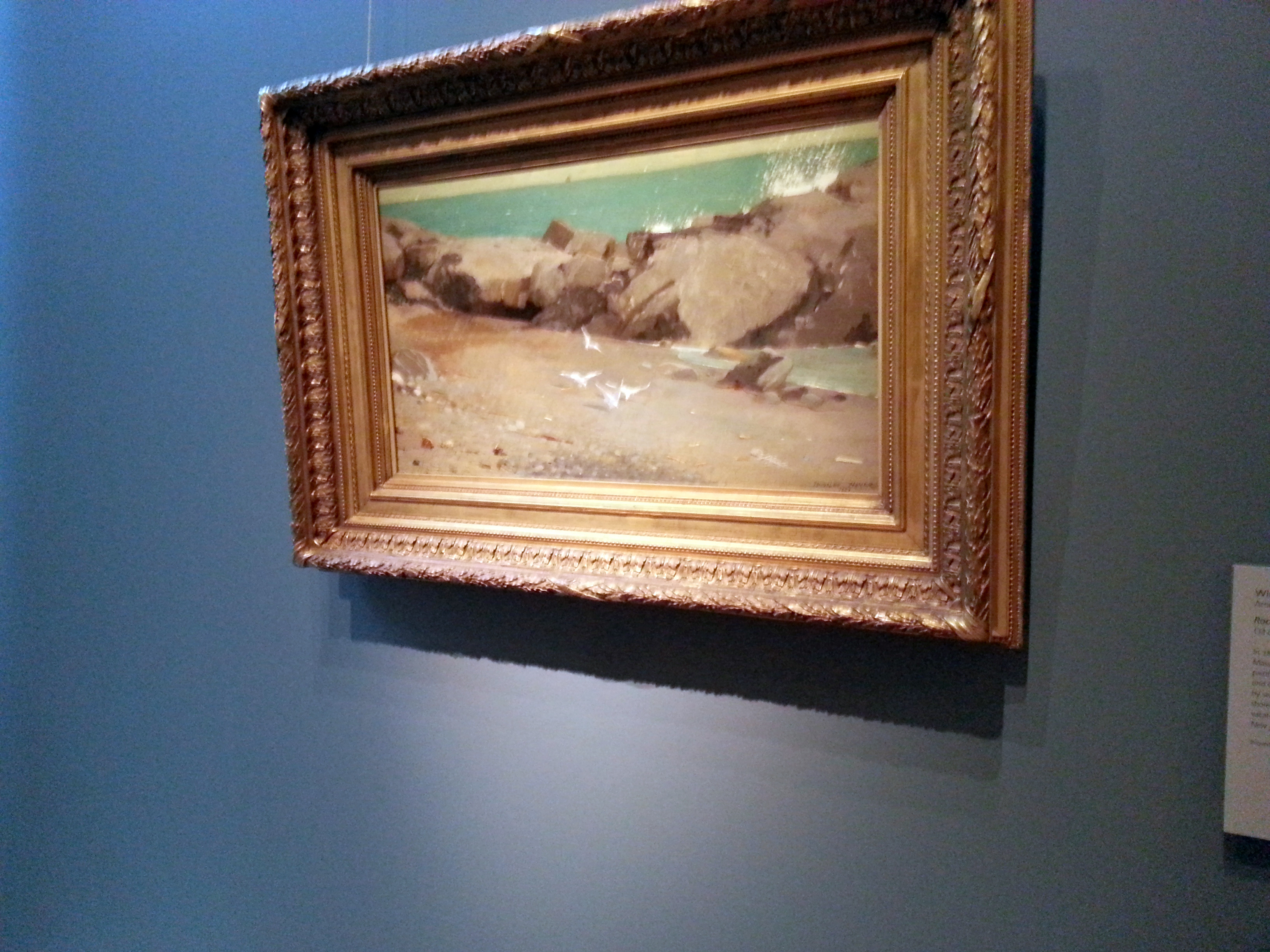
Here’s one data point. Look closely at this 1869 Winslow Homer painting. Can you spot the horseshoe crabs? Can you identify the rocks and beach?
Winslow Homer, Rocky Coast and Gulls, 1869, Museum of Fine Arts Boston, installed in room #234 with so many other Homers (Fog Warning, All’s Well, Driftwood, …)
(zoomed into horseshoe crabs)
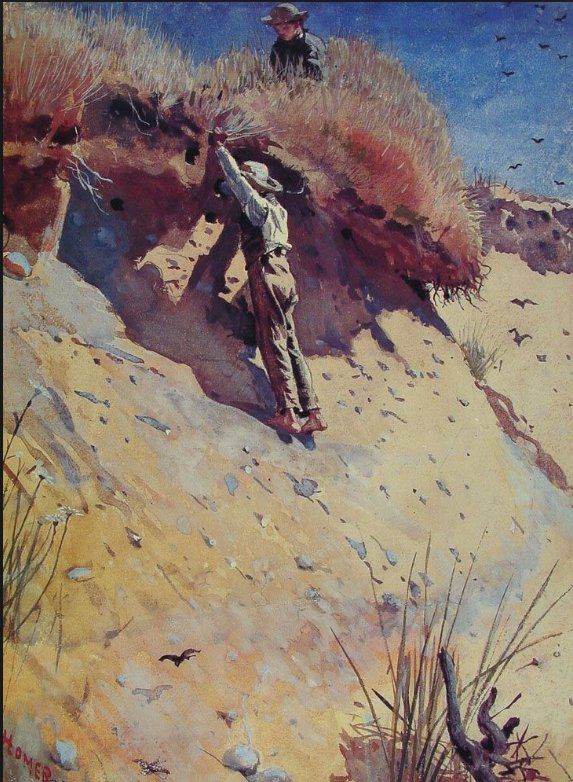
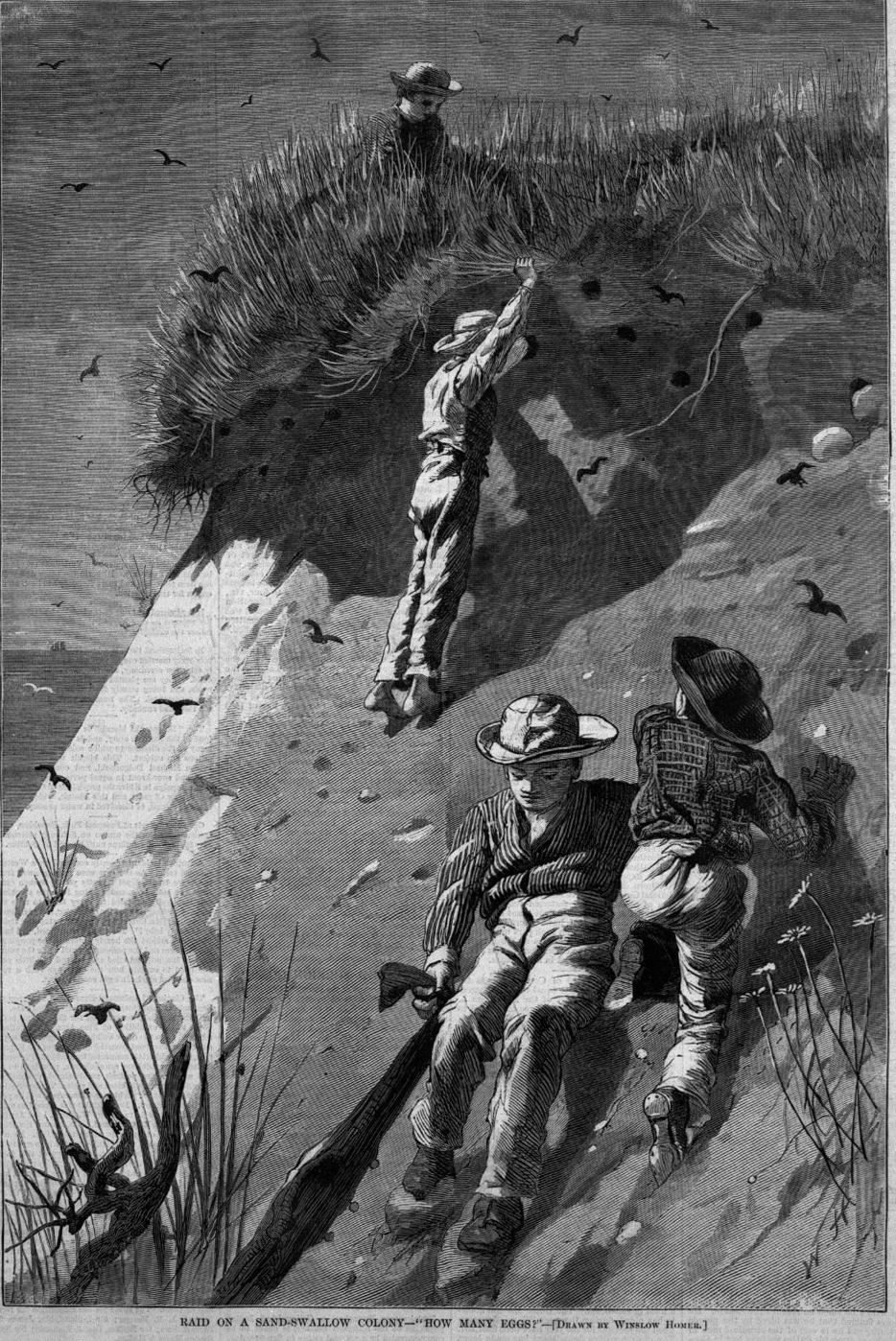
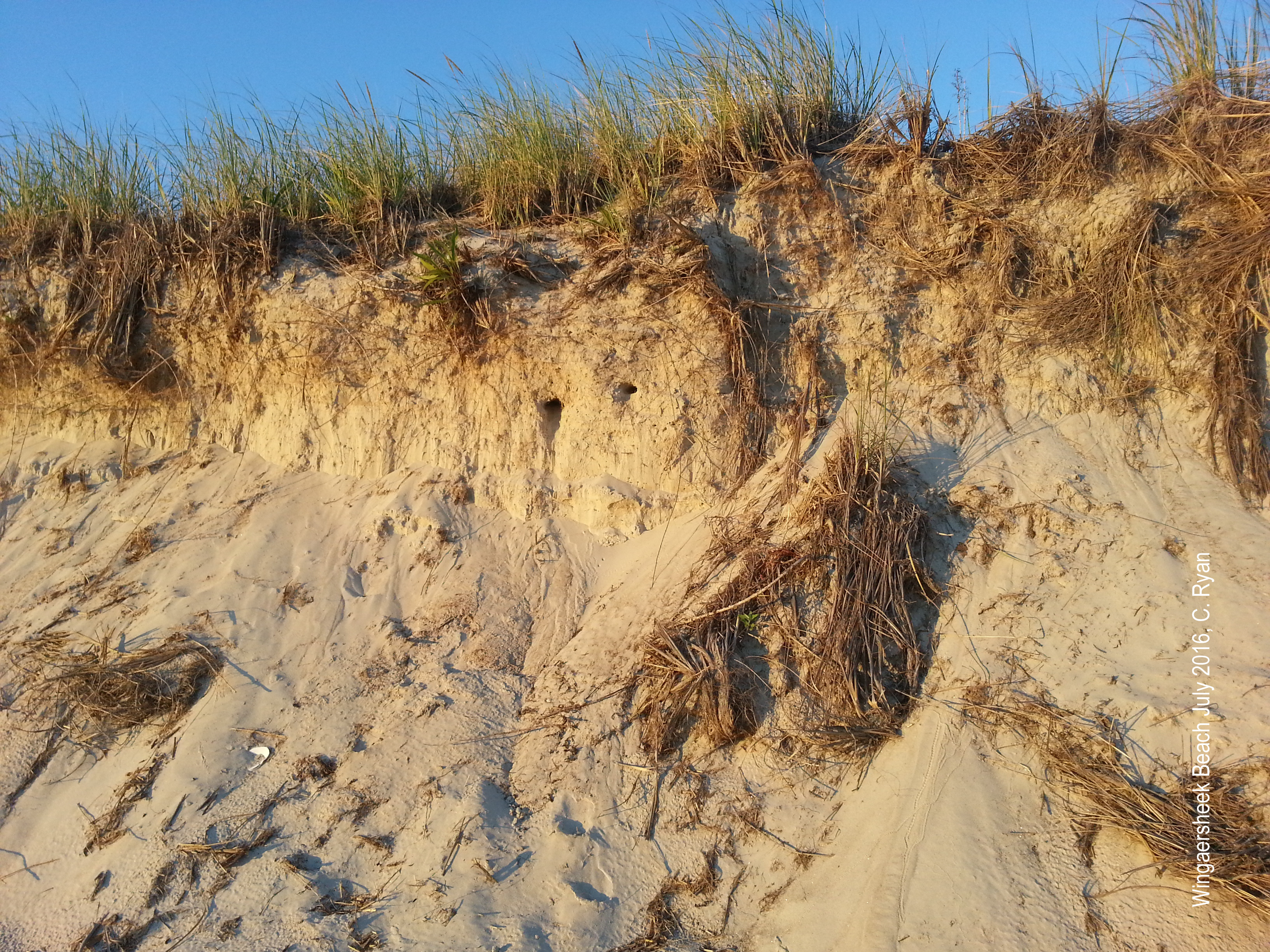
While reading The Narrow Edge, and looking at Kim Smith’s Piping Plover photographs, I thought about Raid on a Sand Swallow Colony (How Many Eggs?) 1873 by Homer and how some things change while much remains the same.When my sons were little, they were thrilled with the first 1/3 or so of Swiss Family Robinson. As taken as they were with the family’s ingenuity, adventure, and tree house–they recoiled as page after page described a gorgeous new bird, promptly shot. They wouldn’t go for disturbing eggs in a wild habitat. The title ascribed to this Homer, perhaps the eager query from the clambering youngest boy, feels timeless. Was the boys’ precarious gathering sport, study, or food? What was common practice with swallows’ eggs in the 1860s and 70s? Homer’s birds are diminutive and active, but imprecise. Homer sometimes combined place, figures, subject and themes. One thing is clear: the composition, line and shadow are primed and effective for an engraving.
Harper’s Weekly published the image on June 13, 1875. Artists often drew directly on the edge grain of boxwood and a master engraver (Lagrade in this case) removed the wood from pencil and wash lines.
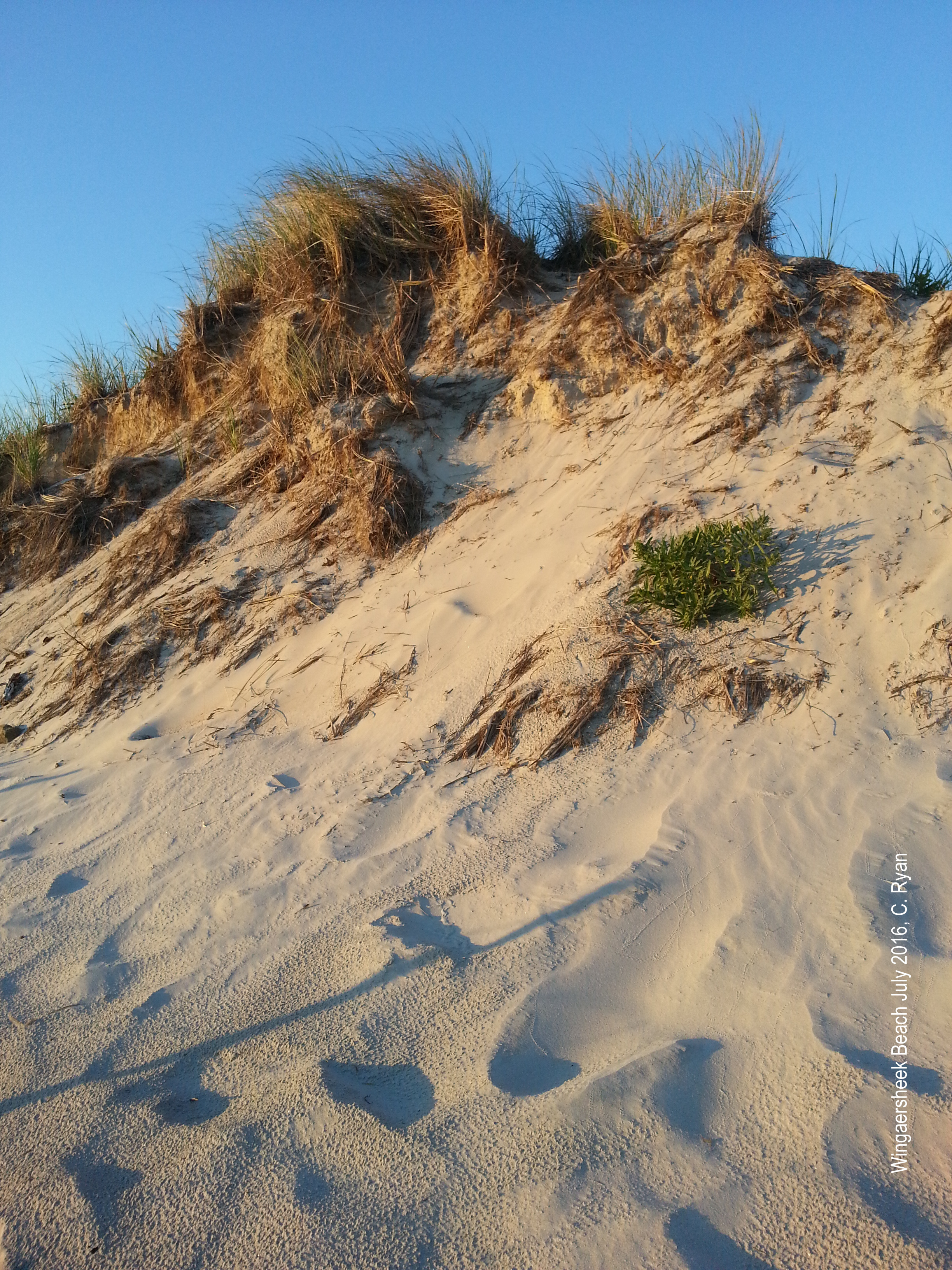
2016. Wingaersheek dunes and nests 140+ years later.
Spring has finally returned to New England! It is arguably the most exciting birding season of the year, when it is possible to find over 100 species in a day with relative ease – many of them in stunning breeding plumage! And each year I organize a small group here on Cape Ann to bird for conservation as part of Mass Audubon’s Bird-a-thon. It’s great fun, involves some friendly competition, and supportsbird conservation.
Here’s how it works.
This yearBird-a-thontakes place May 11-12 and consists of having as much birding fun as we can stand in the 24 hours between 6:00 PM Friday until 6:00 PM Saturday. Back in 2004, I thought it would be fun to see how many species we could find without leaving Cape Ann (Gloucester, Rockport, Essex and Manchester). In addition to the geographical challenge, this reduces birding time lost to driving (one of our team birds by bicycle!) and of course shrinks the team’s carbon footprint. In the 7 years that Cape Ann has fielded a team, we have ticked 183 species total with an average of 132 species per year –dragged down by monsoon rains in two years! In our best single year we found 156 species.
The Cape Ann Bird-a-thon team is back this year with its (catchy?) nickname, “Twitchers with a Purpose” to emphasize the fact that all funds raised will go to specific bird conservation projects. The conservation dollars that can be raised can be significant. For example,last year, Drumlin Farm’s team won the prized Hathaway Cup for raising the most money ($34,820) and a dedicated individual on that team was the statewide top fundraiser with $15,309 raised. My team is trying to hit the $5,000 mark this year.
This, as you’ve probably guessed, is where you come in by pledging to my team as generously as you can. You can either pledge an amount per bird ($1/species @ 132 species = $132) or just pledge a set amount. Pledging is a snap. Just go to my webpage:http://www.firstgiving.com/fundraiser/chrisleahy/bird-a-thon-2012 , click on the green DONATE button and just follow the simple pledging instructions. OR you can just send a check made out to Mass Audubon and designated for the Bertrand Chair (that’s me), attn: Ellen McBride, Mass Audubon, 208 South Great Rd., Lincoln, MA 01773. No gift is too small (or too large!) and all are eligible for a charitable deduction.
I hope you can help. Remember, your pledge will be dedicated to specific bird conservation efforts undertaken by my colleagues and me at Mass Audubon, such as the recently publish and authoritative State of the Birds report. I can assure you on the best existing evidence that our birds need all the help you can give them.
Thank you Chris for all you do to help the birds of Massachusetts!
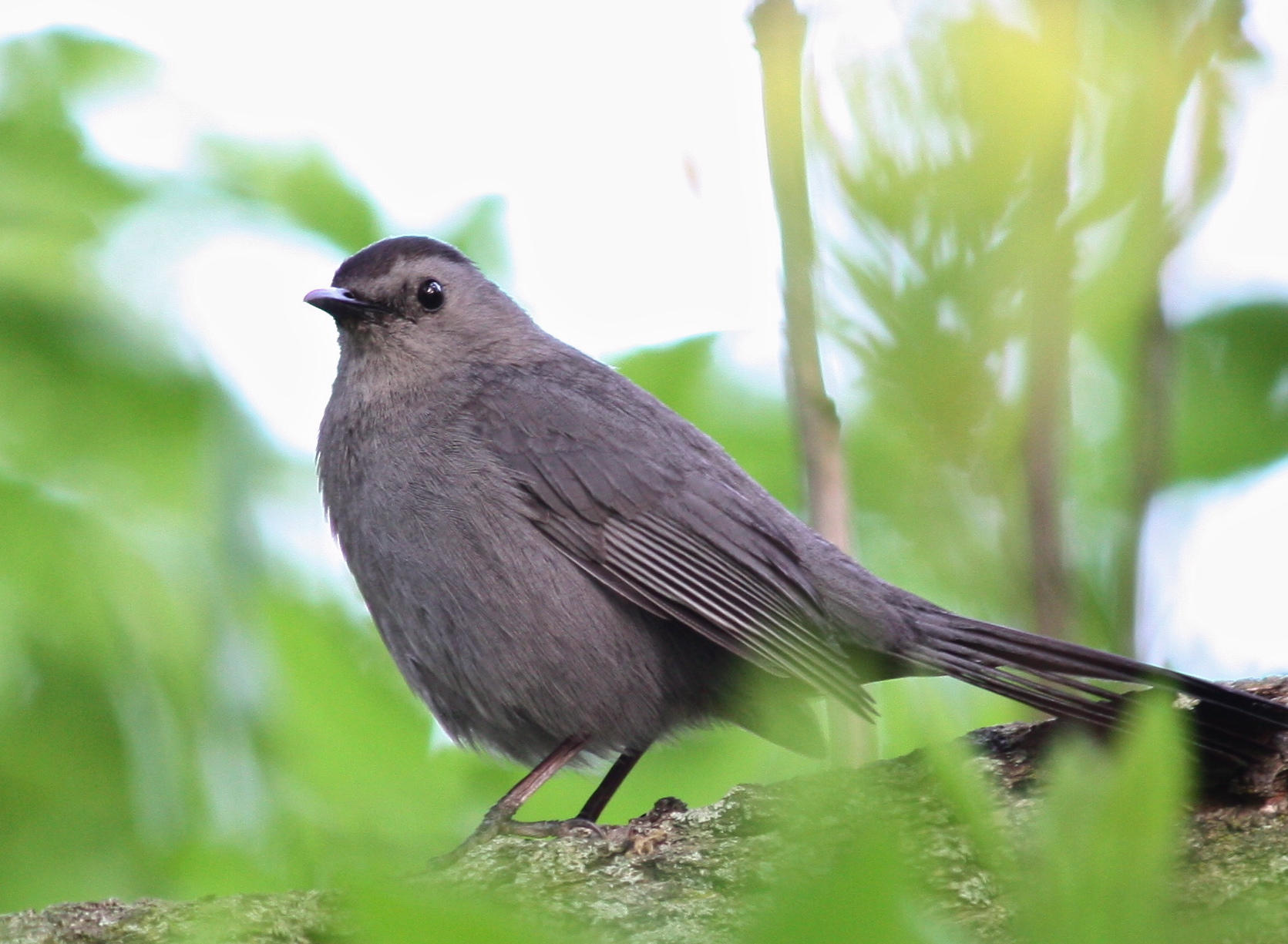
Gray Catbird
In looking through my photo library for an image for this post, I am reminded of when the Catbirds and Mockingbirds began to call our garden home–when our first batch of blackberries ripened! Catibirds dine on fruits and berries and are year-round frequent visitors for the feast we provide, including blueberry, Juneberry, winterberry, and holly berry. As the fruits of our magnolias approach their ripening time, the Catbirds noisily guard the trees in anticipation of the ripened fruit.
The Cornell website has excellent crisp, clear recordings of the Catbirds “mew” sound. Anyone who has heard the repetitious male catbird vocalizing at daybreak knows exactly why they are called Catbirds. From Cornell, “The Gray Catbird belongs to the genus Dumetella, which means “small thicket.” And that’s exactly where you should go look for this little skulker.”
Love the beautiful shade of blue of Catbird eggs!
Gray Catbird Eggs image courtesy Cornell Lab of Ornithology
Spread The GMG Love By Sharing With These Buttons:
Every year, in the United States alone, over 1,000,000,000—yes, that is one billon—birds are killed from flying into windows. Chris Leahy quoted this statistic at the talk he gave last week at the Sawyer Free Library. Coincidentally, earlier that day I had been speaking with my friend Kate who has this very problem of birds hitting her windows as her home is sited on a beautiful seaside meadow in Tiverton, Rhode Island. She wanted to share with my readers about spider web decals for glass windows.
I found a website that offers a range of innovative solutions to protect birds, for both the residential home and the commercial property, TONI Bird Control Solutions. Although based in Germany, the solutions are universal.
Spider webs reflect light in the UV spectrum and are a visible barrier to birds. When you think about it, we don’t often see birds entangled in a spider’s web. Taking cues from nature, the spider’s web is the basis for TONI’s ultraviolet bird pen, bird glass, and UV decals. TONI’s solution #2, the ultraviolet Bird Pen, is well suited for residential properties. Also, check with the Essex Bird Shop. I believe they carry ultraviolet decals, not visible to the human eye.
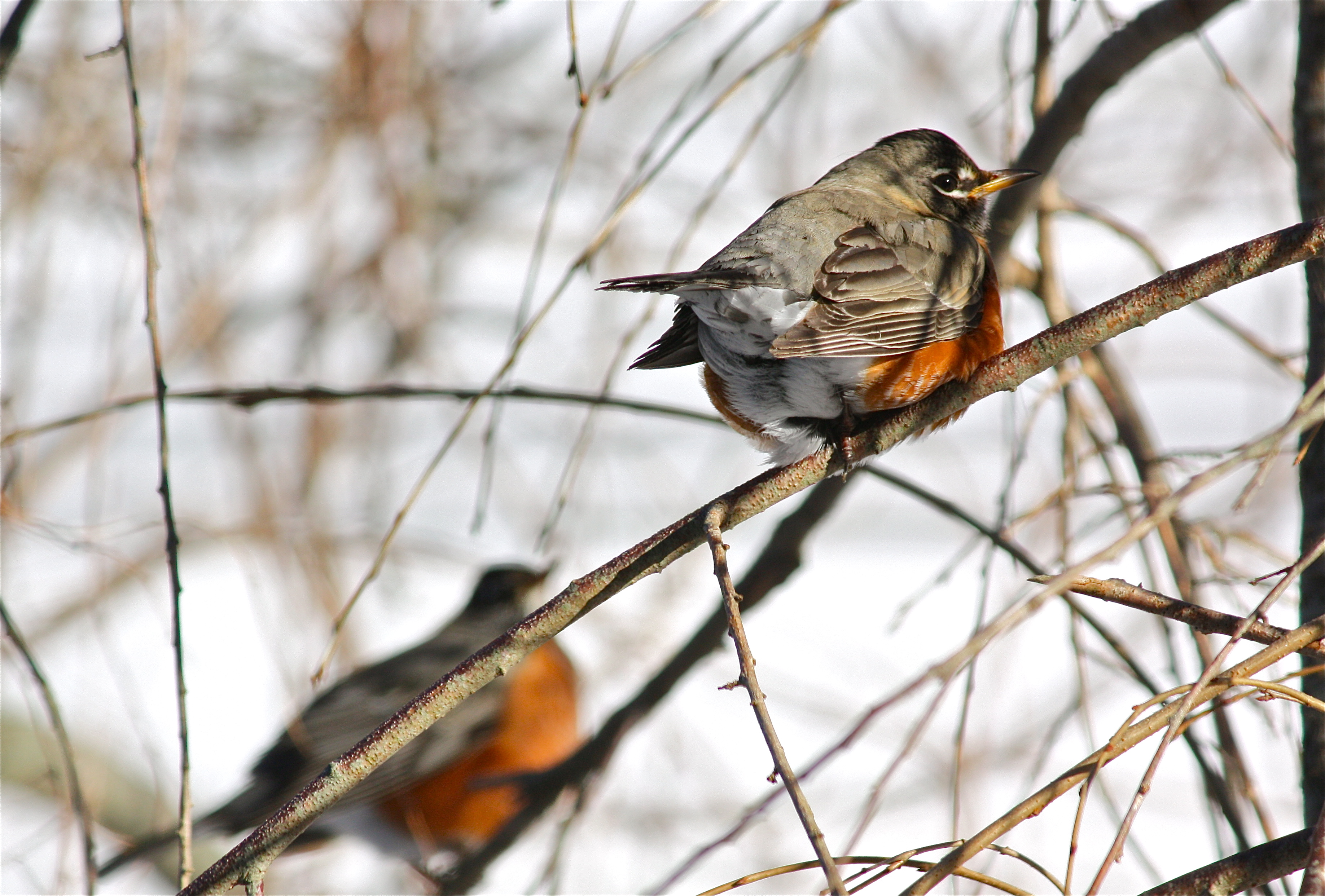
American Robin
If so many birds are killed, why don’t we see the dead bodies? The answer is simply, scavengers. Migrant songbirds fly at night, hitting the glass in the dark and the very early morning hours. Scavengers like gulls, vultures, crows, magpies, rats, and cats know where to look for injured and dead birds. At city skyscrapers, building maintenance daily sweep up bags of, and sometimes during peak migration, barrels full of, dead birds every morning at dawn. The high death rate around skyscrapers is also due in part to the bright lights left burning all night.
Another solution is perhaps not wash your windows quite as frequently, or wait to wash until after the spring and fall migrations. Fortunately, we do not have the problem of birds hitting our windows because of our many weathered and wavy window panes dating back to 1851. We have a different problem. During warmer months, I like to take advantage of the harbor breezes and usually have the windows wide open, and without screens (until mosquito season begins). We’ve had finches and sparrows and hummingbirds flying around my home office, but then again, none fatally injured.
Spread The GMG Love By Sharing With These Buttons:
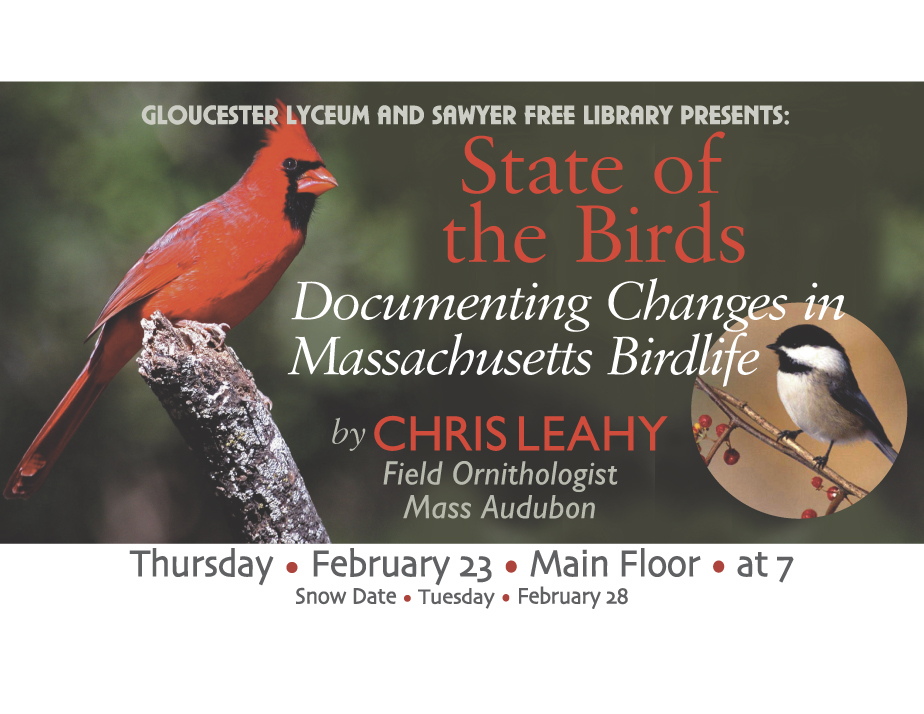
Chris Leahy spoke to a packed house at the Sawyer Free Library last night.
As is usually the case with Chris, his talk was brilliant and depth of knowledge inspiring. Aren’t we fortunate that he resides in Gloucester and always gives so generoulsy of his time and knowledge. Thanks, too, to the Sawyer Free for hosting this event. Chris gave out to our community twenty-five copies of the beautiful and densely illustrated 60 page seminal report on the avifauna of Massachusetts. If you did not receive a copy last night, it is available to read in convenient online magazine form here: State of the Birds: Documenting Changes in Massachusetts Birdlife.
From the forward of State of the Birds, written by Edward O. Wilson, University Professor Emeritus in Entomology Harvard University. ”
Dear Friends,
It is with tremendous enthusiasm that I mark the release of Mass Audubon’s seminal report on Massachusetts avifauna, State of the Birds 2011. Though our Commonwealth is one of the smallest, most populous states in the union, it is blessed with spectacular landscapes filled with an astonishing biodiversity. The Berkshire Hills in their autumn splendor, Bald Eagles soaring over the Quabbin wilderness, the majesty of the sea at any season from Cape Ann to Cape Cod—these and many other treasures inspire our imagination and lift our spirits. These landscapes are home to birds—birds that can show us, when we watch and listen, how our environment is faring and how it is changing.
…Birds inhabit our myths, appear in our poetry, and inspire our music. Since ancient times, birds have been used in auguries to make critical decisions or predict the future. Now science rather than superstition is interpreting what the birds are telling us. We need to listen carefully.”
Sincerely,
Edward O. Wilson
Spread The GMG Love By Sharing With These Buttons:
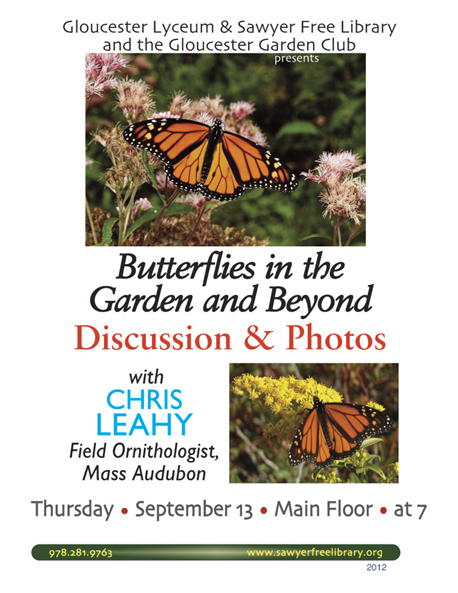
Chris Leahy is a fantastic speaker and I am looking forward to attending his lecture next Thursday night at the Sawyer Free. Chris holds the Gerard A. Bertrand Chair of Natural History and Field Ornithology at Mass Audubon. He has been a professional conservationist for more than thirty years and served as Director of Mass Audubon’s Center for Biological Conservation. His interests in natural history are comprehensive, and he is a recognized authority on birds and insects. His published works include Birdwatcher’s Companion to North American Birdlife, The First Guide to Insects, Introduction to New England Birds, An Introduction to Massachusetts Insects, and The Nature of Massachusetts. He grew up in Marblehead and has lived in Gloucester with his family since the 1970s. ~ Information found on Mass Audubon website.
Spread The GMG Love By Sharing With These Buttons:











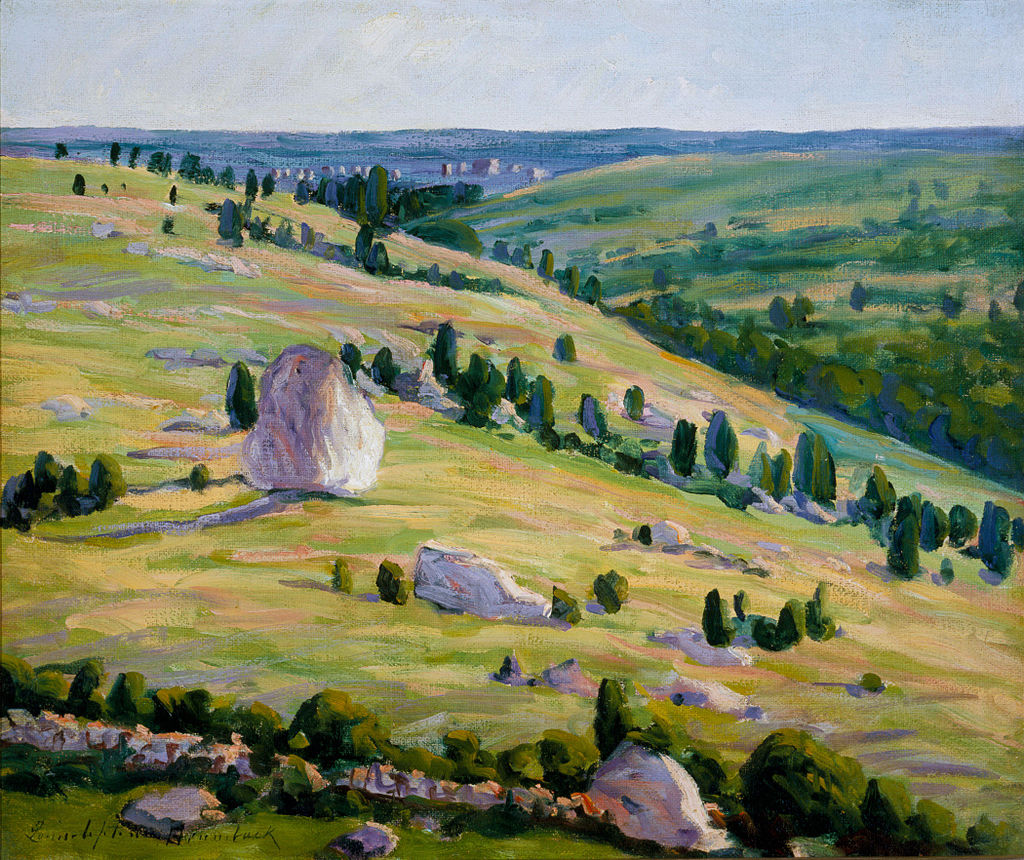








 Louise Upton Brumback (1867-1929), Dogtown- Cape Ann, 1920 oil on canvas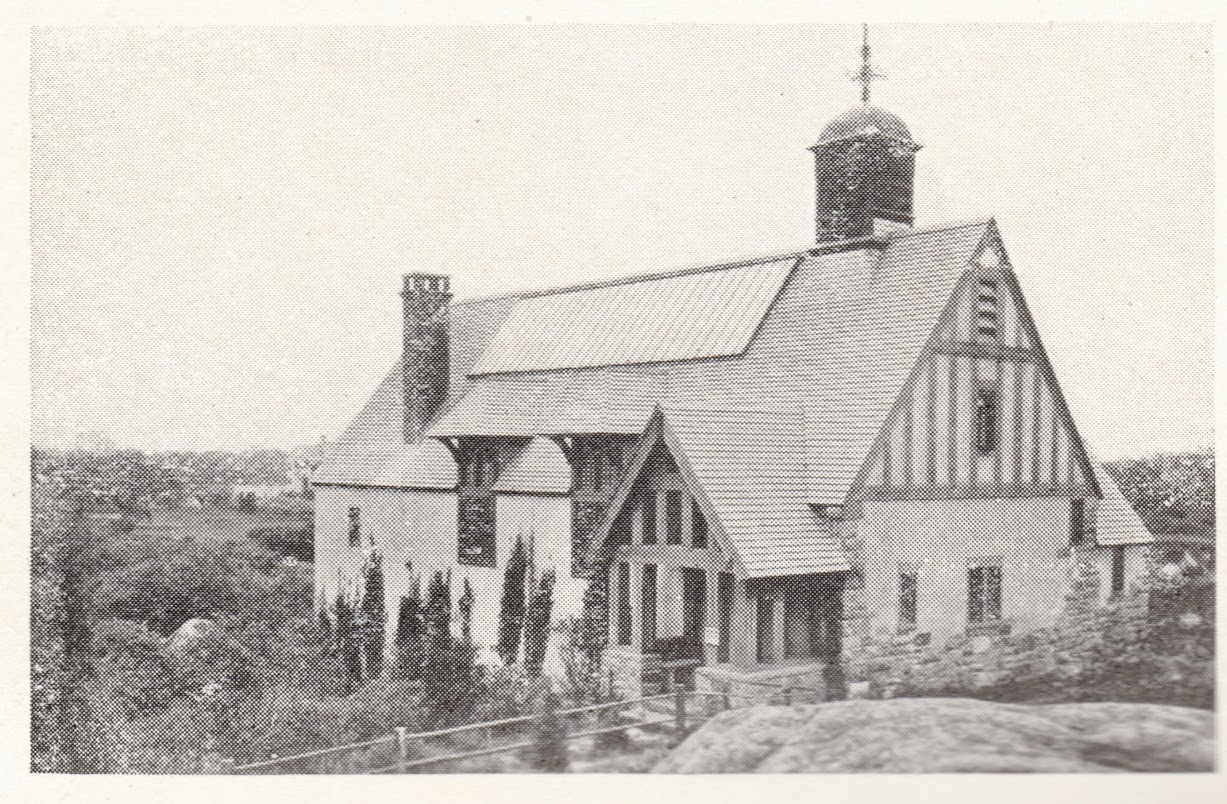












 Good Morning Gloucester