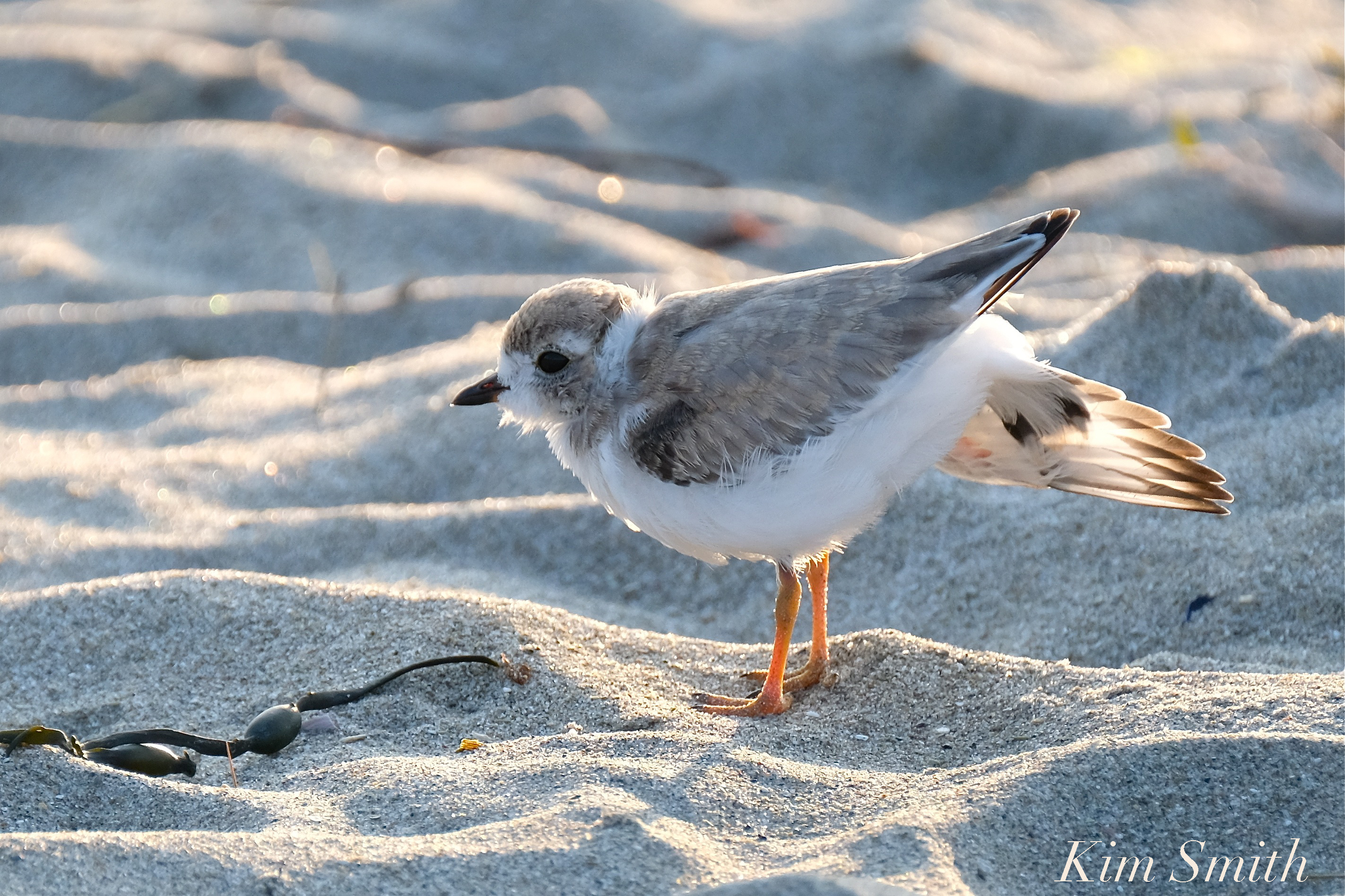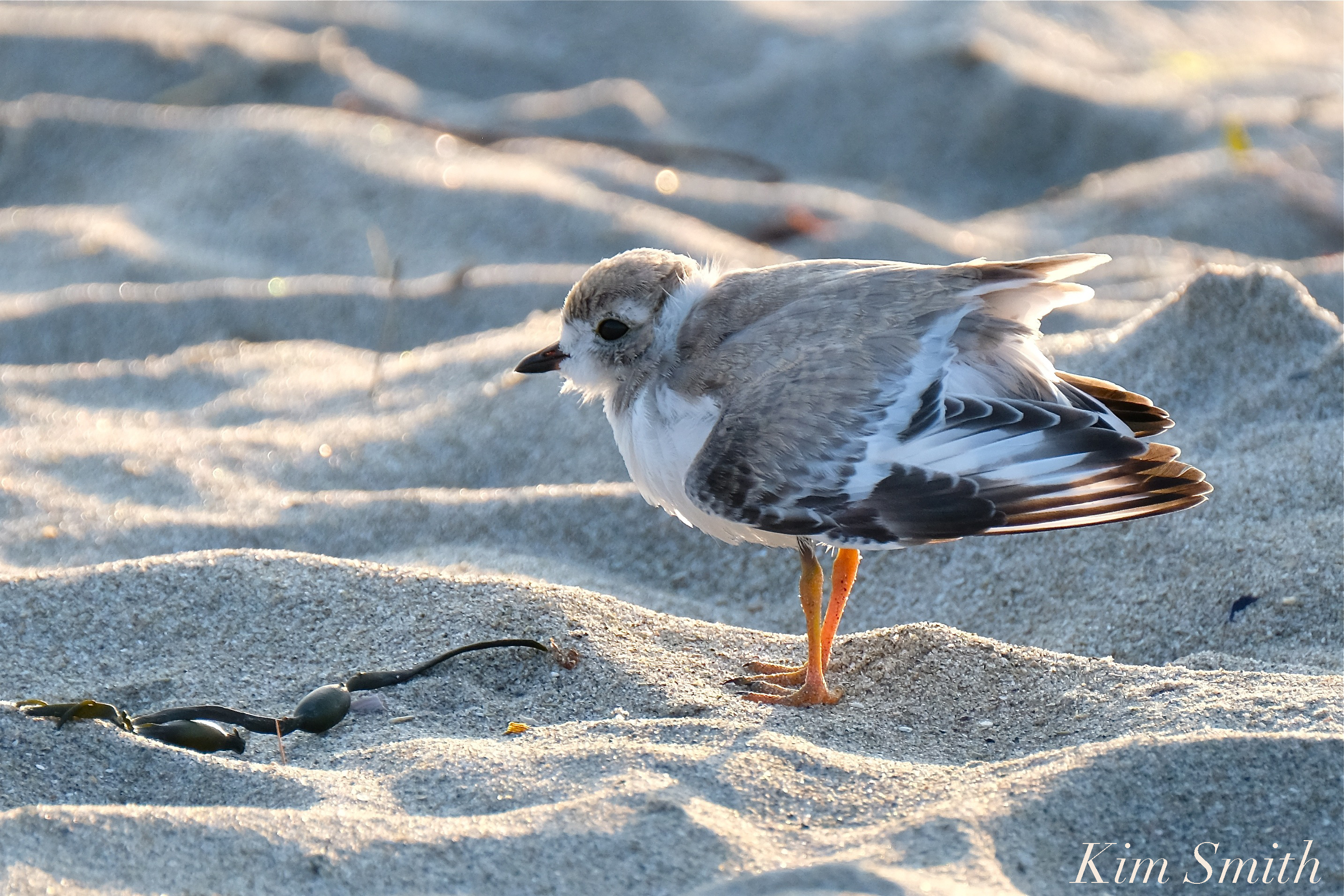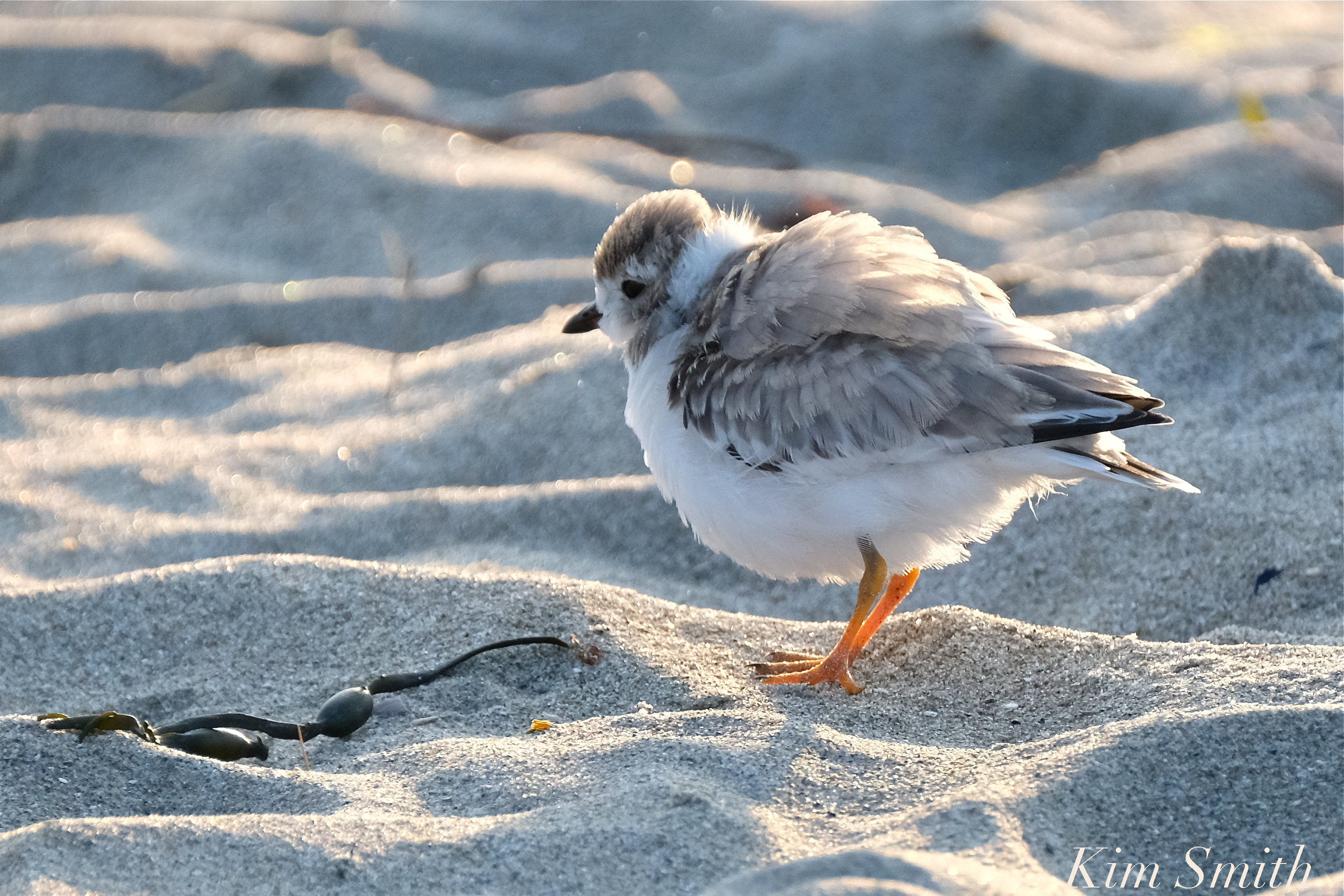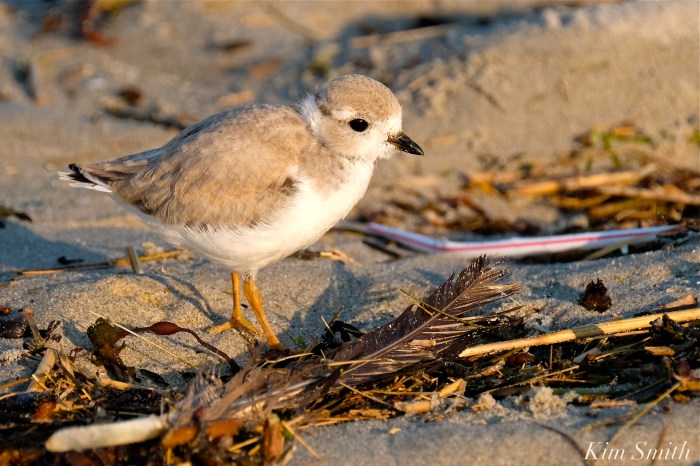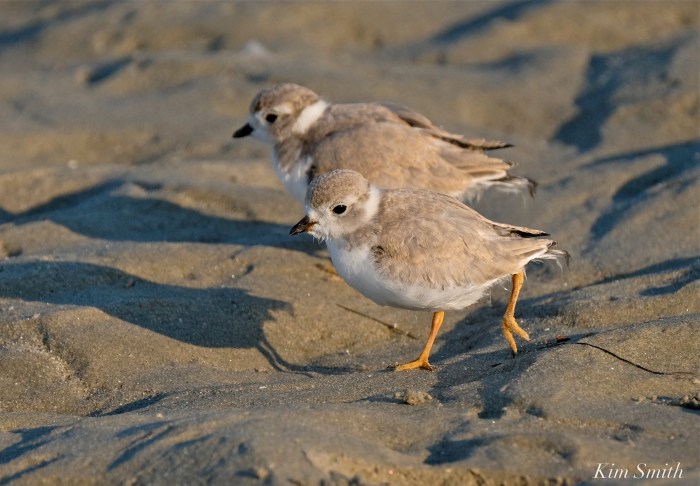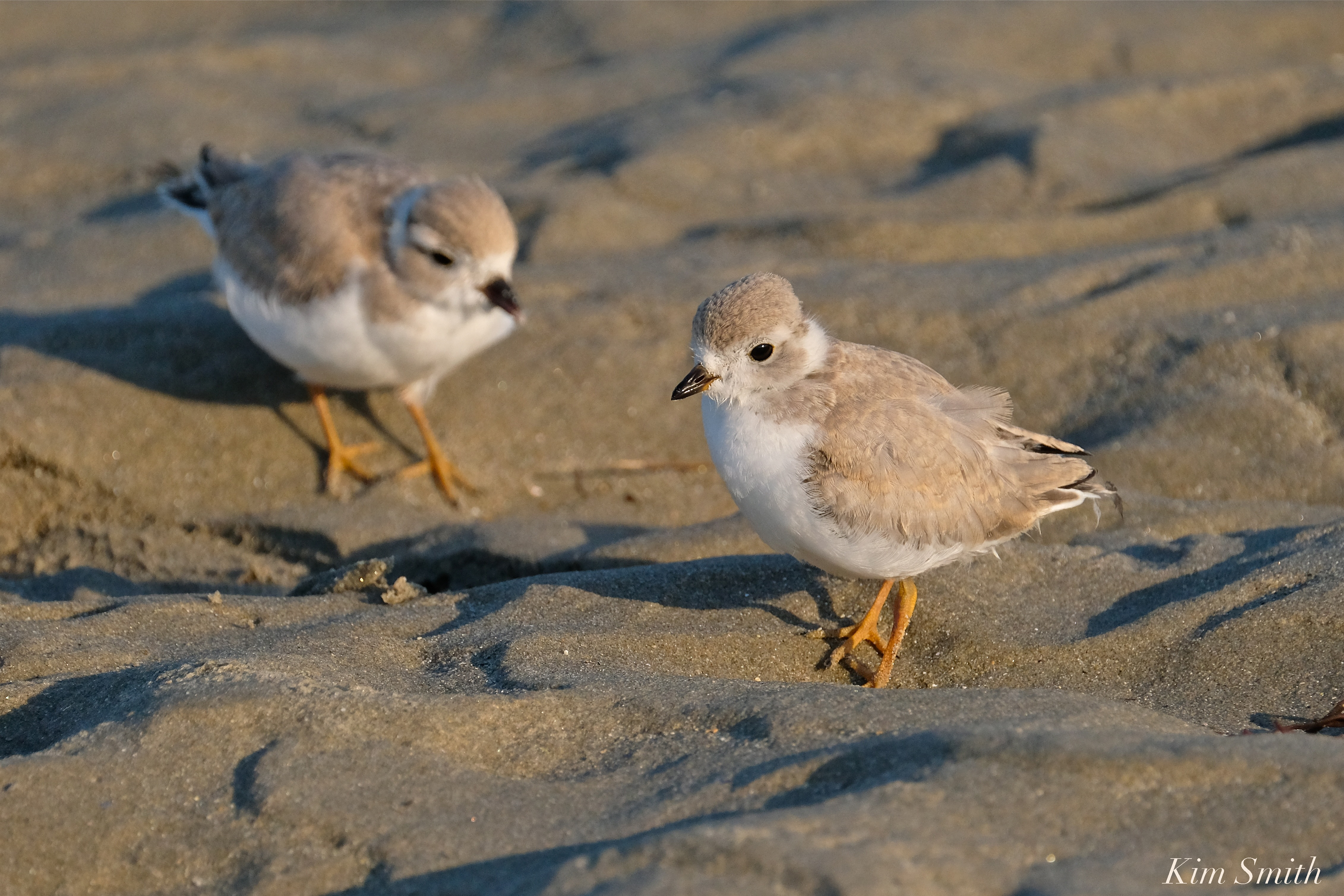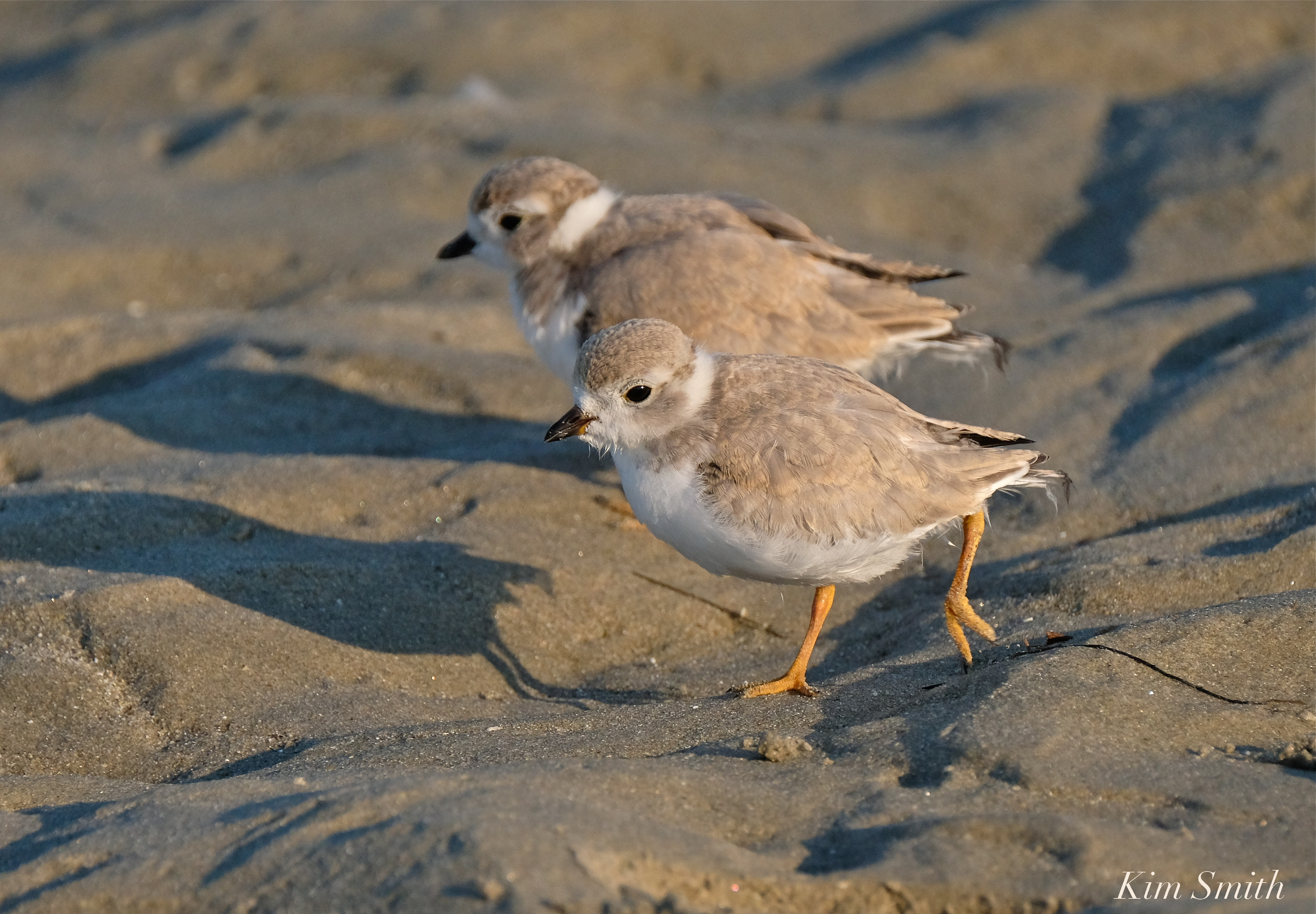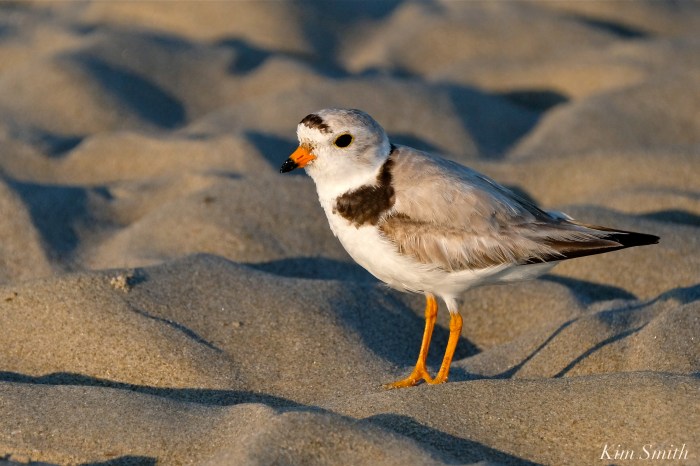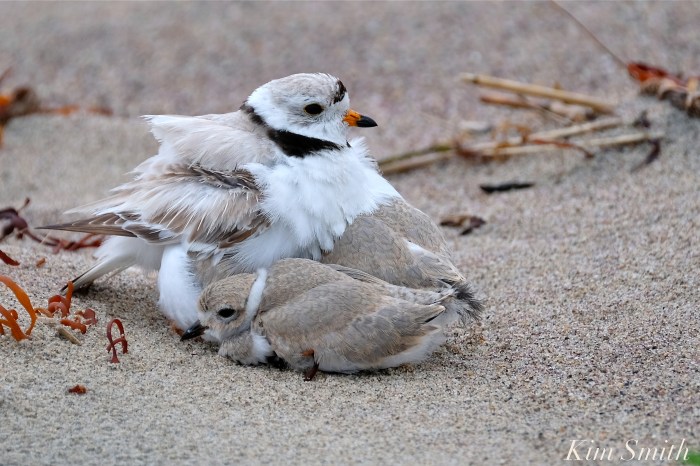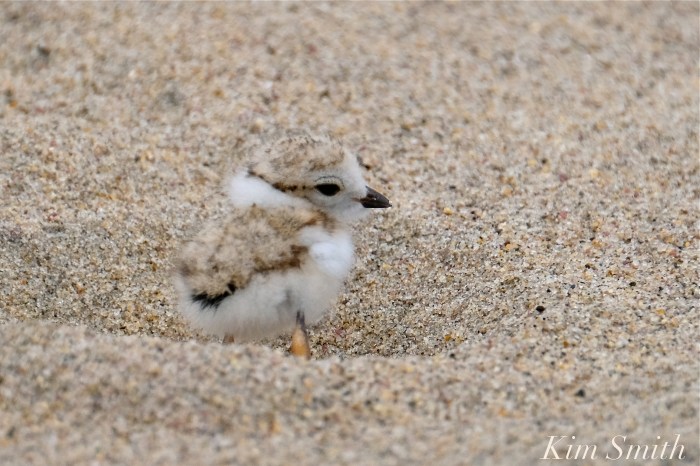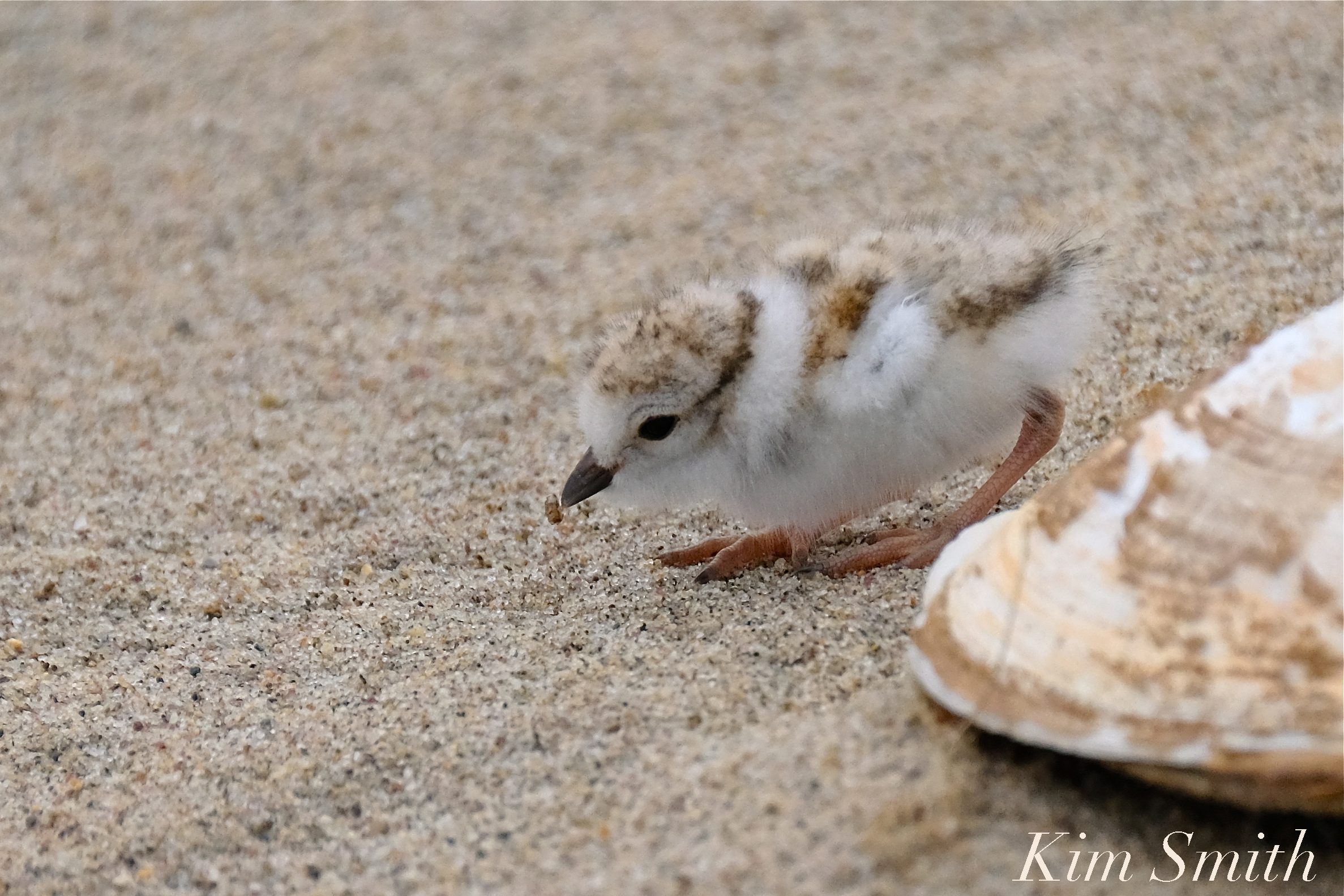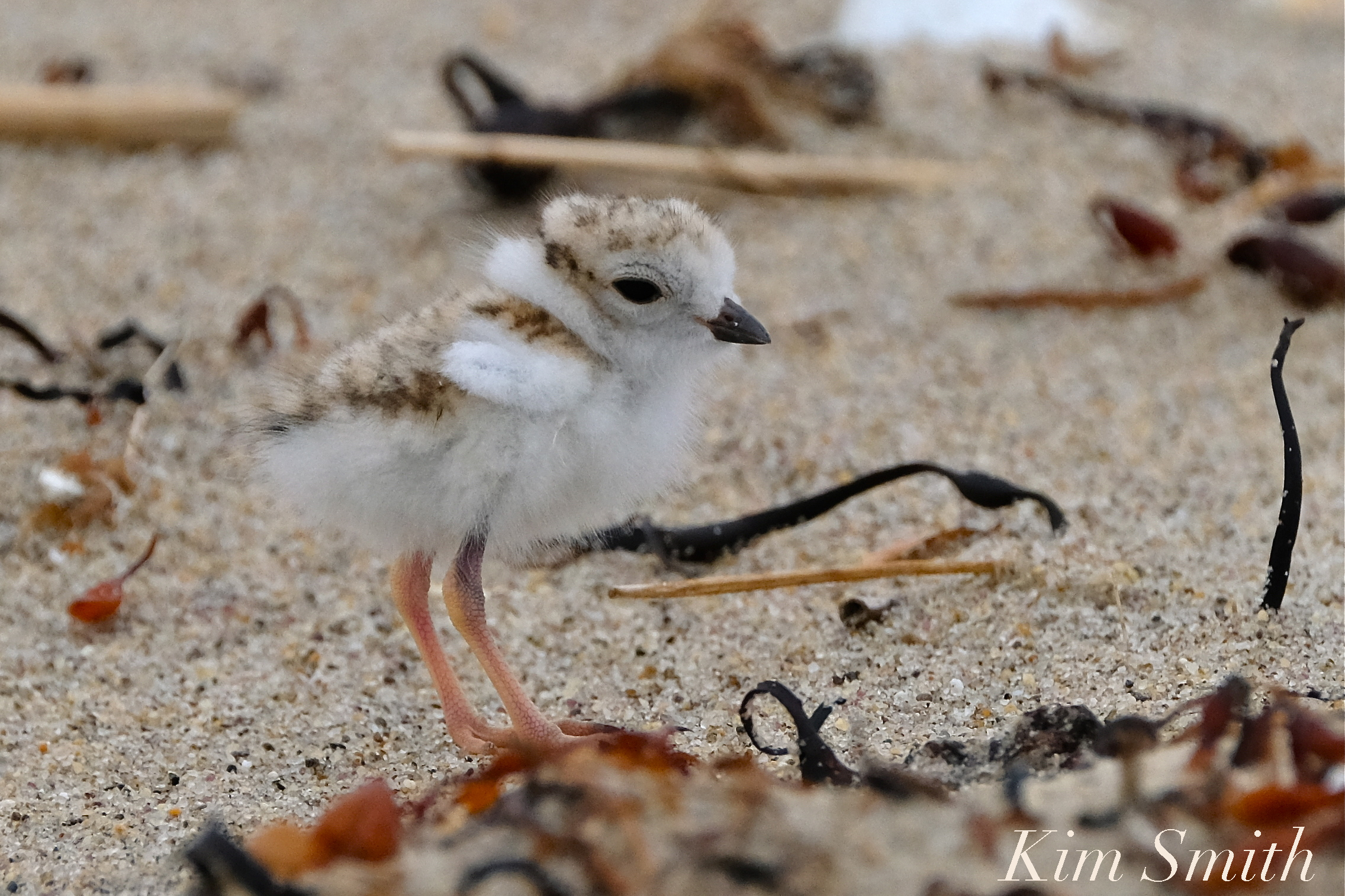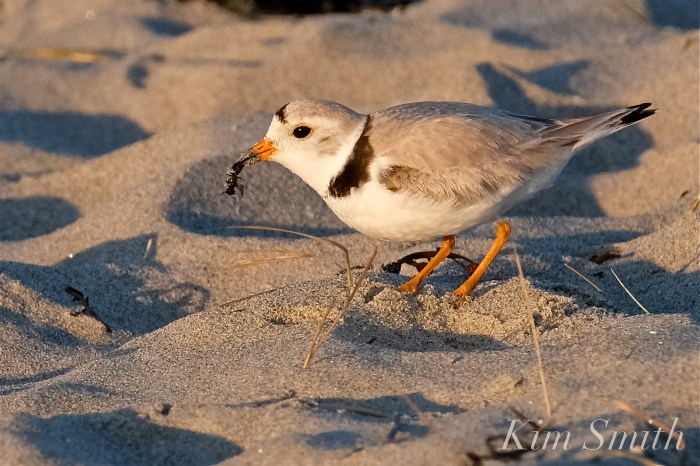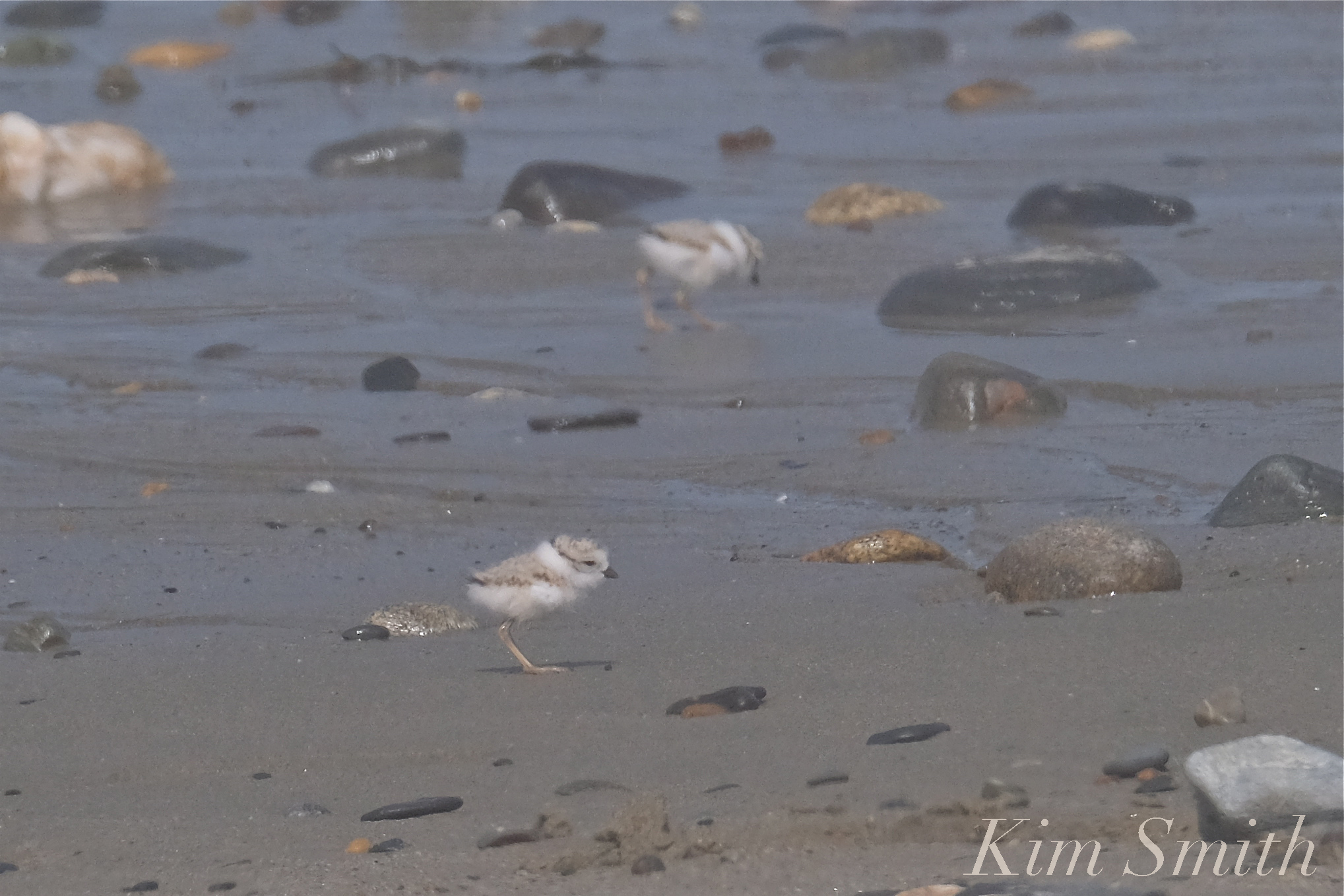
CONGRATULATIONS TO GLOUCESTER AND TO OUR CHICKS! 37 DAYS OLD AND OFFICIALLY FLEDGED!!!

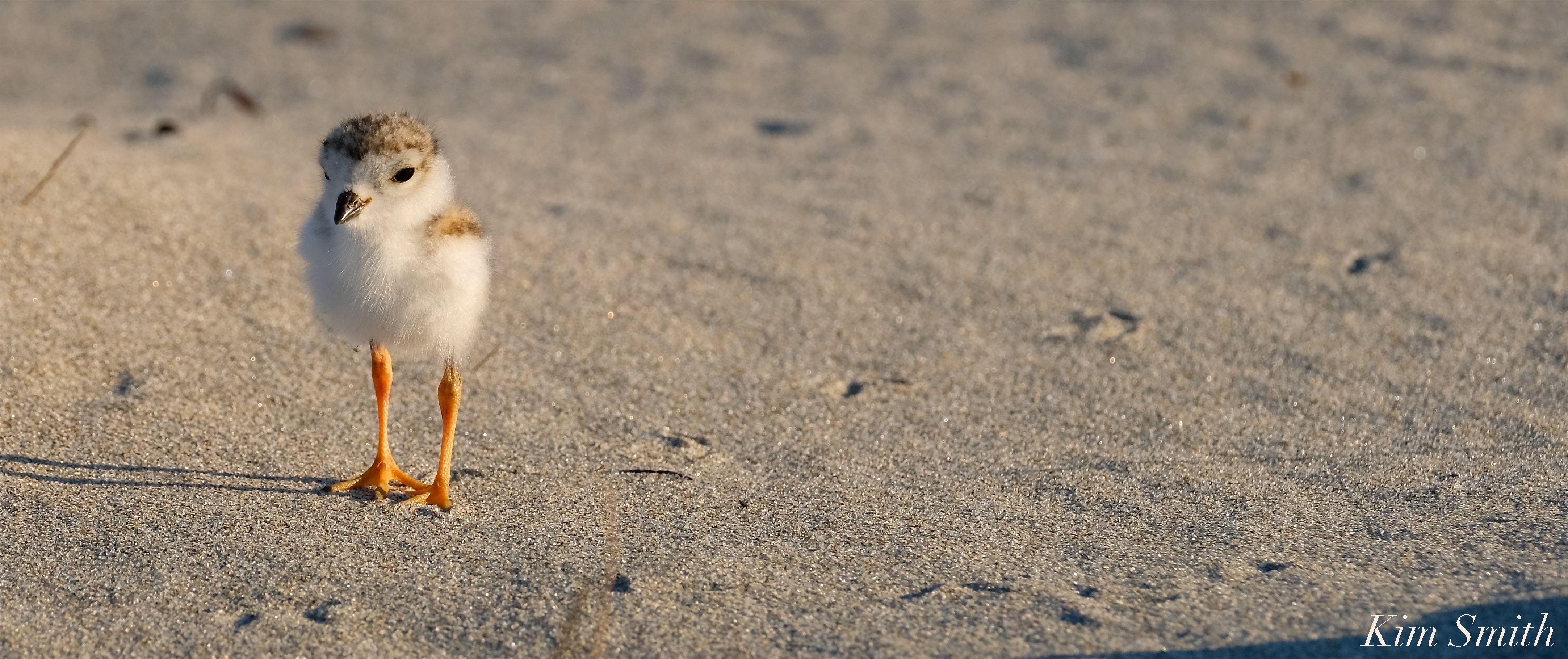
Saturday marked the thirty-five-day old milestone in a Piping Plover’s life, when USFWS considers a chick fully fledged. At five weeks, a chick has by far the greatest chance of surviving and going on to become a breeding adult. That we fledged three from Good Harbor Beach is nothing short of astounding considering the very many potential threats. The average success rate per nest of four is 1.2 fledglings.

Gloucester’s citizens are proof positive of what a community can accomplish when we work together to effect change.

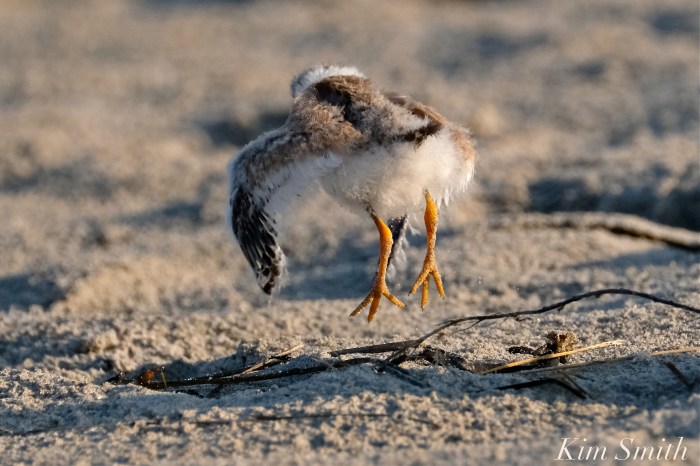
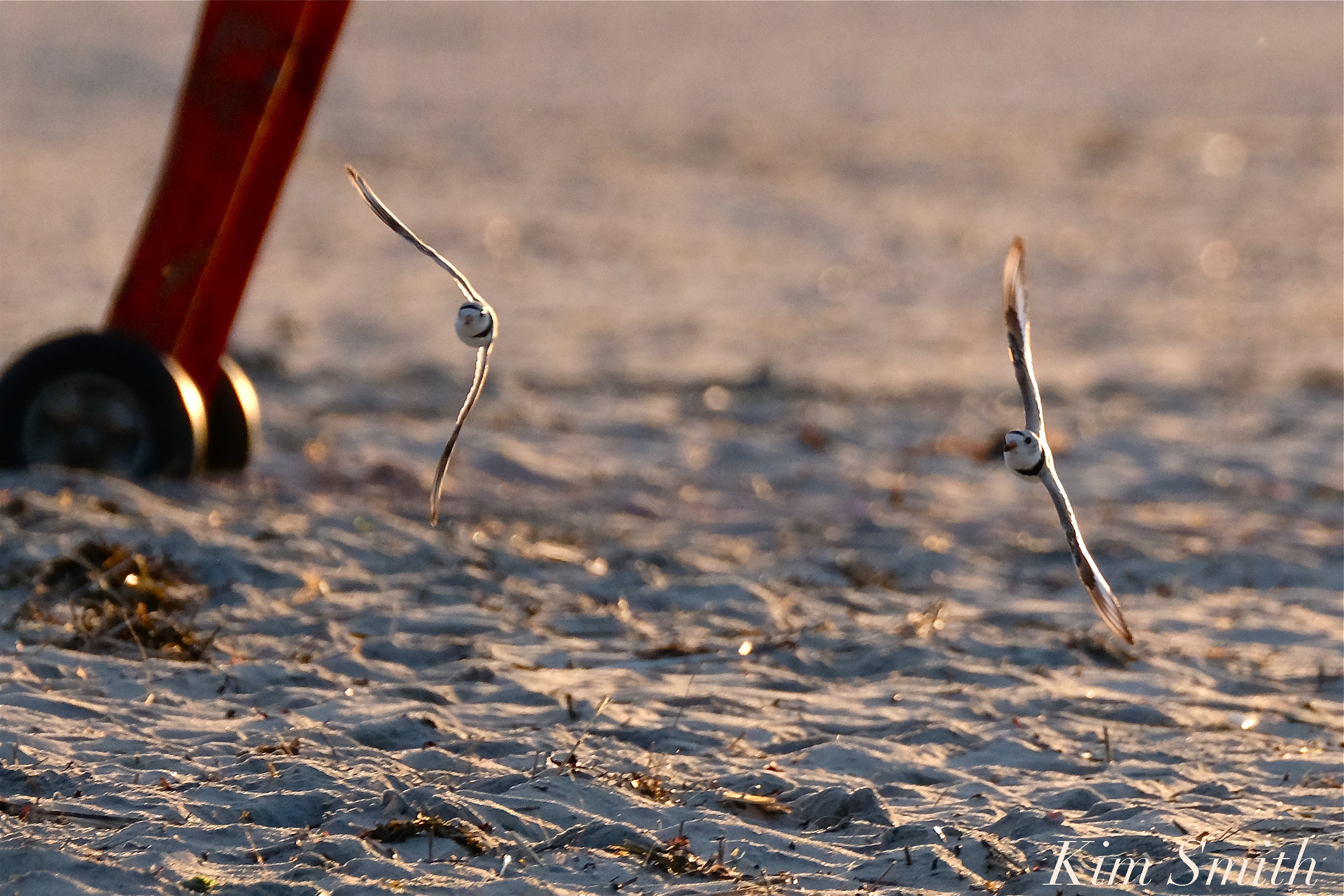
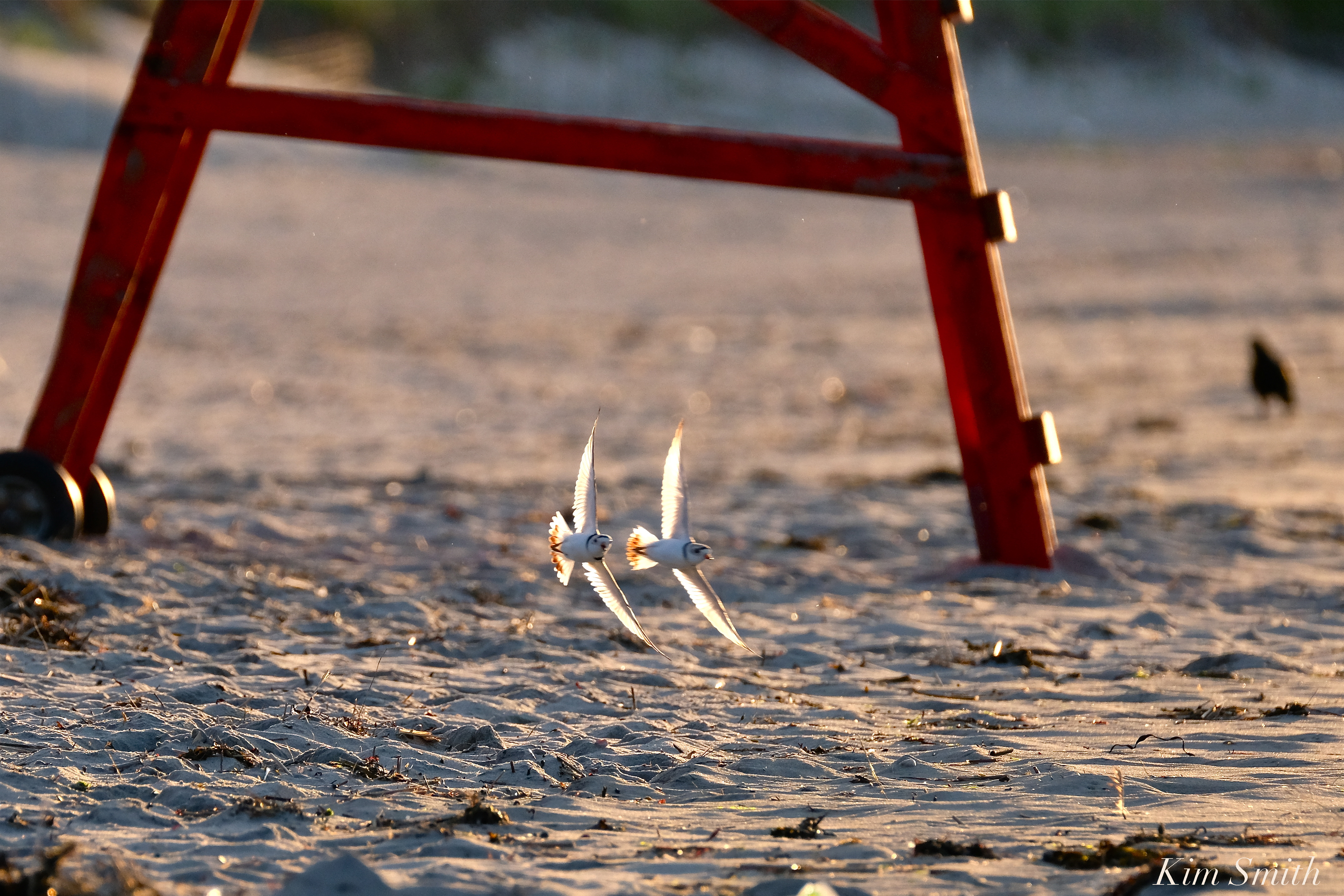
FLYING! One, two, three, lift off!

What did the chicks have going in their favor this year?

Number One was the change in the dog ordinance, which was to disallow dogs on the beach after March 31st.

Number Two was enforcing the new dog ordinance. Because of the ordinance change, and stepped up enforcement, the adults moved back to the beach to nest, and relatively early in the season. By helping the birds nest earlier in the spring, by the time the Fourth of July weekend arrived, the fledglings were bigger, stronger, and much better at following the parent’s voice commands that alert them to danger.

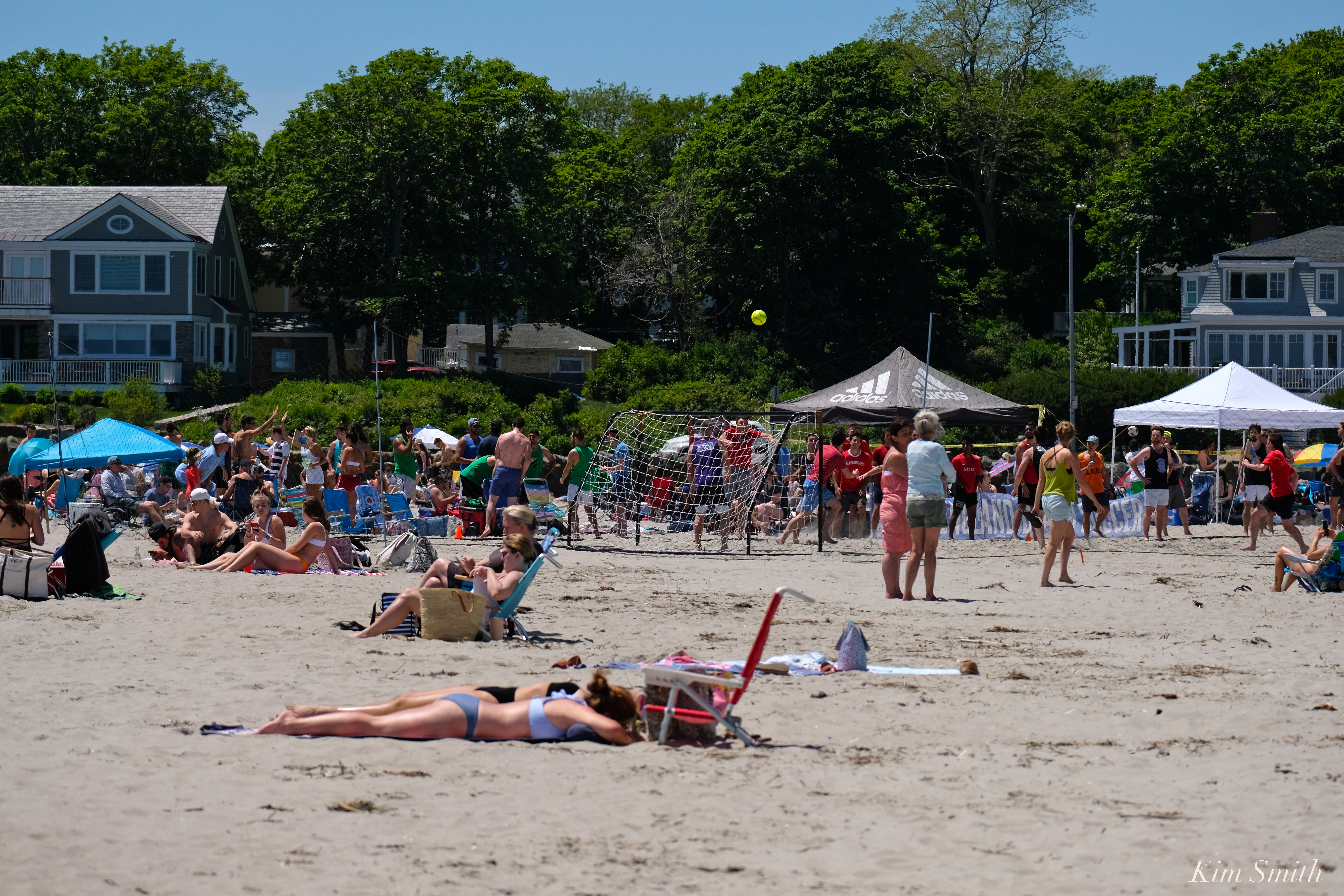
Number Three was the weather. With cooler than usual temperatures, there were fewer beach goers, which allowed for fewer disturbances.

Number Four, last but not least, was an amazing corp of volunteers who have dedicated hours upon hours to keeping watch over the babies, from sunrise til sunset. Our volunteers are truly the envy of other communities where PiPl nest. I am filming at several locations and staff at these beaches wish they had volunteers as dedicated as are ours.

With a happy, heartfelt thanks to a fantastic group of dedicated volunteer PiPl monitors, to Essex Greenbelt Director of Land Stewardship Dave Rimmer for his continued help, to our Gloucester City Councilors for having the collective wisdom to vote to change the ordinance, to Ward One City Councilor Scott Memhard for his ongoing assistance, to ACO Officers Teagan and Jamie, to Gloucester’s Animal Advisory Committee, to Mayor Sefatia and her administration, to the DPWs Mike Hale and Joe Lucido, and to everyone in the community (and beyond) who have expressed their interest, their support, and who have loved learning about these tiniest, but most spunkiest, of sweet little shorebirds as we have watched them grow in their fascinating life story journey. 

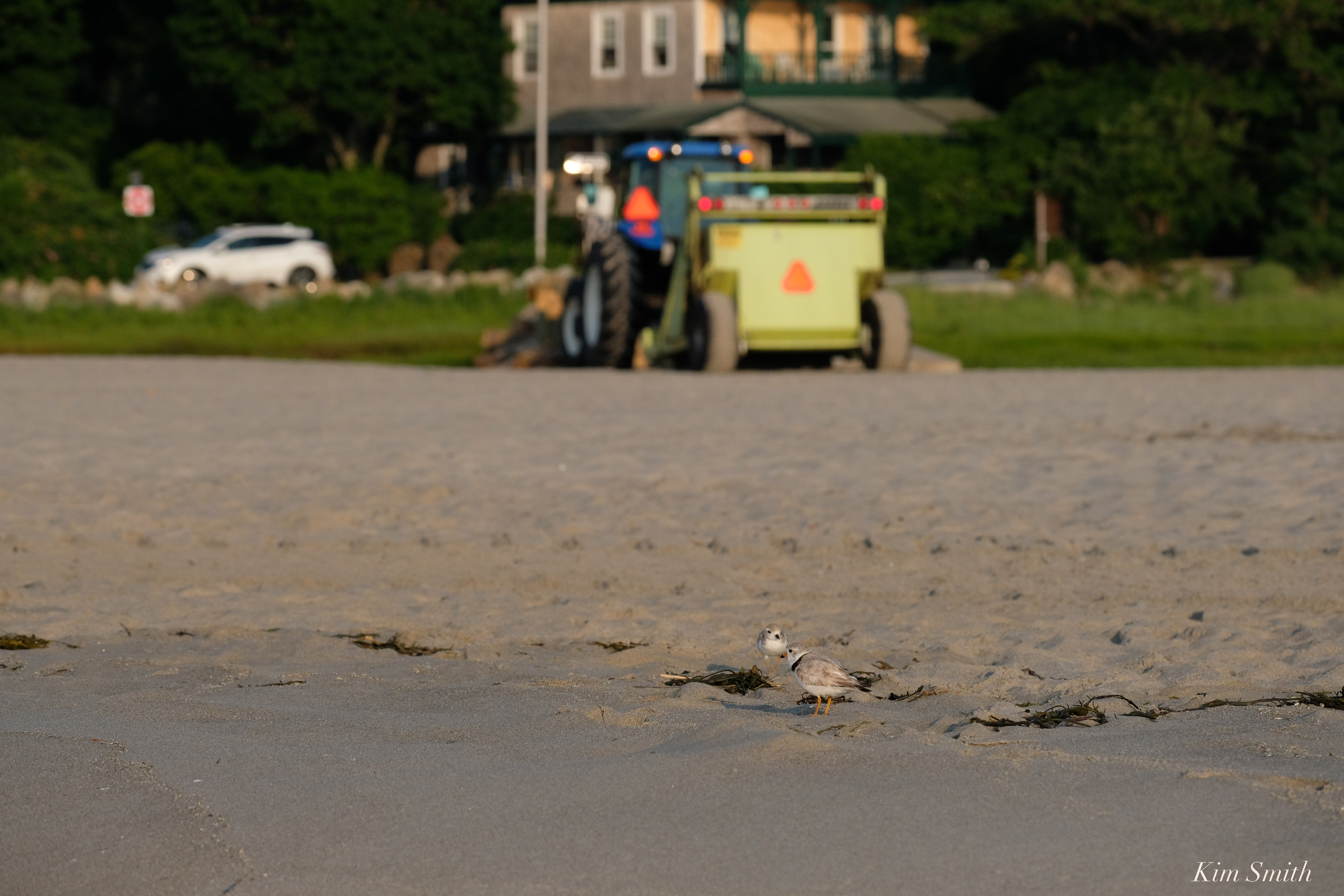
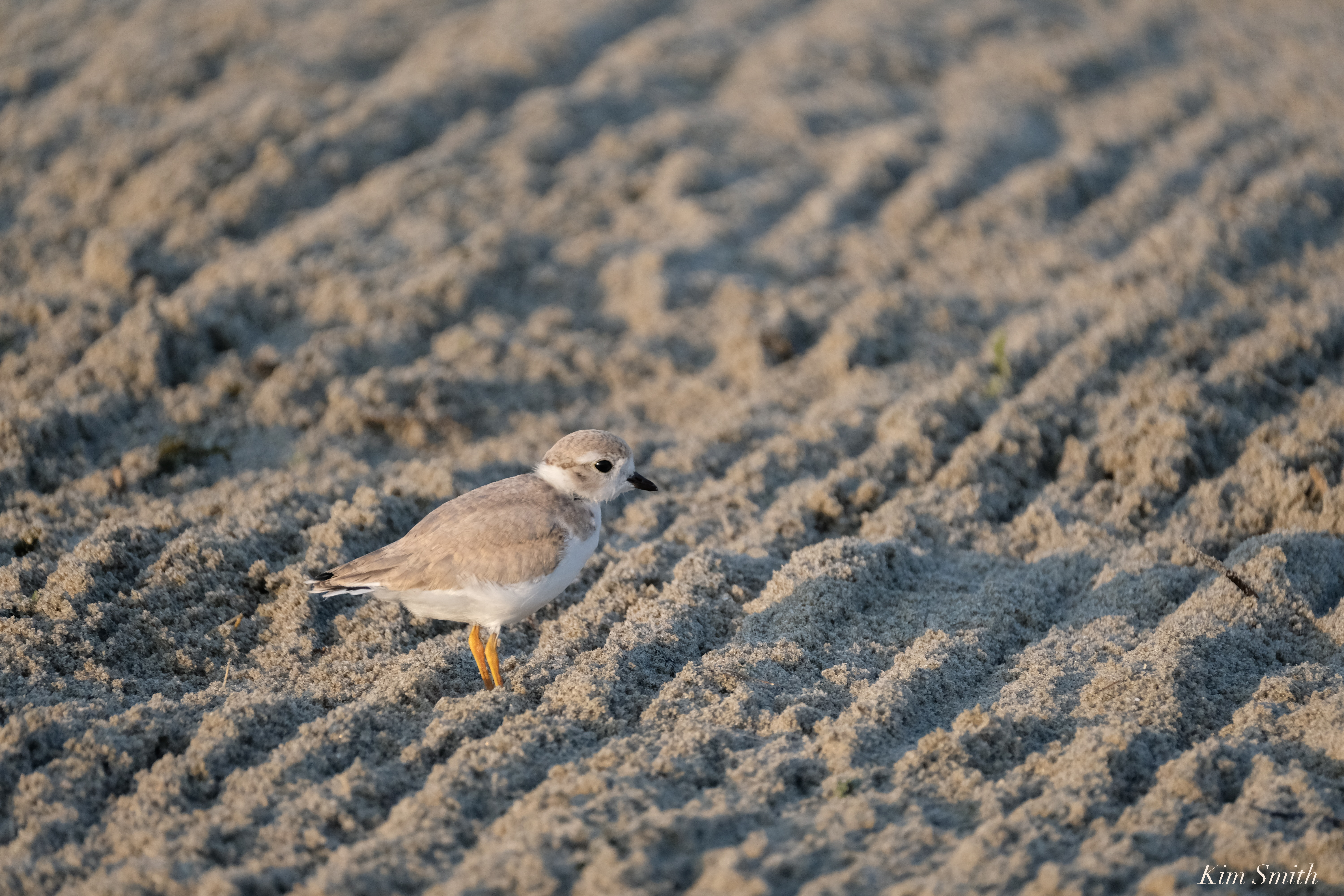
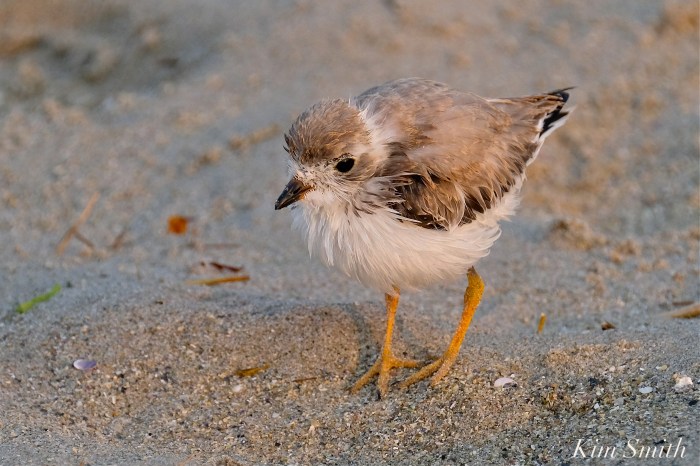
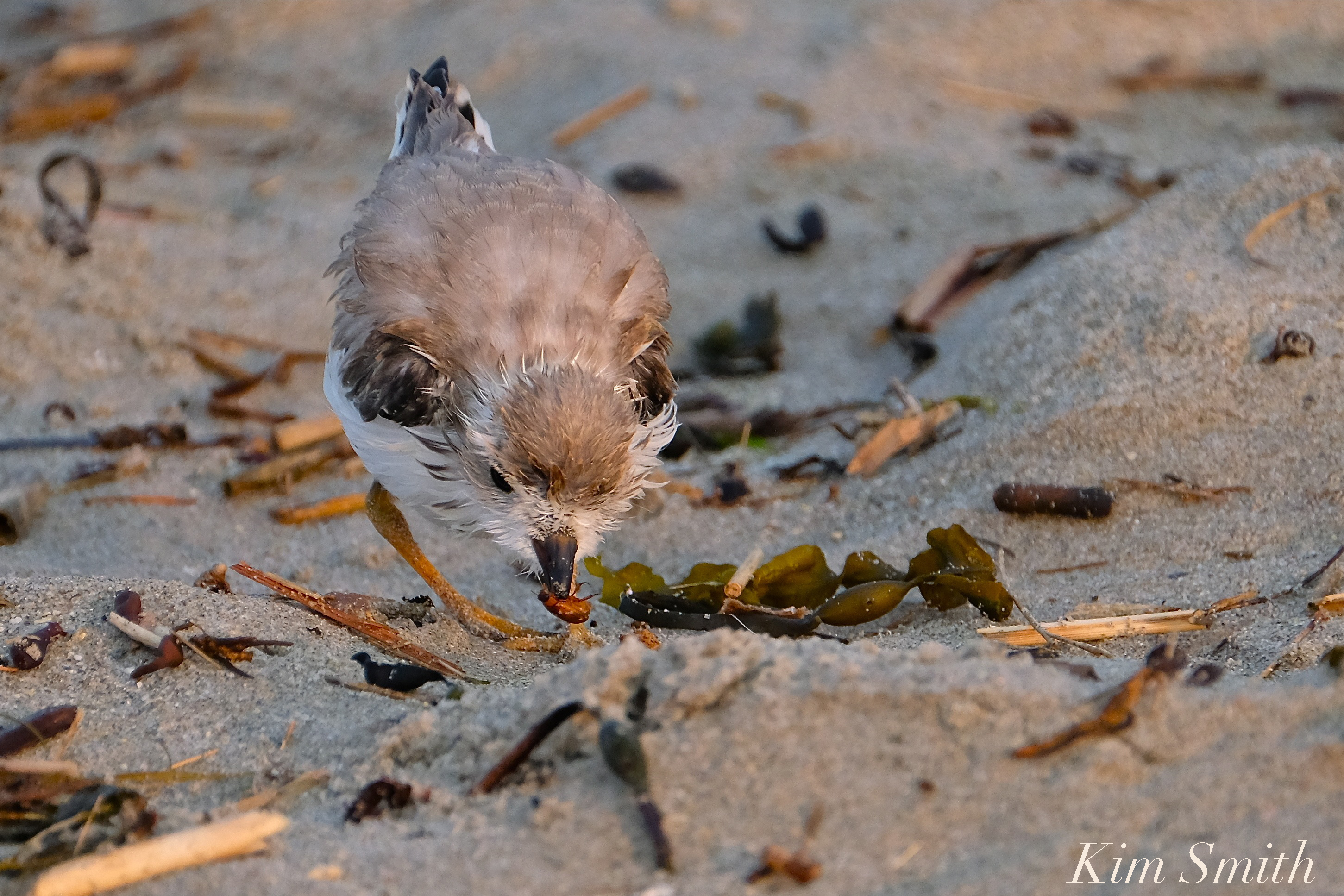
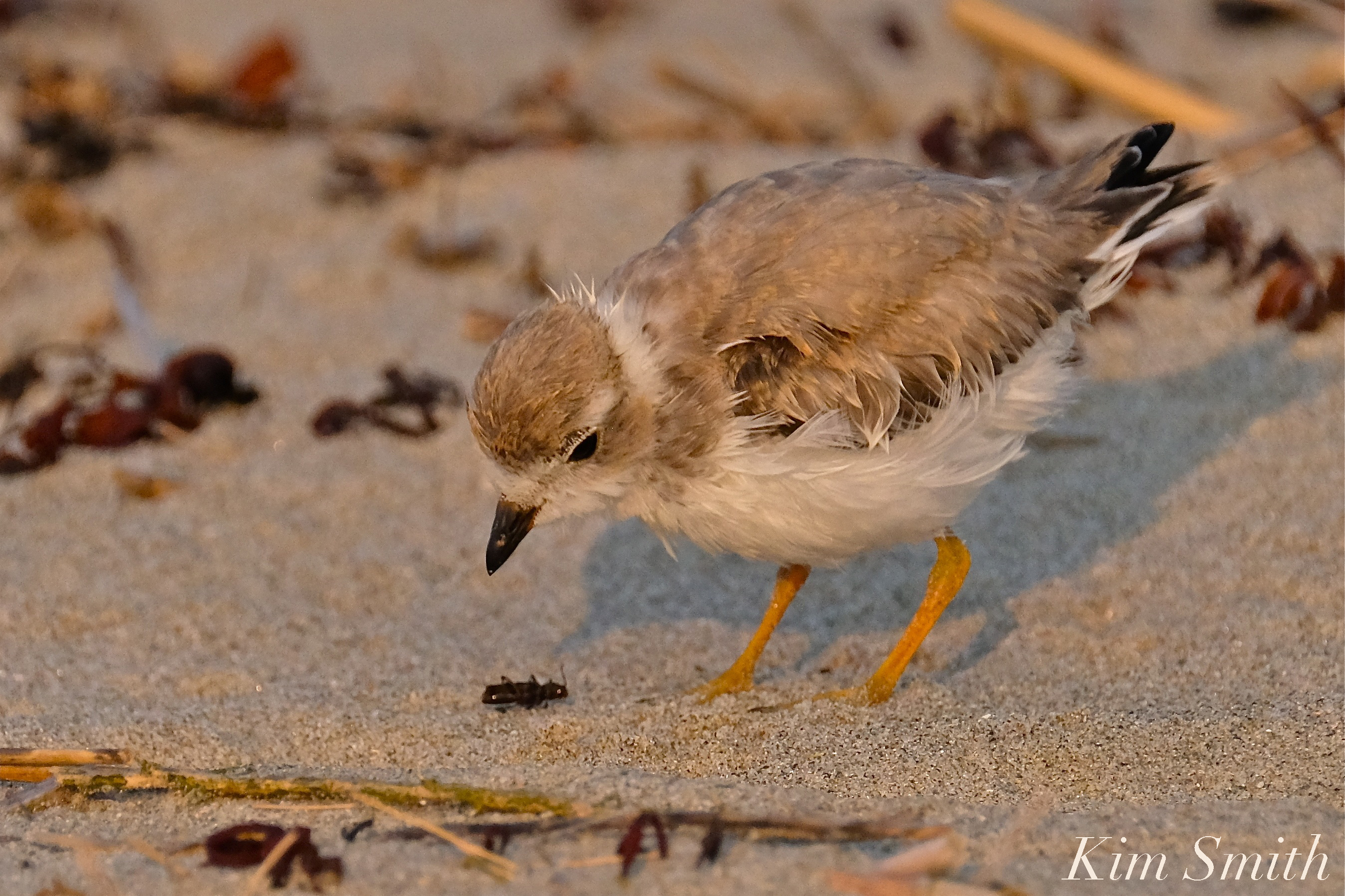
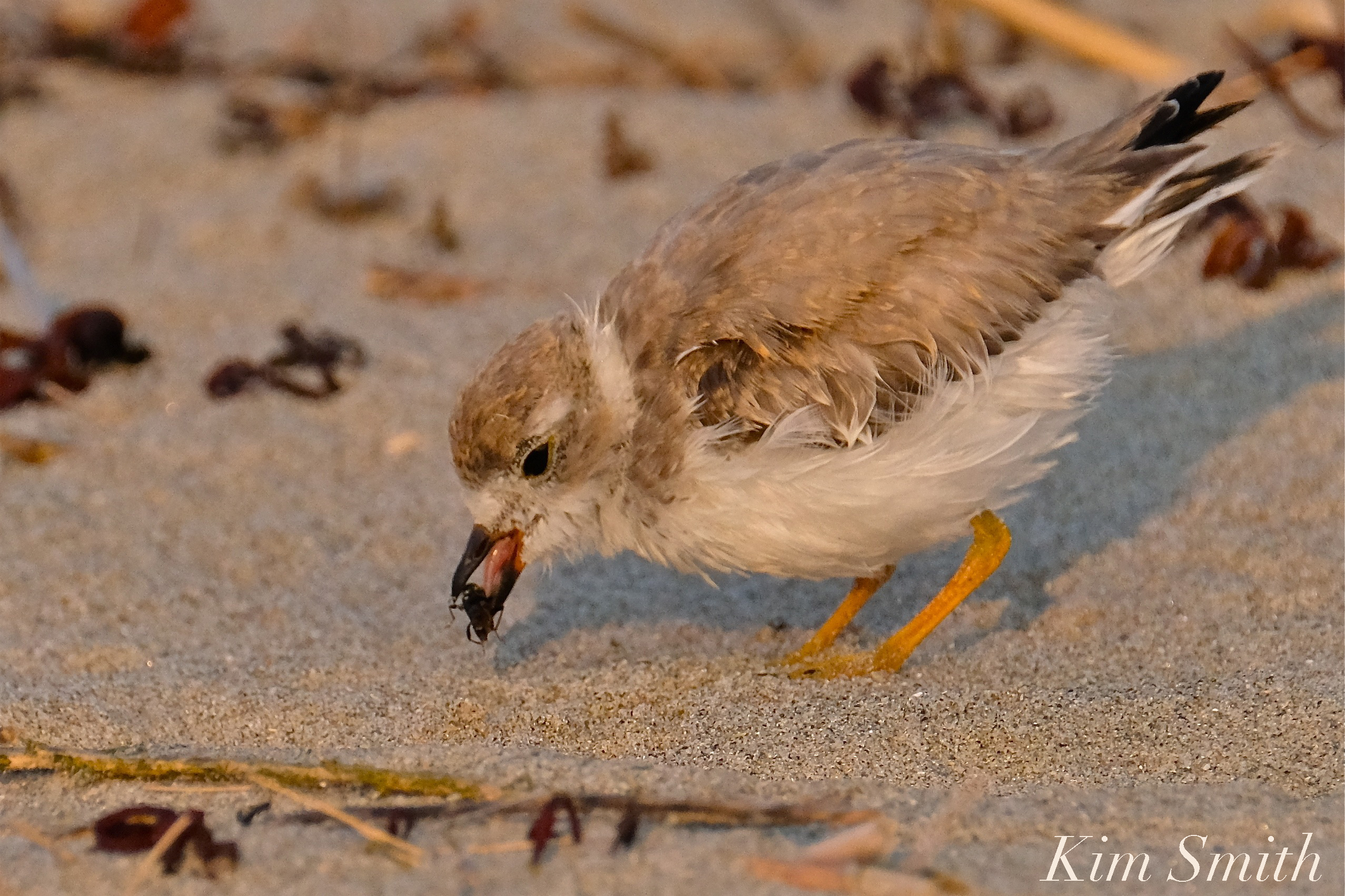
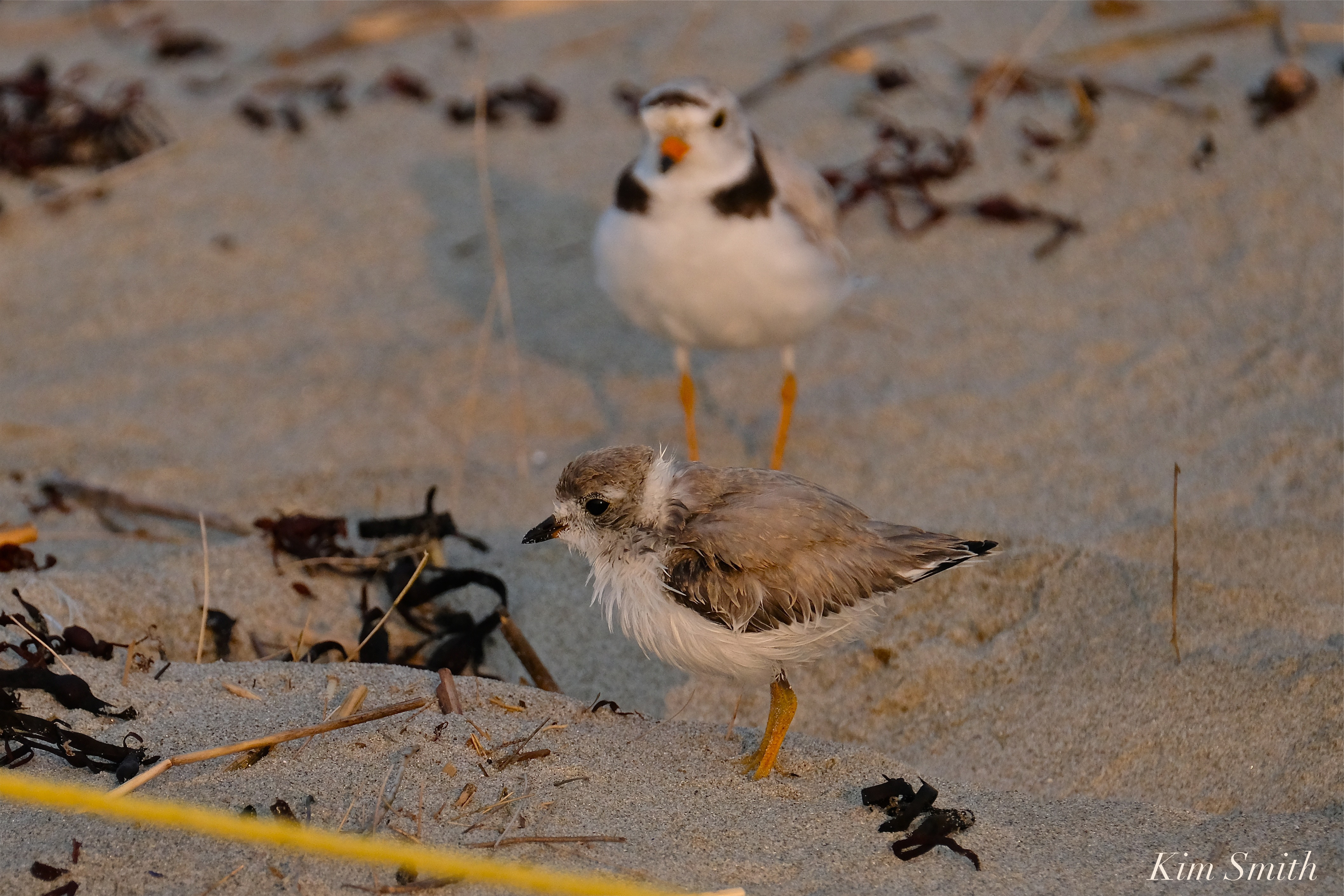
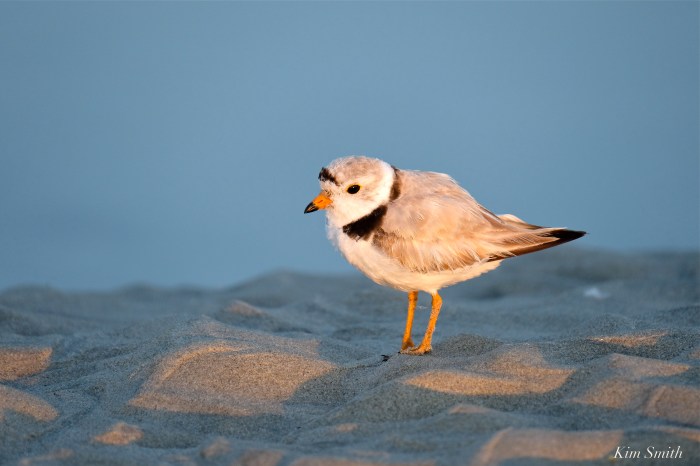
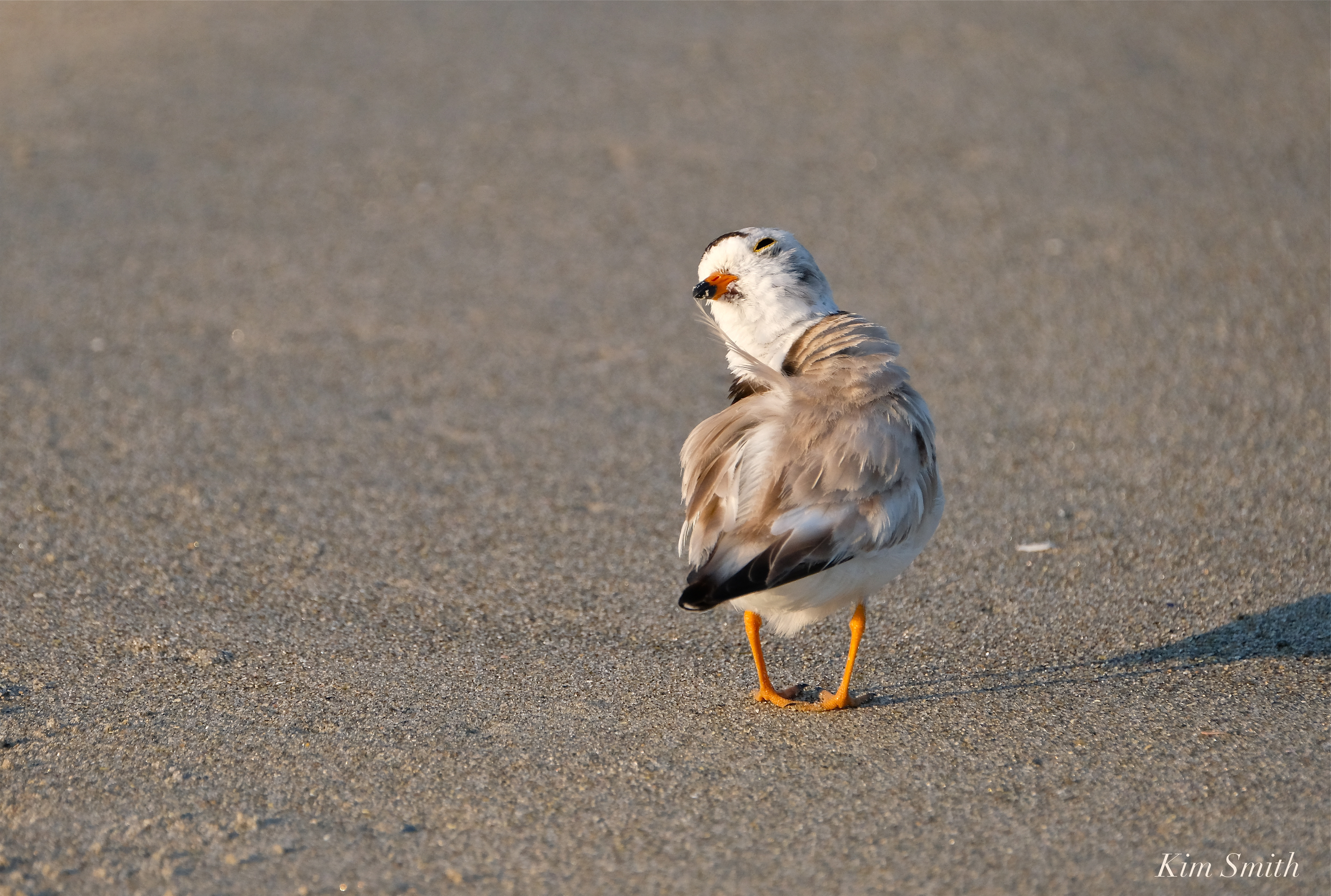
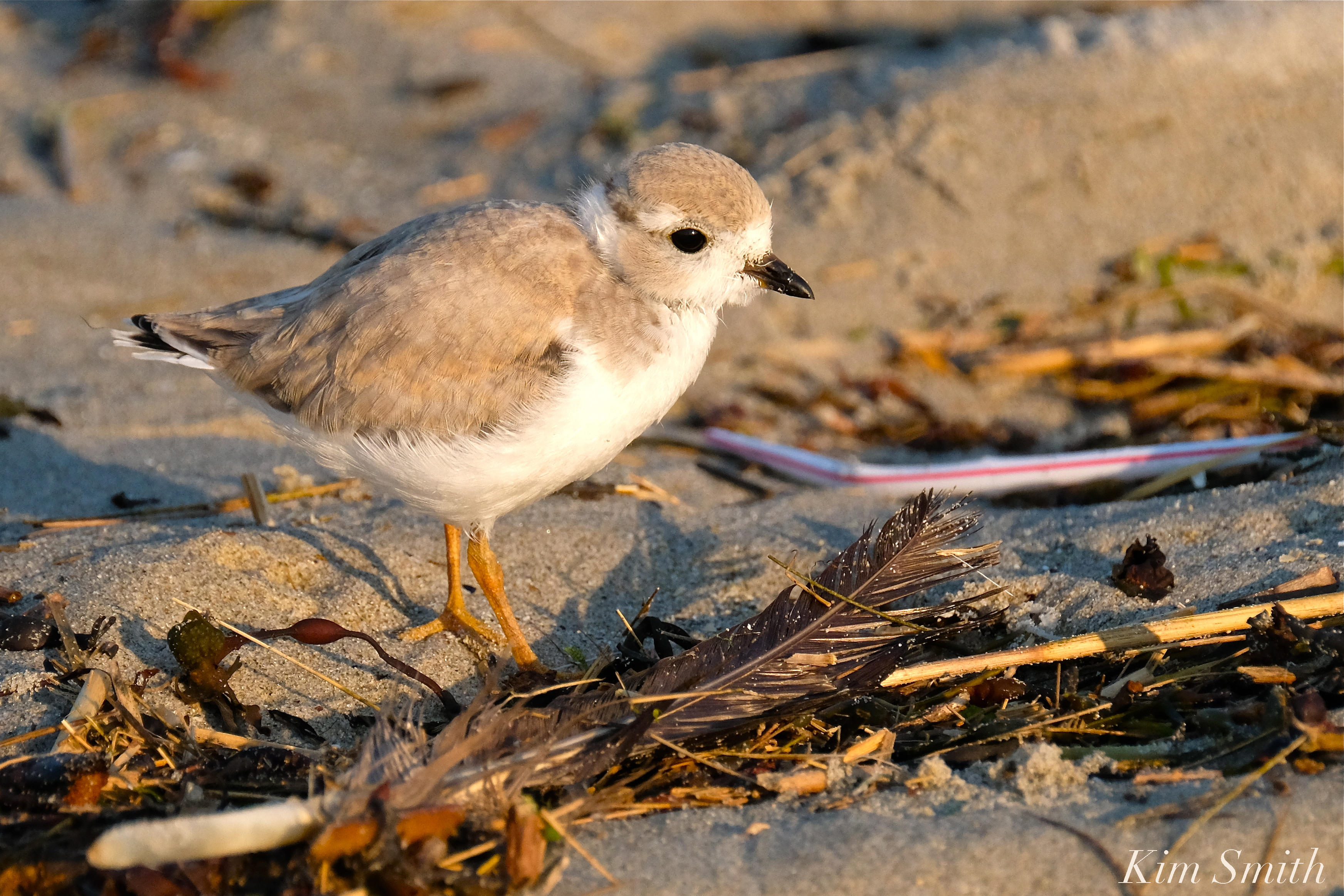
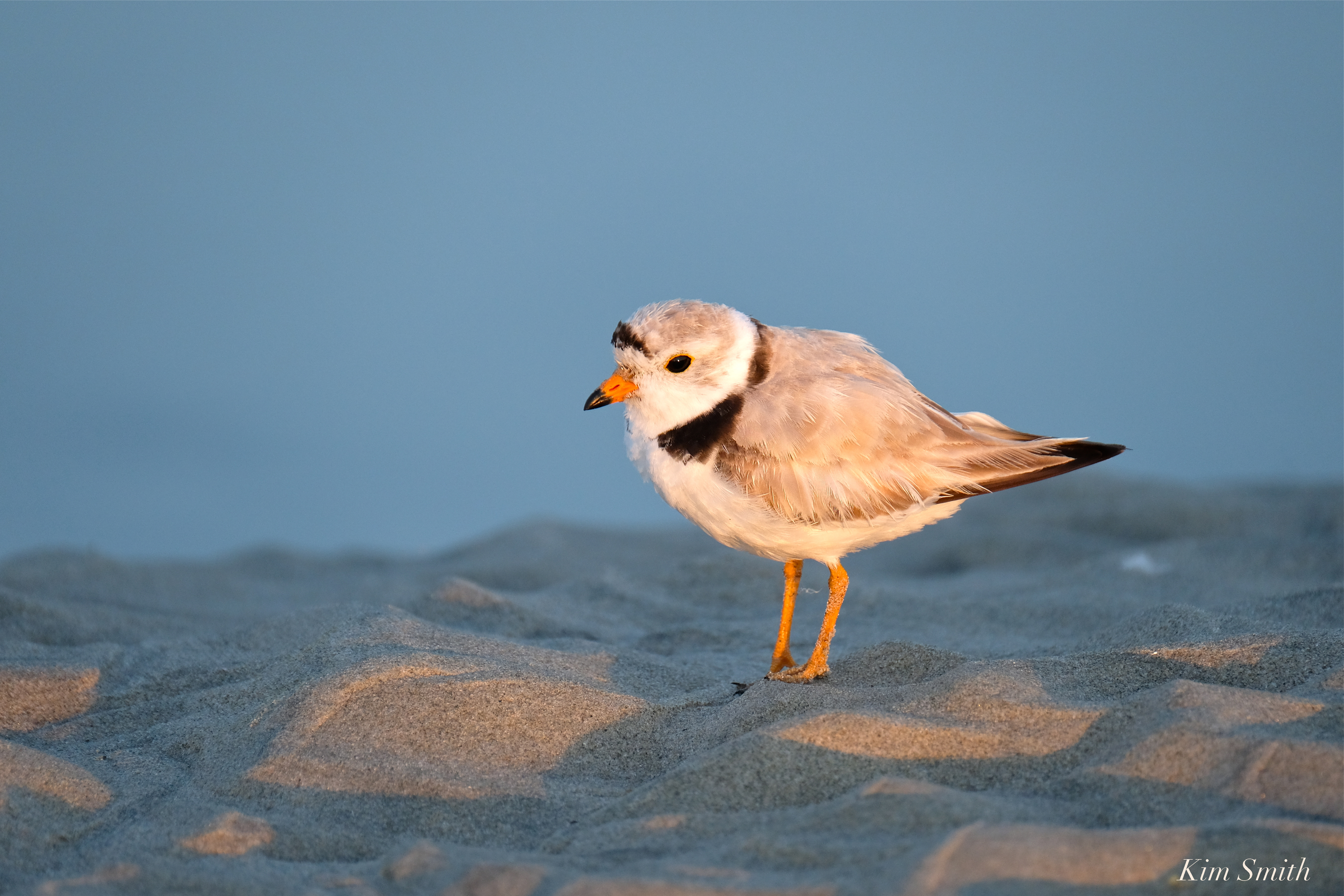
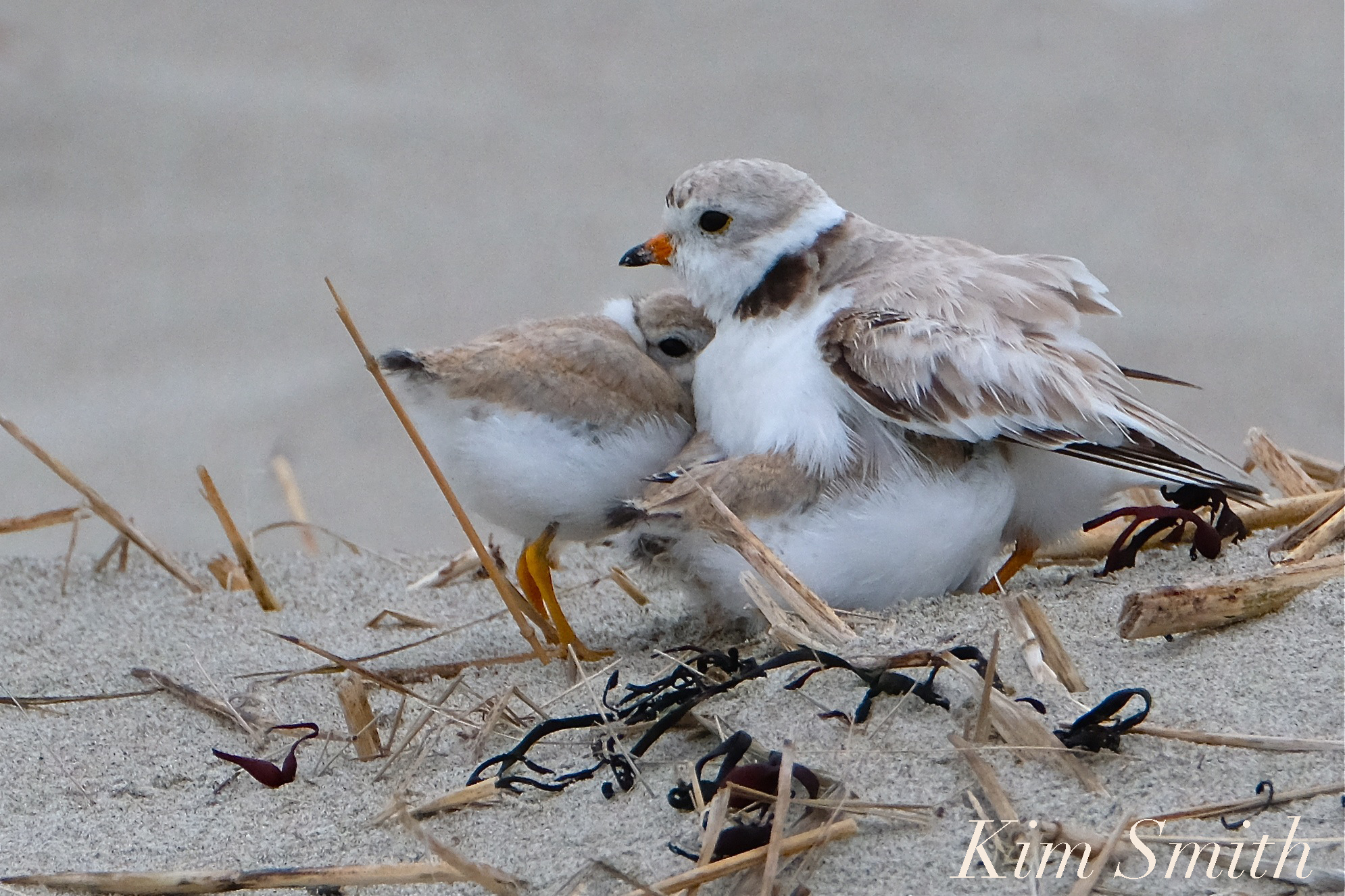
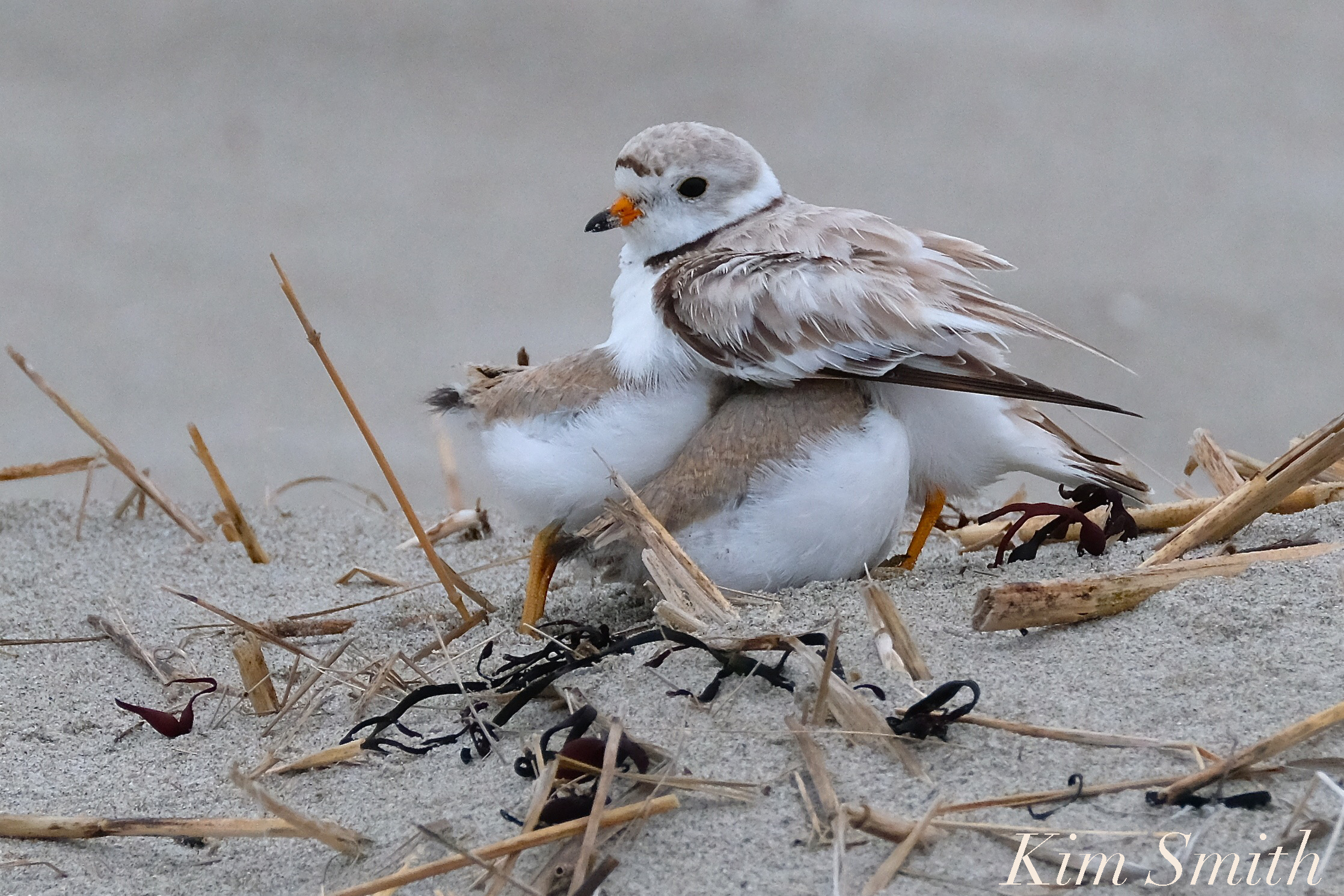
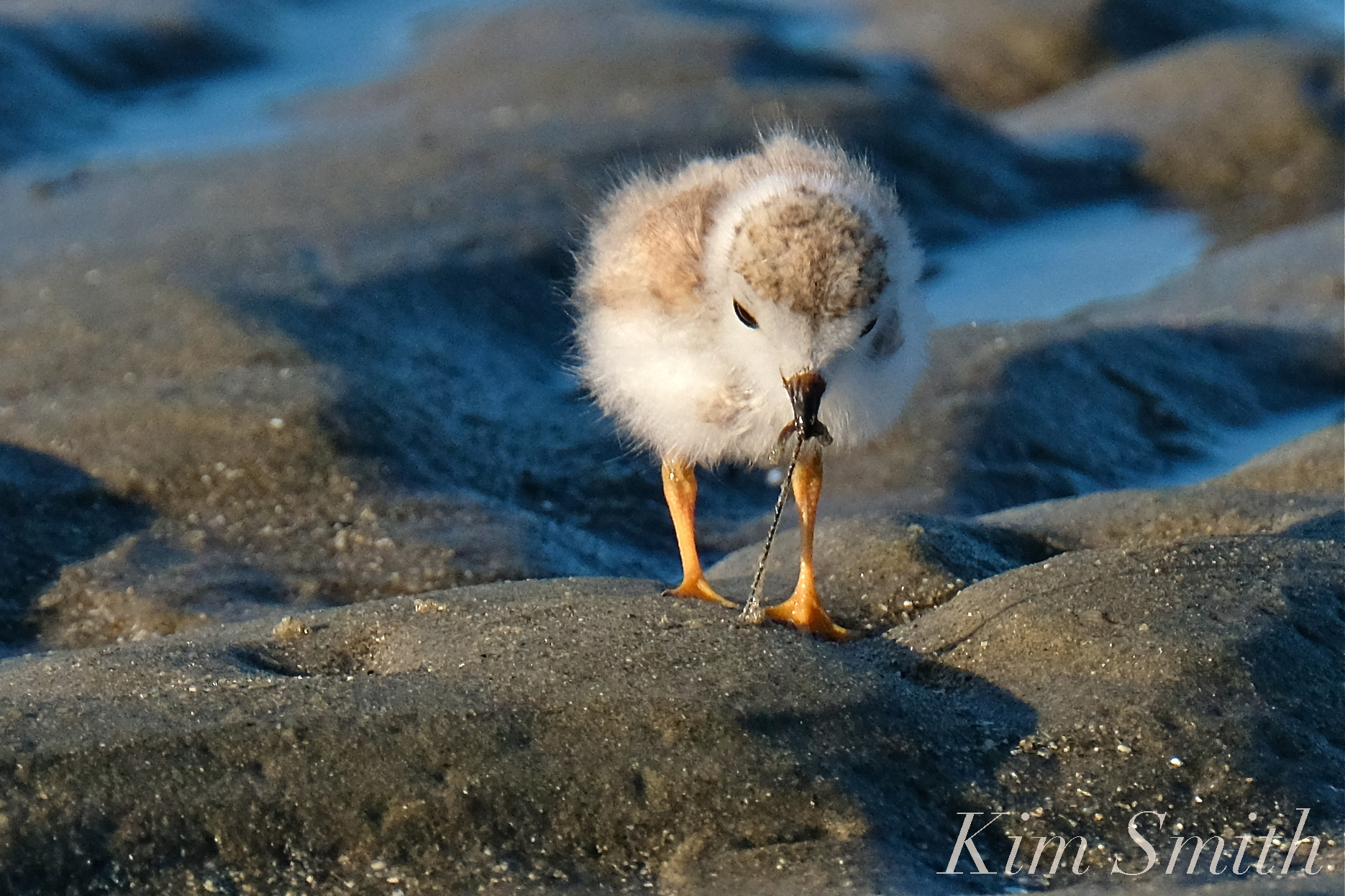
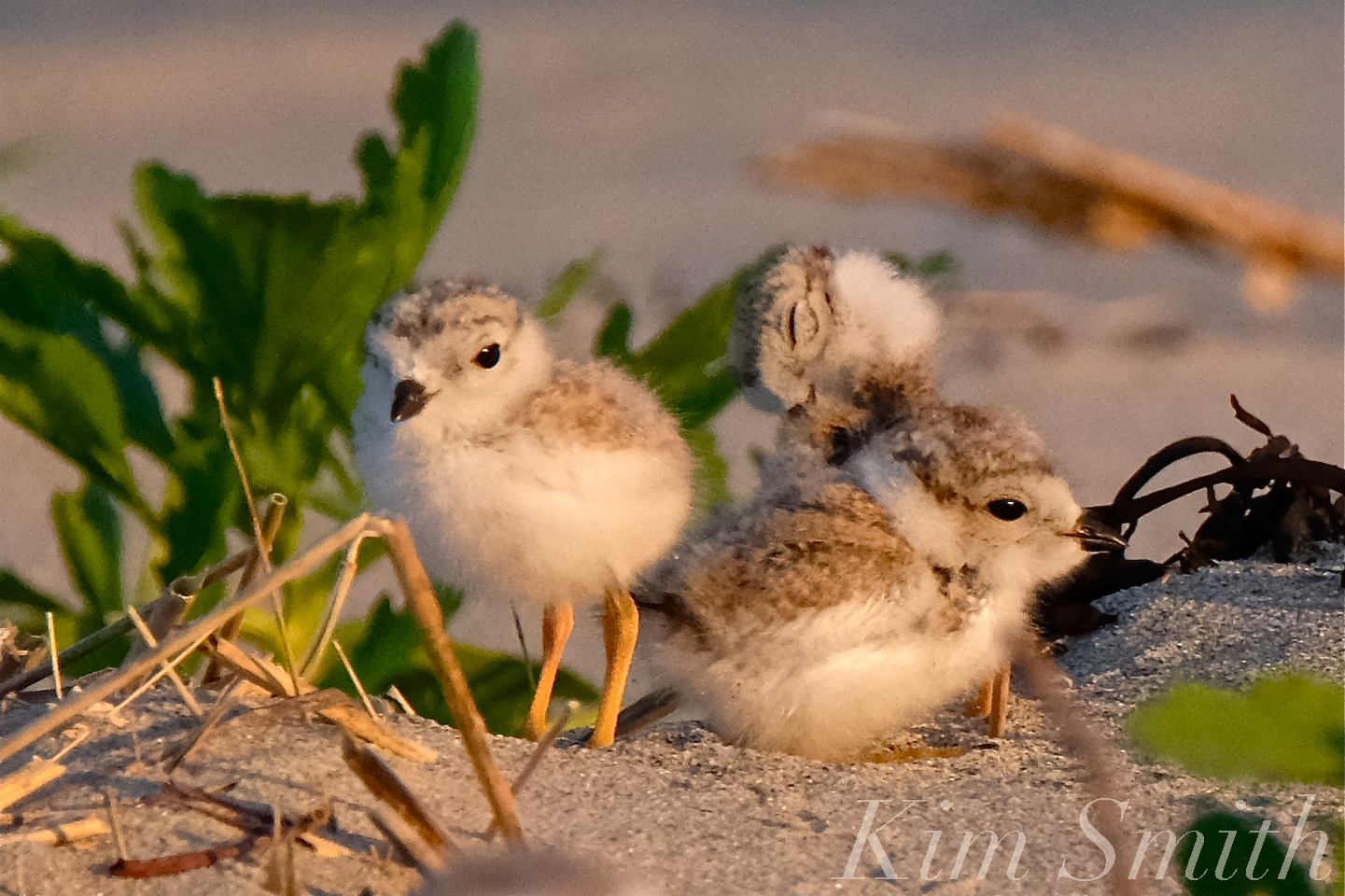
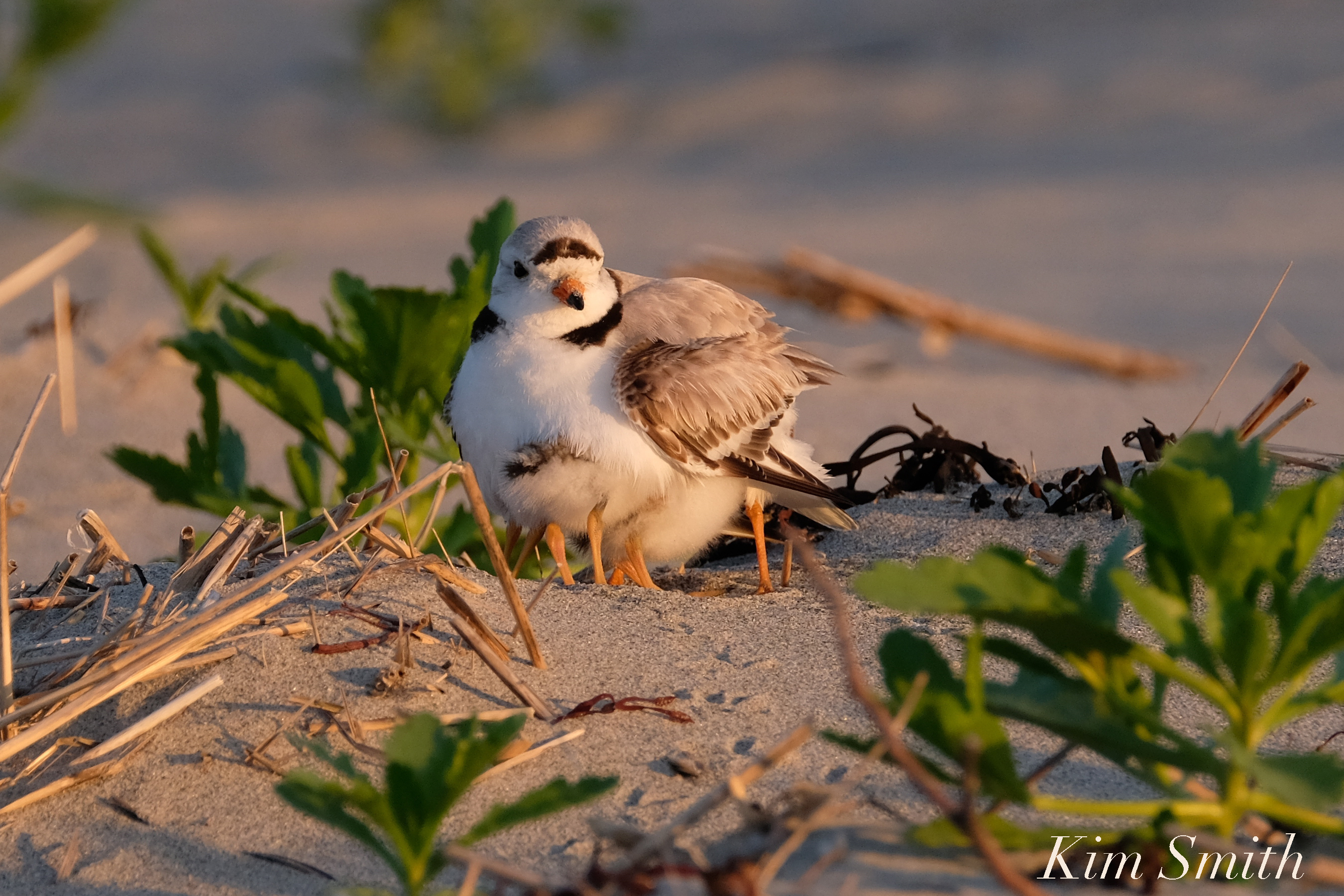
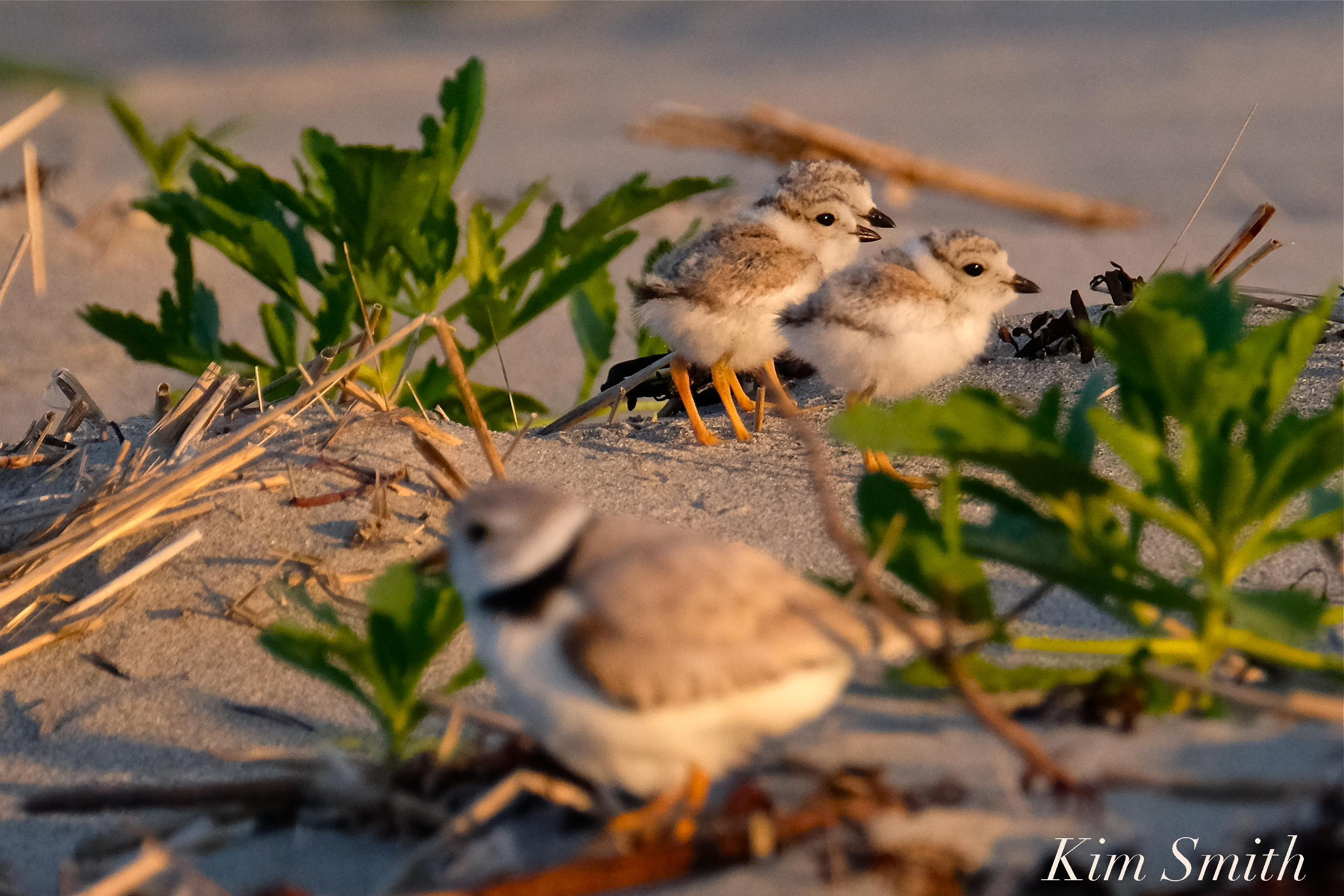
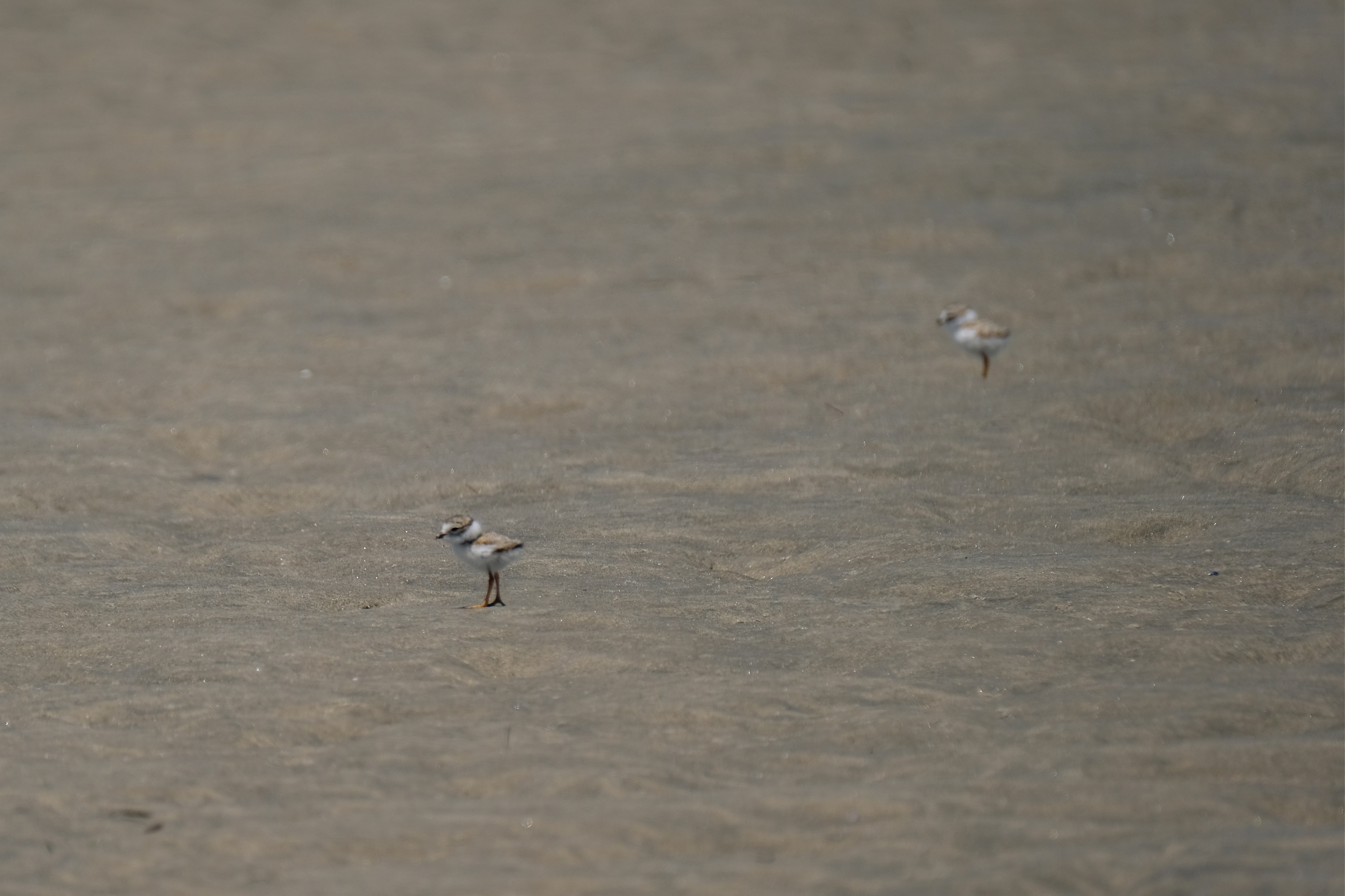
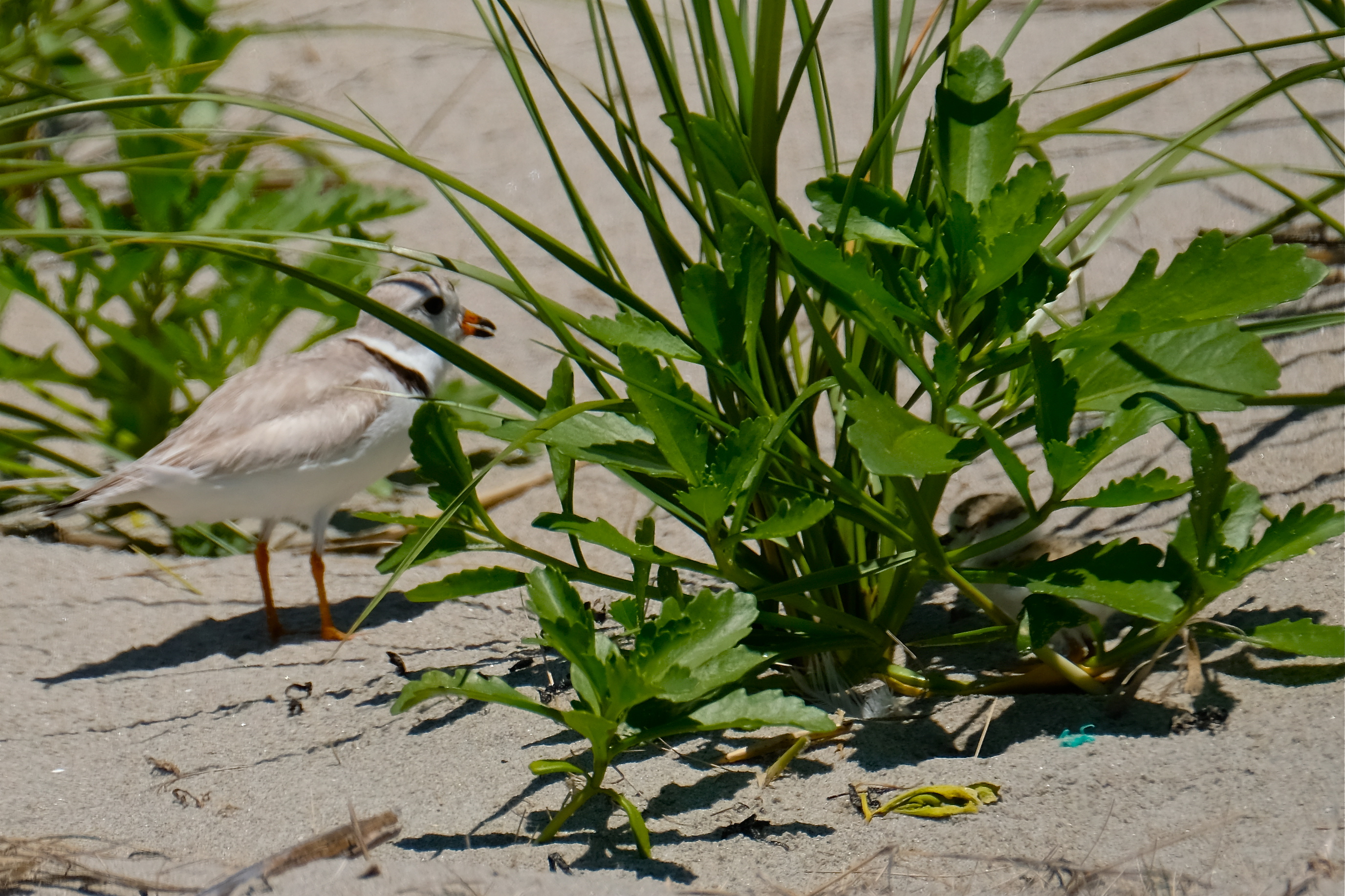
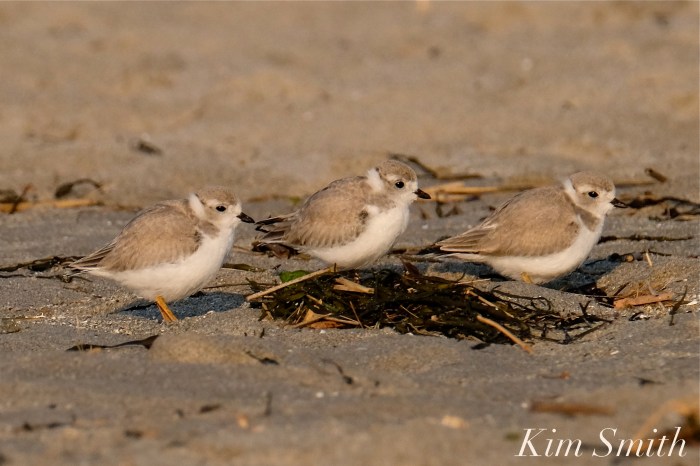
The photos are from July Fourth weekend, at 35 and 36 days old. These past several mornings at daybreak I find the three fledglings, Mom, and Dad foraging and preening together on the tidal flats and wrack line in front of the enclosed area. They move back within the roping when the tractor comes through, preen for a bit, head back down to the tidal flats, or fly off to the creek. The family is continuing to stay together, but are dispersed during the day when feeding. There is a wide variety of insects and small sea creatures to forage from at Good Harbor Beach as the PiPls plump up for their southward migration.

Bath time and drying wings
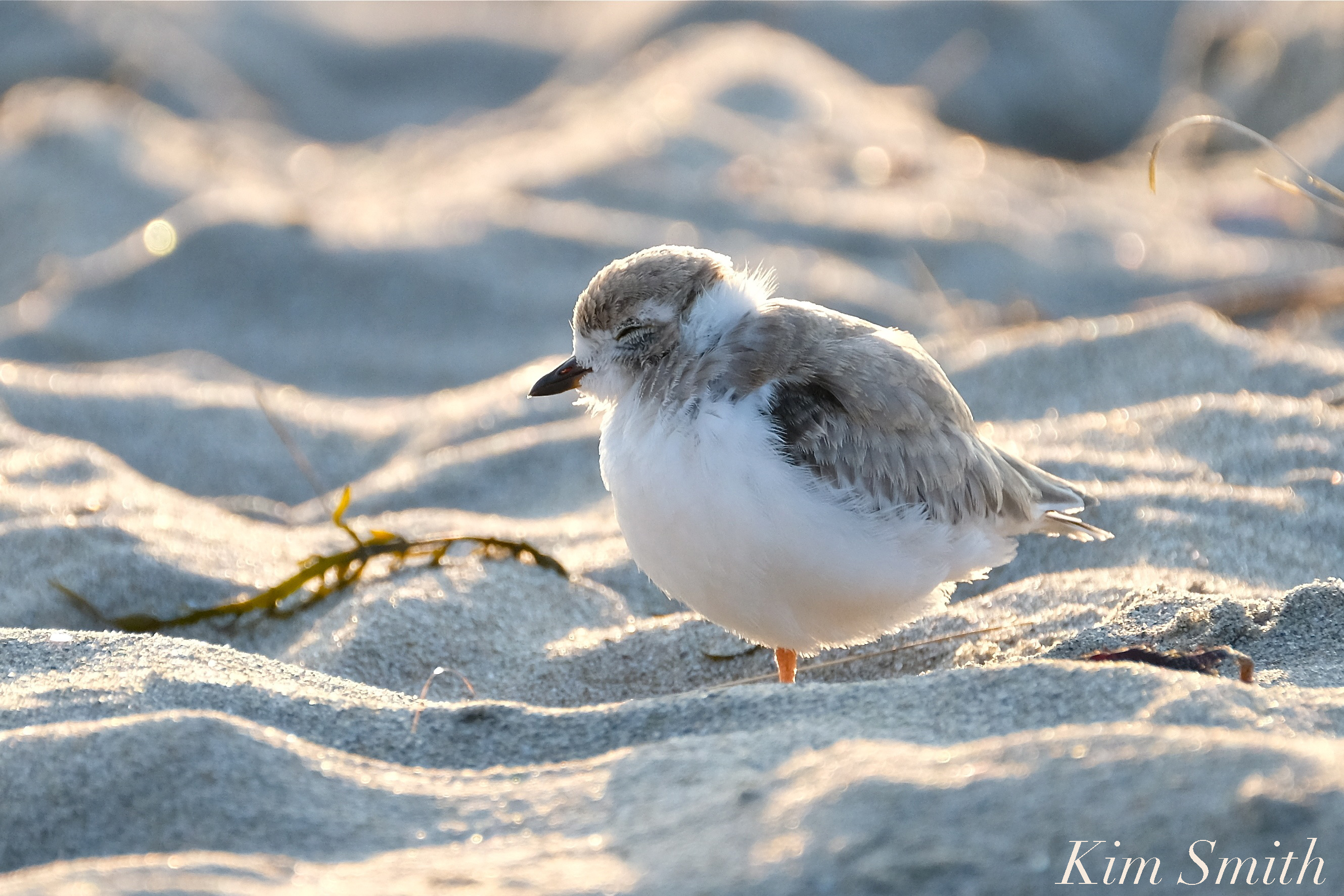
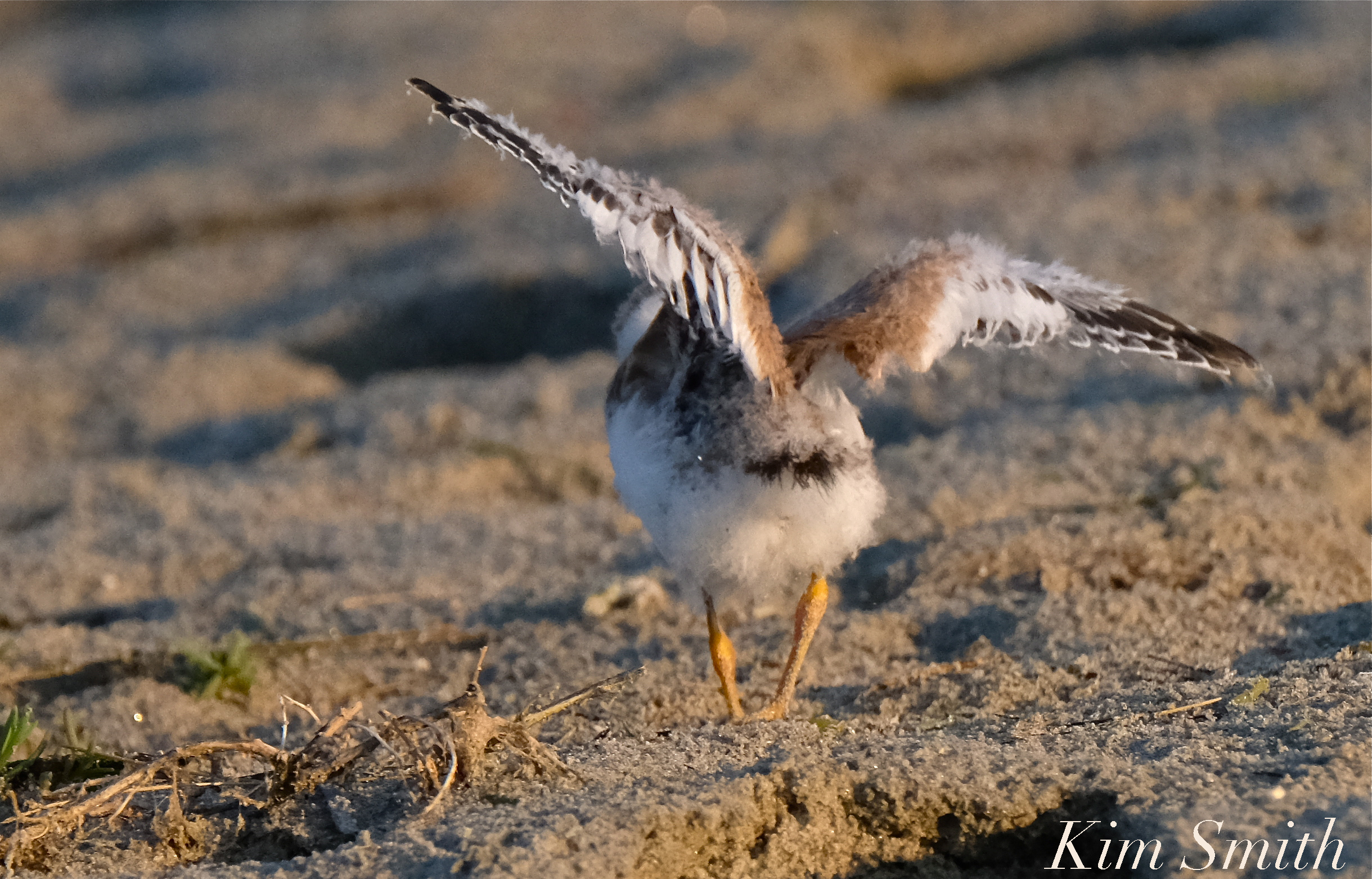
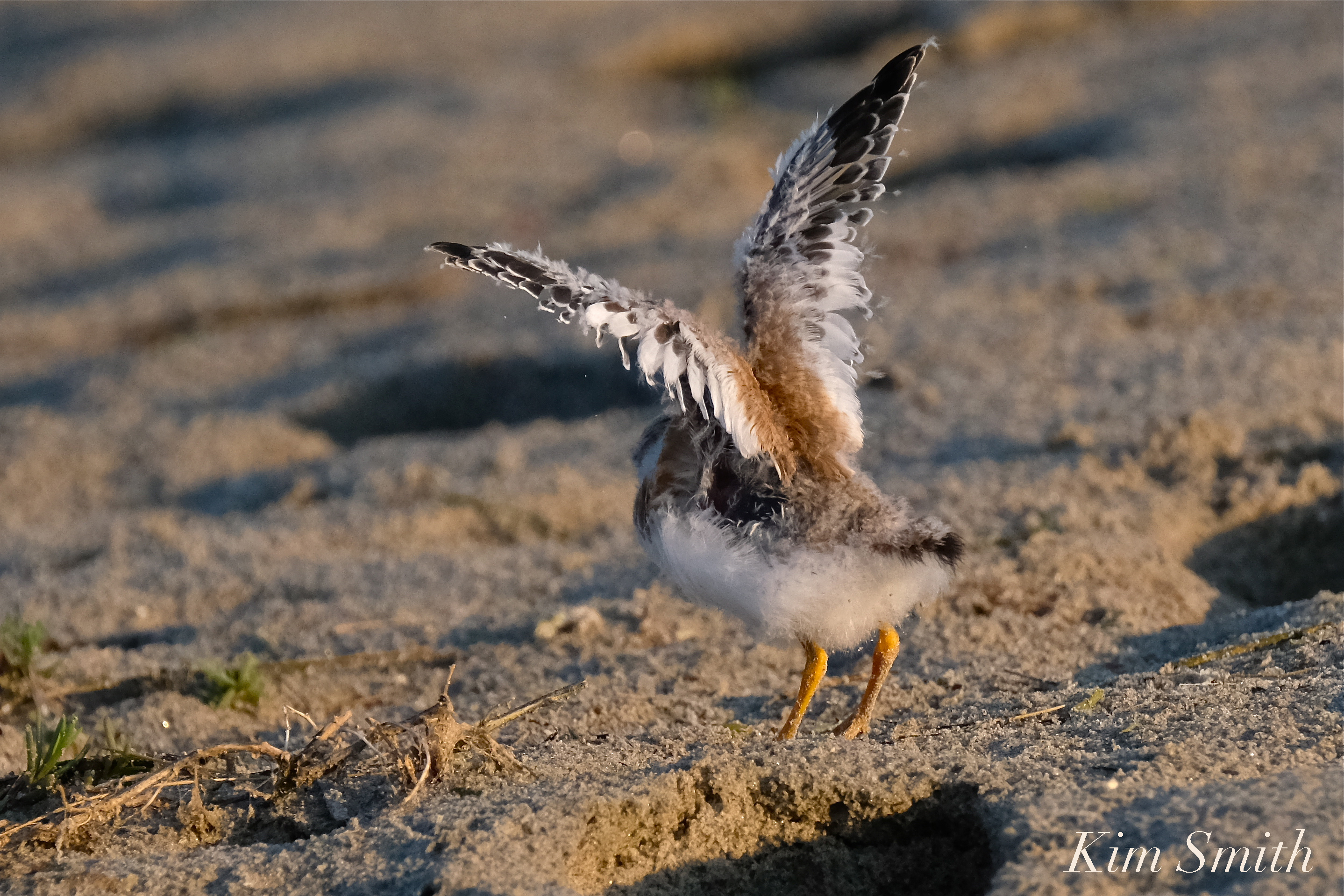
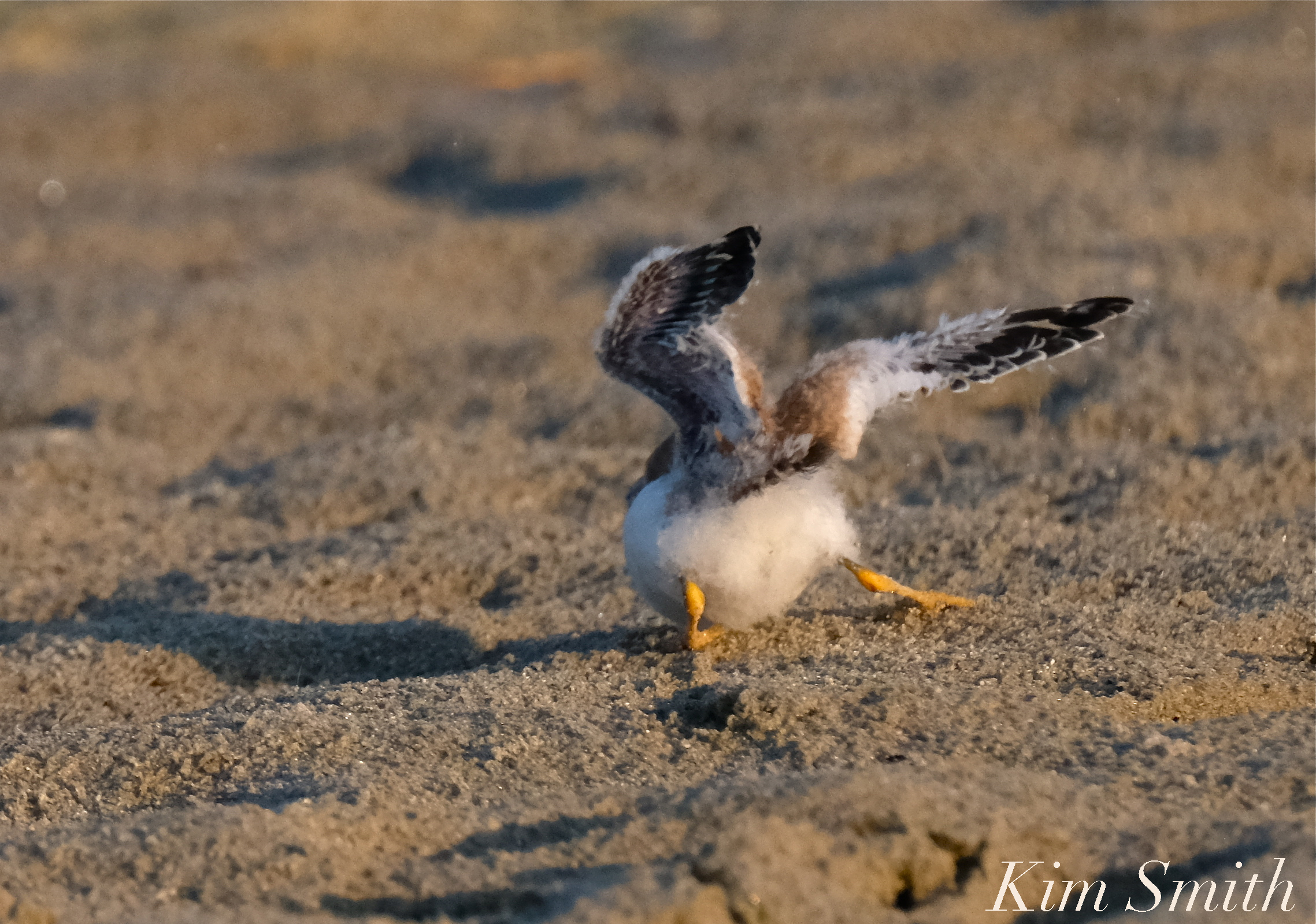
Morning wake up calisthenics – right wing stretches, then left wing, shimmy shake, and then off to forage.
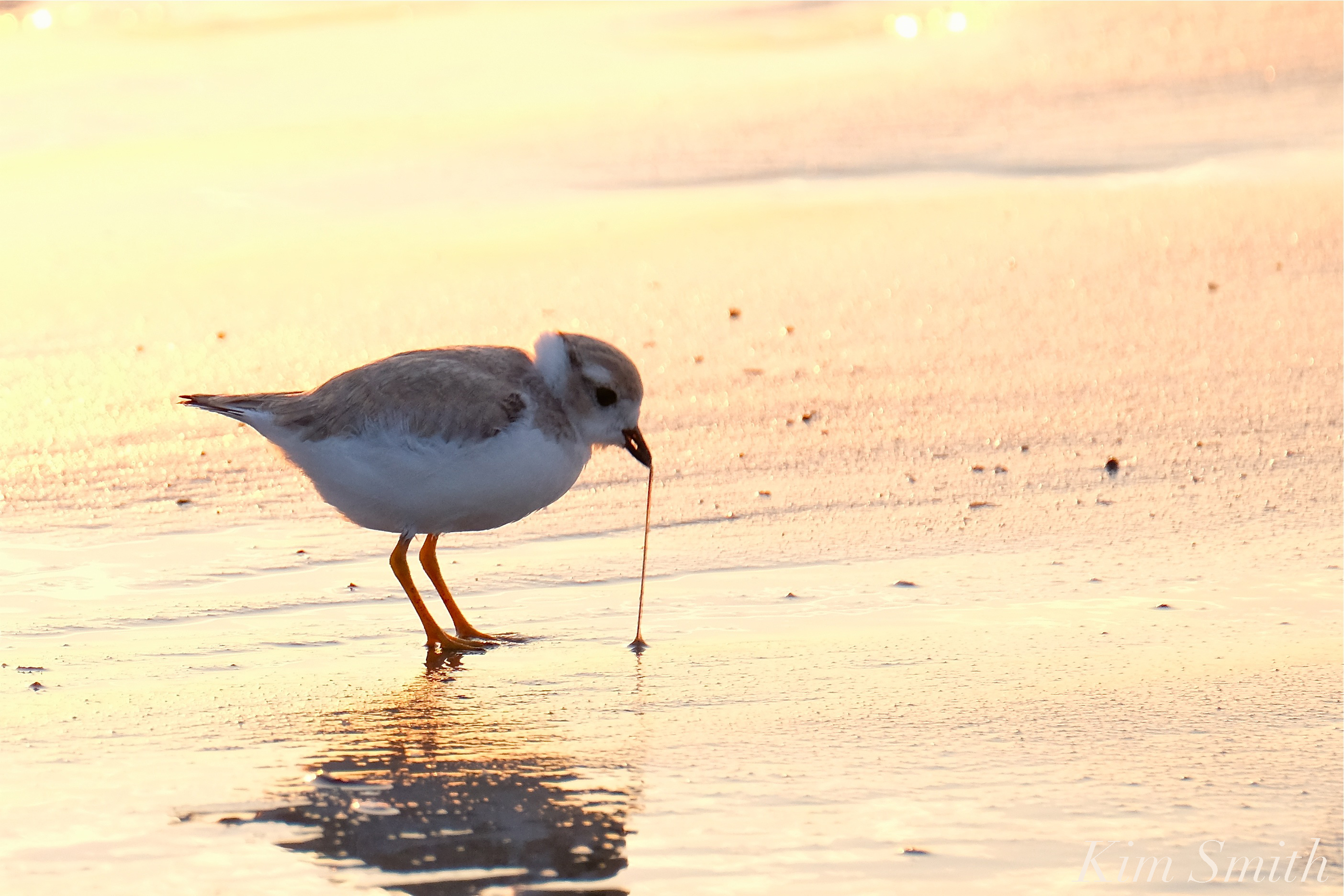
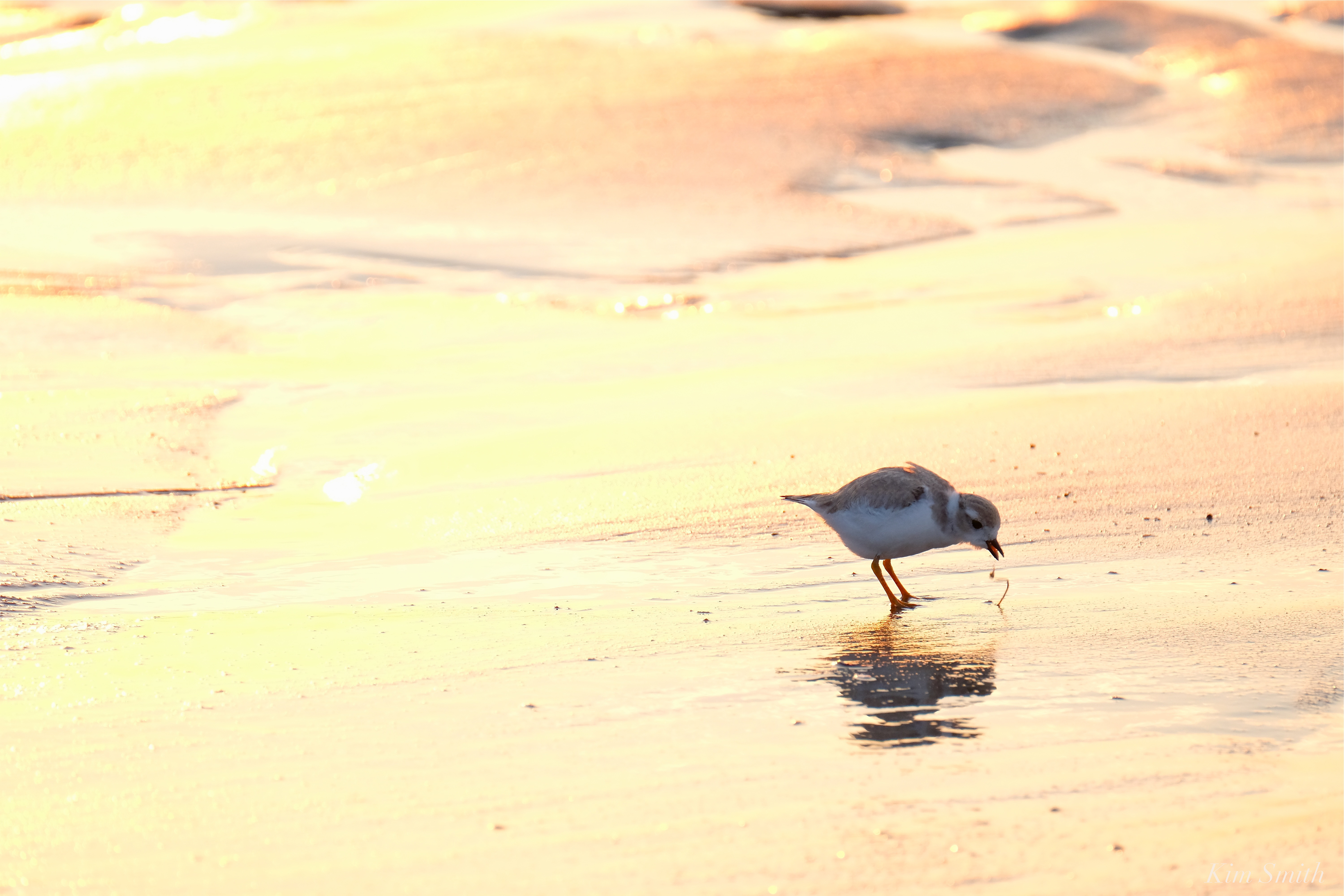
Every morning the beach rake drives over the wrack line where the fledglings and adults are foraging. It was very scary when the chicks were younger. At thirty-five-days old, the birds can fly away to escape the heavy equipment but usually choose to run instead. PiPls are better camouflaged when they don’t fly, and that is why they often run at top speed to escape danger, rather than flying.
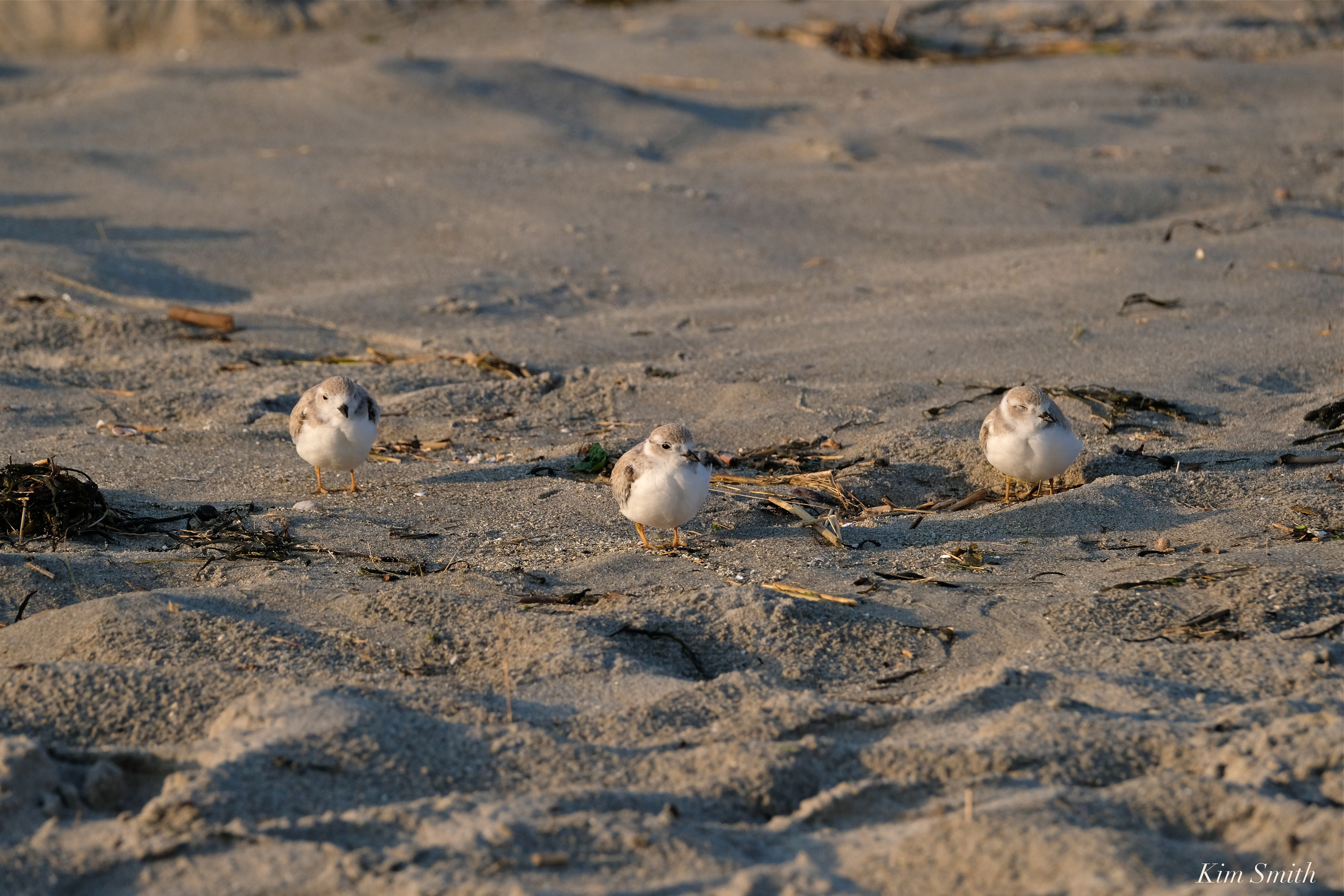
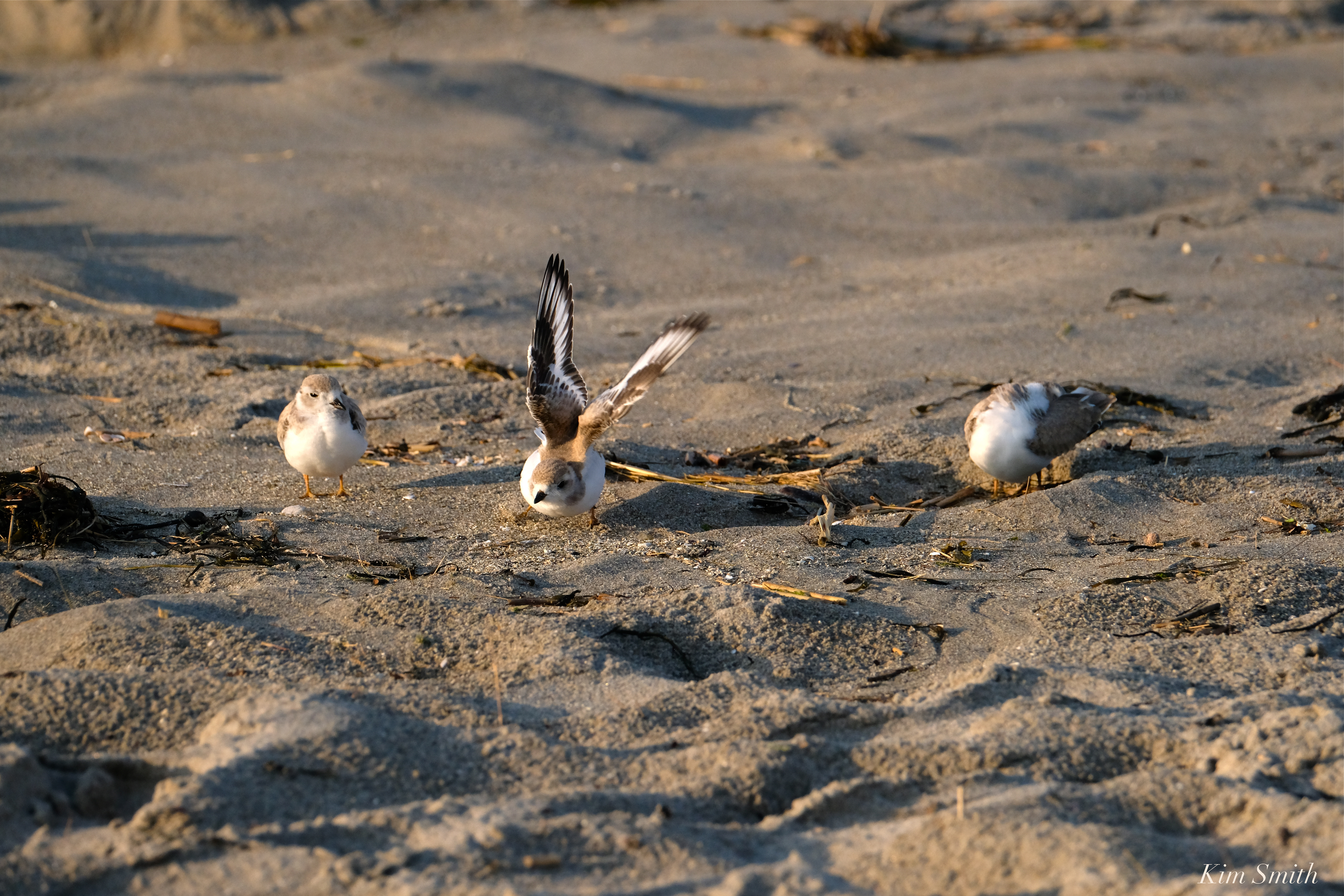
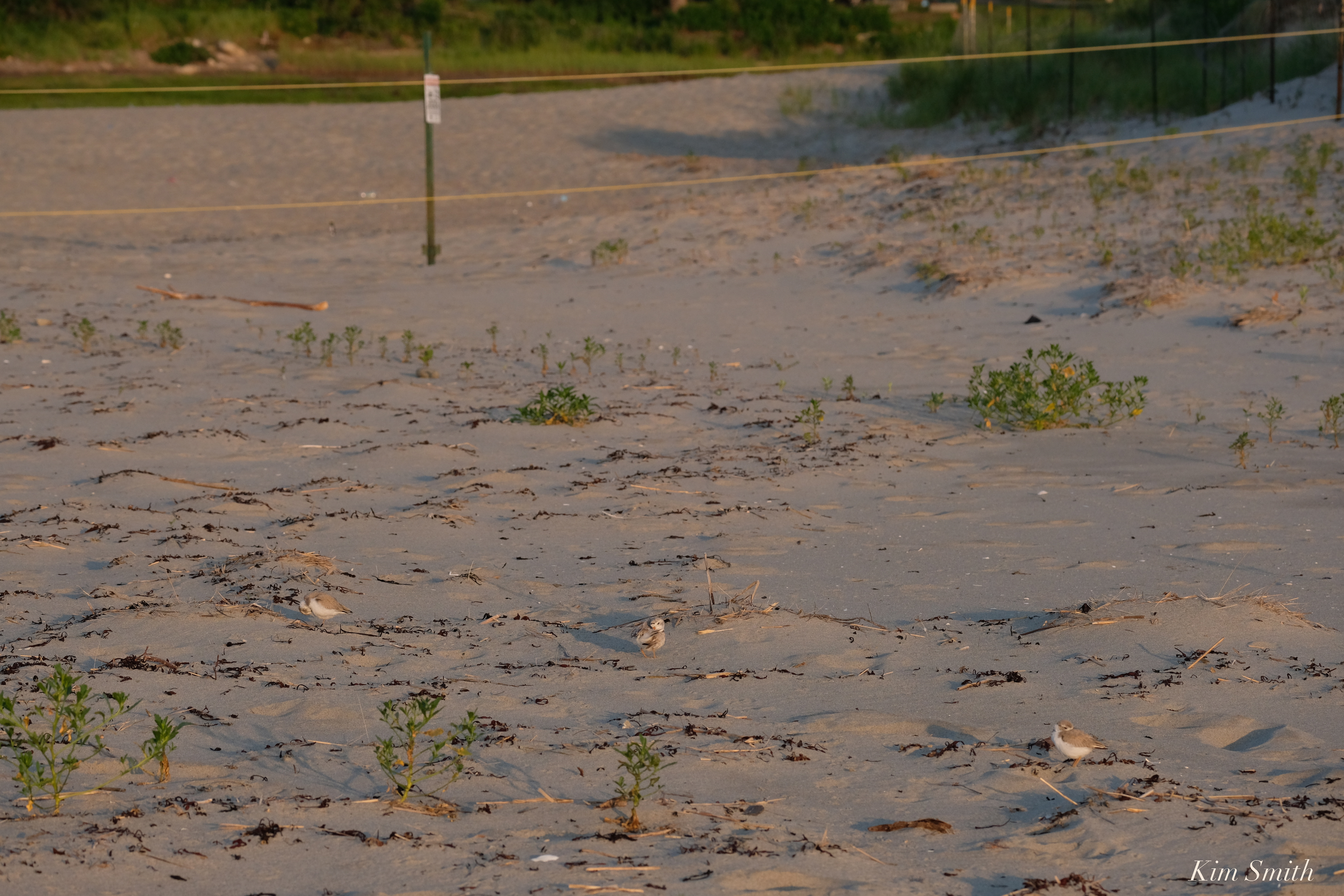
Resting and preening in the morning within the enclosed area.

Because the area inside the enclosure is not raked, a nutritious buffet of insects can be found within the roping. The enclosed area not only provides good food, but is where the family spends most of their time when the tide is high and the beach is full of visitors. Dave Rimmer has let us know he fully supports keeping the roping in place as long as the PiPl family is at Good Harbor Beach. This is a tremendous relief to we volunteers because we see the many ways in which the PiPl family are continuing to utilize this important habitat.
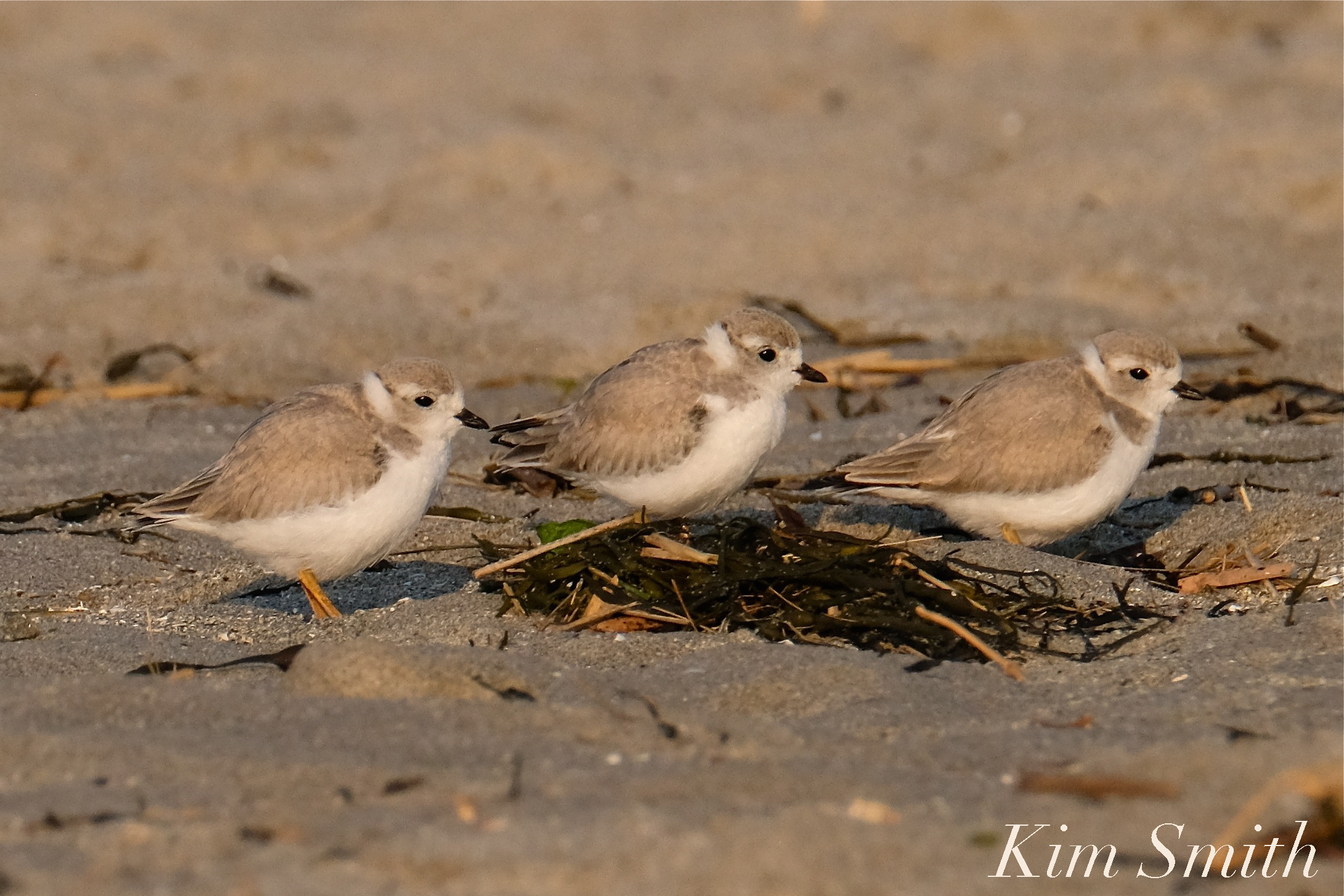
MYSTERY CHICK AT GOOD HARBOR BEACH THIS MORNING

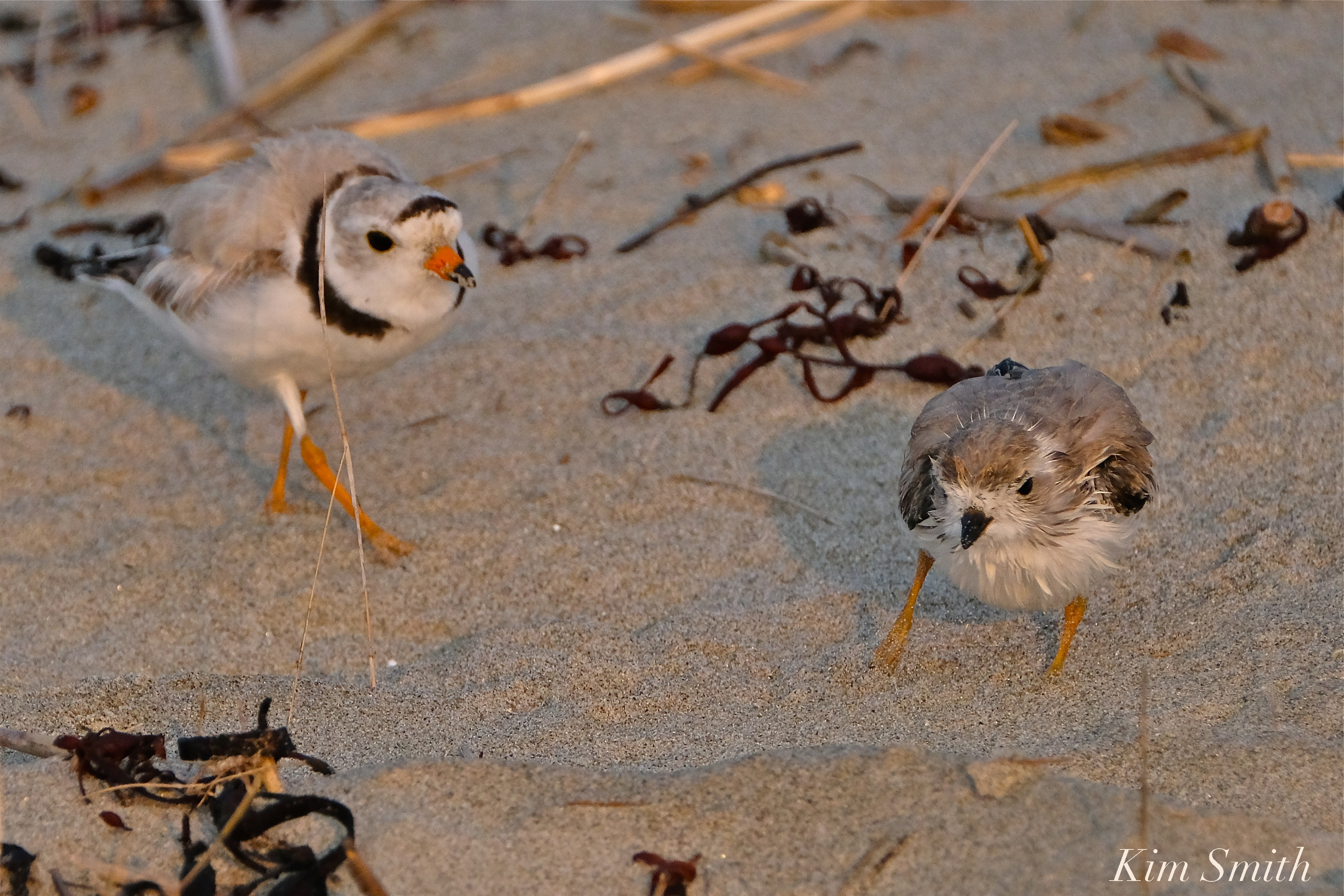
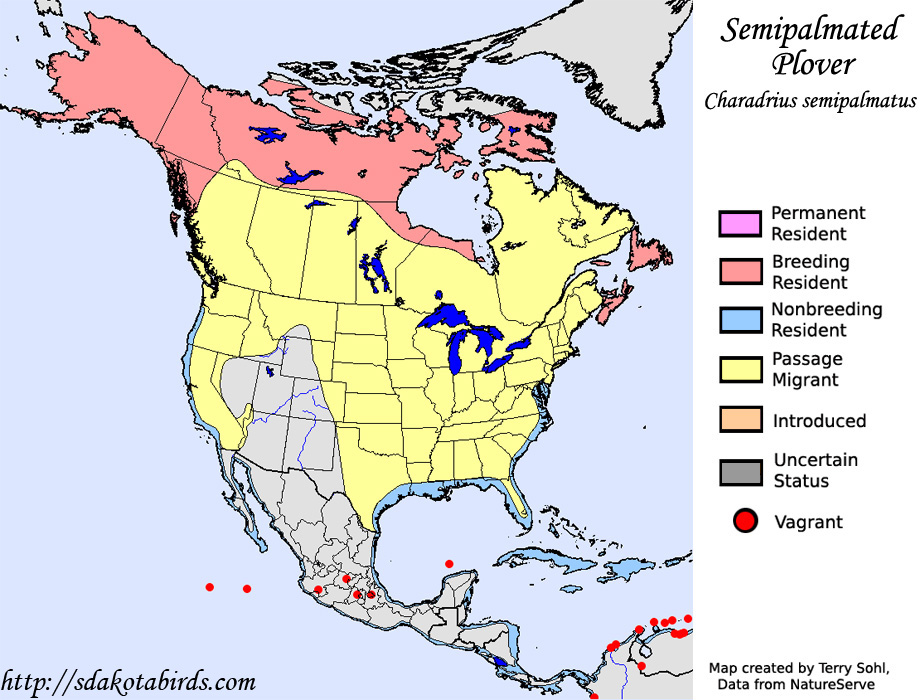
There were not one, not two, not three, but four chicks feeding together at the wrack line at day break this morning. The mystery chick appears to be about the same age as our brood, exhibiting all the same behaviors, although it is not a Piping Plover fledgling. I think it is a Semipalmated Plover fledgling.

The chick was sopping, soaking wet and very disheveled, but feeding as vigorously as our family finding Good Harbor Beach ants, beetles, mollusks, and sea worms to be excellent breakfast fare.

When Papa Plover voiced danger warnings, the little visitor listened as attentively as did our brood of three. At one point Papa ran towards him, I thought to scare him away, but Papa was really after the Bachelor and kept on charging.

How could such a little fledgling fly from their northern breeding grounds at such an early age I wonder. He was so drenched, he appeared to have “washed” ashore, not flown. Semipalmated Plovers breed as far south as Newfoundland so perhaps he only traveled across the Gulf of Maine.

Evocative light at daybreak this morning.

HAPPY JULY FOURTH PIPING PLOVER UPDATE – MOM RETURNS!

Just a very brief update from my morning 5-7am shift- I was happy to see Mom has returned to looking after the chicks. It’s really a relief because the beach was so crowded today with beach goers, beginning very early this morning. The chicks (all three!) spent most of the day at the creek with volunteer monitors keeping a watchful eye on the babes throughout the day.

Mom keeping watch while occasionally pausing to forage and to preen.

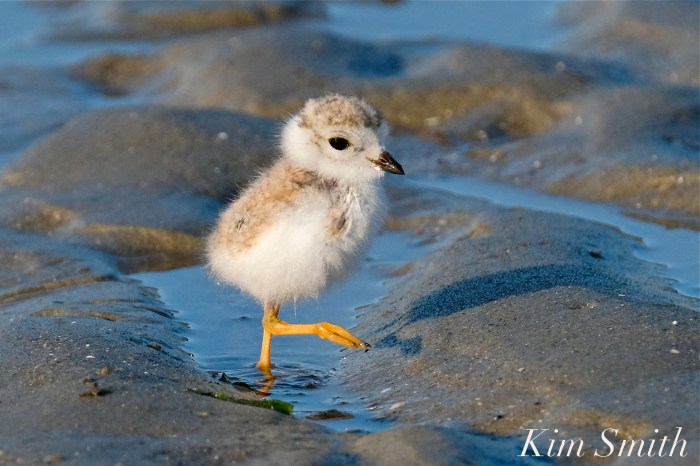
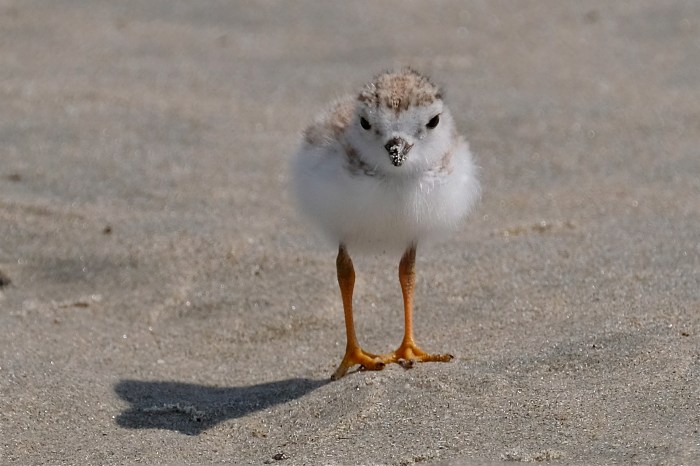
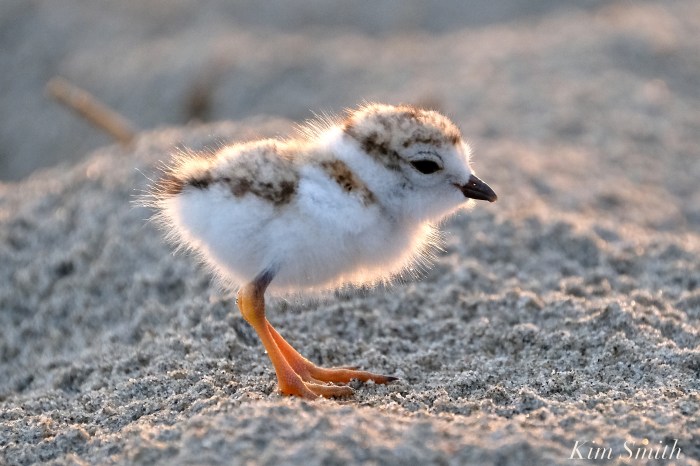
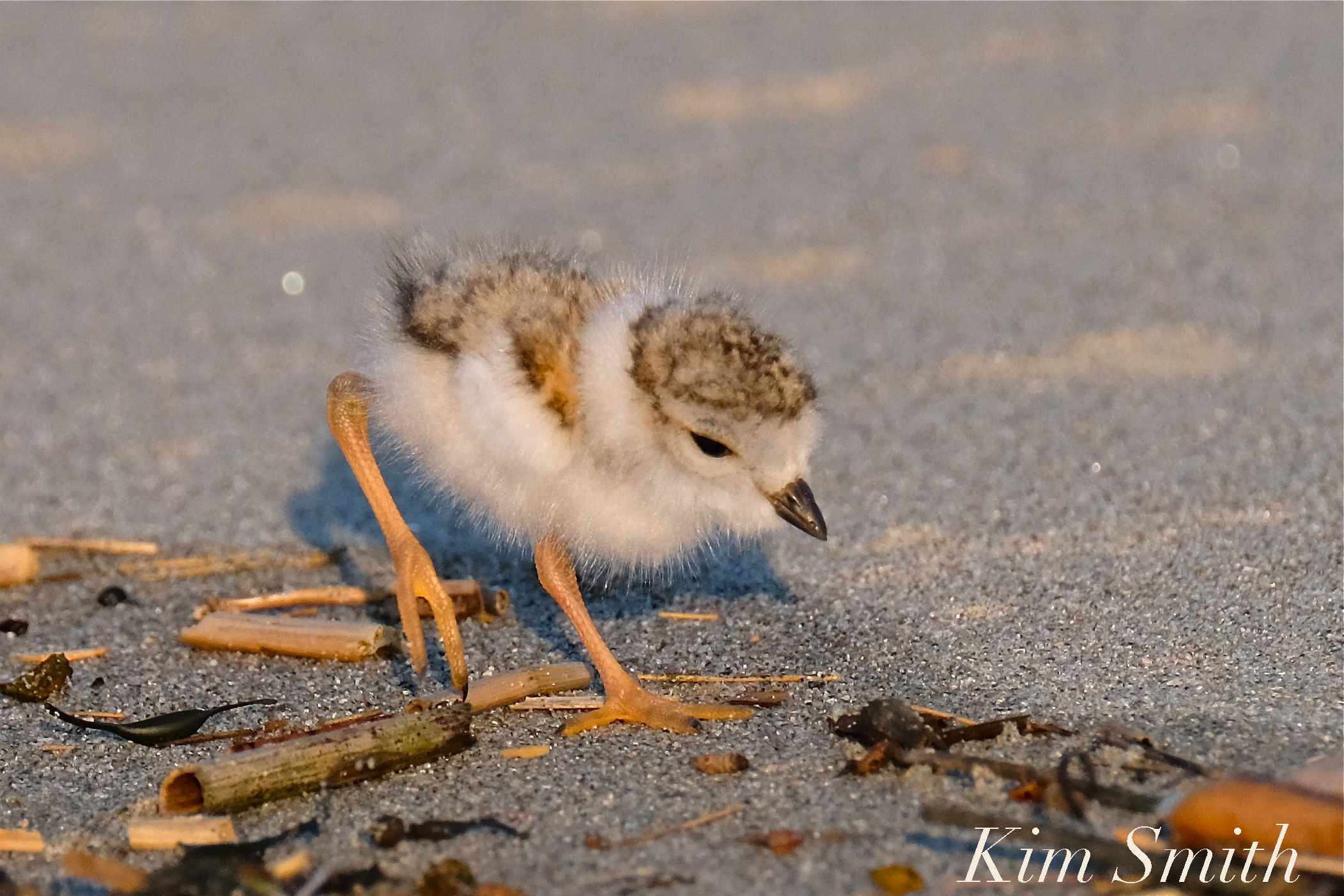
Thirty-three-day old Piping Plover chick.

Dad on alert for crows and the Bachelor.

HAPPY FOURTH OF JULY PIPING PLOVER UPDATE – MOM RETURNS!

Just a very brief update from my morning 5-7am shift- I was happy to see Mom has returned to looking after the chicks. It’s really a relief because the beach was so crowded today with beach goers, beginning very early this morning. The chicks (all three!) spent the day at the creek with volunteer monitors keeping a watchful eye on the babes throughout the day.

Mom keeping watch while occasionally pausing to forage and to preen.

Thirty-three-day old Piping Plover chick.

Dad on alert for crows and the Bachelor.

HAPPY THIRTY-TWO-DAYS OLD LITTLE CHICKS (ALL THREE)!

Almost entirely fledged, our Good Harbor Beach chicks are taking short flights around the creek and sandy beach. USFWS considers Piping Plovers fledged at 35 days, which will bring us to Saturday.

Nearly as large as the adults, the chicks still take direction and heed the parent’s warning piping calls alerting them to approaching danger. Every morning I typically find both adults protecting and monitoring the chicks, but this morning, only Papa was seen and that has been the case reported all day by fellow volunteers. Female Piping Plover parents often depart earlier than their male counterparts and that was the case with our family with the one surviving chick in 2017.

*Edited -found Mama this morning (a day after she disappeared), supervising all three chicks. Both parents still present and still on duty. Happy Fourth everyone!

What will happen at thirty-five-days? Will the chicks suddenly begin migrating southward? I don’t think it will be as precise as all that. The family maintains a loose association for an undetermined amount of time. Another PiPl family that I am documenting at a different location, where the chicks are four days older, is still hanging out together and the four siblings often nap together, within close proximity to Mom and Dad.

Under Dave Rimmer’s advice, the City has agreed to keep the roped off area in place until after the busy Fourth of July weekend (thank you!). By keeping the area within the rope protected, we are continuing to provide a safe harbor and good foraging habitat for the fledging birds, which will surely be needed this weekend.

Thank you to everyone who is watching out for our sweet little PiPl family


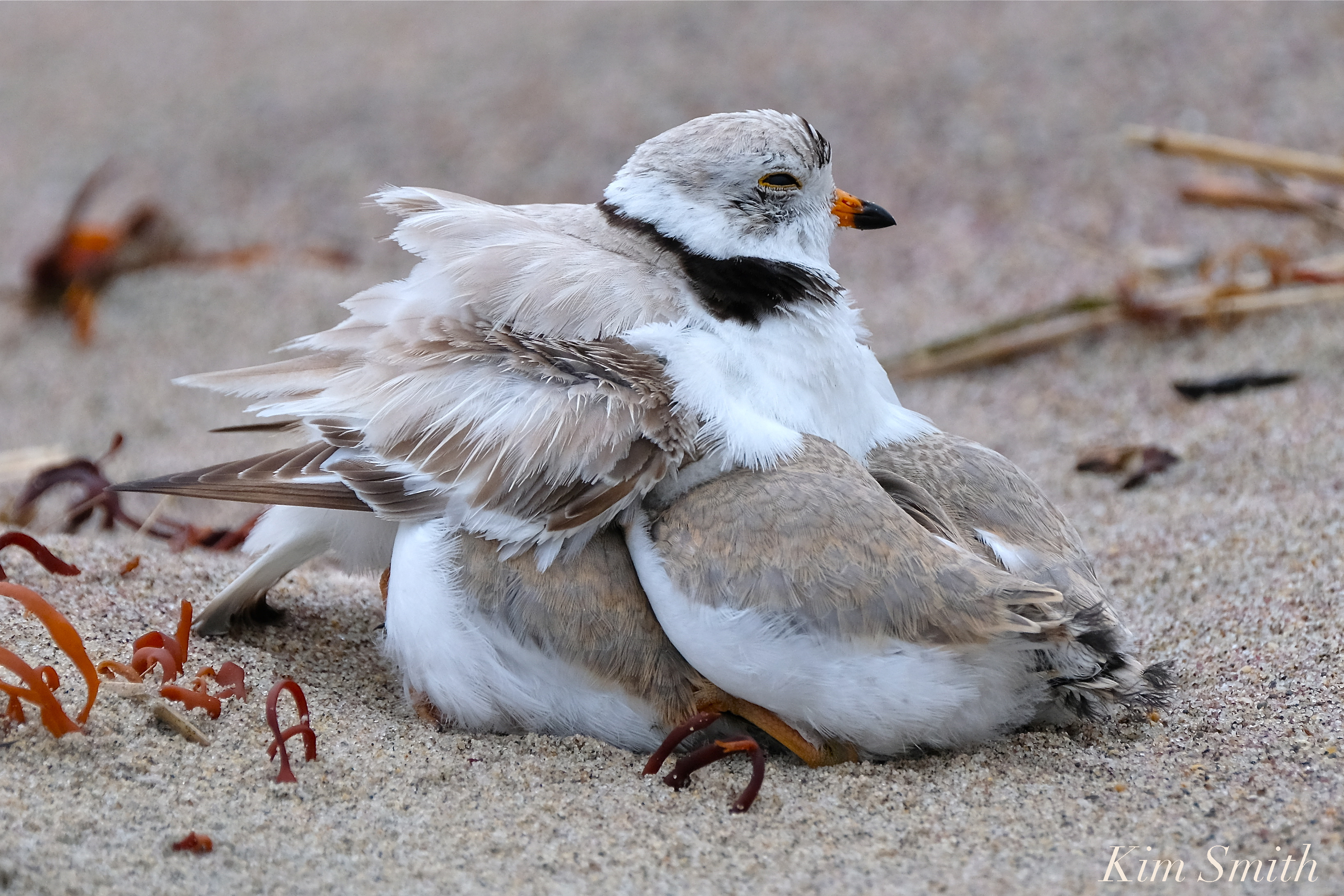
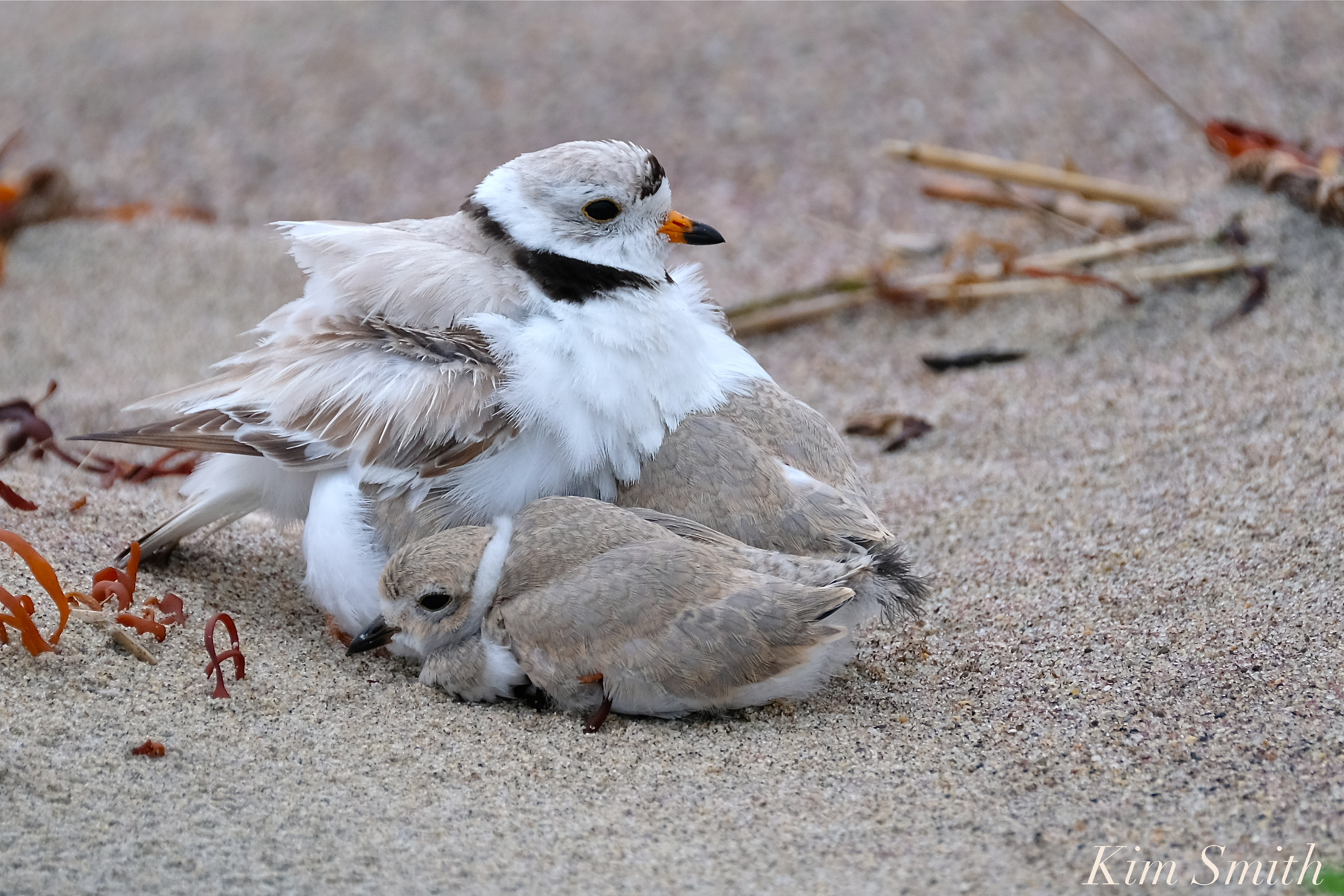
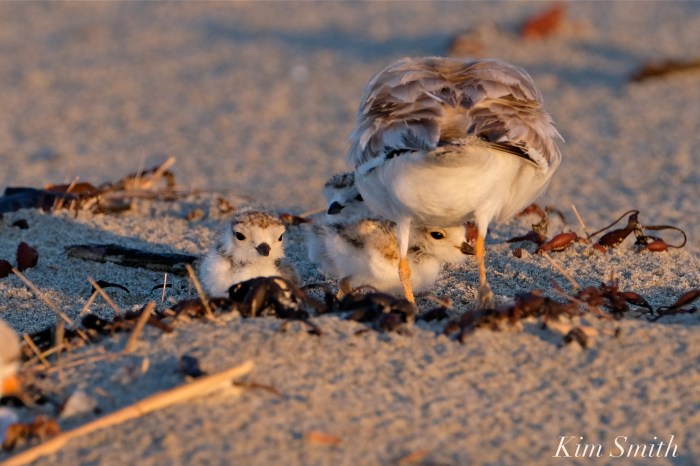
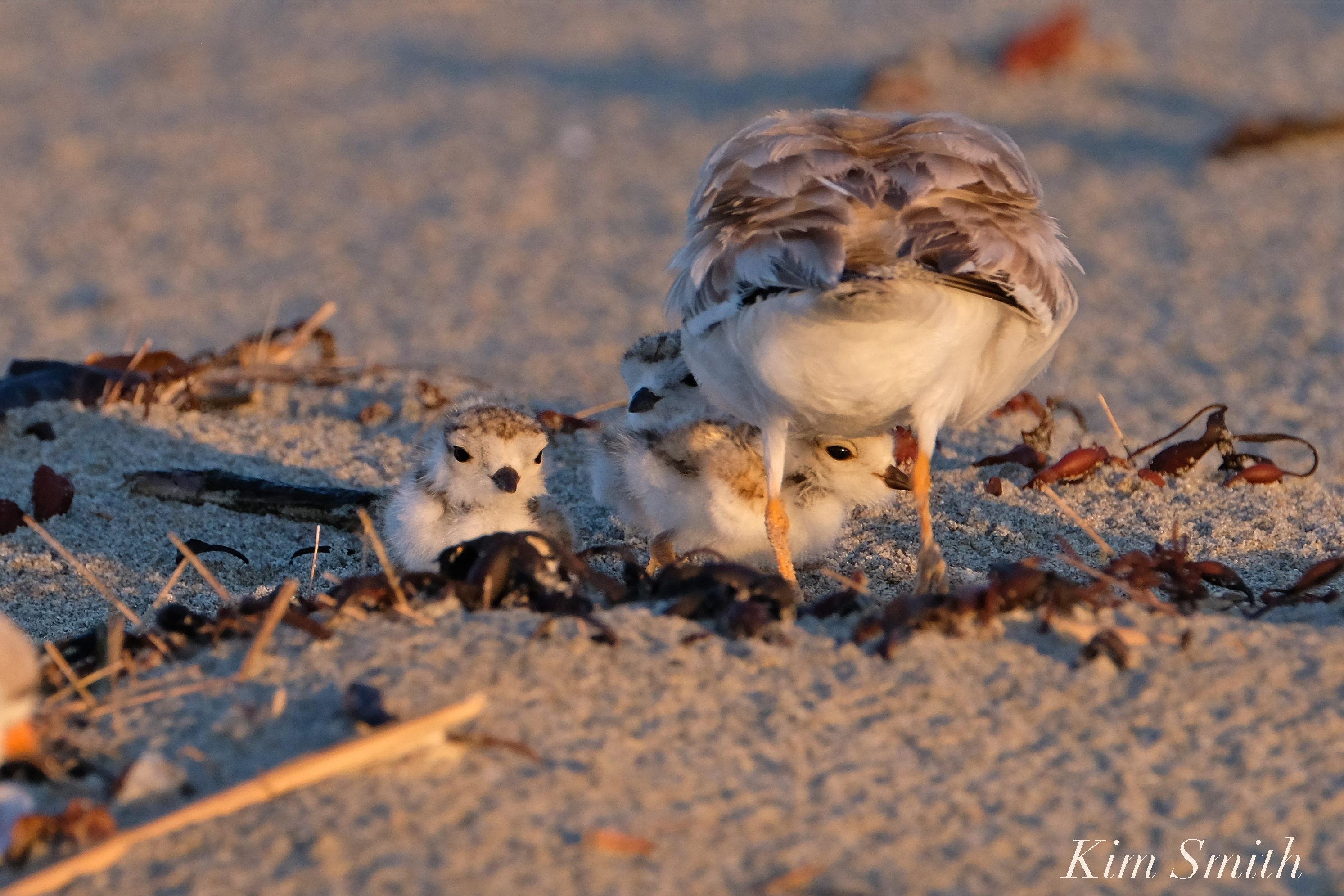
PiPl sandwich

Going, going, gone!

Thirty-two-day Old Piping Plover Chicks

Papa supervising this morning

HAPPINESS IS KNOWING ALL YOUR BABIES ARE SAFE AND TUCKED IN FOR THE NIGHT

Our chicks are 26 days old today. We’ve nearly made it to the four-week-old milestone!

Doesn’t Papa look content? 🙂

Although state guidelines say piping Plover chicks have fledged by 25 days, that simply is not the case with our chicks. They cannot fly more than a few feet and are still swimming across the creek to the other side (about ten feet wide at mid-tide). If they could fly across, they would.

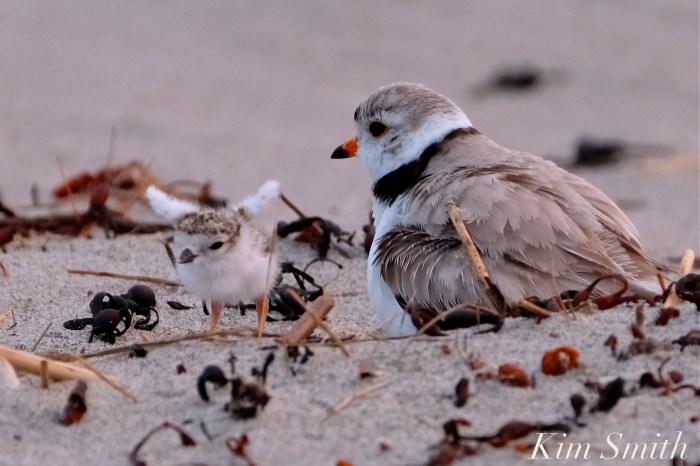
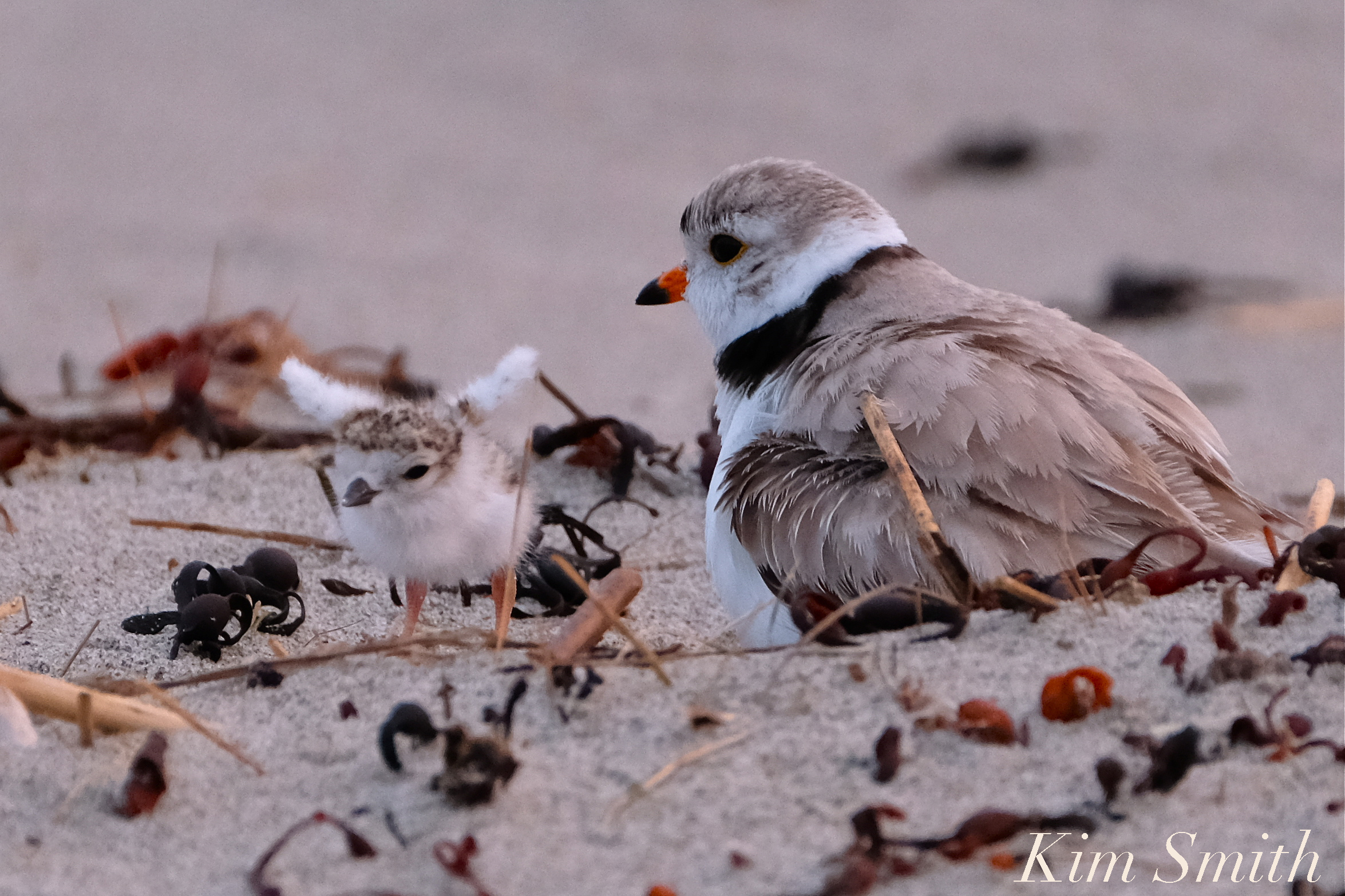
Every morning I find the chicks thermoregulating under Mom or Dad. Throughout the day, the parents guide the chicks up and down the beach to the most safe locations for foraging. And in the evening, they return to the protected area to snuggle under Mom or Dad, spending the night as a family unit.

The Federal guidelines are much more accurate when comparing my own observations and documentation. USFWS mandates protection up to 35 days. We PiPl monitors are going with protecting our family to 35 days, at five weeks old.

Thank you to all our wonderful Piping Plover volunteer monitors. Without a doubt, our chicks would not have made it this far if not for your time, patience, and dedication.

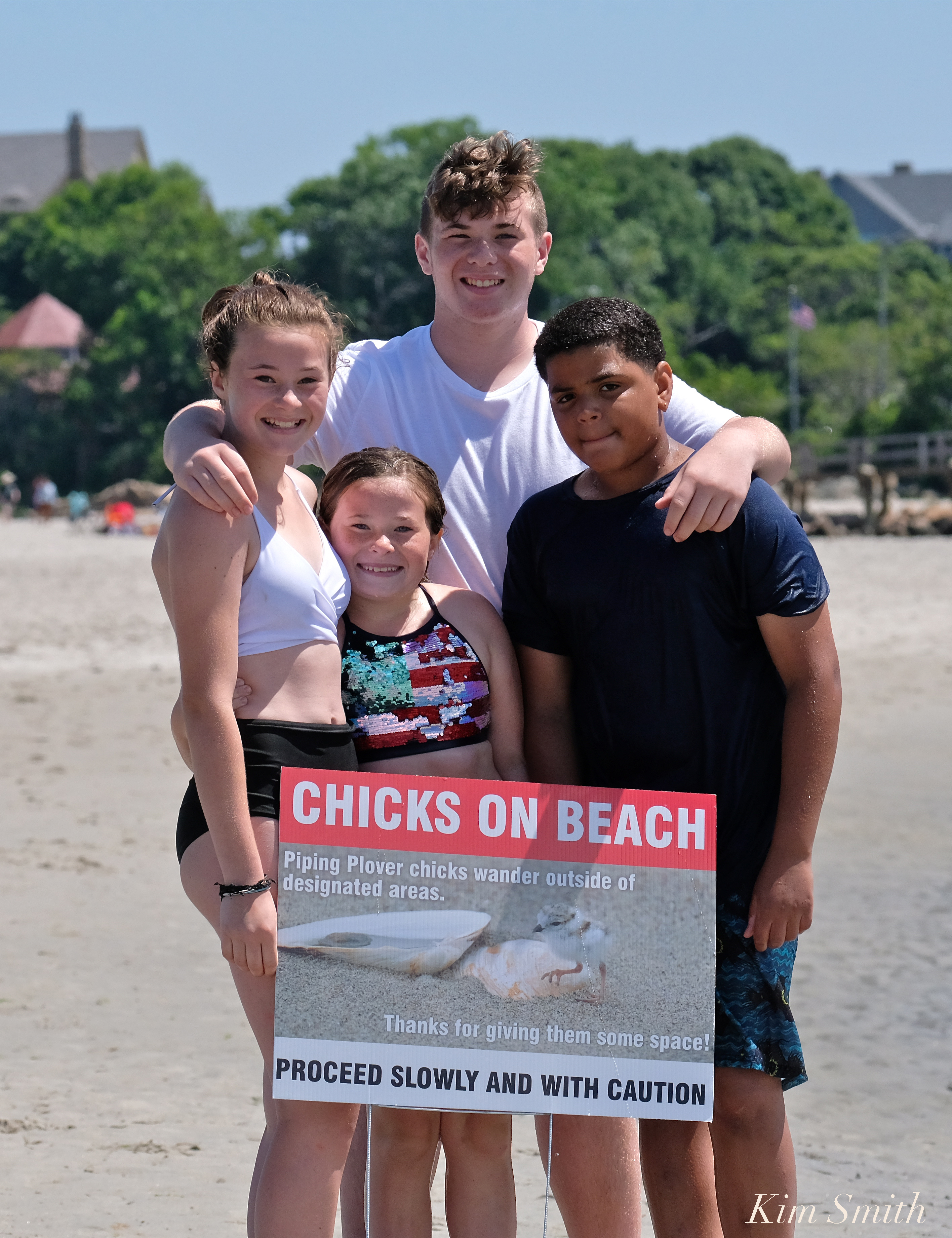
THE JOHNSON FAMILY OF YOUNG CONSERVATIONISTS!

Thank you to the Johnson Family of Wakefield and Connecticut for their interest in learning about the Piping Plovers and for giving them the space they needed when trying to get to the creek.

Volunteer monitor Laurie Sawin spent time with the family on Wednesday, sharing her binoculars and teaching the young conservation-minded kids all about Piping Plovers and their habitat. The kids were so interested and considerate of the birds, it was a joy to meet them!
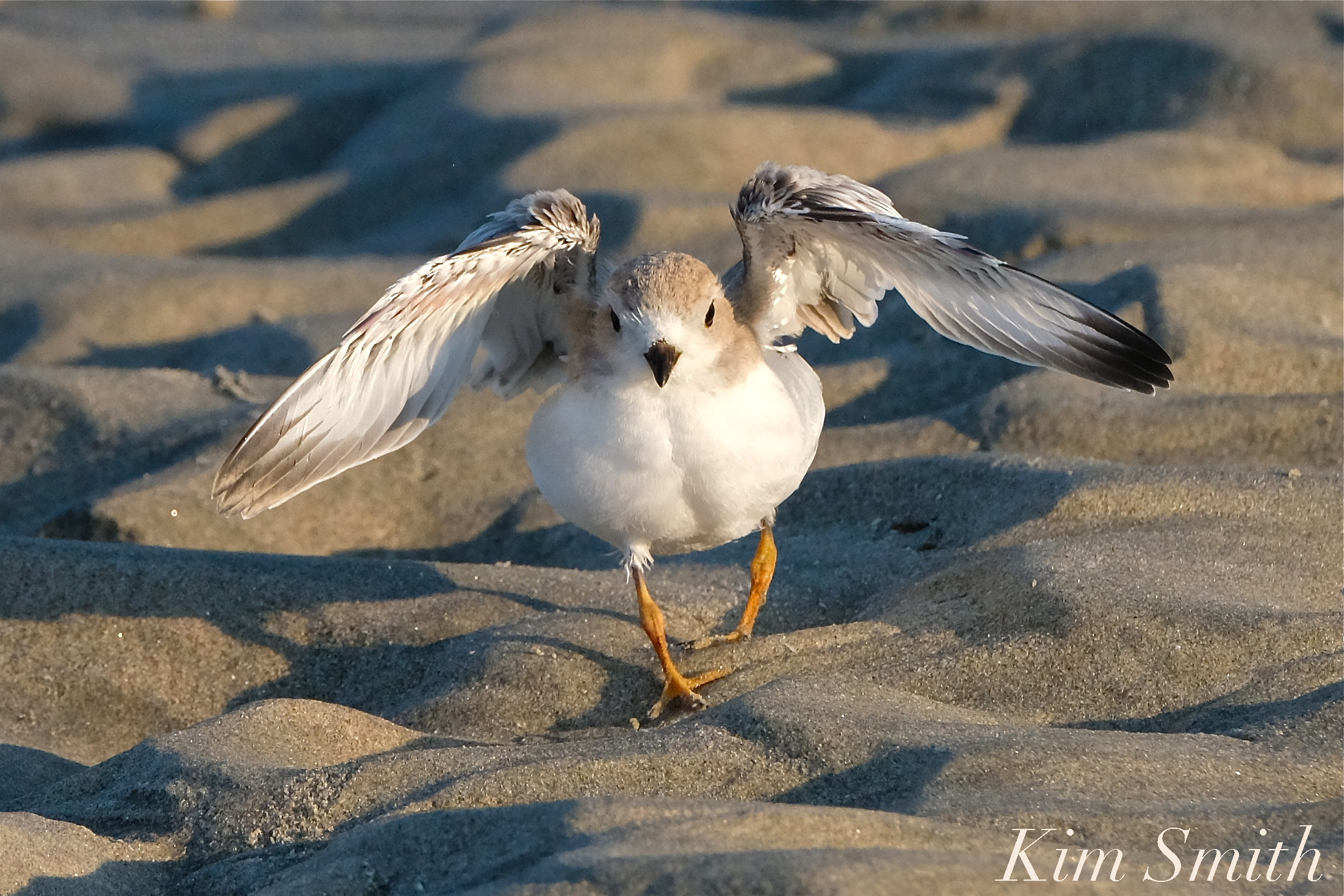
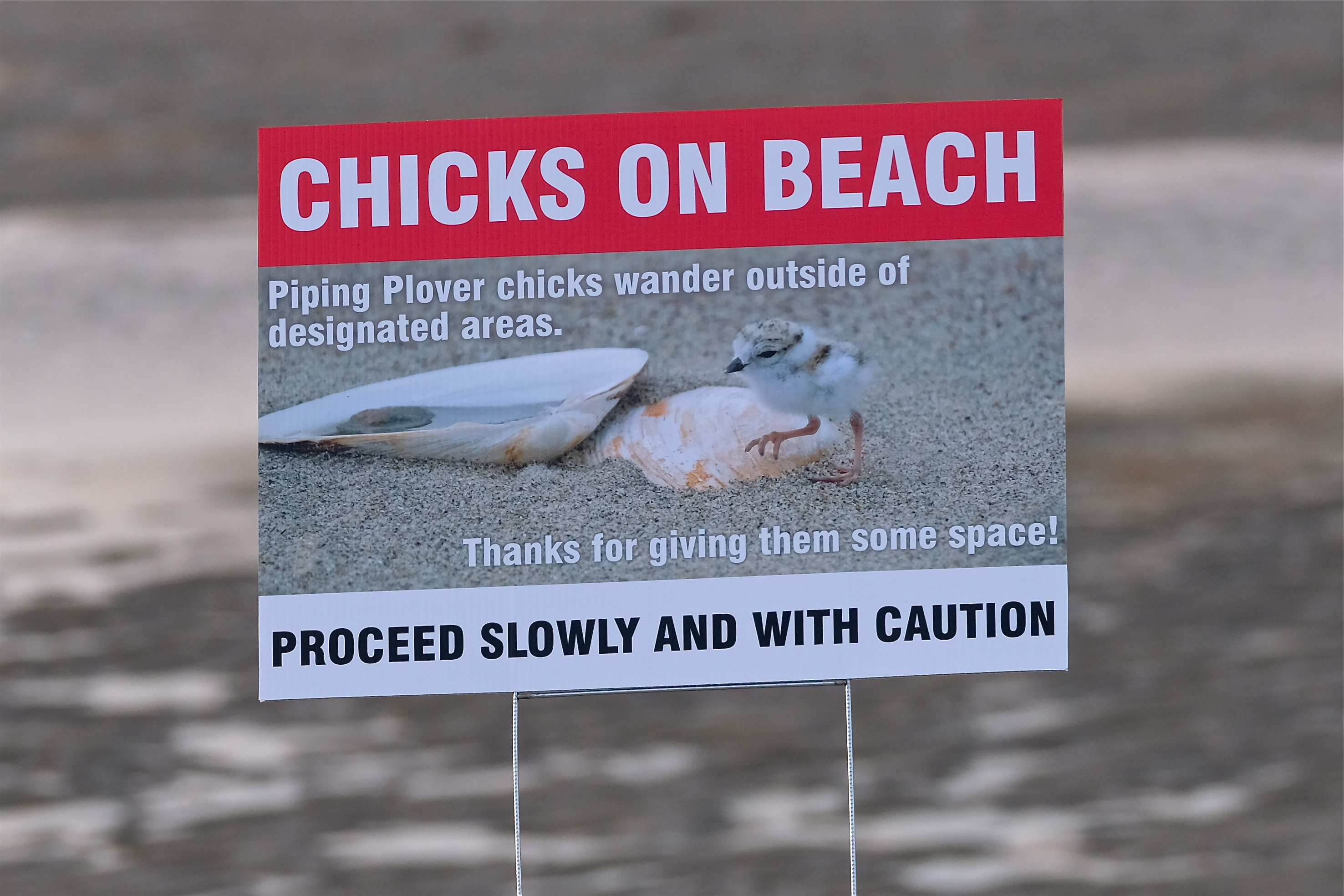
People love the portable new signs, both beach goers and the volunteer monitors. The signs provide an opportunity for beach guests to ask questions and learn about the PiPls, and they also provide a reference for the monitors. Many thanks to volunteer monitor Heather Hall for sharing a photo online of the signs used at PiPl protected areas in Ontario.

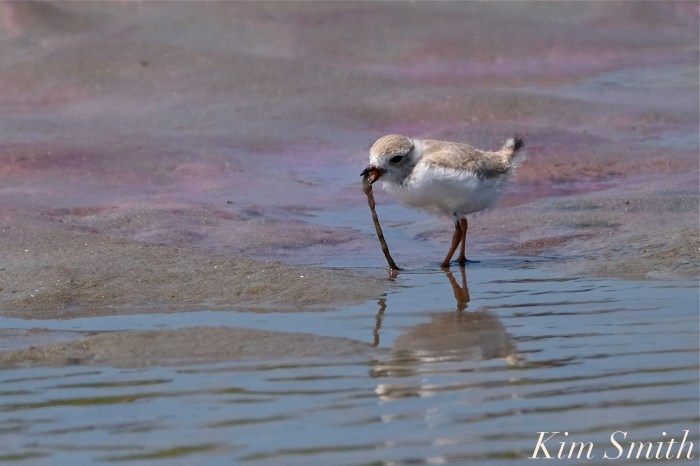
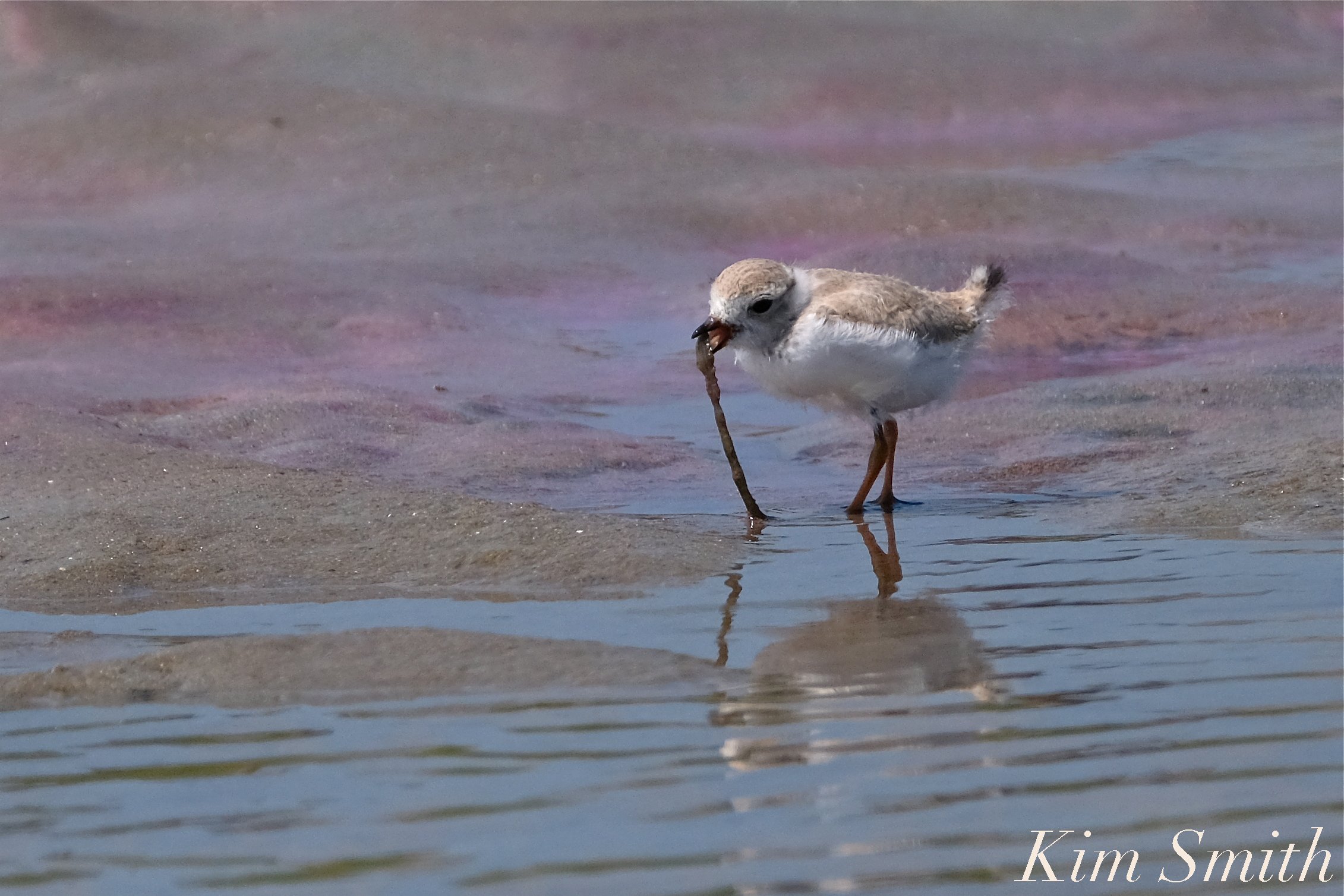
Our PiPl family are finding lots of fat sea worms at the creek.

HAPPY THREE-WEEK-OLD BIRTHDAY TO OUR PIPING PLOVER CHICKS, ALL THREE!

On Saturday our Good Harbor Beach PiPl chicks turned three weeks old. They remind me so much of toddlers, with their indefatigable spirits, high energy and great appetites, adventuring, tumbling and bumping themselves throughout the day, flopping their tired selves down and wanting to be cuddled and protected, and then picking themselves up to start all over again.

Our chicks are spreading their wings! Their flight feathers have not yet grown in nonetheless, it doesn’t stop them from testing their wings. They stretch wide and take little leaps in the air, often ending with a face plant.

And sometimes, lift-off!

The chicks spend a good part of the day at the creek. On Saturday they crossed the creek and much to PiPl monitor Laurie Sawin’s dismay it appeared as though they were trapped on the other side and might have been swallowed up by the incoming tide. Instead, all three chicks swam across the creek to the safety of the shore.

We are stymied by the decision to shrink the Piping Plover’s protected area and are working toward re-establishing the size of their designated area. It’s really much too soon to be shrinking the roped off area and to have raked over the mini mounds of sand they sleep on every night. The chicks are all over the beach at all times of day and the protected area not only provides safety from people and pets, the un-raked areas provide a feast of good eating.

It clearly takes a village to raise a family of chicks at a popular city beach and we have a corps of wonderfully dedicated volunteers. We could really use help over these final ten days before the chicks are fully fledged. The weather has warmed and the beach has become much busier. Please contact Alicia Pensarosa if you would like to help. You can also directly sign up here. Thank you so much, and even more importantly, the PiPls thank you, too ❤

Tiny mollusks for breakfast

NEW PIPING PLOVER SIGNS

We have new Piping Plover portable signs to help the monitors. The signs can be picked up and moved anywhere there are chicks and foot traffic. We got the idea for the coroplast signs from ones used in Ontario.

THANKS SO MUCH TO SEAN AND SAMANTHA AT SEASIDE GRAPHICS FOR PUTTING A RUSH ON THE SIGNS! SEASIDE GRAPHICS IS SIMPLY THE BEST AROUND!
HAPPY FATHER’S DAY – BROUGHT TO YOU BY PIPING PLOVER DADS!

Fifteen-day-old Piping Plover chicks

Last year I posted a similarly titled post, Happy Father’s Day! Brought to You By Papa Plover,with a photo of Papa PiPl snuggling our one remaining chick, Pip.

This year we have a sweet photo from yesterday of our Papa PiPl snuggling all three chicks, not just one chick as was the case last year on Father’s Day. I wrote, “Whenever folks stop by to ask questions at the nesting area and they see the little chicks snuggling under the adult PiPl, they almost automatically assume it is the Mama Plover. Half the time it is the female, and the other half, the male. Mom and Dad share equally in caring for the chicks, generally in twenty minute to half hour intervals. They are always within ear shot and while one is minding the chicks, the other is either feeding itself, grooming, or patrolling for predators. Last year, as is often the case, the Mama Plover departed Good Harbor Beach several weeks before the chick fledged, leaving Little Chick entirely under Papa’s care.”

But there is more to the story about what makes Piping Plover males Super Dads. Papa is not only an excellent Dad in that he is a fifty/fifty caretaker of the chicks, but male Plovers are also fierce defenders of their family. Our Papa is no exception. He is always on high alert, especially when it comes to the Bachelor and his antics. Between gulls, crows, other avian predators, human caused disturbances, and even danger from one of their own kind, it’s not easy being a Plover Dad.

Papa Plover warming the three chicks. They were fifteen days old on Saturday morning.

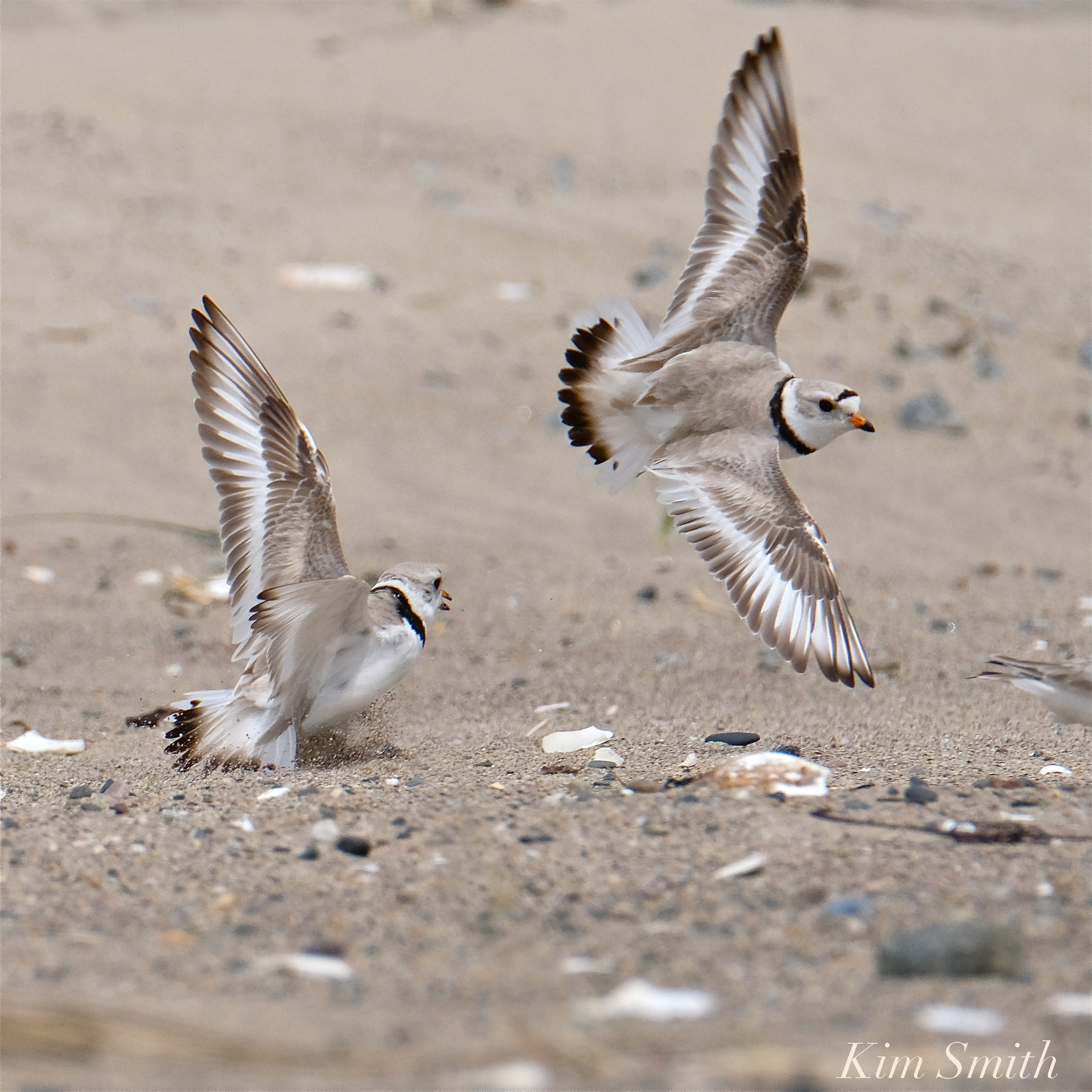
The Bachelor tries to camp out in the protected area. Papa is having none of it and leaps up to give chase to the Bachelor.

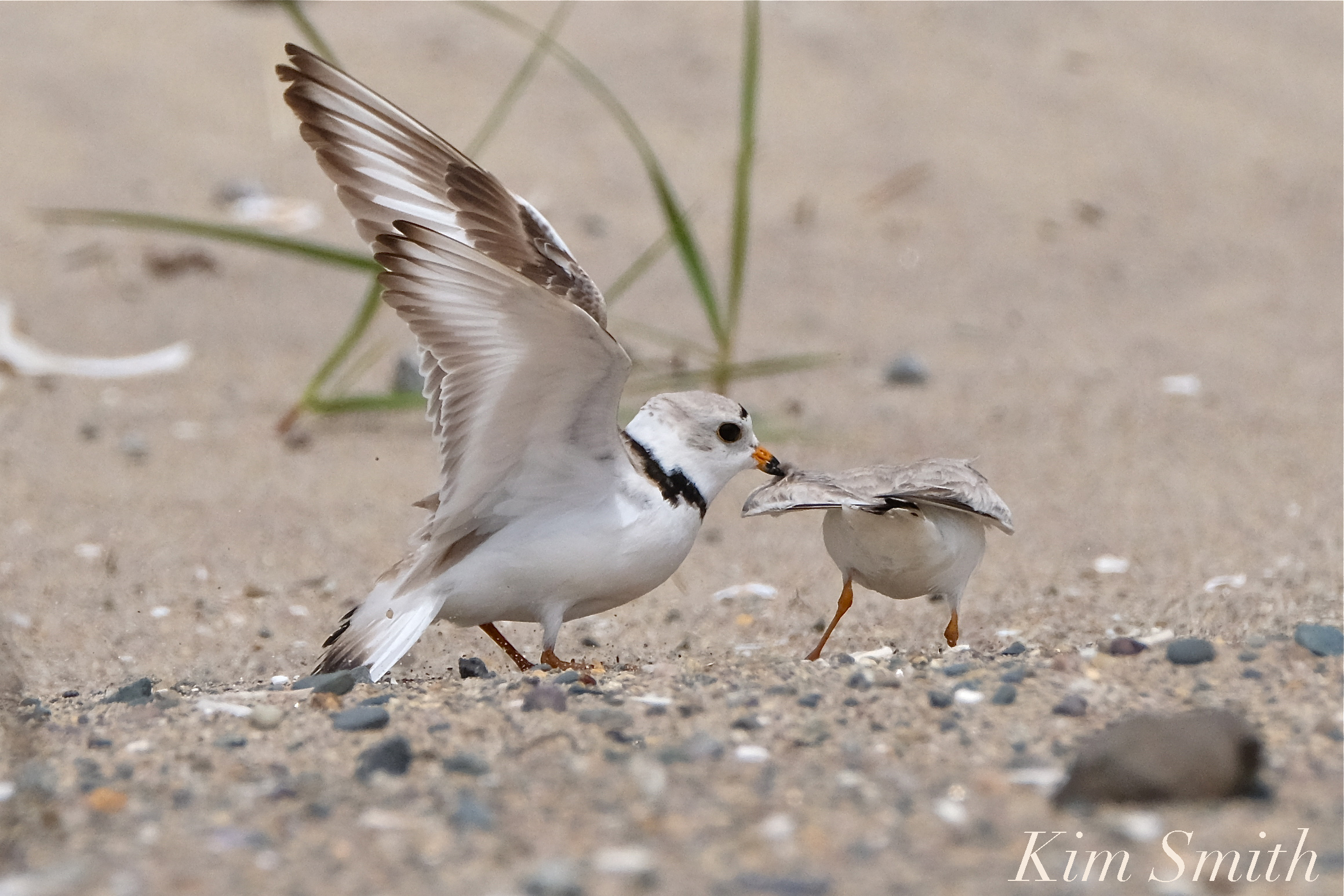
Papa and the Bachelor smack down over command of the protected area.

Male Piping Plovers fight, and even bite, competing males for mates and for nesting territory.


OUR GOOD HARBOR BEACH PIPING PLOVER CHICKS ARE TWO WEEKS OLD TODAY!

Two weeks ago today, four tiny Piping Plover chicks hatched at Good Harbor Beach. Nesting got off to a rocky start, with the mated pair first attempting to nest at the beach, then at the parking lot, but then thankfully, returning to their original nest site.

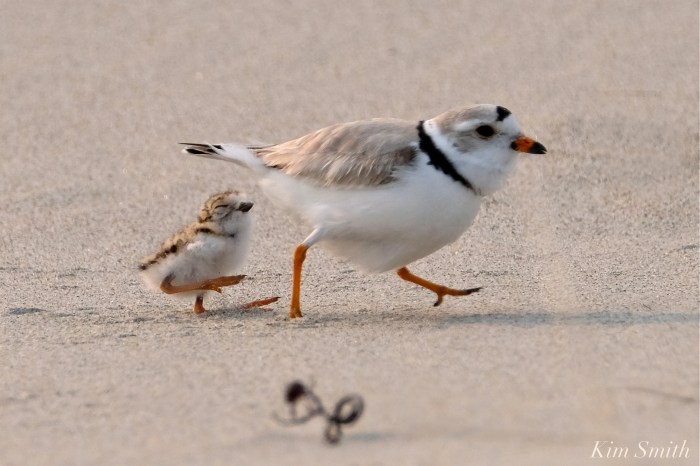
The relative peace on the beach, excellent parenting by Mama and Papa PiPl, cooler than average temperatures, vigilant monitoring by a corps of dedicated volunteers, outpouring of consideration by beach goers, as well as support from the DPW, City administration, and City Councilors has allowed the chicks to attain the two-week-old stage of maturity. With each passing day, we can see the chicks are gaining in strength and fortitude and listening more attentively to their parent’s voice commands. Adhering to Mama and Papa’s piping calls is an important milestone in their development. The parents continuously pipe commands and directions, warning of danger and directing the chicks to come to a stand still. The tiny shorebird’s best defense is its ability to blend with its surroundings when motionless.

The chicks spent the early morning warming up and foraging at the protected area. Afternoon found them camped out at the creek.

Snapshots from the morning


There was a group of young people stationed near the PiPl protected area enjoying the beach on this fine sunny afternoon. All was good though as the chicks were perfectly safe, foraging far down the creek. With gratitude and thanks to everyone who is helping to keep our PiPl family safe.

Snapshots from the afternoon

HAPPY TEN-DAY-OLD BIRTHDAY TO OUR PIPING PLOVER CHICKS!

Today our little chicks, all three, turn ten-days-old. This is a milestone in that their chances of survival are greatly improved when they reach the age of ten-days-old.

The family of five spent the morning foraging, mostly in the protected area, and venturing to the shoreline only occasionally. A Mourning Dove made his way through the dune edge into the protected area and Mama was having none of it. She flew at the Dove, but it attacked back. Papa suddenly appeared out of nowhere and really gave the Dove the business, buzzing it several times. The Dove flew off and then returned. Both parents left the chicks briefly and both attacked the Dove simultaneously. It’s always dramatic when you see how these pint sized shorebirds go after the much larger birds, and usually win.

Our Papa and Mama will fight to the death for their chicks, and because of that the chicks have survived ten whole days. Additionally, the Piping Plover family could not have survived this long without the vigilance of tender hearted volunteer monitors. They are a tremendous bunch of people and if you would like to join our group, please contact Alicia Pensarosa and sign up for a shift. Everyone is welcome. Weekends, especially, volunteers are needed.

Thank you to all the volunteer monitors. Two volunteers deserve an extra huge shout out and they are Heather Hall and Laurie Sawin. These two daily spend hours upon hours monitoring the chicks. Thank you sweet ladies for all your time and devotion ❤

Bug Breakfast

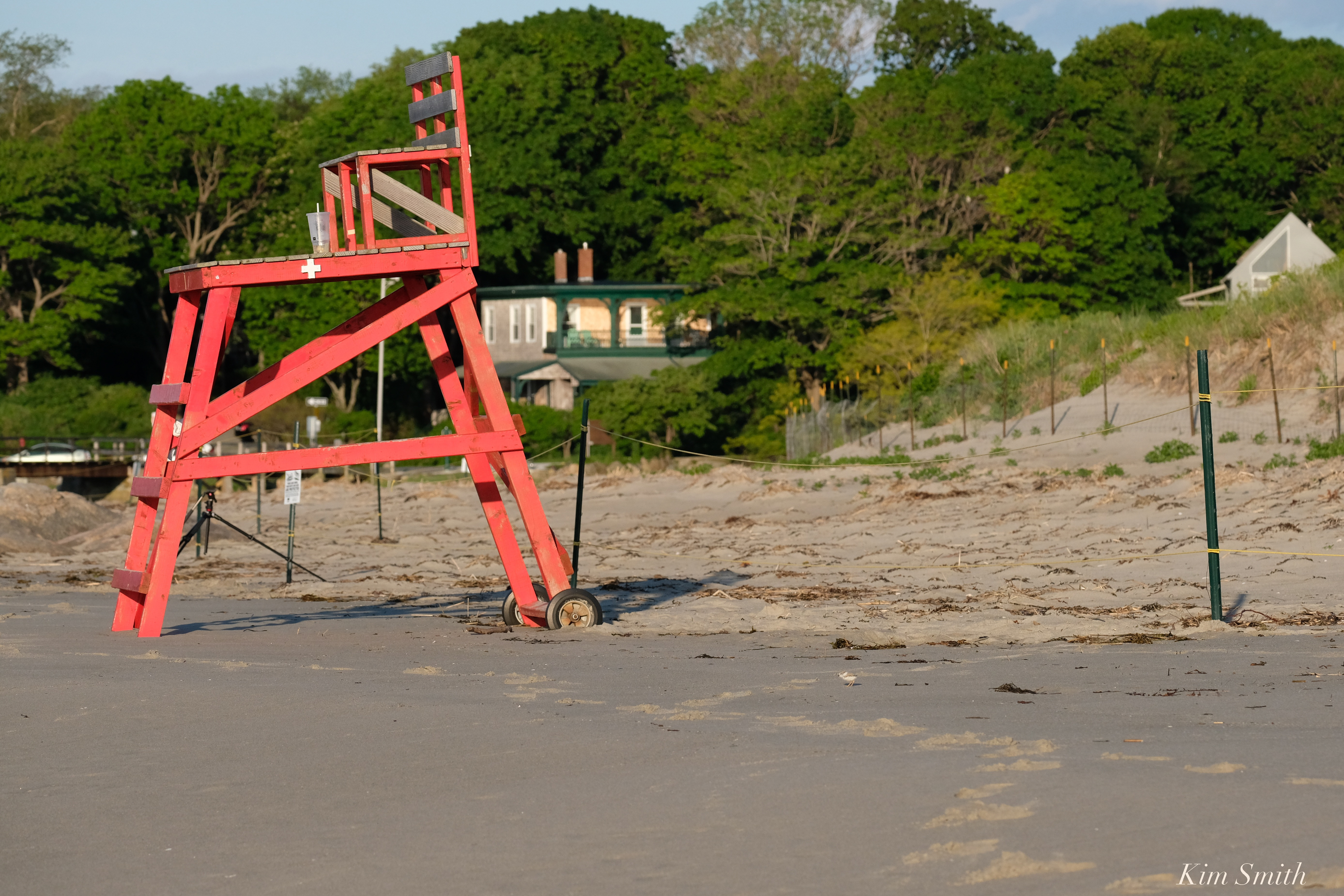
Big Chair, Tiny Bird

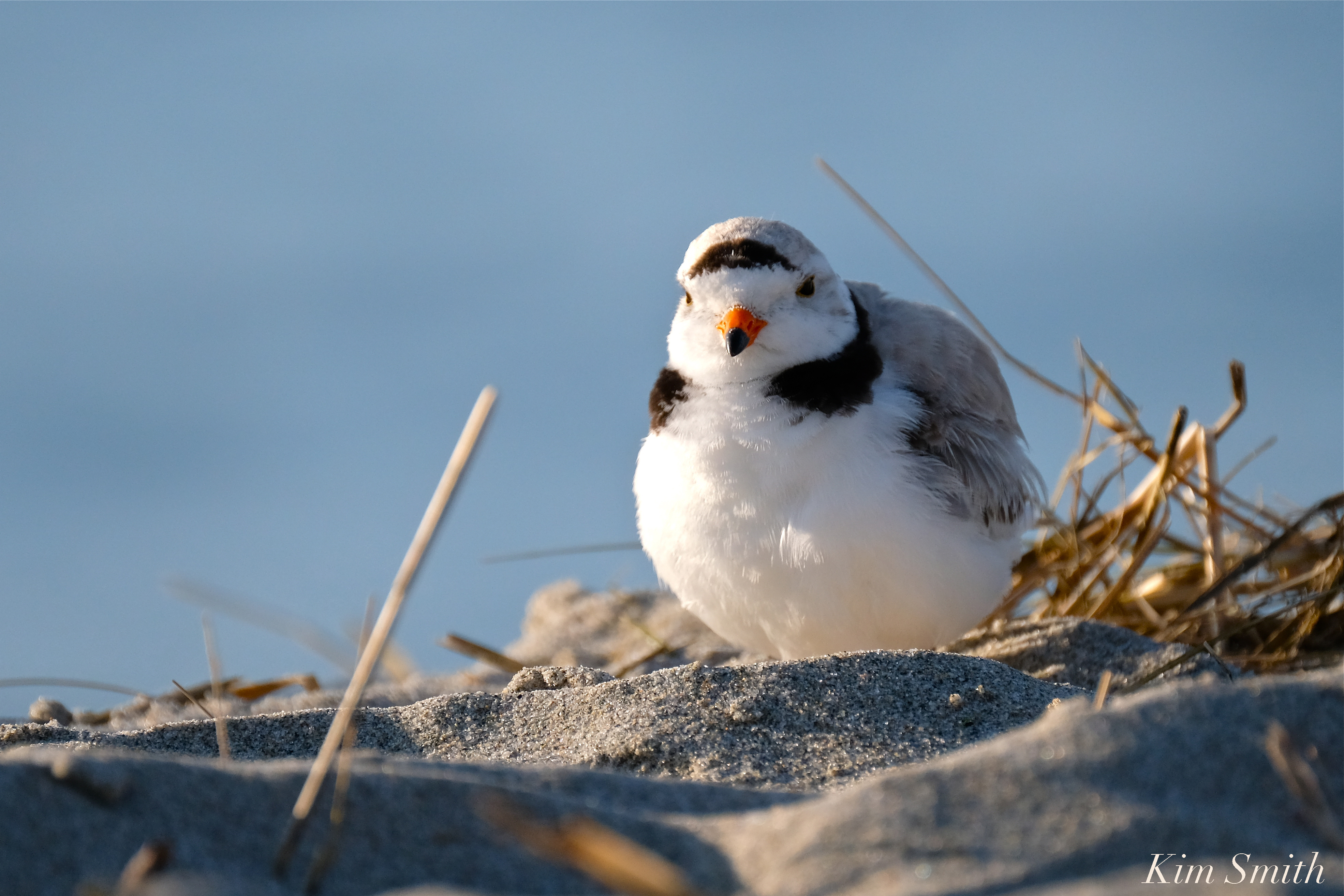
Papa keeping a watchful eye on the family this morning.

CHICKS MADE THEIR FIRST FORAY DOWN TO THE CREEK TODAY!

Our Good Harbor Beach PiPls made their first journey down to the creek this morning. They left the protected area about 11:00am, just as the soccer tournament was heating up. The family traveled along the dune fencing, crossed the back road, and spent the better part of the day foraging in the creek tidal flats and in the vegetation at the marsh edge.

For volunteers who have never seen this behavior before, in 2016 the chicks hatched over Fiesta weekend, when the beach was very busy. At only two days old, the PiPl family began making the epic journey to the creek from the protected area. This is harrowing for them and we lost a chick during the 2016 trek. Volunteers can best help the chicks by following along, from a safe distance that does not impede their movement. Keep an eye on stray balls and let folks in the vicinity know what is happening, if possible. They typically return as the tide is coming in or at dusk.

I believe easy access to the creek is one reason why our GHB PiPls choose to nest at the No. 3 boardwalk over the No. 1 boardwalk area. The creek is closer to No. 3 and gives the birds a secondary option for feeding when the main beach is super crowded.

The hatchlings are eight days old and are nearing the ten-day-old milestone. They are growing visibly stronger and increasingly more independent everyday. I have lots of photos to share and will provide a longer update after the weekend. 

Chicklet tracks

Creek tide flats

Mom calling for a chick, which is hiding in the vegetation at the edge of the marsh 🙂

Seven-day-old Piping Plover Chicks

PIPING PLOVER CHICKS FIVE-DAYS-OLD AND ALL PRESENT AND ACCOUNTED FOR :)

Our little Good Harbor Beach Piping Plover family of five all appear to be doing well. The three chicks made the five-day-old milestone today. They are becoming increasingly independent, so much so that is is occasionally difficult for the PiPl volunteers to find. We monitors have had it relatively easy up to this point. With the cooler temperatures, the chicks have spent a great deal of time tucked under Mama and Papa. This first warm day of June, they were zooming from one length of the beach by the No. 3 boardwalk, all the way to the creek end, in and out of the cordoned off area, and to the shoreline. The chicks were also observed by monitor Laurie Sawin running up into the edge of the dunes and taking shelter from the heat and sun under the beautiful native flowering Beach Pea.

Ward One City Councilor Scott Memhard has provided laminated information about Piping Plovers, on a clipboard that any PiPl monitor can access via Cape Ann Coffees, which is around the corner from Good Harbor Beach at 86 Bass Avenue. The information can be picked up and dropped off by asking at the counter. Many, many thanks to Rick and Dorthe Noonan, proprietors of Cape Ann Coffees, for volunteering to keep the information at their wonderful coffee shop.

Gloucester Animal Advisory Committee chairperson Alicia Pensarosa reminds everyone to follow this link to sign up if you are interested in becoming a Piping Plover volunteer monitor: https://signup.com/client/invitation2/secure/2801244/true#/invitation

The weather prediction for the weekend is blue skies and seventies, so much help will be needed, especially during the mid-day when the beach is most congested. If you have any questions or comments, please email Alicia at gloucesterAAC@gmail.com.


Three-day-old PiPls waking up at sunrise, foraging in the wrack zone, and taking turns warming up under Mom and Dad

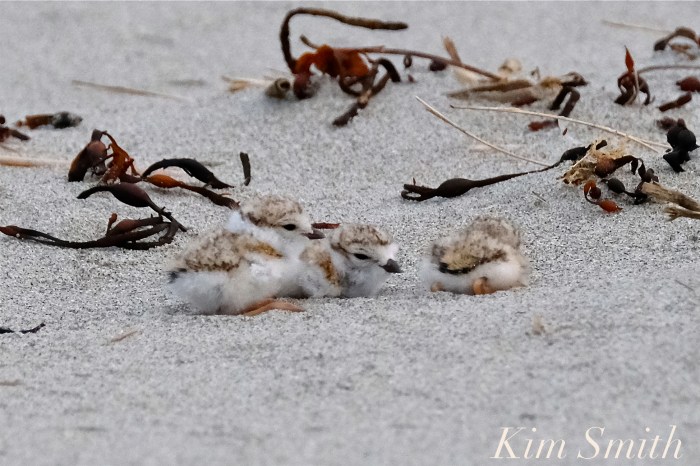
Looking for the well-camouflaged PiPl chicks makes my head spin!

Four-day-old chick

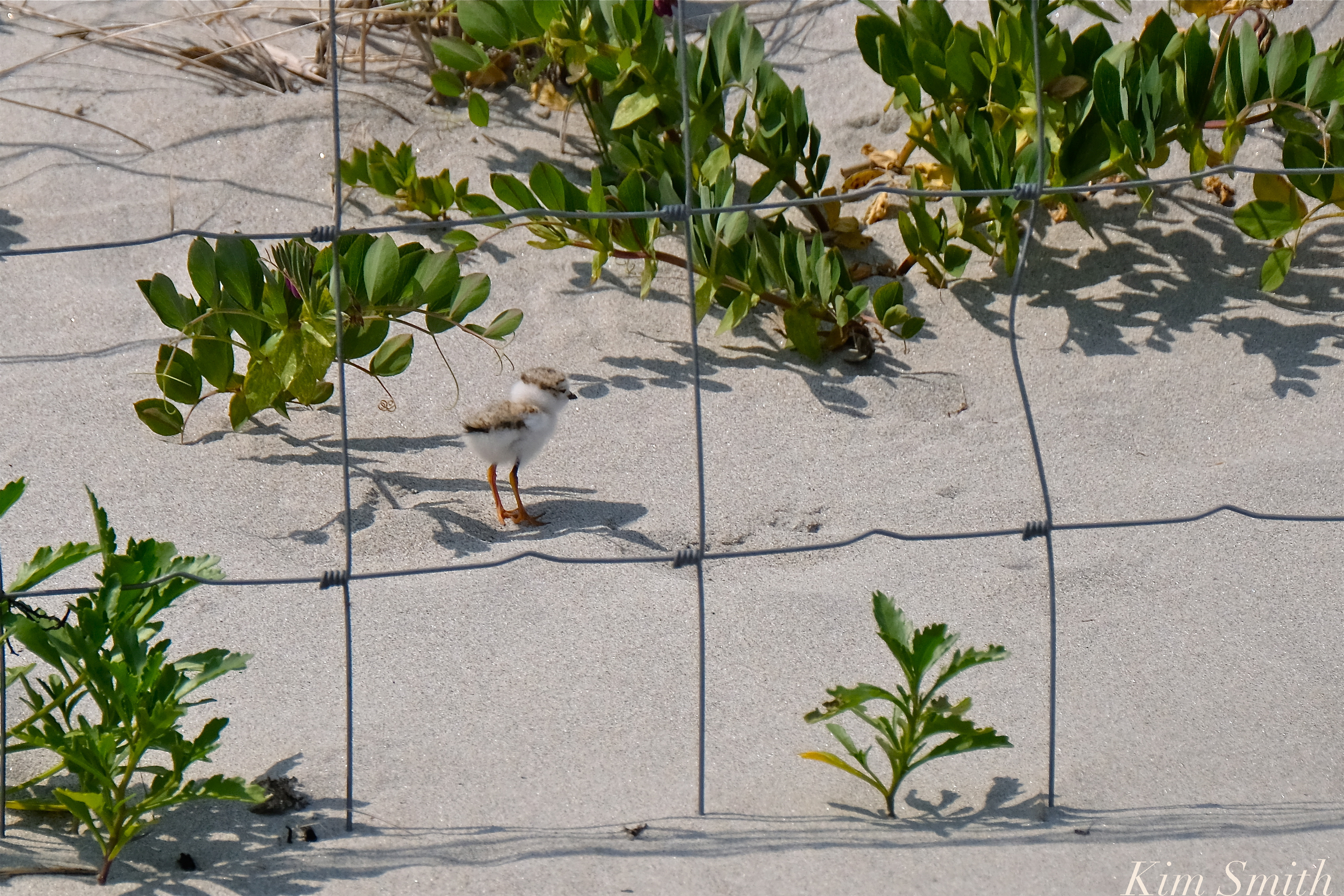
Five-day-old PiPl chick venturing into the dunes.

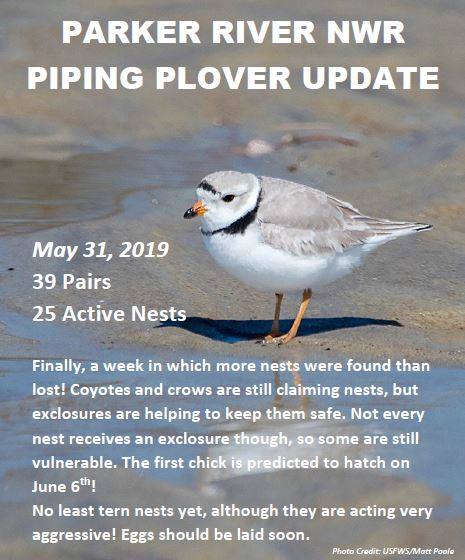
Great news from our PiPl friends at Parker River National Wildlife Refuge-as of May 31st, they have 39 pairs, 25 active nests, and their first chick is projected to hatch on June 6th! 


WE LOST A CHICK LAST NIGHT

So sorry to have to post that we lost one of our little chicks last night. It’s impossible to know what happened; there were not tracks or signs of unusual activity. Could it be the chick became separated from the family in the heavy fog and last night’s thunderstorm? We’ve seen chicks survive on similar nights and we lost one in 2017 after a thunderstorm. They are only three days old today so I imagine the rough weather is rough on the chicks, too.

Three-day-old chicks this morning

SWEETEST ONE-DAY-OLD PIPING PLOVER CHICKS AND HOW TO SIGN UP TO VOLUNTEER

We had a terrific informal Piping Plover informational gathering at Good Harbor Beach this afternoon. If you would like to sign up to volunteer, please follow this easy link. We would love to have you join us.

http://bit.ly/2Vsw2Wd  

If you have any questions, please feel free to email me at kimsmithdesigns@hotmail.com or leave a comment in the comment section.

Today the chicks are two days old; the photos are from yesterday at daybreak. It was foggy and overcast and the chicks mostly wanted to warm up under Mama and Papa.

All four chicks are doing fantastically, feeding well and venturing further and further from the upper wrack zone. Because of the cool temperatures, the beach has been relatively quieter this past spring, which has been ideal not only for our GHB PiPl family, but for nesting and hatching PiPl families all around the state.

Pint-sized mountain climbing

PIPING PLOVERS DAY TWO AND TINIEST OF WING BUDS

Briefest update just to let everyone know the hatchlings are all doing beautifully. So many thanks to everyone who is volunteering ❤

One-day-old teeny tiny wing buds

We are having an informal get together at Good Harbor Beach Sunday afternoon at 4:00 for anyone interested in becoming a Piping Plover monitor and learning more about the PiPls. Meet at Boardwalk #3. We hope to see you there!

FIRST LOOK – OUR GOOD HARBOR BEACH PIPNG PLOVER CHICKS (ALL FOUR!) HATCHED!!!

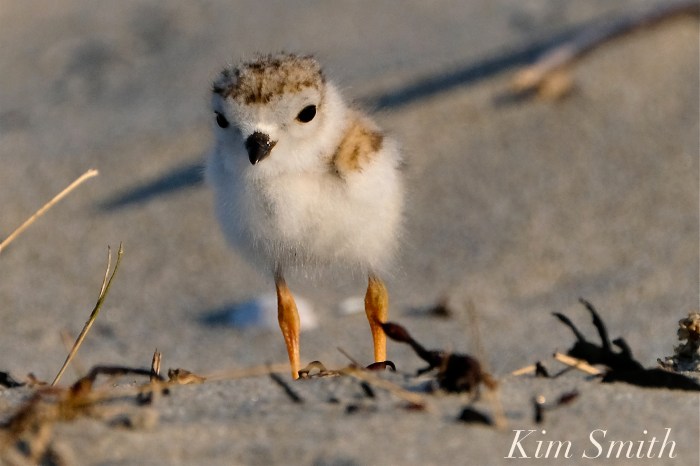
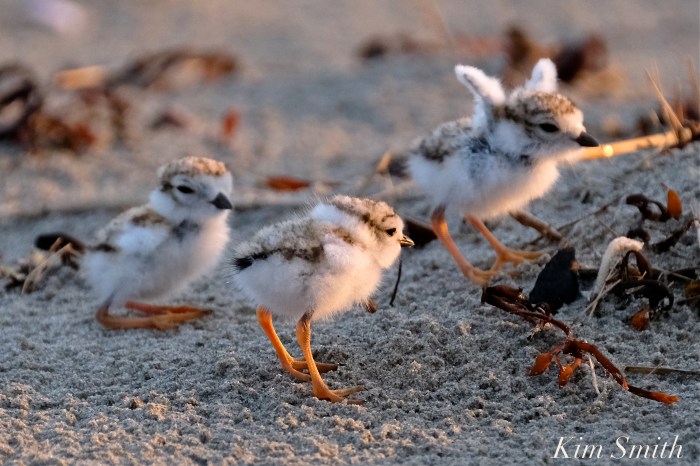
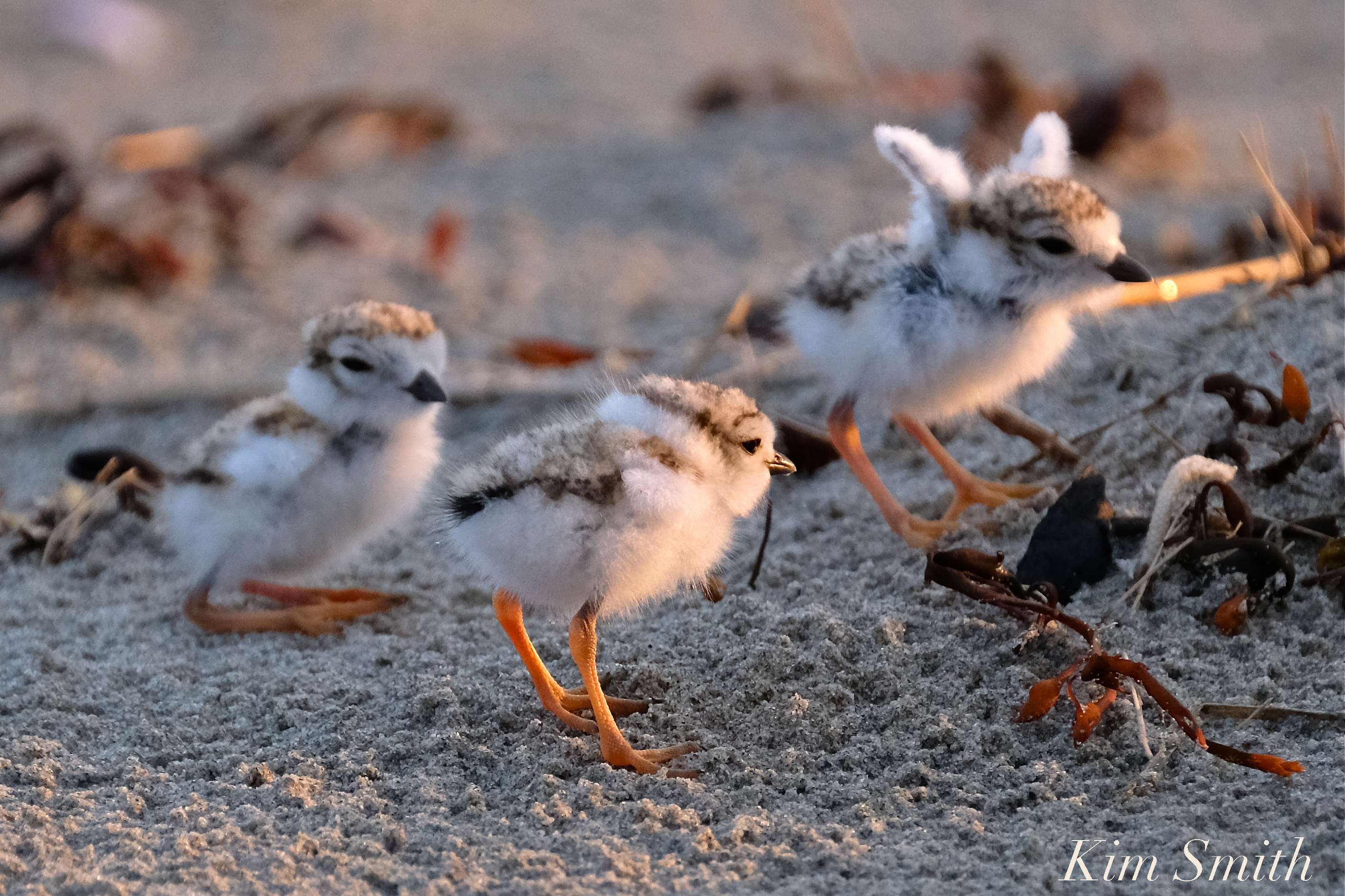
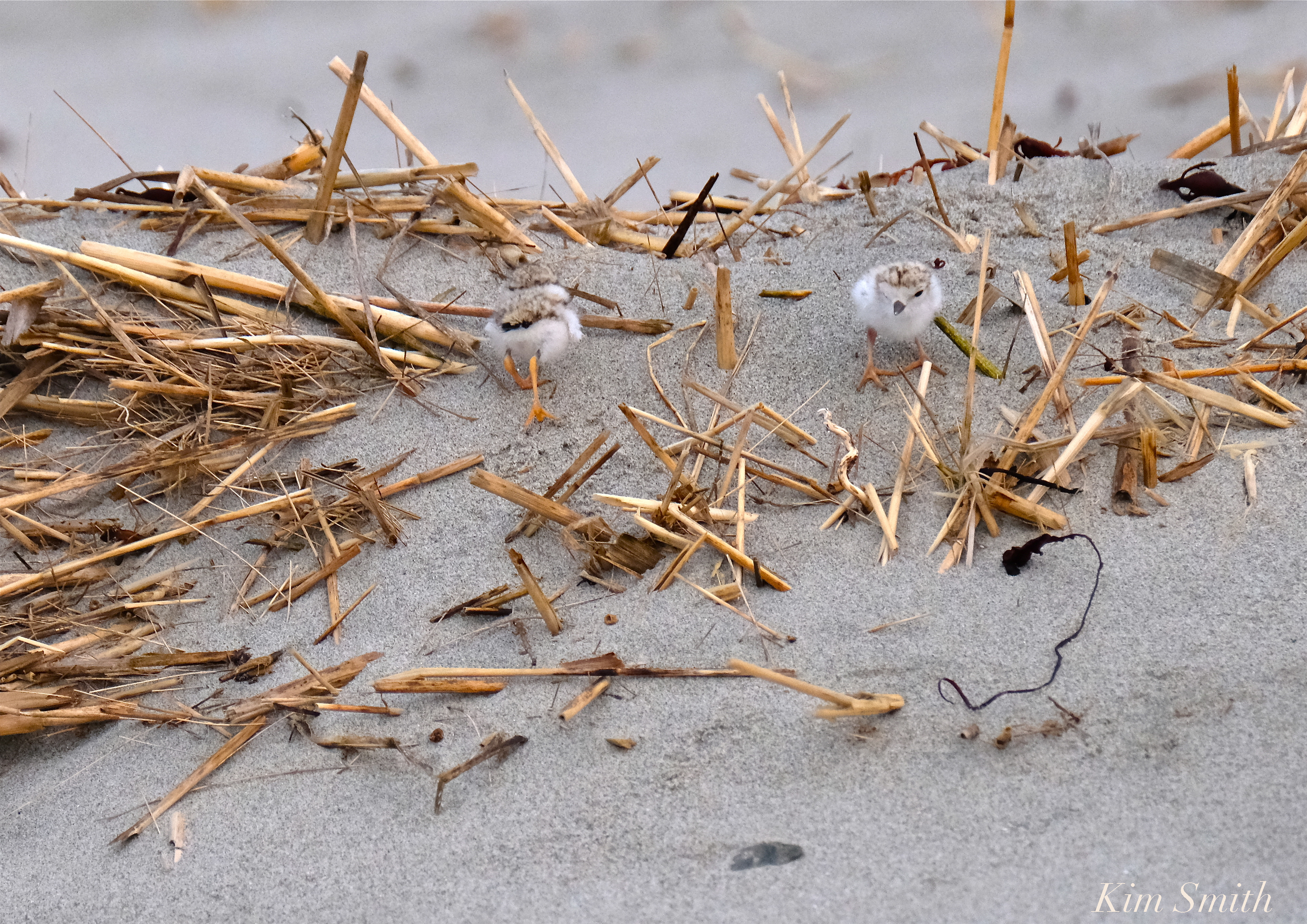
Only hours-old, our Good Harbor Beach Piping Plover chicks were learning to navigate the varied terrain–climbing mini hummocks, falling into divots, somersaulting, tripping over dried bits of beach grass and seaweed, running for short bits, and just generally stumbling and tumbling. In one photo you can even see a chick already eating a tiny ant. After an afternoon of exploring, all four seemed pretty tuckered out and were taking turns snuggling under both Mama and Papa. 

Weighing about as much as a nickel at the time of hatching, Piping Plover chicks are able to feed themselves but are unable to regulate their body temperature. They need to tuck under Mom and Dad to warm up.

A-D-O-R-A-B-L-E HOURS OLD PIPING PLOVER CHICKS!

These sweet Piping Plover chicks are only hours old. All four are healthy, vigorous, and already feeding themselves and stretching their wing buds. They sure were giving their Mom and Dad reason to panic as they ran hither and thither, not yet understanding the adults piping voice commands. A dog ran through the nesting area and a pair of Crows added to the parent’s stress. After both parents briefly left the chicks to distract the dog and give chase to the Crows, calmness was restored and three snuggled under Mom while the fourth kept dad on the run.

*Note–I have been following and filming half a dozen PiPl nests around the state and just to be clear in case of any confusion, these are not our Good Harbor Beach PiPls 🙂


There have been quite a few PiPl chicks hatching around New England beaches. The cool, overcast weather will benefit the hatchlings tremendously. The beaches are relatively quieter, with fewer people, dogs, and trash that attracts avian predators, which will help allow the babies to reach that critical one week old age.

Finding insects in the wrack zone

Tiny wing buds

Adorableness

PIPING PLOVER WEEKLY UPDATE – ONE-DAY-OLD CHICKS AND NESTING AROUND MASSACHUSETTS!

One-day-old chicks foraging at the shoreline on a foggy Memorial Day Monday

It was a beautiful Memorial Day weekend in more ways than one. Piping Plover chicks have been hatching all around Massachusetts this past week and I was fortunate to observe two nests with a total of six one-day-old chicks zooming around beaches. We’re so blessed that our Good Harbor Beach pair are also on a relatively early track, which greatly increases the chicks chance of surviving.

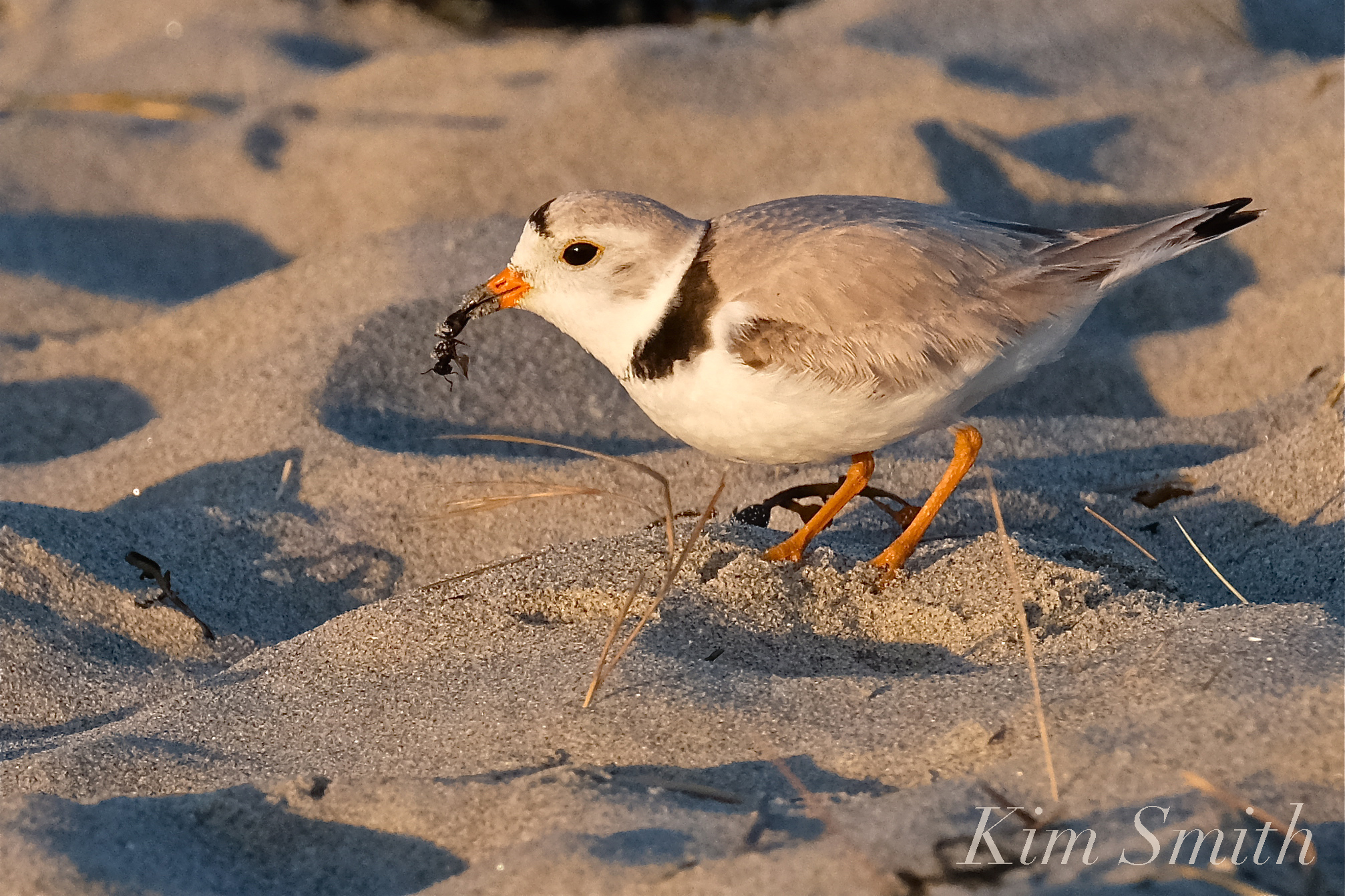
Mama and Papa spent the weekend on the crowded beach incubating their eggs and foraging. Ironically, I think they benefitted from beach goers picnics (minus the gulls and crows). Papa spent a busy Monday morning pecking at the sand and devouring mouthfuls of large tasty black ants.

Anteater

Many more hatchlings to come!