It’s a little too cold and a little too early in the season for the Alewife to run, yet despite today’s 44 degree temperature, Gloucester’s new shellfish warden Tammy Cominelli shares that nine were counted from the Little River’s brand new counting station on Saturday!
Today marked the official opening of the station with Mayor Sefatia and members of SumCo eco contractors, NOAA, and the Mass Division of Marine Fisheries in attendance.
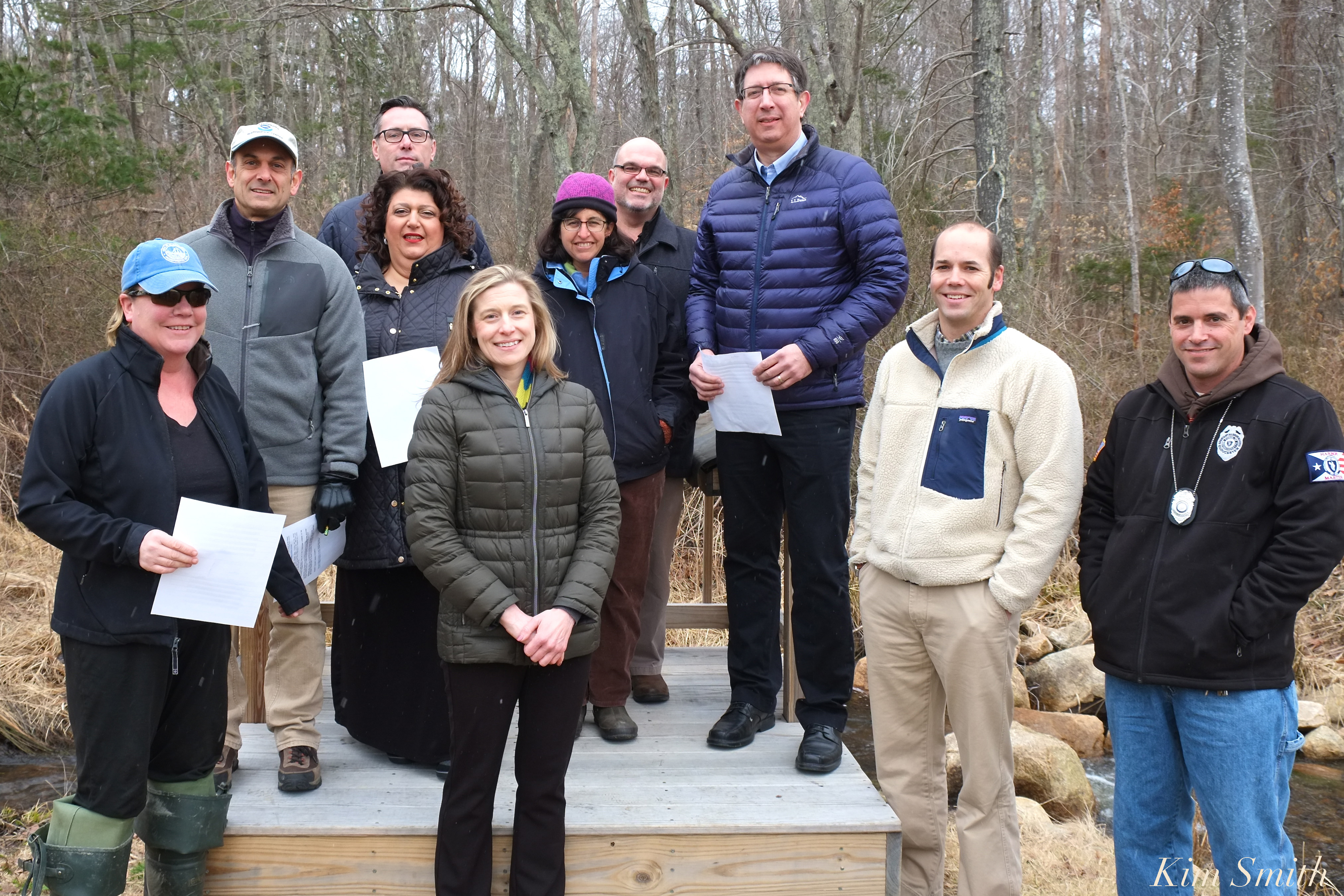 Tammy Cominelli (Gloucester Shellfish Warden), John Catena (NOAA Fisheries Restoration Center), Mayor Sefatia Romeo Theken, Anna Macan (NOAA Fisheries Communications), Jen Goebel (NOAA Fisheries Communcations), Max Schenk (City of Gloucester Health Department), Michael Pentony (NOAA Fisheries – Greater Atlantic Regional Administrator), and Travis Sumner (SumCo co-founder).
* Unfortunately, I did not get everyone’s name. Please let me know if you know the names of the gentleman in the far back row and the gentleman to the far right. Thank you!
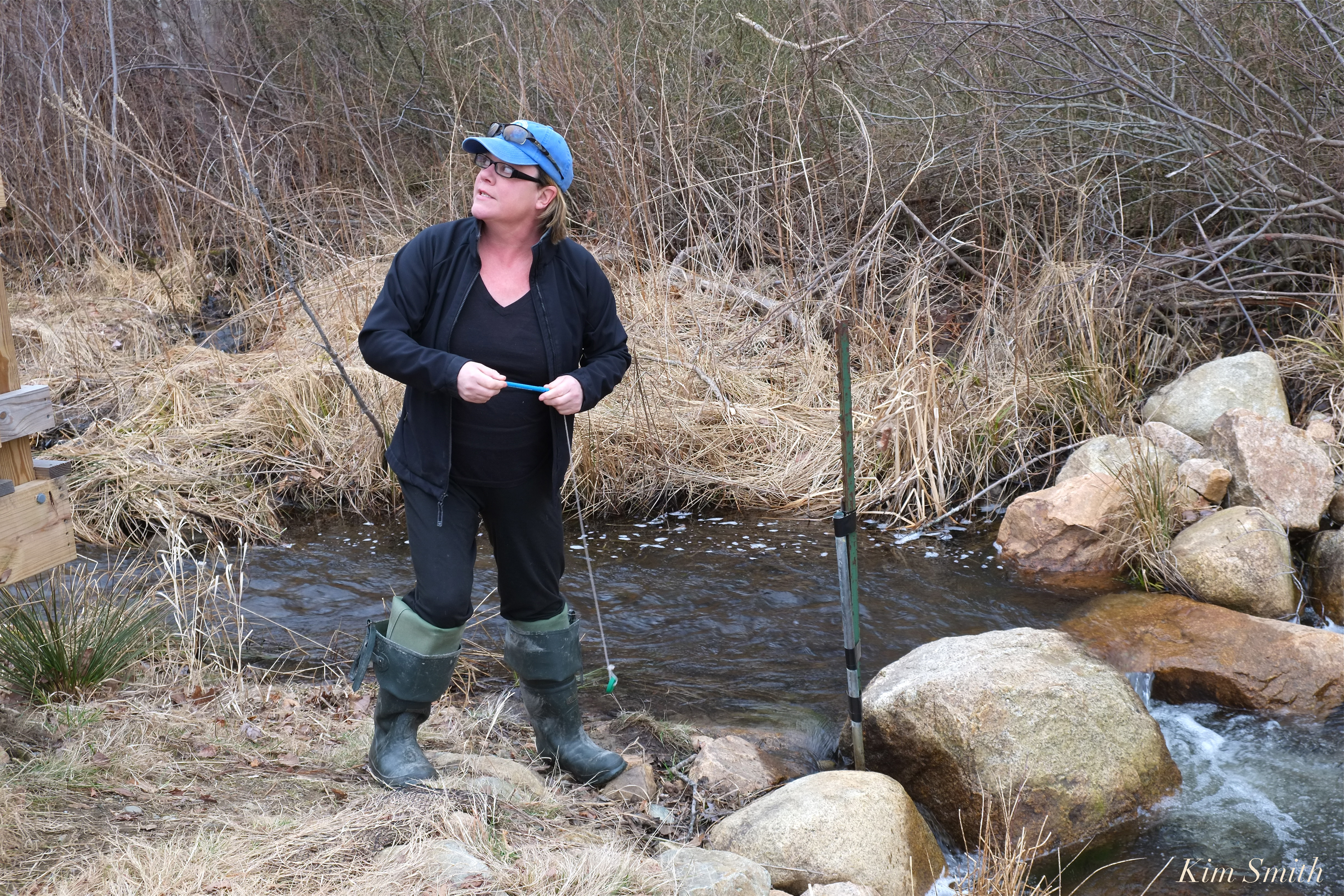 Tammy Cominelli, Gloucester’s new Shellfish Warden, checking the water temperature.
* * *
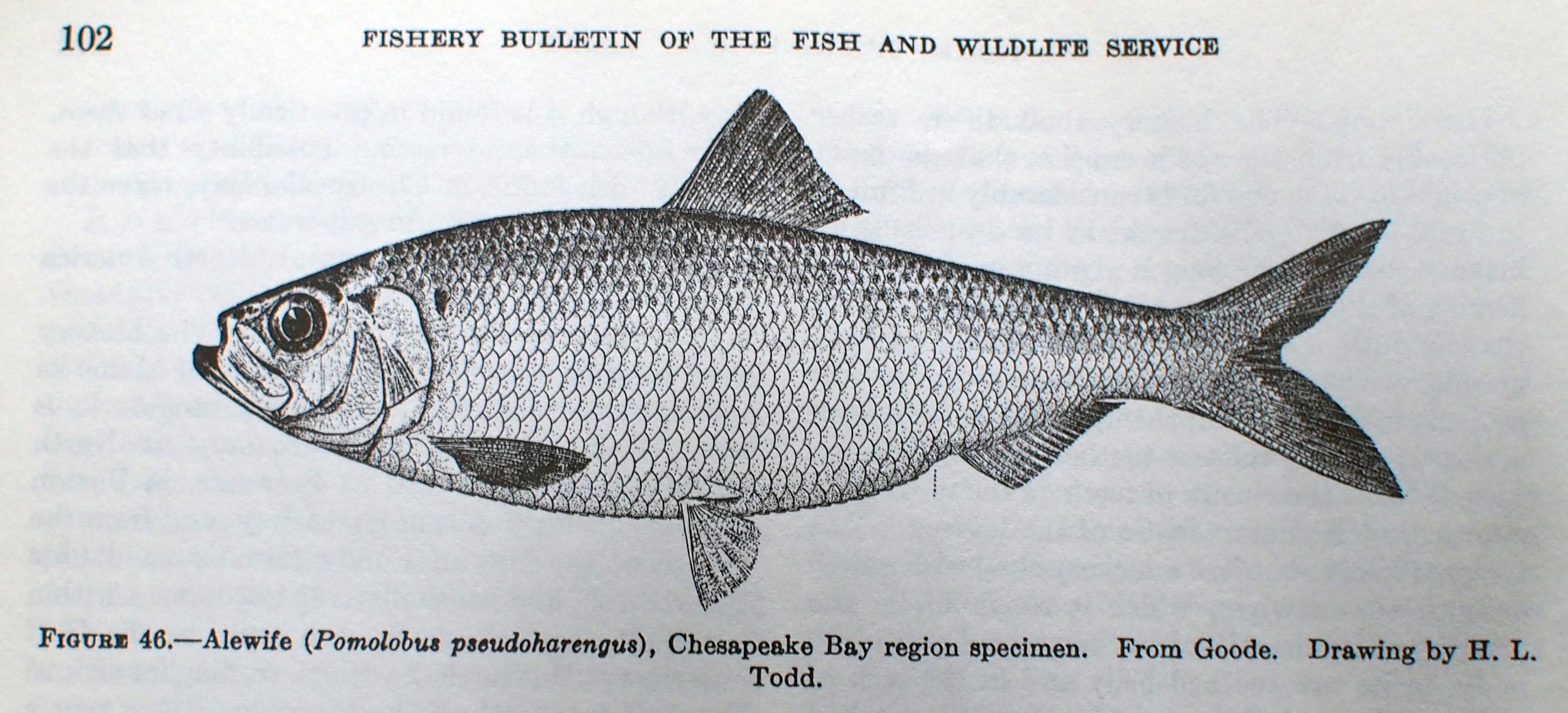
In Massachusetts, the Alewife run between late March through May (when the water temperature is 51 degrees) and Blueback Herring run from late April through June (57 degrees); both species use the Little River to spawn at the freshwater Lily Pond.
The river herring begin their spring journey by swimming from the Atlantic Ocean, traveling through the Little River brackish, marshy basin.
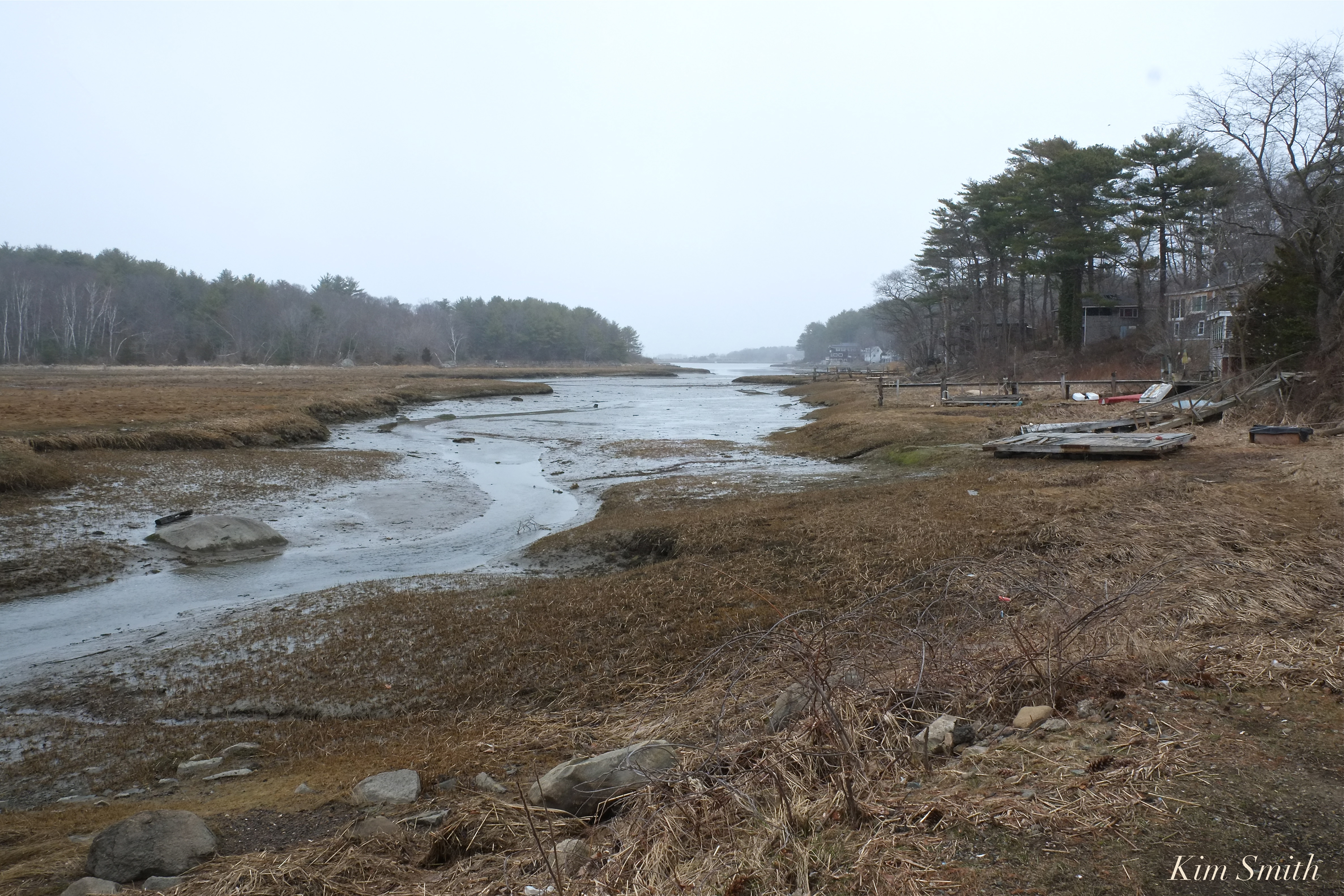 Little River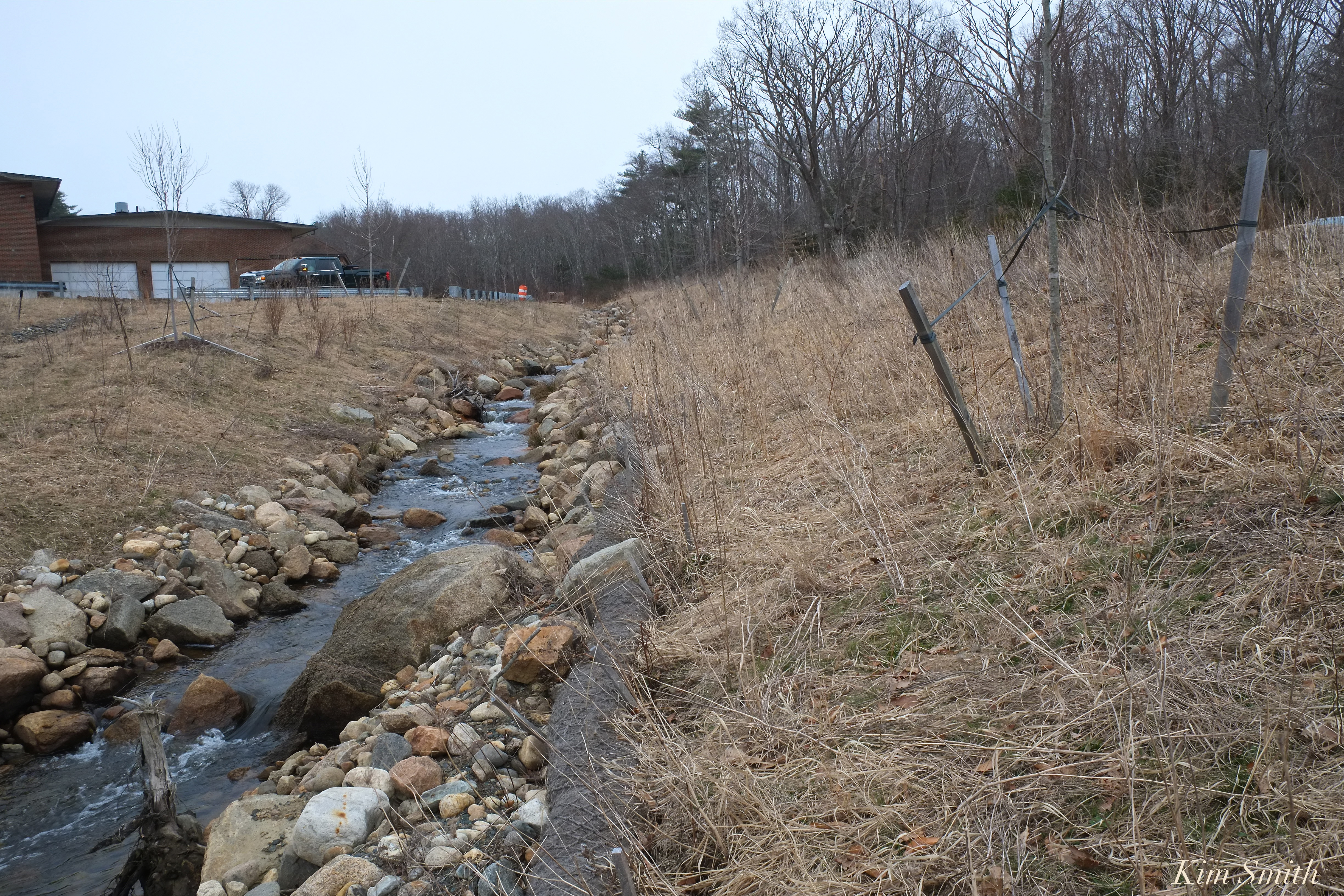
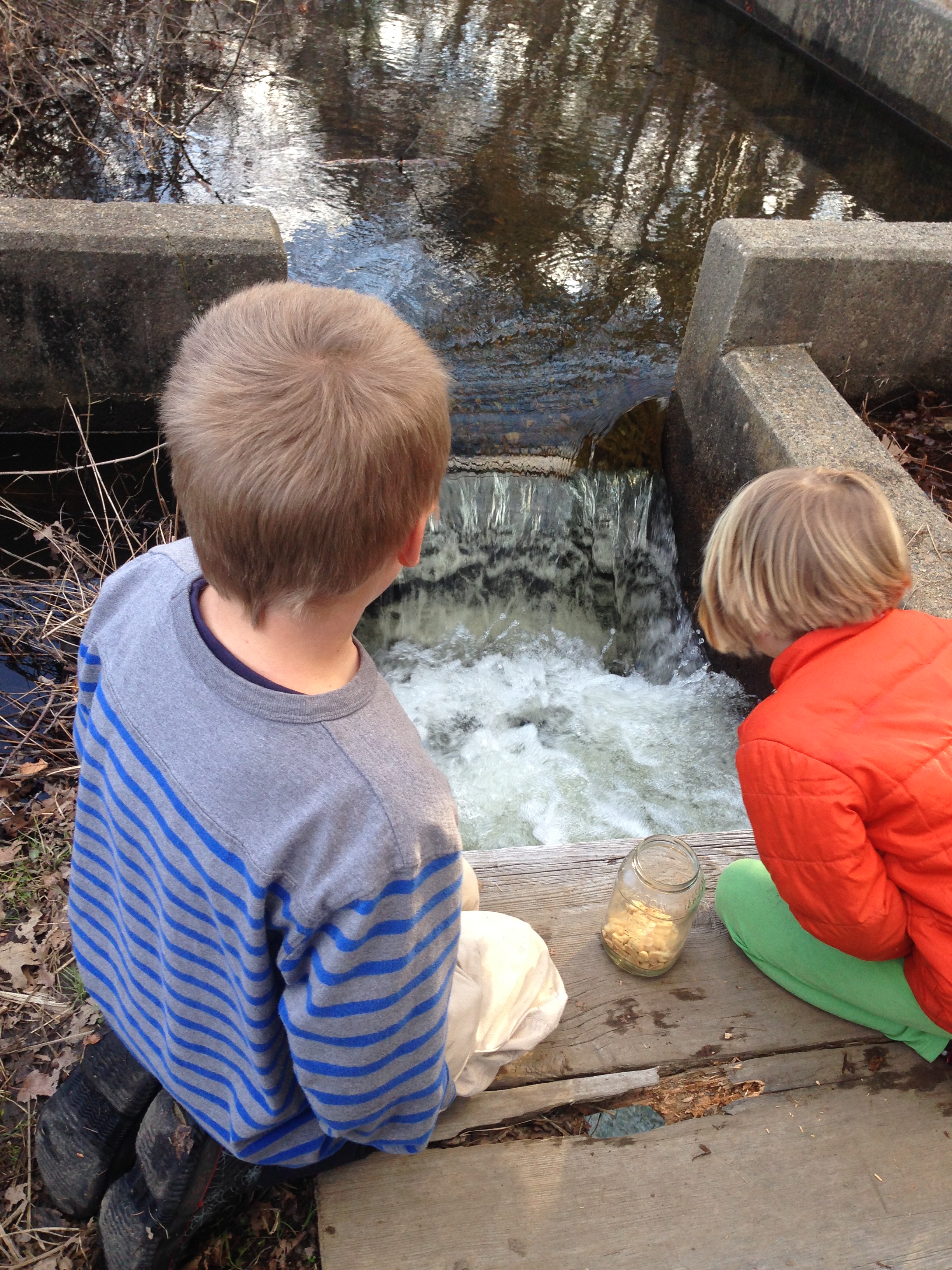
River herring travel upstream to the little pool just below the Lily Pond, where they then swim up the new ladder, called an Alaskan sea pass, to spawn.
https://www.instagram.com/p/BhEmfEFF2Dj/
Here the adults will stay for about three to six weeks. Unlike salmon, which spawn and die, river herring that survive spawning take the return trip back to the sea.
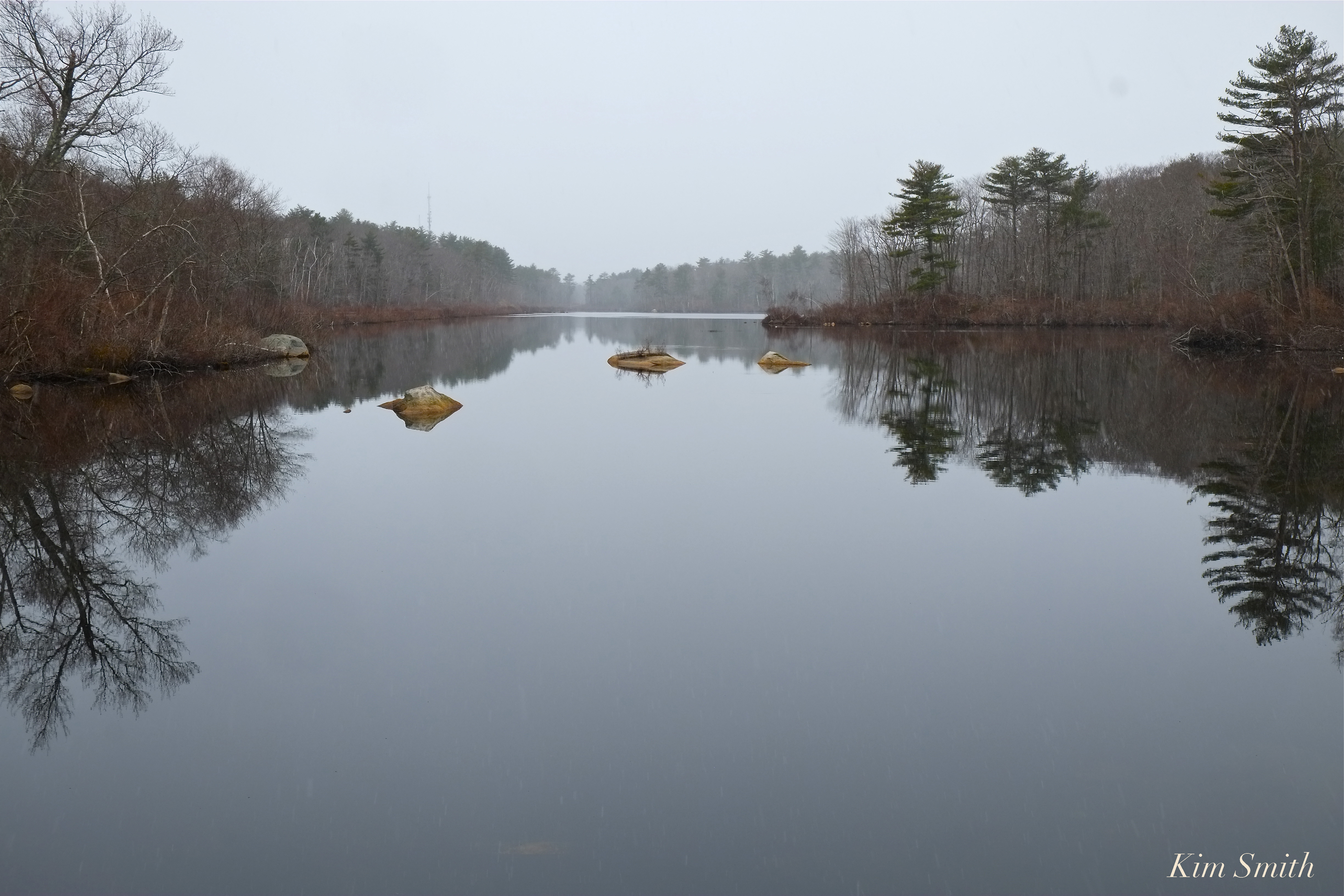
Lily Pond snowy spring day
After the baby herring hatch, they live at the Lily Pond anywhere from one to three months. Once they have grown large enough, the young herring begin their journey to the Atlantic Ocean, first migrating down to the Little River basin, which is a mixture of both fresh and sea water, and then slowly out to the open sea to join large schools of Alewife and Blueback Herring.
River herring return to their home river to spawn once they become adults, in three to five years.
https://www.instagram.com/p/BhE62w2Fx39/





 Good Morning Gloucester