At The Cut. I was so excited to see Chris + Joe and Chelsea Berry on Saturday night at The Cut. Unbelievably, my very first time at The Cut was just two weeks ago. If you haven’t checked it out, you really should. My first impression, upon walking in to the back of the main room is that I felt like I was in one of the many bars in Nashville that I love to spend time in. The music venue itself is also really cool. While we sat at a table in the front row for Chris + Joe, I chose to mingle a bit near the bar during Chelsea’s show. Here’s a shot from side stage.
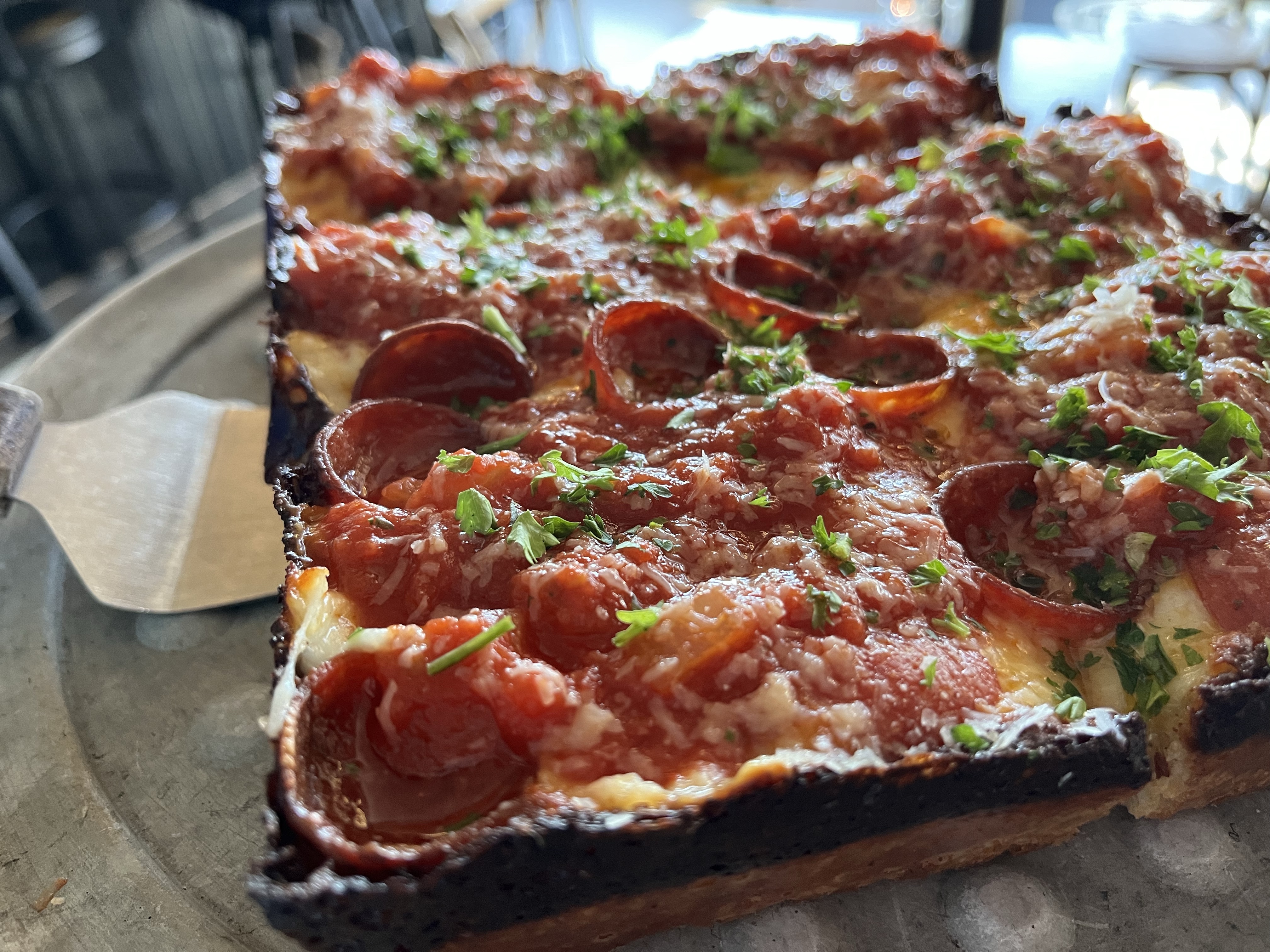
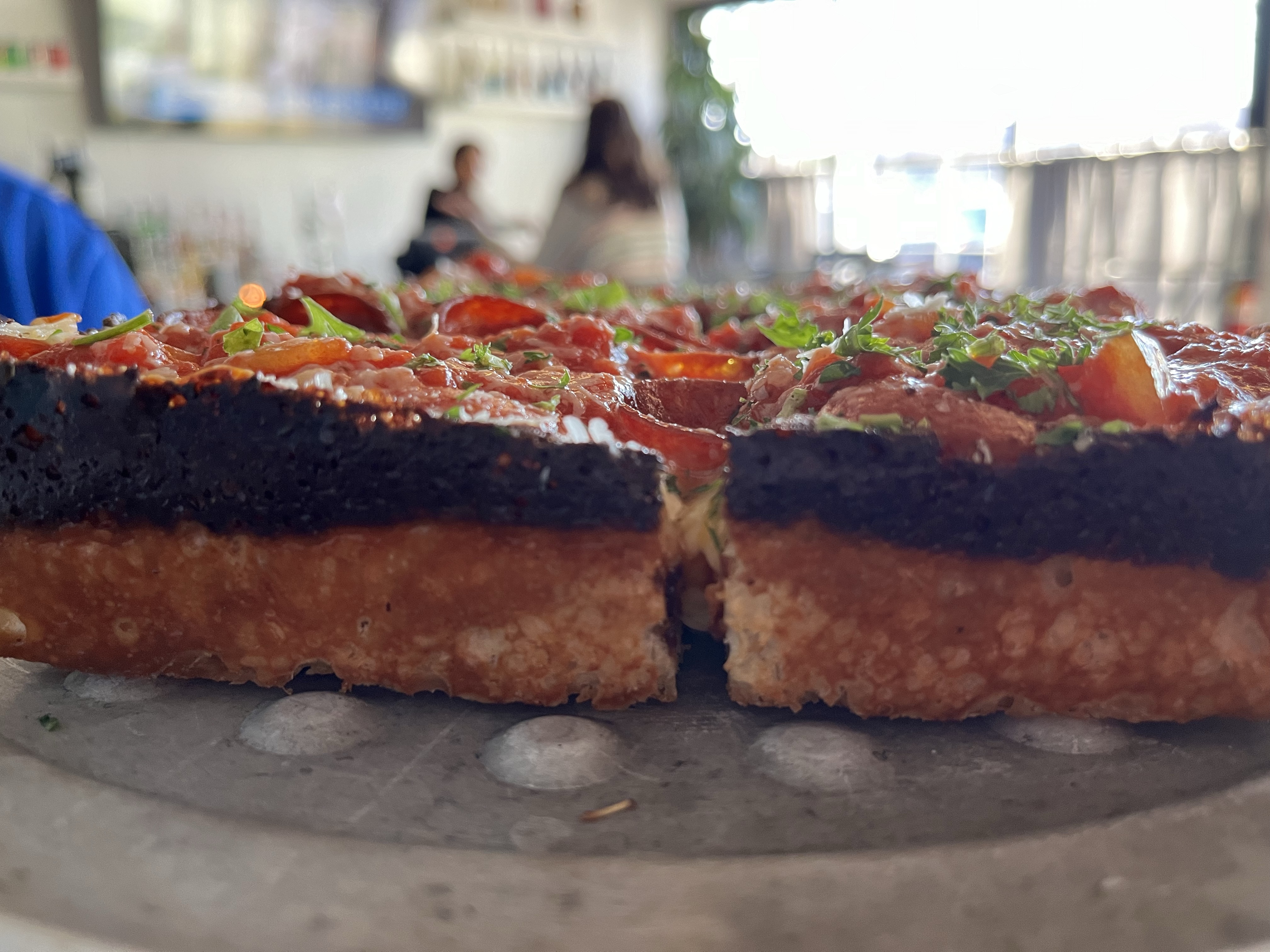
Mondays are made for Detroit style pizza at Bravo by the Sea in Manchester. We ordered ahead by phone and ate it there in the dining area. Win Win. That “Great Wall of Cheese” is everything it’s cracked up to be. This is DELICIOUS pizza. And today’s Monday……so….
Spread The GMG Love By Sharing With These Buttons:
Join us on a captivating journey through history as we explore the profound connections between art, innovation, and the human imagination. Delve into the fascinating intersection of artistic expression and community dynamics, from the medieval world to the present day. Discover how art has shaped our collective identity and inspired generations to push the boundaries of creativity. Don’t miss this enriching series that celebrates the power of imagination to transform the world around us. Join the conversation and be inspired! The series includes:
Television is one of the most ubiquitous technologies in human history, so much so that we tend to take it for granted. However, the story of TV is a winding tale of decades of painstaking research, false starts, technological dead ends and breakthroughs, commercial failures and successes, aspirational ideals, and human drama. The full picture of TV is composed of a mosaic of individual scientists, engineers, and industrialists who helped to bring it to life, including our founder, John Hays Hammond Jr., whose contributions to the medium are often overlooked. “Who invented television?” is not a simple question. Through this presentation, the complex evolution of television will be traced, the pioneers who forged its path will be given their due, and in particular, the significance of Hammond’s work will be revealed.
The form and function of the painted image changed drastically during the 15th-century Italian Renaissance. From the late medieval paintings of Giotto to works of Renaissance painters like Botticelli and da Vinci, one feels as though stepping from an old world into a new one. What were the sources of this transformation of image and world? How was this transformation related to other cultural shifts such as the rise of humanism, a burgeoning secular society, and the scientific revolution? This presentation examines the religious, philosophical, and scientific backgrounds to the changes of the image in Italian Renaissance painting, in particular the development of linear perspective techniques, and connects this visual revolution in painting to its accompanying spiritual, cultural, and scientific revolutions.
Beliefs and fears surrounding witches and the Devil were rampant in the sixteenth and seventeenth centuries. Laws against witchcraft were in place as early as 1542 in England. The resulting witch trials were published in witchcraft pamphlets written for the public to consume. While the church advised the people to trust in the power of God, many people took defense against witches into their own hands. Specific items concealed in walls or specific markings carved into fireplaces were believed to keep the Devil and his agents away. When the British came to colonize America, these practices came with them and can be found in many local historic homes even today.
On July 7, 1956, the librettist John Treville Latouche’s seminal American Opera The Ballad of Baby Doe premiered in Central City, Colorado. “It’s about love and It’s about money,” Latouche had joked, in predicting the public’s response to the Opera, “And there’s no combination an American audience likes more!” Today, The Ballad of Baby Doe is often cited as one of the most significant Operas in the American canon, but Latouche would never know just how right he had been. One month later, John Latouche was dead. He was 41. Over the course of his short years, Latouche lived a remarkably dynamic life; like a brilliant star, he pulled some of the most important artistic figures of 20th-century American culture into his brief orbit. The story of the community which Latouche anchored is one that features well-known characters such as composer Leonard Bernstein and artist Marcel Duchamp and local figures like Margarett McKean and Hammond Castle Museum’s own John Hays Hammond Jr.In fact, through Latouche’s legacy, a curious assembly of artists, poets, and occultists, many of them Queer, came to assemble at Hammond Castle Museum in its founder’s final years. This is a story about the life of John Latouche, but it is also a story about love. About money. About art. About magick. About false accusations of murder, and more. This lecture, the final in Hammond Castle Museum’s May Series on Art & Community Through the Ages, will also serve as an introduction to Hammond Castle Museum’s June Pride Month programming.
Admission: $15 per presentation / $50 for series. Member savings apply.
We came across a fox feasting on the beach rocks in the vicinity of Black Beach recently. the photo id suggests this might be a red fox, though it appears to have seen better days. When done foraging, it hopped onto the road and trotted close enough to us to make me prepare to get back in the car. But then it hopped back over to the beach and continued trotting along the beachfront. It seemed to be oblivious of the traffic going by so perhaps it’s become used to populated areas.
Spread The GMG Love By Sharing With These Buttons:






























 Good Morning Gloucester