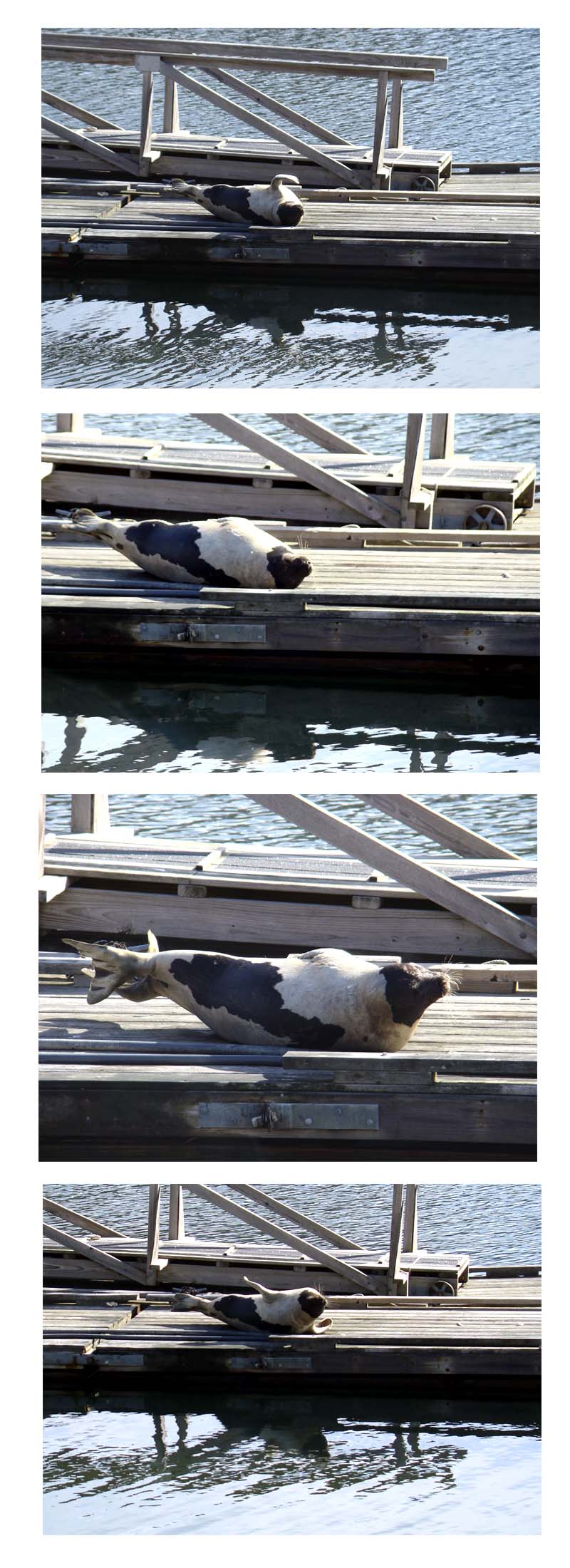
Did You Know (Harp Seal)

Photos by E.J. Lefavour

That Harp seals spend relatively little time on land and prefer to swim in the North Atlantic and Arctic Oceans? These sleek swimmers cruise the chilly waters and feed on fish and crustaceans. They can remain submerged for up to 15 minutes. Harp seals are sometimes called saddleback seals because of the dark, saddlelike marking on the back and sides of their light yellow or gray bodies.

Both sexes return each year to breeding grounds in Newfoundland, the Greenland Sea, and the White Sea. On this turf males fight for their mates, battling with sharp teeth and powerful flippers.

When the mating ends, females gather in groups to give birth. Young harp seals are born on the ice, and mothers identify their own offspring from the multitudes by their smell. The young seals are famous for their snowy white coats. This fluffy fur is highly valued and has drawn hunters to the Newfoundland breeding grounds for two centuries. During the past several decades these grounds have become the scene of a human conflict between sealers and outraged environmentalists and animal rights activists. Modern hunts are better regulated than in the past, but the harp seal remains perhaps the most commercially important seal, with hundreds of thousands killed each year. (From National Geographic)

This harp seal seemed to have no interest in the cold water and appeared to be enjoying his/her sunbath on the dock, and was also really into posing for the camera.  In the first shot, he’s giving a big smike and wave to everyone out there in GMG land.  Maybe he’ll stick around Cape Ann where he’ll be safer. 

My grandfather grew up in Newfoundland near Piss Pot Rock (really, that was what it was called), and was a sealer when he was a young man.  (There, that dark secret from my mother’s family history is out of the closet).  He went on to become a longshoreman after he immigrated here, and stopped killing poor defenseless creatures.  After falling into the hold of a ship and breaking himself up, he became a fry cook at his sister and brother-in-law’s awesome restaurant, Wes Parker’s Fried Clams in Wakefield; closed after everyone died off or got too old, but they did have the best fried clams.  Anyone remember them?

E.J. Lefavour

www.khanstudiointernational.com

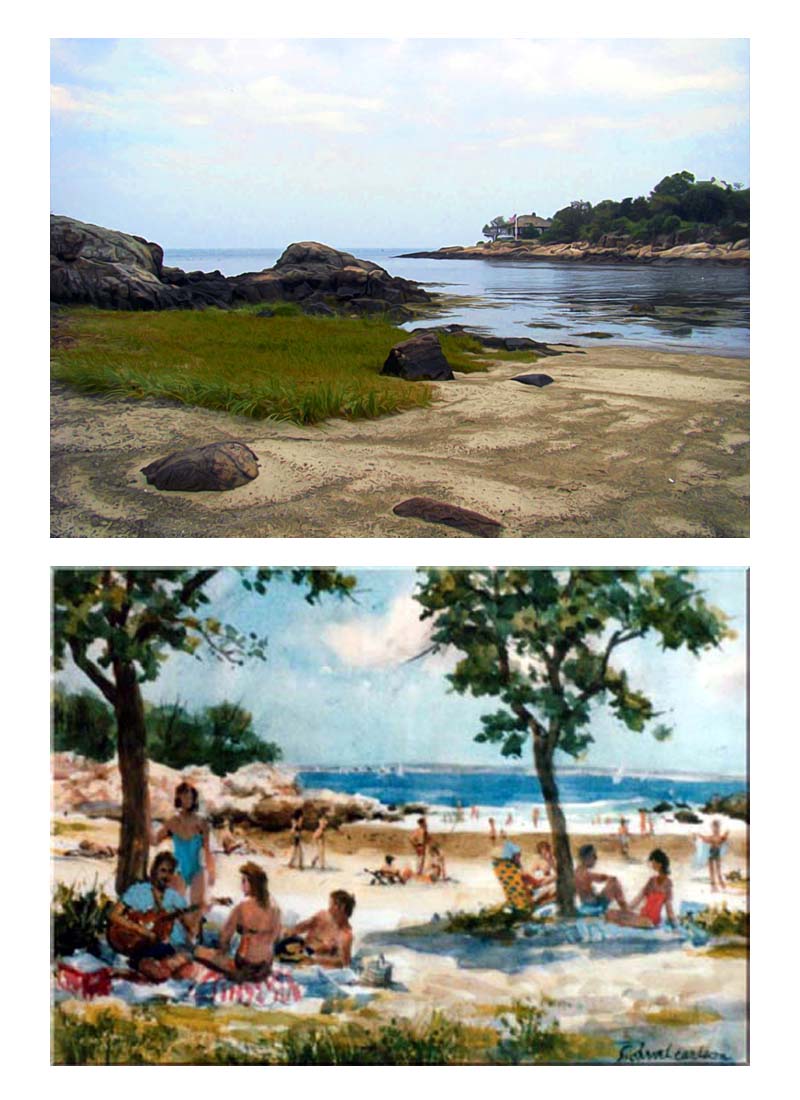
Did You Know (Plum Cove Beach and Sven Ohrvel Carlson)

Fall Plum Cove Beach Photo and Summer Painting by Sven Ohrvel Carlson

That this tiny peaceful beach with its beautiful panoramic view, is located on Washington Street in the Lanesville section of Gloucester? The waters are calm and perfect for small children. Parking is limited and requires a Beach Sticker. From a diver’s perspective – Plum Cove is often diveable when many other sites are weathered out. Depth ranges from 10 to 20 feet and there is a small reef outside the cove just off the right point (facing the ocean).

This is late fall photo of Plum Cove Beach, together with a lovely summer watercolor painting titled Plum Cove Beach by Sven Ohrvel Carlson (1911-2006).  Mr. Carlson, who was also a sculptor, a professional jazz and classical violinist who played with the Cape Ann Symphony, a composer, and a poet.  He died on August 22, 2006 of prostate cancer at Addison Gilbert Hospital in Gloucester.  He was 95. 

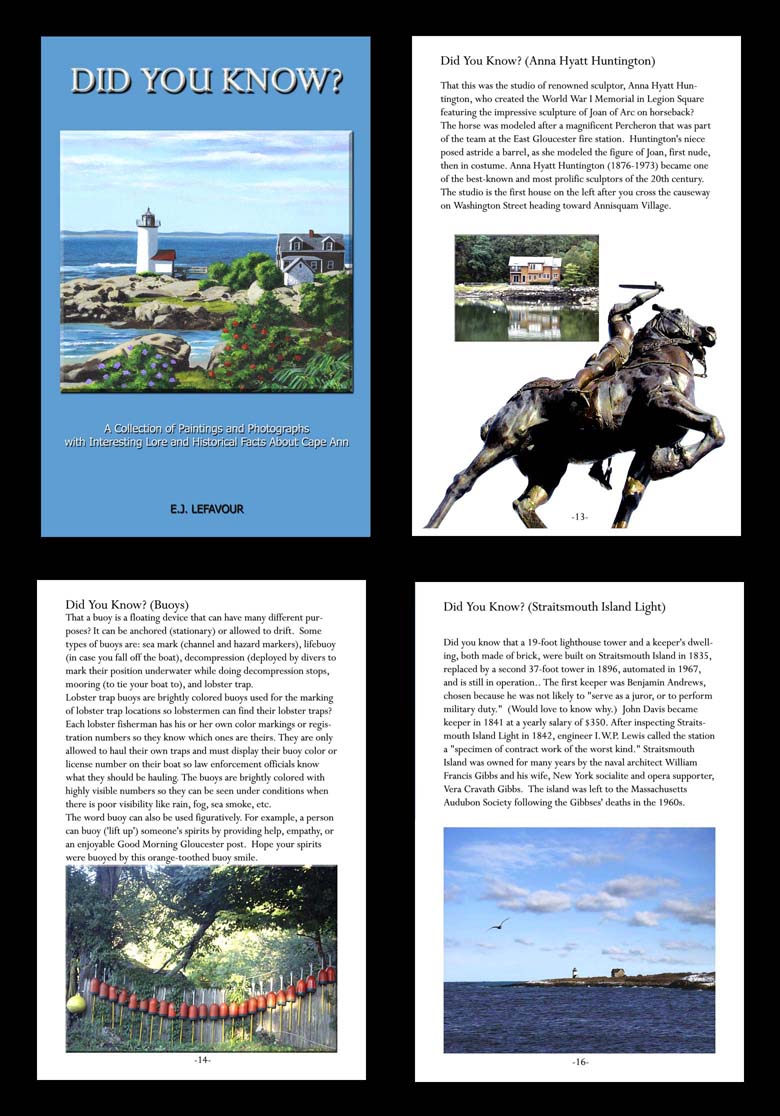
Did You Know? (The Book)

That I am interested in people’s thoughts about a Did You Know book?  Admired and respected fellow GMG contributor, Manny Simoes, has been encouraging me to do a book of my Did You Know posts; so I have put together the design, and am interested in knowing what GMG readers and other contributors think about it, before I go to the expense of having it printed.  It would be a 5.5×8.5 full color bound soft cover book containing 39 of my (and hopefully other people’s) favorite GMG posts and images (photos and paintings), and based on printing costs would sell for $20.  The cover and a couple of example pages are shown here.  I respect the opinions and feedback of the greater GMG universe, so would like to know if people think it’s a silly idea, or if you think it looks like something you might buy or think others would buy.  Artists always have to be innovative, coming up with new ways to pay the bills so they can continue creating while waiting for those wealthy patrons to come along and discover them, and none of us can afford to make expensive mistakes, so your input would be greatly appreciated.  If you would like to see the book in its entirety, you can go to http://www.khanstudiointernational.com/did%20you%20know%20book.htm. Thanks so much, EJ

E.J. Lefavour

www.khanstudiointernational.com
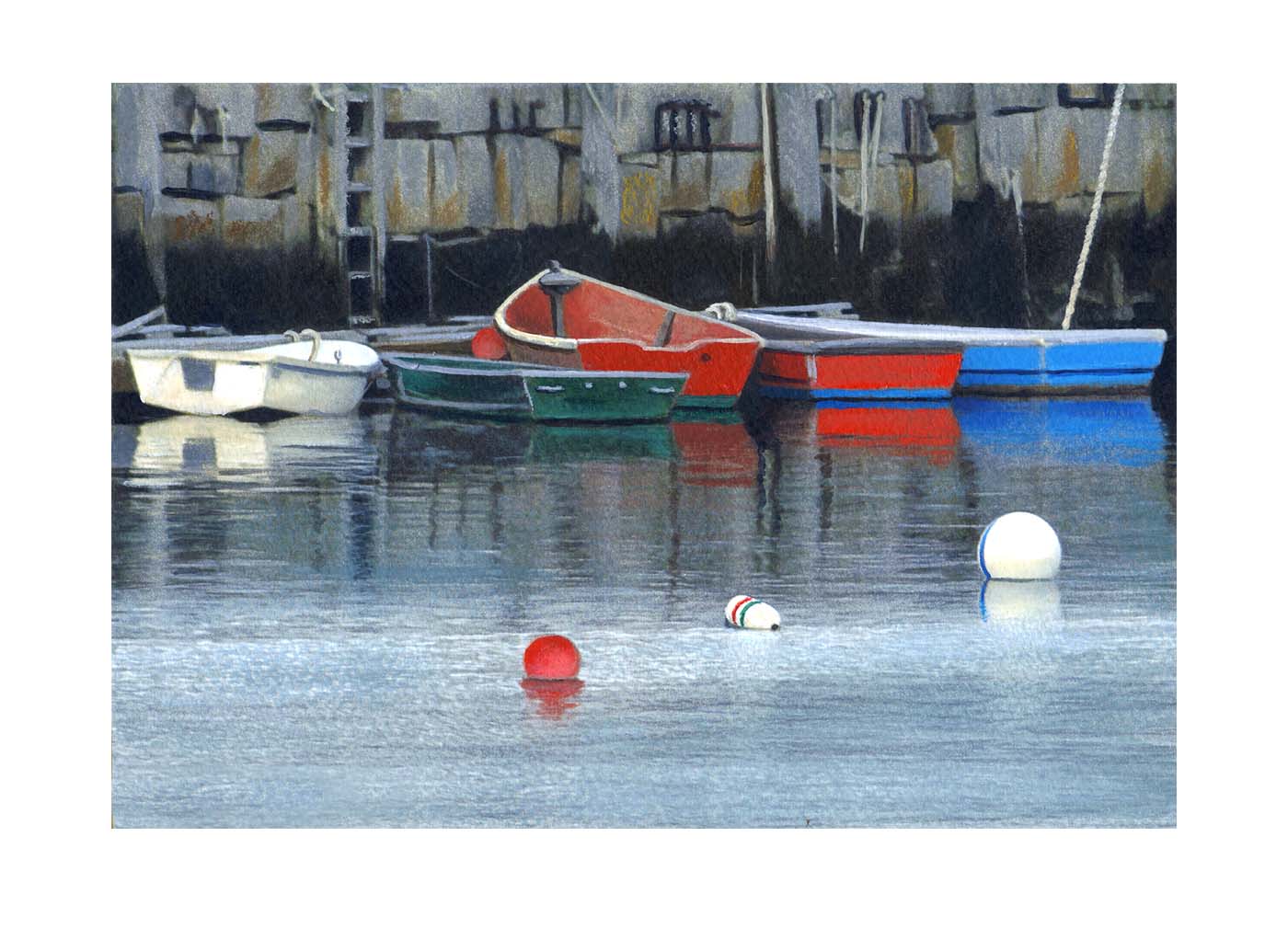
Did You Know (Rockport Harbor)


Before the coming of the English explorers and colonists, Cape Ann was home to a number of Native American villages, inhabited by members of the Agawam tribe. Samuel de Champlain named the peninsula “Cap Aux Isles” in 1605, and his expedition may have landed there briefly. By the time the first Europeans founded a permanent settlement at Gloucester in 1623, most of the Agawams had been killed by diseases caught from early contacts with Europeans.

The area that is now Rockport was simply an uninhabited part of Gloucester for more than 100 years, and was primarily used as a source of timber—especially pine for shipbuilding. The area around Cape Ann was also one of the best fishing grounds in New England, in 1743 a dock was built at Rockport harbor on Sandy Bay and was used for both timber and fishing. By the beginning of the 19th century, the first granite quarries were developed, and by the 1830s, Rockport granite was being shipped to cities and towns throughout the East Coast of the United States.

Rockport had consisted primarily of large estates, summer homes, and a small fishing village while Gloucester was becoming increasingly urbanized. Rockport was set off as a separate town in 1840 as its residents desired a separate enclave with an identity of its own. As the demand for its high-grade granite grew during the Industrial Revolution, the quarries of Rockport became a major source of the stone. A distinctive form of sloop was even developed to transport the granite to parts far and wide until the second decade of the 20th century. For many years, there were a large number of residents of Scandinavian descent, dating from the days when Finns and Swedes with stoneworking expertise made up a large part of the workforce at the quarries.

Although the demand for granite decreased with the increasing use of concrete in construction during the Great Depression, Rockport still thrived as an artists colony—which began years earlier due to its rocky, boulder-strewn ocean beaches, its quaint fishing shacks, a harbor filled with small, colorful fishing boats, and Motif #1. 

E.J. Lefavour

www.khanstudiointernational.com

Did You Know (Babson College)

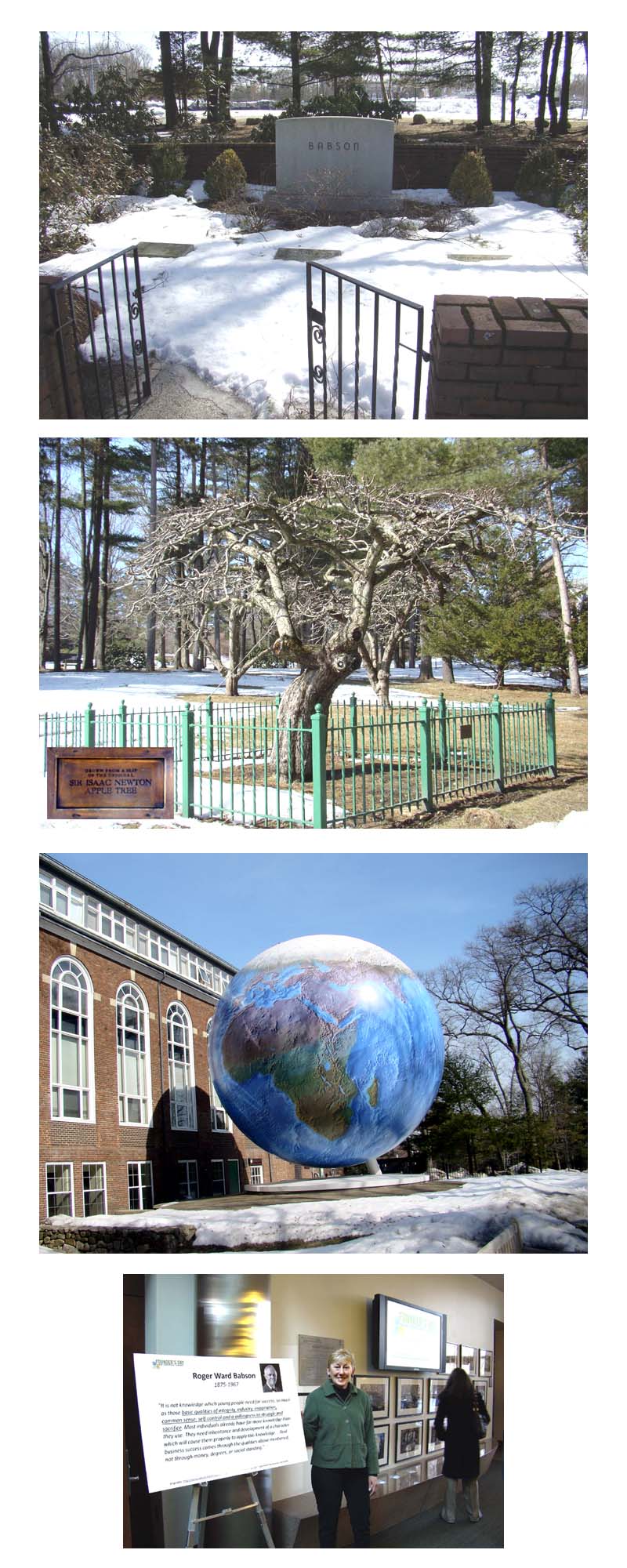
Roger Babson gravesite, Sir Isaac Newton apple tree, Babson Globe
Photos by E.J. Lefavour

That Gloucester’s Roger Ward Babson is buried at Babson College between his two wives (Grace Knight Babson and Nona Dougherty Babson); and that the second wife, Nona, was his mistress until Grace died and he married her?  The second photo is of a fourth generation apple tree that was grown from a sprig of Sir Isaac Newton’s apple tree – you know the one the apple fell from and allegedly caused Sir Isaac to discover the Universal Law of Gravitation.  Roger Babson had a great fascination with Newton and in 1937, his wife, Grace, purchased for Babson College, the original pine-paneled walls and carved mantel from the parlour of Isaac Newton’s house on St. Martin’s Street, Leicester Square, London, where he lived from 1710-1725.  The Grace K. Babson Collection of Newtonia includes a library of over 1,000 volumes of English and foreign language editions of Newton’s works (many of which are autographed and annotated in Newton’s hand), manuscripts, engravings, artifacts, and other Newton memorabilia, including a death mask that originally belonged to Thomas Jefferson. The collection is the largest source of Newton materials in the United States.  The third photo is of The Babson World Globe, originally dedicated in 1955, refurbished and rededicated on October 2, 1993, which is one of the world’s largest free standing globes (28 feet in diameter, weighing 25 tons) capable of revolving on its base and spinning on its axis.  The last photo is of me standing next to my exhibit of Babson Boulders Photos at Olin Hall. 

The Babson Boulder photos have created great interest at Babson College.  A number of faculty that I spoke with during the event expressed interest in setting up field trips to bring Babson students to Cape Ann to see the Babson Boulders for themselves.  I gave them Seania McCarthy’s “Walk the Words” site info as a possible tour guide for their field trips.  Babson has a student body of 1,900 and faculty of 50+, not all of whom would take the trips, but it could potentially bring a bunch of new young people and academics to Cape Ann to investigate Roger Babson’s roots and become Cape Ann lovers in the process.  I got these shots and bits of info during my Founder’s Day tour of the campus yesterday. 

E.J. Lefavour

www.khanstudiointernational.com
Did You Know? (Starfish)

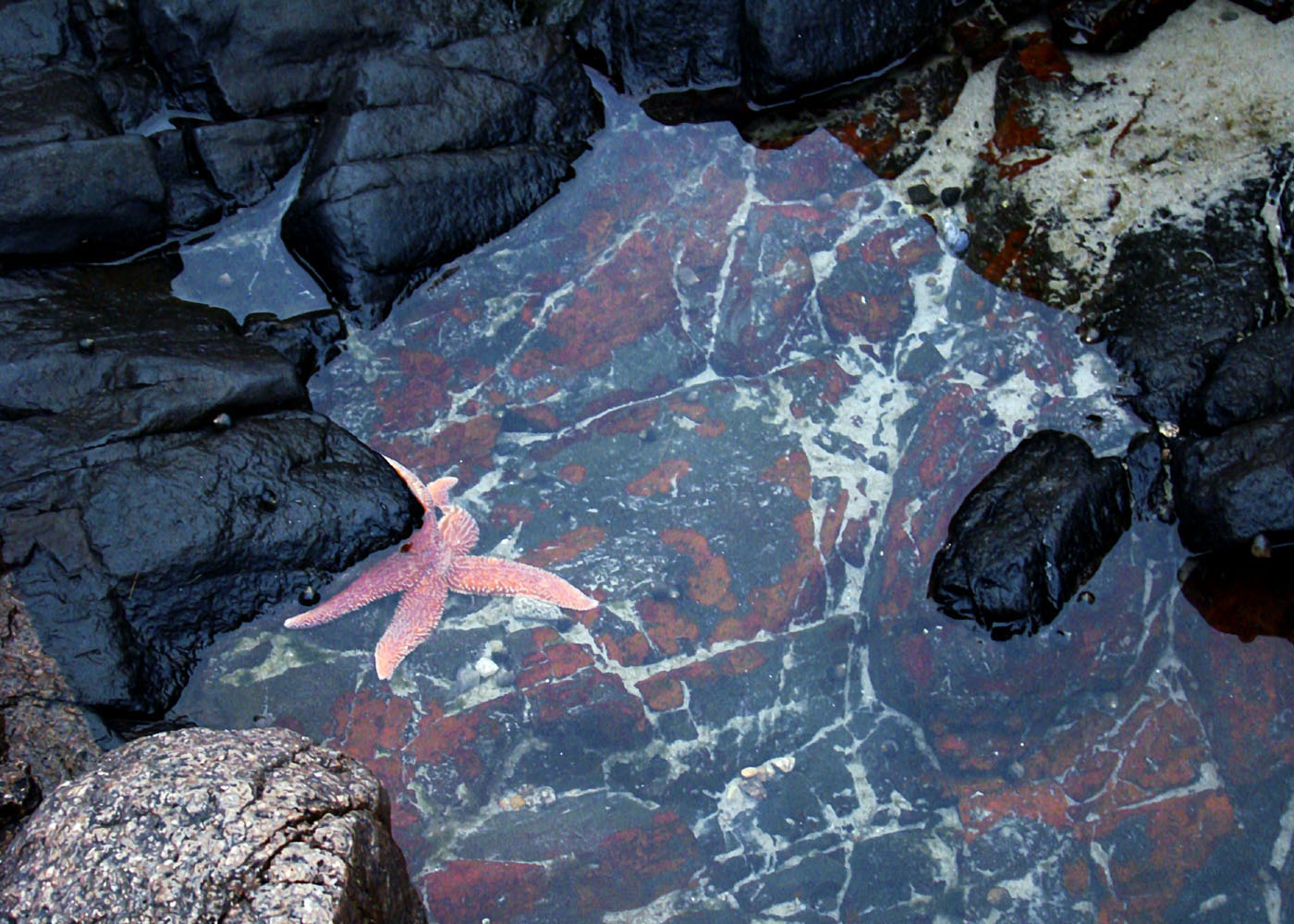
starfish in tidal pool at cambridge beach in annisquam
Photo by E.J. Lefavour

That Starfish or sea stars are echinoderms belonging to the class Asteroidea?  The names “starfish” and “sea star” essentially refer to members of the Class Asteroidea. There are 2,000 living species of starfish that occur in all the world’s oceans, including the Atlantic, Pacific, Indian as well as in the Arctic and the Southern Ocean (i.e., Antarctic) regions. Starfish occur across a broad depth range from the intertidal to abyssal depths (>6000 m).

Starfish are among the most familiar of marine animals and possess a number of widely known traits, such as regeneration and feeding on mussels. Starfish possess a wide diversity of body forms and feeding methods. The extent that Asteroidea can regenerate varies with individual species. Broadly speaking, starfish are opportunistic feeders, with several species having specialized feeding behavior, including suspension feeding and specialized predation on specific prey.

Starfish are capable of both sexual and asexual reproduction. Most species are dioecious, with separate male and female individuals, but some are hermaphrodites. For example, the common species Asterina gibbosa is protandric, with individuals being born male, but later changing into females.

Male and female sea stars are not distinguishable from the outside; one needs to see the gonads or be lucky enough to catch them spawning. Each arm contains two gonads, which release gametes (a cell that fuses with another cell during fertilization) through openings called gonoducts, located on the central body between the arms.  (excerpt from Wikipedia)

As a lifelong avid tidal pool explorer, I love coming across a starfish.  This is the first one I had found since moving to Cape Ann, and it remained in this same spot for a couple of weeks.  I didn’t check for gonads, so don’t know if it is a he or a she, or both.

E.J. Lefavour

www.khanstudiointernational.com

Did You Know (Our Lady of Good Voyage)

Photo by E.J. Lefavour

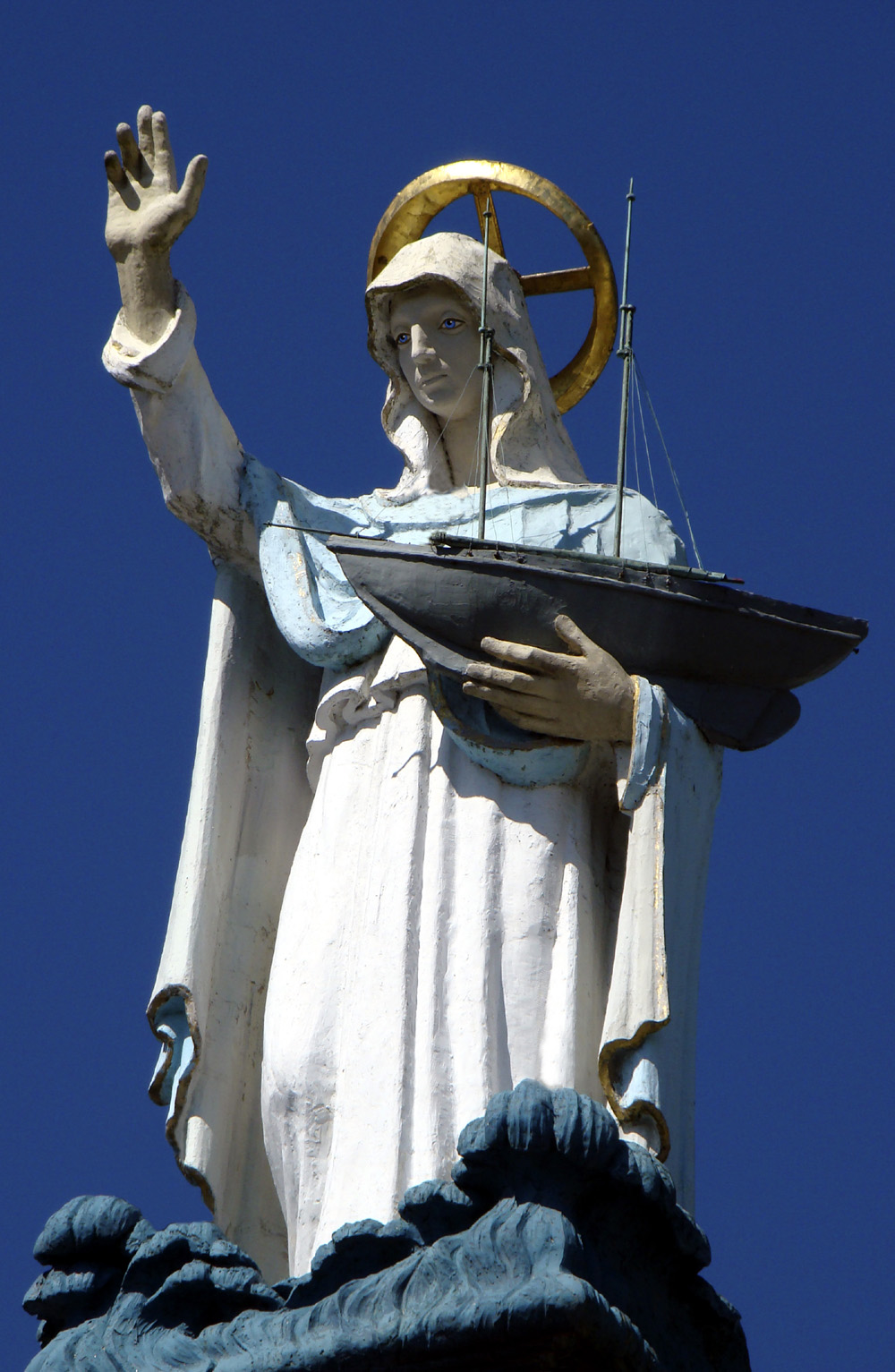
That the original statue of Our Lady of Good Voyage is on exhibit at the Cape Ann Museum? Originally dedicated in 1893, Our Lady of Good Voyage was built for the Portuguese community in Gloucester, after they petitioned the Roman Catholic Church for the establishment of a place to worship dedicated to the Madonna. Large numbers of Portuguese immigrants migrated from the rugged Azores Islands and began settling around Gloucester’s Inner Harbor as early as 1829 to work in the city’s active fishing industry. By 1888, approximately 200 Portuguese families lived in Gloucester making it the largest Portuguese colony on the East Coast. According to the story of Our Lady of Good Voyage, a stranded fisherman in the rough Atlantic Ocean broke one of his oars and could not return to his homeport. He sought help from the Madonna and the sea miraculously calmed allowing him to reach port safely.

A fire destroyed the original church in 1914. Prominent architect Halfdan M. Hanson designed and immediately began building the existing, unique Mission style church, which replaced the earlier church. It is the only Mission style church in Gloucester. Modeled after a church in the Azores, Our Lady of Good Voyage consists of two distinct sections: the two-story main worship space that is of a cruciform plan and an L-shaped rectory that extends from the northwest corner of the main worship space. The rectory, which was built between 1872 and 1884 as a separate building, was incorporated into the new church. Resting on a granite foundation, the building is covered in a buff-colored stucco. Flanked by two identical bell towers, the central bay of the façade is pierced by the main entrance at the first level. A rose window adorns the second level, above which rises an ogee pediment supporting a pedestal and a statue of Our Lady of Good Voyage, who holds a boat in her left hand as a symbol of a safe voyage. In 1922, bells were installed in the towers. These bells, still in place today, were cast by John Taylor & Company of England-the same foundry that cast Phildelphia’s Liberty Bell.

Our Lady of Good Voyage is located at 142 Prospect St. in Gloucester and is an active church. For further information, call Our Lady of Good Voyage Parish at 978-283-1490.

E.J. Lefavour

www.khanstudiointernational.com
Did You Know (Fire)

Photo by E.J. Lefavour

That the discovery of fire, or, more precisely, the controlled use of fire was, of necessity, one of the earliest of human discoveries? Fire’s purposes are multiple, some of which are to add light and heat, to cook, to clear forests for planting, to heat-treat stone for making stone tools, to burn clay for ceramic objects. The controlled use of fire was an invention of the Early Stone Age (or Lower Paleolithic). The earliest evidence for controlled use of fire is at the Lower Paleolithic site of Gesher Benot Ya’aqov in Israel, where charred wood and seeds were recovered from a site dated 790,000 years ago.   From Archeology.com.

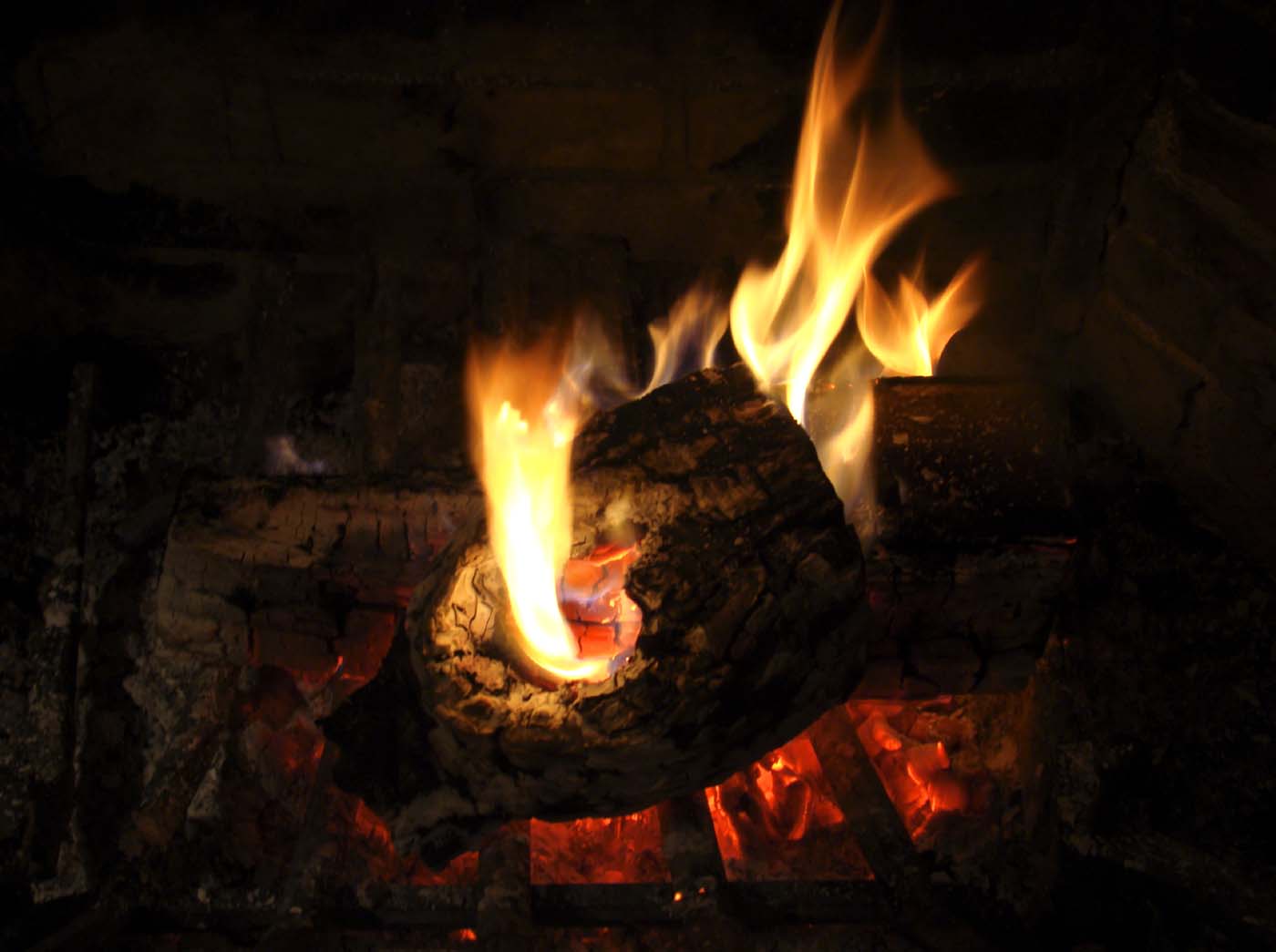
This is a modern fire, hopefully the last one I will light this winter.  I thought the burning wood with the hole in it looked like a flaming lumpfish from hell. 

E.J. Lefavour

www.khanstudiointernational.com

Did You Know (Not Snow)

Photos by E.J. Lefavour

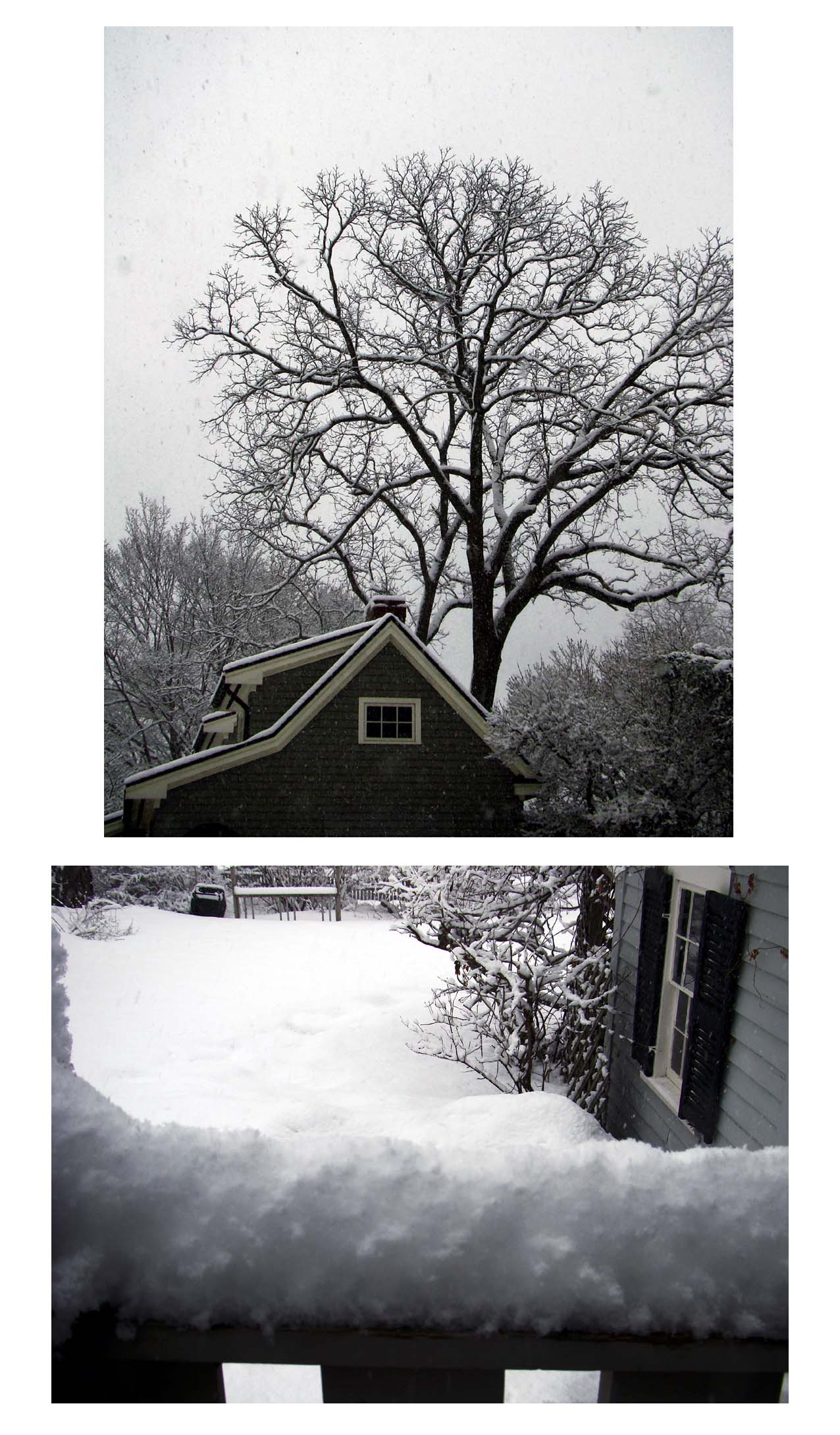
Although it may look like it, this is not snow we are getting today.  Today’s weather forecast was for freezing fog and snow mist.  Freezing fog occurs when liquid fog droplets freeze to surfaces, forming white soft or hard rime.  This is very common on mountain tops which are exposed to low clouds. It is equivalent to freezing rain, and essentially the same as the ice that forms inside a freezer which is not of the “frostless” or “frost-free” type. The term “freezing fog” may also refer to fog where water vapor is super-cooled, filling the air with small ice crystals similar to very light snow. It seems to make the fog “tangible”, as if one could “grab a handful”.  Snow mist is frozen ice crystals.  Semantics, I know, but they didn’t call it snow.  If you look closely at what has fallen, it does have a different appearance than normal snow.

E.J. Lefavour

www.khanstudiointernational.com
Did You Know (Mechanically Challenged Women)

Photo by E.J. Lefavour

That there are some women out there who know little about the mechanics of their vehicles?  I am one of them.  I can change an air filter, check my fluids and add as needed, put air in my tires; but beyond that I am useless.  My van (Annie) and I have a good relationship, and she is very dependable and good to me; but on occasion, she needs professional care.  I have always felt a little threatened by car mechanics.  I think it stems from the way their eyes glaze over and then roll back in their heads a bit when I try to mimic the strange sound or behavior my baby is exhibiting.  It makes me feel like they can tell me anything in the world is wrong (at whatever price they feel they can get away with charging), and I won’t know the difference.  After losing my tailpipe in the Callahan Tunnel in Boston one day (a dreadful, scary sounding thing to happen inside a tunnel where you can’t pull over or do anything but keep on going, watching and hearing your tailpipe clanging down the road behind you and then disappear from view in the rearview mirror, all the while hoping no one will hit it and get a flat tire), I discovered Baron’s.  Since I knew what the problem was and could explain it in terms he understood, Baron didn’t glaze over, fixed Annie’s problem quickly and at a very fair price.  I felt secure, knowing I had found a mechanic I could trust. 

Last week after my excursion with Debbie Clarke to visit Masconomet’s Burial site, I stopped at Market Basket.  As I started heading home, I hit my brake and it went down to the floor, with only a bare amount of stopping power if I pushed really hard on the brake pedal.  I crept home over the hilly and winding roads to Annisquam, rolled to a stop and parked.  I immediately called Baron, who was getting ready to go on vacation, was overbooked and couldn’t see her, but did say it was my brake lines that had gone.  He suggested I call Billy next door, who it turned out was also getting ready to go on vacation and couldn’t help.  I didn’t know where to turn, so I asked Debbie for a suggestion.  She recommended Linsky’s Service Station at 159 Maplewood Ave.  I called them and reached Doris who told me to have Annie towed over and they would take a look and give me an estimate.  I called AAA and they sent a couple of sweet guys from Tally’s over to tow her.  Baron had already given me best and worst-case scenario estimates, so I had an idea of what I could be looking at, the worst case not being something I could manage.  Later in the day Doris called to tell me that the two rear brake lines were gone, and very sweetly and almost apologetically told me it would cost $148.00, $2.00 less than the best case estimate Baron had given me.  I was thrilled and told her to go ahead with the repairs. 

My girl now stops, she was fixed quickly and at a price I could afford (and I believe a very fair price), and I felt so comfortable dealing with Doris and Linsky’s Service Station that I had to send out this kudos.  Big up Linsky’s!  And thanks.  By the way, Linsky’s has been around since 1953, longer than me (not much, but still longer), so I’d say they have long proven themselves to many people to be a good, fair service station.

E.J. Lefavour

www.khanstudiointernational.com

Did You Know (Air Force Test)

http://members.iinet.net.au/%7Epontipak/redsquare.html

That this little hand eye coordination game could drive you nuts?
The object of the game is to move the red block around without getting hit by the blue blocks or touching the black walls.  If you can go longer than 18 seconds you are phenomenal.

I don’t know if it’s true, but it is said that the US Air Force uses this for fighter pilots.  They are expected to go for at least 2 minutes.
Give it a try but be careful…it is addictive.  After about my 20th try, I white knuckled it for 13.5 seconds.  Can anyone out there go longer than 18 seconds? 

E.J. Lefavour

www.khanstudiointernational.com
Did You Know (Masconomet)

Photos by E.J. Lefavour

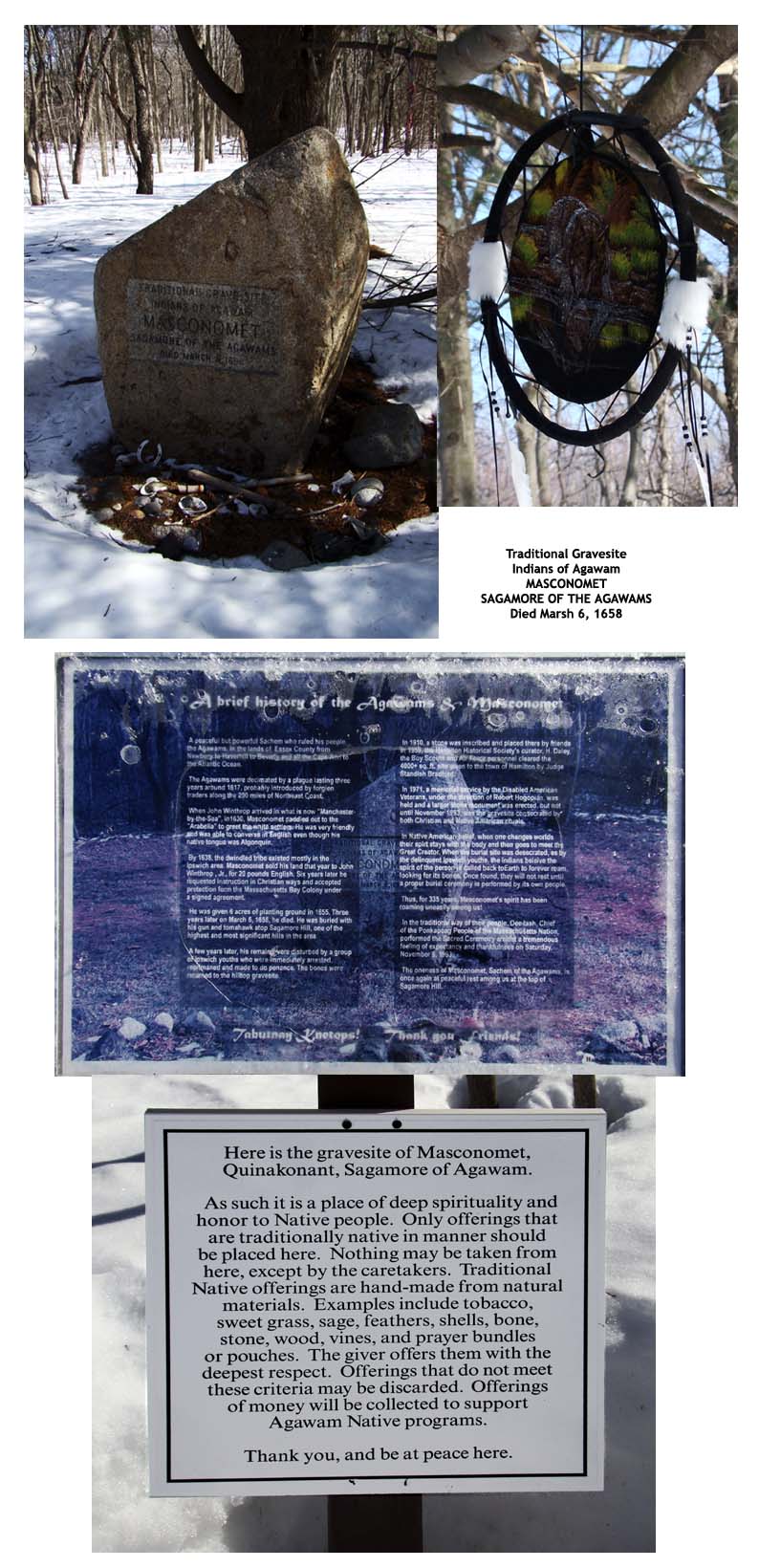
That Masconomet, was a powerful but peaceful Sachem who ruled his people, the Agawams, in the lands of Essex County from Newbury to Haverhill to Beverly and all of Cape Ann to the Atlantic Ocean?  Debbie Clark took me on an interesting excursion yesterday to the burial site of Masonomet, Sachem of the Agawams, located at 305 Sagamore Street in South Hamilton, at the top of Sagamore Hill, the highest point in Hamilton at 180 feet above sea level.  These are a few photos from the site and a brief history taken from one of the plaques.  If you visit, do so with the reverence it deserves, and bring along a gift of nature to leave behind.  I didn’t know, so didn’t have anything to leave, but Debbie left her own version of a Paul Frontiero art rock.

A Brief History of the Agawams and Masconomet

 A peaceful but powerful Sachem who ruled his people, the Agawams, in the lands of Essex County from Newbury to Haverhill to Beverly and all the Cape Ann to the Atlantic Ocean.

 The Agawams were decimated by a plague lasting three years around 1617, probably introduced by foreign traders along the 200 miles of Northeast Coast.

 When John Winthrop arrived in what is now “Manchester-by-the-Sea”, in 1630, Masconomet paddled out to the “Arabella” to greet the white settlers.  He was very friendly and was able to converse in English even though his native tongue was Algonquin.

By 1638, the dwindled tribe existed mostly in the Ipswich area.  Masconomet sold his land that year to John Winthrop, Jr. for 20 pounds English.  Six years later he requested instruction in Christian ways and accepted protection from the Massachusetts Bay Colony under a signed agreement.

He was given 6 acres of planting ground in 1655. Three years later on March 6, 1658, he died.  He was buried with his gun and tomahawk atop Sagamore Hill, one of the highest and most significant hills in the area.

 A few years later, his remains were disturbed by a group of Ipswich youths who were immediately arrested, reprimanded and made to do penance.  The bones were returned to the hilltop gravesite. 

 In 1910, a stone was inscribed and placed there by friends.  In 1959, the Hamilton Historical Society’s curator, H. Daley, the Boy Scouts and Air Force personnel cleared the 4000+ sq. ft. site given to the town of Hamilton by Judge Standish Bradford.

In 1971, a memorial service by the Disabled American Veterans, under the directiokn of Robert Hogopian, was held and a larger stone monument was erected, but not until November 1993, was the gravesite consecrated by both Christian and Native American rituals.

 In Native American belief, when one changes worlds, their spirit stays with the body and then goes to meet the Great Creator.  When the burial site was desecrated, as by the delinquent Ipswich youths, the Indians believe the spirit of the person is called back to Earth to forever, roam looking for its bones.  Once found, they will not rest until a proper burial ceremony is performed by its own people.

 Thus for 355 years, Masconomet’s spirit has been roaming uneasily among us!

In the traditional way of their people, Oee-tash, Chief of the Ponkapoag People of the Massachusetts Nation, performed the Sacred Ceremony amidst a tremendous feeling of expectancy and thankfulness on Saturday, November 6, 1993.  The oneness of Masconomet,

Sachem of the Agawams, is once again at peaceful rest among us at the top of Sagamore Hill.

E.J. Lefavour

www.khanstudiointernational.com

Did You Know (Dory)

painting of a yellow dory reflecting in the calm water
Painting by E.J. Lefavour

Is it a rowboat, a skiff, a dinghy, a dory?  There are a number of different names for small rowing boats, so I had to check to find out what this was rightly called.  It appears to be a dory. 

Strictly speaking, the only true defining characteristic of the dory is that it is planked up with wide boards, “It should be well understood, that it is the dory’s special mode of construction, not its hull shape, that sets it, and its related sub-types apart from other boats”.

More generally speaking, the dory can be defined as a small boat which has:

  • a flat bottom, with the bottom planks fastened lengthwise (bow to stern).
  • a hull shape defined by the natural curve of a sawn plank (never steam bent).
  • planks overlapping the stem at the front of the boat and an outer ‘false’ stem covering the hood ends of the planks.
  • (with some exceptions) a fairly narrow transom often referred to as the ‘tombstone’ due to its unique shape.

Despite their simplicity of design, dories are well known for their seaworthiness and rowing ease. Because of their narrow bottoms, they do not exhibit much initial stability and have often been called ‘tippy’. They exhibit high ultimate stability, however, tipping to a point and then stiffening up significantly and resisting further rolling tendencies. Dories by design are quite voluminous and can carry a heavy load for their size and will continue to retain their great ultimate stability even when heavily loaded.

In 1876, Danish immigrant and fisherman Alfred Johnson sailed a custom twenty foot Cape Ann Dory from Gloucester, Massachusetts to Liverpool in 66 days, proving the design built for fishing the rough Atlantic Ocean could handle nearly any weather.

E.J. Lefavour

www.khanstudiointernational.com
Did You Know (Spring)

Photo by E.J. Lefavour

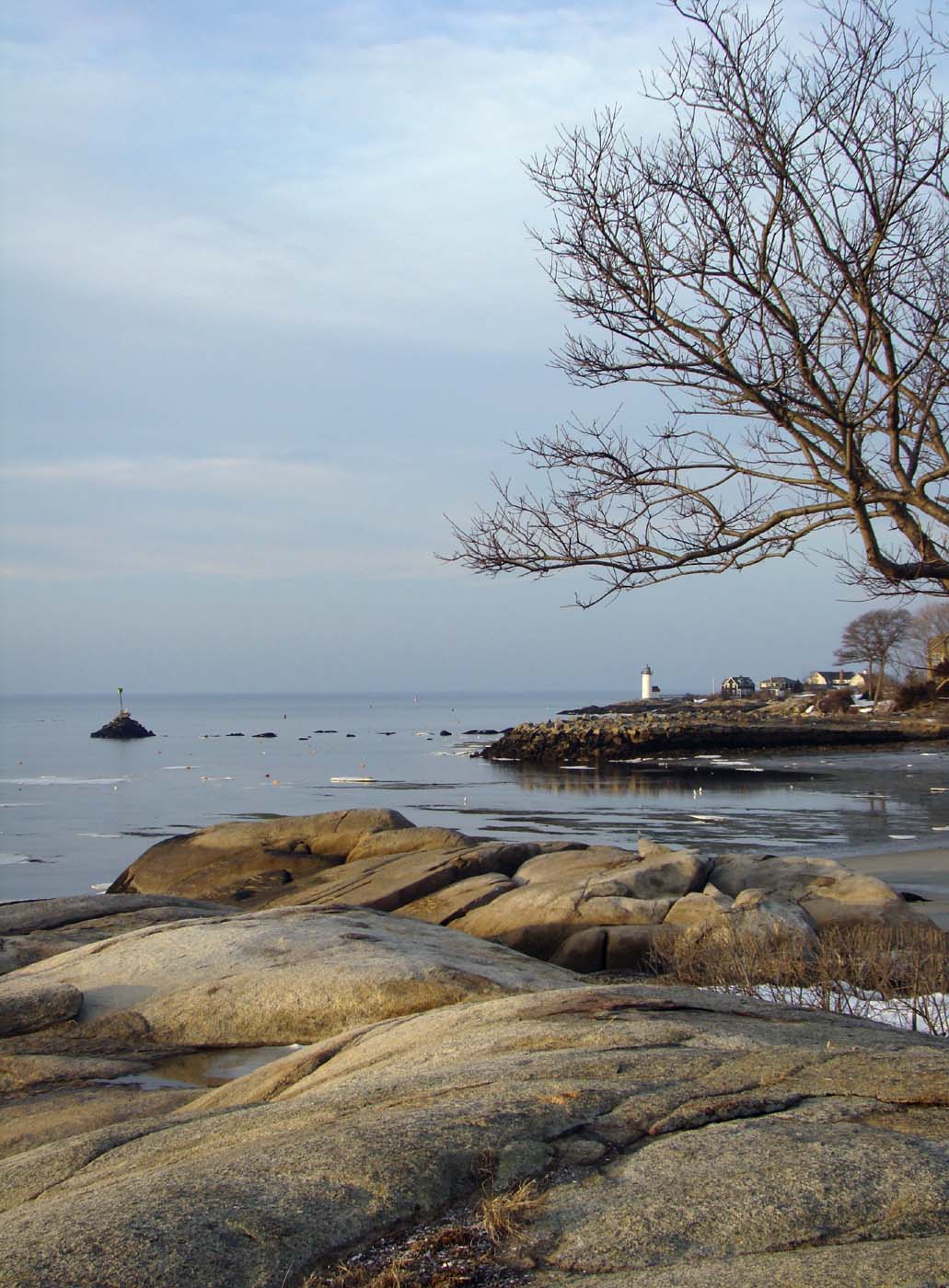
Spring really is right around the corner.  You can see the snow and ice are just about gone from the shoreline, rocks and rooftops, and some ground is even exposed in places.  The Vernal Equinox will occur on March 20th at 23:21 (11:21 pm), 28 days from now.  An equinox occurs twice a year (spring and fall), when the tilt of the Earth’s axis is inclined neither away from nor towards the Sun, the center of the Sun being in the same plane as the Earth’s equator.   On a day of the equinox, the center of the Sun spends a roughly equal amount of time above and below the horizon at every location on the Earth, night and day being of roughly the same length.  This photo really has nothing to do with spring, but was a new vantage point I discovered to view the lighthouse from, and thought it would be new to others too. 

E.J. Lefavour

www.khanstudiointernational.com

Low Tide Sandbar Stollers

Photos by E.J. Lefavour

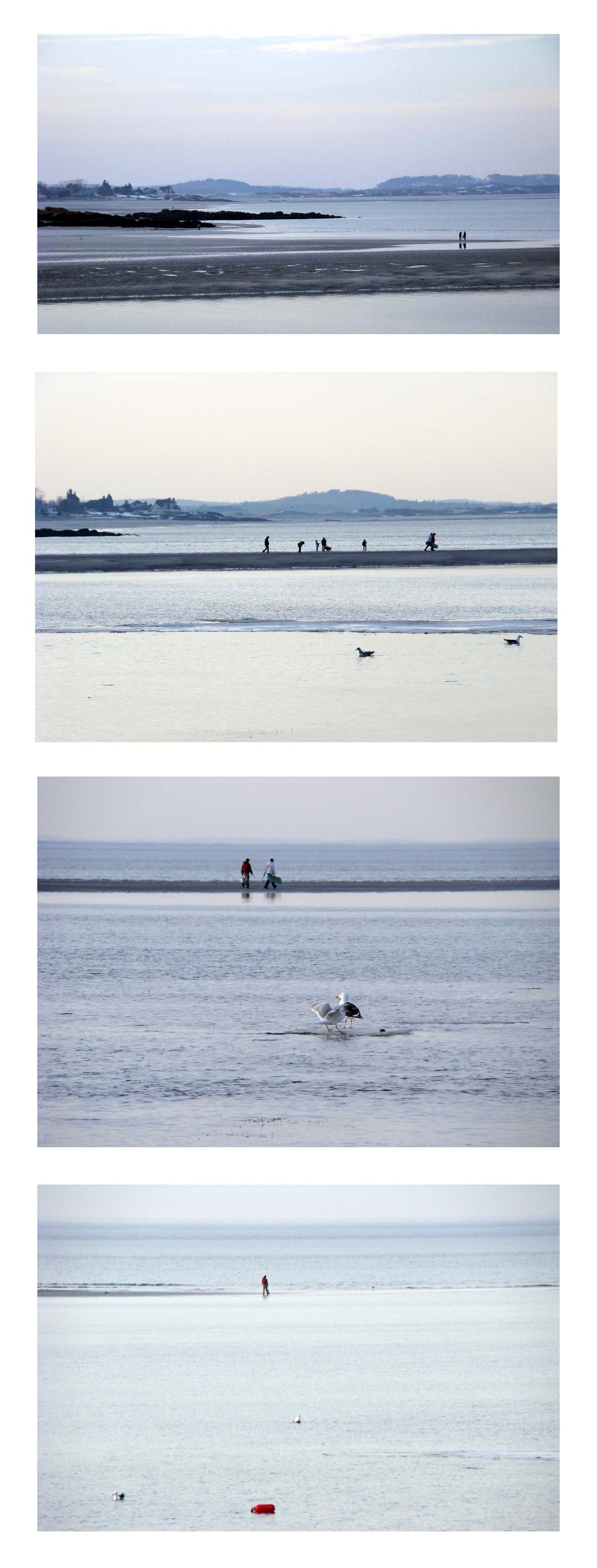
I’m sure other people observed the exceptionally low and high tides we had this week around the full moon.  On Friday, when the weather was so balmy and the tide so low, the sandbar was exposed from Wingaersheek Beach out into the bay and many people and homies enjoyed it.   The last one almost looks like he’s walking on the water.

E.J. Lefavour

www.khanstudiointernational.com
Did You Know (Bananas)

Bananas vintage thrift shop, main street, Gloucester

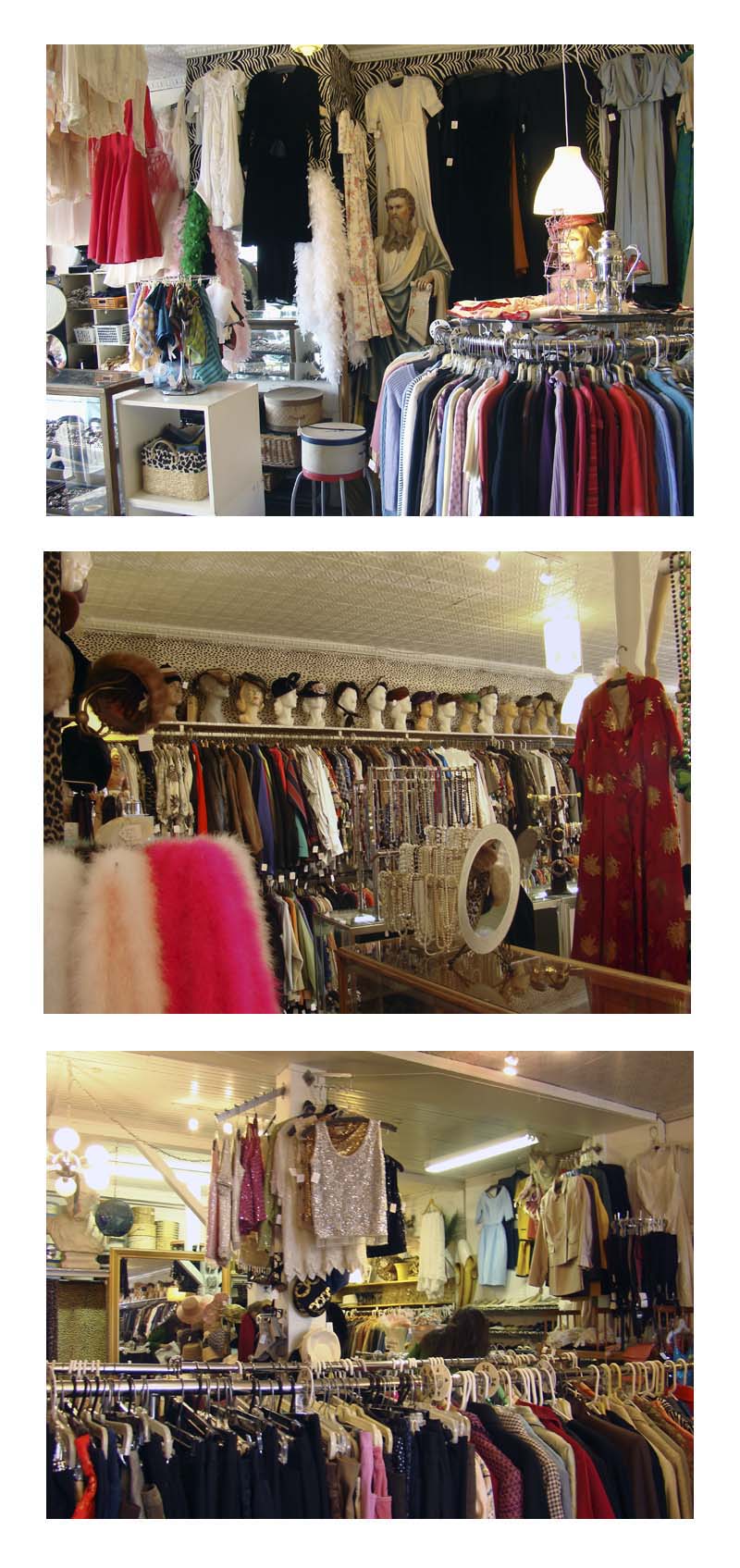
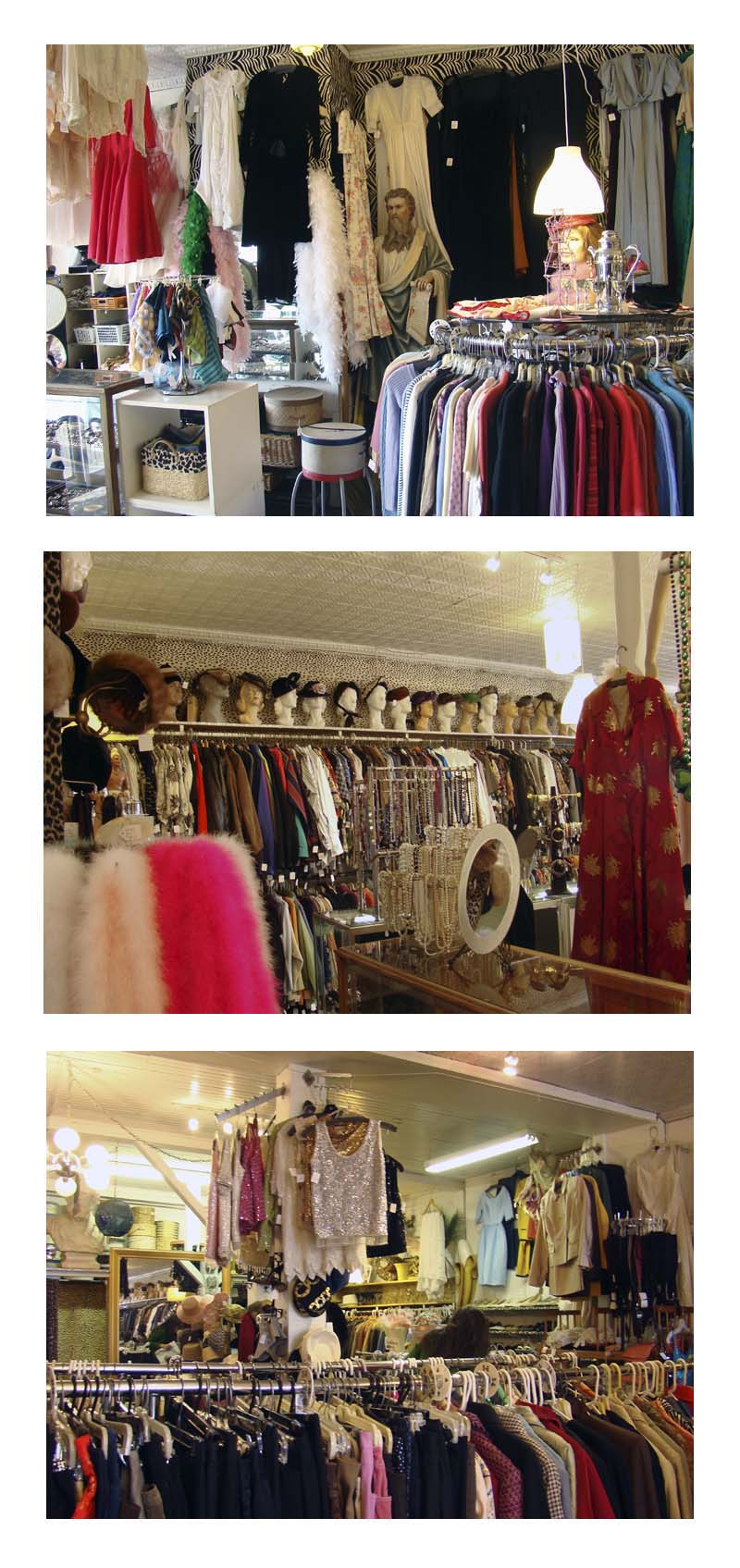
Spring is in the air.  If you’re tired of the drab winter colors and want to switch to something bright, colorful and springy without having to unpack your warm weather things, stop in to Bananas at 78 Main Street, Gloucester.  I love thrift shops, and Bananas is really eclectic and fun, with great prices and a huge selection of clothing, funky jewelry, shoes, feather boas (a must have), hats and more.  Even if you’re not in the market to buy, or don’t wear second hand (heaven forbid), stop in just for the experience; it will make you smile.

E.J. Lefavour

www.khanstudiointernational.com

Did You Know (No Dead Squammers)

Photo by E.J. Lefavour

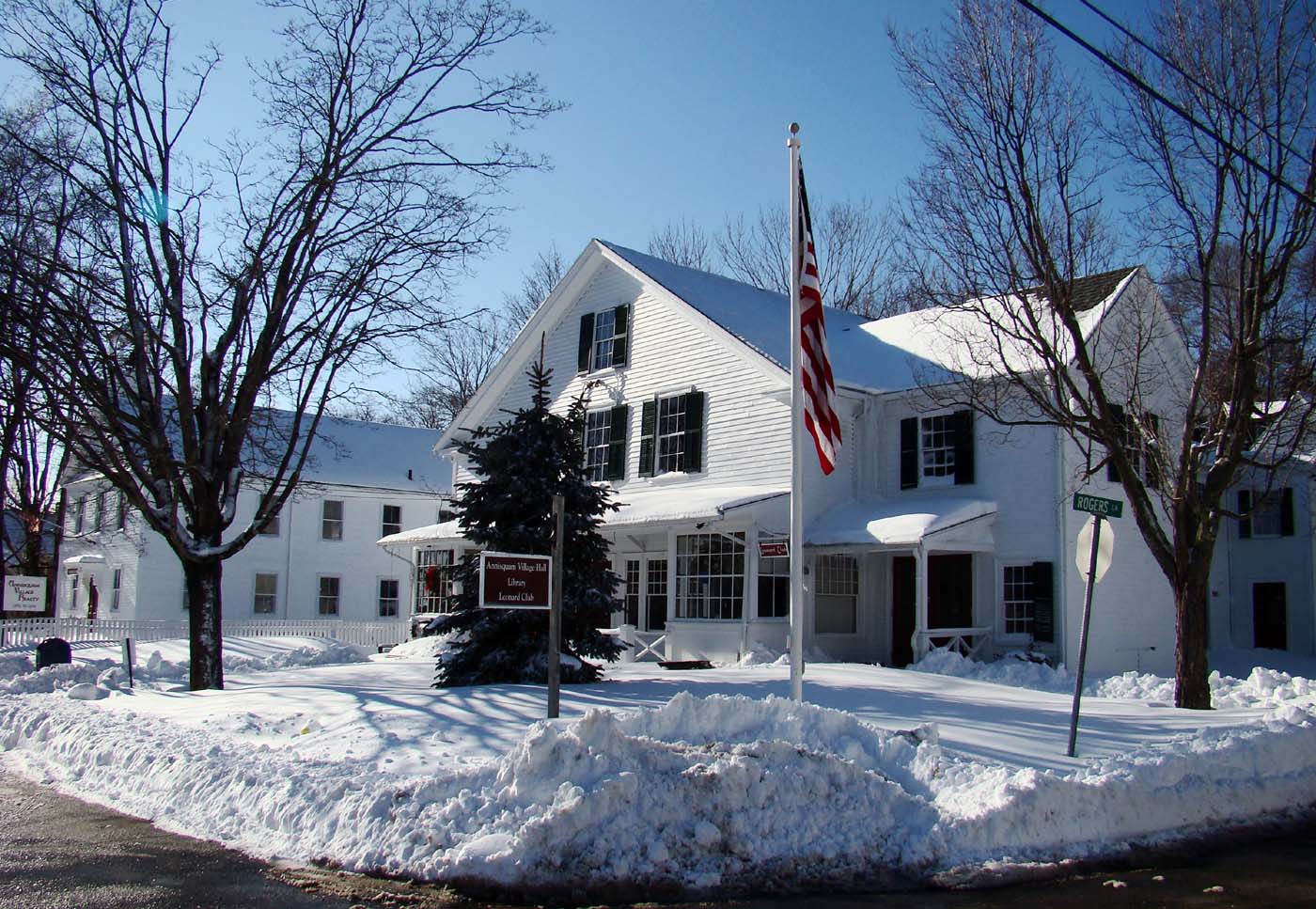
That no one associated with Annisquam died recently?  I learned an interesting bit of Annisquam tradition.  When someone who has ever lived in Annisquam dies, even if they had moved away, the flag at the Village Hall is flown at half-mast and a note is left giving the details of the decedent.  I thought that was a pretty special tradition, and unique way to let people to know that a fellow “Squammer” had passed.  (Information courtesy of Jill Carter).

E.J. Lefavour

www.khanstudiointernational.com
Collective Consciousness

paintings of waves breaking on the rocks of Cape Ann
Paintings by E.J. Lefavour

“COLLECTIVE CONSCIOUSNESS”
Poem by Joda Khan

the ocean flexed for just an instant
and a multitude of waves took form
no two alike
yet each the same
from the primordial womb they all were born
some came in quietly without a word to say
they calmly spent their force
others giggled loudly in utter delight
as they splashed and rushed ashore
sensuous swells brushed in blue silk
their sisters wrapped in rainbows
paid their respects to white capped gales
resplendent in gray
striking an ominous pose
the oceans of life
humankind’s collective mind
each drop a memory
every wave a lifetime

I have always loved Joda’s poetry, and for the years we were married, we collaborated on many works together – I painting his poetry, or he writing poetry to accompany my paintings.  Much of our work during those years was of a social or political nature, but this one is spiritual and works well with the collective consciousness and ocean beauty of Gloucester. 

If you know of any good spoken word poetry venues around Cape Ann, I’d love to pass on the info about them.  Thanks.

E.J. Lefavour

www.khanstudiointernational.com  

Did You Know (Quarries)

Photos by E.J. Lefavour

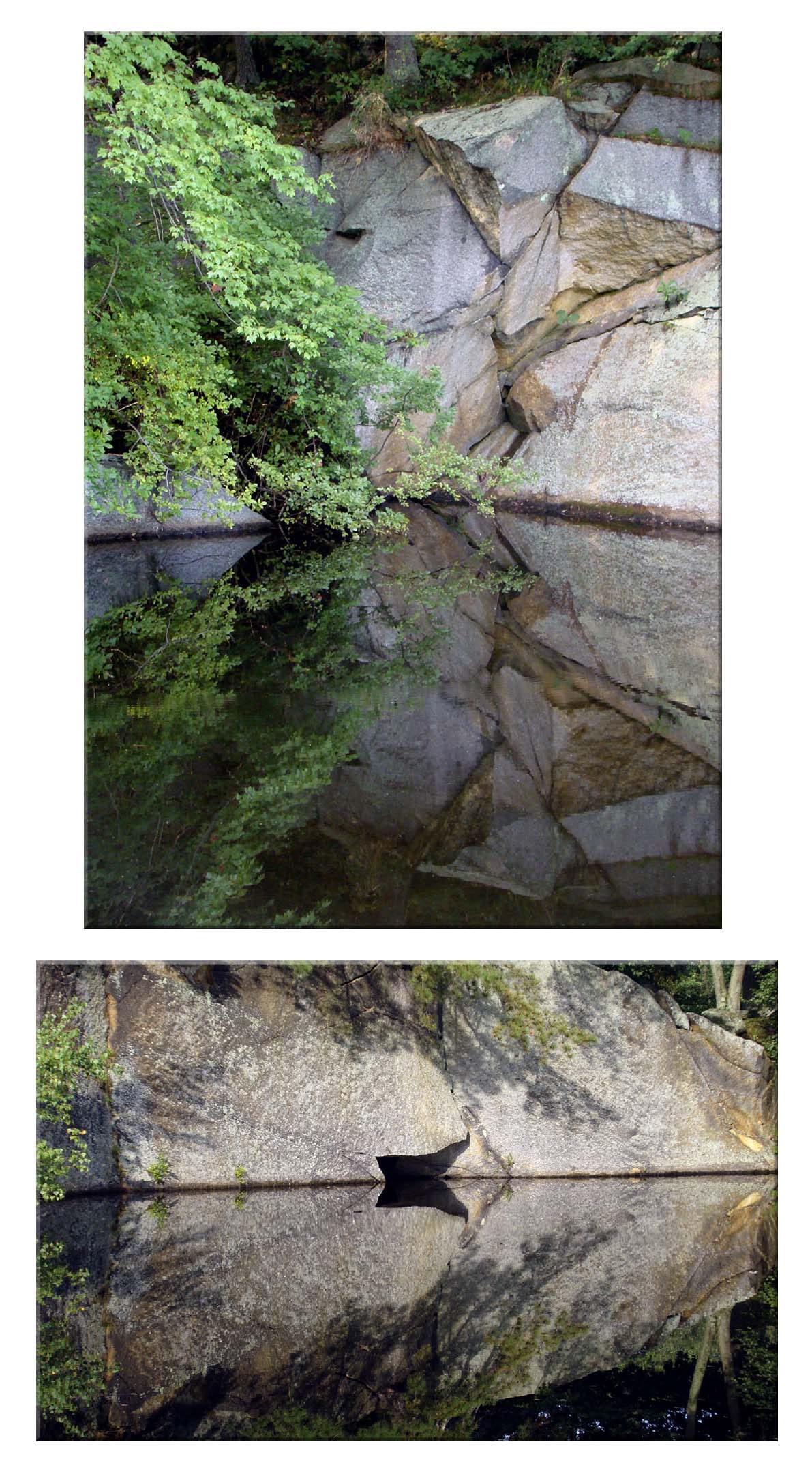
For many years Cape Ann — Rockport in particular — sustained a thriving granite industry. As early as 1800, the inhabitants of Cape Ann began cutting the peninsula’s 450 million year old granite into blocks of stone. The granite industry gradually expanded throughout the 19th Century to the point where it actually superseded the fishing industry in Rockport as the town’s primary business. Quarrying reached its zenith about the year 1910.

The Cape Ann granite industry became successful for a number of reasons. The fine quality of the granite quickly attracted the attention of builders all along the eastern seaboard. As word spread, the granite was regularly shipped throughout the world. Cape Ann’s location allowed for quarries to be set-up close to shore so that the granite blocks could be shipped by vessel. This was important in the early days when railway service was non-existent. Despite the above advantages, it was the rugged character, ingenuity, and perseverance of the people of Cape Ann that made quarrying successful. The men worked year-round in the quarries — irrespective of weather. Before steam engines and drills became available in the 1850s, most of the arduous work was done by hand or with teams of oxen.

The Great Depression ushered in the collapse of the local granite industry. By that time, demand shifted to concrete and steel for building construction and asphalt for street paving. For over 100 years, however, the rock cut and shipped from Cape Ann was used in the construction of many famous buildings throughout the U.S. — including parts of the Statue of Liberty and other great monuments. Paving stones from local quarries were used in the construction of thousands of streets worldwide.

Today, most of the quarries in Cape Ann have filled with both rain and spring water to form deep ponds. Many of the quarries are now hidden in forests which nature has reclaimed. Owing to their colorful beauty and intriguing nature, the quarries are popular with visitors and artists alike. Guided quarry tours are offered frequently at Halibut Point State Park in Rockport — site of the Babson Farm Quarry.

From www.cape-ann.com 

E.J. Lefavour

www.khanstudiointernational.com

Did You Know (Great Blue Heron)

Photos by E.J. Lefavour

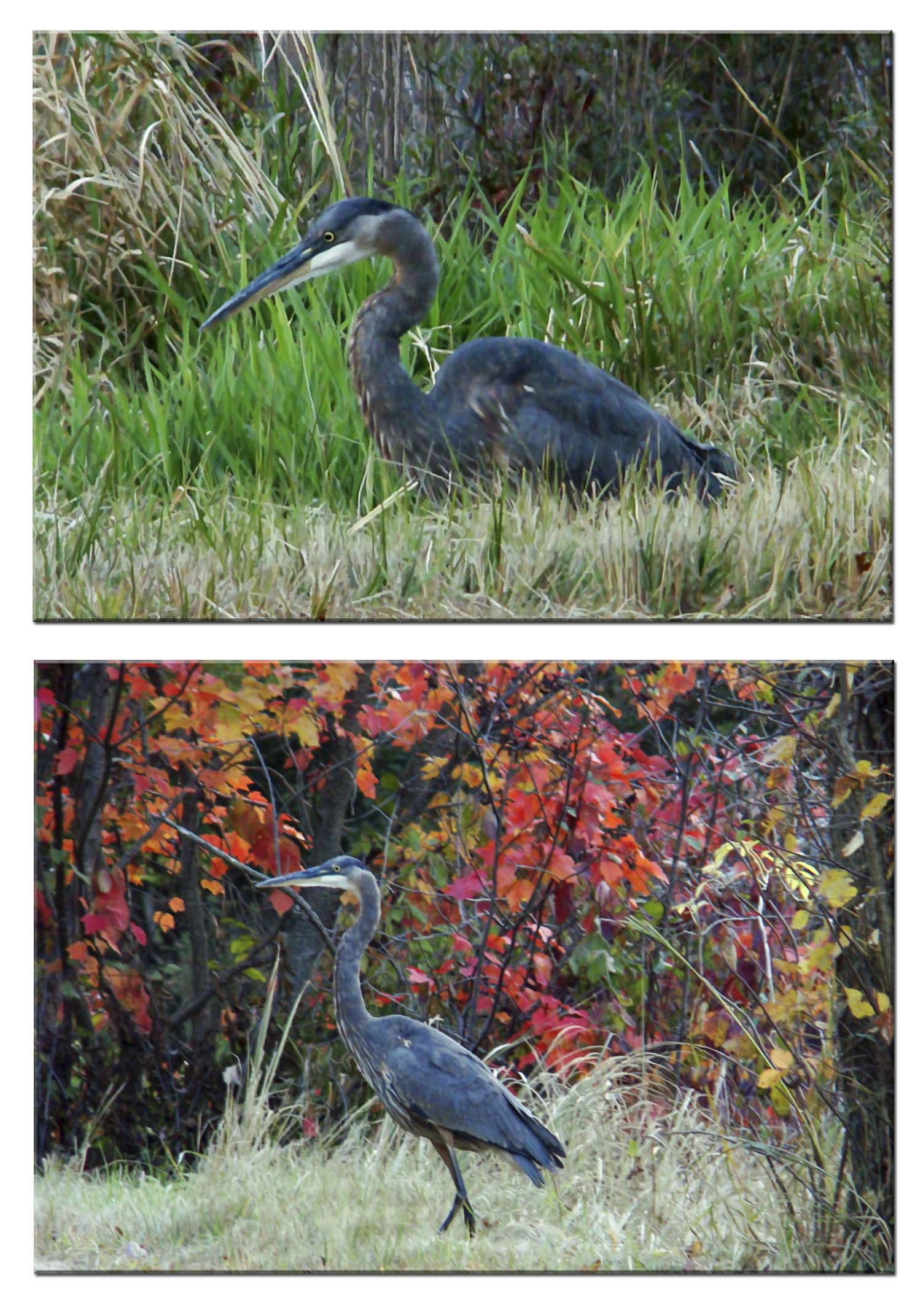
My favorite shore bird, the Great Blue Heron is a large wading bird in the heron family Ardeidae, common near the shores of open water and in wetlands over most of North and Central America as well as the West Indies and the Galápagos Islands. An all-white population found only in the Caribbean and south Florida was once known as a separate species, the Great White Heron

It is the largest North American heron, with a head-to-tail length of 36–55 in, a wingspan of 66–79 in, and a weight of 4.4-8 lbs. Notable features include slaty flight feathers, red-brown thighs, and a paired red-brown and black stripe up the flanks; the neck is rusty-gray, with black and white streaking down the front; the head is paler, with a nearly white face, and a pair of black plumes running from just above the eye to the back of the head. The feathers on the lower neck are long and plume-like; it also has plumes on the lower back at the start of the breeding season. The bill is dull yellowish, becoming orange briefly at the start of the breeding season, and the lower legs gray, also becoming orangey at the start of the breeding season. Immature birds are duller in color, with a dull blackish-gray crown, and the flank pattern only weakly defined; they have no plumes, and the bill is dull gray-yellow.

When I lived in Key Largo, FL, there was a resident Great White Heron, called George, at the Mandalay (an open air restaurant).  He would routinely sneak into the kitchen when the cook’s back was turned, and steal whatever he could off the counter before being chased out, croaking loudly.  He was also known to sneak up behind diners and with incredible speed impale and be off with the burger or fried fish from their plate, and even right out of their hand on occasion.  Amazingly, no one was ever injured, and he was eventually driven away and back to his more natural and healthier food sources.

E.J. Lefavour

www.khanstudiointernational.com