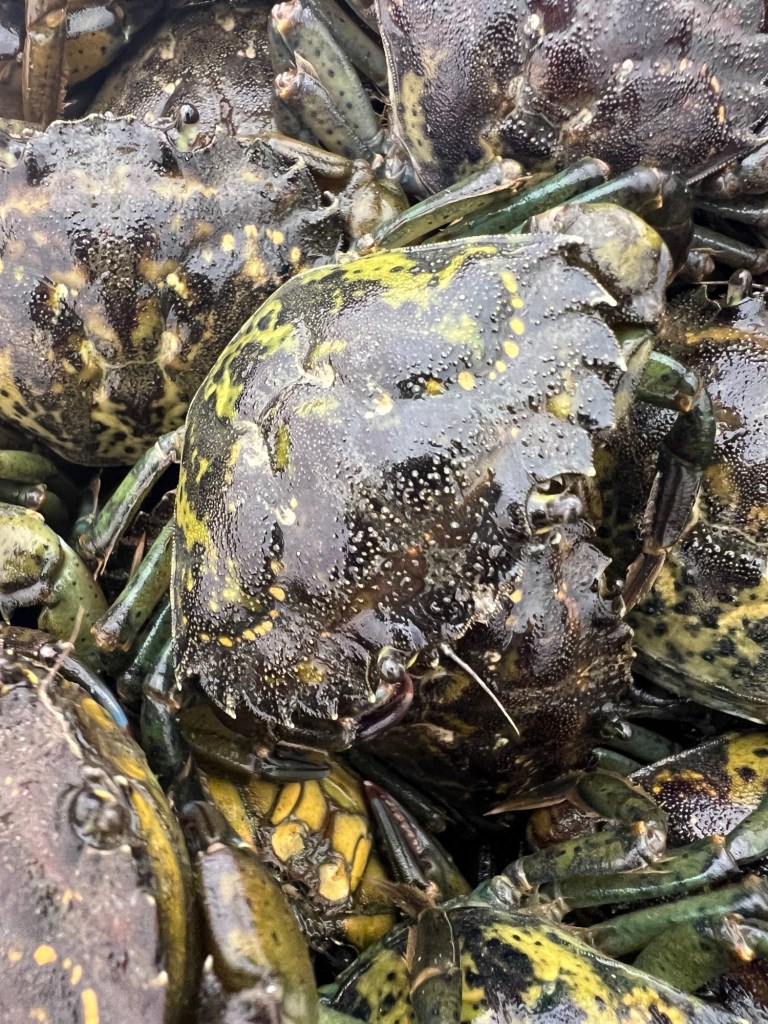
Invasive European green crabs are a global marine problem, introduced from Europe in the 1800s, and are now widespread in North America and other parts of the world, including New England and the West Coast. They outcompete native species for food and habitat, consume bivalves, and destroy crucial eelgrass beds, threatening commercial fisheries, ecosystems, and local culture. Green crabs can be identified by their five teeth on the front edge of their shell and are highly tolerant of diverse ocean temperatures and habitats, allowing for their rapid spread.
Characteristics of Green Crabs
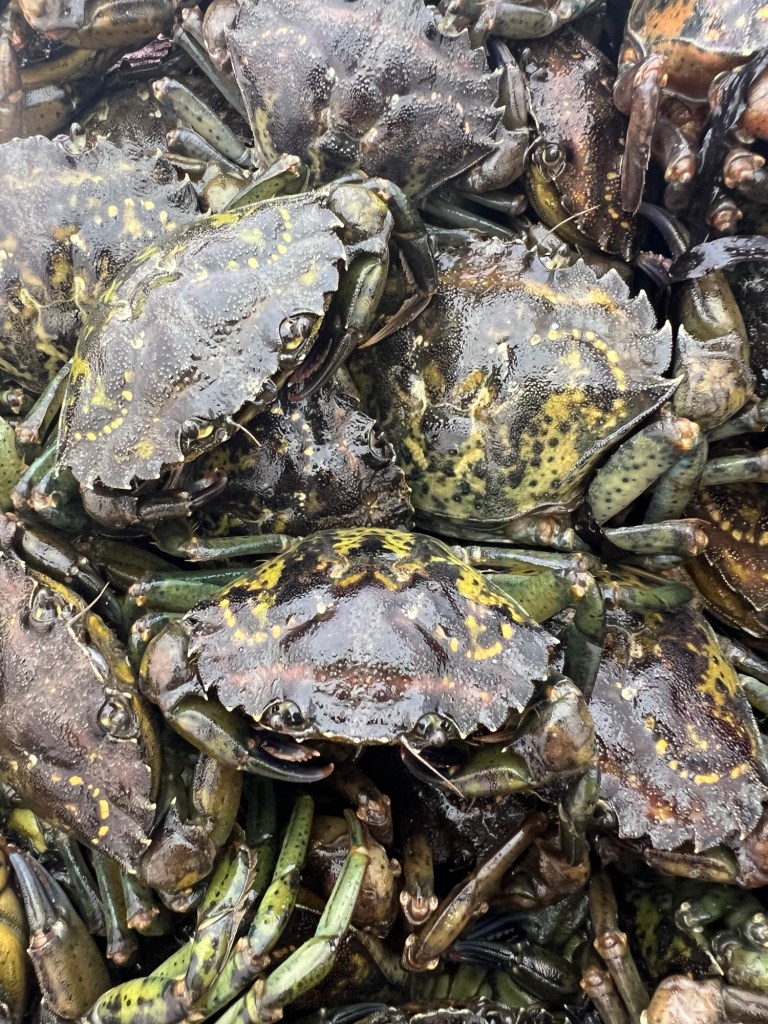
- Appearance: They have five teeth along the front ridge of their shell and are not always green; their color can vary.
- Habitat & Diet: They are voracious predators of clams, scallops, and native crabs, and also uproot eelgrass, which is vital for other marine life.
- Resilience: They are highly tolerant of varied ocean temperatures and have a long larval stage, which helps them conquer and establish in new environments.
Impact of Green Crabs
- Ecological Disruption: They reduce biodiversity, outcompete native species, and alter marine habitats.
- Economic Damage: They cause collapse in commercial shellfish industries, such as soft-shell clam and oyster harvesting.
- Threat to Culture: They threaten the livelihoods and cultural resources of coastal communities, including Tribal nations.
Identifying and Reporting a Green Crab
- Look for the Five Teeth: A key identifier is the five spikes or teeth along the front edge of their carapace.
- Report Sightings: If you find one, especially in areas where they are not established, report it immediately. You can do this by contacting the Washington Invasive Species Council, Alaska Fish and Game, or other local authorities.


 Good Morning Gloucester