Thank you to reporter Litsa Pappas and videographer Steve Wright from Fox 25 for taking the time to learn about Gloucester’s nesting Piping Plovers and for sharing their story 🙂
 Steve Wright and Litsa Pappas
The story airs tonight at 6 on Fox 25!
My View of Life on the Dock
Thank you to reporter Litsa Pappas and videographer Steve Wright from Fox 25 for taking the time to learn about Gloucester’s nesting Piping Plovers and for sharing their story 🙂
Steve Wright and Litsa Pappas
The story airs tonight at 6 on Fox 25!

Gloucester’s Animal Advisory Committee is meeting tonight to vote on whether or not to change the Good Harbor Beach dog rules. The meeting is at 6:30 at City Hall, 3rd floor. At present dogs are allowed at GHB through April 30th. Our hope is that the new ordinance would shorten the time, to end on March 31st. Nesting Piping Plovers, as well as the many species of shorebirds migrating through (and some also nesting at) Good Harbor Beach would benefit tremendously from this change to the ordinance. Thank you!
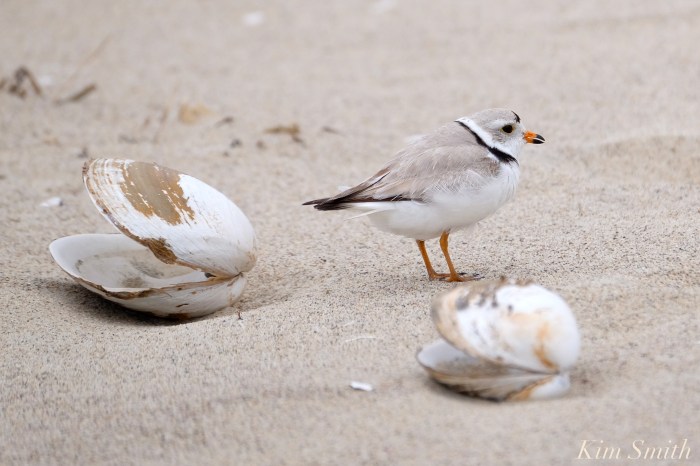
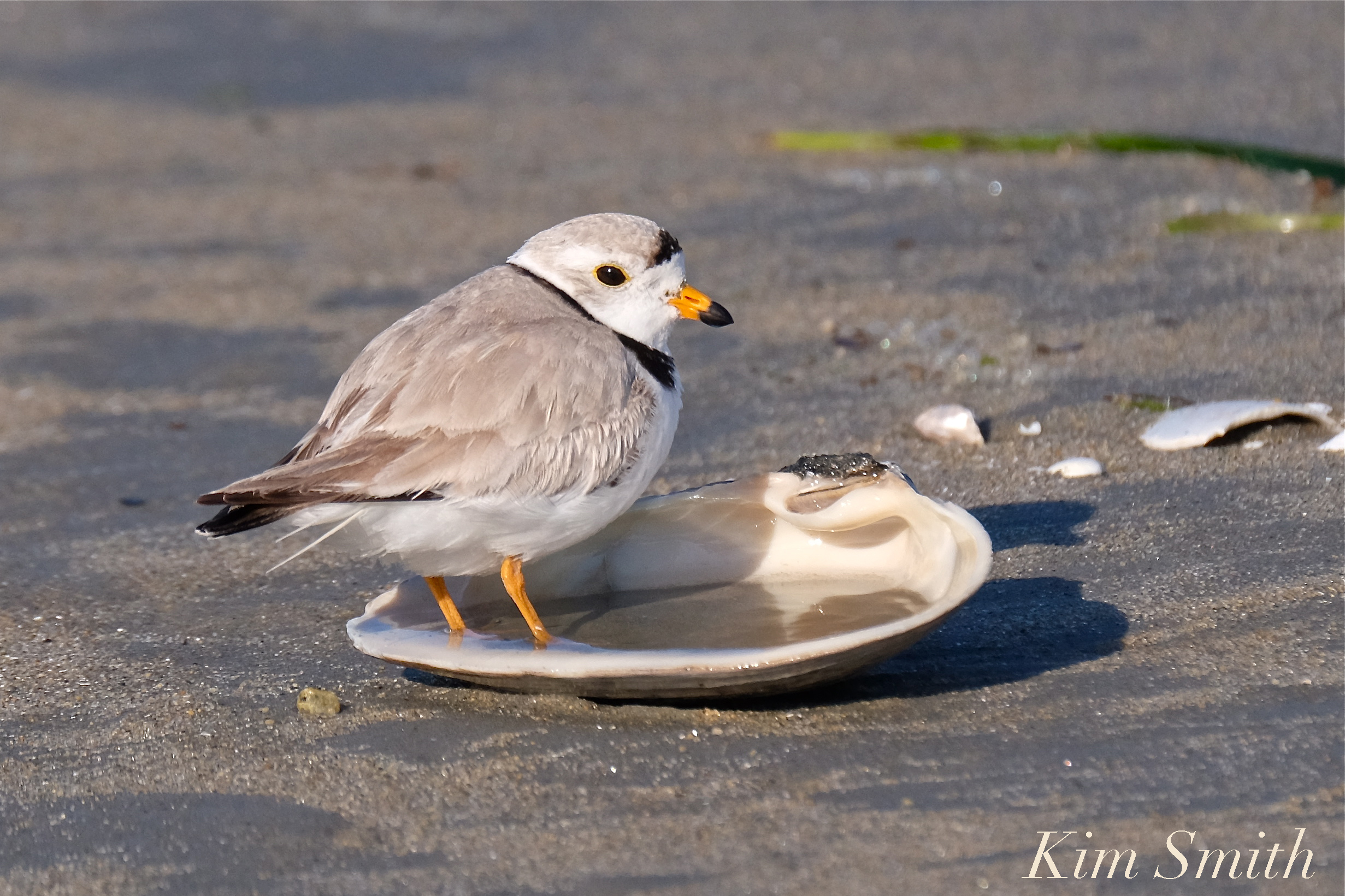 Piping Plover on the Half Shell

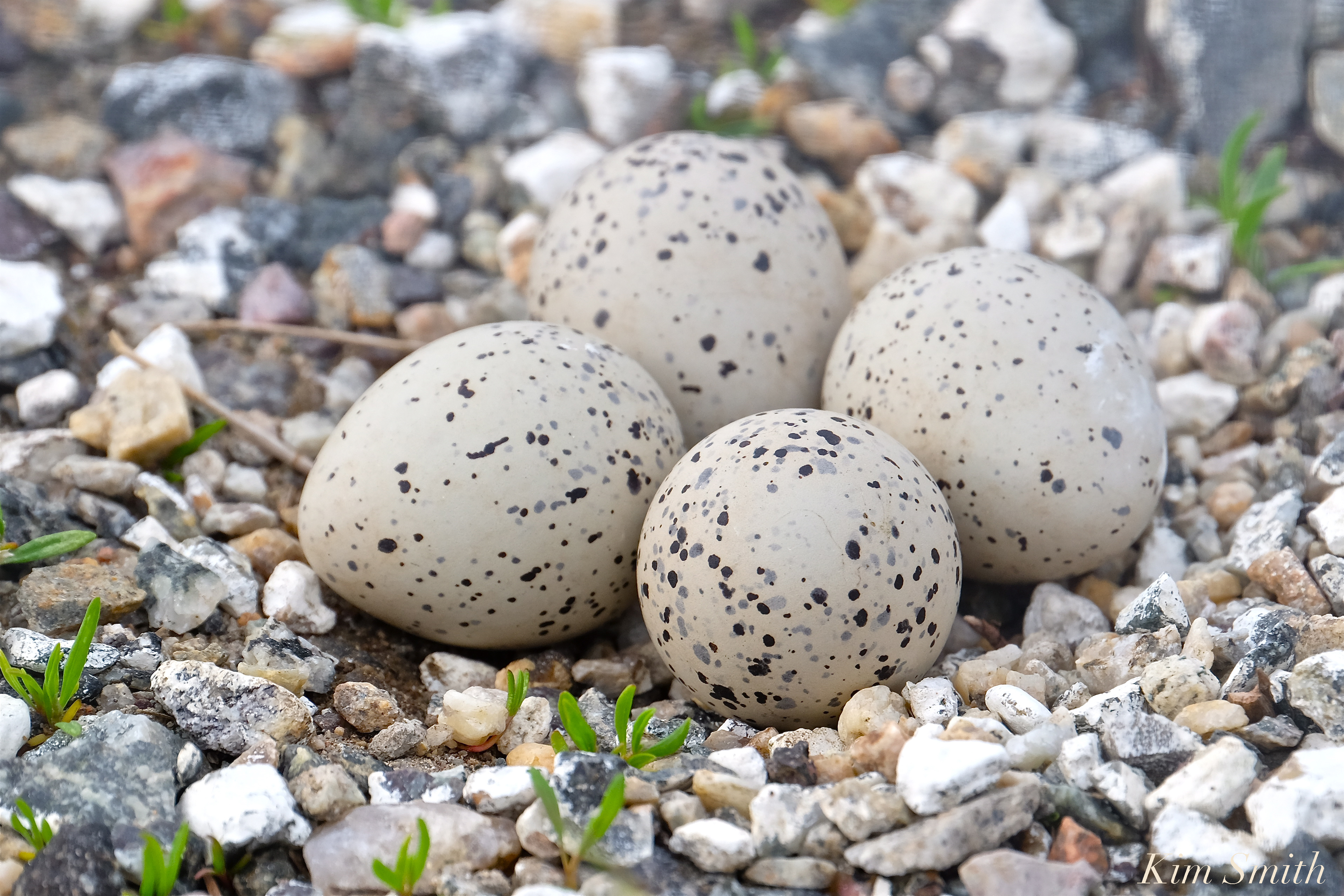 Four Piping Plover eggs in the Good Harbor Beach parking lot nest!

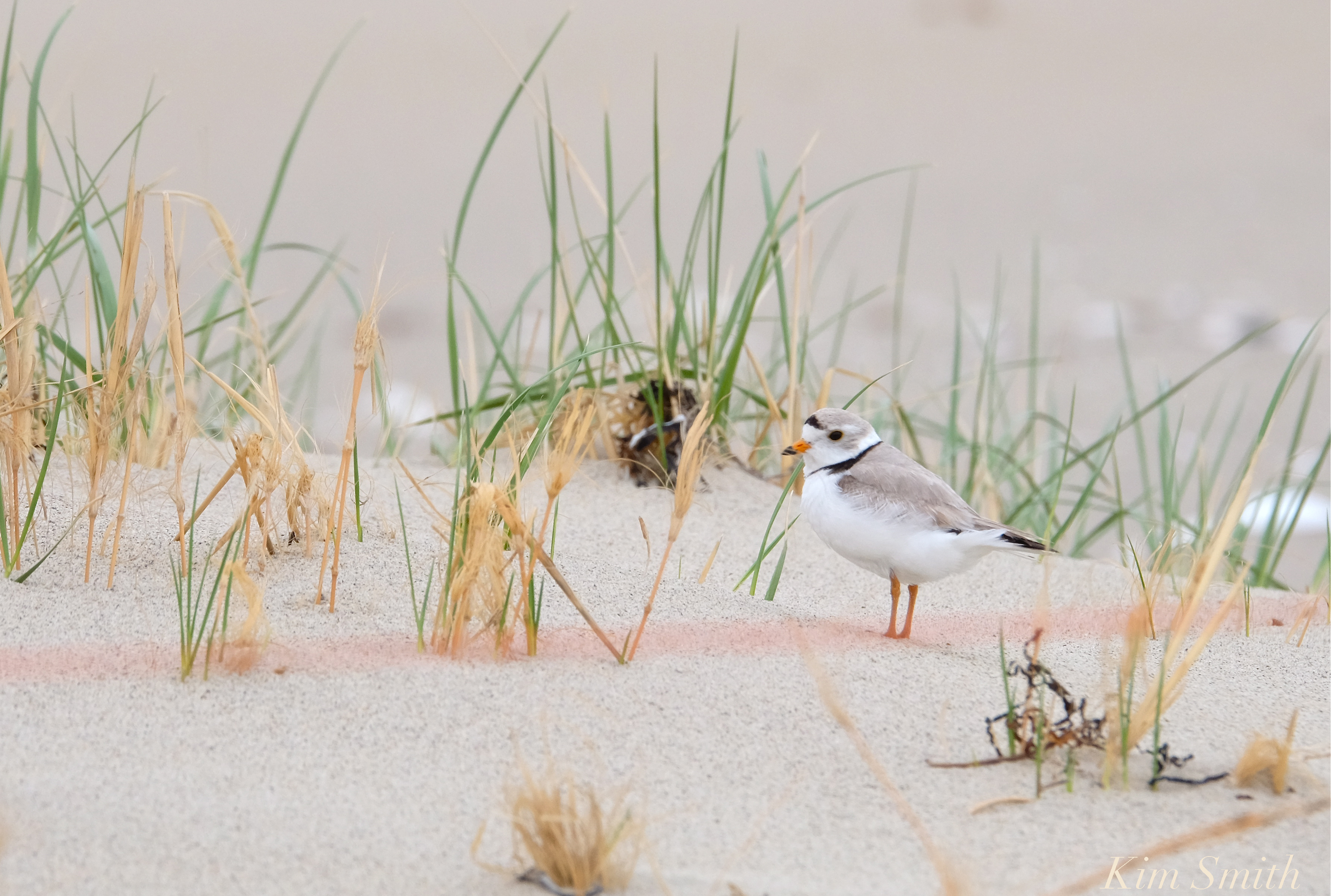 To better understand how to help Gloucester’s Good Harbor Beach Piping Plovers survive nesting at our most well loved and highly trafficked beach I have been following a little Plover family at Revere Beach.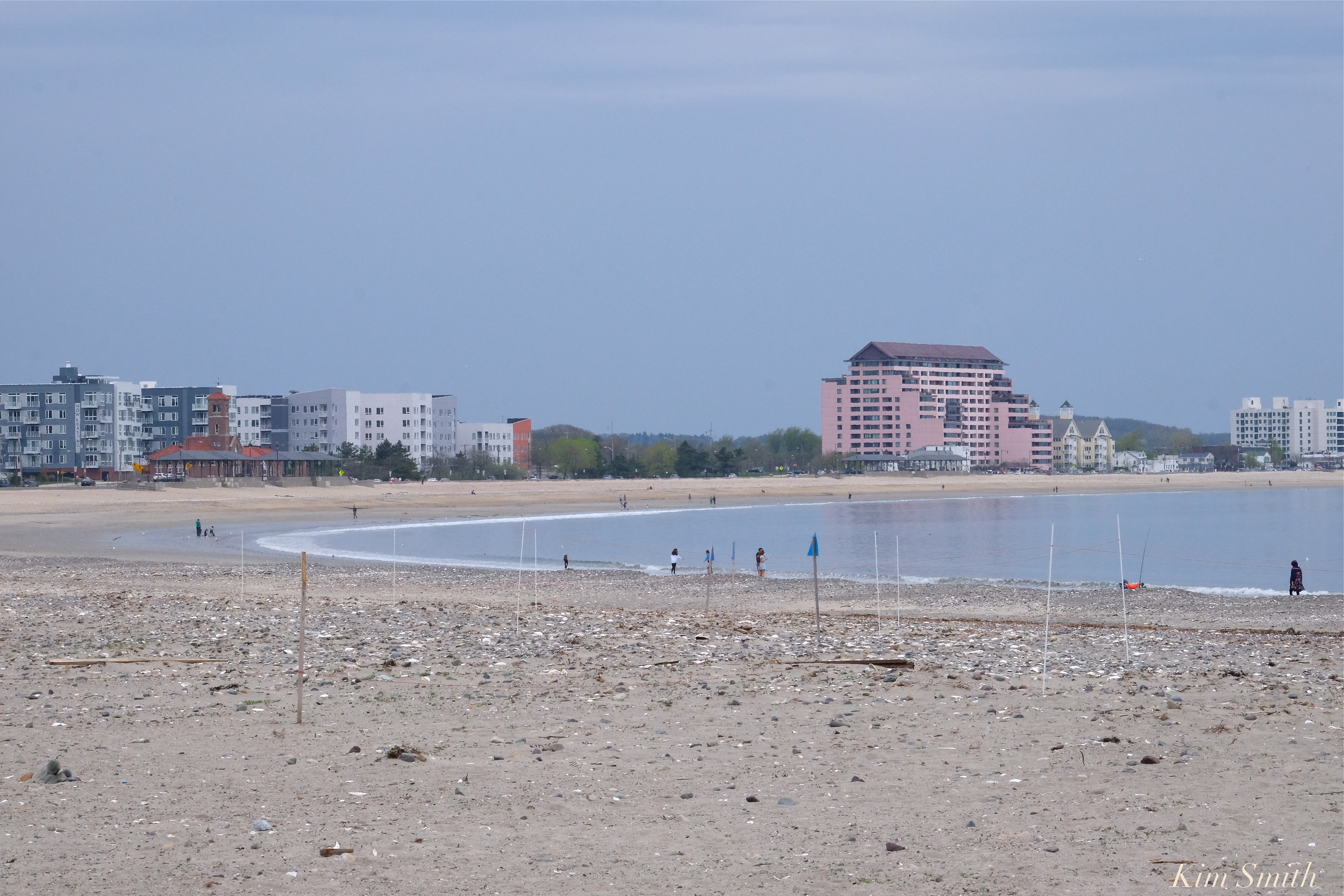
Like Gloucester, Revere is a city north of Boston. Only ten square miles, with six miles of land, four miles of water, and a population of 52,000 people, Revere is a much more densely populated city than Gloucester. Gloucester’s year round population is 28,000, covering an area of 41 square miles, with 26 miles of land and 15 miles of water.
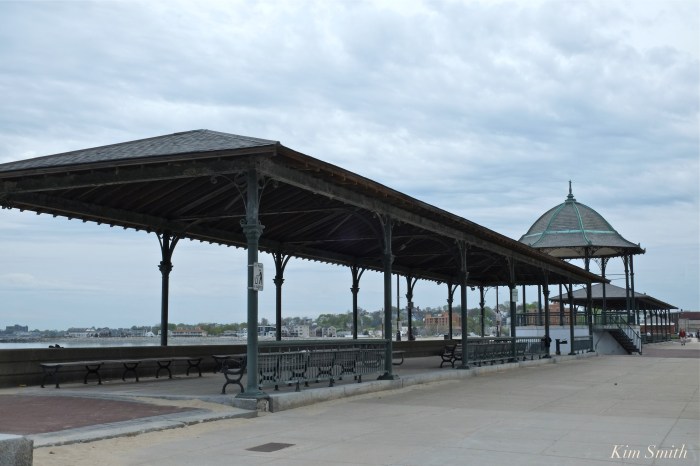
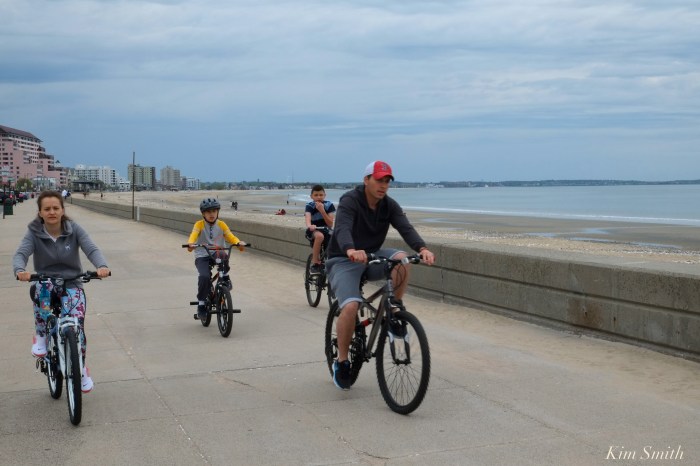
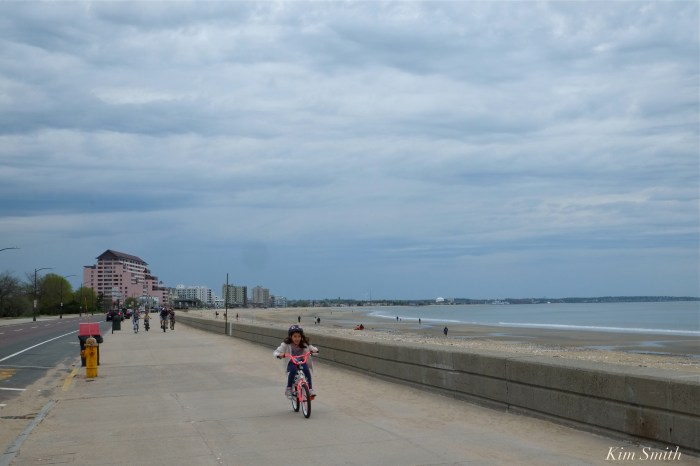
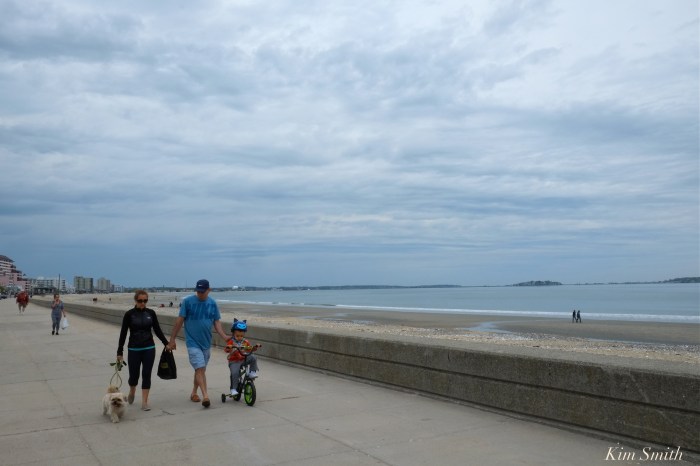
Revere Beach is the first public beach established in America (1895). Misperceptions about a needle and trash littered shoreline are deeply held but in reality, Revere Beach is a beautiful beach, beautifully maintained.
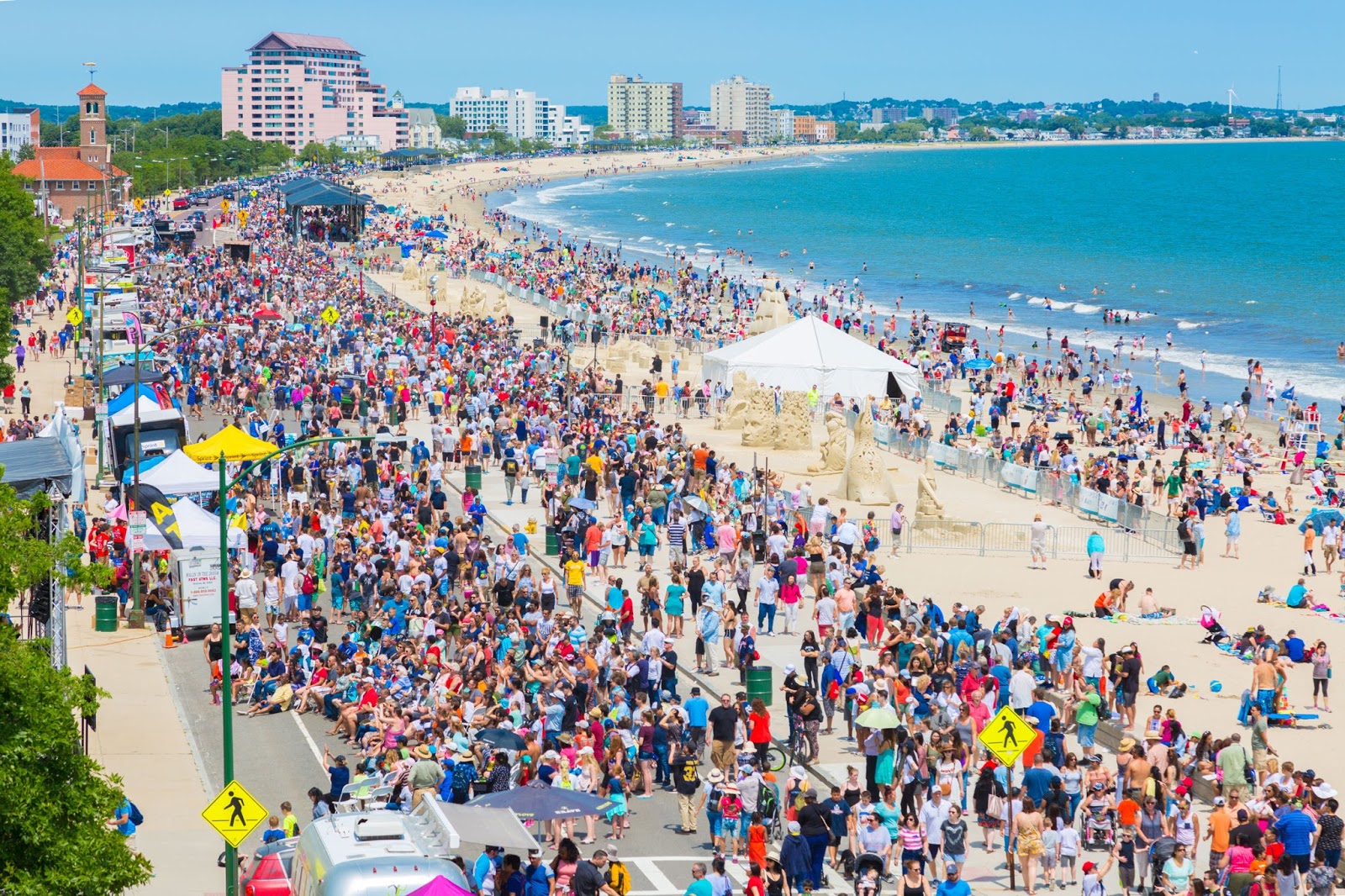 Each year Revere Beach hosts the International Sand Sculpting Festival, with amazing sculpting competitions, amusements, food, and fireworks. This year’s festival will be held on the weekend of July 20-July 22nd (photo courtesy wiki commons media).
Piping Plovers began arriving at Revere Beach at the same time the GHB PiPl arrived, in late-March and very early April. There are at least half a dozen nesting areas cordoned off for Piping Plovers. Revere has had excellent success with fledging Piping Plover chicks because the PiPl are allowed to establish nests early in the season, without disturbance. From decades of field work, it is known that the earlier the chicks hatch, the greater their chance of survival.
I stopped by to check on the Revere Beach PiPl family on a recent Sunday afternoon; it’s not that out of the way to make it part of my regular routine coming home from Cambridge and Boston jobs. And then stopped at Good Harbor Beach. The difference was astounding. There wasn’t any trash or dog poop on Revere Beach, and there wasn’t a dog anywhere along the five mile stretch of beach. There were however six dogs off leash at Good Harbor Beach within the twenty minutes that I was there to say hello to PiPl monitor Heather and to check on our PiPl parking lot family.
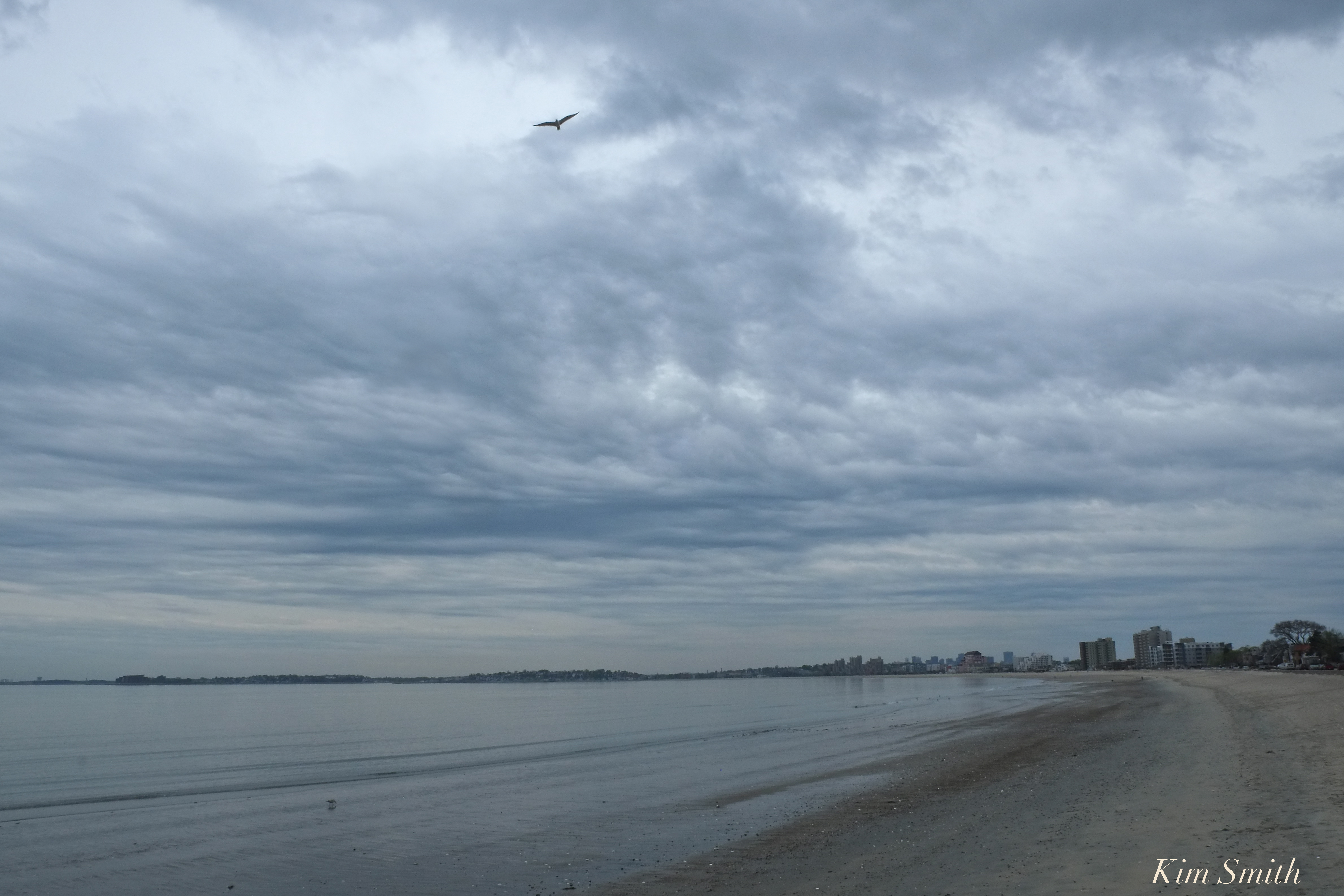 Perhaps you might not think a fair comparison; Revere Beach is much longer than GHB, and it is under the management of the Massachusetts Department of Conservation and Recreation but I did not see a single DCR employee or officer policing Revere Beach that dog-and-trash-free Sunday afternoon.
Over the past several decades, communities throughout Massachusetts have been learning how to live with Piping Plovers. I am hopeful that the more we learn about the issues confronting the Piping Plovers, the Gloucester community will come together to take the steps to insure their safety and successful nesting.
There are a great number of helpful signs at Revere Beach.
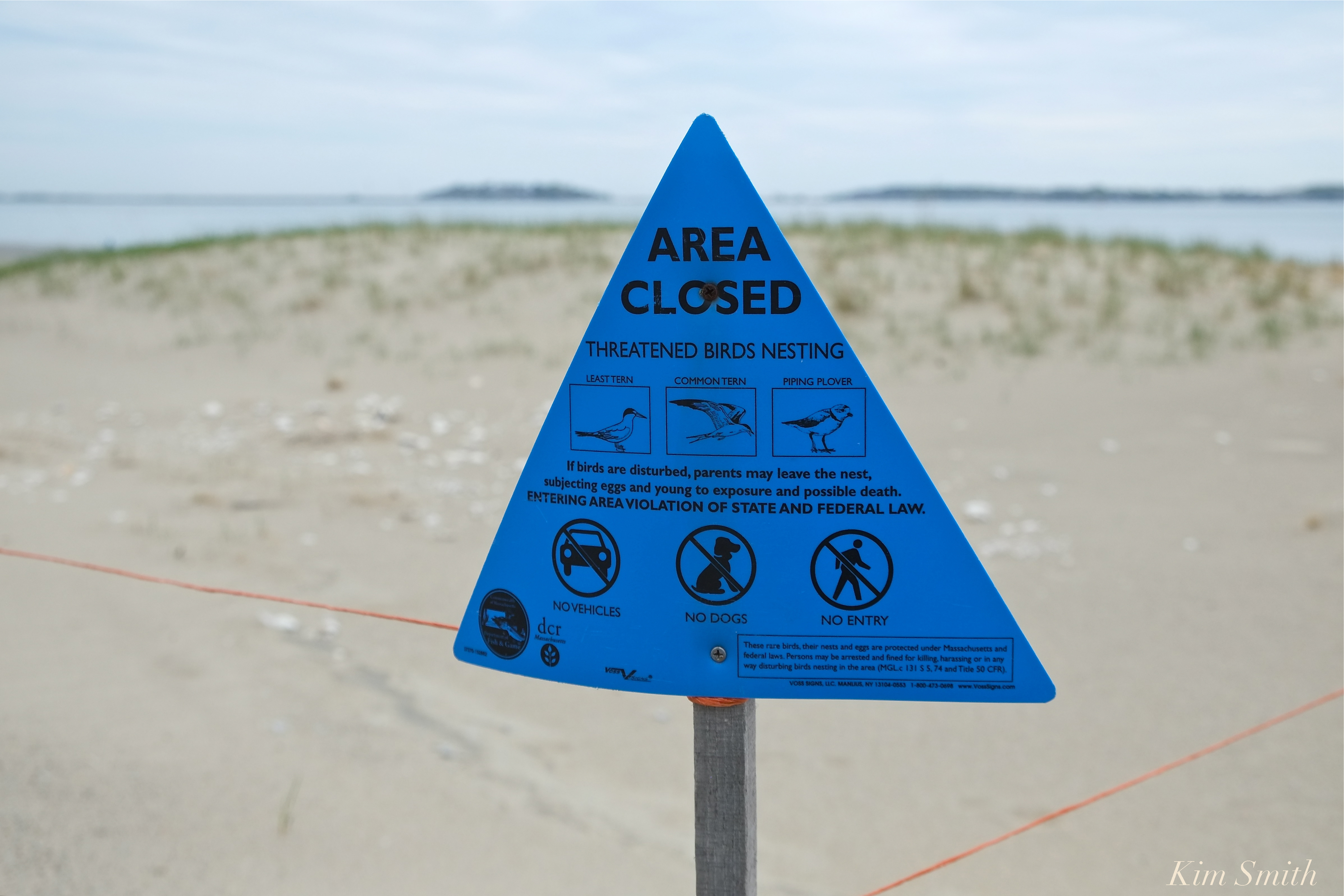
The triangular-shaped signs that are posted at the PiPl nesting areas are on the small side, only about 8 inches. 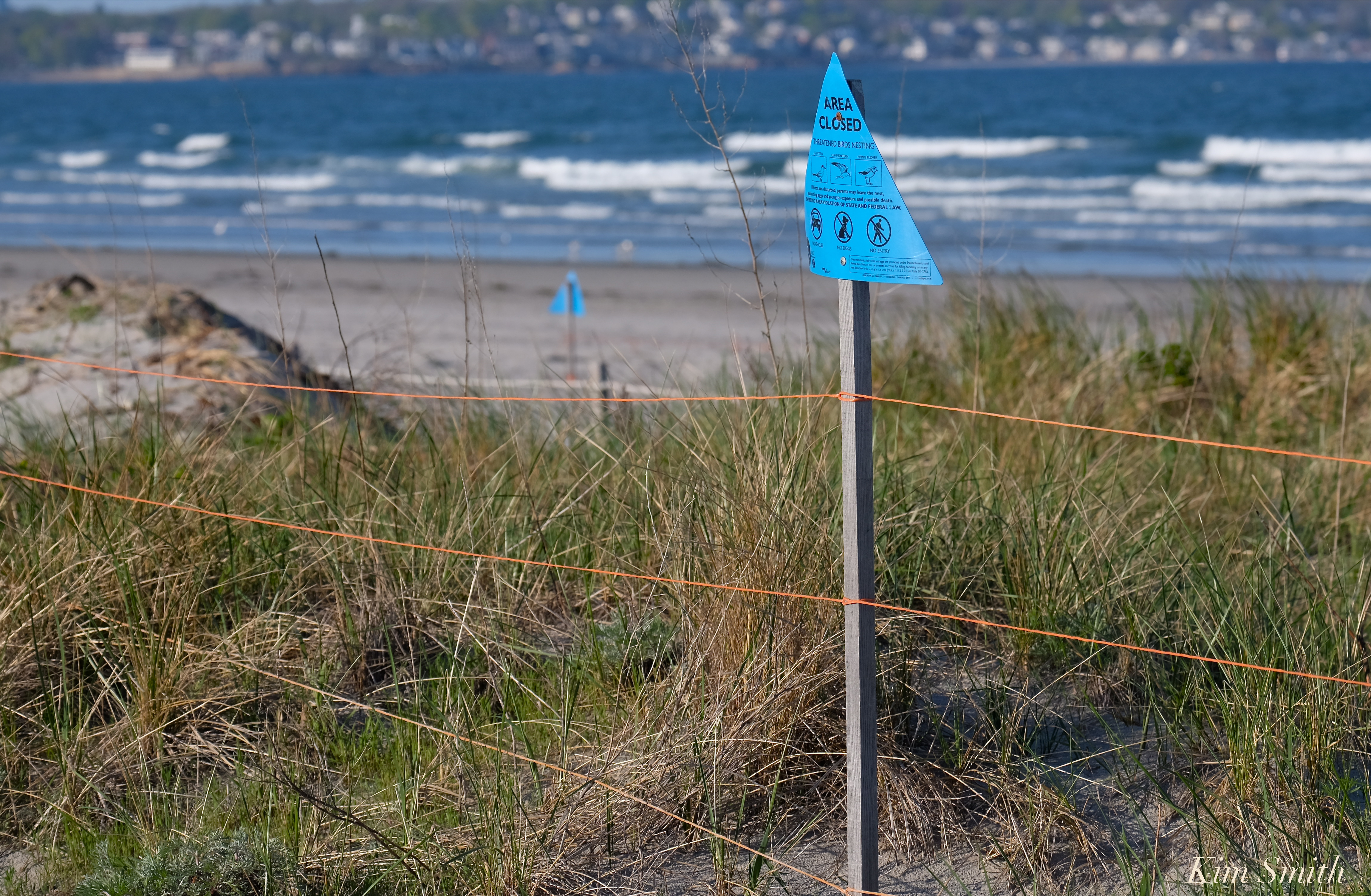
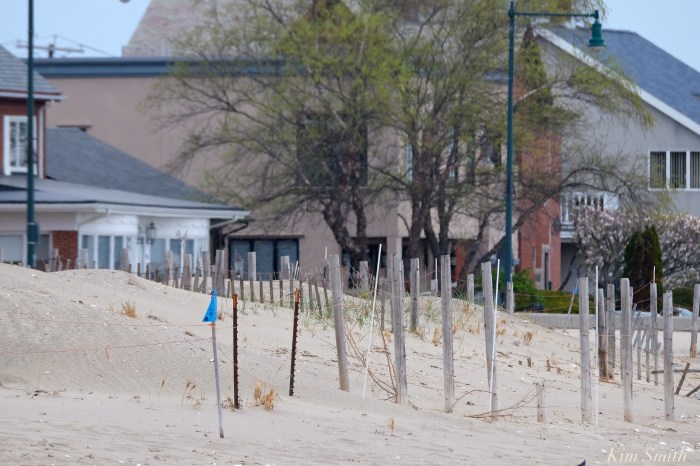
Just like at Nahant Beach (above) many of the roped off areas at Revere Beach have three rows of roping.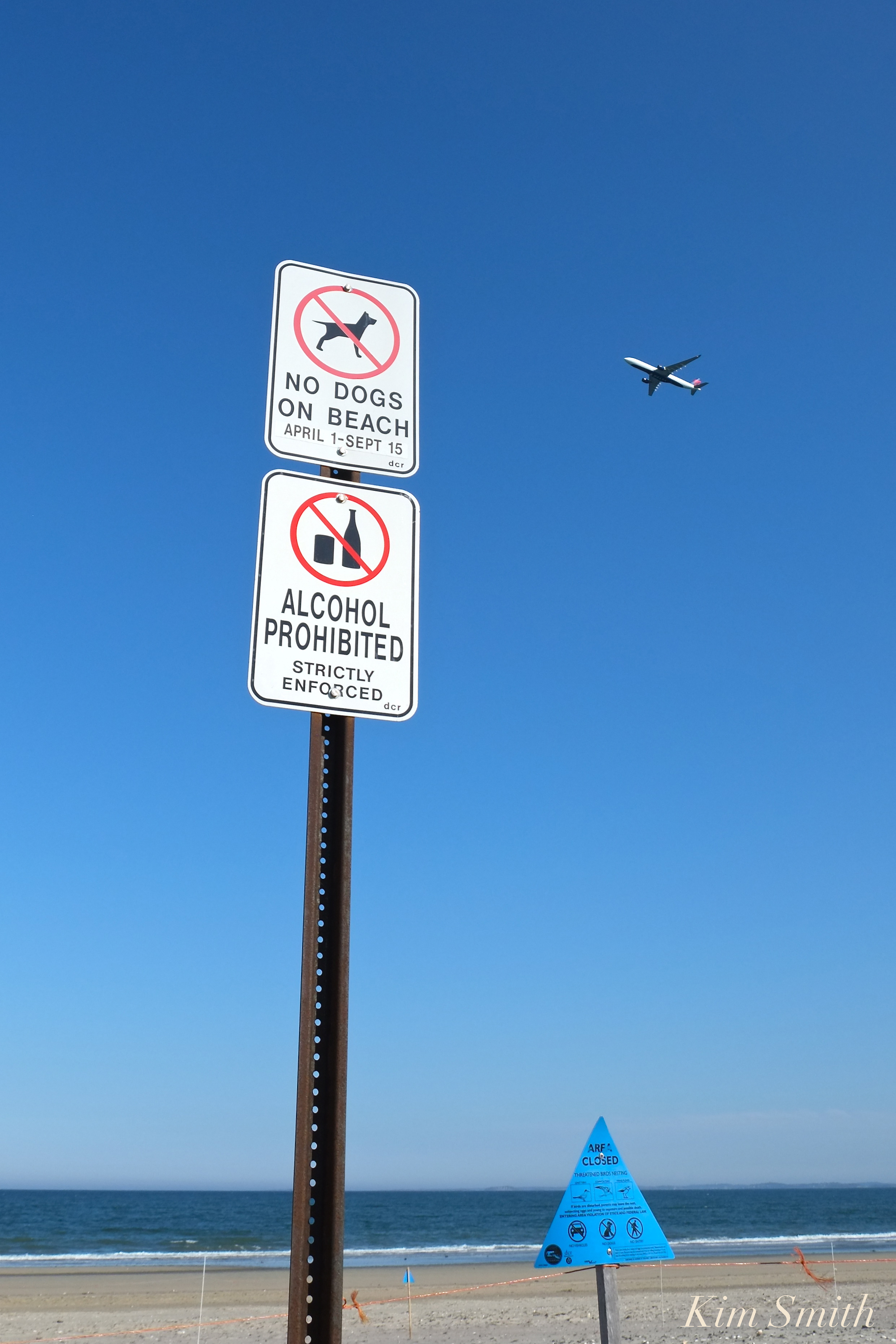
At Revere Beach dogs are not allowed on the beach beginning April 1st. The rules are clearly posted at each and every entry to the beach. The signs and poles aren’t fancy and I imagine would be affordable and easy to obtain.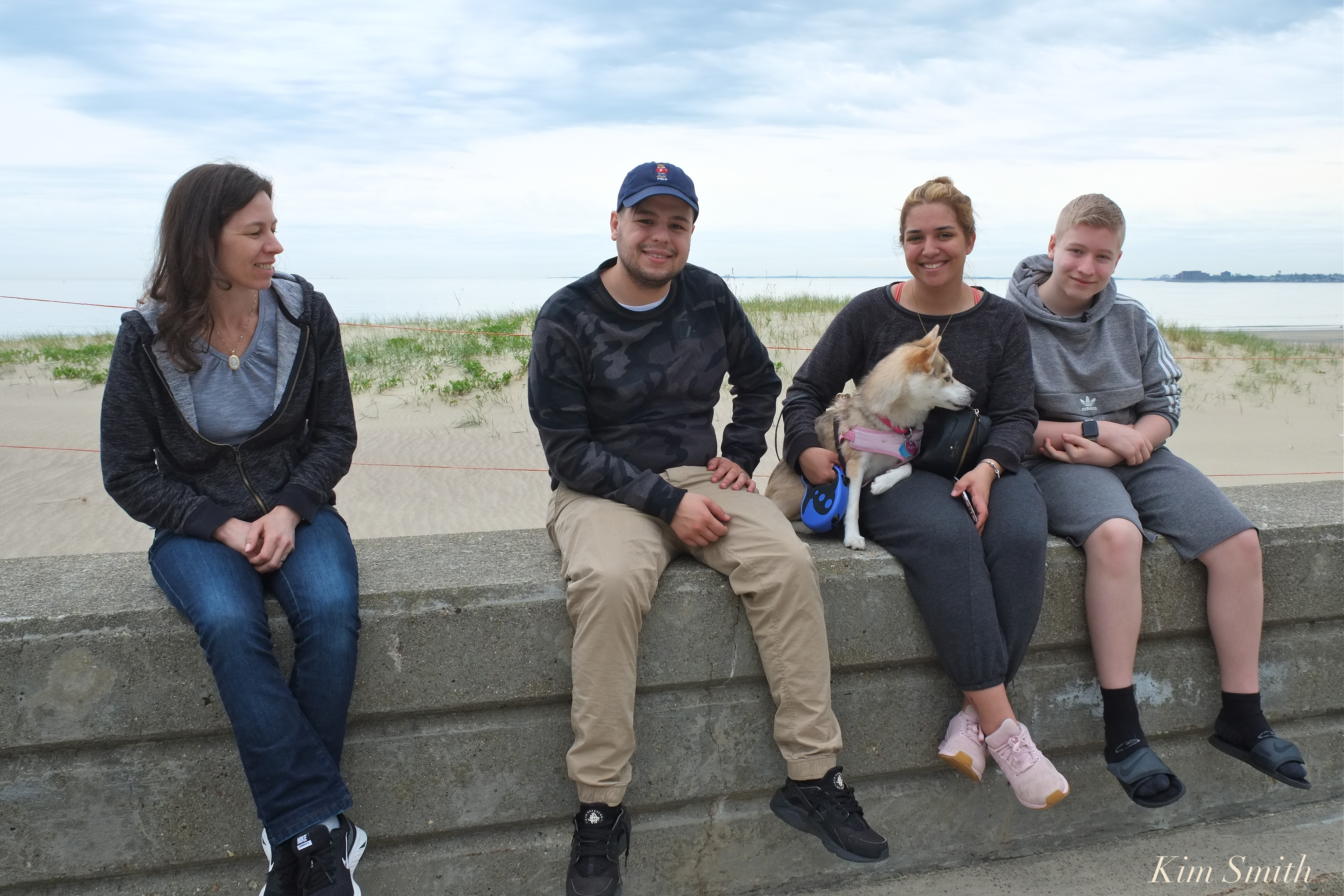
The Gabe and Gabby Family with their leashed dog on the boulevard, sitting next to a PiPl nesting area–no problem for this family to keep their dog off the beach during nesting season.
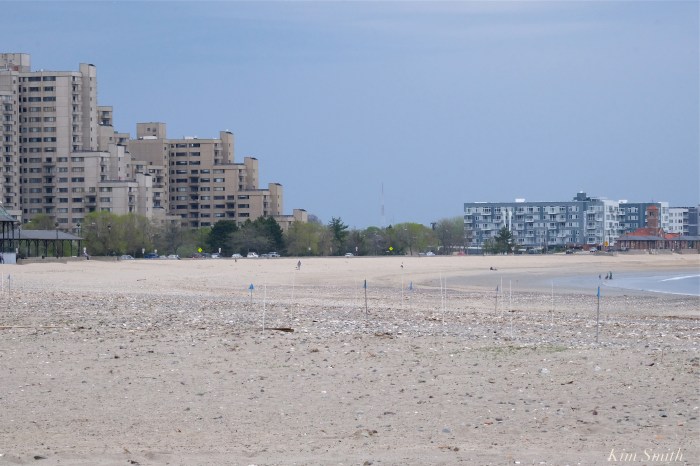
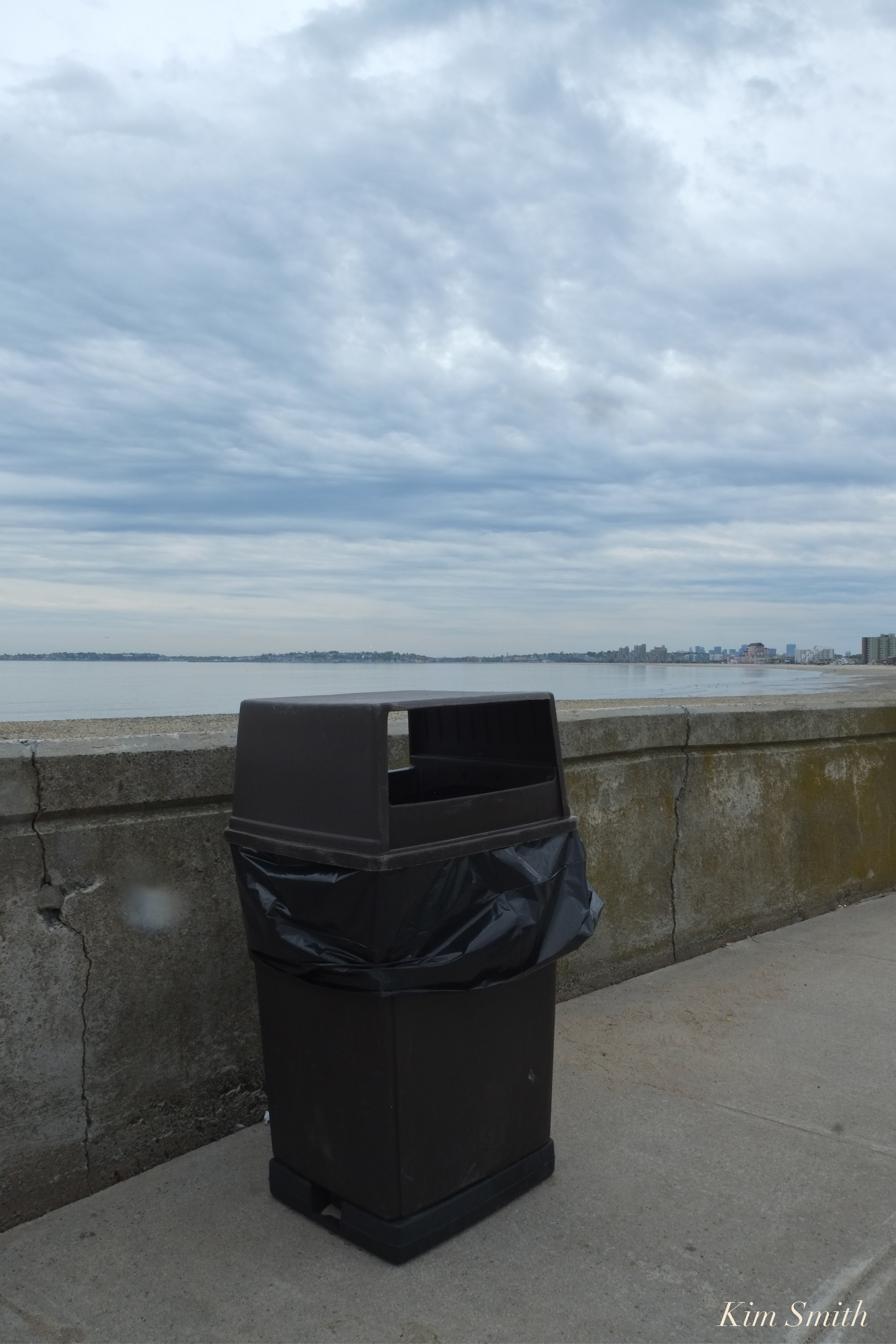 Plenty of trash barrels.
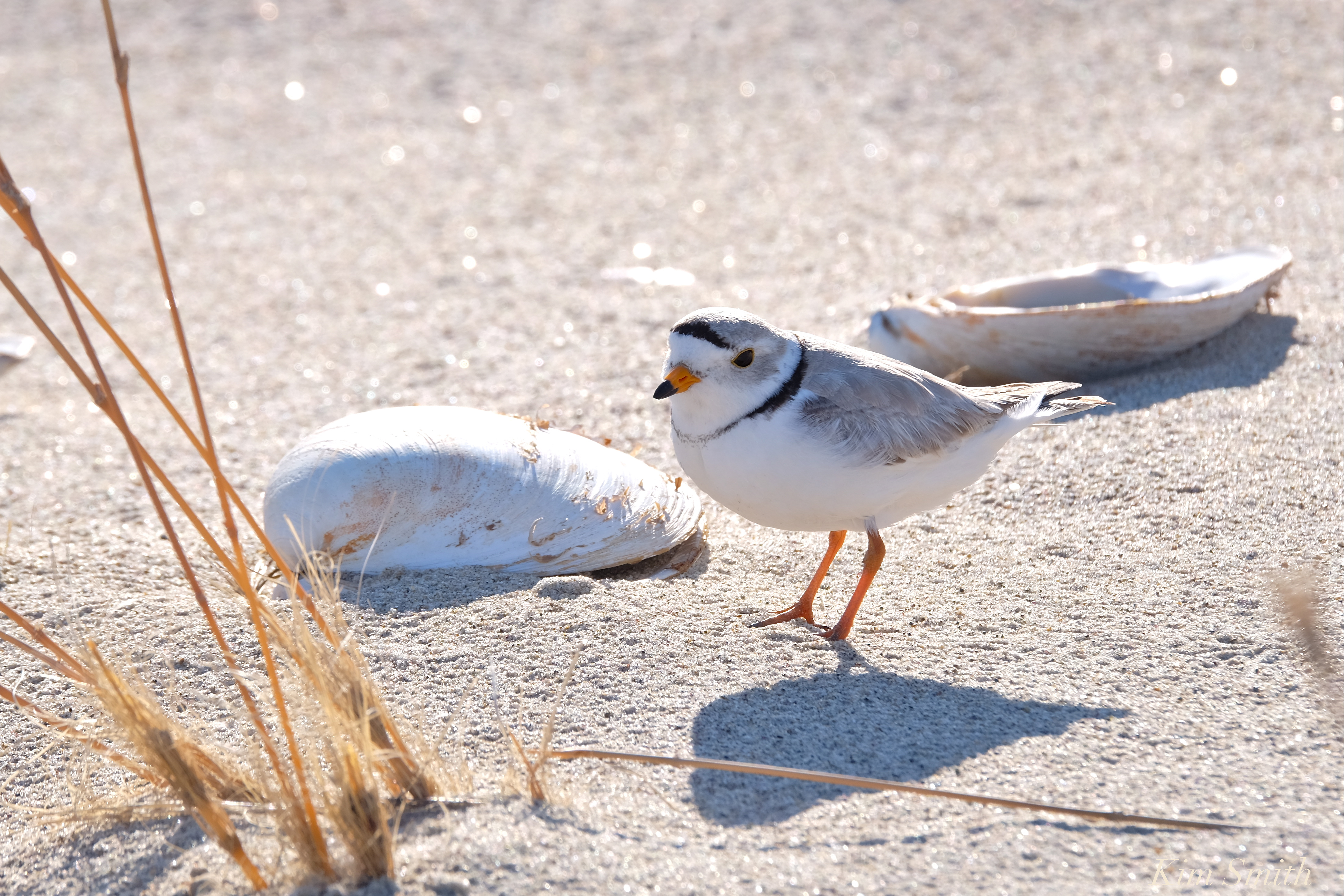 Some folks are under the false impression that the reason our GHB PiPl are nesting in the parking lot is because when they arrived it was cold and the parking lot hard pack is warm. Factually speaking, Piping Plovers arrived at beaches all along the Massachusetts coastline in mid-March and early April. As far as we know, the Good Harbor Beach PiPl are the Only Piping Plovers nesting in a parking lot.
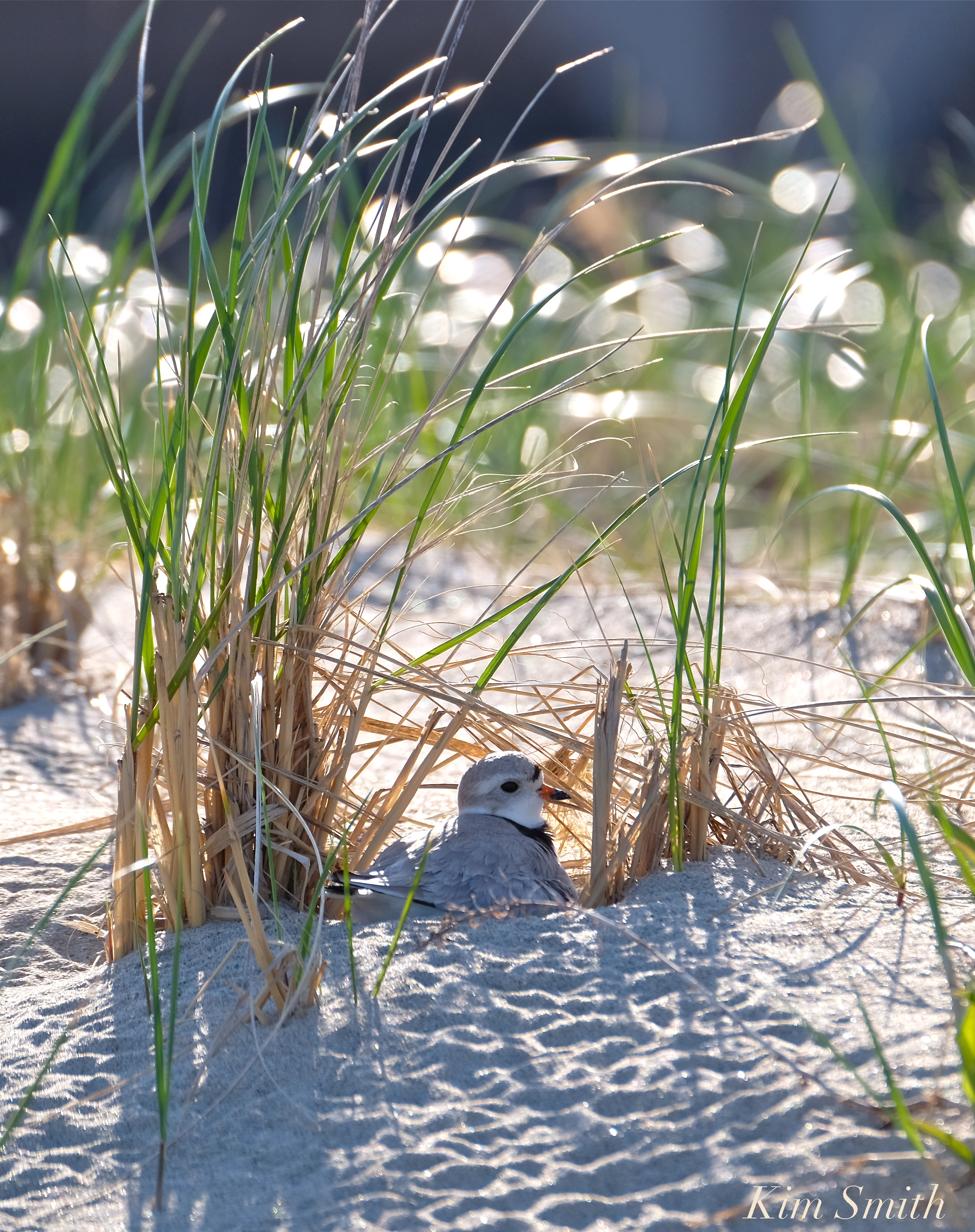 Male Plover nesting at Revere Beach. The Revere Beach PiPl were creating their nest scrapes on the beach at exactly the same time our GHB PiPl were trying to establish a nest on the beach.
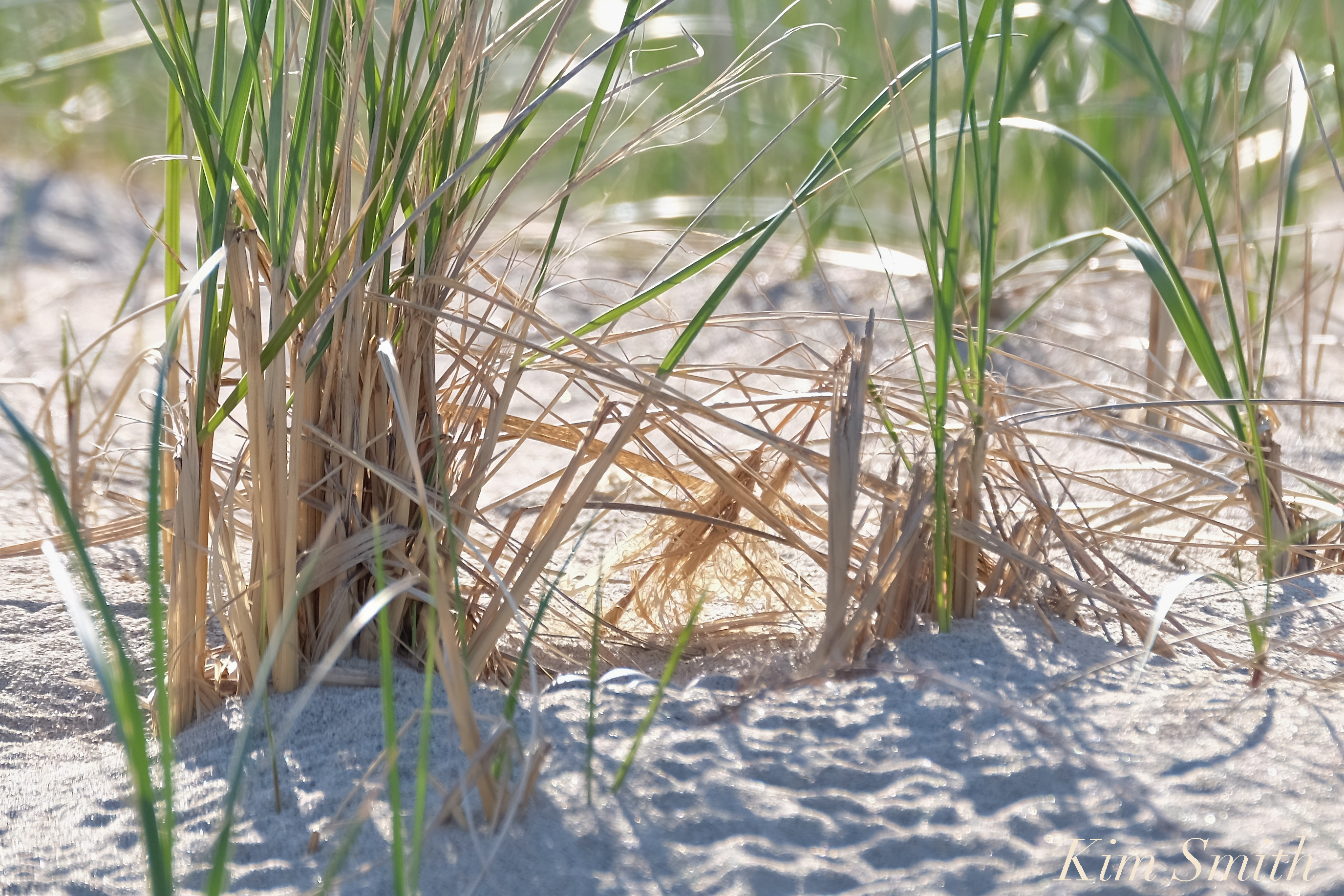
Just like our GHB PiPl family, it looks like there are four eggs in the Revere Beach nest!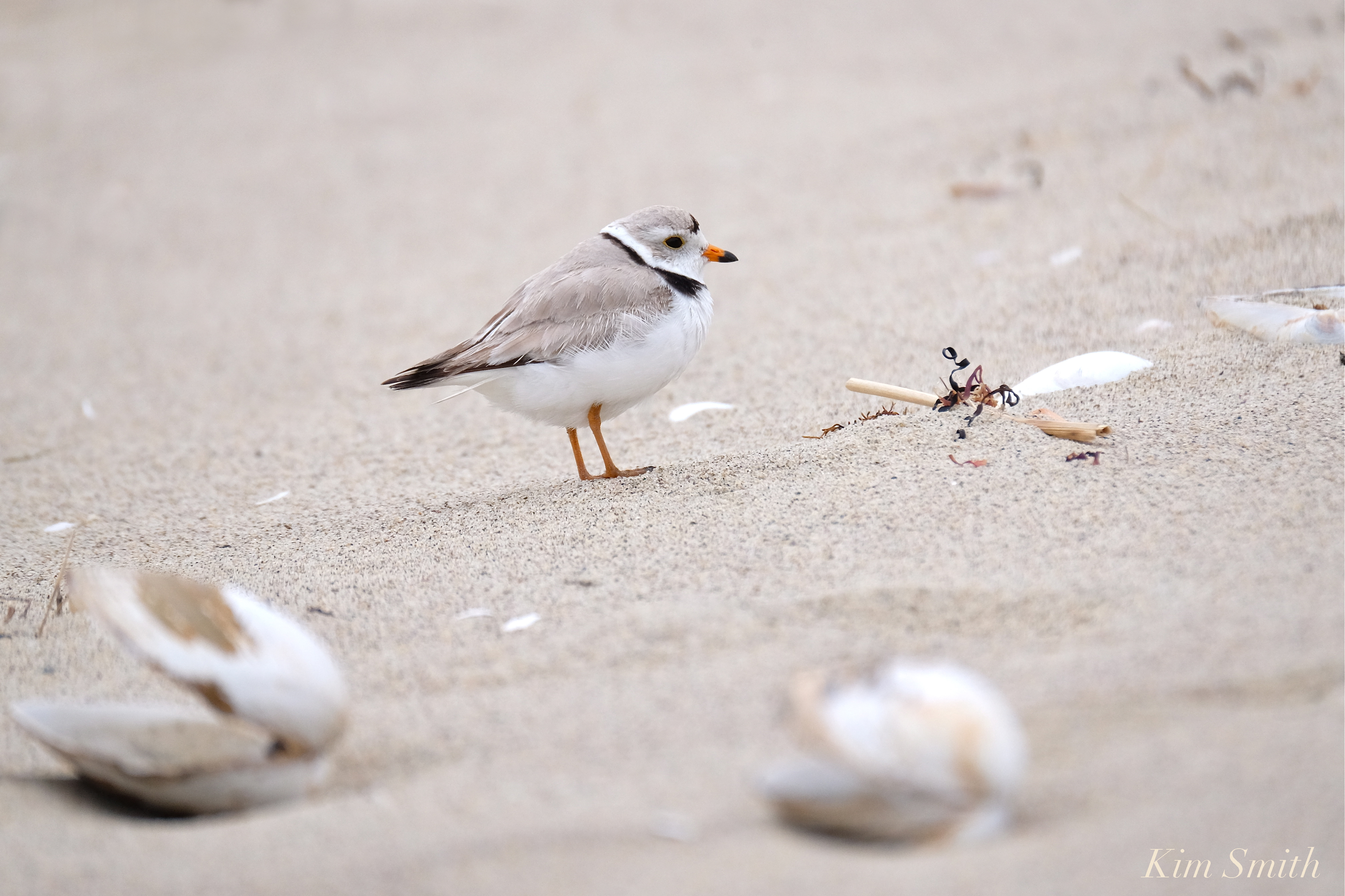
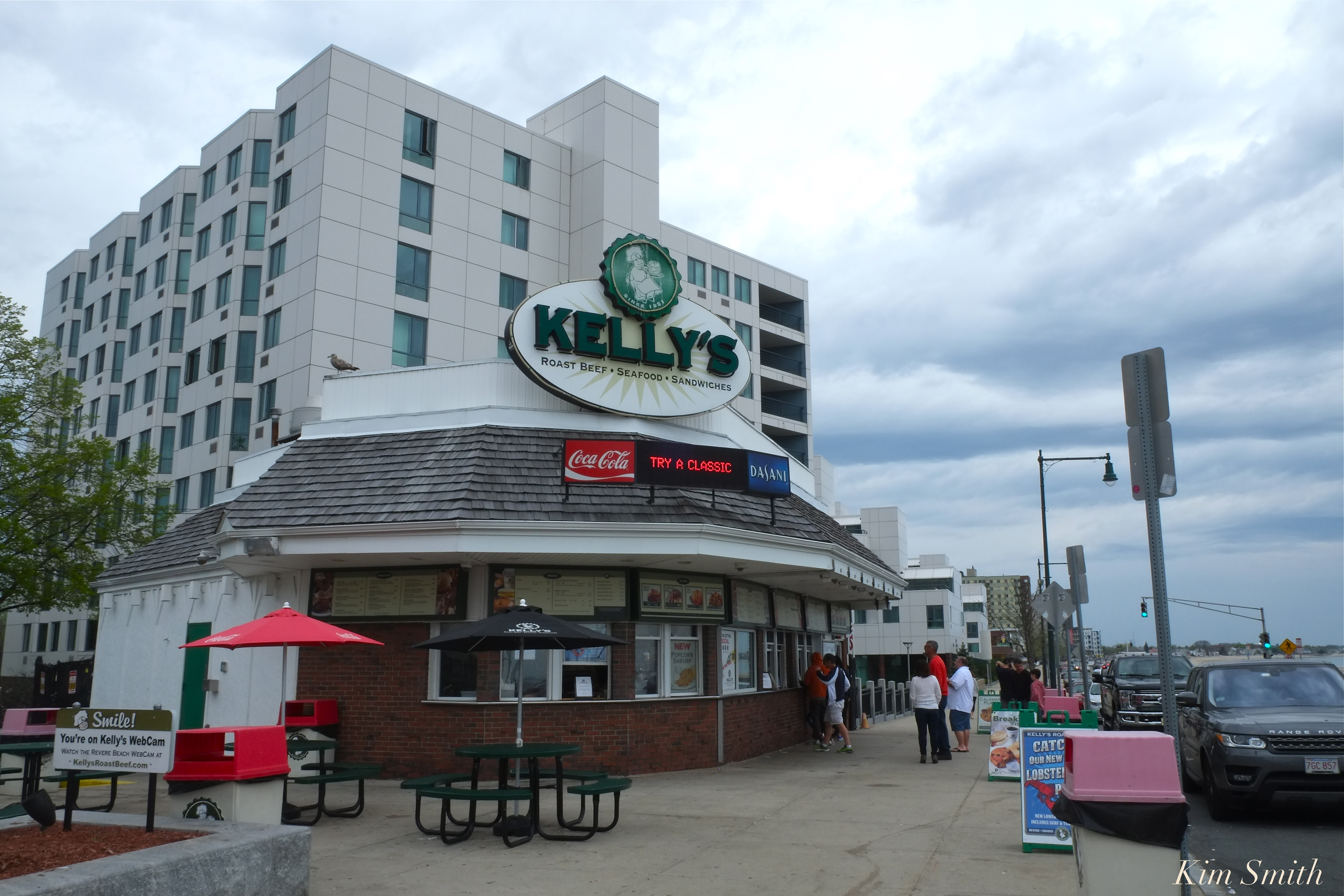 Next time I stop to visit the Revere Beach PiPl family, I am going to have to bring home some Kelly’s roast beef sandwiches for dinner. I’ve heard the seafood is pretty good at Kelly’s, too!

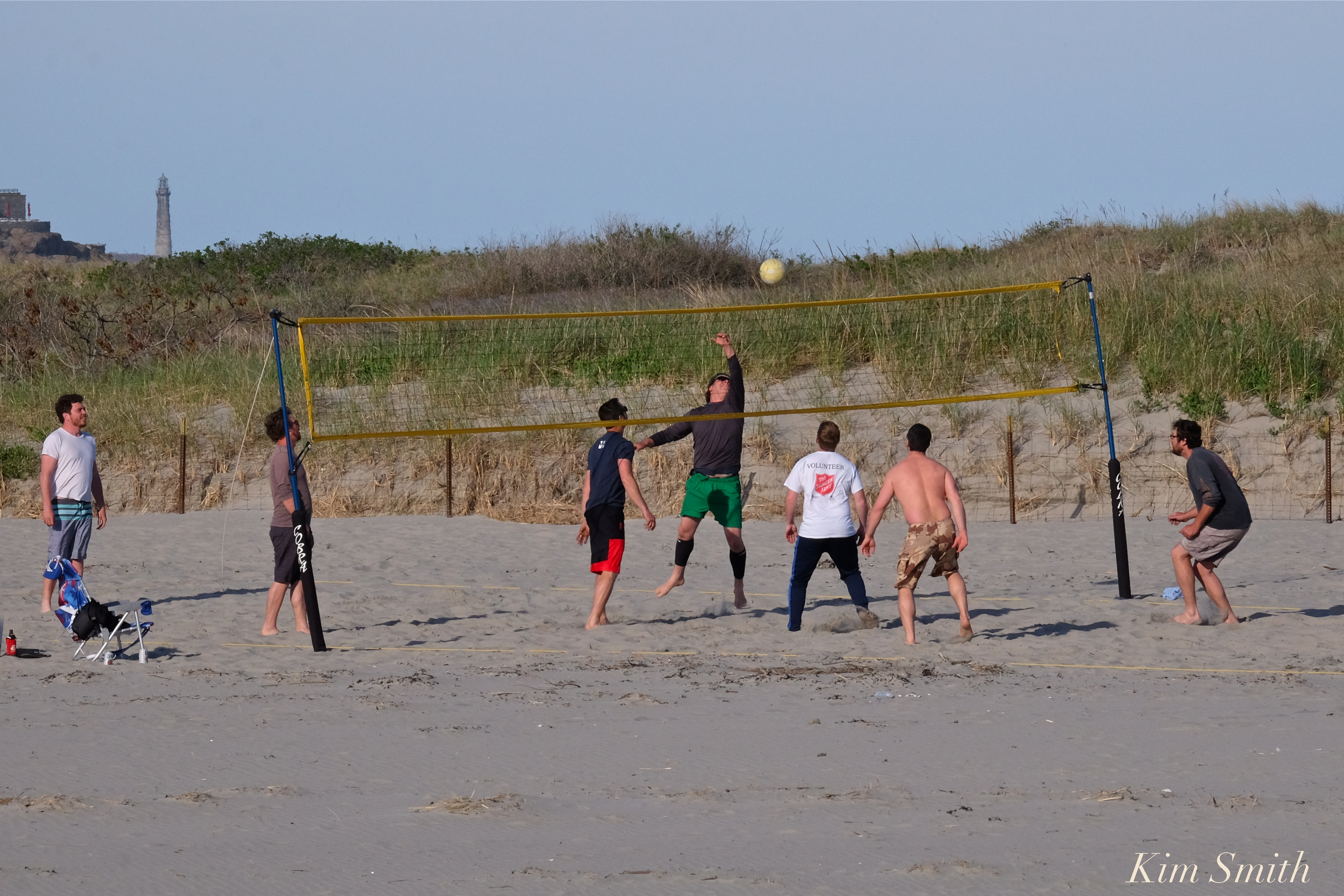 Huge shout out and thank you to the Good Harbor Beach volleyball players! They set up their net away from the Piping Plover #3 nesting area, around the corner, closer to the creek. As far as I know, no one asked that they move their nets. Grateful for the consideration 🙂

We hope the Piping Plover eggs survive the storm. The parking lot hard pack does not drain that well. After they built their first nest scrape in the parking lot, I checked on it the next day following a rainstorm and the scrape was filled with water. Let’s hope for the best with this second parking lot nest.
https://www.instagram.com/p/Bi0Ec0_nffX/

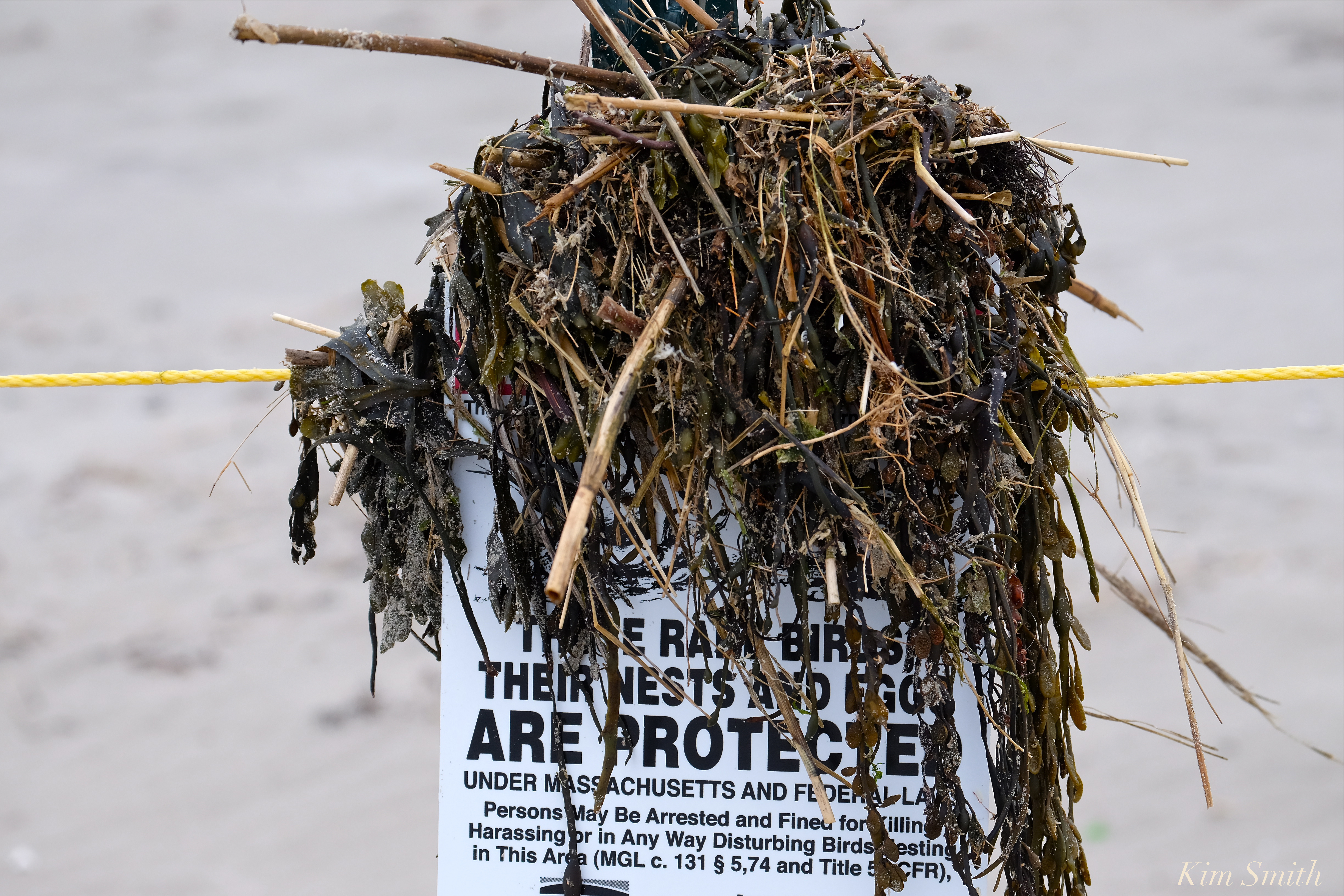 Early this morning I found the endangered species signs covered in seaweed as well as tire and dog tracks in the nesting areas. The vandalism happened sometime overnight, between 6 pm and 6am.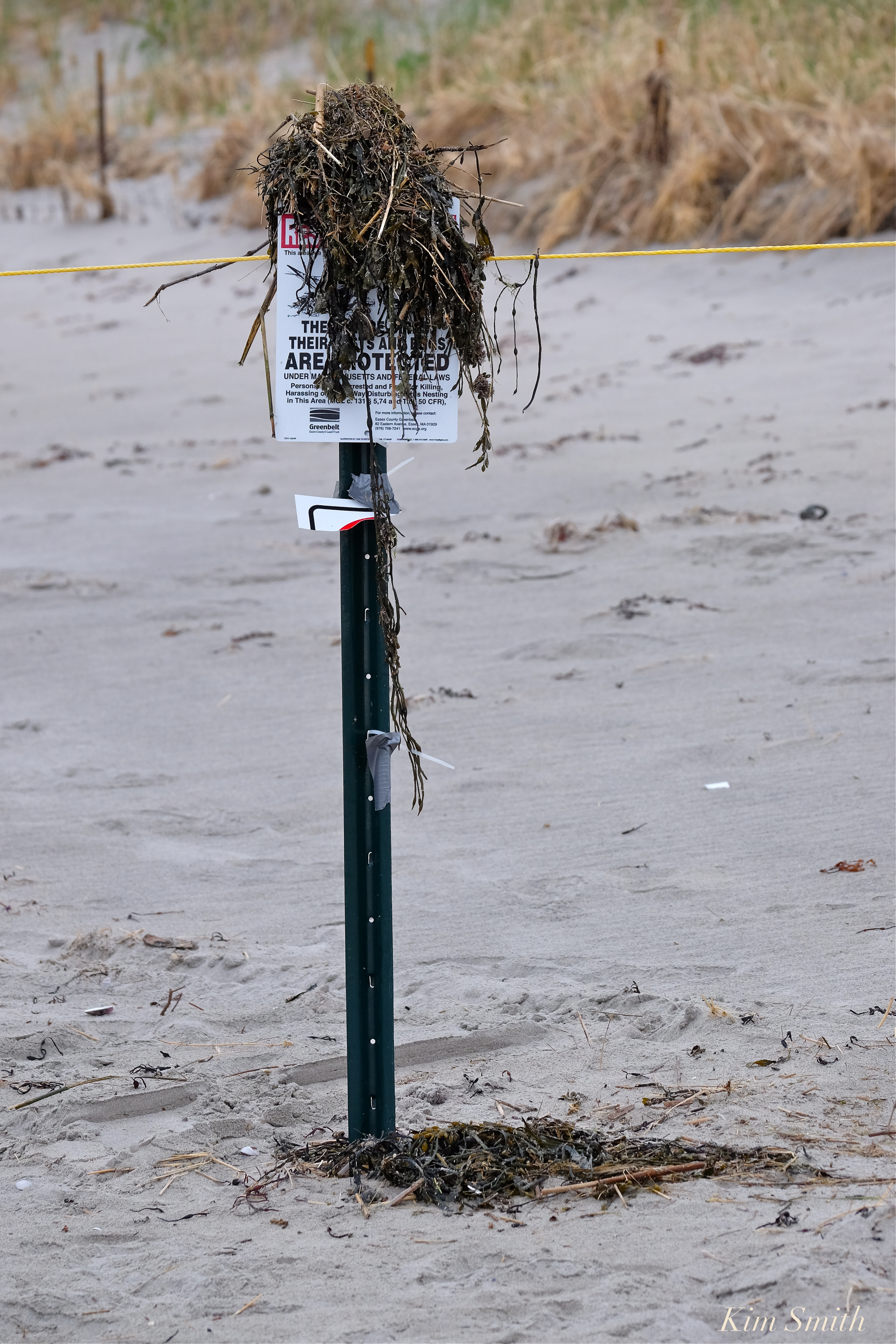
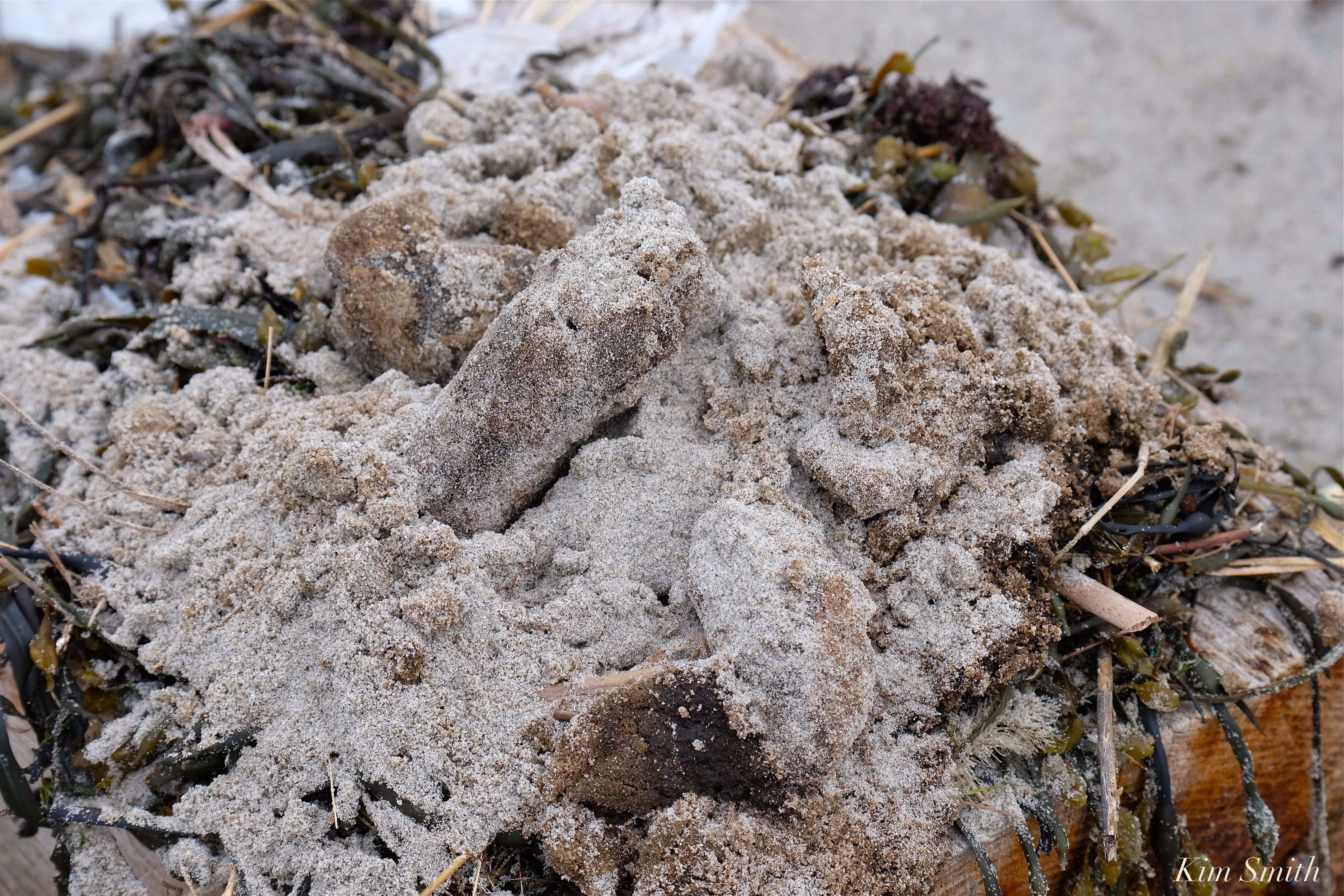 The grossest thing were the poles bent over, with a wooden box holding down the roping, and on top of that, a huge pile of sand-covered DOG POOP. There was so much poop it had to have been collected.
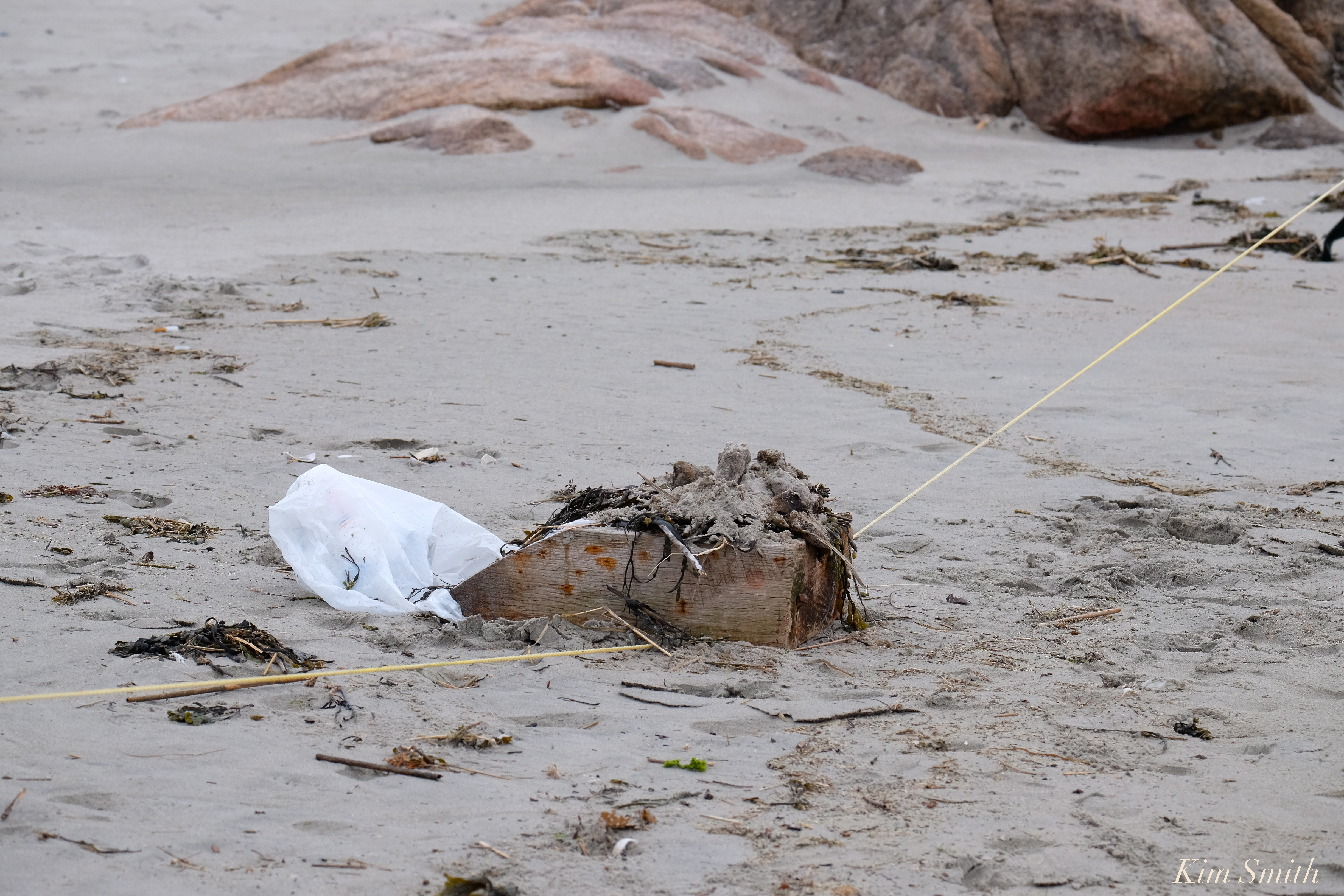
I cleared off the signs, but rubber gloves and/or a shovel are needed to remove the dog poop on top of the wooden box.
People, and not just young people, were doing donuts in the parking lot on Sunday, right next to the PiPl cordoned off nesting area. When the PiPl monitor Heather asked if the donut-makers were aware of the PiPl, they said, “Yes, but we weren’t going to hit them.”
One pair of Plovers has already been forced into the parking lot by dog owners not properly managing their dogs. There is at least one more pair of PiPl, and The Bachelor, making use of the roped off nesting areas. It would be a heartbreaker to see a second pair forced off the beach and move their nest into the parking lot, too.
Please call 911 if you see anyone harassing or harming the Piping Plovers, or vandalizing the nesting areas on the beach or in the parking lot. Thank you so very much.
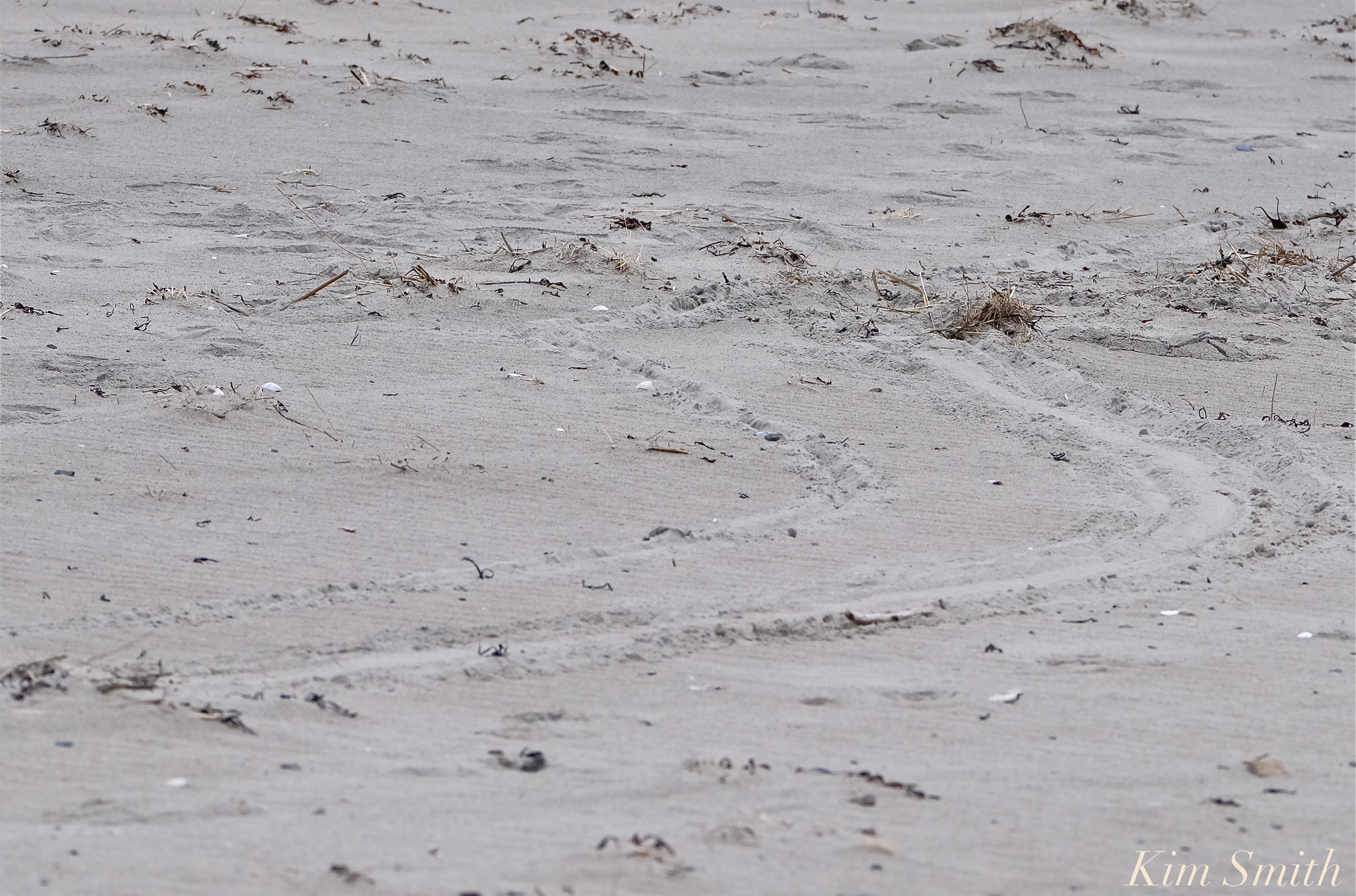 Tire tracks in the Piping Plover nesting area #3.

https://www.instagram.com/p/BiohAjhHH41/
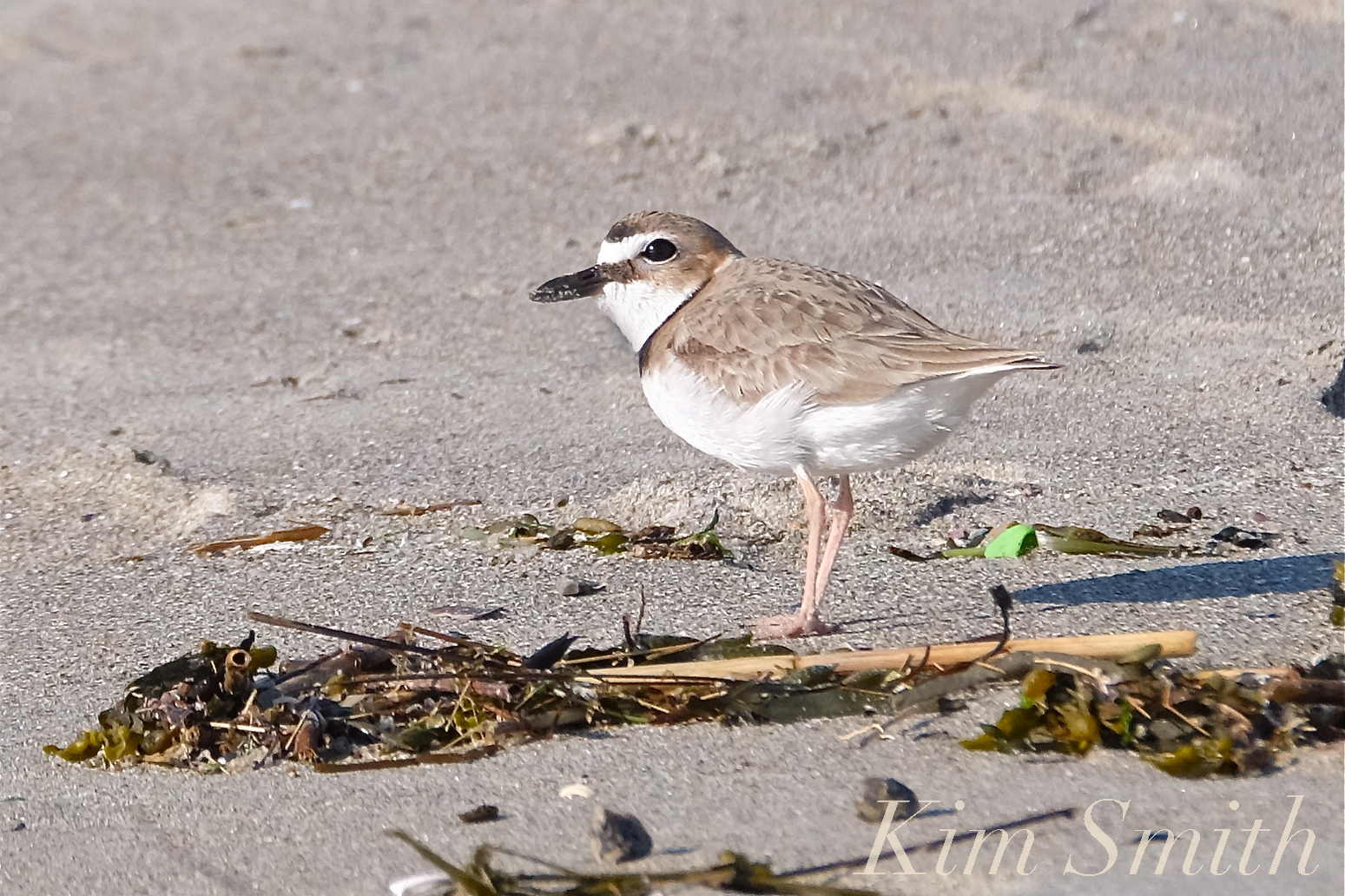 Wilson’s Plover Good Harbor Beach, Gloucester, Massachusetts
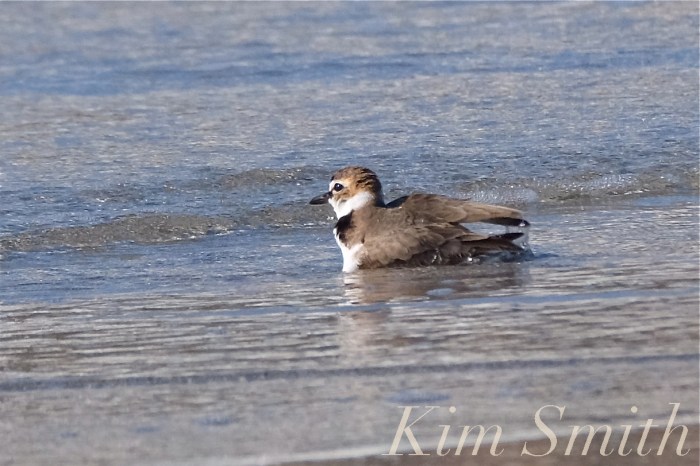
Earlier this week while checking on the PiPl, a small group of shorebirds caught my eye. They were foraging at the water’s edge. Although the fog was as thick as split pea soup and visibility not great, something seemed off with the birds–they looked like Piping Plovers–but seemed a tiny bit bigger, and the silhouette of their bills was larger and chunkier than that of our PiPl. When they scurried along, coming closer, I could see that their bills were solid black, too, and their legs and feet were a fleshy pink, not the bright PiPl orange.
The three foraged nearly identically to the way Piping Plovers forage, pecking and darting at the water’s edge, enough so that when Papa Plover caught sight, he chased them further down the beach and out of his territory.
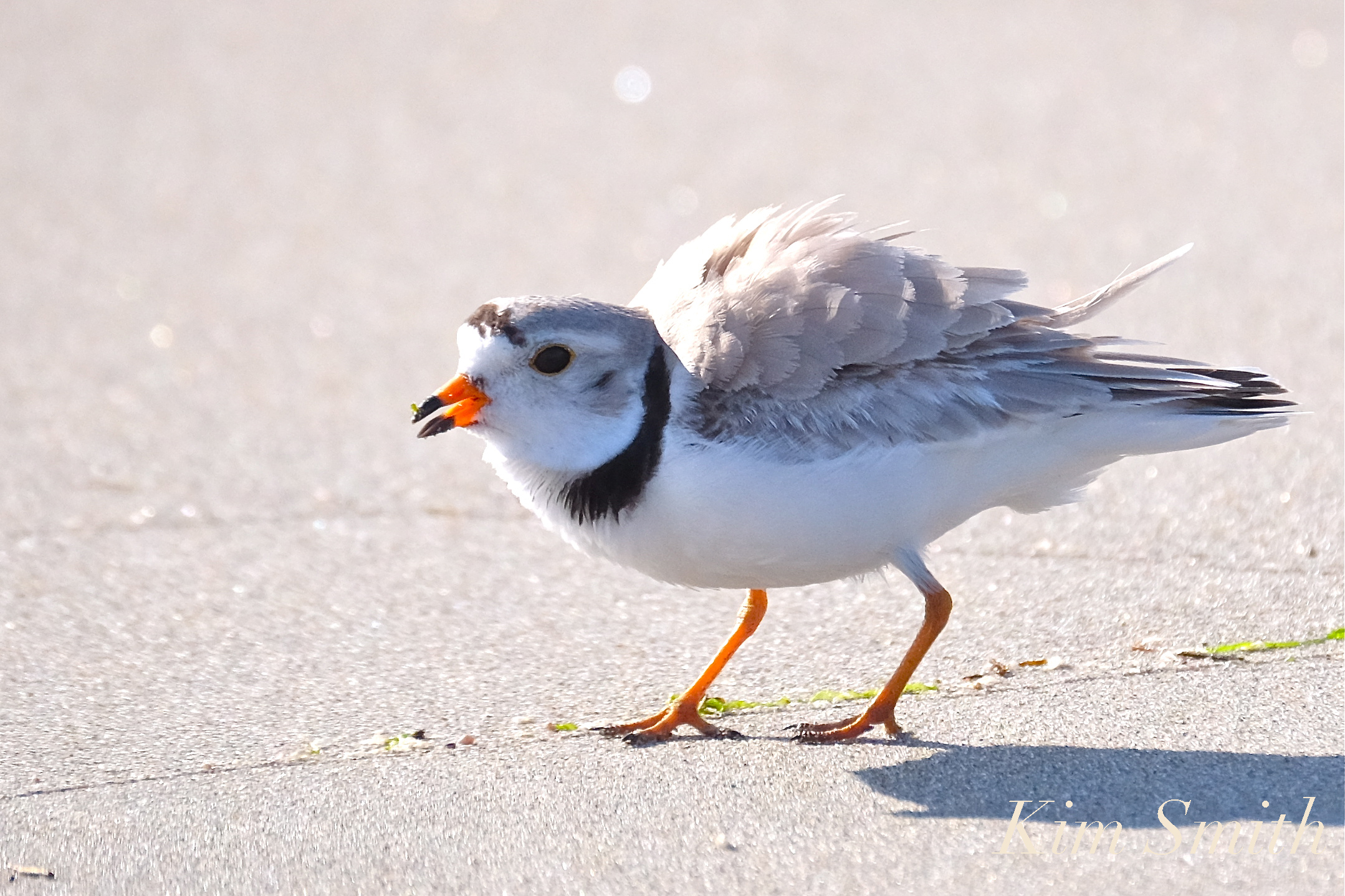 Papa Piping Plover, with feathers puffed out to appear larger, chasing the Wilson’s Plover out of his #3 nesting area.
In the above two photos, compare the orange legs and feet of the PiPl, versus the Wilson’s fleshy pink legs and feet. The PiPl bill is black with differing degrees of orange; the Wilson’s bill is pure black and thicker.
The mystery plovers were fairly far down the beach and I only got few good photos, but did take some footage of Papa chasing the odd plovers with the pale pink legs.
Later at home I was able to identify the shorebirds and amazingly, they are Wilson’s Plovers!! I write amazingly because they are a southern species of plover, rarely seen as far north as New Jersey. I mentioned to Greenbelt’s Dave Rimmer about the Wilson’s Plovers. I don’t think he believed me at first, but after taking a walk on the beach, he agreed, yes, they were Wilson’s Plovers!
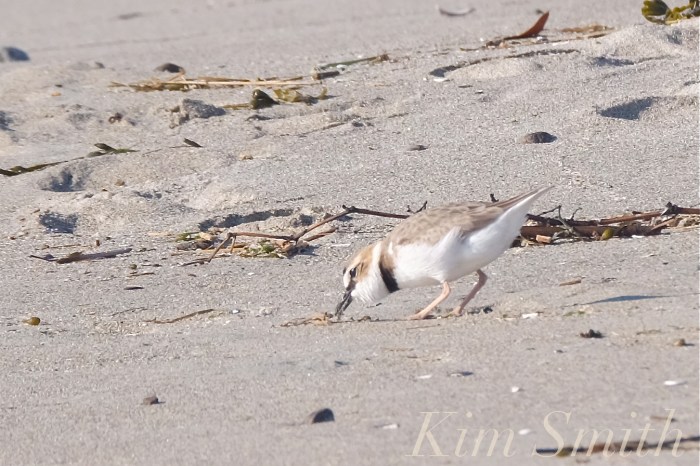
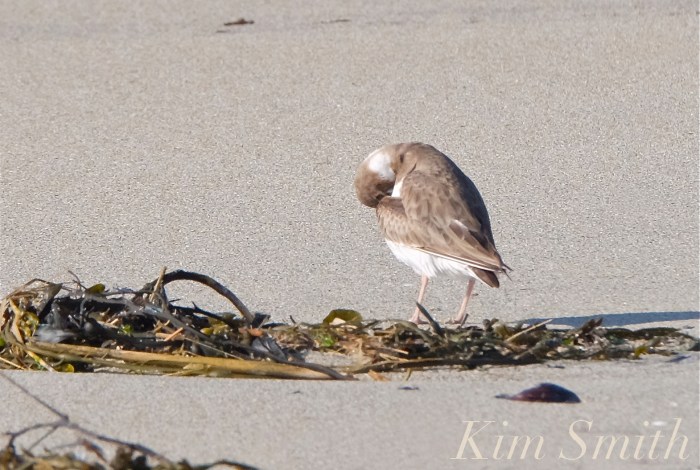
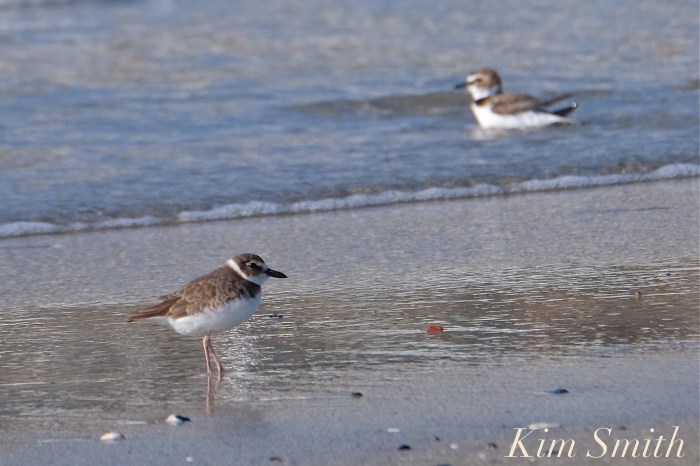
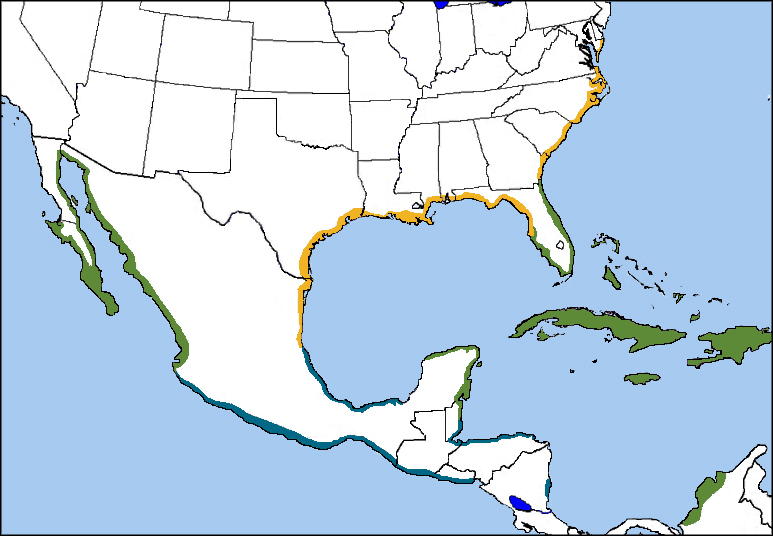 Wilson’s Plovers live along beaches of the southern Atlantic and Gulf coasts. They are named after the ornithologist Alexander Wilson who discovered them on Cape May in 1813. The species is (and was at that time, too) very rare for New Jersey, let alone northern Massachusetts!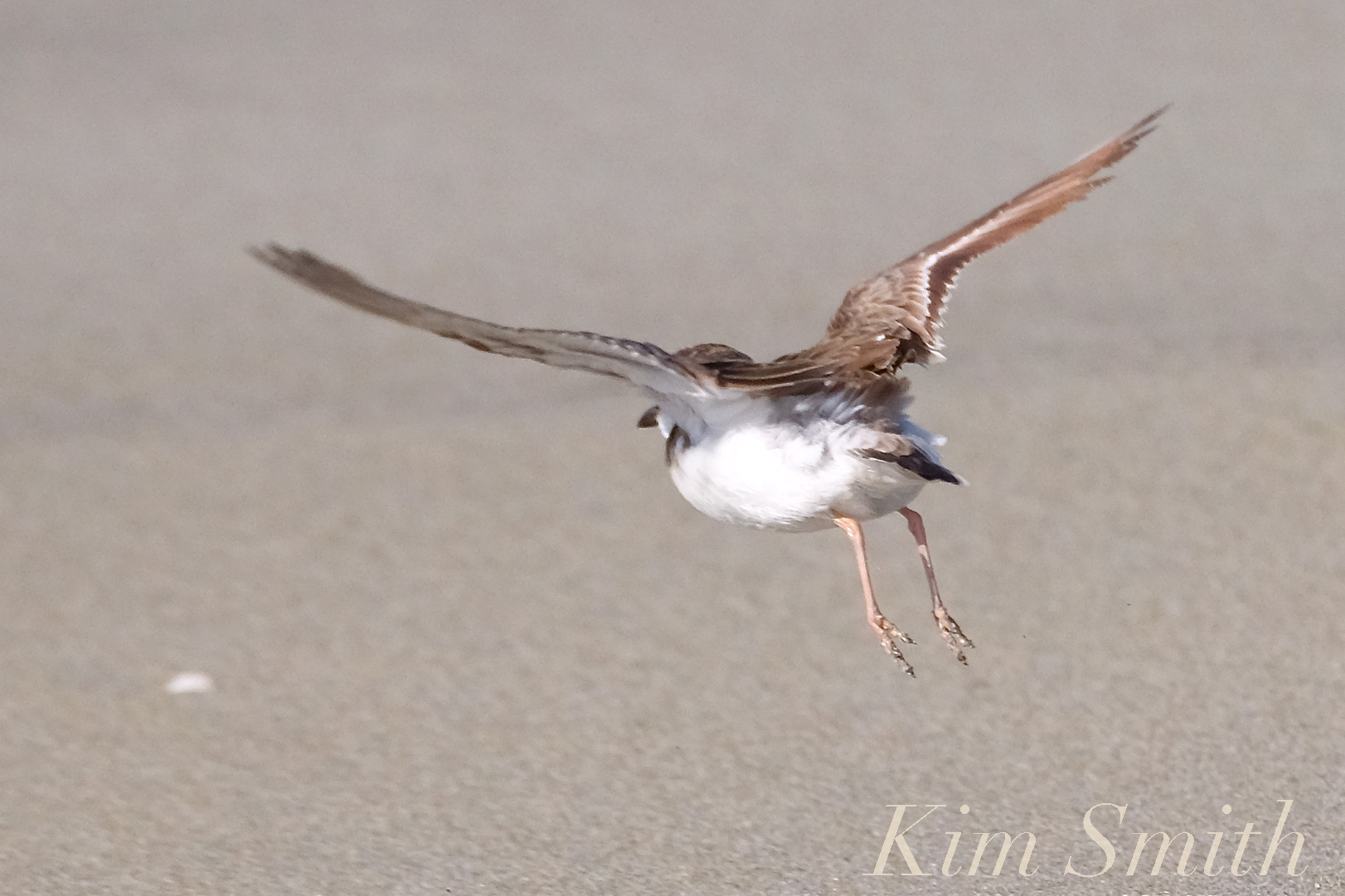
Pretty pink legs of the Wilson’s Plover.
Wilson’s Plovers are listed as threatened or endangered in some states. As with Piping Plovers, disturbances to nesting areas and loss of habitat are the primary threats to this plover species.
I only spotted the Wilson’s Plovers early in the day. The fog engulfed the shoreline even more, making additional sightings nearly impossible. The following morning I stopped by GHB to check on the PiPl, and did not find the Wilson’s. Ornithologists call these visitors in places far outside the bird’s range “vagrants,” but I prefer to think of them as guests. Please write and let us know if you see a Wilson’s Plover, and please take a snapshot if possible. Thank you.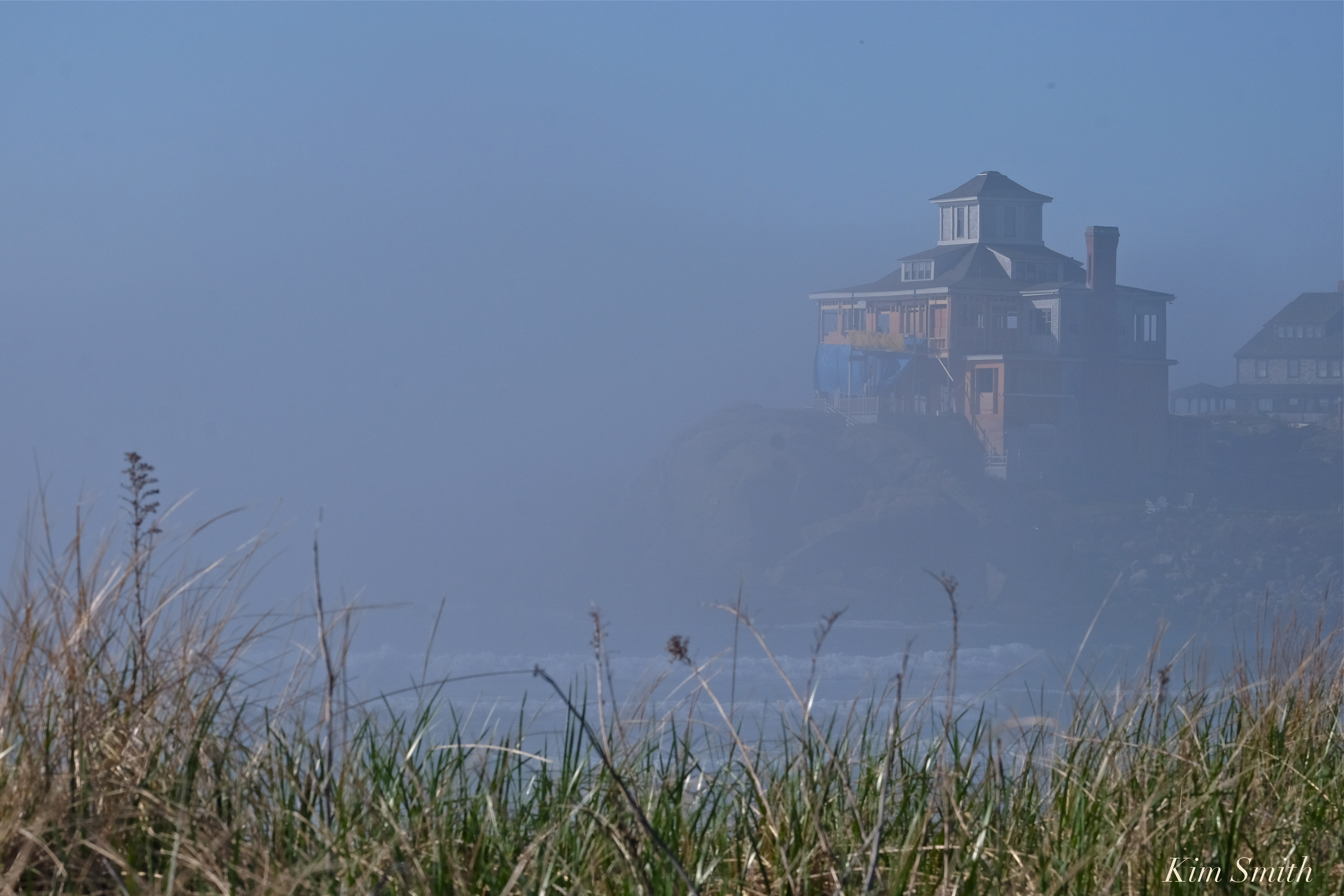

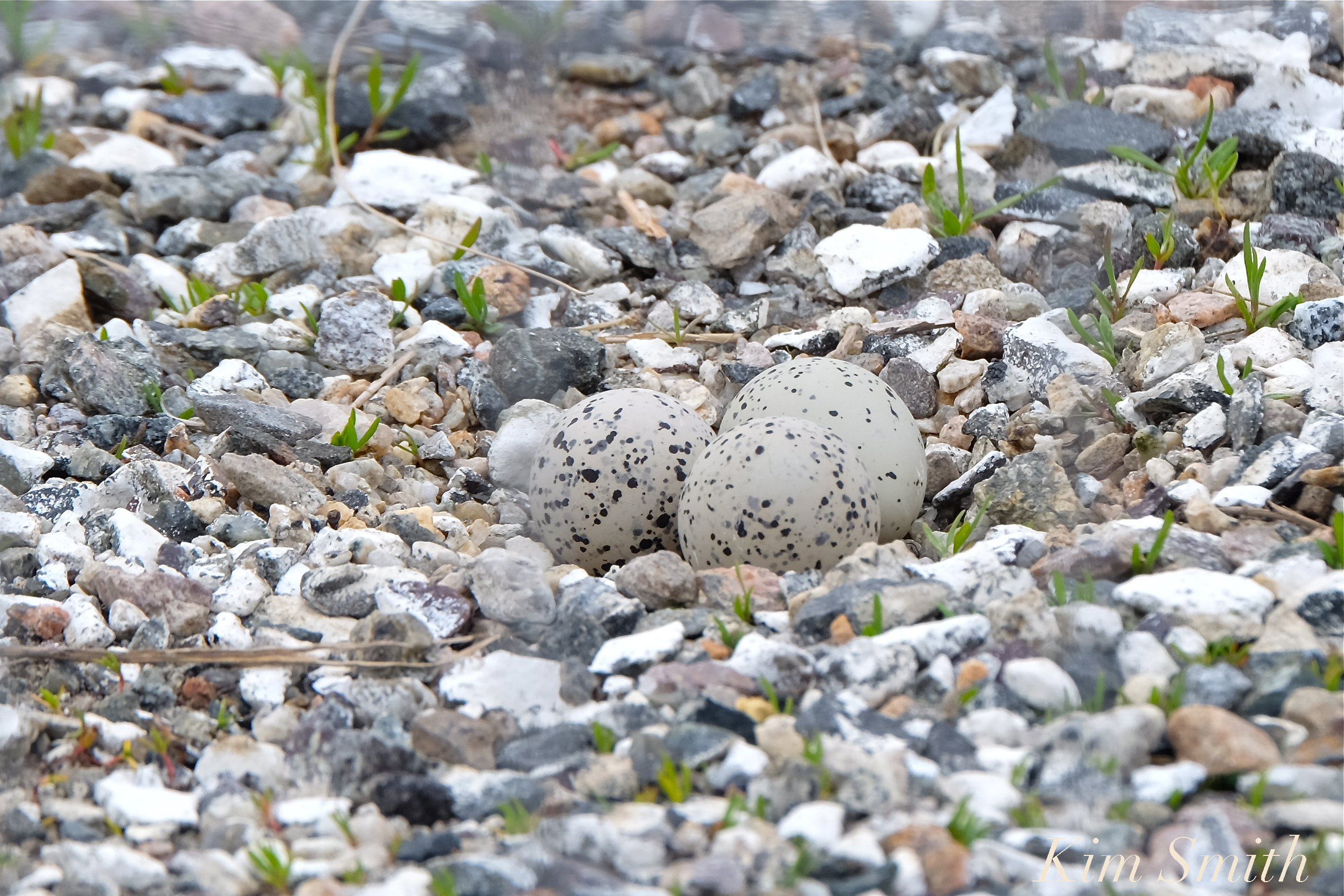 Our Mama PiPl laid egg number three today!

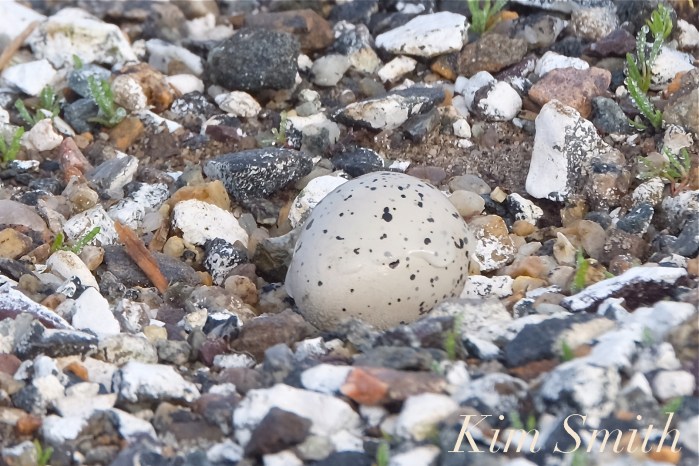

Piping Plover Eggs Good Harbor Beach Parking Lot
A second egg was laid yesterday by our Parking Lot Plover family. The second egg is an indication by the PiPl that they are committed to the nest, which means it is time to put up the wire exclosure. If the exclosure is installed earlier, the risk of the PiPl abandoning the first egg is far greater. We immediately called Essex County Greenbelt’s Dave Rimmer to let him know about the second egg. 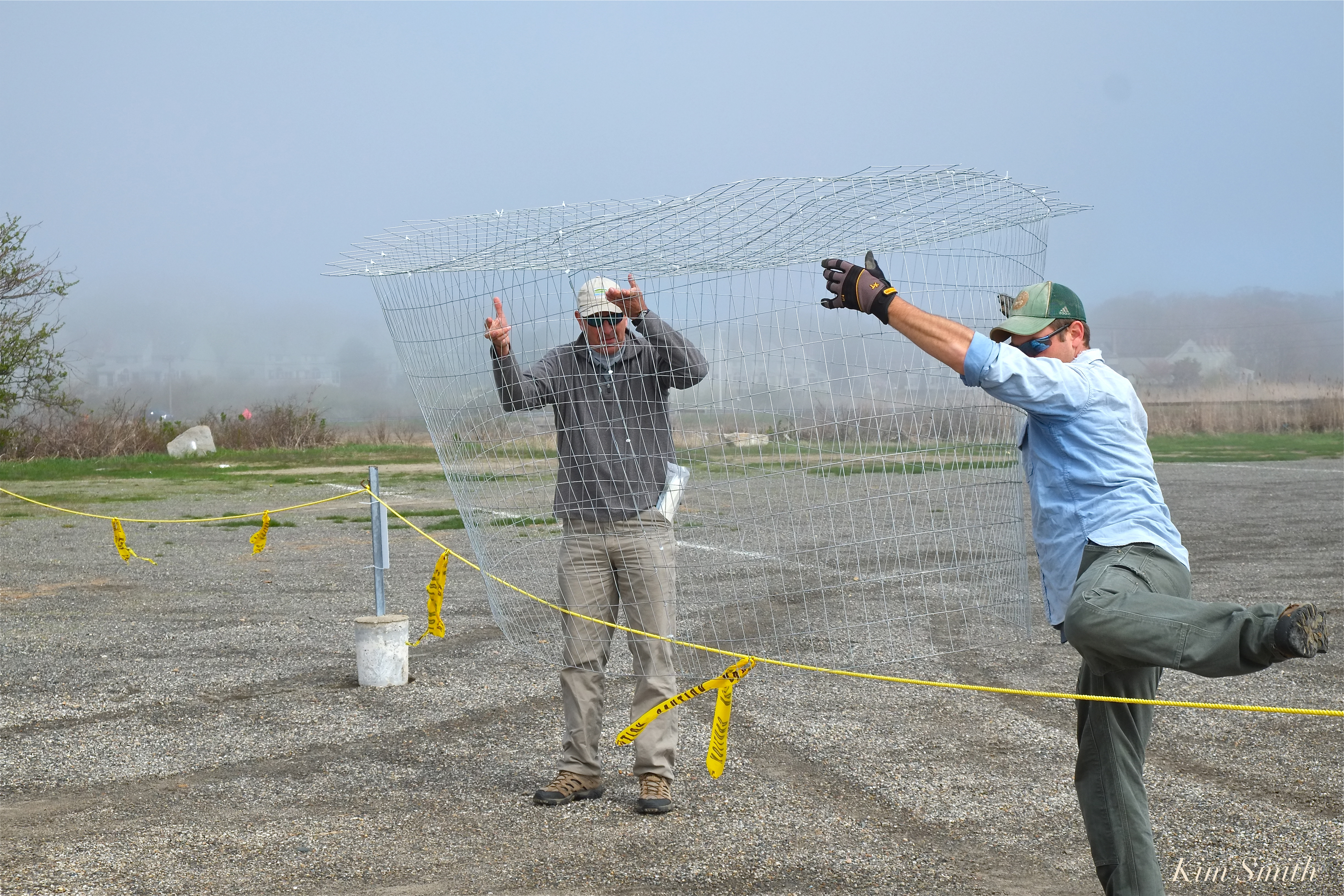
Dave and his assistant Mike Carbone arrived early this morning to set up the exclosure. Roughly six feet in diameter and made of wire with four inch spacing, the exclosure’s four inch openings are the ideal size to let PiPl in and out, and to keep large predatory birds and small mammals from entering. With thanks and gratitude to Dave and Mike for coming so quickly to exclose the nest.
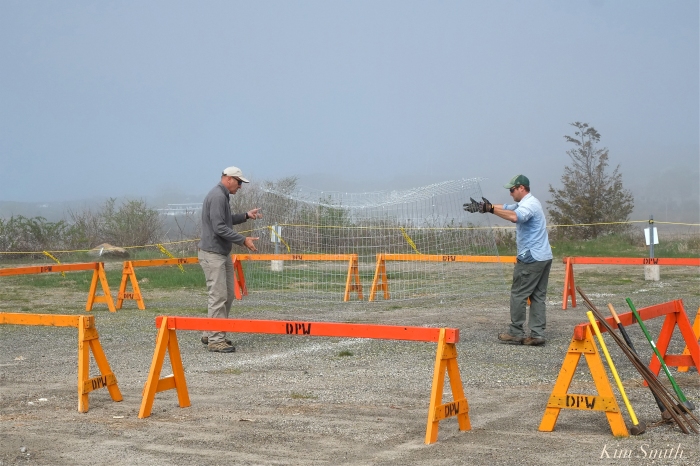
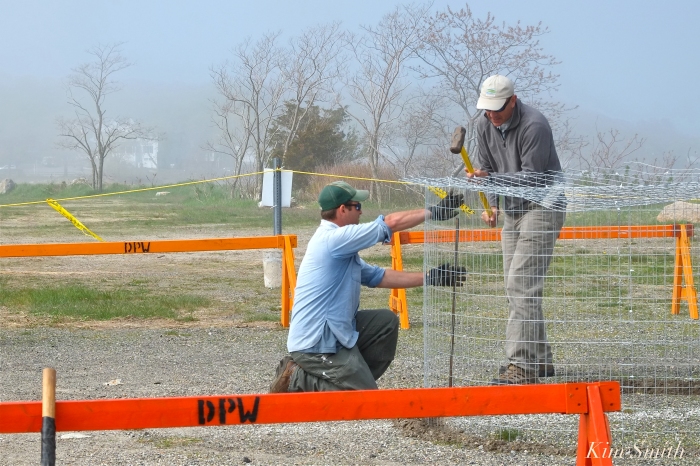
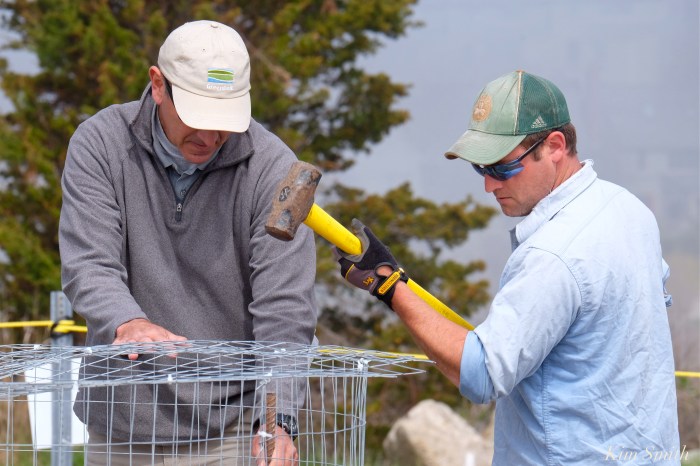
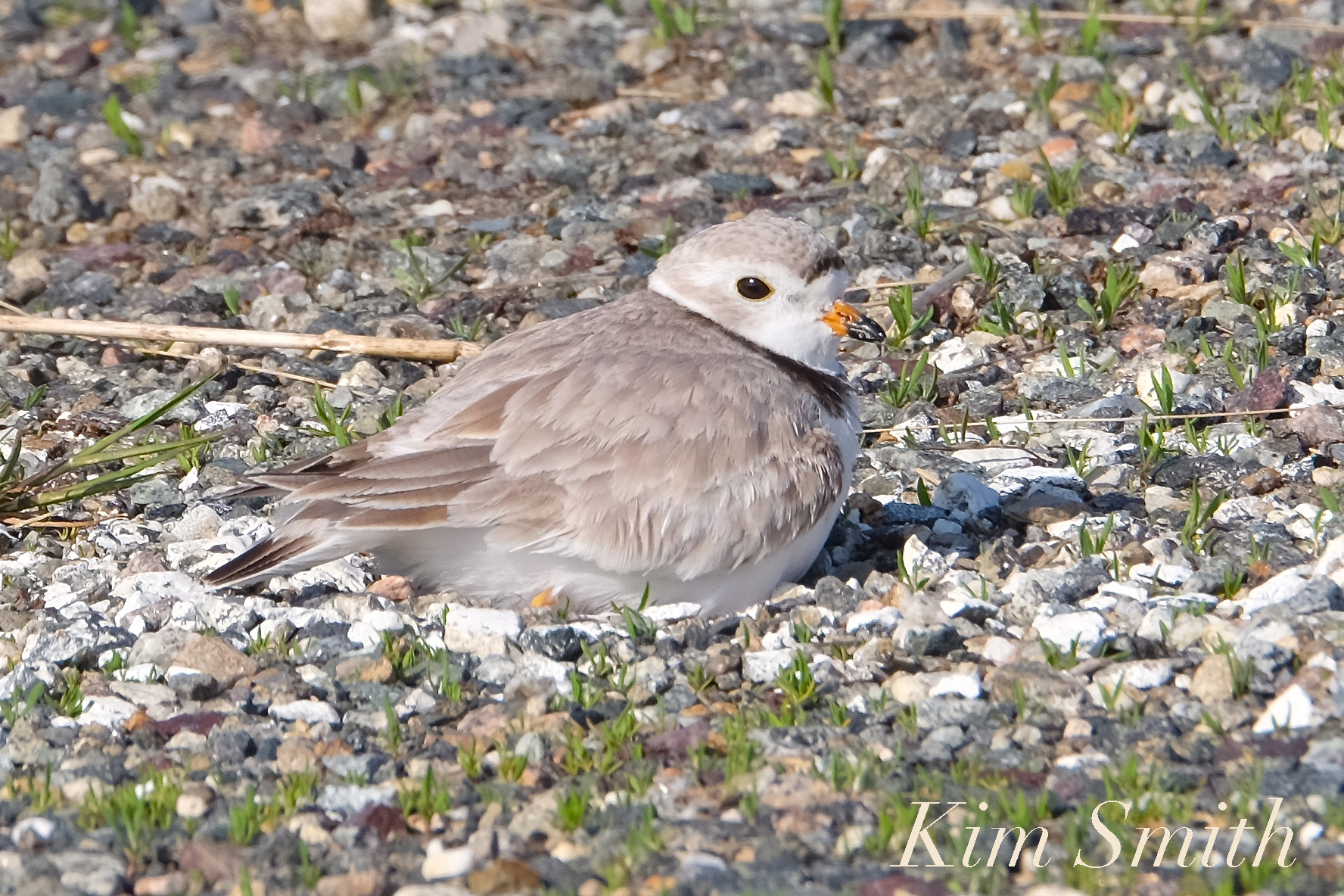 After installing the exclosure the fear is that the PiPl will abandon the nest site. Our Mama Plover returned to the nest a short time after the exclosure was installed!
And thanks again to dog officer Teagan Dolan, who stopped by to check on the Piping Plovers and has been regularly ticketing 🙂

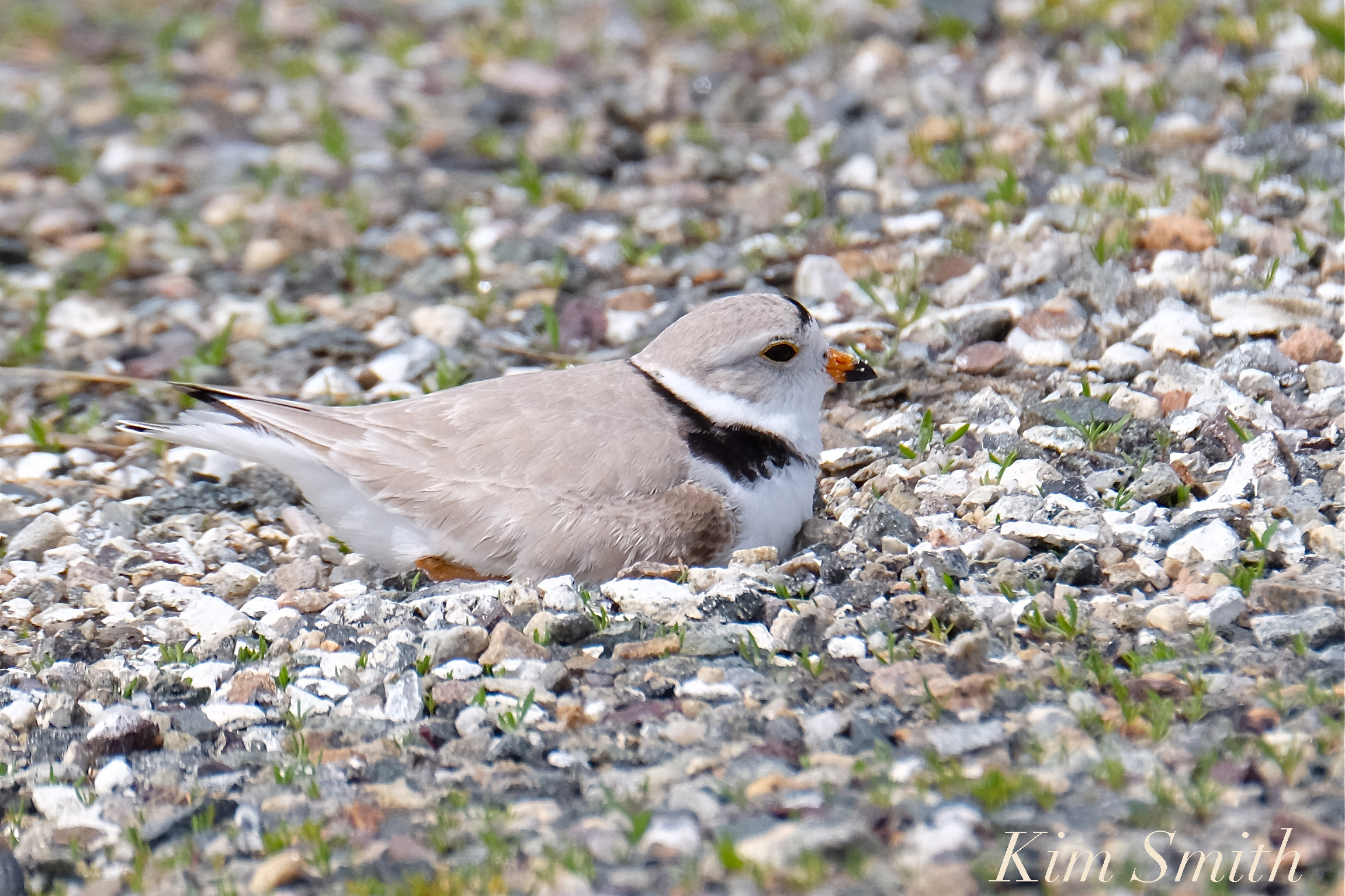 Nest with egg in the parking lot at Good Harbor Beach
Thanks to our awesome DPW, who has barricaded the area, and to my husband Tom, who discovered the egg, our PiPlover egg is protected from cars and trucks. I checked on the PiPl this morning before work at about 6:30 to 7am and the PiPl were courting in the #3 nesting area. A dog off leash ran by and they quickly flew. I checked for an egg in their nest scrape in the parking lot before leaving and the egg had not yet been laid. Tom discovered the single egg at 11am and immediately spoke to Phil Cucuru, who was working on the boardwalks.
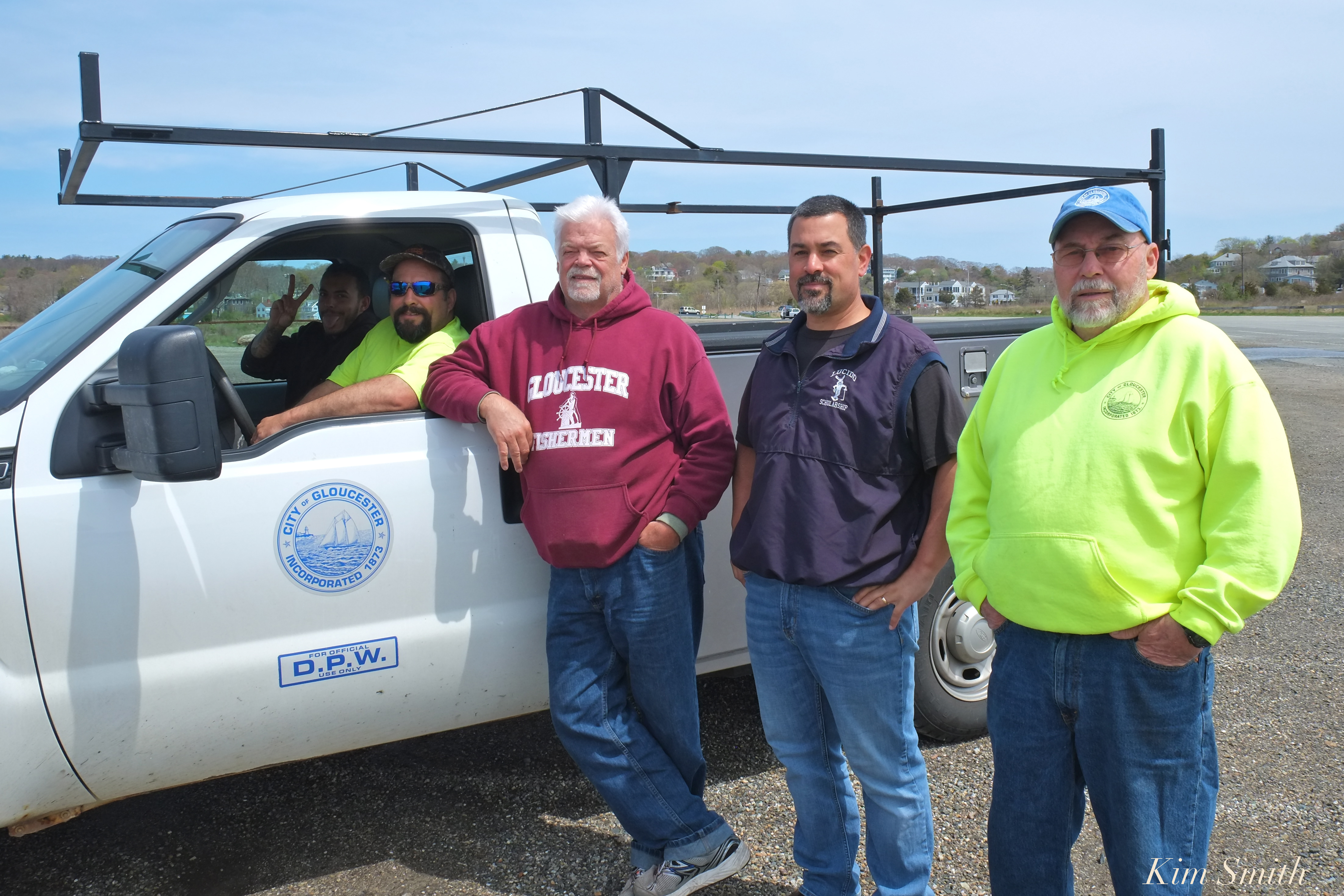 Kevin Mazzeo, Phil Cucuru, Kenny Ryan, Joe Lucido, and Steve Peters were immediately on the job, placing a barricade around the nest.
We are all going to work together to help our PiPl pair, despite this most difficult of all locations. One thing the pair has going for it is that this is relatively early in the season. If all four are laid within the upcoming week, we could have chicks by mid-June, a full two weeks earlier than last year. Dave Rimmer, from Greenbelt, will be placing the exclosure around the egg shortly. The DPW is placing a second tier barricade around the nest.
Please, please please, do not allow your dog in the GHB parking lot or on the beach. There were umpteen dogs, off leash and on, at Good Harbor Beach this past week, despite the fact that there should be no dogs after May 1st. I asked each person who had brought their dog where they were from–it seemed fairly equal–half were from out of town and half were local.
Our Mama and Papa are still mating in the nesting area. Whether the parking lot is their alternate plan or the only plan, at this point, please no dogs.
A second pair of PiPl arrived yesterday. Will they be staying or is GHB is just a stopover? The following may sound like a strange request, but part of the problem this weekend was kites. Just as we love dogs, there are few things more magical to a young child than flying a kite on the beach. The issue is, when folks are flying their kite over the nesting area, to a PiPl, a kite looks like a giant vulture looming overhead, ready to snatch them up. Please when flying a kite (or a drone) on the beach, please fly away from the nesting area, keeping the kite at least 500 yards away from the Plovers. Early in the season there was a pair of Turkey Vultures eating a dead seagull on the beach. It was amazing to film the PiPl reaction because as the Vultures flew overhead, all the PiPl, and the one Dunlin, foraging in the intertidal zone flattened to the sand in unison, and stayed that way long after the Vulture had disappeared over the horizon.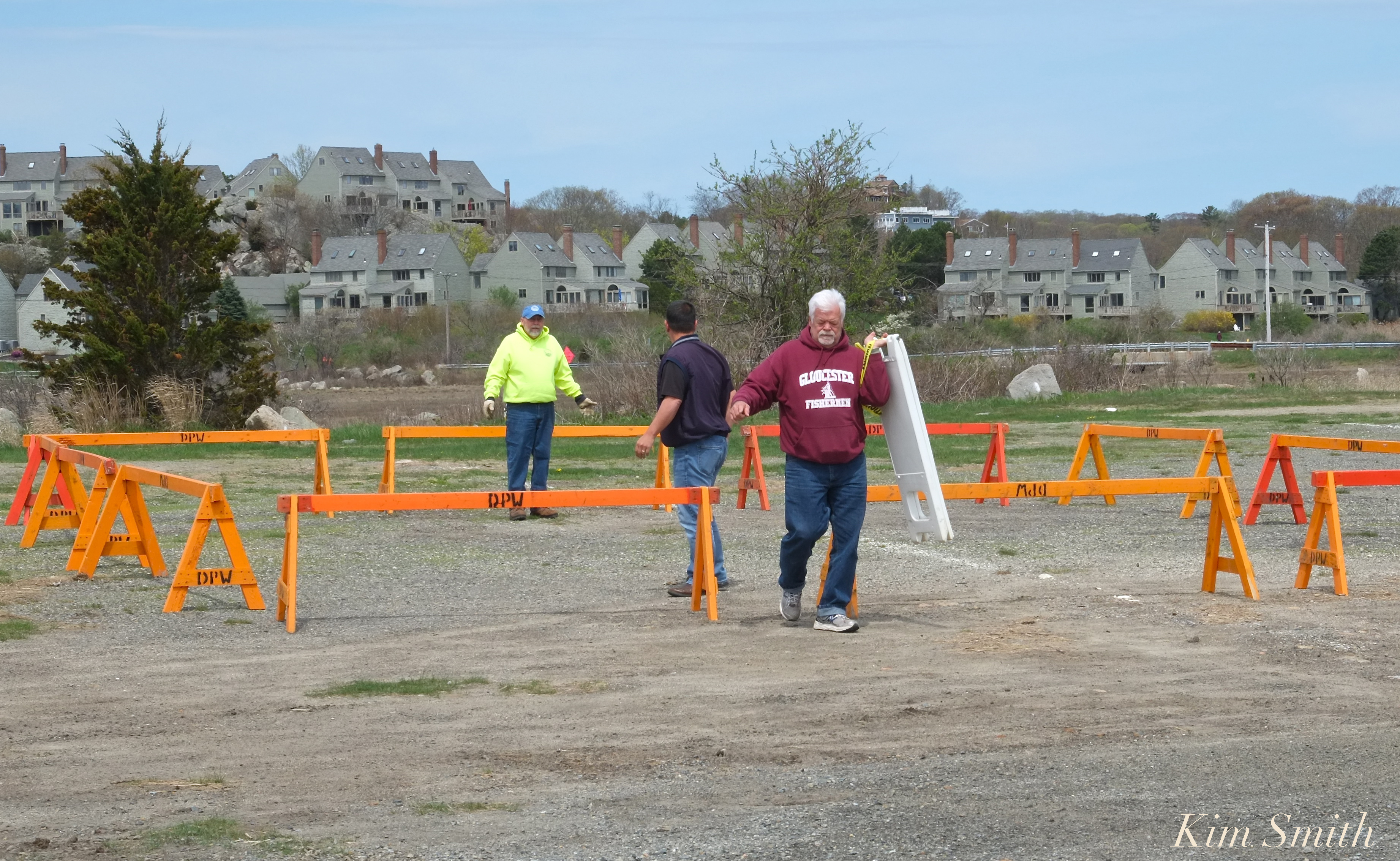 Thank you to everyone for all that you are doing to help the PiPl. Special thanks to Joe Lucido, Phil Cucuru, and the tremendous support from the DPW crew, to PiPl monitor Heather Hall, who spent many hours at GHB this past weekend watching over the PiPl, and to my husband Tom, for his eagle eyes.
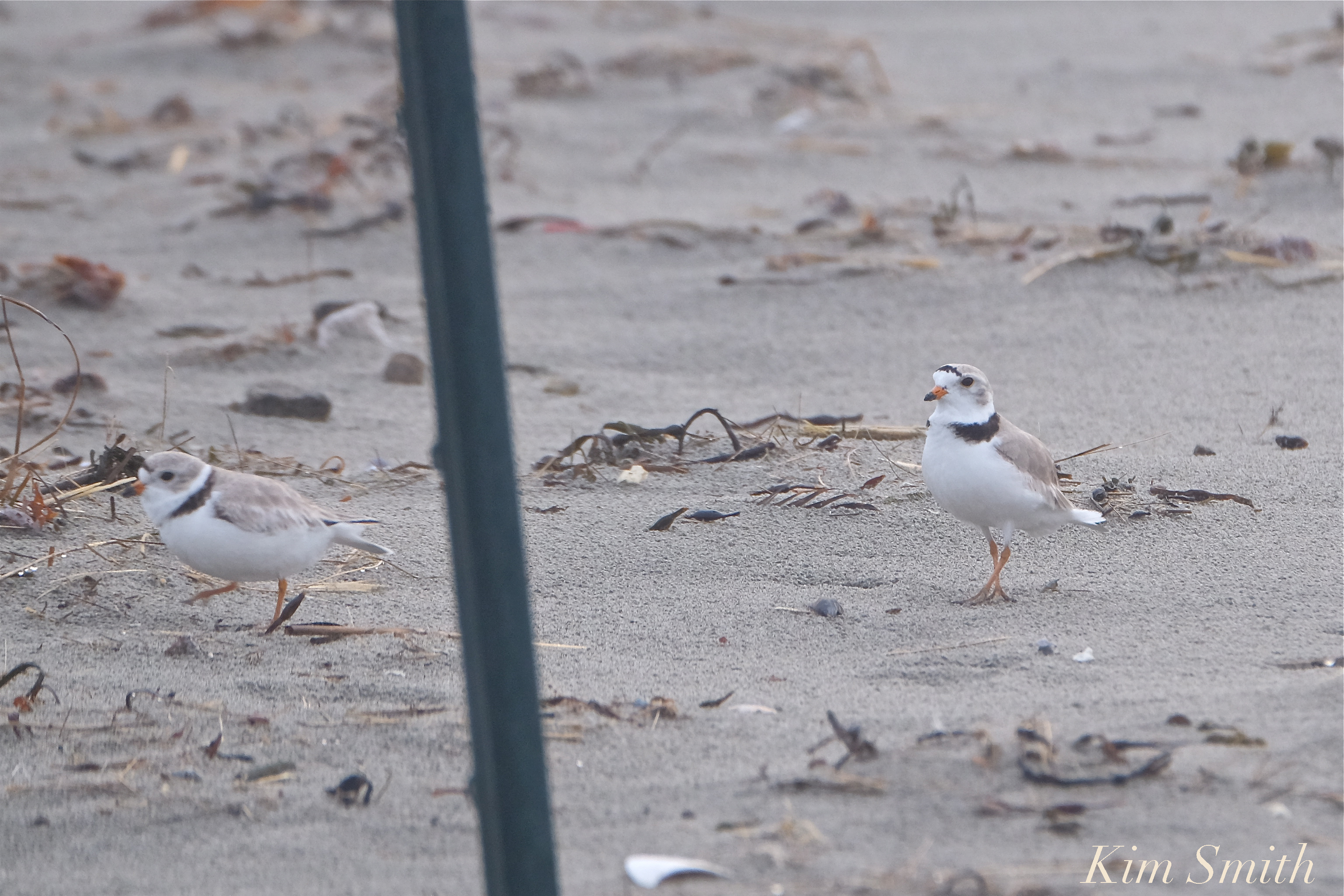 Mama and Papa courting in the nesting area in today’s early morning fog.
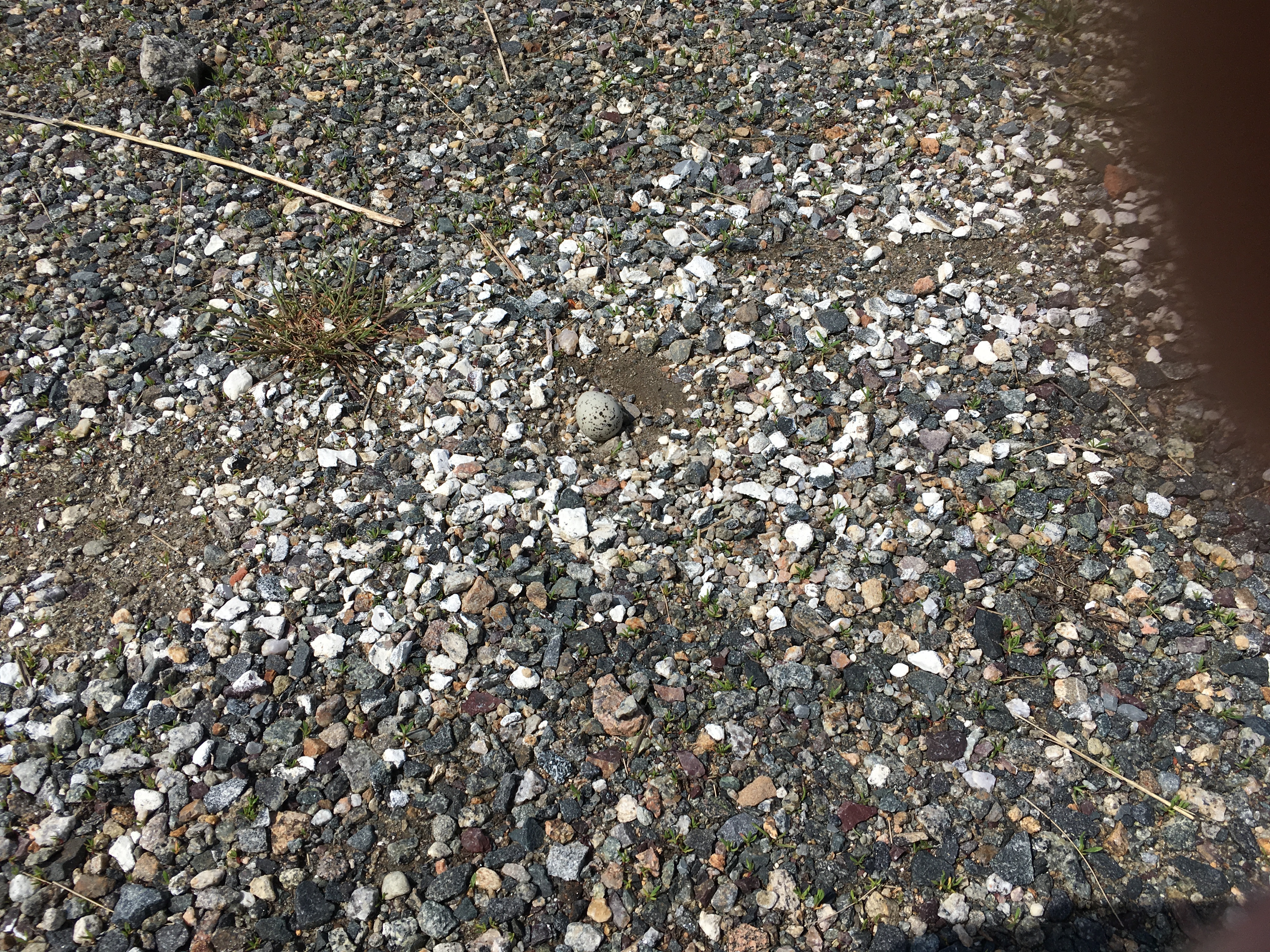
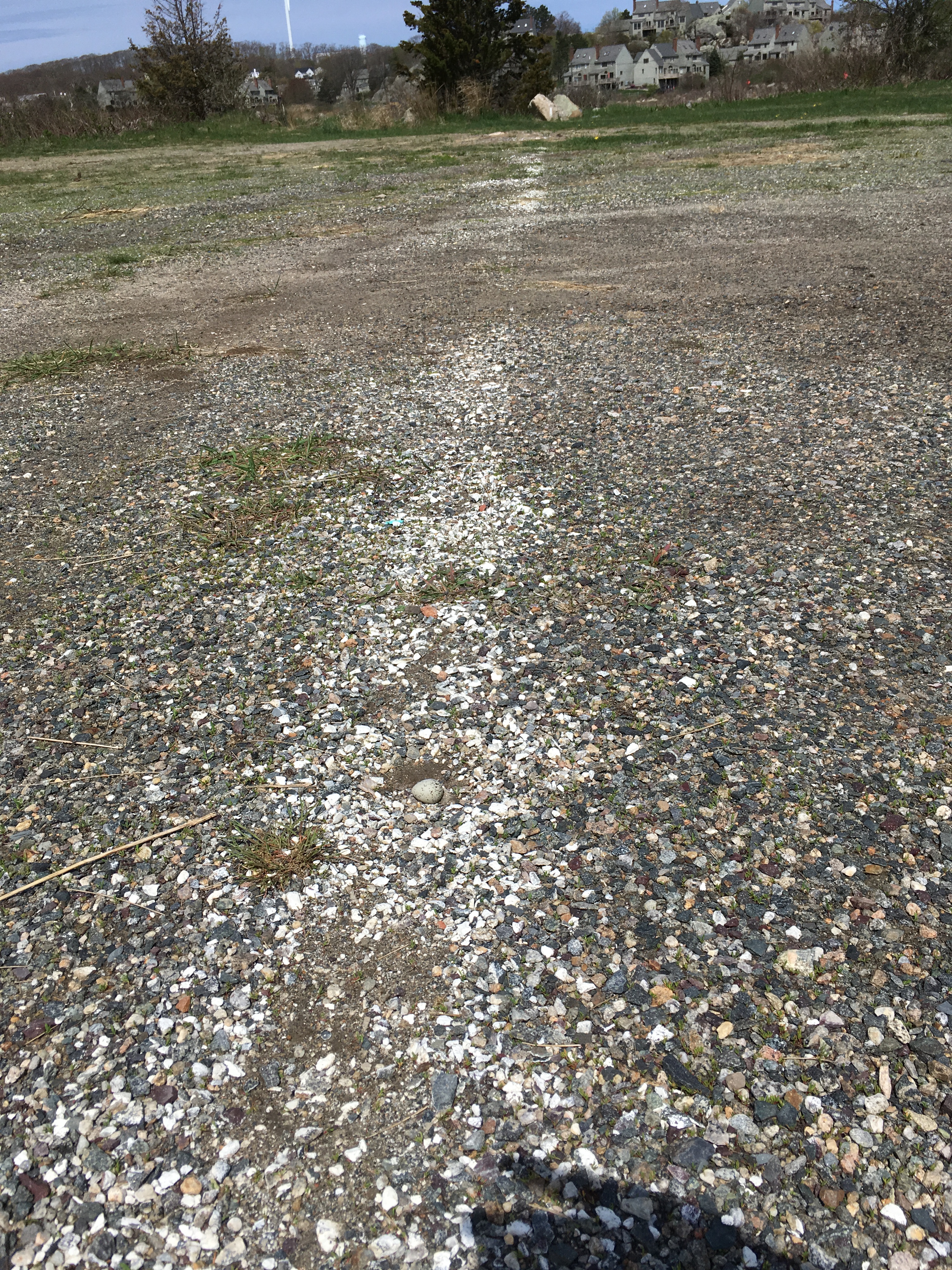 Tom Hauck Egg Photos

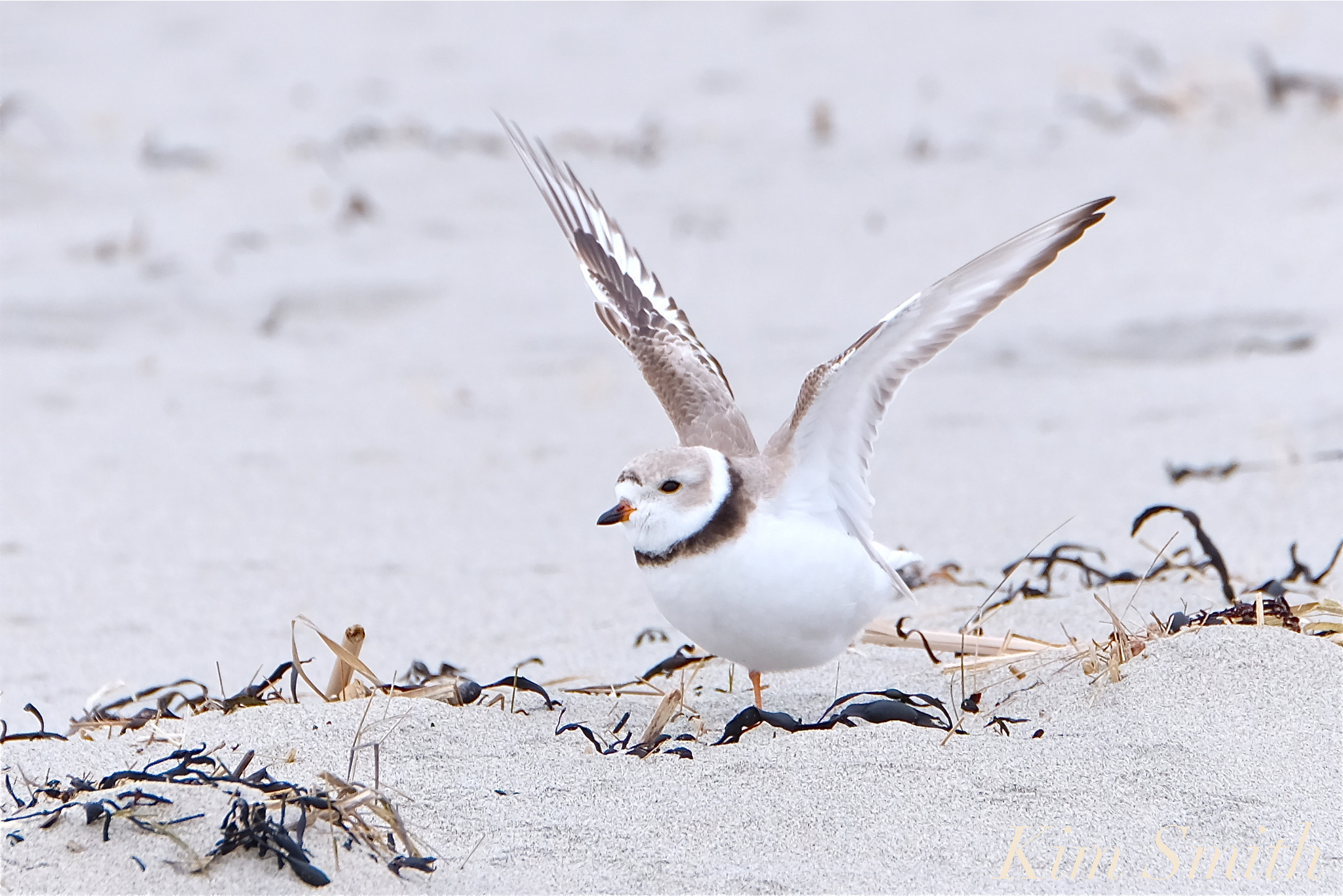 Mama PiPl stretching her wings before flight
Just a very brief update about the PiPl, more tomorrow–but to let you know, today was heaven on earth for the Plovers. All three were spotted feeding without interruption in the tide pools and in the nesting area. Mama and Papa are still spending some time at the parking lot nest, but not twelve hour shifts as has been the case. I think it will take a few calm days to get them back to the beach full time. And our awesome Officer Teagan was on the job today handing out tickets!
Helpful tip for watching and photographing the Piping Plovers: PiPl are not like Snowy Owls, which unlike our Hedwig, did not mind crowds. PiPl flush much more easily. While we are trying to help the PiPl return full time to the beach especially, if you come to GHB to see the PiPl, please stay a good distance back. The roped off area is much narrower than the past two years. Deeper is better, but because we have lost so much beach to erosion, the nesting area is as wide as possible, but not quite wide enough for the comfort and safety of the PiPl. Approach singularly, quietly, and slowly, stay a few moments and then retreat. Additionally, too much attention to the PiPl draws the crows and gulls as well.
https://www.instagram.com/p/BiPFy92nvk2/
https://www.instagram.com/p/BiPHpdzHWGe/
https://www.instagram.com/p/BiPKRXOnY03/

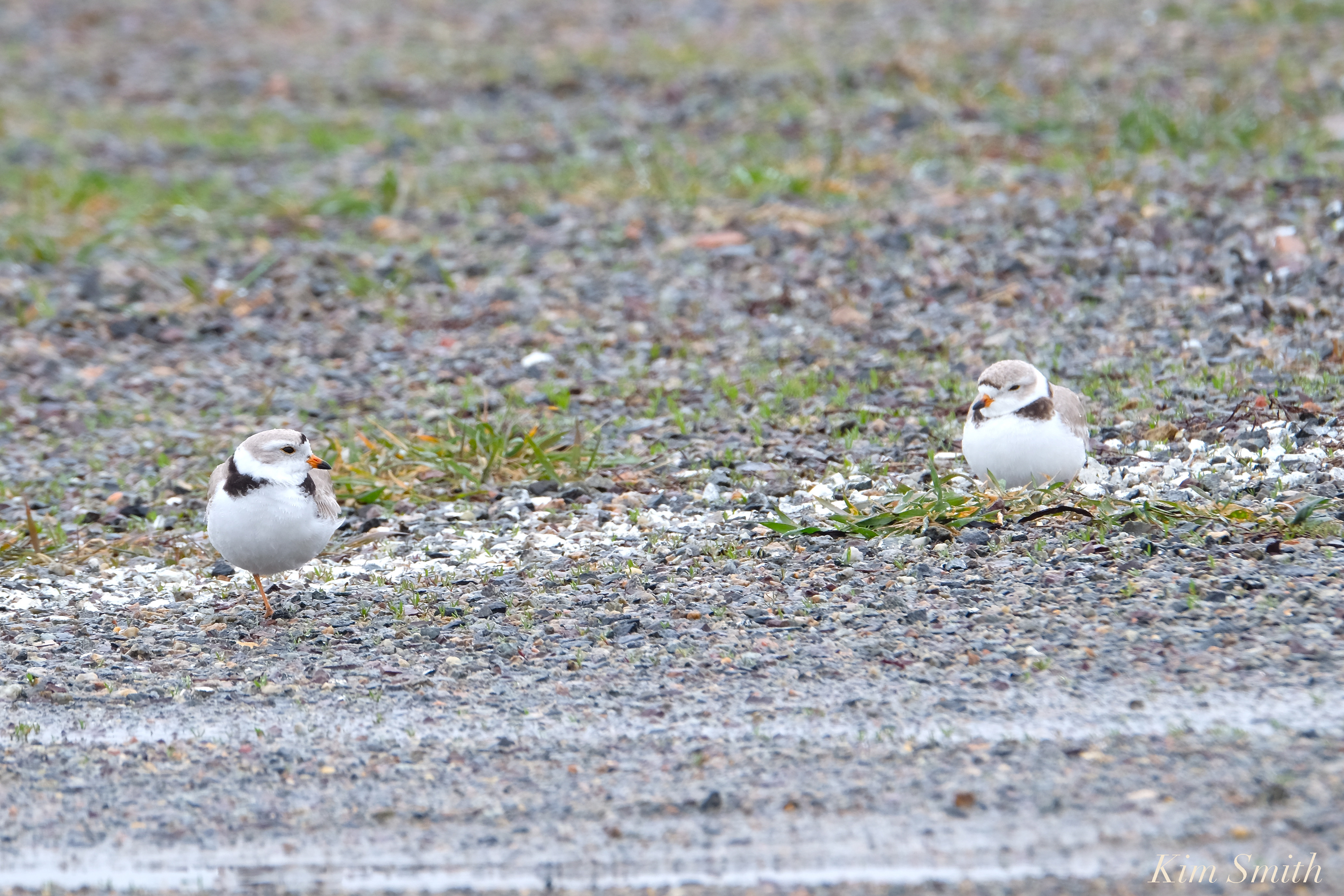 THE PIPING PLOVERS HAVE GIVEN UP ON THE BEACH AND ARE NESTING IN THE PARKING LOT.
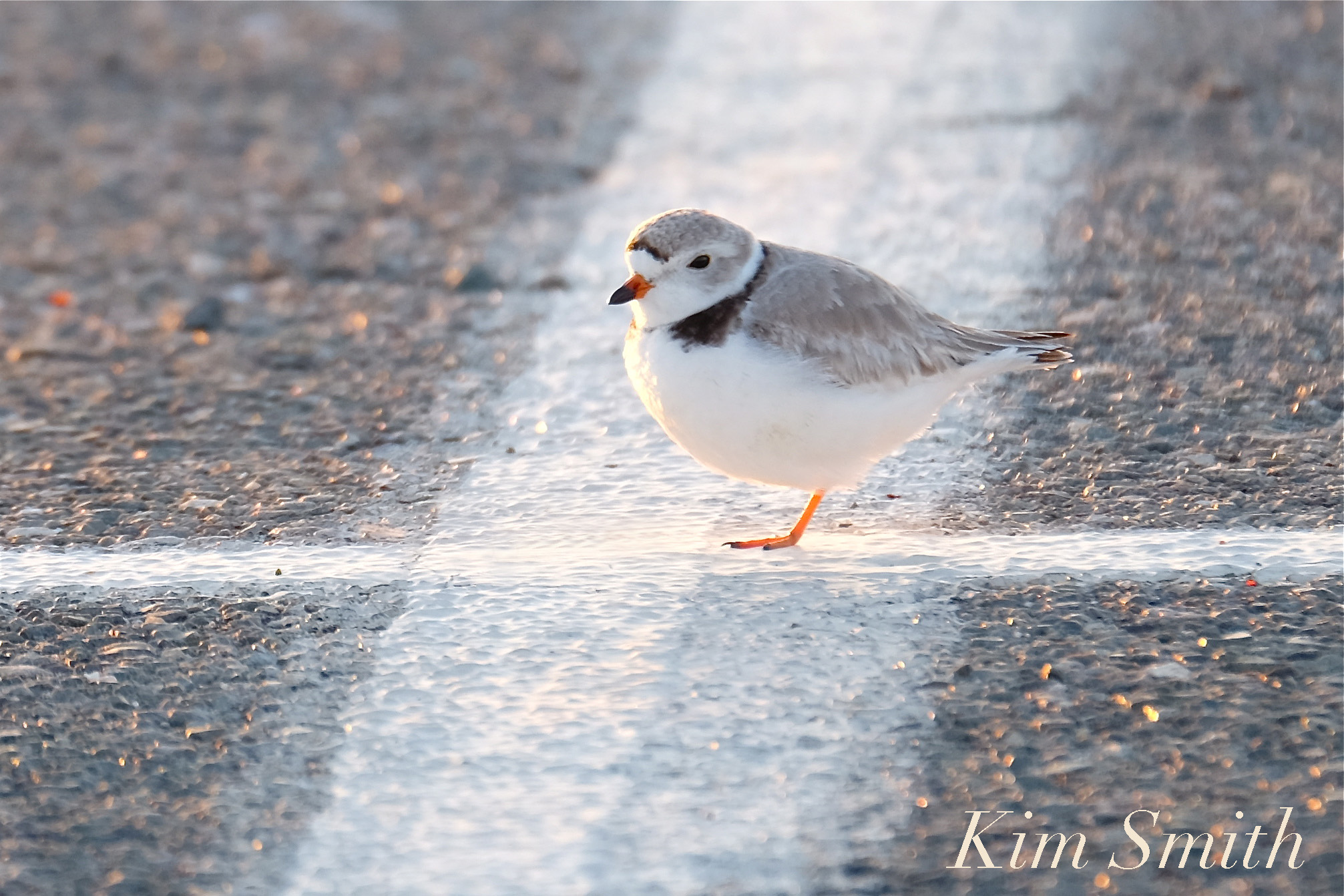
 During some part of each of the past four off leash beach days, the Piping Plovers have been found in the parking lot, forced off the beach by a barrage of dogs in the nesting area, and dogs chasing them up and down the beach. For the first three of those four off leash days that they were driven off the beach, the PiPl spent a good part of the time going from white painted line to white painted line, using the color white as camouflage against predators such as hawks, crows, and falcons. They are miniature “sitting ducks” when in the parking lot, not only to natural predators, but because they are so well camouflaged, and so tiny, they are in tremendous danger from car and truck drivers who would not see them until it is too late.
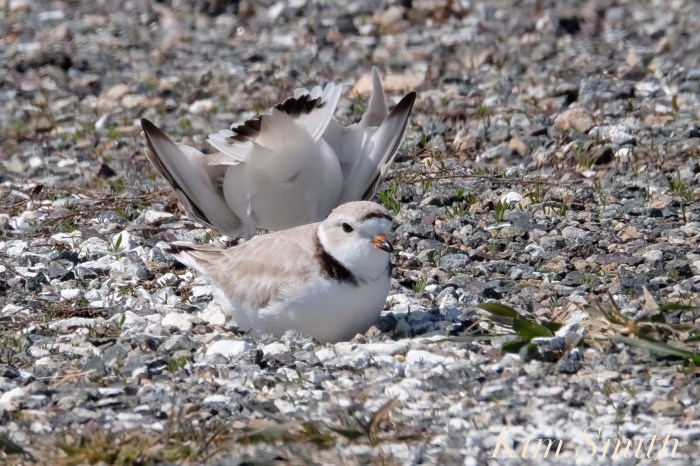
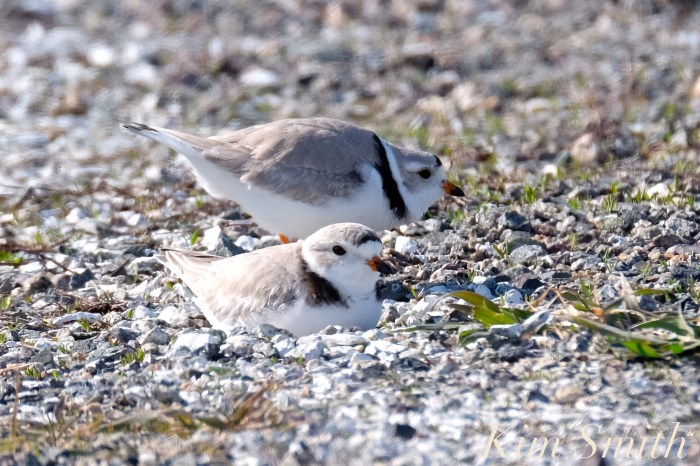
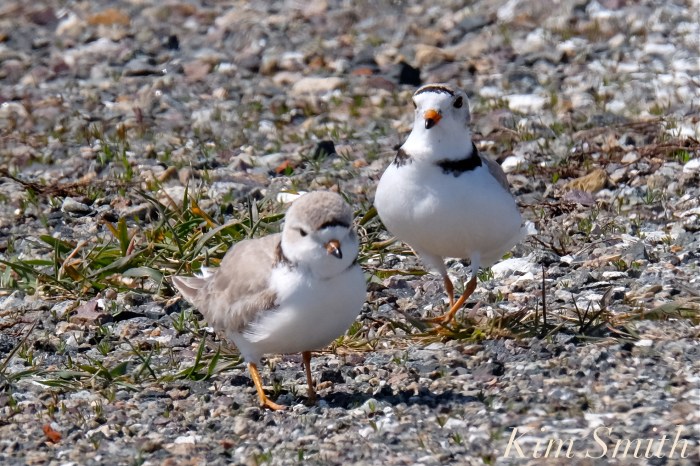
Nesting and courting in the parking lot.
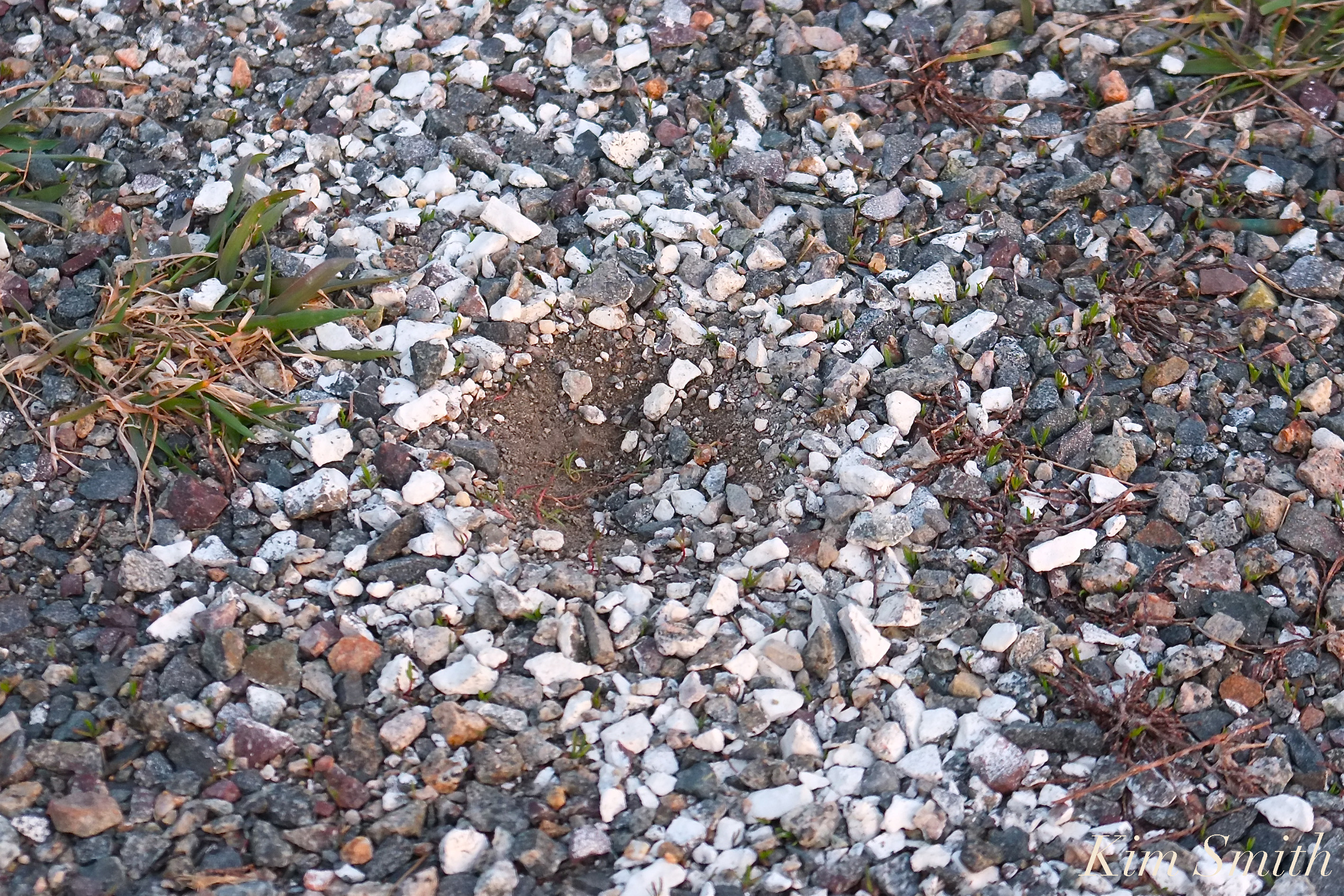 New little nest scrape.
Yesterday morning at 7am, an off leash day, the PiPl were chased off the beach by a dog and its owner. They flew to the parking lot. For the next twelve and a half hours, Mama and Papa did not leave the parking lot. They did not eat or drink, but spent the entire time courting, mating, and building a nest scrape in the gravel, traveling from white line to white line. It was sadly beautiful and heartbreaking to watch. Beautiful in the way that no matter what obstacles they face, the little pair’s desire to reproduce is so powerful that they will continue to try, even in a habitat that is so wholly unsuitable for raising chicks. Sad and heartbreaking because this scenario was unquestionably and completely unnecessary.
Yesterday the dogs were in the nesting area, poohing, peeing, romping, and digging. It happened throughout the day, from 6:30am to 8pm, but was especially challenging during high tide, when so little beach remains. The following batch of photos was taken in the short period of time that I was on the beach and not in the parking lot, as the tide was receding.
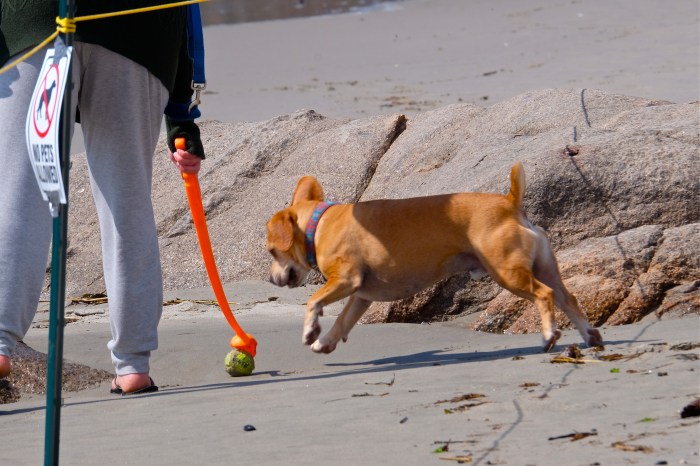
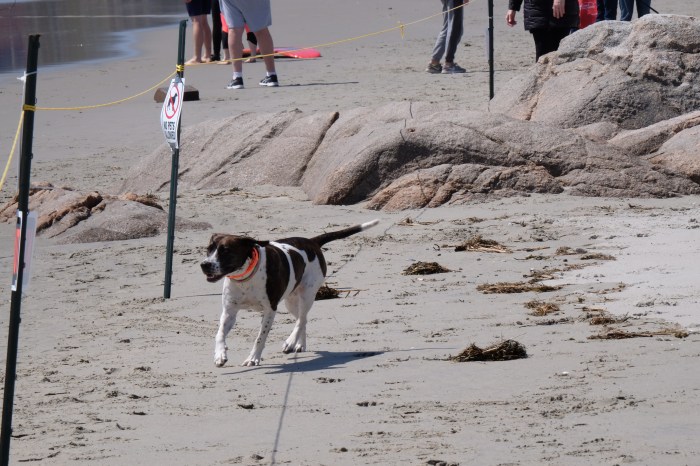
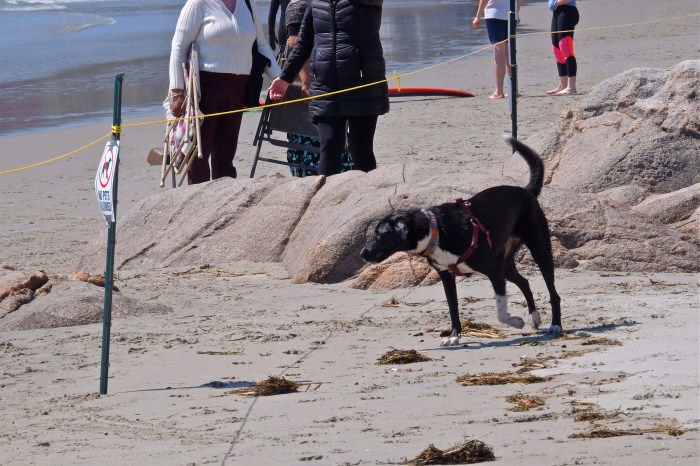
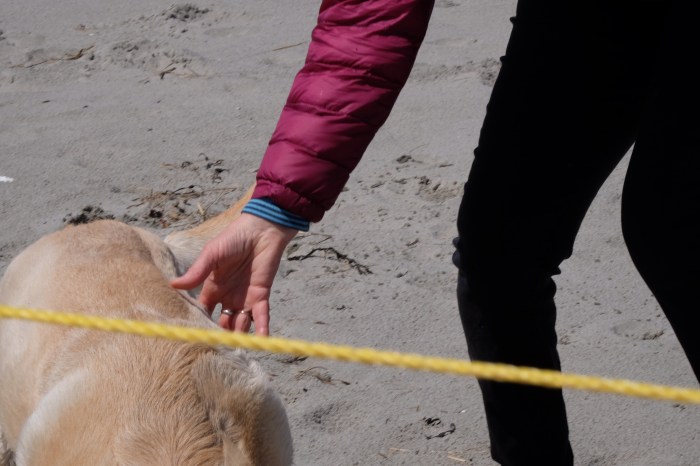
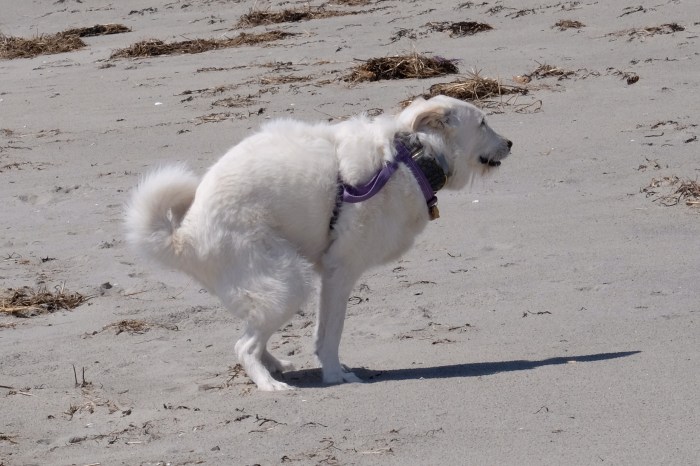
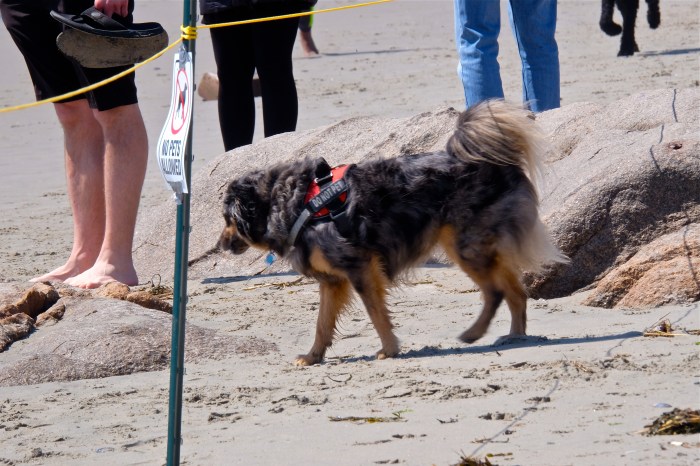
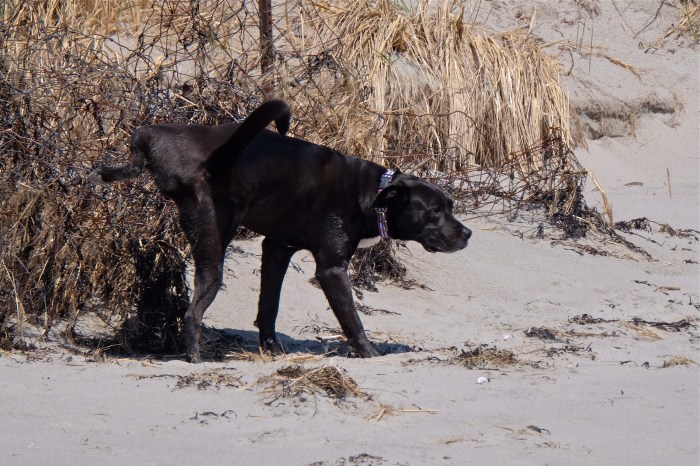
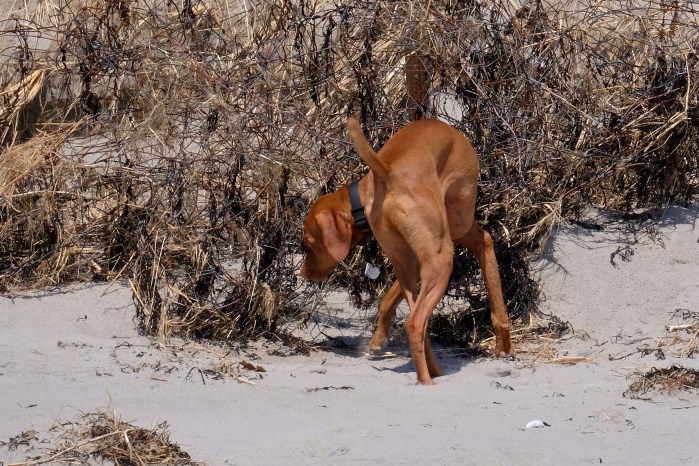
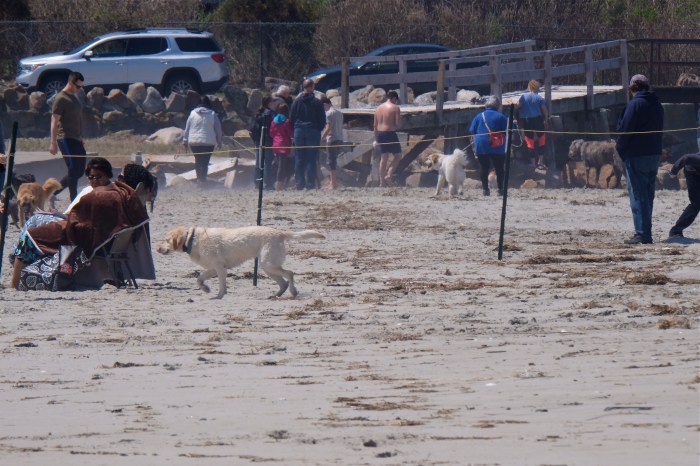
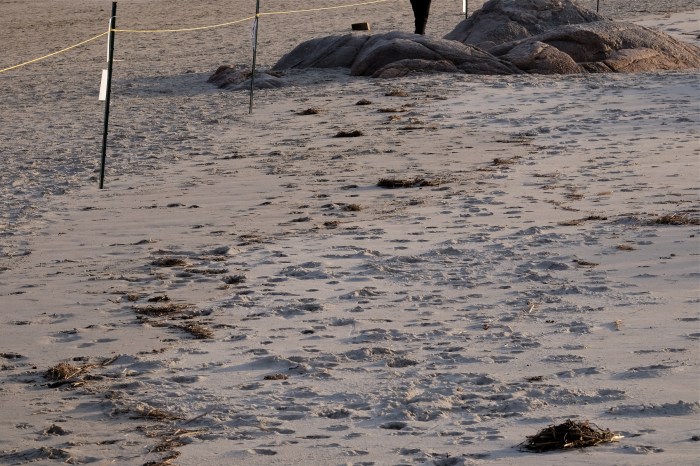
When dog owners were asked by volunteer Preston if they were aware of the PiPl–most said yes–as they allowed their dog to wander into the nesting area.
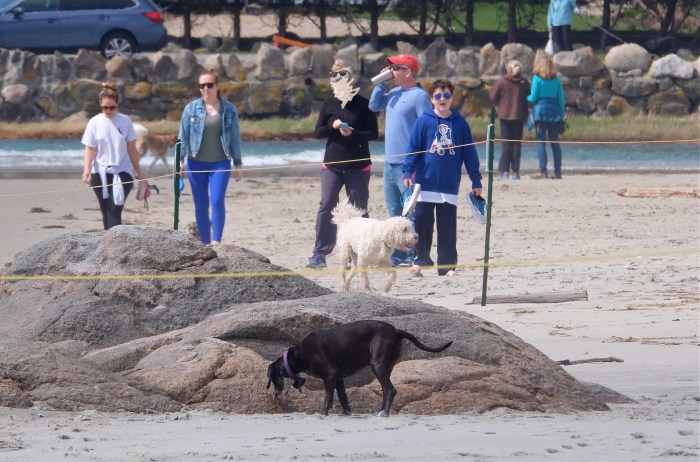
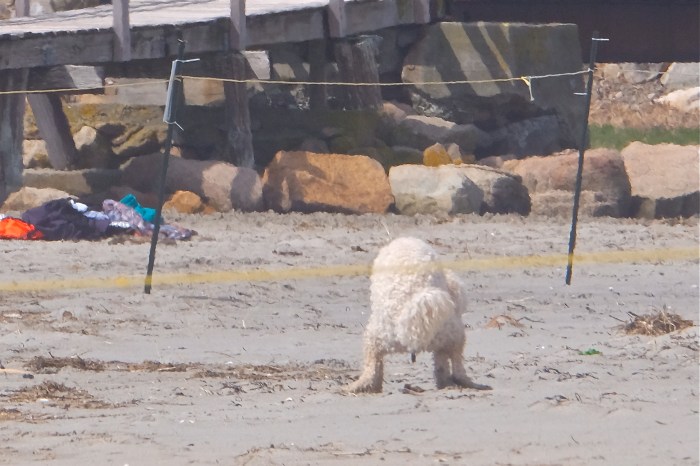
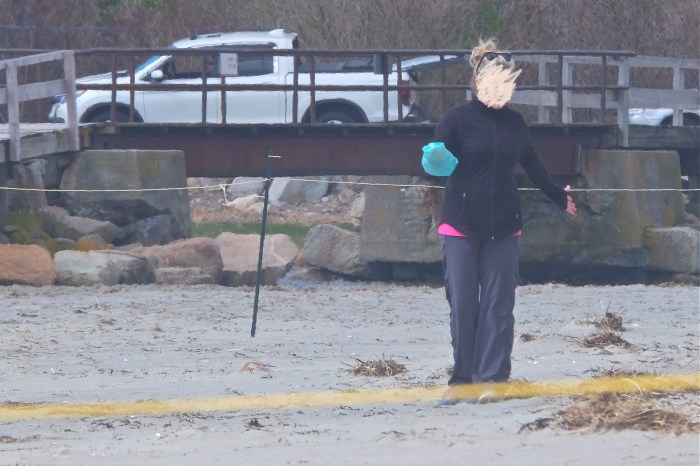
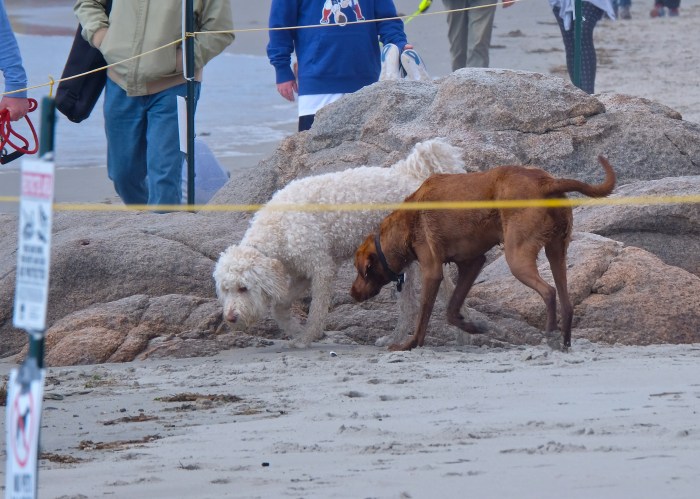
Dog runs into nesting area, dog goes poop, owner enters nesting area to clean up poop, can’t find poop, has to muck around in nesting area to find, finally finds poop, cleans up, dog meets a new friend in the nesting area.
Last night Mama and Papa flew back to the beach after the coast was clear, at sunset. As you can imagine, they were ravenous, and ate with great gusto at the water’s edge.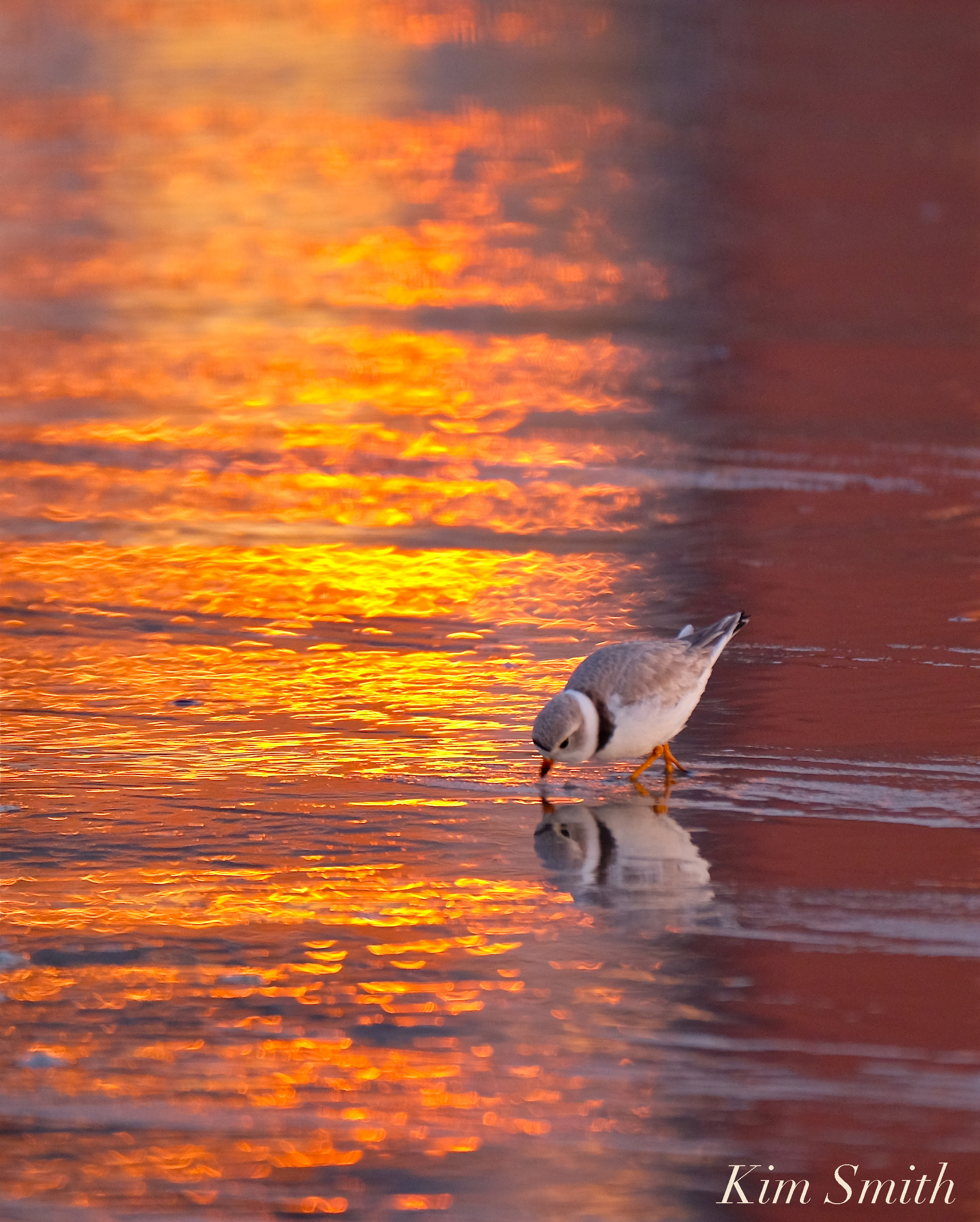
 The Bachelor returned to the nesting area at sundown, too.
Early this morning I found all three eating and bathing in the tide pools, before they were chased off again later in the morning. As I write this, the Mama and Papa are taking turns sitting on their nest scrape, in the rain, in the parking lot.
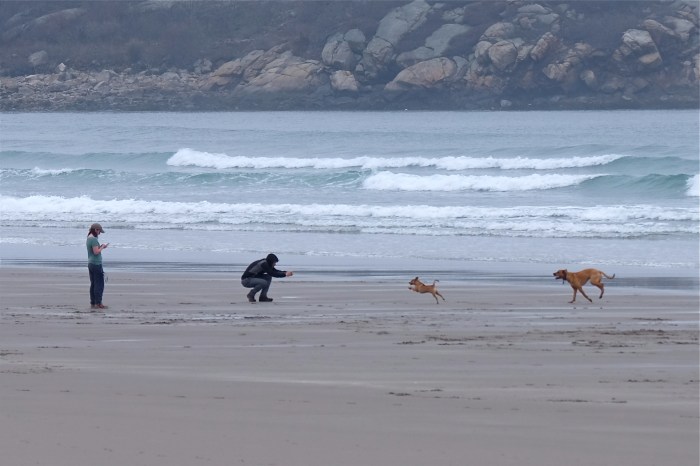
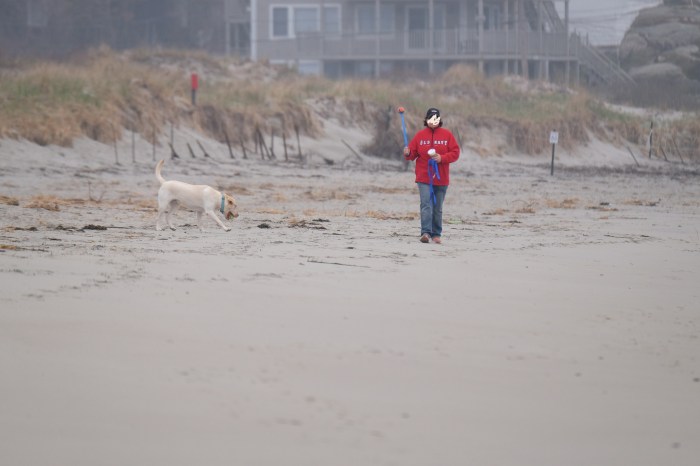
The Piping Plovers can’t catch a break – off leash dogs this morning on an on leash day.
It is difficult for the animal control officers to give out tickets as the ordinance is written, when it is an off leash day, especially when the dogs are running willy nilly and far away from their owners. And it is impossible for them to be there 24/7.
Early this morning, which is an on leash day, Officer Dolan was handing out tickets.
https://www.instagram.com/p/BiJ6B7DH765/
Call your councilors and Mayor Sefatia’s office and let them know your thoughts on protecting the Piping Plovers. Tomorrow is the last day of the spring summer season 2018 that dogs are allowed on the beach. But they are not allowed under ANY circumstances in the nesting area. If you see a dog on the beach at any time of day or night after April 30th please call the dog officer at 978-281-9746. Thank you.
I have an idea to make a brochure to not only hand out to people at the parking lot entrance to the beach, but to circulate door to door around the neighborhood. We need to help folks understand why it is so important that we help the PiPing Plovers.
Thank you to all the volunteers who helped yesterday. If you came and I unfortunately did not see you it is because most of the day was spent in the parking lot. Thank you to Lillian and Craig, Leontine, Deborah, Heather, and Preston for your good work!!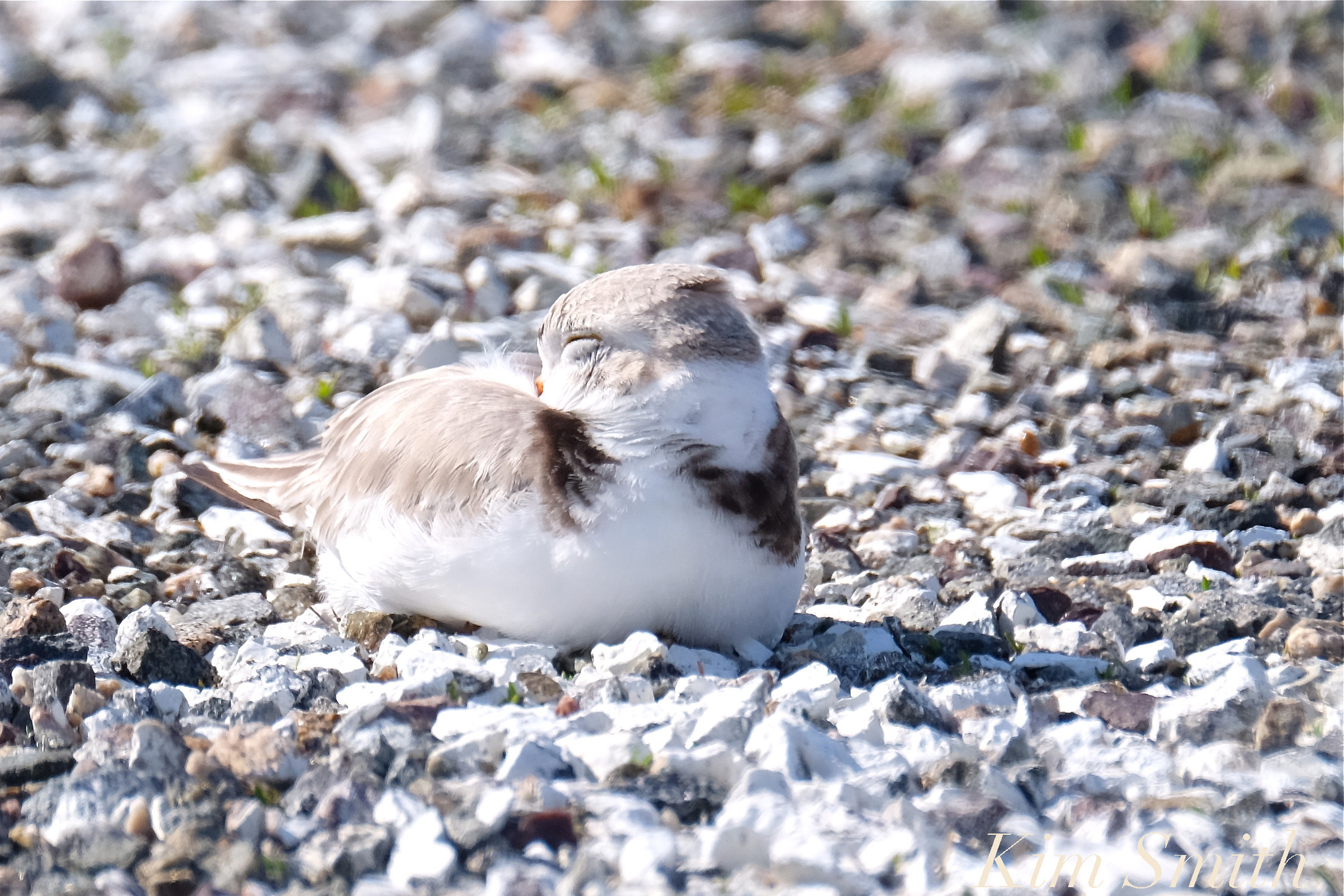
Mama sleeping on the white lines in the parking lot

Three years ago (!) almost to the day, Deborah Cramer’s NY Times op ed , “Silent Seashores” was published and her horseshoe crab and Red Knot poetic missive “The Narrow Edge: A Tiny Bird, an Ancient Crab, and an Epic Journey” advanced a global ecological message to the masses. “I hope I never walk beaches empty of sandpipers and plovers. But it is possible that may happen. In the case of some shorebirds, it is increasingly likely. This is why we must commit the money and muscle needed to give these birds safe harbor. If we do, we just might keep our shores teeming with shorebirds.” Deborah Cramer is a visiting scholar at M.I.T., and resides in Gloucester.
The New York Times, published another mighty call to arms making use of today’s improved visual storytelling tools. “Shorebirds the world’s greatest travelers, face extinction” is breathtaking and devasting digitial photojournalism about shorebird extinction by John W. Fitzpatrick (Director Cornell Laboratory of Ornithology) and Nathan R. Senner (scientist University of Montana). Stuart A Thompson designed the superb interactive graphic element. The indeliable header pulses with a bird on a wire, a “common snipe” it’s captioned, peering, chest beating, and then a sickening struggle. The bird’s caught, and we’re its snipers. Do. Not. Look. Away.
While you’re checking out this NY Times must read on line, think about Gloucester, Deborah Cramer, and Kim Smith. How one person can and continues to make a difference. Among many other projects, Smith is leading the effort to protect piping plovers at Good Harbor Beach. Let’s support the laws in place to safeguard the natural world. No dogs year round may be easier to remember. Honor system, volunteers, and enforcement (without “teeth” and more funding) are not working. If compassion, art, rules, and legacy aren’t persuasive, there’s always the bottom line. Natural culture all about us is a strategic resource.


 No one paid attention to our signs that we added to the nesting area yesterday. My friend Deborah Cramer stopped by to see the PiPl and watched half a dozen dogs running through and playing in the nesting area. When I returned to the beach at 6:30, the PiPl were in the parking lot, again driven out of the nesting area by off leash dogs. Very frightening when an SUV drove past and they didn’t budge.
While the PiPL were in the parking lot, I thought would be good time to reinforce the signs with duct tape. When at the nesting area adjusting signs, there were more dogs owners allowing dogs to run through and completely ignoring the signs.
Reading the federal regulations from the USFWS:
“Pets should be leashed and under control of their owners at all times from April 1 to August 31 on beaches where piping plovers are present or have traditionally nested. Pets should be prohibited on these beaches from April 1 through August 31 if, based on observations and experience, pet owners fail to keep pets leashed and under control.”
All the signs in the world won’t make people who don’t care, care.
Tomorrow, especially at high tide, and as the skies are clearing, I am afraid will be another terrible situation for the PiPl. If you would like to lend a hand, please email me at kimsmithdesigns@hotmail.com or just come. I will be there for the better part of the day and will show you what to do. High tide tomorrow is at 10:54 am. Thank you!

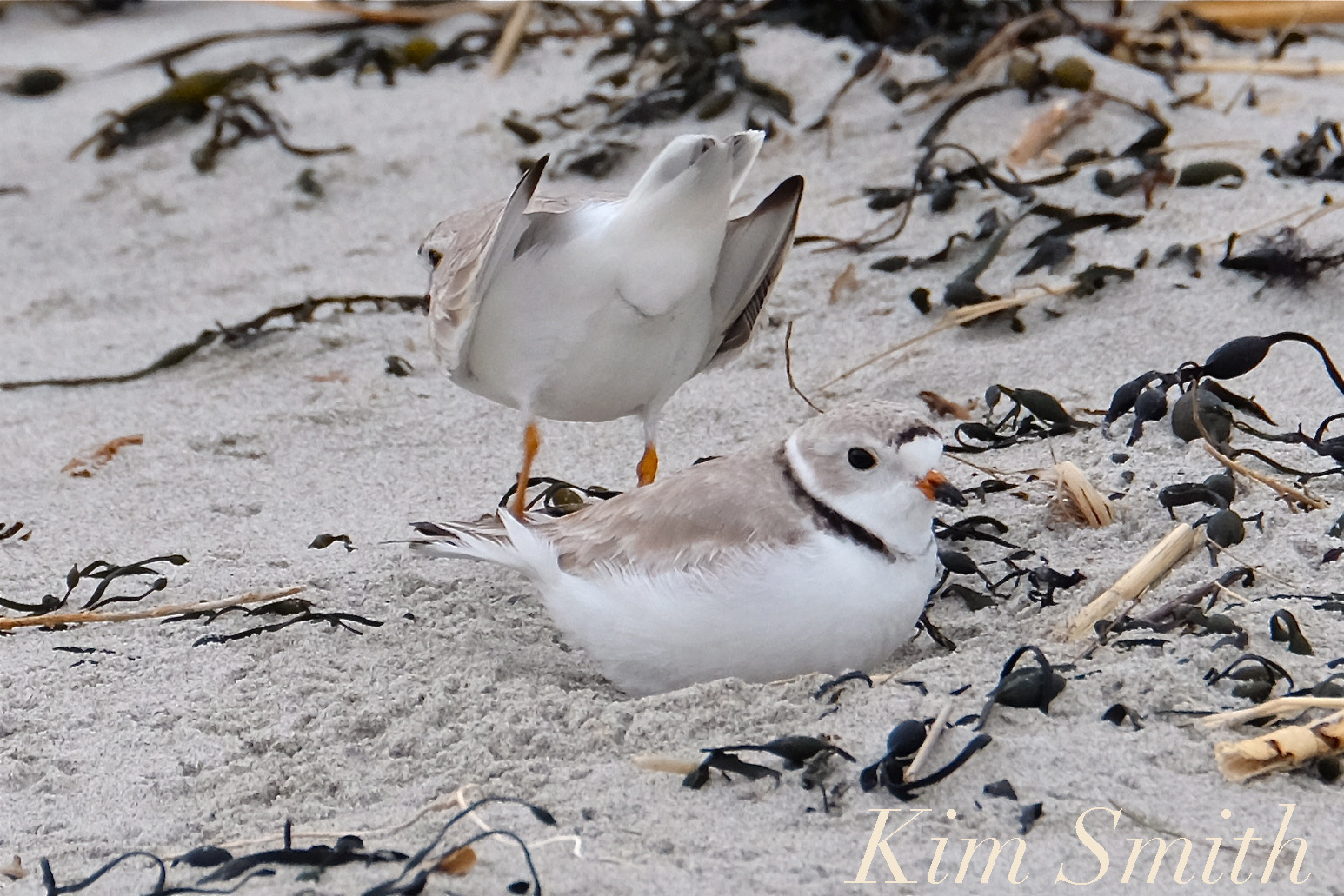 Mama Plover sitting in and checking out Papa Plover’s perfect little nest scrape.
My friend Lauren Mercadante from Manchester stopped by today to volunteer with the Piping Plovers and we added twenty signs on the posts surrounding the roped off area at boardwalk #3.
https://www.instagram.com/p/BiClNEtnD3K/
We had a new group of Piping Plover travelers fly in overnight, earlier in the week, but since that one-day stopover, where they rested and foraged at the nesting area around boardwalk #1, the travelers have not since been seen. If we see evidence of PiPl tracks at #1, we can add more signs there, too.
https://www.instagram.com/p/BiCmNuanx9t/
There has been tremendous criticism regarding signage. The signs that Greenbelt posted at Good Harbor Beach are similar in size and scope of information to signs used up and down the East Coast, and on the West Coast, too, for Snowy Plovers, a similarly threatened species. I especially like the first one and the second sign in the gallery and would like to design one for our Good Harbor Beach similar to one of these.


Kind folks have suggested adding banners to the posts, which I am afraid would only serve to attract gulls and crows, and would also disturb the PiPl. More kind folks have suggested fencing. I think that conservationists don’t use dune fencing for several reason. The adults (and chicks) need to run freely to and from the water’s edge to forage, the fencing would be disruptive to install, in our case, part of the fencing would need to be in the tidal zone and would easily be damaged during high tides, and because it would trap small predatory mammals within.
Regardless of whether or not we have adequate signs, we find ourselves in the struggle of Dog Owner versus Piping Plover. It’s partly because the Plovers have arrived a full month earlier than in previous years. In 2016 and 2017, they arrived at Good Harbor Beach when the beaches are closed to dogs for the season, on May 15th, and May 3rd, respectively. This year, the PiPl arrived on April 3rd. I know this for certain because this spring I had been checking everyday since mid-March.
There are many, many dog owners who are keeping their dogs leashed when at Good Harbor Beach and many who are walking their dogs at alternative locations during this last week in April. We should all be grateful and appreciative to these friends of the PiPl, I know I sure am!
The struggle of Dog Owner versus Plover is not simply an issue at this time of year, with dogs off leash during the month of April, but is consistently challenging throughout the summer during the entire nesting season. Yes, there are folks from out of town who aren’t familiar with our no dogs on the beach between May 1st through October 1st ordinance, but the folks who most frequently ignore our ordinances are people who live here and are aware of the rules. This is especially apparent in the early hours of the morning and after five, when people know there are few enforcers on duty at those times of day.
https://www.instagram.com/p/BiCnOx4nvFy/
Another threat to Piping Plovers, again created by humans, are people that leave their trash on the beach. Good Harbor Beach looks pristine and incredibly beautiful after the tremendous job done by the Clean City Commission’s Great Gloucester Cleanup volunteers. Daily there are typically only a handful of crows and gulls. Soon that will change. People will leave their trash on the beach, which attracts a plethora of hungry gulls and crows, which eat baby chicks.
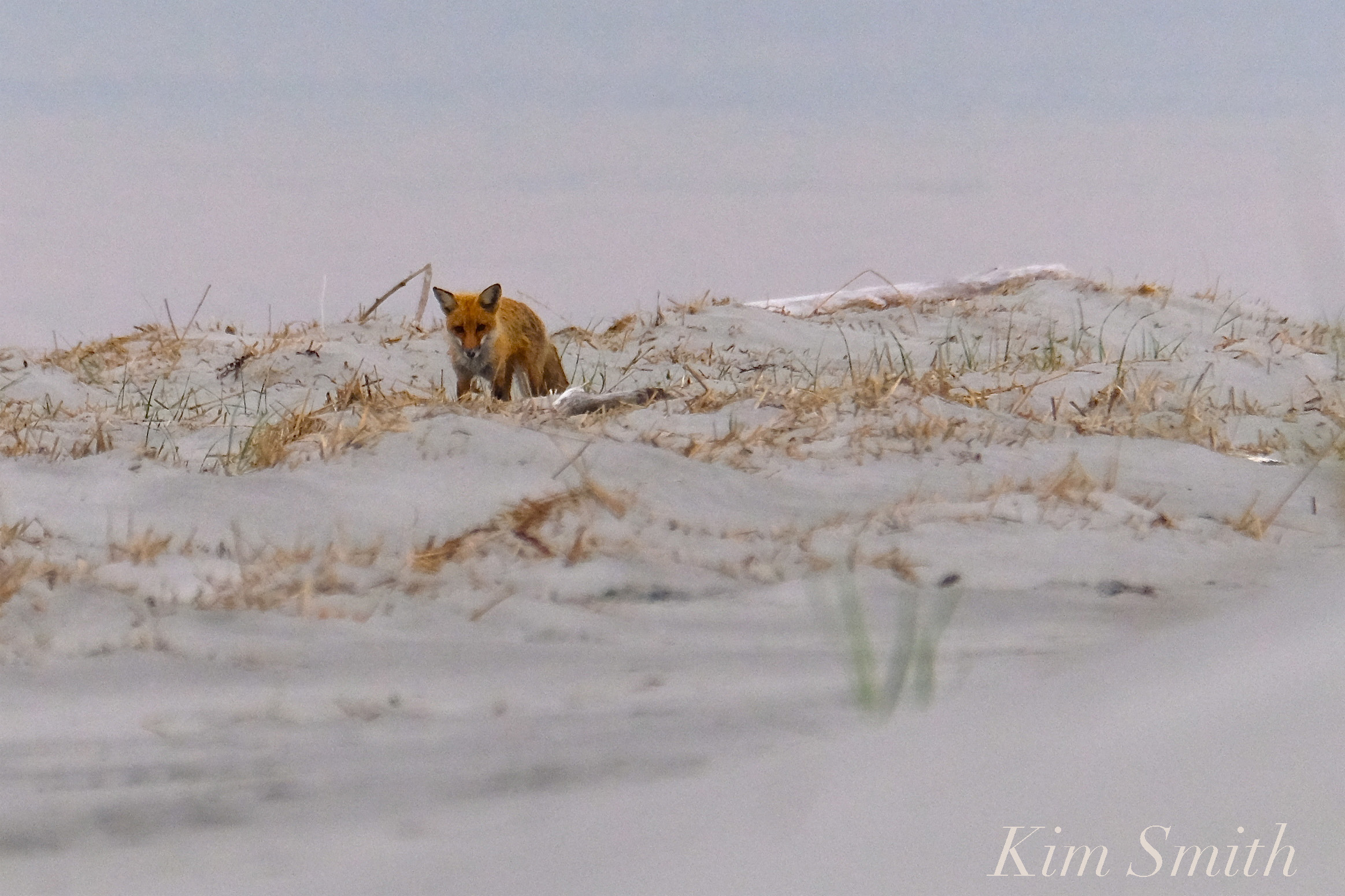 Red Fox foraging for shorebird eggs, West Gloucester
Piping Plovers face many other threats including fox and coyotes that forage on eggs, large predatory birds such as Great Horned Owls, plastic pollution, loss of habitat, and rising sea level. But the two threats that are under our immediate ability to manage are preventing dogs and people from disturbing the nesting sites, and keeping the beaches super clean of trash.
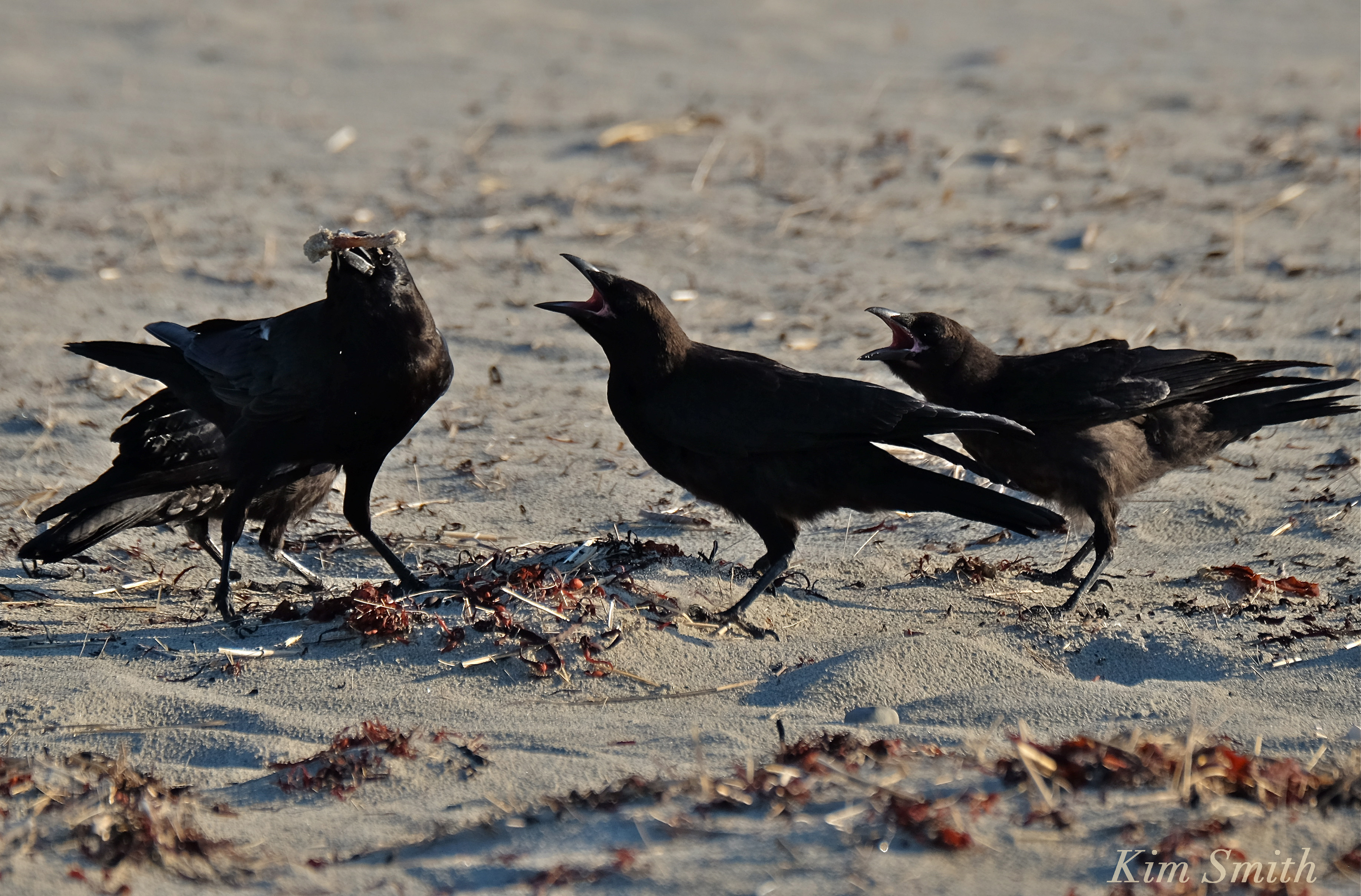
Crows in the PiPl nesting area, fighting over chicken bones left on the beach, 2017.
Many North Shore beaches that find themselves home to the Piping Plovers are also under the management of federal and state organizations. Plum Island is a US Fish and Wildlife Refuge, Nahant and Revere Beaches are managed by DCR, and Crane Beach is managed by the Trustees of Reservations.
Gloucester has none of the daily oversight and funds provided by federal and state organizations. The Piping Plovers need our help and so it is up to we citizens of Gloucester and Cape Ann to do all we can.
Piping Plovers are facing extinction. There are approximately only one thousand five hundred breeding pairs in the world, and that simply isn’t enough to sustain the population, especially since the rate of fledging has recently dropped precipitously. Conservationists hope to raise the number to at least two thousand five hundred pairs, and the bird will not be taken off the threatened species list until that time.
The early arrival of the Piping Plover this year signals a success of sorts. The pair successfully fledged one chick last summer, which is better than the current overall Massachusetts state average of .6. The birds are maturing and finding their way more easily to GHB.
This year, there simply wasn’t enough time to change the dog ordinances, which as they are currently written, allow dogs off leash fifteen days out of the month of April. Because the leash ordinances at this time allow dogs off leash, the only way we are going to help the Plovers is if we work together as a community, to help each other understand what is happening with the PiPl, and do all we can to protect this tiniest of shorebirds on the busiest of our beaches.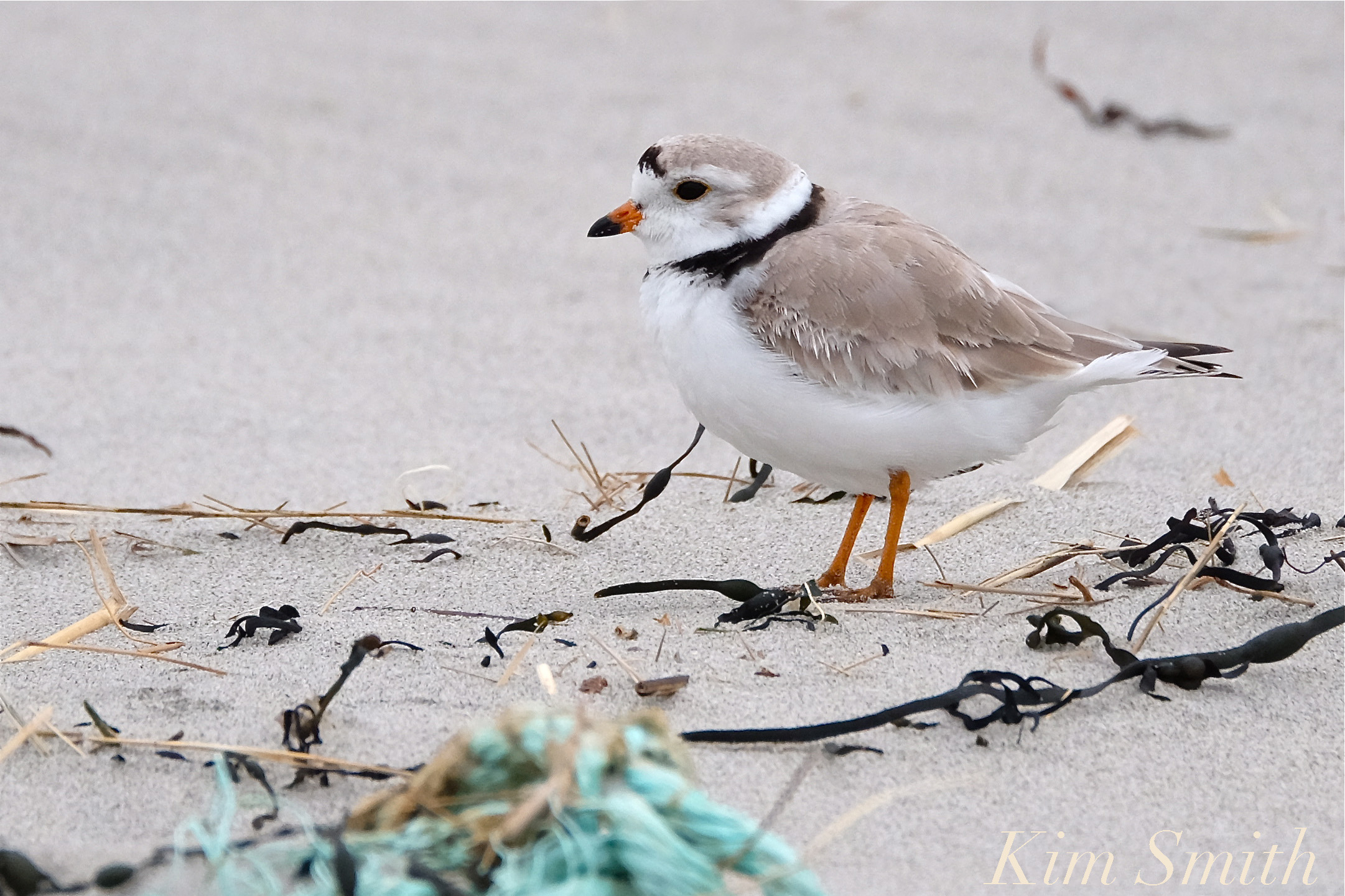 The Lonely Bachelor

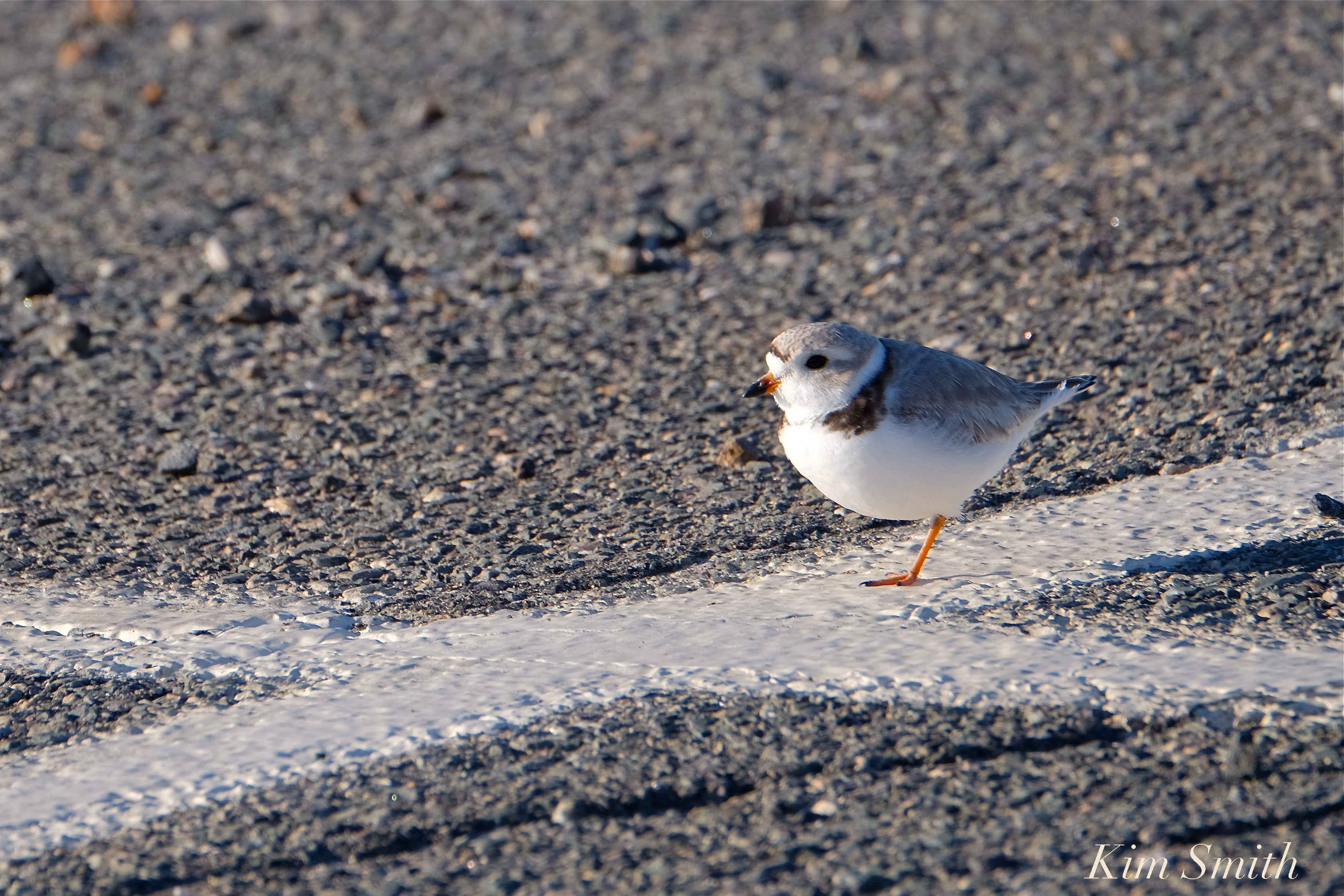 Despite best efforts, the Piping Plovers were again driven off the beach.
Knowing an off leash weekend day was going to be tough on the PiPl, I spent most of Sunday at Good Harbor Beach. During the morning hours, it wasn’t so bad because most dog walkers were with their pooches by the water’s edge. As the tide came in, the situation quickly deteriorated. Countless dogs ran into the roped off area; I lost track after forty. The PiPl gave up on courtship and tried to forage. A pair of bird dogs chased all three Plovers up and down the beach repeatedly, when they finally gave up.
I searched for an hour and couldn’t find. As I was leaving, there were Mama and Papa, in the parking lot. Mama was sitting quietly on the painted white lines and Papa was desperately trying to dig a nest scrape in the course gravel. This exact same scenario happened last Saturday, on the off leash beach day.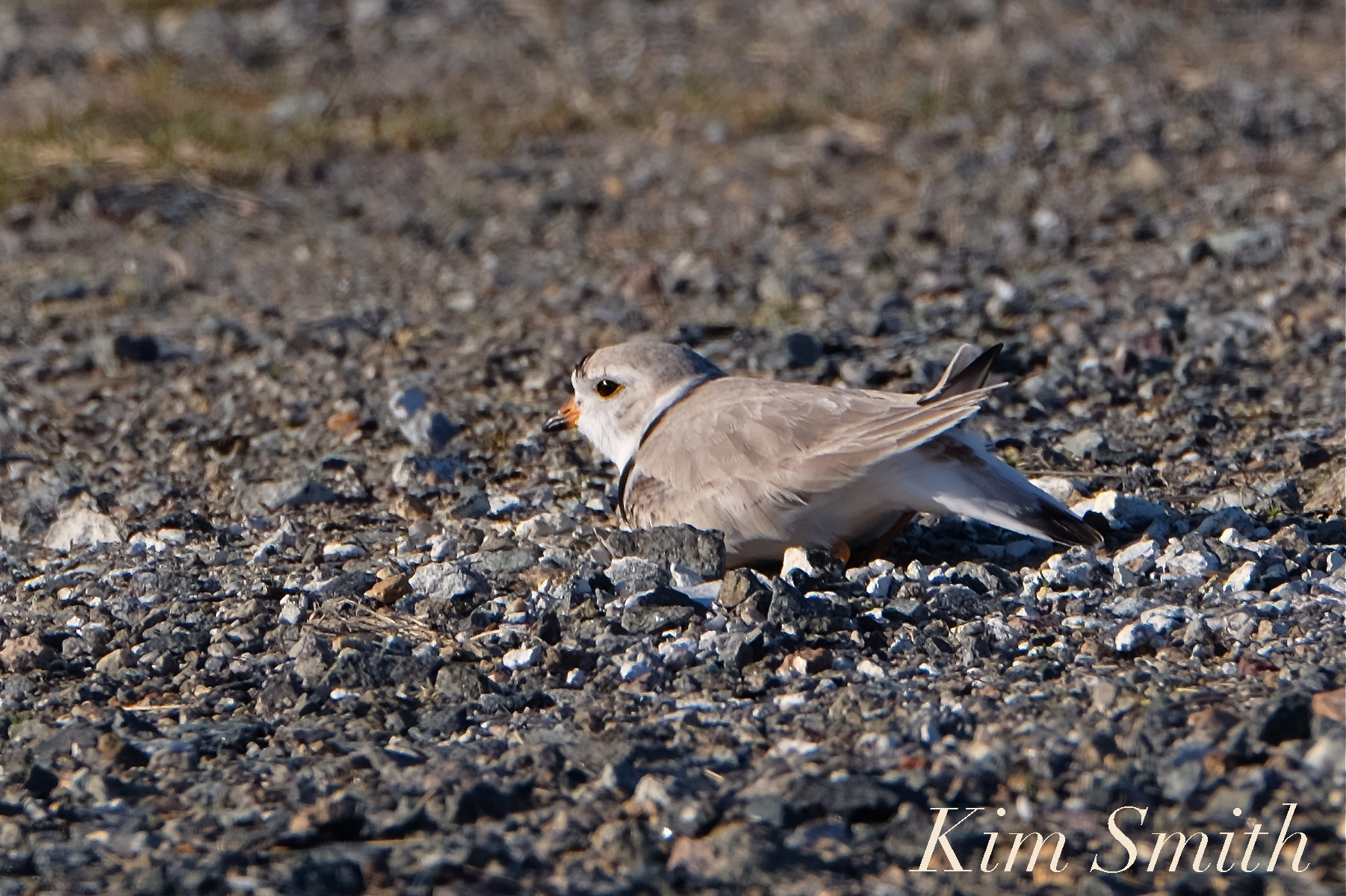
Papa trying to scrape a nest in the gravel parking lot
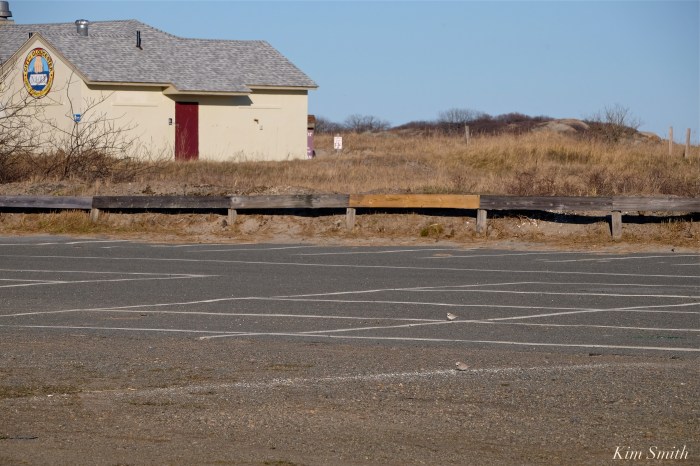
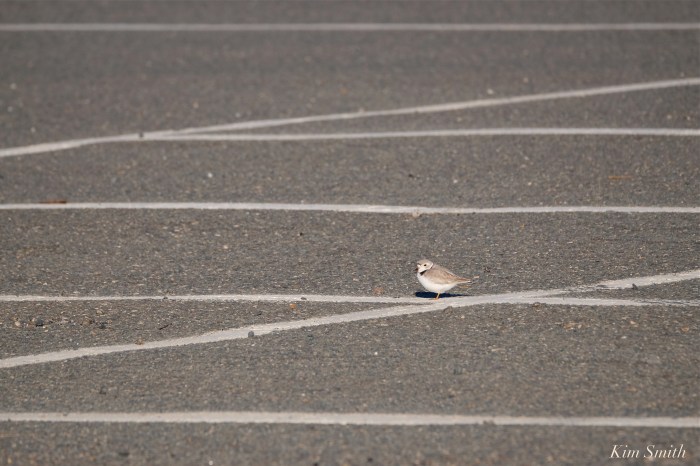
I had hoped that by spending the day trying to keep dogs out of the #3 nesting area, the parking lot scene would not be repeated. Volunteers are desperately needed during this last week of off leash days. For the area around #3, where I was stationed, at least two are needed, because as you are trying to keep dogs out of one side, they are coming in from the opposite end.
Please email Ken Whittaker if you would like to help. His email address is: kwhittaker@gloucester-ma.gov
The worst days are going to be Thursday, Saturday, and Monday, the three last off leash days of April, with Saturday being by far the hardest.
High tides for the upcoming weekend off leash days:
Thursday April 26th – 9:03 am – off leash day
Friday April 27th – 10:01am – on leash
Saturday April 28th 10:54am – off leash day
Sunday April 29th 11:42am – on leash
Monday April 30th 12:27pm – off leash day
Our Piping Plover pair are resilient. They left the parking lot and returned to the beach at sunset, but again, the same pair of dogs chased them off the beach.
Mama and Papa Plover, and the little Bachelor, survived this past off leash weekend day, but as you can imagine, courting and nesting are again delayed. The most important thing for folks to understand is that the earlier in the season the Piping Plovers are allowed to nest, the earlier the chicks will hatch, which means they will have a thousand fold better chance of surviving.
Some good news—overnight four new additional Piping Plovers arrived! They are in a battle with one another over turf at the roped off area by boardwalk #1.

The following video was produced in 2014. The number of Piping Plover chicks that have survived has gone down since that year, but I thought that what coastal biologist Jorge Ayub from DCR at Revere Beach has to say is especially relevant to our Good Harbor Beach. He begins speaking at 2:45.”We have seen this year an improvement, relative to last year, and acceptance. We’ve seen a tremendous amount of success. This year the Plovers fledged earlier in the season and the reason for that is thanks to the visitors and the residents who didn’t disturb them earlier in the season.”
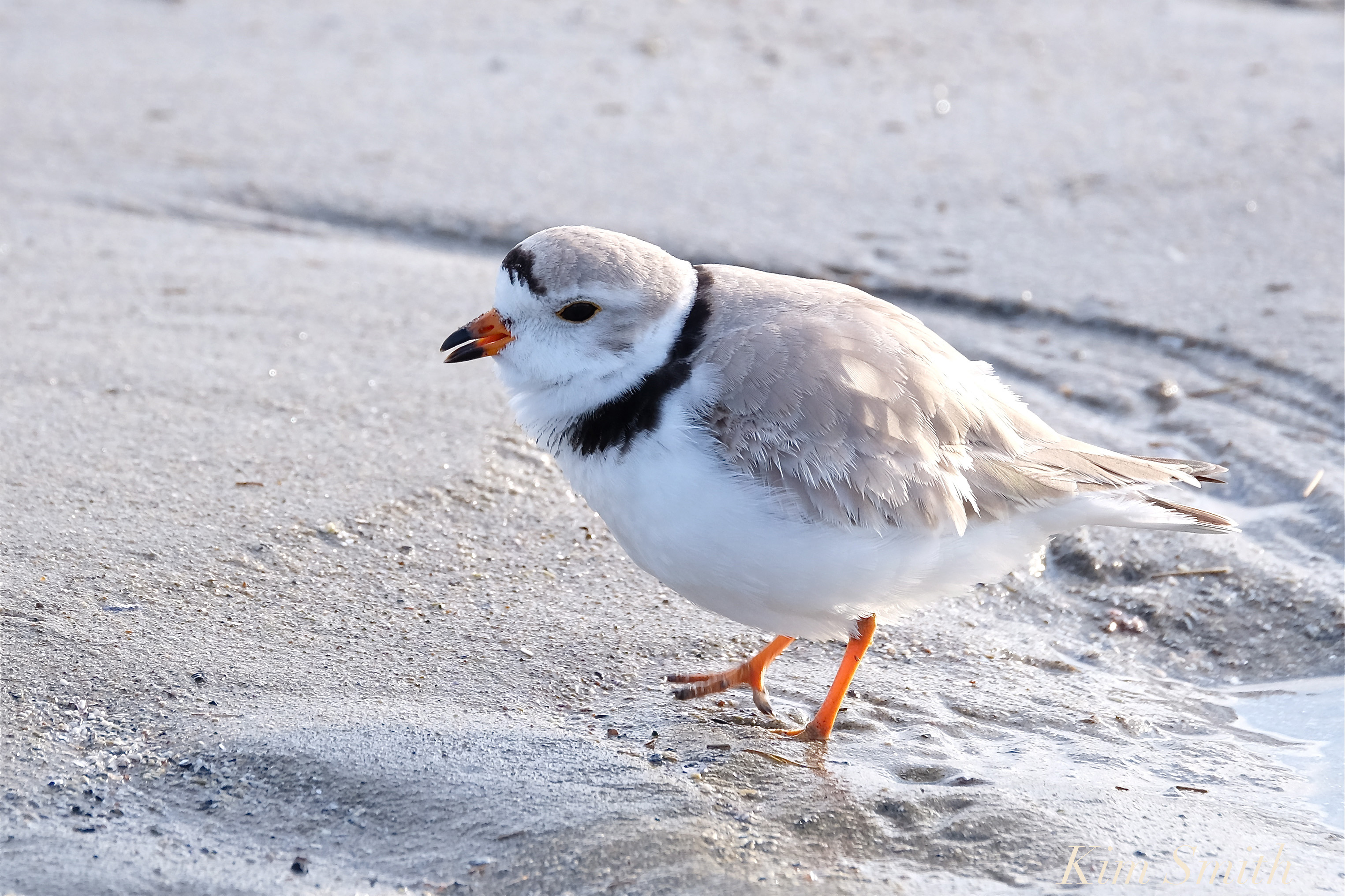 Piping Plover Piping

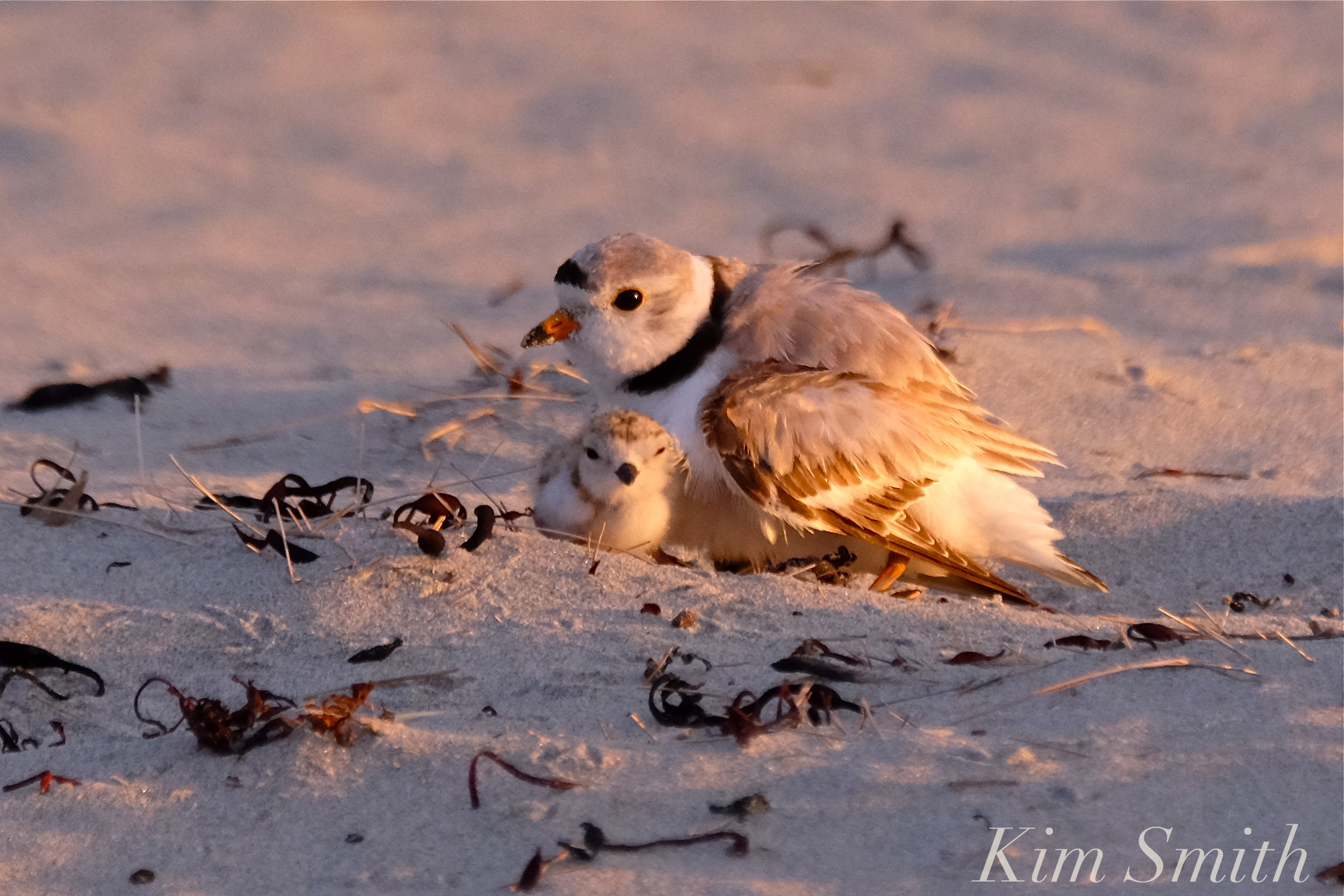

 Good Morning Gloucester